

Toyota and Hyundai are still driven by the belief that hydrogen will become a key source of clean energy for the future. That obsession with hydrogen fuel cell vehicles looks more justified now than it has sometimes appeared in the past.
ft.com
ft.com
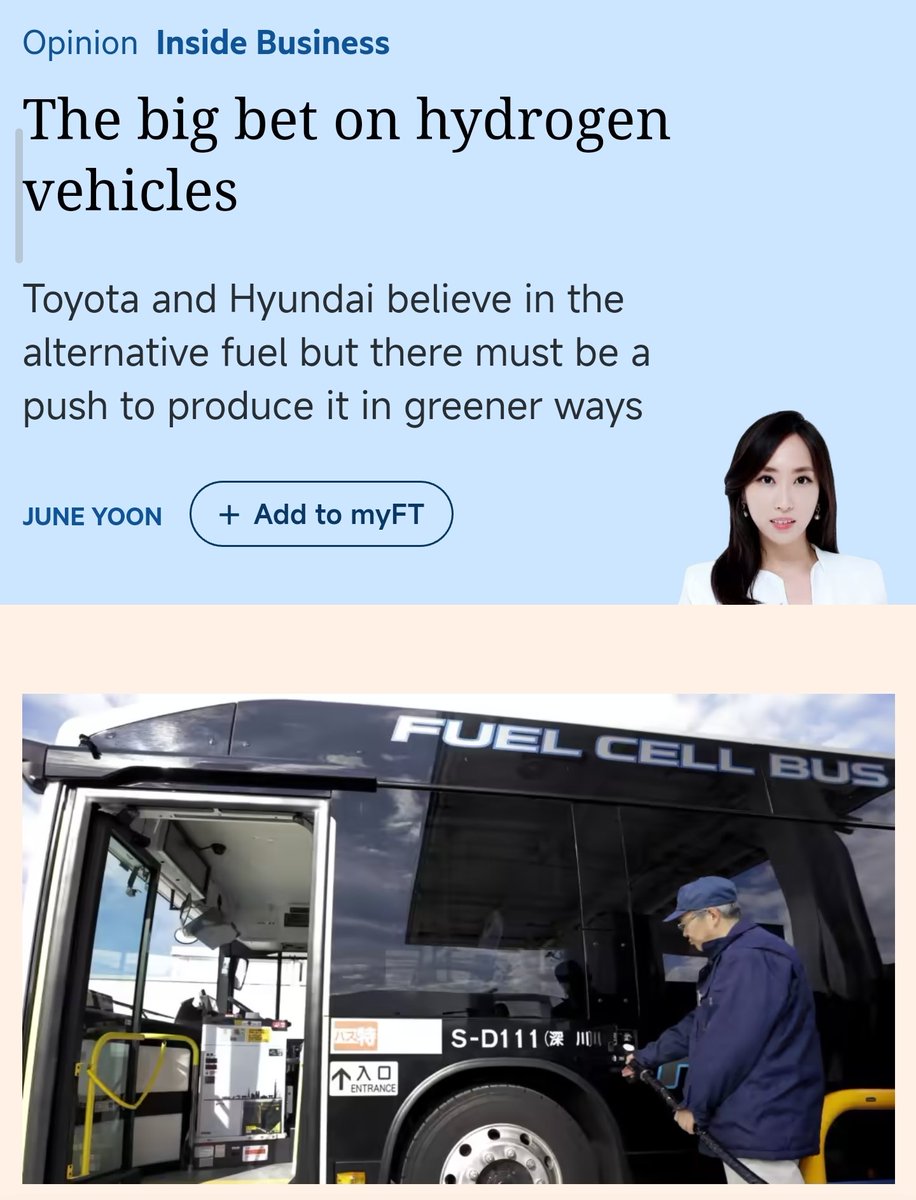
Hyundai’s Xcient trucks have expanded market share rapidly since last year, on the roads in Germany, Switzerland, New Zealand and South Korea. Deliveries arrive in the US and Israel this year. In China, hydrogen fuel-cell vehicle sales, led by buses, nearly tripled last year.
There is good reason for the take-up in hydrogen-powered vehicles. The latest Xcient trucks and the Mirai, for example, can travel more than 800km on a single charge. They can be charged in minutes. Prices are going down.
Like the batteries in electric cars, the hydrogen fuel stack, the heart of a fuel-cell power system which generates electricity, is the most expensive component of the vehicles that use them — costing more than $11,000 per car in earlier models.
About 95% of all hydrogen fuel is generated from fossil fuels, mostly natural gas. In the production process, this produces carbon monoxide and carbon dioxide, which offsets the reduction in exhaust pipe emissions from hydrogen cars.
Toyota and Hyundai have been developing fuel-cell vehicles since the 1990s and have decades worth of investment that must be recouped. The duo’s operating margins and net profit per car sold lag behind that of electric-only peers.
Loading suggestions...