

The Spanish Dehesa is an ancient and resilient agriculture system dating back over 2,000 years.
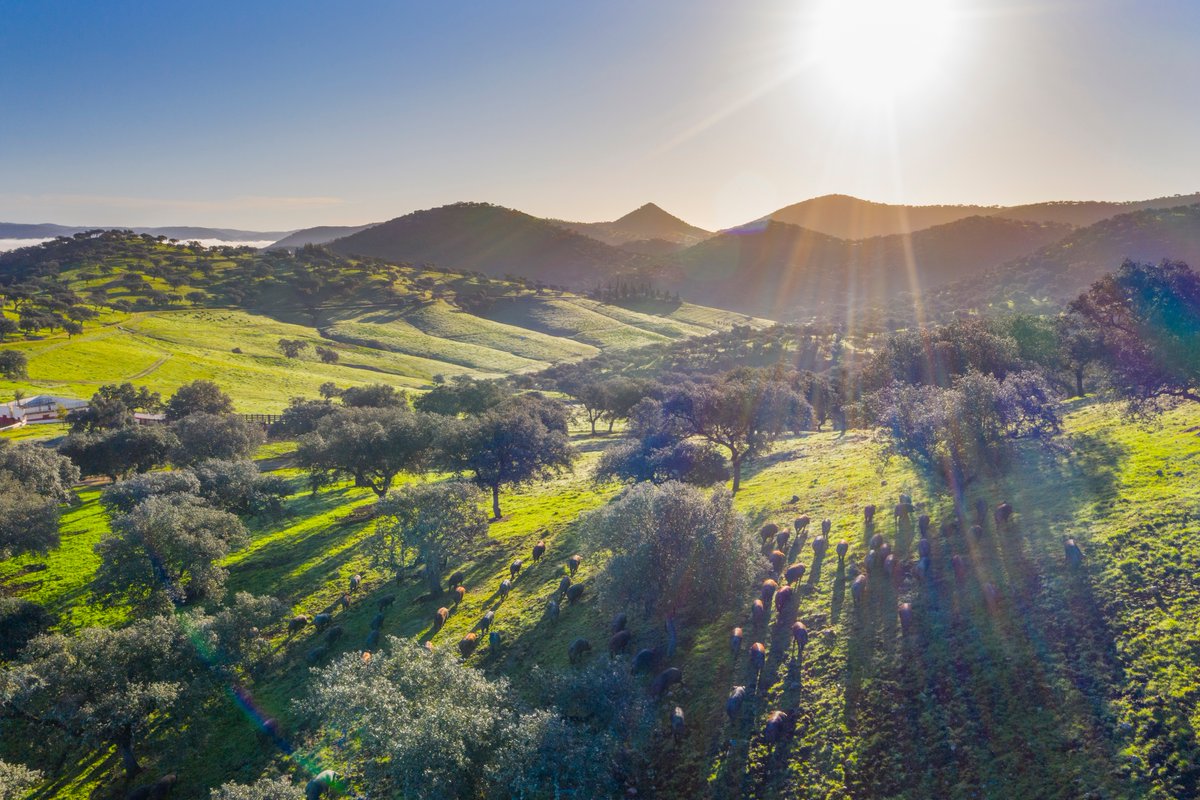
The Dehesa sweeps across 9 million acres of rolling hills in the Iberian Peninsula, where otherwise marginal land remains abundantly productive and vibrant.
A look at the Dehesa:
The Dehesa sweeps across 9 million acres of rolling hills in the Iberian Peninsula, where otherwise marginal land remains abundantly productive and vibrant.
A look at the Dehesa:

The Dehesa is a silvopasture system incorporating livestock, trees, diverse perennial pastures, annual grasses, and crops.
The Dehesa is renowned for the Iberian pigs that roam its pastures, feeding on the acorns of Holm Oaks that dot the landscape.
The Dehesa is renowned for the Iberian pigs that roam its pastures, feeding on the acorns of Holm Oaks that dot the landscape.
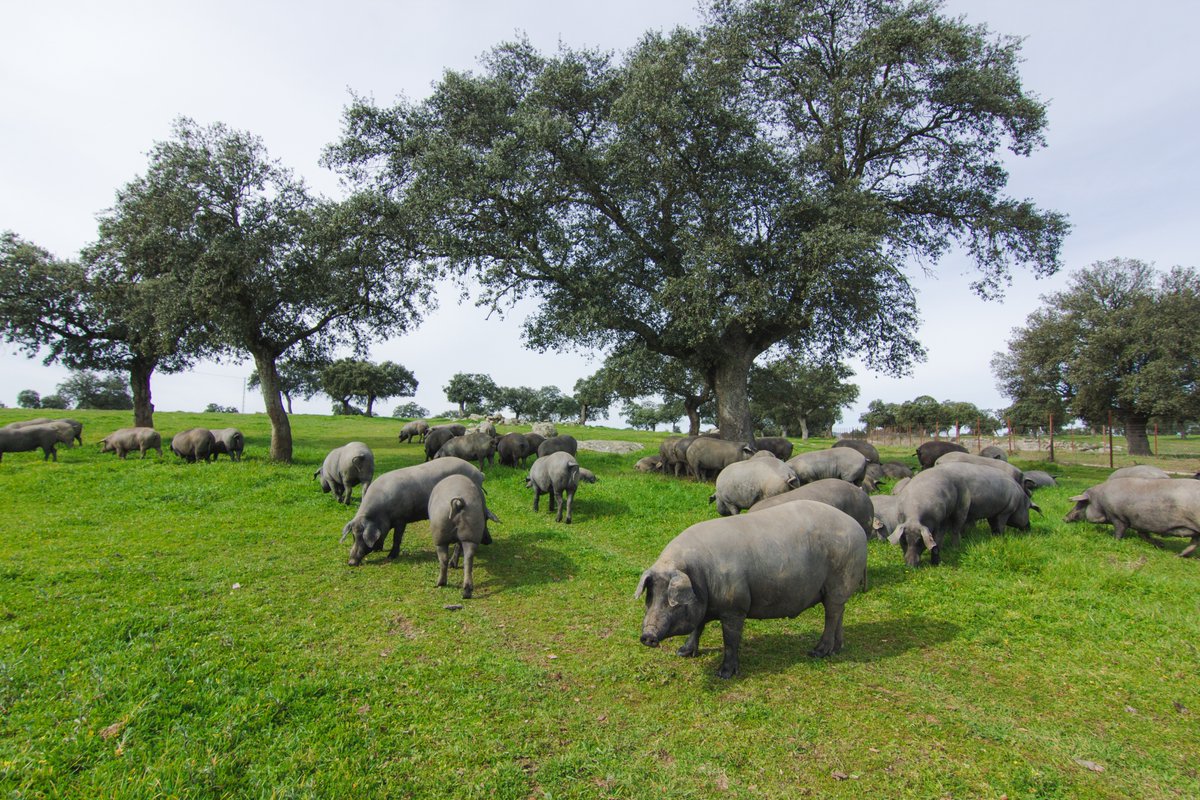
Chefs and foodies prize the Dehesa's Jamon Iberico de Bellota, dry-cured ham with an exquisite floral and nutty flavor, thanks to the pigs' acorn diet and plentiful exercise.
But that's only a small part of the cornucopia produced in the Dehesa system.
But that's only a small part of the cornucopia produced in the Dehesa system.
Other livestock roams the silvopasture, including cattle, sheep, and goats.
A variety of grains are cropped in large tracts between trees.
And Oaks dominate the tree layer and yield a bounty of acorns, cork, fuel wood, and browse for wildlife.
A variety of grains are cropped in large tracts between trees.
And Oaks dominate the tree layer and yield a bounty of acorns, cork, fuel wood, and browse for wildlife.

The verdant expanse of the Dehesa stands out like an oasis in the dry Mediterranean climate.
This area receives between 15-20 inches of rain annually.
But on the Dehesa, each drop is captured by rain-harvesting earthworks and stored in strategically placed ponds.
This area receives between 15-20 inches of rain annually.
But on the Dehesa, each drop is captured by rain-harvesting earthworks and stored in strategically placed ponds.
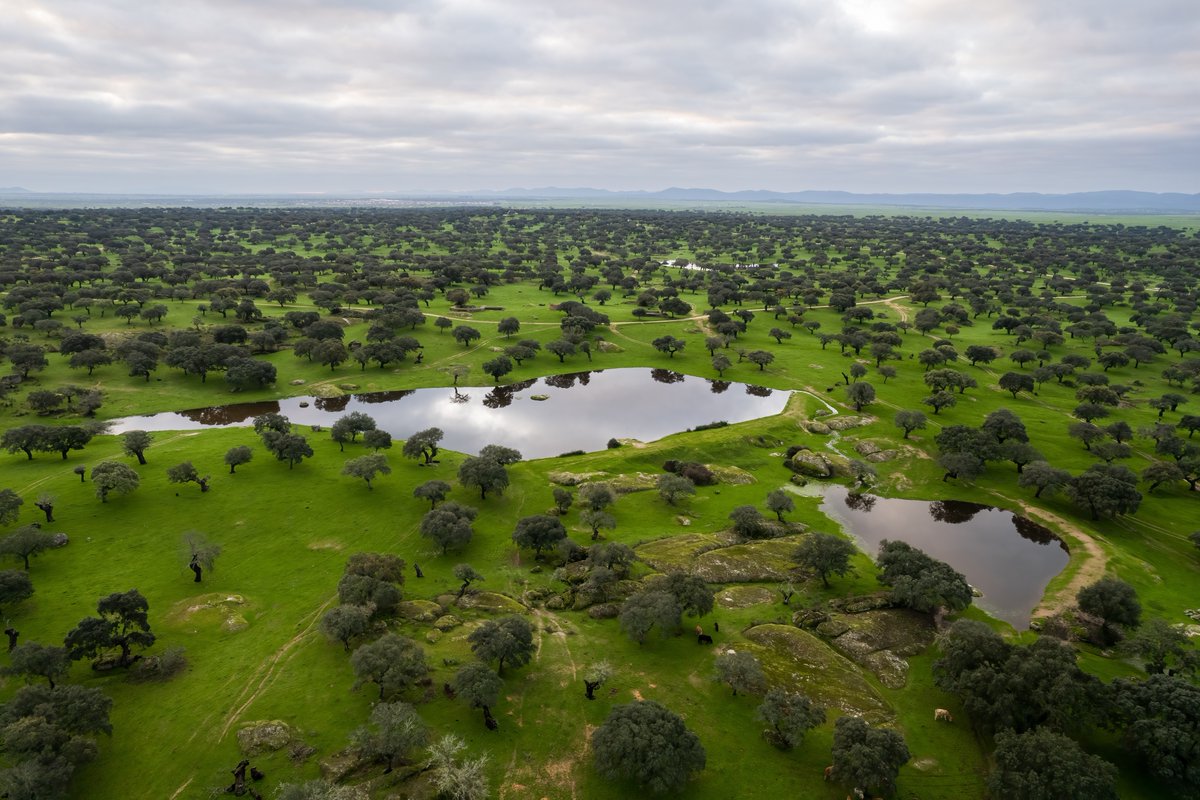
Livestock and wildlife have a year-round water supply, and the trees and deep-rooted grasses tap into lenses of water stored in the soil.
The intelligent capture and storage of water is a defining aspect of the Dehesa system, allowing it to sustain a diversity of life.
The intelligent capture and storage of water is a defining aspect of the Dehesa system, allowing it to sustain a diversity of life.
The structural and biological diversity of the Dehesa creates a rich web of relationships between each element of the system.
The management of each element necessarily affects every other element, whether plant, animal, or microbe.
On the Dehesa, life begets life.
The management of each element necessarily affects every other element, whether plant, animal, or microbe.
On the Dehesa, life begets life.
The Dehesa is a shining example of leveraging the essence of an ecosystem for food production.
Rather than impose a cropping system from a world away, the Dehesa’s savannah woodland characteristics serve as the model for a productive and enduring agriculture.
Rather than impose a cropping system from a world away, the Dehesa’s savannah woodland characteristics serve as the model for a productive and enduring agriculture.

The Dehesa has persisted since the Neolithic period, always satisfying the needs of its inhabitants while improving and preserving the health and vibrancy of the ecosystem.
It's a reminder that agriculture needs to be specific to each place so life can flourish.
It's a reminder that agriculture needs to be specific to each place so life can flourish.
Loading suggestions...