

Today is 612th foundation day of #HeritageCity Ahmedabad. It was founded by Gujarat 3rd Sultan Ahmedshah.612 years ago at noon of Thursday 26-2-1411 Ahmedabad city was founded by Sultan Ahmedshah in presence of 4 Ahmeds & 12 Babas.#HappyBirthdayAhmedabad
#AhmedabadFoundationDay
#AhmedabadFoundationDay
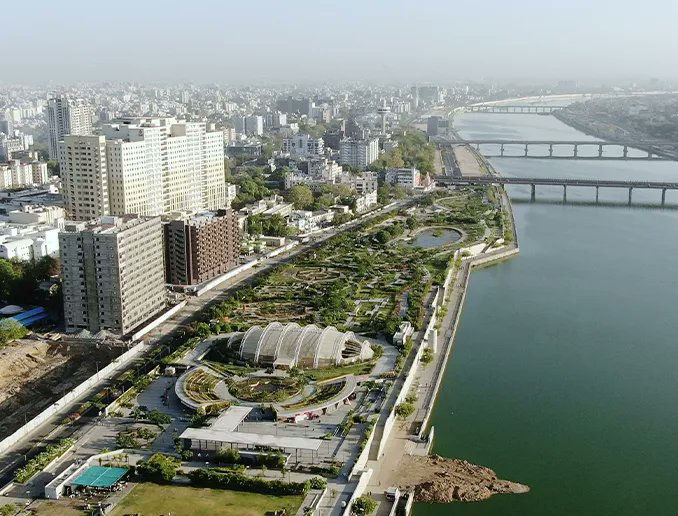
Gujarat 3rd Sultan Ahmedshah born on 18-11-1391 in Delhi.His father Tatarkhan & grandfather Muzffarshah were in services of Delhi Sultanat.Gujarat Sultan Ahmedshahs great grandfather Saharan was Punjabi Hindu Tank Rajput who adopted Islam.His sister married Delhi Sultan Firozshah
Sultan Ahmedshahs grandfather Muzffarshah was Delhi Sultnat Gujarat governor.He founded independent Gujarat Sultnat in 1404 legally in 1407.Ahmedshah became 3rd Gujarat Sultan at 19 year age n 1410 at Patan.He was brave,intelligent & very religious. So he was known as Pir Badshah
Gujarat Sultan Ahmedshah decided to shift his capital Patan to a place adjoining Karnavati as it was strategic place on routes of Gujarat.Sultan Ahmedshah was a follower of Sarkhej great Sufi Saint Sheikh Ahmed Khattu Ganjbax.Sultan took his permission & order to found new city.
Hazrat Al Khizar Khwaja advised through Saint Ahmed Khattu that foundation of new city be laid by 4 holy Ahmed who never missed daily Namaz. Search began for 4 holy Ahmeds.2 were Saint Ahmed Khatu & Sultan Ahmedshah himself.Other 2 were found Kazi Ahmed Jud of Patan & Malek Ahmed
Gujarat Sultan Ahmedshah took advice & opinion of expert & learned Hindu astrologers to fix day,date & time of foundation of Ahmedabad.Greatest Sufi Saint Sheikh Ahmed Khattu Ganjbaksh blessed & laid with 3 other Ahmeds foundation brick of Ahmedabad at noon of Thursday 26-2-1411.
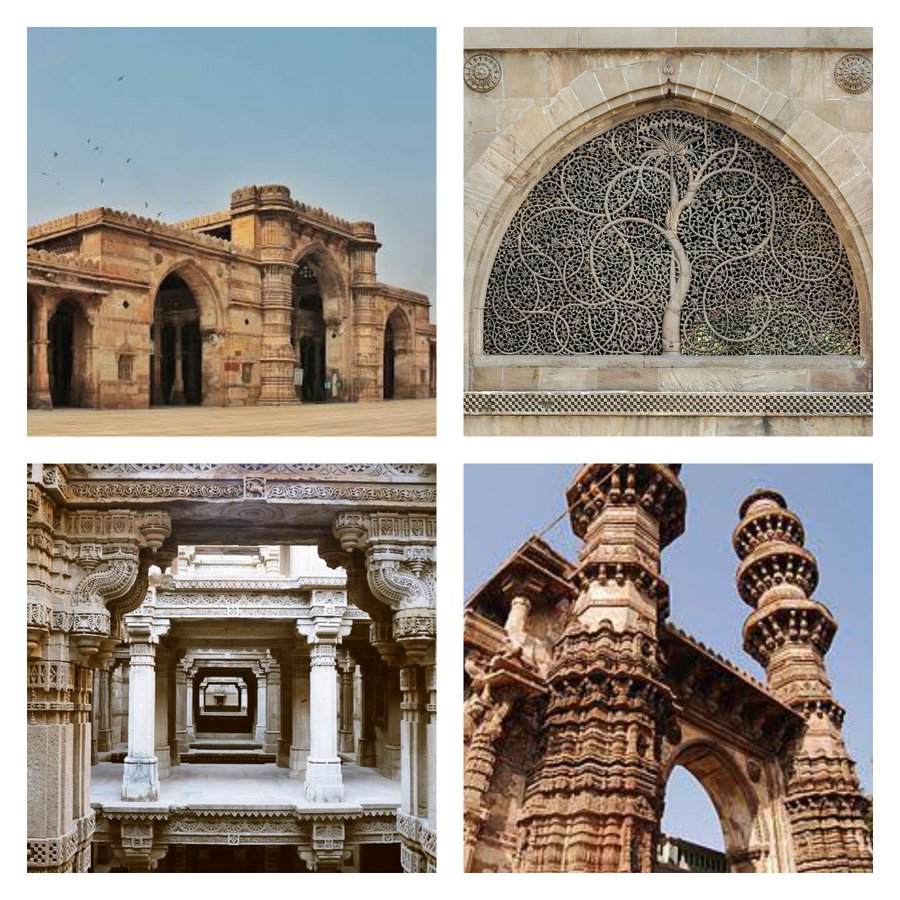
612 years ago foundation brick of Ahmedabad city laid was of Bhadra fort bastion which is known as Manek Buraj at the eastern end of Ellisbridge. Persian poet Hulvi Shirazi wrote a poem in Persian about foundation of Ahmedabad in 1411 AD. It gives foundation details of Ahmedabad.
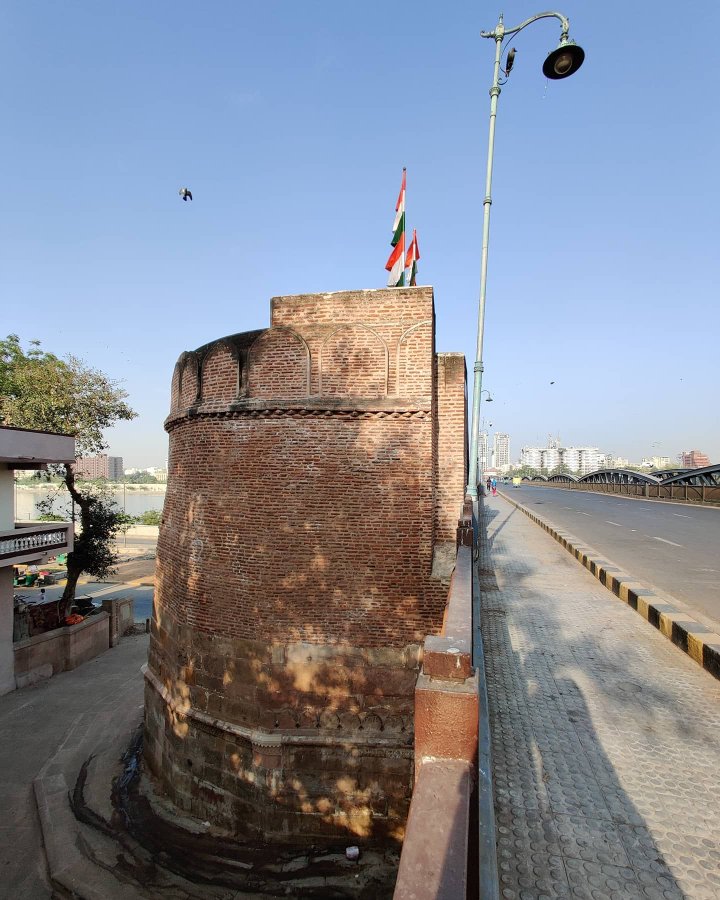
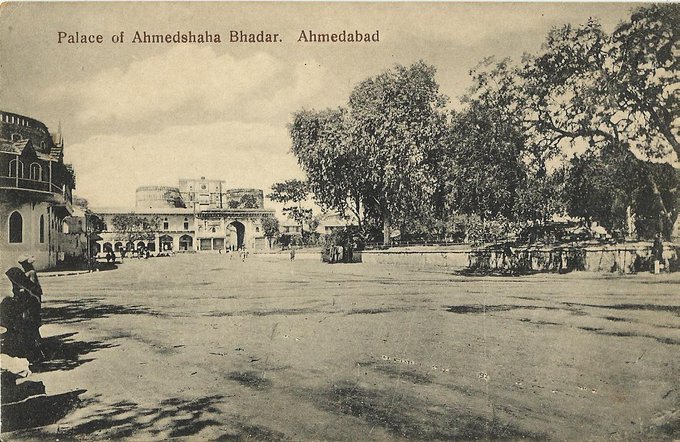
612 years ago when Ahmedabad city founded first Bhadra fort & its palaces,3 Darwaja, Manek Chowk, Ahmedshah Masjid & Jami Masjid were built.There was no fort around Ahmedabad city for 75 years after it foundation in 1411.Sultan Ahmedshah built only Bhadra fort around his palaces.
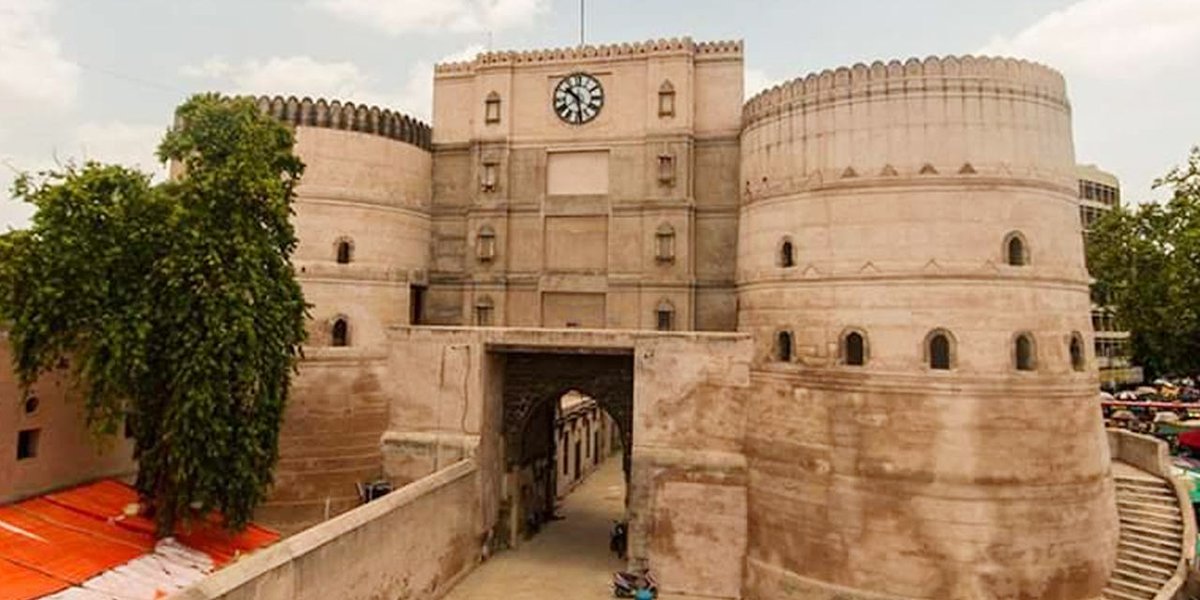
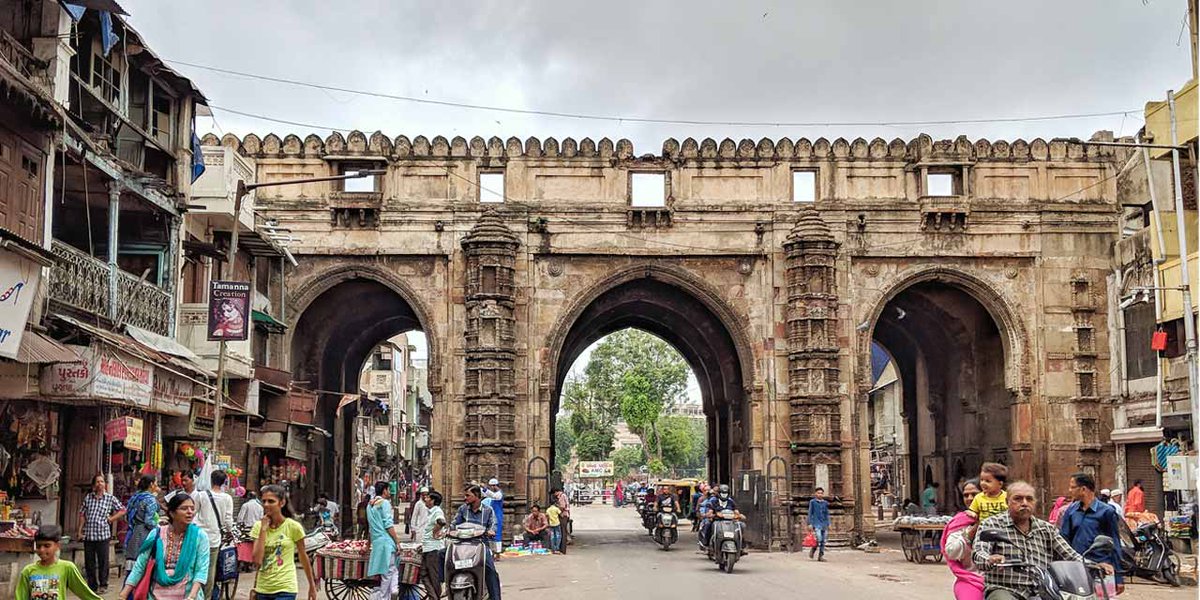
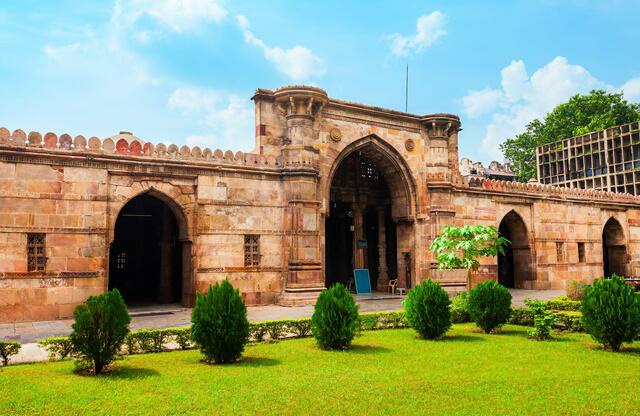
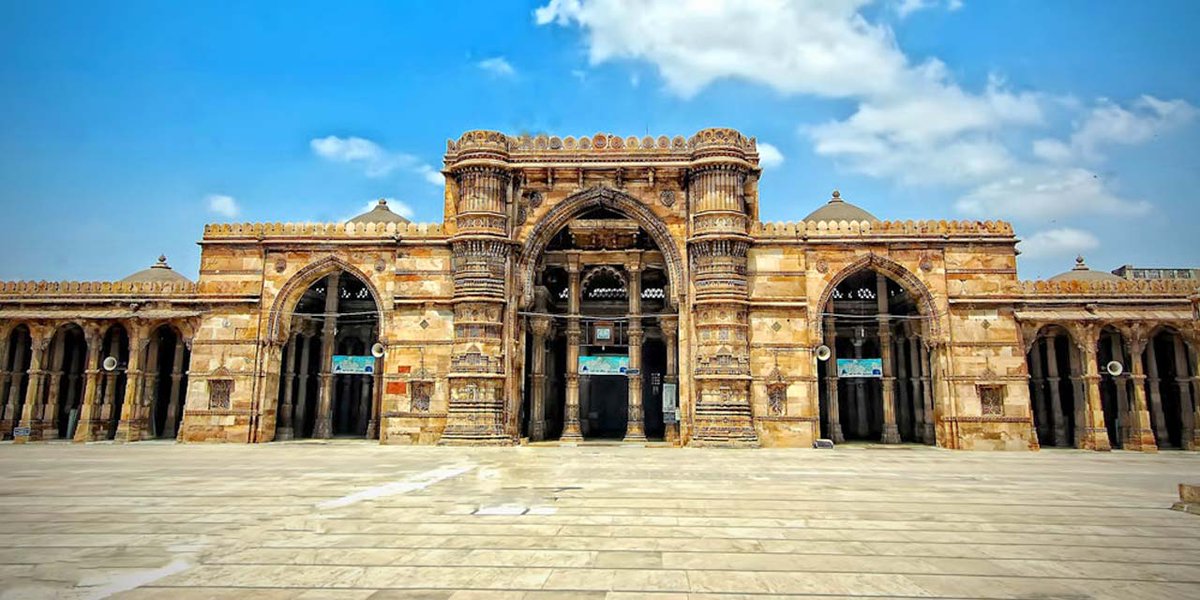
As per book 'Amdavad Ni Vanshavali' Sultan Ahmed brought 5 Crore Rupees,1 Lakh soldiers,800 elephants,16000 bullocks & 32000 camels from Patan. Stories related to Ahmedabad foundation such as rabbit & dog,Maneknath Bava,Sultan Ahmedshah-Teja love story are folk tales,not history.
When Sultan Ahmedshah founded Ahmedabad in 1411 AD, he first built Bhadra fort for royal palaces. It had 8 gates,14 bastions & area of 43 acres. Lal Darwaja where Dist. Panchayat, Bahumali Bhavan & AMTS bus station are, there were royal palaces & Bhadra fort in middle age.

The main gate of Ahmedabad's Bhadra fort which is near Bhadrakali temple today was known as Nagarkhana/Piranpir Darwaja in the middle age. Lal Darwaja area of Ahmedabad named so as there was Lal Darwaja (gate) of Bhadra fort 612 years ago. This gate was near Sidi Saeed Masjid.
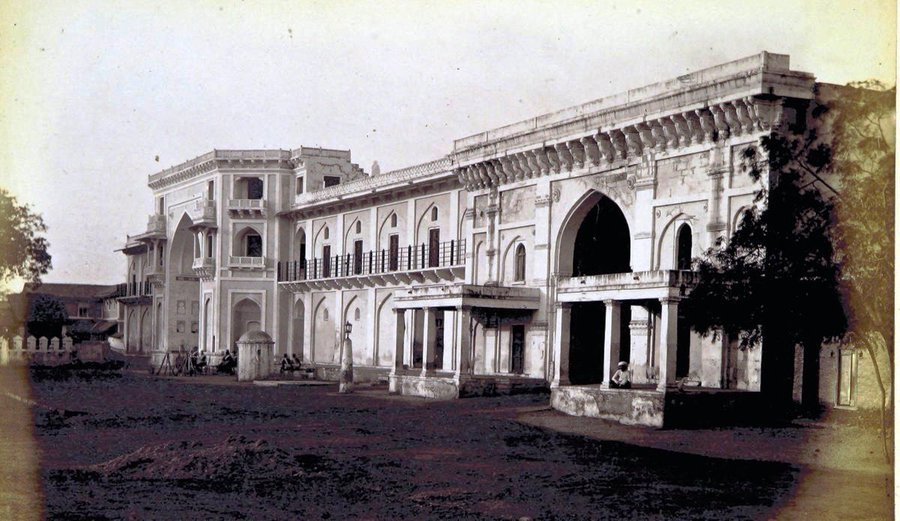
The main shopping area of Ahmedabad between 3 Darwaja & Bhadra fort gate is 612 years old. In Sultnat time Shukravari (Friday) Bazar/Khas Bazar was held here. In the middle age Ahmedabad was known as ' Shahar-i- Muazam Ahmedabad ' means capital city Ahmedabad.

Only Masjids,Maqbaras,tombs,Mughal palaces & fort remains of Ahmedabad are 300 to 612 years old. No other building is older than 300 years.Ahmedabad fully developed as city after 100 years of it foundation in 1411.Building material brought from Asval/Karnavati,Chandravati & Patan
In 1486 AD Sultan Ahmedshahs grandson Gujarat Sultan Mahmud Begada built fort with 12 gates & 139 bastions around Ahmedabad.Later 18 gates. In Sultnat time in area between 3 Darwaja & Bhadra Darwaja of Ahmedabad there was open ground known as 'Maidan-i-Shah' with fountain & trees
In Ahmedabad form of all Sultnat & Mughal time roads, Chowks & streets of walled city changed in Maratha & British rule. Only names remained. Ahmedabad city & Bhadra fort was designed, planned & constructed as per principles of Hindu architecture and pattern of old capital Patan.
Pol (housing cluster) is a peculiarity of Ahmedabad. Muhurat Pol, Bhanderipur Pol, Dhinkava Pol, Khadia Pol, Haja Patel pol & Nisha pol are the oldest Pol of foundation time. The Biggest Pol was Mandvi Pol. Tankshal (mint) Pol is historical Pol & Zaverivad Pol was for the rich.
In 15 century Sultan Mahmud Begada built garden 'Bag-i- Firdosh' with 9 Lakh trees with fort near Vastral in Ahmedabad where is today Amraivadi. In 15 century Kalupur of Ahmedabad was founded by Kalu Azad-Ulmulk-Malik who was an African slave & later Sultan Mahmood Begada's Amir.
In 15th century Daria Khan founded Dariapur of Ahmedabad. He was the childhood friend of Sultan Mahmud Begada. Malik Sarang founded Sarangpur. Amir (Lord) Tajkhan & Malik Isan founded Tajpur and Isanpur suburbs of Ahmedabad.
In the 17th century, Navrangkhan who was a senior official of Mughal power in Gujarat founded Navarangpura of Ahmedabad during the rule of Mughal Emperor Aurangzeb.
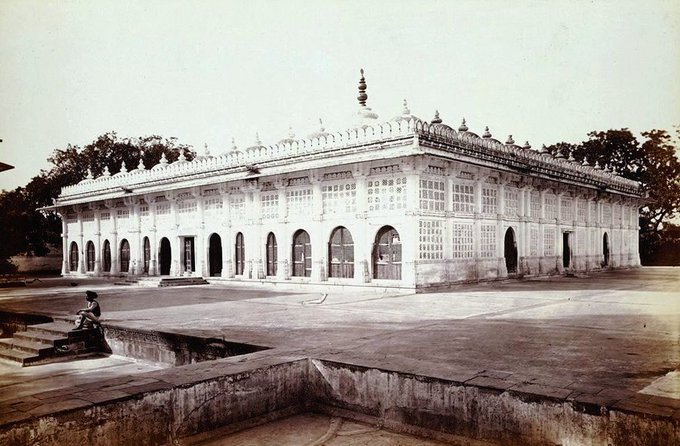
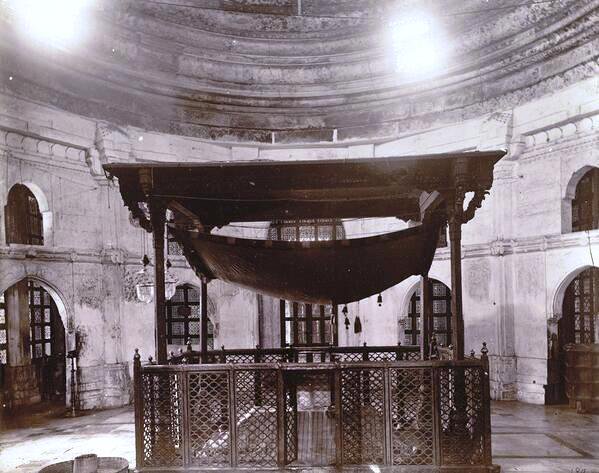
143 year old photo of the tomb of Saint Sheikh Ahmed Khattu Ganjbaksh (R.H.) at Sarkhej near Ahmedabad. He is considered one of six greatest Muslim Saints of the Indian subcontinent. He laid foundation brick of Ahmedabad city on 26-2-1411 &137 years old photo of interior of tomb.
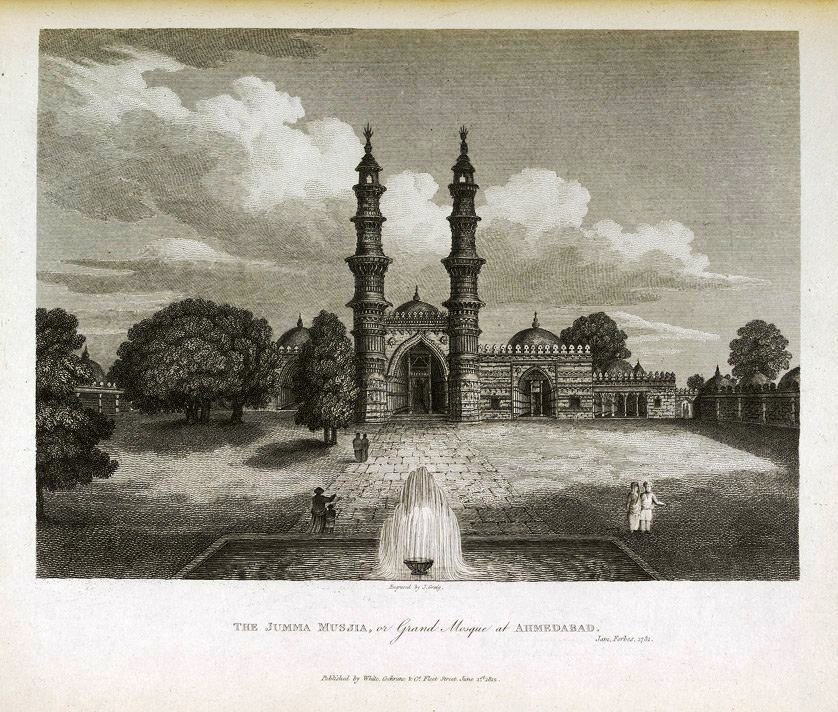
249 years old drawing of Jami Masjid in Manek Chowk of Ahmedabad was drawn in 1774 AD. It was built by Gujarat's 3rd Sultan Ahmedshah in 1424 AD. Minars seen in the picture fell down in 1819 AD earthquake.
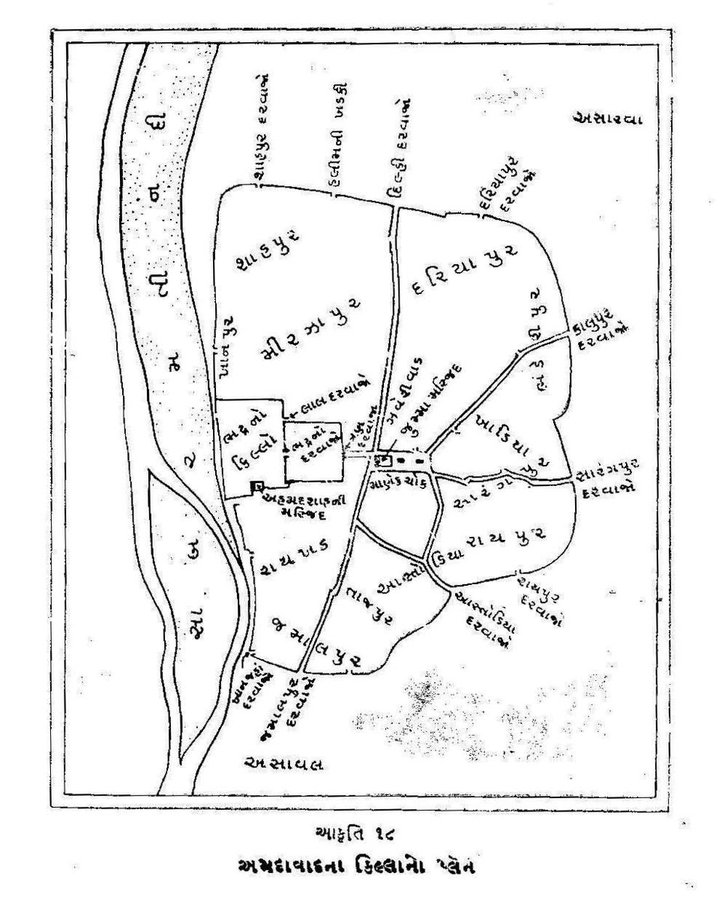
Map showing plan of walled Ahmedabad city 500 years ago during the rule of 15th century Gujarat Sultan Mahmud Begada. In the map, Asaval (Karnavati) is shown in outside of Ahmedabad city fort in the south.
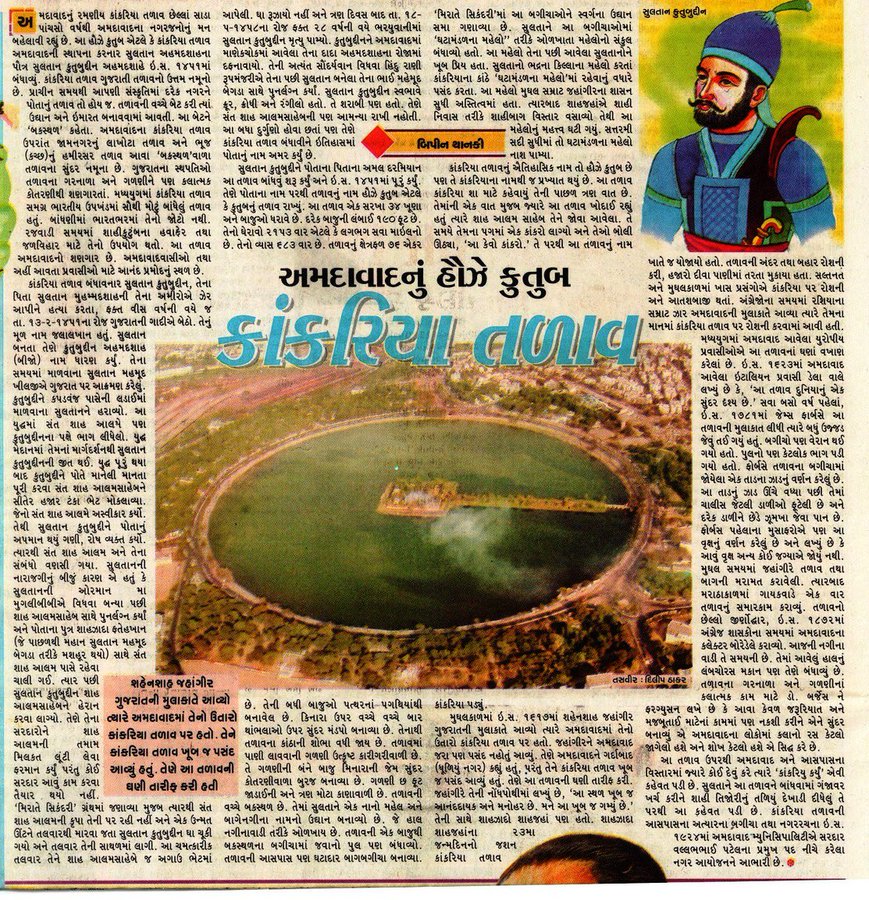
In 1451 AD Sultan Kutubuddin built 'Hauz-i-Kutub' which is popularly known as 'Kankaria Talav' & built Ghatamandal palaces & gardens around lake.During rule of Gujarat Sultanat & Mughals, there were many gardens in Ahmedabad. It was called a city of gardens by foreign travellers.
When Mughal prince Shahjahan was Gujarat governor, he built a palace on the riverbank in Shahibag Ahmedabad as his royal residence in 1618 AD. Shahjahan built Shahibag on Sabarmati bank in 1618. It was one of the best gardens in India. Mughals were fond of gardens & fountains.
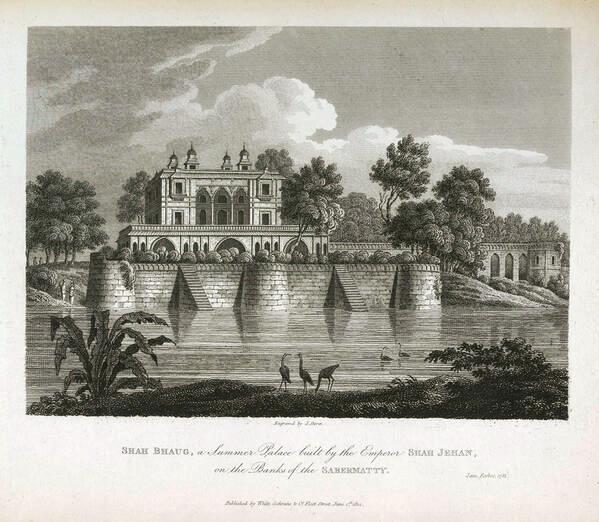
Ahmedabad famous gardens in Mughal time: Shahibag, Shahvadi, Bag-i-Firdaus, Bag-i-Shayban, Farmanvadi, Fatehbag, Rustambag & Gulab b Bag. In Mughal time fruit & flower gardens were from walled city to Sarkhej. It was green area. It was deserted & ruined during Maratha rule chaos.
There were 84 suburbs of Ahmedabad in Mughal times such as Shahpur, Asarva, Haripur, Bibipur, Rasoolabad-Shahalam, Saiyadabad-Saraspur, Rajpur, Usmanpura, Shekhpur, Changizpur (Mithakhali), Kazipur, Khanpur etc.
In Sultnat time,Ahmedabad prosperity was at peak. It fame reached Europe as one of top cities in world. It was compared with Baghdad & Basra. In Sultnat & Mughal periods ( 1411-1758) Ahmedabad was biggest city in India. It was bigger than Delhi & Agra. It was clean,beautiful city
English diplomat Sir Thomas Roe who was first envoy to Mughal court visited Ahmedabad in 1618 AD wrote that Ahmedabad was as big as London. In Mughal time trade-commerce of Ahmedabad flourished. Its foreign trade was from Khambhat port. Malwa opium & Sarkhej indigo were exported.
Traders of Ahmedabad had agents in all big cities up to Istambul of Asia in middle age.Their credit was high.They all were known as 'Bania'.Foreign travellers who visited Ahmedabad in old-time wrote that there were few sweet marts in city in comparison with cities of north India.
Foreign travellers of middle age wrote that there was a large number of shops of roasted groundnuts & grams and parched rice (Sing, Dalia-Chana & Mamara) in Ahmedabad. People liked cheap food and were not fond of expensive food & sweets like north Indians.
Ahmedabad was ruled by Gujarat independent Sultnat for 161 years, Delhi Mughals for 186 years, Maratha for 60 year & British for 129 years. In middle age Ahmedabad paper was famous. It was known as Amdavadi Kagal.Most paper artisans were Muslims. They were known as Kagazi/Kagadi.
In 18 century, Ahmedabad city had 2 Maratha rulers-Pune Peshwa & Gaekwad. City was divided like Berlin in two separate zones. It was chaos. In 1818 British took Ahmedabad from Maratha power.Their flag Union Jack was hoisted on Bhadra fort exact 200 years after visit of Thomas Roe
In 1824 AD British did 1st Ahmedabad city survey. Zones as per it:-
North City Zone:
Khanpur, Shahpur, Mirzapur, Idaria, Dariyapur, Zaveriwad, Dhinkava, Teen Limbadi.
South City Zone : Khadia,Sarangpur.Raypur,Astodia,Jamalpur,Raikhad,Bhadra,Khasbazar,Pankor & Manek Chowk.
North City Zone:
Khanpur, Shahpur, Mirzapur, Idaria, Dariyapur, Zaveriwad, Dhinkava, Teen Limbadi.
South City Zone : Khadia,Sarangpur.Raypur,Astodia,Jamalpur,Raikhad,Bhadra,Khasbazar,Pankor & Manek Chowk.
271 years old drawing of a view of 18th century Ahmedabad was drawn by an English artist was published in London in 1752 AD.
In 1411 AD Gujarat Sultan Ahmedshah founded Ahmedabad very near to Ashaval (Karnavati) as per middle age Persian history book 'Mirat-i-Sikandari'.
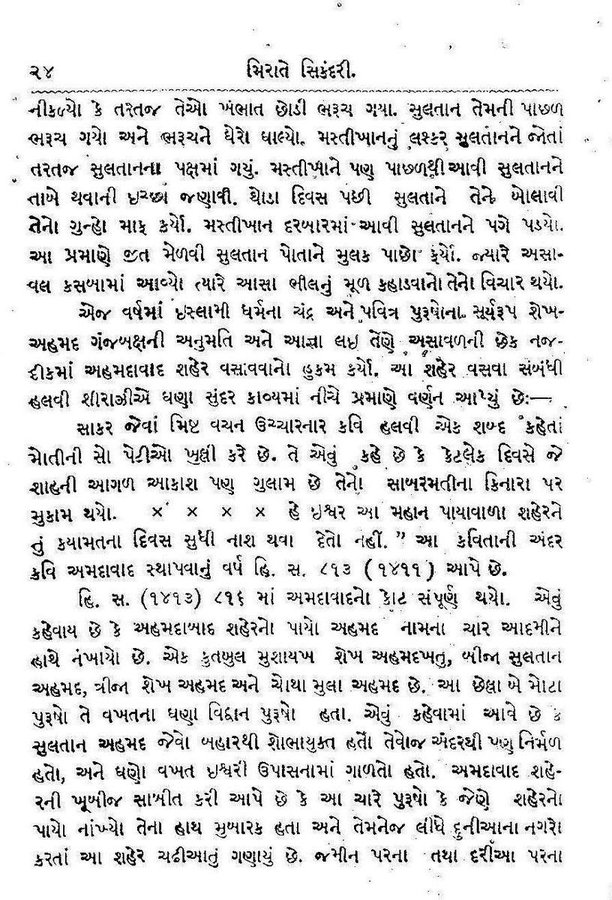
According to famous historians of Gujarat, Ahmedabad was not Karnavati. We have tweeted the history of Ashapalli/Ashaval/Karnavati on 25 Feb. Please refer to our tweet thread -
This tweet thread is to be continued.
In 1818 AD Ahmedabad was put under administration of Bombay Presidency & its governor. Dunlop was appointed as 1st collector of Ahmedabad. In destructive 1819 earthquake, 500 persons were killed at a community dinner & Minars of Jami Masjid at Manek Chowk fell down in Ahmedabad.
In 1826 first 2 Gujarati medium primary schools based on western education system introduced by British were opened in Ahmedabad. In 1832 Ahmedabad fort was repaired with funds collected by special fort tax. As per advice of governor Malcolm army camp was established out of city.
In 1842 AD first printing press was started by Bajibhai Amichand in Ahmedabad. In 1846 AD first English medium school was opened in Ahmedabad. In the same year first High School was also opened in the city.
174 years ago in 1849 AD first tap water came in Ahmedabad in Manek Chowk by pipeline laid from river waterworks which was powered by bullocks. In 1849 AD a clock tower was installed at a cost of Rs.8000 on Bhadra fort in Ahmedabad. It was imported from England.
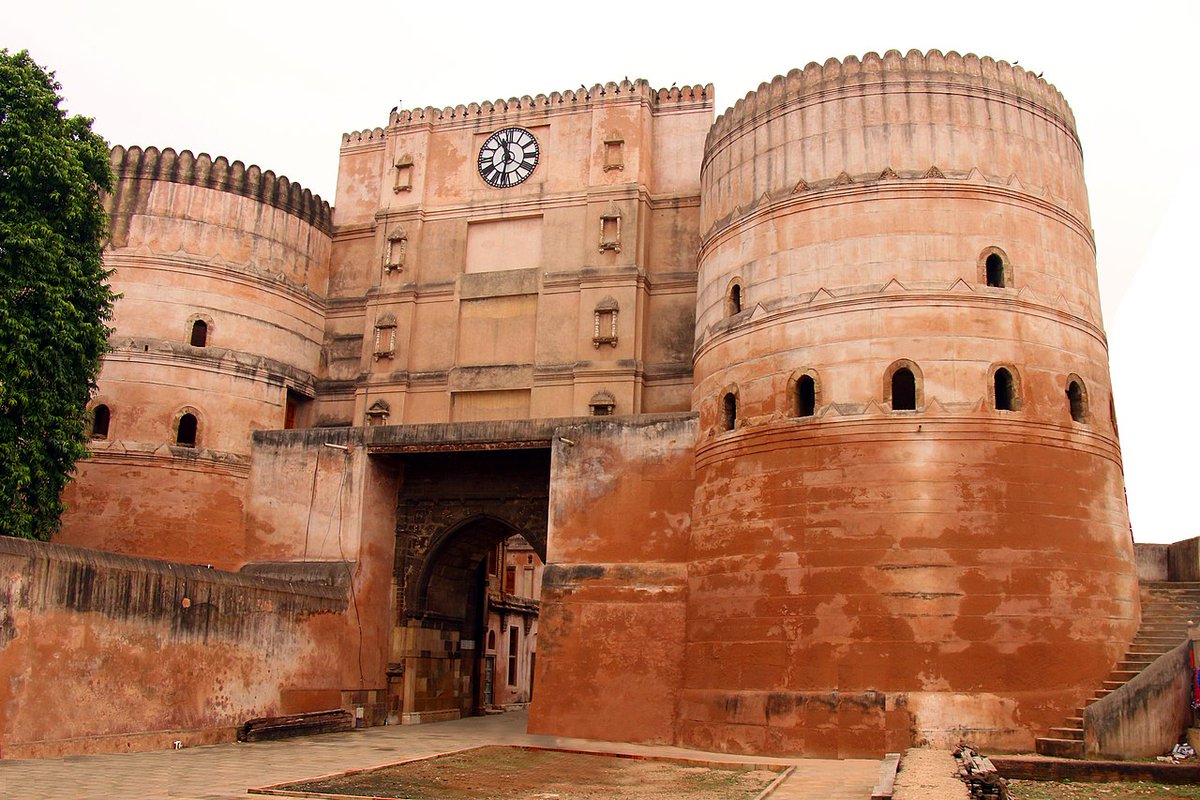
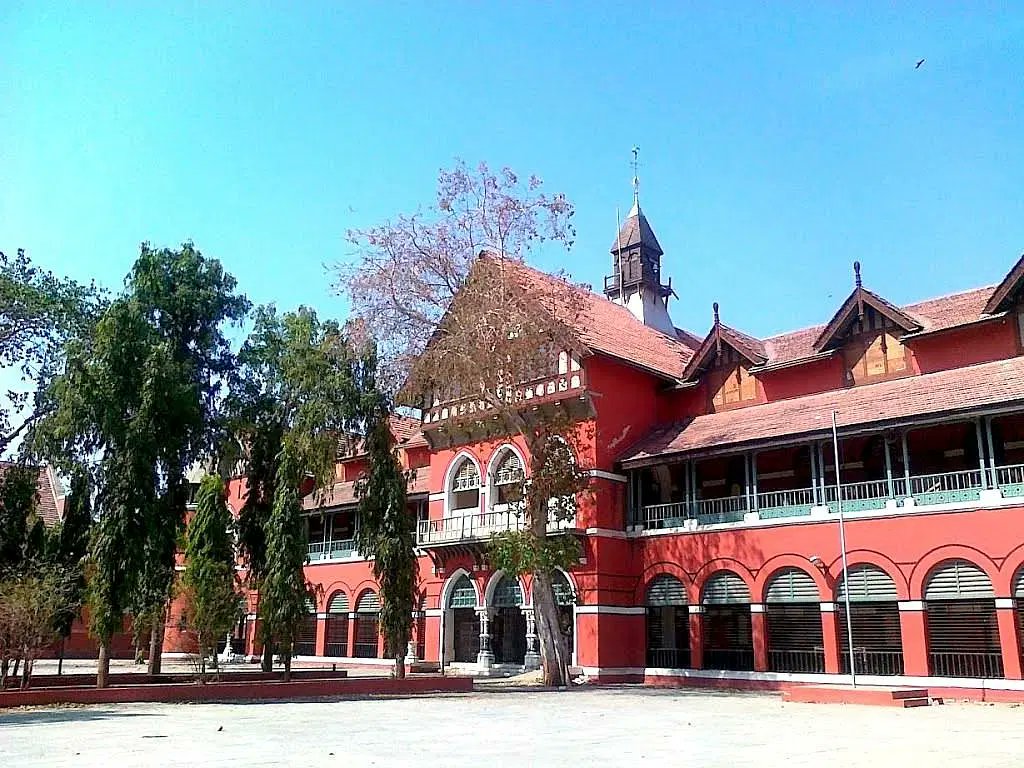
In 1861 AD Gujarat's first college "Gujarat Provincial College" opened at Ahmedabad with public donations. Its monthly cost was Rs 430. In 1861 Gujarat's first law education started at Gujarat Provincial College Ahmedabad. It was a law class attended by students & govt. servants.
In 19 century rich people like mill owners, landlords & lawyers of Ahmedabad first began to live outside old city in Shahibag bungalows.Kasturbhai Lalbhai was top rich.His ancestor famous Nagarsheth Shantidas Zaveri built grand Chintamani Jain temple in Saraspur Ahmedabad in 1638
Population of Ahmedabad: In Sultnat & Mughal time 5 to 7 lakh,in end of Maratha rule in 1818 it was 80000,in British rule it 116873 in 1872. As per first census 1872 AD population of Ahmedabad was 116873 of which Hindu 92619, Muslim 23491, Parsi 446, Jew 40, Christ.264, Others 13
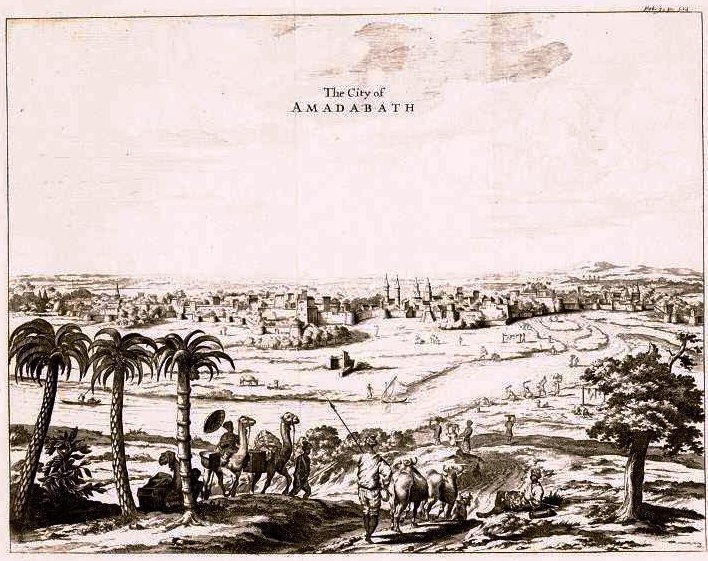
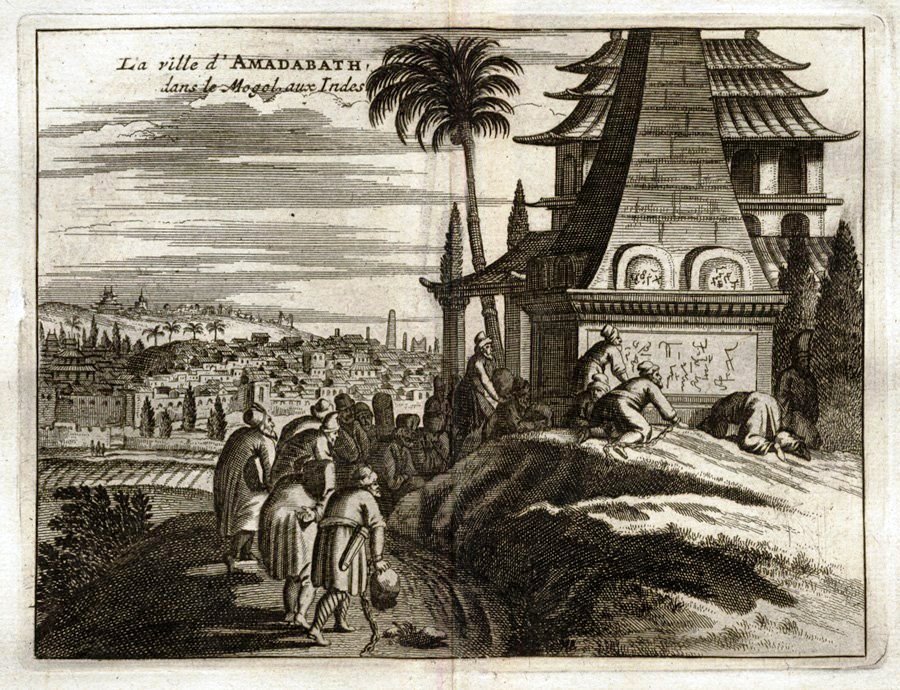
333 years old rare drawing of a view of 17th century Ahmedabad was drawn by a Dutch artist in 1690 AD.
My article on Kankaria Talav (lake) of Ahmedabad was published in the leading Gujarati newspaper 'Divya Bhaskar'.
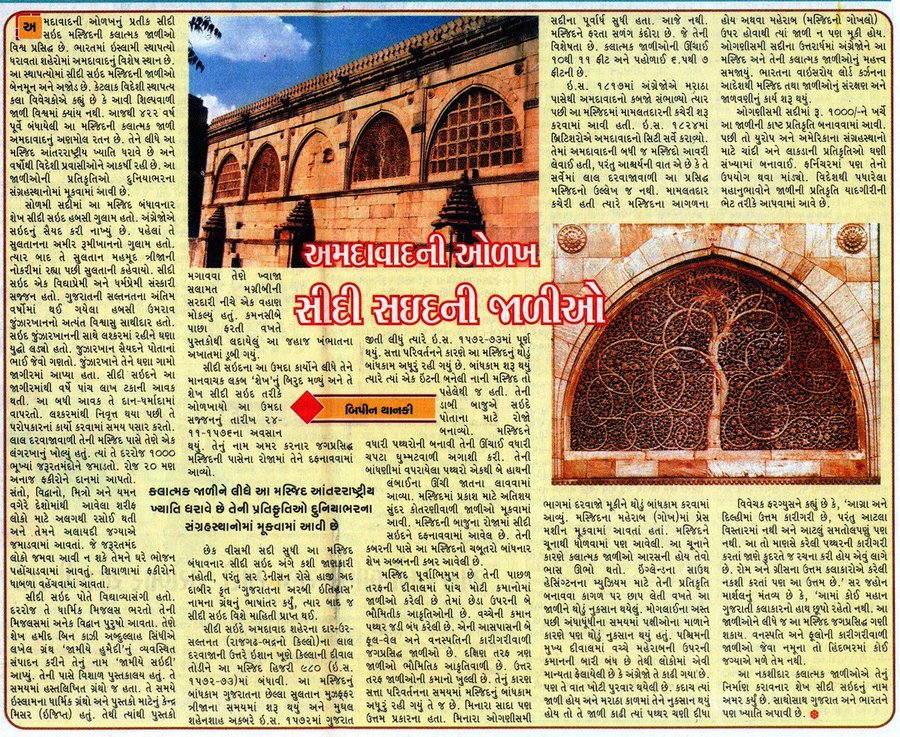
My article on 'Sidi Saeed Ni Jali' - an identity of Ahmedabad was published in the leading Gujarati newspaper 'Divya Bhaskar'.
This tweet thread on the history of Ahmedabad is ended.
Loading suggestions...