

1/10
Citibank apparently has an interesting research piece on the similarities between China’s economy today and Japan's of the late 1980s and early 1990s: "Back in 2003," the FT notes, "Japan could no longer fool itself that all was well."
ft.com
Citibank apparently has an interesting research piece on the similarities between China’s economy today and Japan's of the late 1980s and early 1990s: "Back in 2003," the FT notes, "Japan could no longer fool itself that all was well."
ft.com

2/10
It continues: "The 1990s had pitched the country off a trajectory on which it once seemed capable of overtaking the US. Its subsequent mishandling of the bad loan mountain built during its 1980s vainglory days put paid to the notion that the country could easily recover."
It continues: "The 1990s had pitched the country off a trajectory on which it once seemed capable of overtaking the US. Its subsequent mishandling of the bad loan mountain built during its 1980s vainglory days put paid to the notion that the country could easily recover."
3/10
The China-Japan comparisons have come thick and fast in the past two years, as similarities become increasingly clear, but to those who were thinking of China's development model within its historical context, it was obvious well over a decade ago.
The China-Japan comparisons have come thick and fast in the past two years, as similarities become increasingly clear, but to those who were thinking of China's development model within its historical context, it was obvious well over a decade ago.
4/10
By the mid 2000s we could see that the major Japanese imbalances of the 1990s that led to the "lost decades" – mainly the suppressed domestic consumption (or artificially high savings) that forced the economy to rely excessively on trade surpluses and investment in...
By the mid 2000s we could see that the major Japanese imbalances of the 1990s that led to the "lost decades" – mainly the suppressed domestic consumption (or artificially high savings) that forced the economy to rely excessively on trade surpluses and investment in...
5/10
non-productive projects – had been taken to even greater extremes in China than they had in Japan. The result was the same unleashing of the self-reinforcing process of surging credit creating asset and investment bubbles that then justified the surging credit.
non-productive projects – had been taken to even greater extremes in China than they had in Japan. The result was the same unleashing of the self-reinforcing process of surging credit creating asset and investment bubbles that then justified the surging credit.
6/10
The article implies that part of the problem for Japan was that Tokyo mismanaged the adjustment process, and while it probably did, it did so for political-economy reasons that made it almost impossible to do otherwise.
The article implies that part of the problem for Japan was that Tokyo mismanaged the adjustment process, and while it probably did, it did so for political-economy reasons that made it almost impossible to do otherwise.
7/10
The only way to "resolve" bad debt, for example, is to allocate the costs directly or indirectly to some sector or other of the economy. This is an extremely political process, which is why if the debt burden is large enough it is never done in an economically efficient way.
The only way to "resolve" bad debt, for example, is to allocate the costs directly or indirectly to some sector or other of the economy. This is an extremely political process, which is why if the debt burden is large enough it is never done in an economically efficient way.
8/10
What is more, after decades of these imbalances, the economy is locked into a process (explained by Hyman Minsky) in which the operations and balance sheets of households, businesses and governments must incorporate an implicit bet on the continuation of these imbalances.
What is more, after decades of these imbalances, the economy is locked into a process (explained by Hyman Minsky) in which the operations and balance sheets of households, businesses and governments must incorporate an implicit bet on the continuation of these imbalances.
9/10
And over time, as certain constituencies benefitted disproportionately from the imbalances (in ways Albert Hirschman described) the country's business, financial and political institutions and elites also became structured around the continuation of the model.
And over time, as certain constituencies benefitted disproportionately from the imbalances (in ways Albert Hirschman described) the country's business, financial and political institutions and elites also became structured around the continuation of the model.
10/10
"Managing" the adjustment effectively, i.e. reversing the sources of the original imbalances, requires, in other words, frictionless politics and a frictionless financial system. That is probably why no country has ever managed the adjustment well.
"Managing" the adjustment effectively, i.e. reversing the sources of the original imbalances, requires, in other words, frictionless politics and a frictionless financial system. That is probably why no country has ever managed the adjustment well.
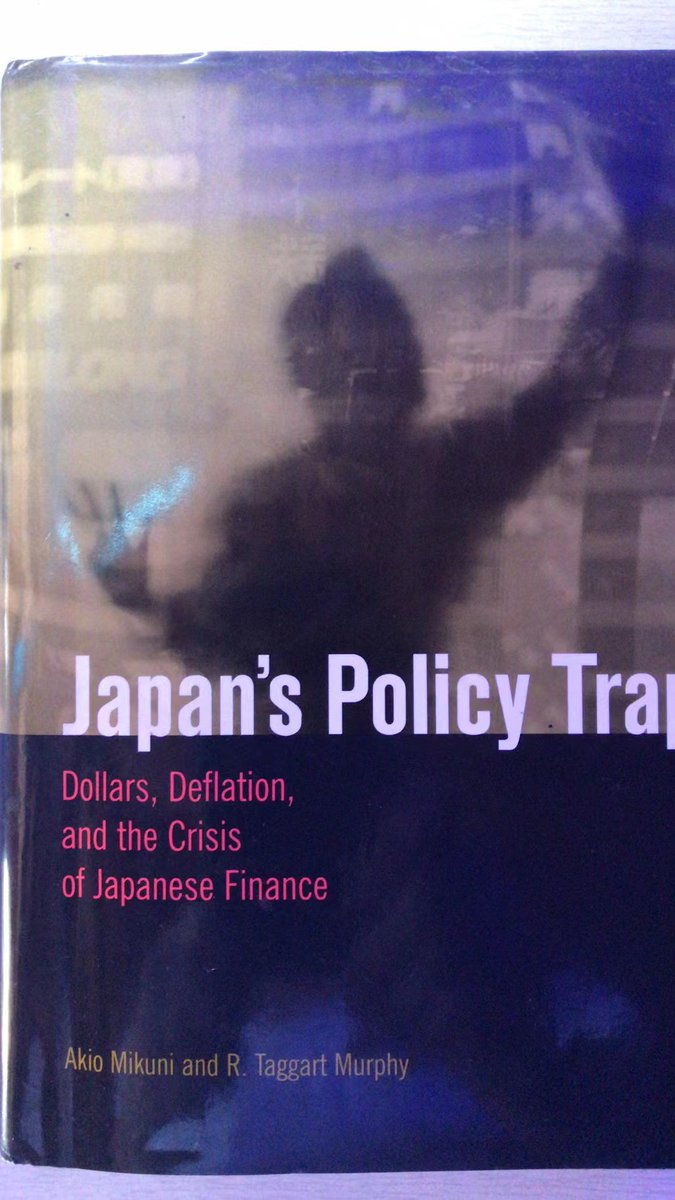
Many people have asked me to recommend relevant books about the Japanese economy. There are dozens of very good books, but here is one I especially liked:
Loading suggestions...