

New research suggests that, if it is not careful, China may be on track for a new wave of Japanification.
ft.com
ft.com
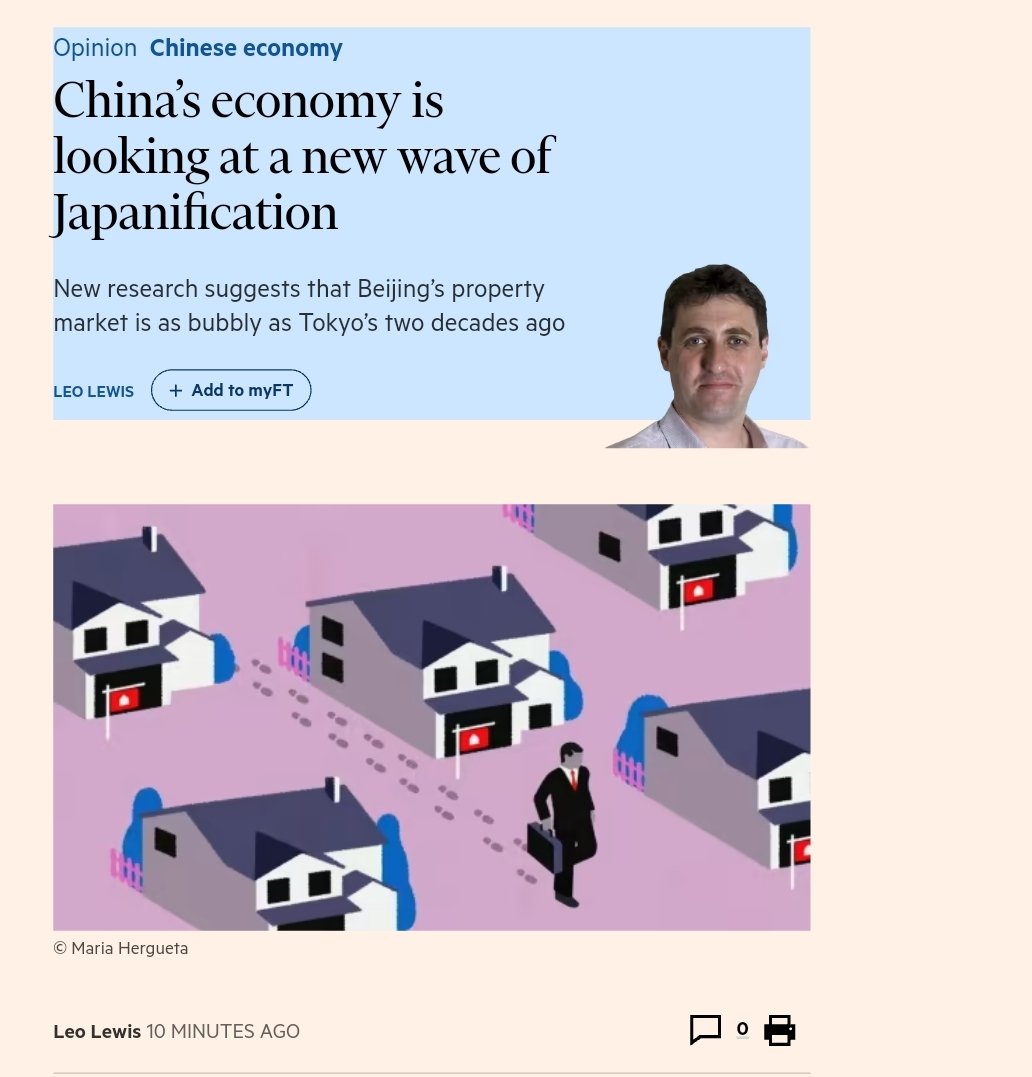
The 1990s had pitched Japan off a trajectory on which it once seemed capable of overtaking the US. Its subsequent mishandling of the bad loan mountain built during its 1980s vainglory days put paid to the notion that the country could easily recover.
China today looks “strikingly similar” to Japan in its post property bubble era. Their respective demographic profiles, with China’s population now shrinking, provide a reminder that after 1990, Japan’s housing price index fell as the 35- to 54-year-old cohort decreased.
Between 2010 and 2020, capital formation represented an average 43% of Chinese GDP growth, according to the World Bank. When its bubble burst in 1990, Japan’s capital formation proportion was at roughly 36%, and considered very high.
China’s clearly bubbly property market, Citi estimates, hit $65 trillion by 2020, exceeding that of the US, EU and Japan combined.
By 2021, 41% of the total assets in China’s banking system were accounted for by property-related loans and credit.
By 2021, 41% of the total assets in China’s banking system were accounted for by property-related loans and credit.
Citi analysts even see a parallel between the two nations’ relationships with the US.
As Japan’s trade surplus ballooned, competitive friction with America escalated to an outright trade war in the 1980s, with technology, intellectual property and security concerns at its heart.
As Japan’s trade surplus ballooned, competitive friction with America escalated to an outright trade war in the 1980s, with technology, intellectual property and security concerns at its heart.
The future is not pretty.

Projection of the population of
India,
China,
United States
Japan
2022-2100
India,
China,
United States
Japan
2022-2100

#Japan: The number of deaths was nearly double that of births. The number of newborns fell 5.1% to 799,728 in 2022.
A record 1,582,033 people, including foreigners living in Japan and Japanese citizens living abroad, died last year.
A record 1,582,033 people, including foreigners living in Japan and Japanese citizens living abroad, died last year.
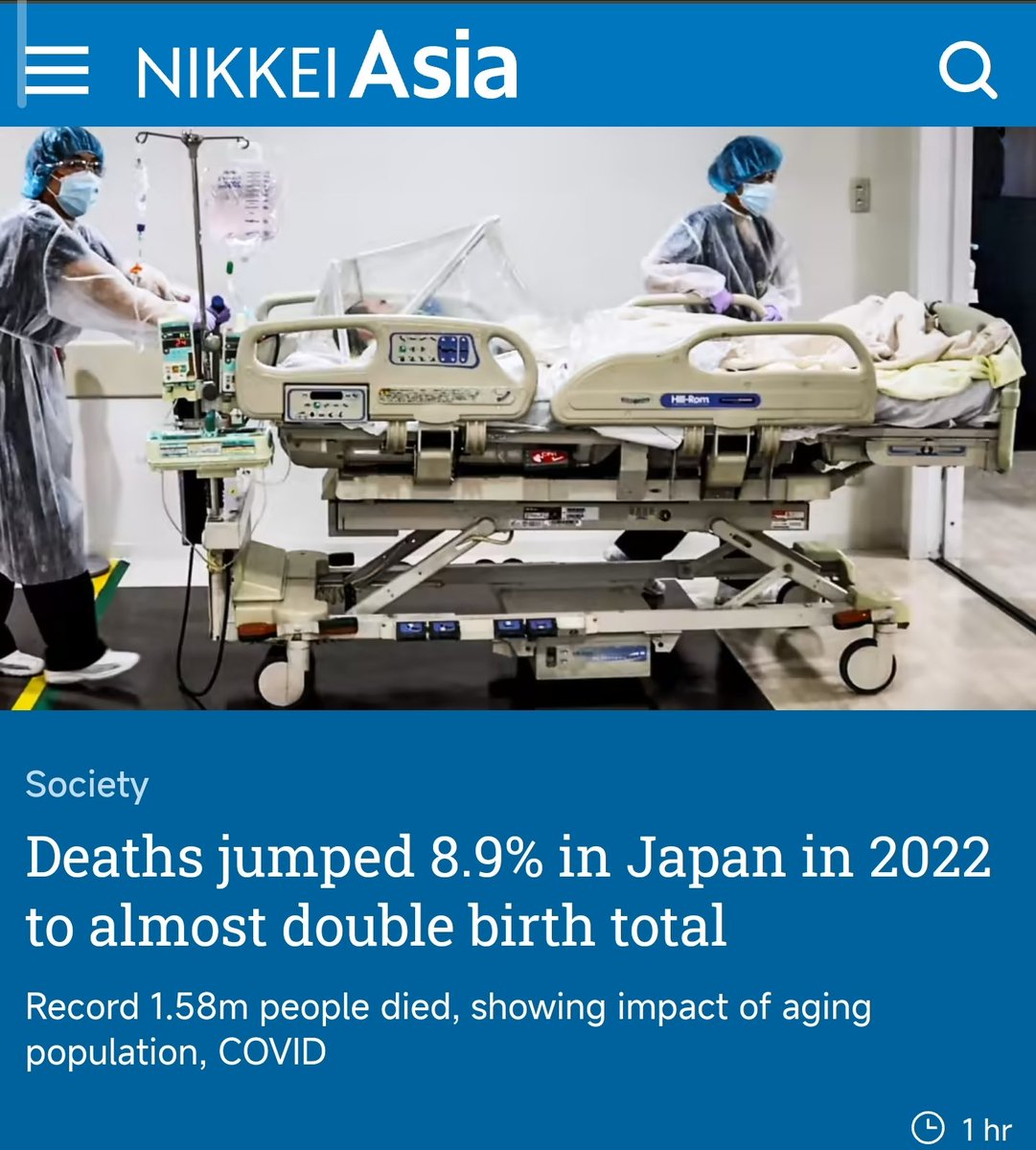
Japan birth rate: A new government agency will be set up in April to focus on the issue, with Kishida saying in January that he wants the government to double its spending on child-related programs.
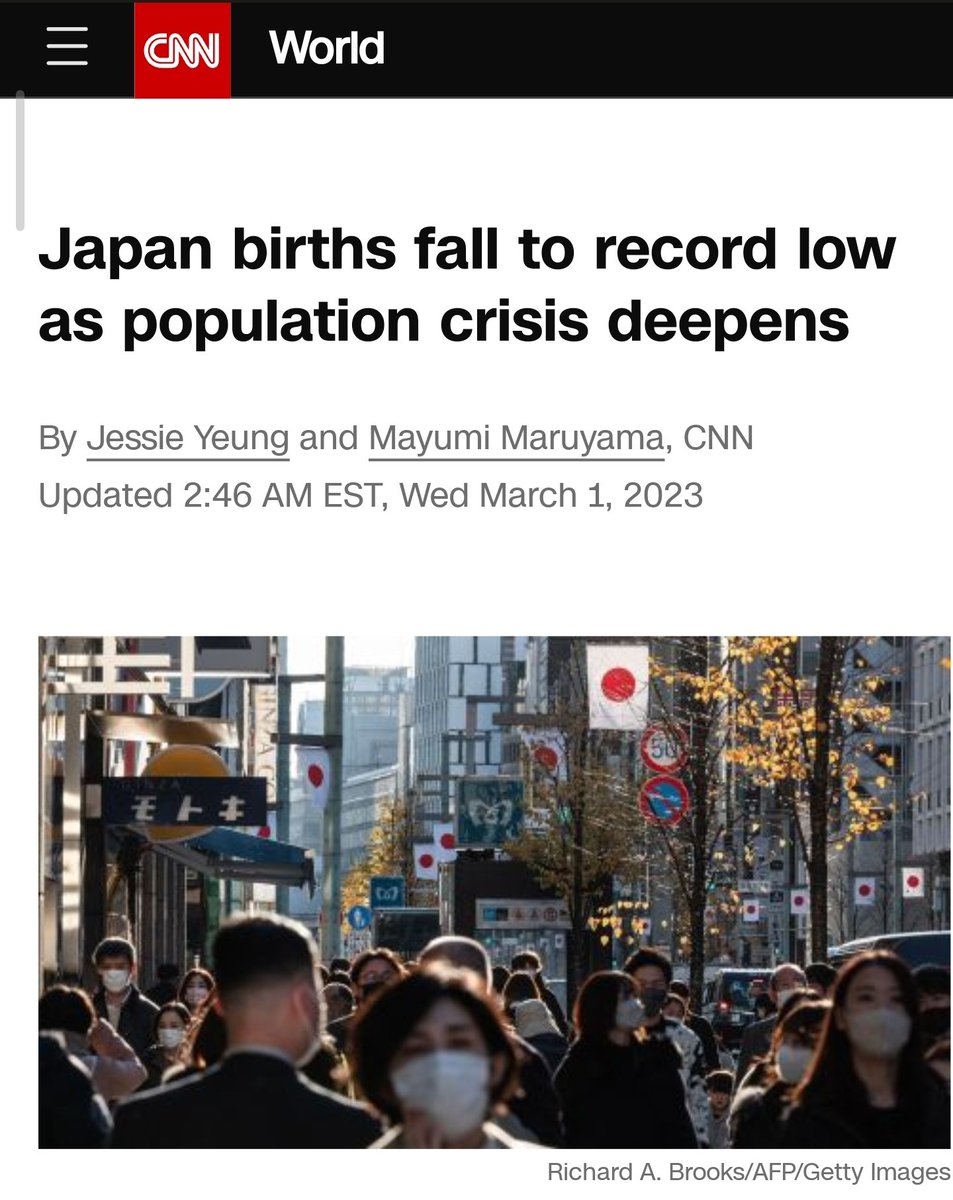
Attitudes toward marriage and starting families have also shifted in recent years, with more couples putting off both during the pandemic – and young people feeling increasingly pessimistic about the future.
The average real annual household income declined from 6.59 million yen ($50,600) in 1995 to 5.64 million yen ($43,300) in 2020, according to 2021 data from the Ministry of Health, Labor and Welfare.
Loading suggestions...