

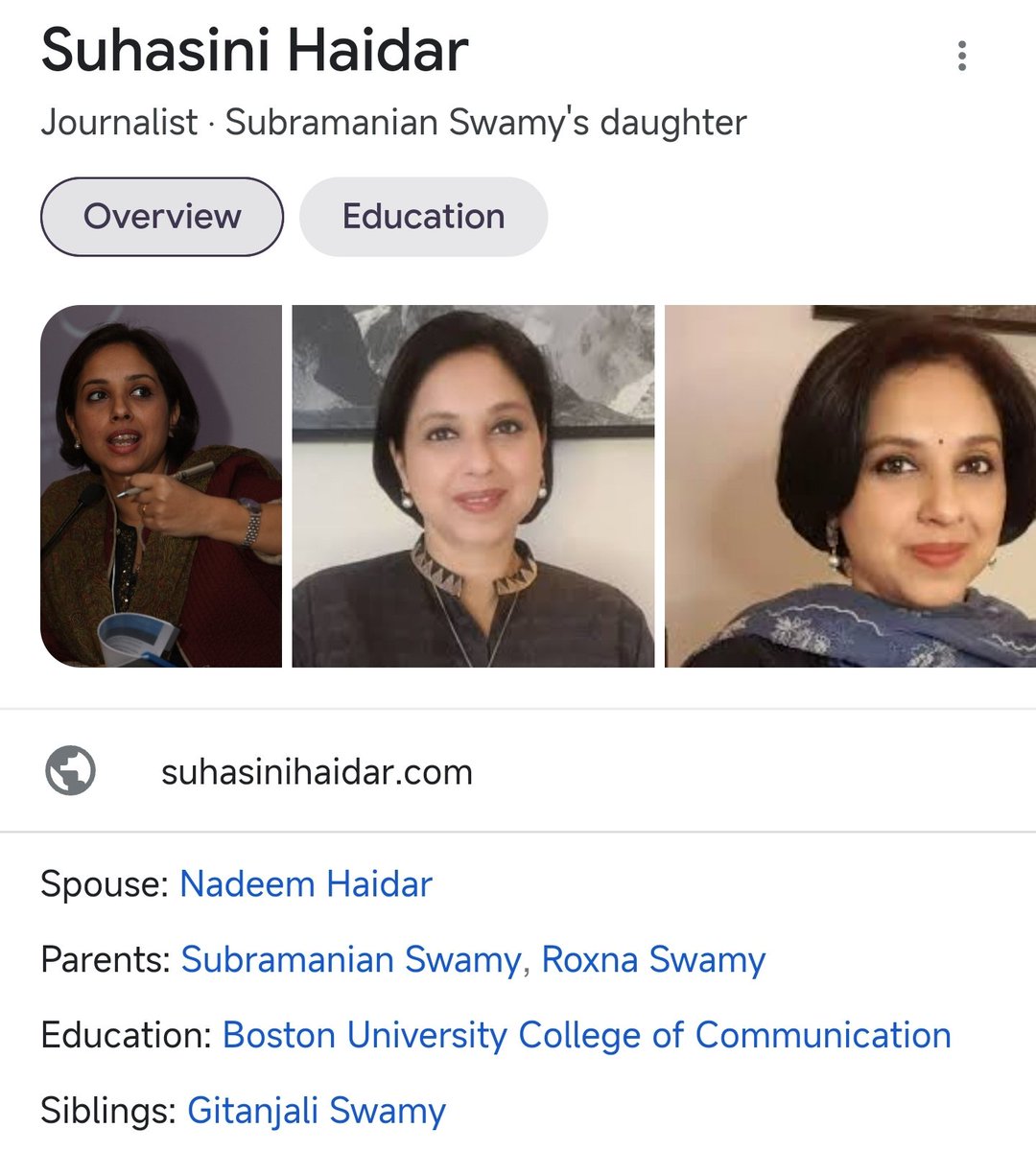
So The Hindu's Suhasini Haidar is actually Subramanian Swamy's daughter.
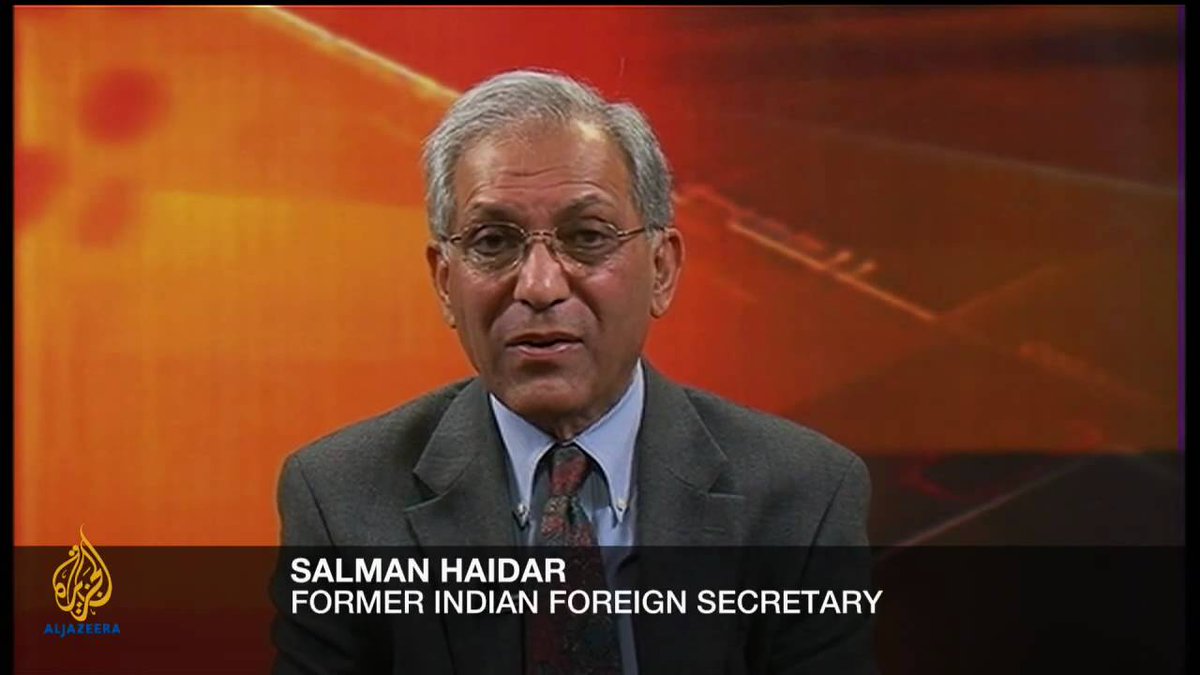
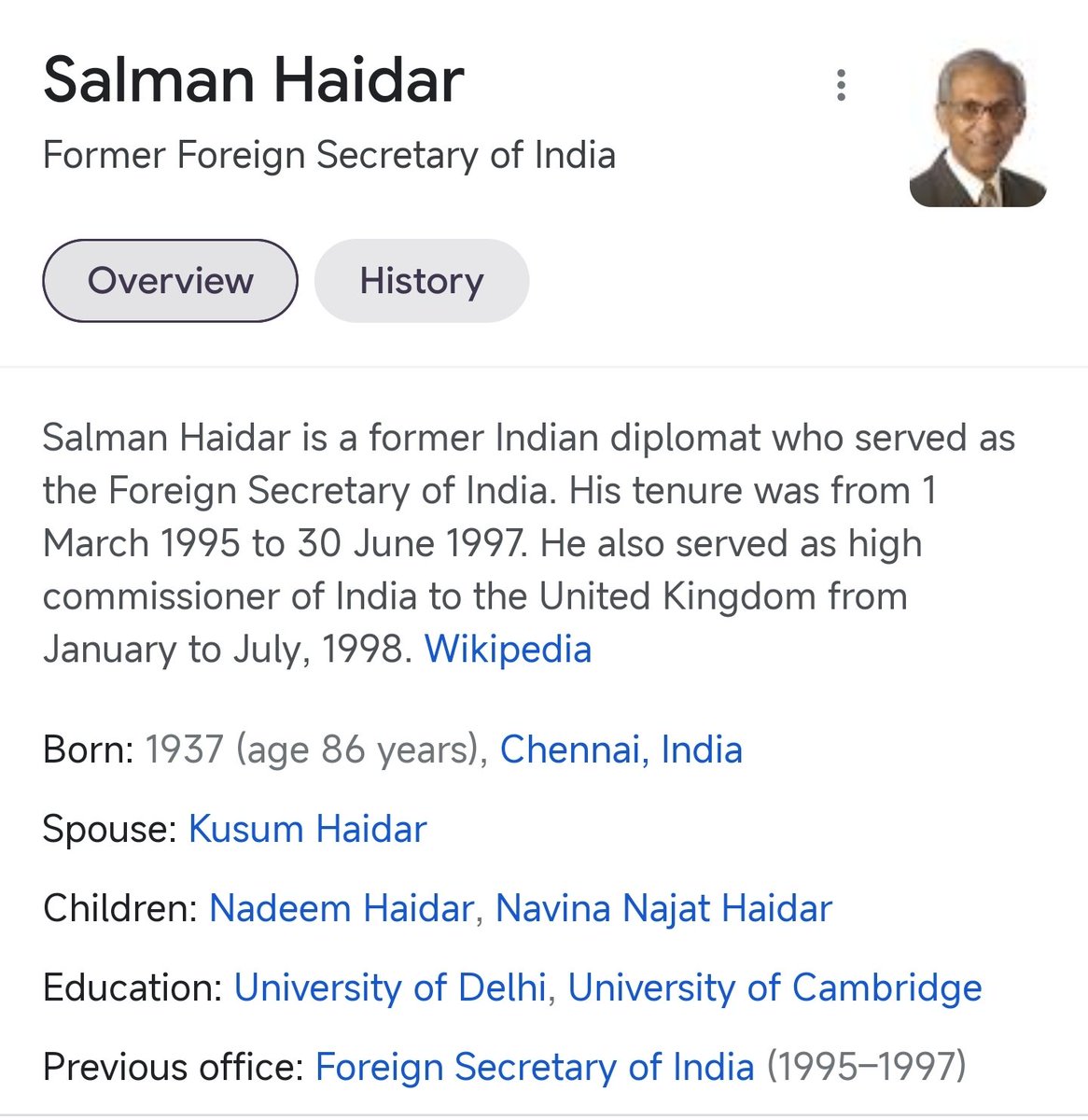
Salman Haidar, her father-in-law, served as India's foreign secretary between 1995 and 1997.
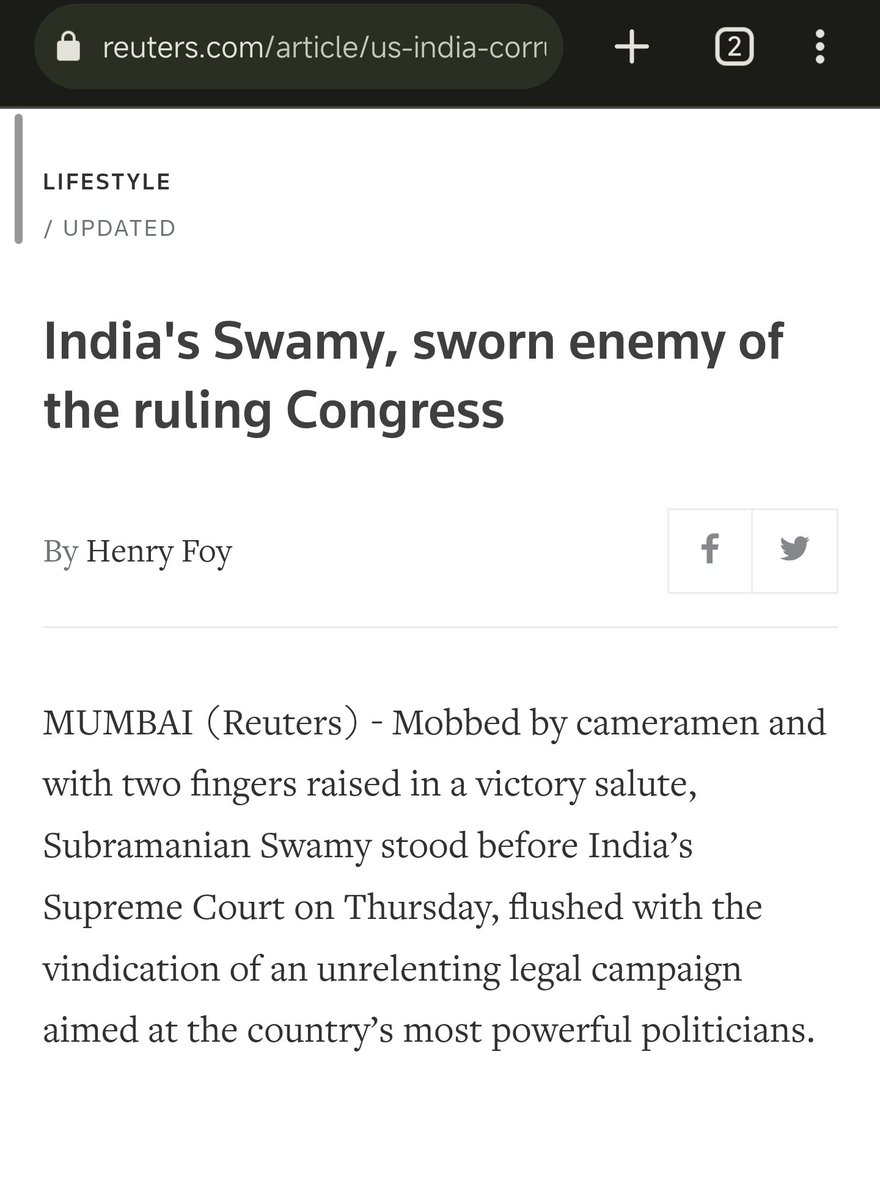
Swamy “is a muckraker par excellence. He can hurl abuses, he can talk through his hat, attack iconic national leaders and get away with it all.”

“A celebrated economist and noted foreign policy expert, Swamy is perhaps best known as a peddler of conspiracy theories that range from the sublime to the ridiculous.”
(Reuters story in 2012 by Henry Foy)
reuters.com
(Reuters story in 2012 by Henry Foy)
reuters.com

A trail-blazing economist with a PhD from Harvard, Swamy saw his radical policy proposals discredited by Indira Gandhi, who reportedly described him as a “Santa Claus with unrealistic ideas” and expelled him from the IIT.
Indira Gandhi rode to power in the 1971 Lok Sabha (lower house of India's parliament) elections on a pro-poor development platform. Her slogan of 'Garibi Hatao' resonated with the masses and was instrumental to her increasing popularity.
During the Emergency, the government had banned the Rashtriya Swayamsevak Sangh (RSS) and several volunteers were detained under Maintenance of Internal Security Act (MISA) and Defence of India Rules (DIR).
Swamy fled to the United States during the emergency rule, only to flout an arrest warrant against him to attend a parliamentary session in New Delhi, cementing his name in opposition folklore.
The undisputed king of India’s right-wing blogosphere, his rumination on the alleged mental illnesses of Rahul Gandhi, Sonia’s son and the Congress heir-apparent, spread like wildfire.
Harvard stripped Swamy of his teaching duties in 2011 after he wrote an opinion piece that called for the destruction of mosques and the disenfranchising of non-Hindus.
“Some Congress sympathizers accuse Swamy of nurturing an irrational hatred for the Gandhis. In fact, they claim that all this is a result of his militant Hinduism.”
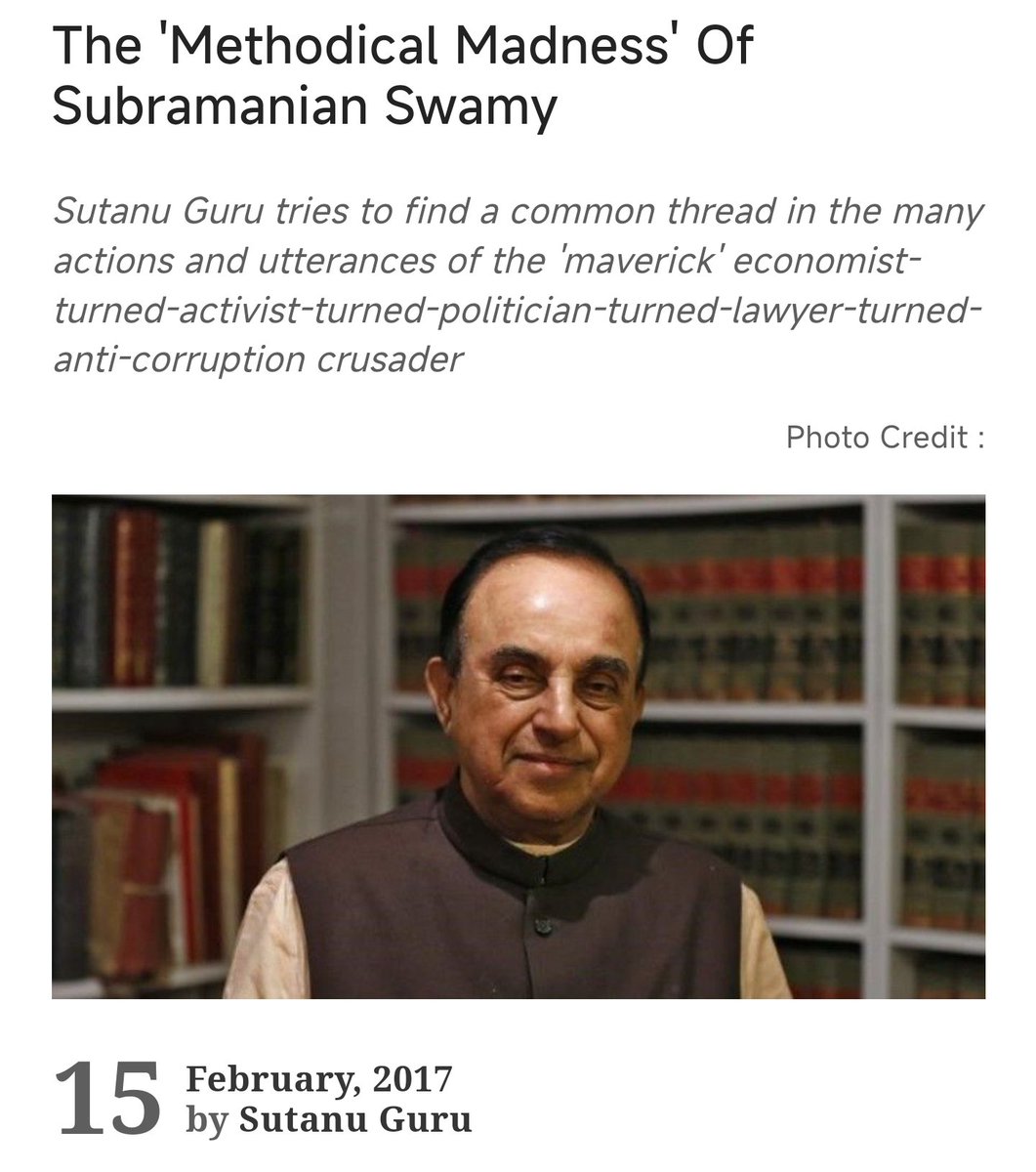
Swamy has seen it all in India and fought with them all.
google.com
google.com
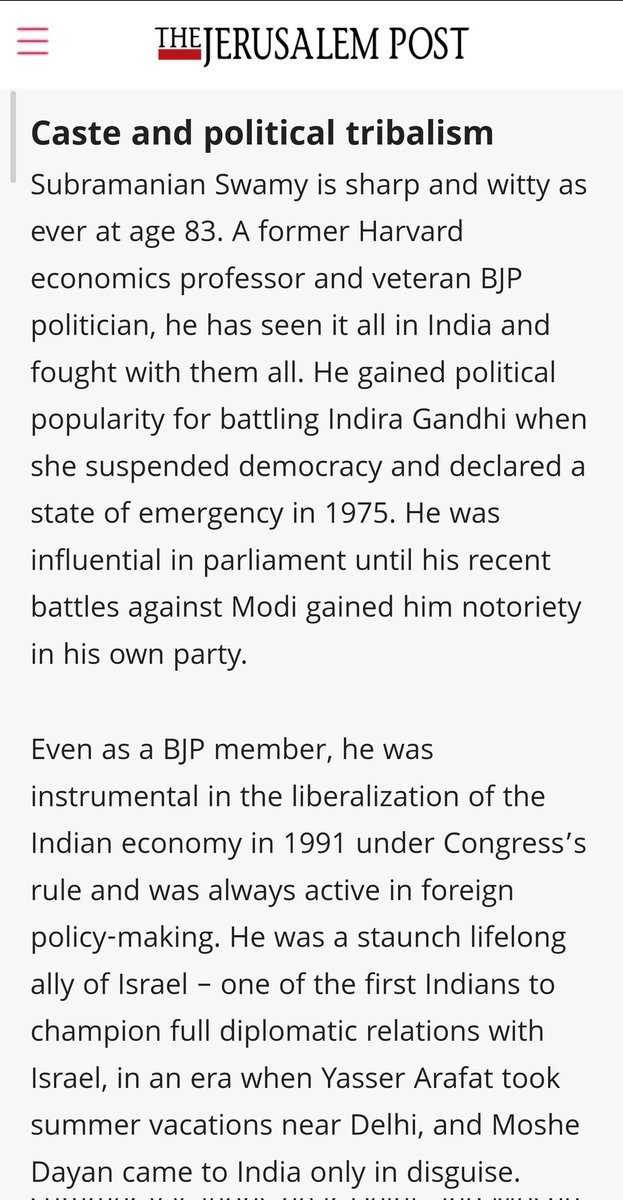

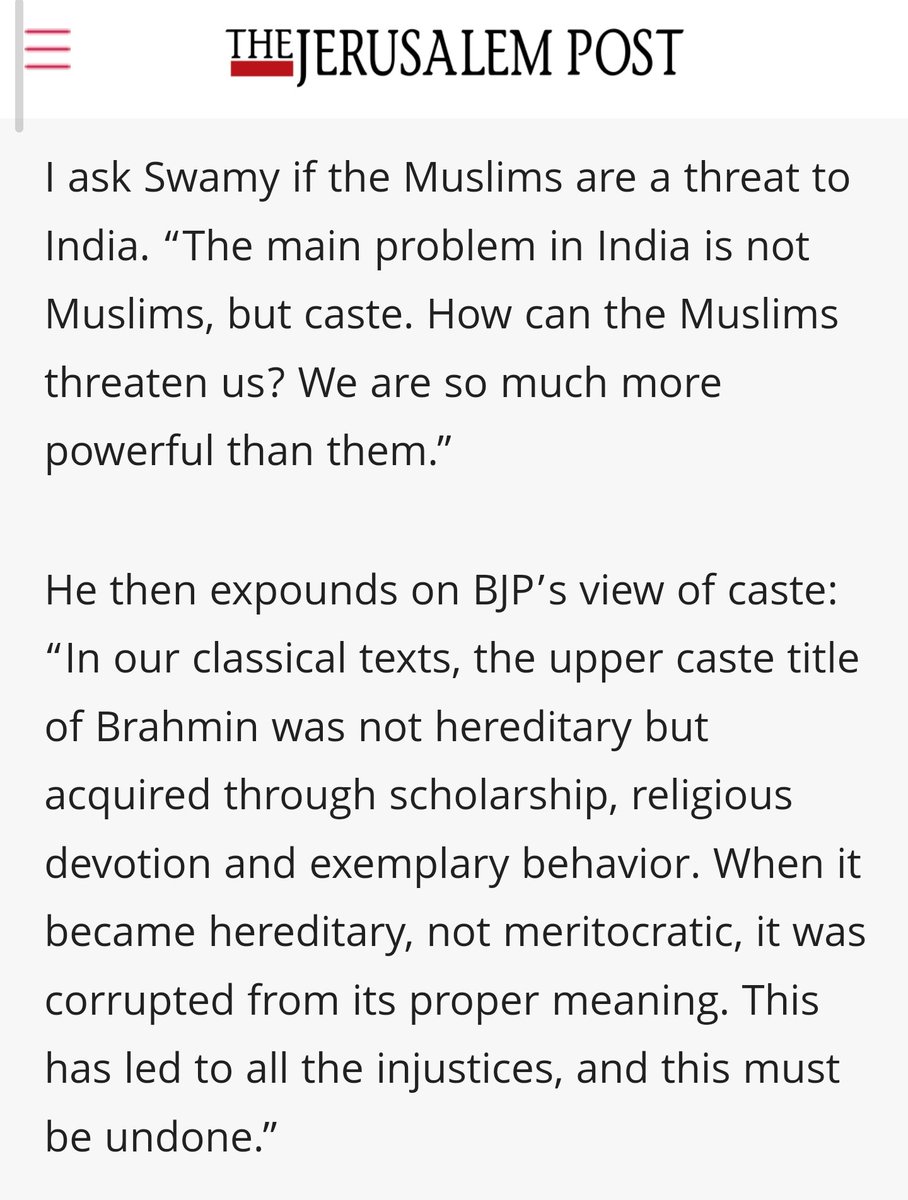
“BJP leaders know Muslims won’t vote for them, so they court lower caste votes.”
“Swamy sneers at Modi’s economic populism and calls out the economists surrounding him as sycophants who know the truth but won’t say it. He dreams of Indian grandeur, but his activism leads him not only to champion the rights of Hindu temples but also free market economics.”
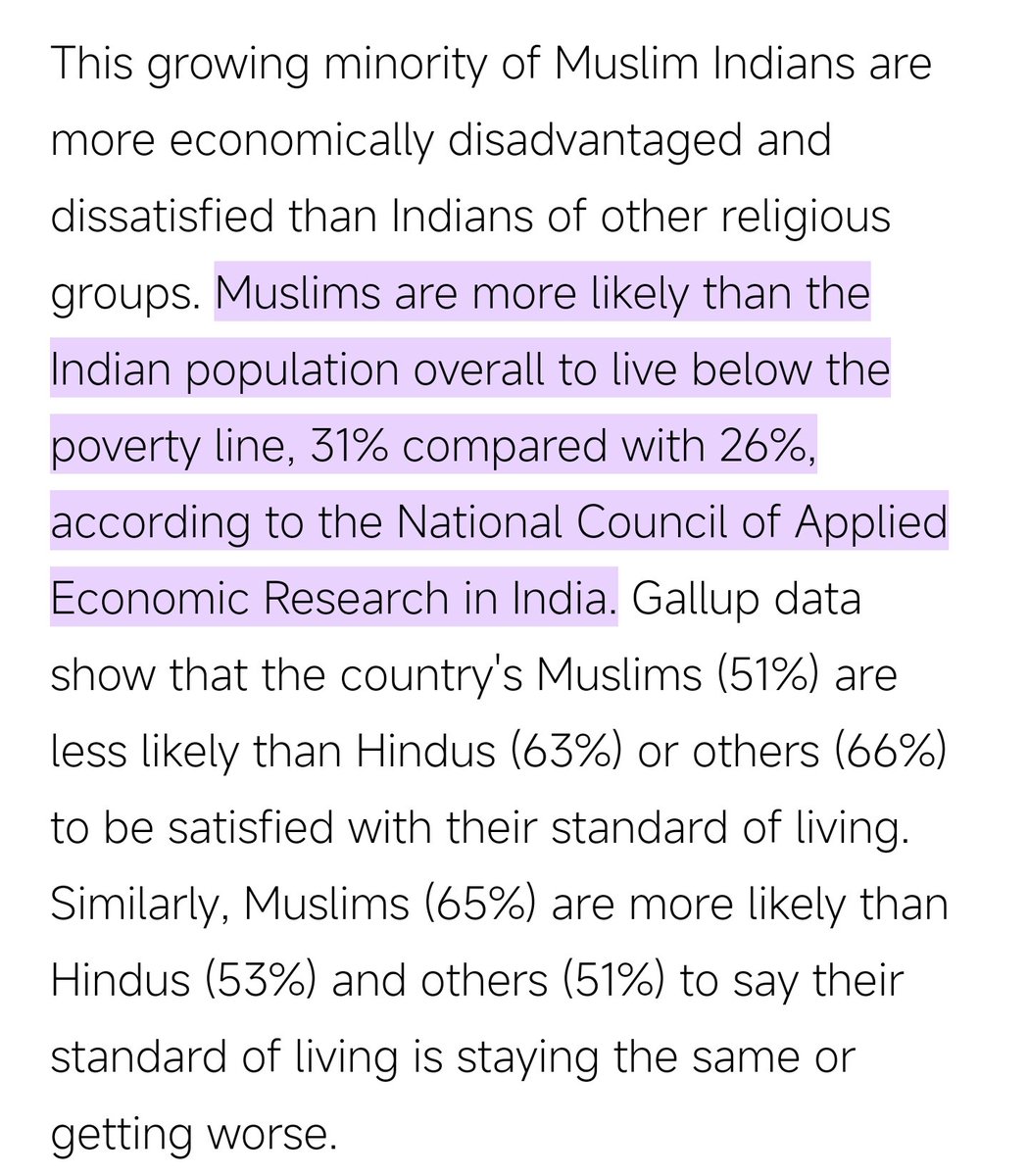
Muslims are more likely than the Indian population overall to live below the poverty line.
Previous research has shown that the Muslim community has the lowest rate of enrollment in higher education in India, accounting for just 4.4% of students.

“Dominant land-owning agricultural castes hold key positions in society using their economic, political, and social capital. Further dominance in politics continues the cycle of wealth accumulation.”
onlinelibrary.wiley.com
onlinelibrary.wiley.com
The estimates of rural poverty were as follows: Muslim Dalits (52.5%), Hindu Dalits (51.9%), Muslim OBCs (38.2%), Hindu OBCs (38.0%), and Muslim General (31.3%). These are much higher compared to the Hindu General (14.4%).
Loading suggestions...