

🖖✋A show of hands: upper limb apraxia types and assessment. 🧠🧵
#Neurology
#Neurotwitter
#Apraxia
#Teaching
👌🥸
1/🧵
#Neurology
#Neurotwitter
#Apraxia
#Teaching
👌🥸
1/🧵

Disclaimer 🚨⚠️
This tweetorial is based on a great chaper from this amazing book. ⬇️👇
2/🧵
This tweetorial is based on a great chaper from this amazing book. ⬇️👇
2/🧵

But first....what is apraxia?
"disturbances in learned skilled movements due to a cognitive defect in motor programming, such as errors in pantomiming brushing one’s teeth or gesturing “good-bye." 🤔
3/🧵
"disturbances in learned skilled movements due to a cognitive defect in motor programming, such as errors in pantomiming brushing one’s teeth or gesturing “good-bye." 🤔
3/🧵
🦪To properly assess praxis:
1️⃣ Exclude other cogntiive deficits (language and attention) 🗣️
2️⃣ Exclude primary motor or sensory deficits 💪
3️⃣ Observe for any unusual posturing or movements as some may appear when assessing praxis
4️⃣ Start with verbal commands
4/🧵
1️⃣ Exclude other cogntiive deficits (language and attention) 🗣️
2️⃣ Exclude primary motor or sensory deficits 💪
3️⃣ Observe for any unusual posturing or movements as some may appear when assessing praxis
4️⃣ Start with verbal commands
4/🧵
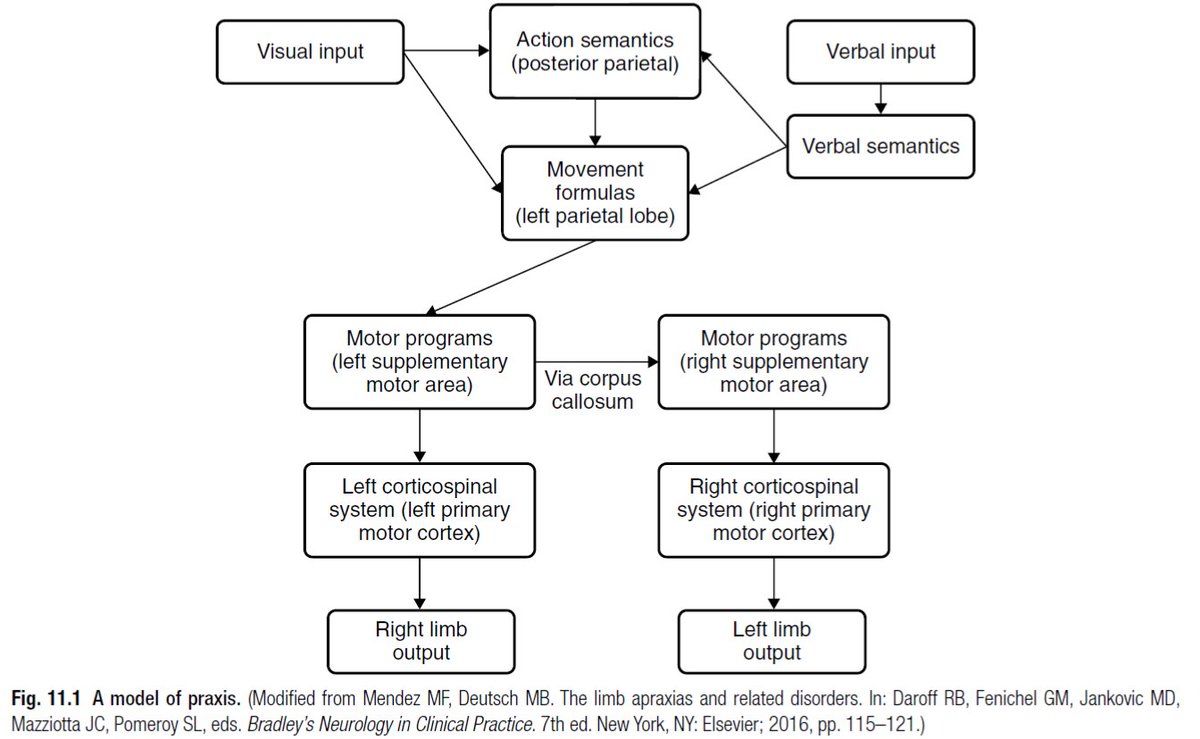
1️⃣ Ideomotor apraxia
🧠No pantomime to verbal command
🪞 No recognition of gestures
5/🧵
🧠No pantomime to verbal command
🪞 No recognition of gestures
5/🧵
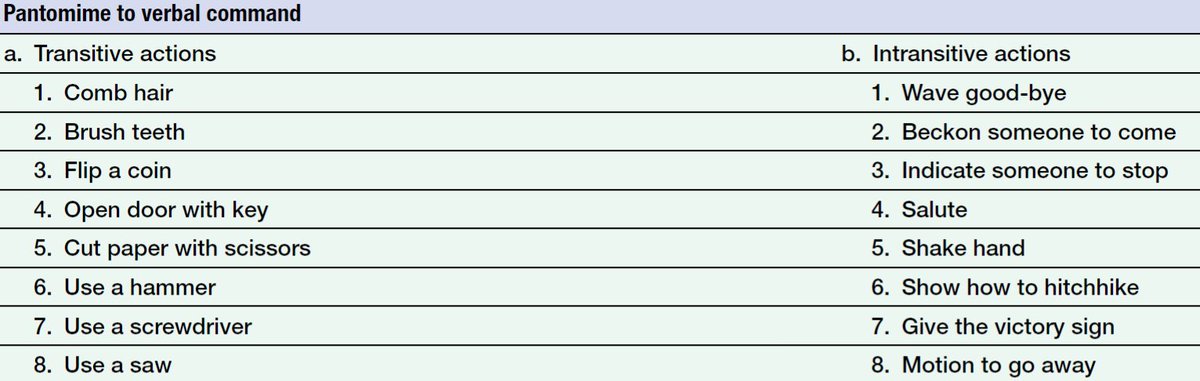
2️⃣ Dissociation Apraxia
No pantomiming on verbal commands
Can imitate and understand gestures 🪞
Aphasia is frequently seen 🗣️
Can imitate meaningless gestures and do well with real object use 👐
6/🧵
No pantomiming on verbal commands
Can imitate and understand gestures 🪞
Aphasia is frequently seen 🗣️
Can imitate meaningless gestures and do well with real object use 👐
6/🧵
3️⃣ Ideational apraxia
Inability to correctly sequence a series of movements in a multistep action. 🪥🥪
Patients cannot order individual gestures, to complete a goal.🥅
7/🧵
Inability to correctly sequence a series of movements in a multistep action. 🪥🥪
Patients cannot order individual gestures, to complete a goal.🥅
7/🧵

4️⃣ Conceptual apraxia
Semantic disorder🧠
Wrong action to command
Wrong action for a tool
Using 🪥 as a 🔨 or a 🥄 as a comb
8/🧵
Semantic disorder🧠
Wrong action to command
Wrong action for a tool
Using 🪥 as a 🔨 or a 🥄 as a comb
8/🧵
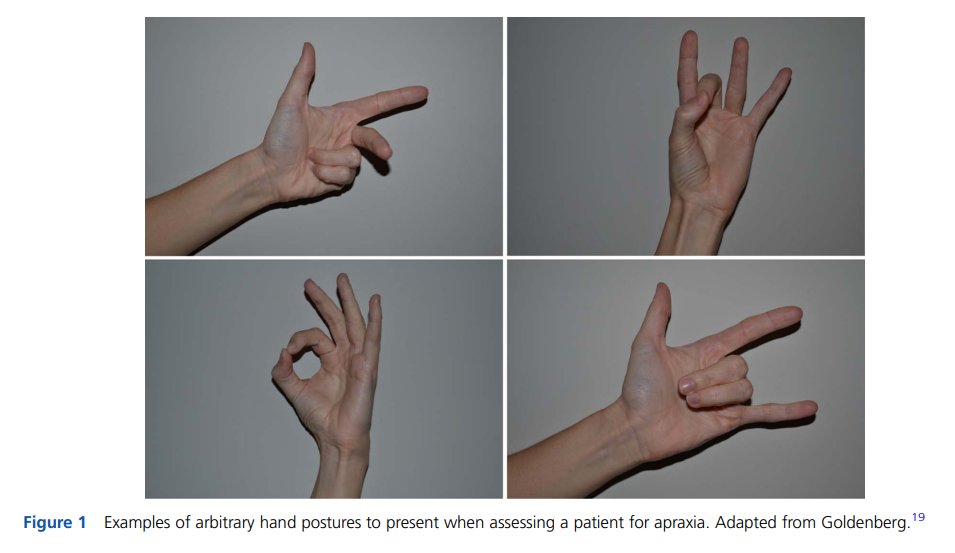
5️⃣ Limb-kinetic apraxia
Finger fine movements 🖐️
How to assess it?
👇
9/🧵
Finger fine movements 🖐️
How to assess it?
👇
9/🧵

Some final considerations
🥇 Most of apraxias affect both extemitires (exceptions exist)
🥈 Most of them are related to left parietal injury
🥉 Dressing apraxia is not an "apraxia" it's a visual-spatial deficit
10/🧵
🥇 Most of apraxias affect both extemitires (exceptions exist)
🥈 Most of them are related to left parietal injury
🥉 Dressing apraxia is not an "apraxia" it's a visual-spatial deficit
10/🧵

Final disclaimer ⚠️
This is only a summary, more types of apraxia exist. The main objective of this 🧵 was to summarize the easieast chapter that I've found (so far) regarding this extensive and complicated (nevertheless fascinating) topic.
11/🧵
This is only a summary, more types of apraxia exist. The main objective of this 🧵 was to summarize the easieast chapter that I've found (so far) regarding this extensive and complicated (nevertheless fascinating) topic.
11/🧵

References:
1.- MF. Mendez. The mental status examination handbook. 1st Edition. Elsevier. 2021. P 119. Praxis.
2.- Pract Neurol. 2016 Aug;16(4):317-22. doi: 10.1136/practneurol-2015-001354
1.- MF. Mendez. The mental status examination handbook. 1st Edition. Elsevier. 2021. P 119. Praxis.
2.- Pract Neurol. 2016 Aug;16(4):317-22. doi: 10.1136/practneurol-2015-001354
Loading suggestions...