

Buying dividend stocks is like buying income.
Anyone can do it, and you can start with as little as $1.
Let me break down dividend investing for you:
Anyone can do it, and you can start with as little as $1.
Let me break down dividend investing for you:
Let's start with the basics:
Companies buy and sell products and services.
Most companies have a goal of offering a product or service to earn a profit (sale price minus all costs to sell the product and run the business).
Companies buy and sell products and services.
Most companies have a goal of offering a product or service to earn a profit (sale price minus all costs to sell the product and run the business).
As a company grows, it requires more capital (inputs like money, labor, and machinery) to continue operations.
Opening stores, hiring employees, and developing products cost money.
Companies can borrow money by selling bonds (debt), or selling ownership of the company (equity).
Opening stores, hiring employees, and developing products cost money.
Companies can borrow money by selling bonds (debt), or selling ownership of the company (equity).
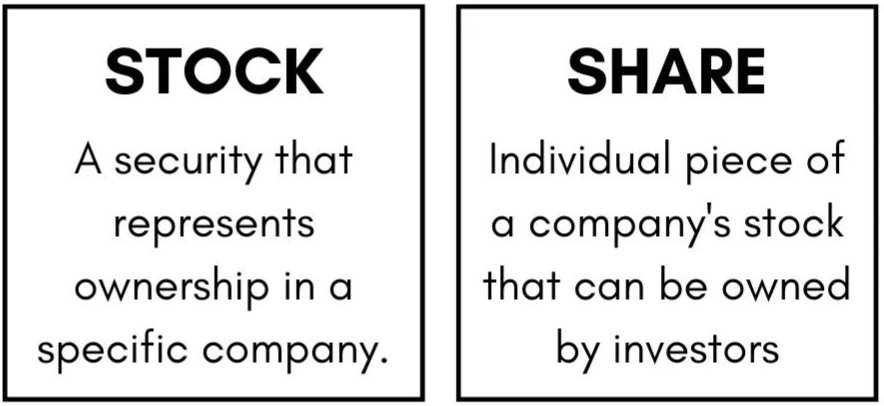
A stock represents ownership in a company (also known as equity).
A share is an individual unit of stock. Shareholders have fractional ownership in a company.
For example, if you bought 1 share of a company with 100 outstanding shares, you would own 1% of the company.
A share is an individual unit of stock. Shareholders have fractional ownership in a company.
For example, if you bought 1 share of a company with 100 outstanding shares, you would own 1% of the company.
Some stocks are only available to be bought by insiders - these are private companies.
Shares of publicly owned companies can be purchased by ANYONE.
Shares of publicly owned companies can be purchased by ANYONE.
Buyers and sellers of public stocks can purchase from and sell to others by participating in the stock market.
The stock market is a network of people coming together to trade ownership in companies.
The stock market is a network of people coming together to trade ownership in companies.
Different stocks are sold on different exchanges. An exchange is like an individual store in which you can purchase specific stocks.
The New York Stock Exchange (NYSE) is the world's largest stock exchange. It's known for listing stocks of well-known, established companies.
The New York Stock Exchange (NYSE) is the world's largest stock exchange. It's known for listing stocks of well-known, established companies.
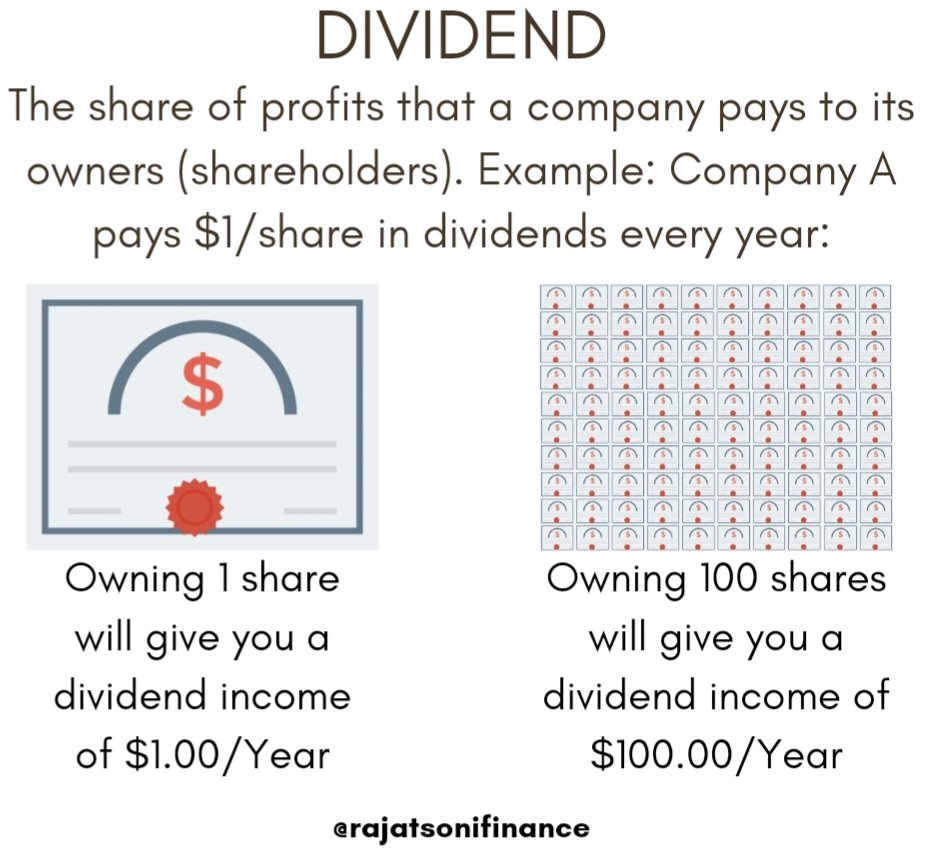
Some companies give their shareholders a share of their profits. This share of profits is called a dividend.
If you hold 1% of a company, you are entitled to 1% of their payout as a dividend.
Dividend investing means buying shares of companies that pay a dividend.
If you hold 1% of a company, you are entitled to 1% of their payout as a dividend.
Dividend investing means buying shares of companies that pay a dividend.
Every company pays a different dividend.
CIBC, a Canadian Bank, pays a 5.27% dividend to its shareholders every year.
This means for every $100 invested in its stock, shareholders will receive $5.27.
Amazon, the world's largest retailer, pays no dividends.
CIBC, a Canadian Bank, pays a 5.27% dividend to its shareholders every year.
This means for every $100 invested in its stock, shareholders will receive $5.27.
Amazon, the world's largest retailer, pays no dividends.
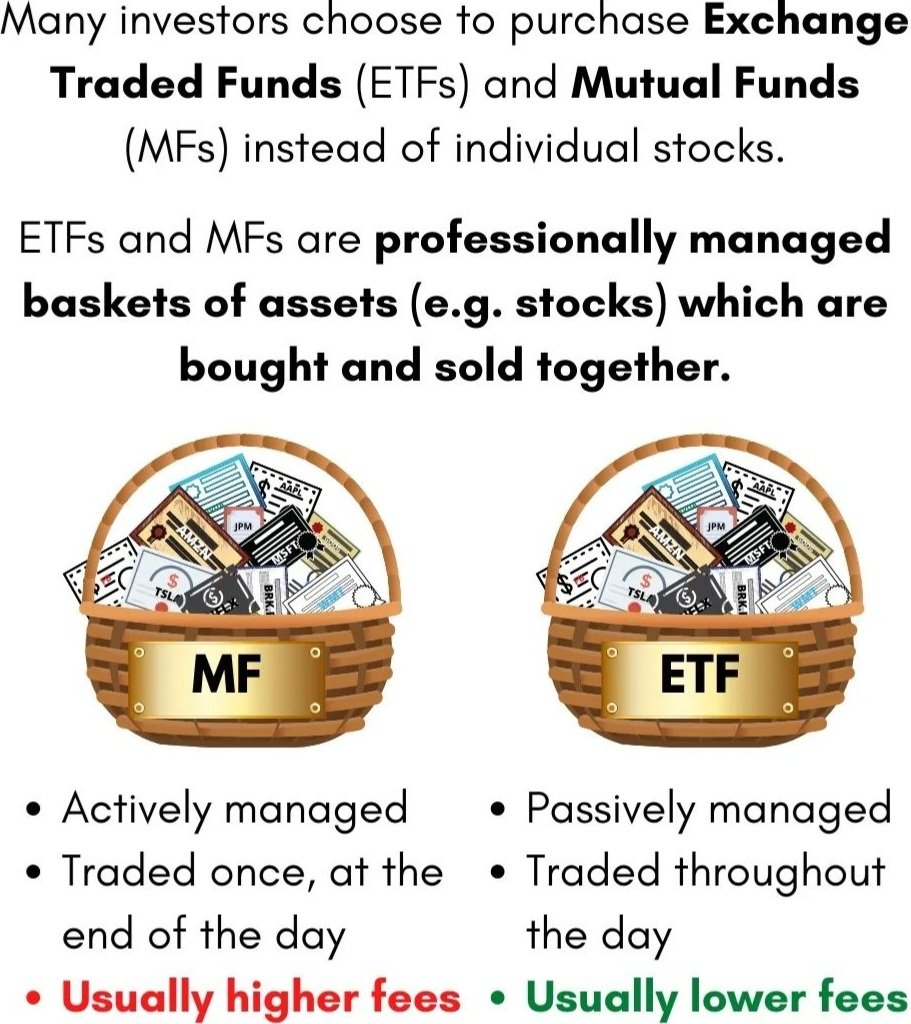
Dividend investing can be done by purchasing exchange traded funds (ETFs) or by purchasing shares of individual companies.
An ETF is a basket of securities based on a certain criteria. You can buy an ETF that only holds stocks with a high dividend yield.
An ETF is a basket of securities based on a certain criteria. You can buy an ETF that only holds stocks with a high dividend yield.
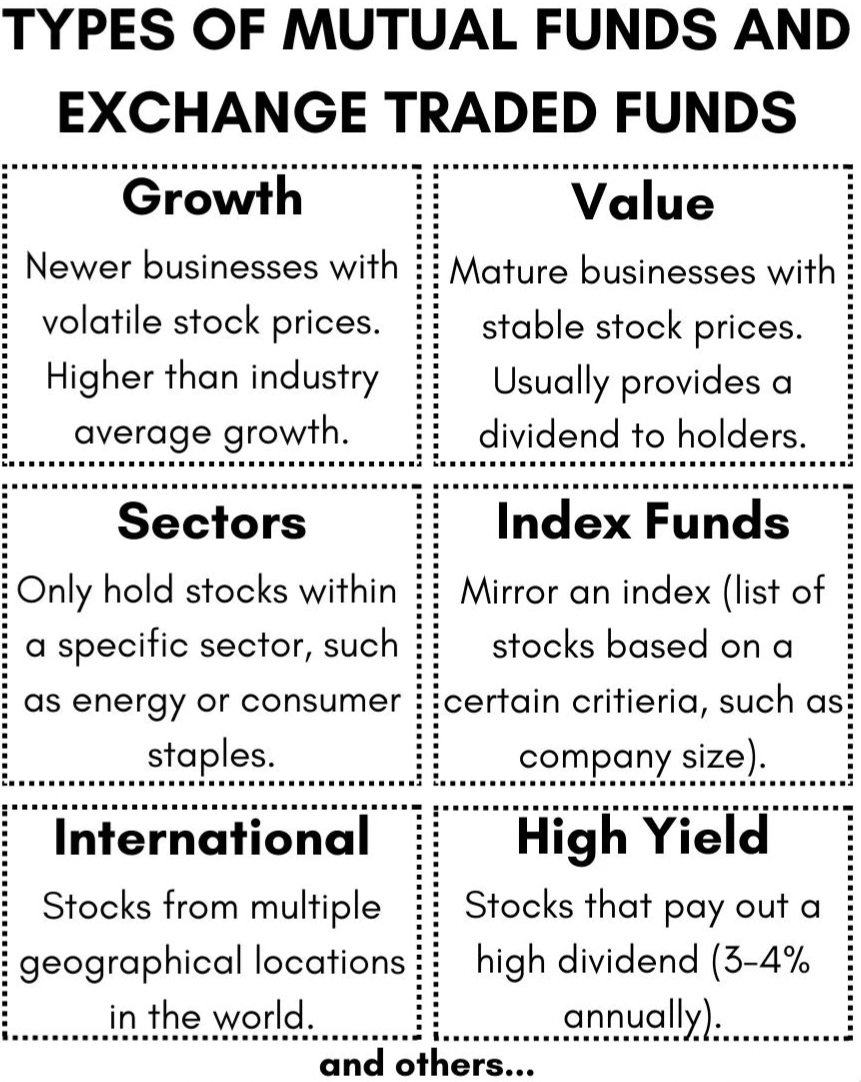
An index is a list of stocks. The Dow Jones U.S. Dividend 100 is an example of an index. It lists high dividend yielding US stocks.
The companies in the Dividend 100 index have a record of consistently paying dividends and have strong fundamental ratios relative to their peers.
The companies in the Dividend 100 index have a record of consistently paying dividends and have strong fundamental ratios relative to their peers.
The Schwab US Dividend Equity ETF (Ticker: $SCHD) holds the stocks in the Dividend 100 index.
SCHD has a low expense ratio at 0.06% - every $10,000 invested would cost you $6.
SCHD pays a 3.4% dividend to shareholders. Every $10,000 invested would receive ~$340 as a dividend.
SCHD has a low expense ratio at 0.06% - every $10,000 invested would cost you $6.
SCHD pays a 3.4% dividend to shareholders. Every $10,000 invested would receive ~$340 as a dividend.
If you want to buy individual companies, you can purchase shares of Dividend Kings.
These are companies in the S&P 500 (an Index of the largest 500 US companies) that have increased their dividend for 50 YEARS STRAIGHT.
These are companies in the S&P 500 (an Index of the largest 500 US companies) that have increased their dividend for 50 YEARS STRAIGHT.
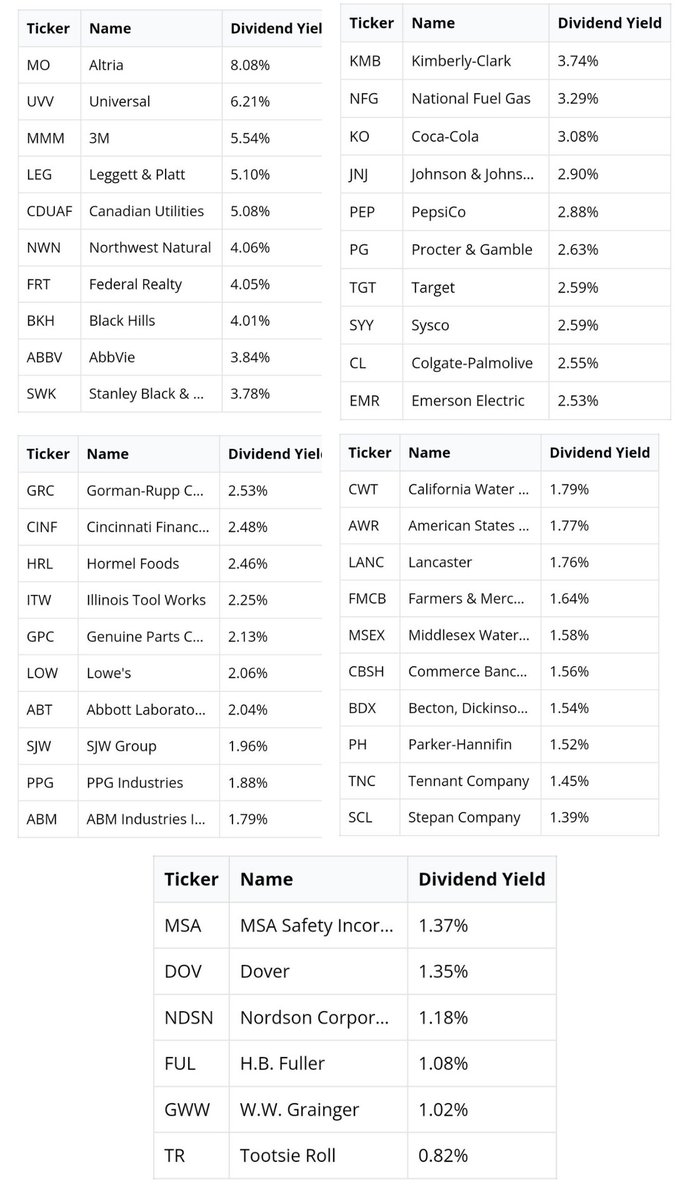
All 46 Dividend Kings as of today:
Dividend investing allows you to sit back and relax while managers and CEOs generate income for you.
With an ETF like SCHD, you would receive a dividend payout every 3 months.
Investing $10,000 means you receive $85 in March, June, September, and December.
With an ETF like SCHD, you would receive a dividend payout every 3 months.
Investing $10,000 means you receive $85 in March, June, September, and December.
You can use dividend investing to replace your income.
Let's say you earn $4,000 every month BEFORE tax.
You would need ~$1.4 million invested in SCHD to receive $12,000 in dividends every 3 months (after tax value may be different due to tax treatment of dividends).
Let's say you earn $4,000 every month BEFORE tax.
You would need ~$1.4 million invested in SCHD to receive $12,000 in dividends every 3 months (after tax value may be different due to tax treatment of dividends).
If you want more dividends over time, you need to invest more in a stock or ETF.
One way to do this is to reinvest your dividends.
When use your dividends to buy more shares of a stock, you get the benefit of compounding - your dividends ALSO earn a dividend.
One way to do this is to reinvest your dividends.
When use your dividends to buy more shares of a stock, you get the benefit of compounding - your dividends ALSO earn a dividend.
You can construct your portfolio to receive a dividend every month.
An example of a 3 stock portfolio that pays dividends every month
JPM: January, April, July, and October.
ABBV: February, May, August, and November.
HD: March, June, September, and December.
An example of a 3 stock portfolio that pays dividends every month
JPM: January, April, July, and October.
ABBV: February, May, August, and November.
HD: March, June, September, and December.
Buying only 3 stocks to generate all of your income could be risky.
Diversification is key, in case some companies you buy stop giving out a dividend due to difficult economic times.
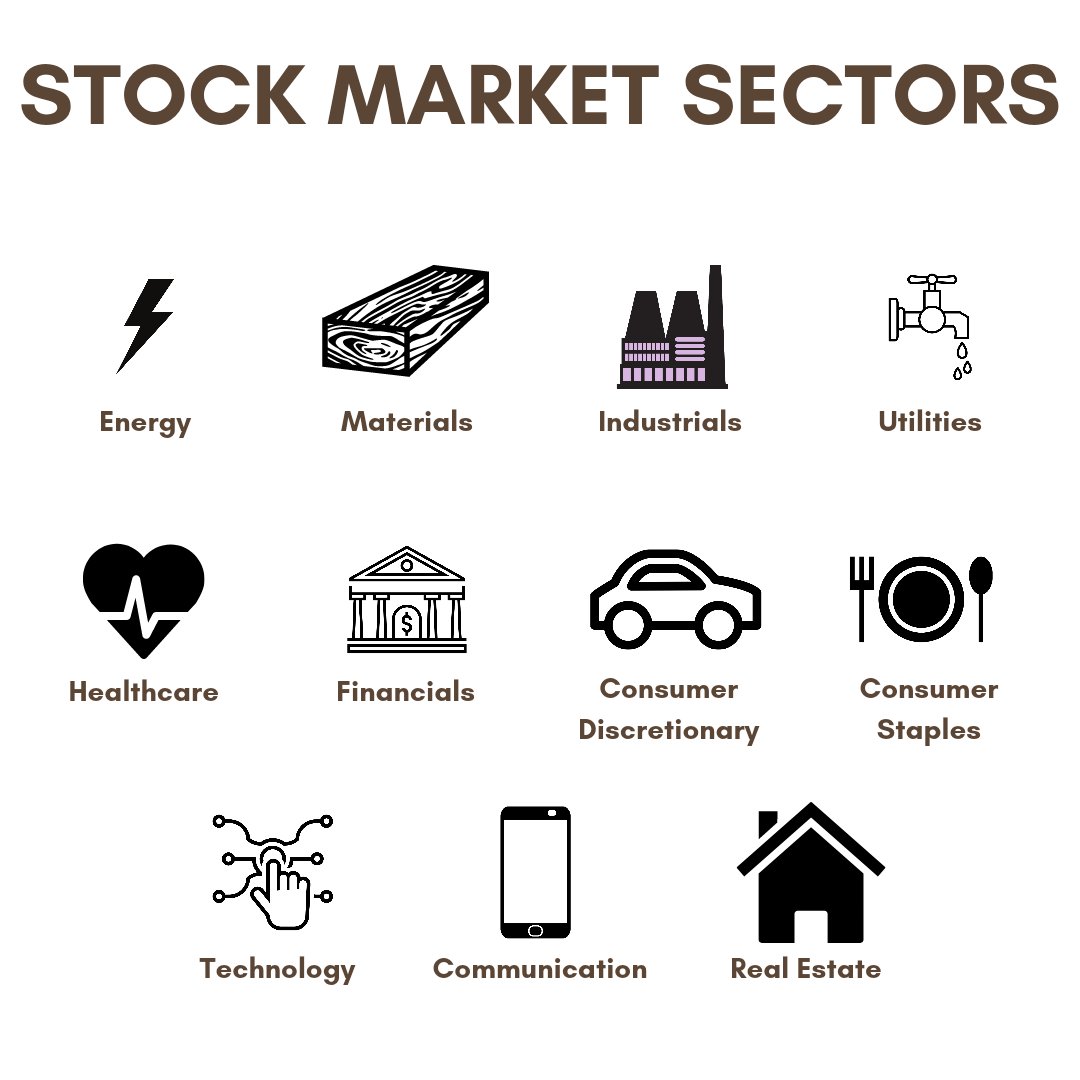
Purchasing stocks from different sectors would give you more consistent cash flow over time.
Diversification is key, in case some companies you buy stop giving out a dividend due to difficult economic times.
Purchasing stocks from different sectors would give you more consistent cash flow over time.
If you want to find safe dividend stocks, look for companies with:
1) Strong cash flows
2) Increasing profits
3) Sufficient cash reserves (emergency fund)
4) High demand for products/services
5) Low debt-to-equity ratio
6) Part of a strong industry
1) Strong cash flows
2) Increasing profits
3) Sufficient cash reserves (emergency fund)
4) High demand for products/services
5) Low debt-to-equity ratio
6) Part of a strong industry
Stocks paying out a dividend that's too high may require additional due diligence.
A high yield could mean the company isn't reinvesting in growth (majority of profits go to shareholders).
Some companies may have a high dividend yield due to a recent drop in the stock price.
A high yield could mean the company isn't reinvesting in growth (majority of profits go to shareholders).
Some companies may have a high dividend yield due to a recent drop in the stock price.
Generally, a strong dividend yield would be somewhere between 2-4%.
But the yield doesn't tell you everything.
Companies with a low yield could be reinvesting in growth. Companies with a high yield may be mature businesses.
A high yield could mean low/no growth in the future.
But the yield doesn't tell you everything.
Companies with a low yield could be reinvesting in growth. Companies with a high yield may be mature businesses.
A high yield could mean low/no growth in the future.
Important note: Canadian buying foreign stocks may be subject to a 15% withholding tax on dividends received in brokerage accounts and TFSAs.
RRSPs don't pay a withholding tax, but taxes may be higher overall, because taxes on RRSPs are calculated based on income level.
RRSPs don't pay a withholding tax, but taxes may be higher overall, because taxes on RRSPs are calculated based on income level.
I'm passionate about helping more people become financially literate, but these threads take a long time to write.
If you found value in this post, make sure you like and retweet the first tweet, and subscribe to my FREE newsletter.
Thanks for reading!
rajatsonifinance.substack.com
If you found value in this post, make sure you like and retweet the first tweet, and subscribe to my FREE newsletter.
Thanks for reading!
rajatsonifinance.substack.com

Loading suggestions...