

How much of your budget should be spent on search?
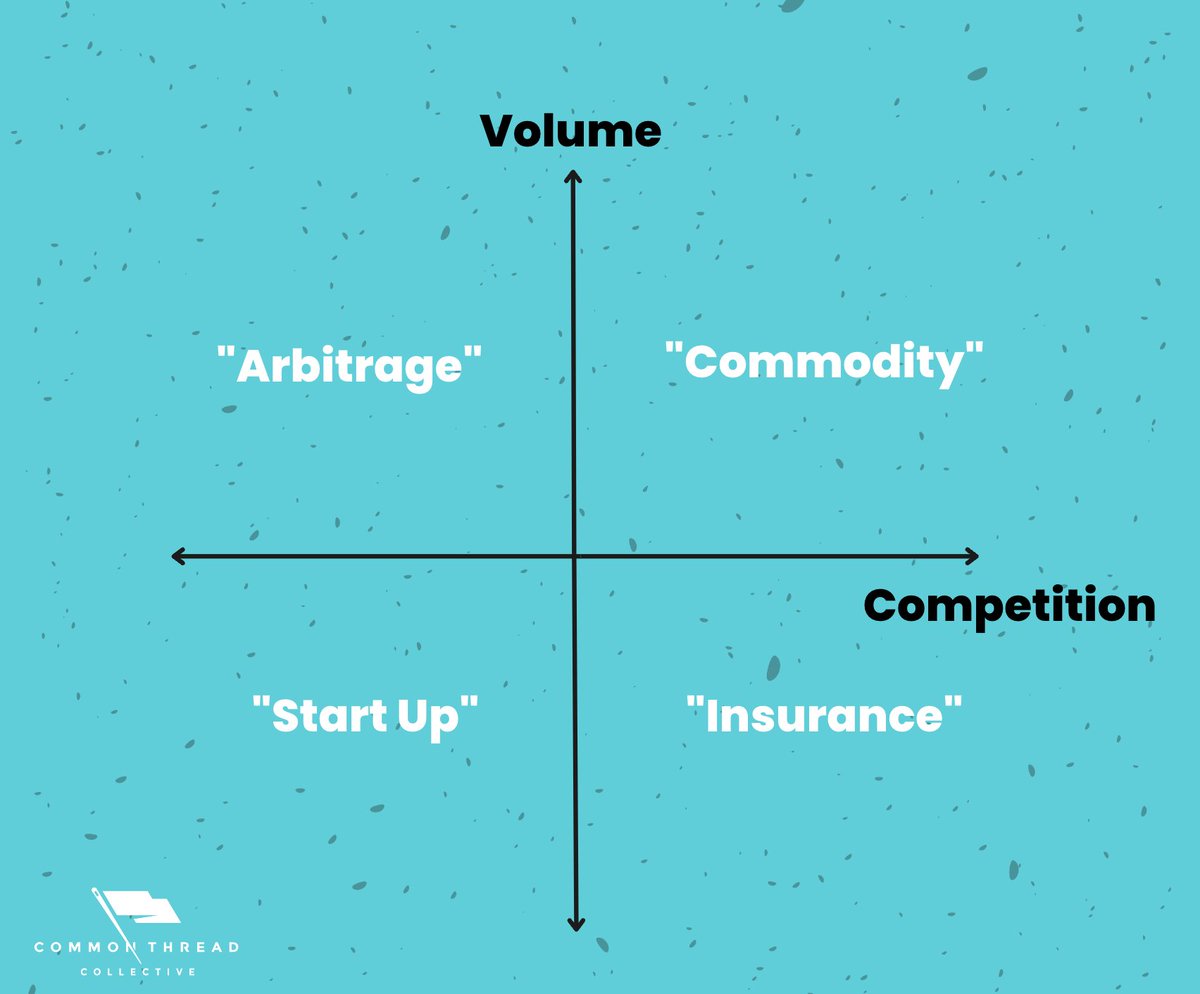
Well that depends on which of these four quadrants your brand exists in...
Let me explain 🧵
Well that depends on which of these four quadrants your brand exists in...
Let me explain 🧵
Google search opportunity exists post-intent, meaning that something has to prompt a user to create a search query in order for your ad to be shown.
Your job is capture as much of that demand as currently exists for your brand and category.
Your job is capture as much of that demand as currently exists for your brand and category.
But, the size of that opportunity varies DRAMATICALLY by brand.
As a quick example...
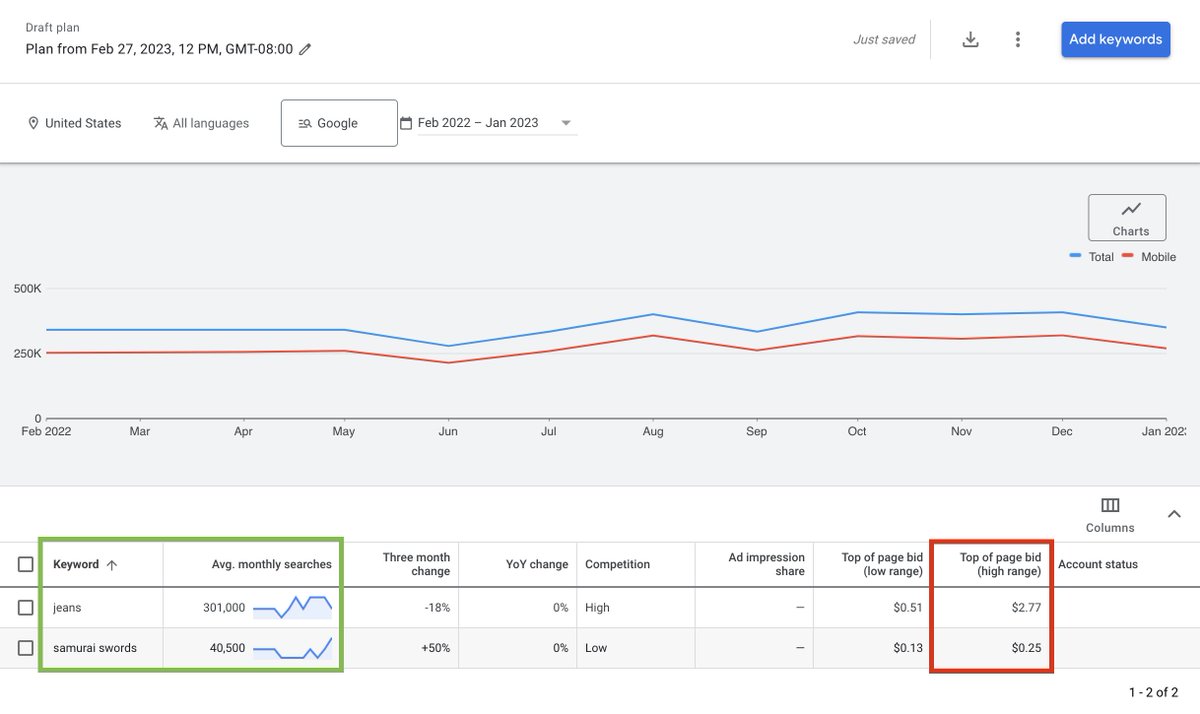
There were 300,000 searches in February for "Jeans"
and 40,000 searches in February for "samurai swords" (Sorry @theisaacmed)
As a quick example...
There were 300,000 searches in February for "Jeans"
and 40,000 searches in February for "samurai swords" (Sorry @theisaacmed)

But the "opportunity" isn't JUST a reflection of VOLUME there is also a consideration for competition.
As you can see on the same two terms the top of page bid is 7X higher for "jeans" than it is for Samurai Sword.
As you can see on the same two terms the top of page bid is 7X higher for "jeans" than it is for Samurai Sword.
This relationship between VOLUME and COMPETITION defines the size of the initial opportunity for your brand on search.
This X,Y defines four different quadrants that brands may fall into
1. The commodities
2. The arbitrage opportunities
3. The startups
4. The insurance group
This X,Y defines four different quadrants that brands may fall into
1. The commodities
2. The arbitrage opportunities
3. The startups
4. The insurance group
The commodities are the most obvious.
They are high volume, high competition terms like "jean" or "makeup".
They are mature categories with lots of established players.
You can spend MASSIVE amounts of budget here depending on your need for efficiency.
They are high volume, high competition terms like "jean" or "makeup".
They are mature categories with lots of established players.
You can spend MASSIVE amounts of budget here depending on your need for efficiency.
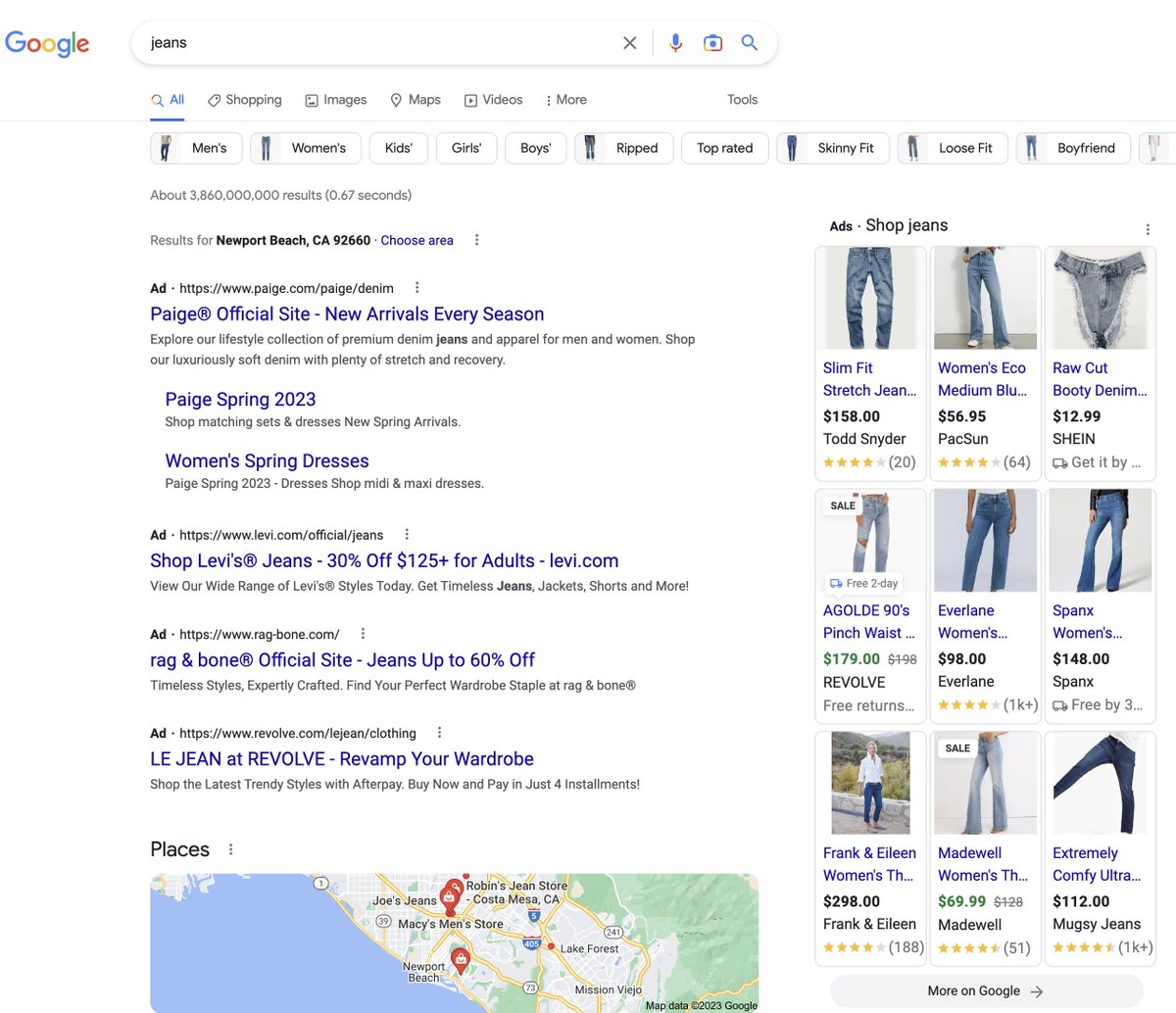
BUT the nature of an auction based system means that most of the first order profitability gets competed away in this quadrant.
Large players with that ability to generate high LTV and with broader demand capture (retail) push these terms into inefficient costs most of the time.
Large players with that ability to generate high LTV and with broader demand capture (retail) push these terms into inefficient costs most of the time.
The 2nd quadrant is where the gold lies...
These RARE instances of high volume, low competition means that Google will be your growth engine.
These tend to be categories with high barriers to entry or where search trends suddenly shift creating a period of massive opportunity
These RARE instances of high volume, low competition means that Google will be your growth engine.
These tend to be categories with high barriers to entry or where search trends suddenly shift creating a period of massive opportunity
Brands don't often live in this quadrant for long as competition tends to QUICKLY arise.
Think about "face masks" in March of 2020.
Suddenly the volume skyrocketed and the current players captured MASSIVE demand. Only to see it very quickly competed away.
Think about "face masks" in March of 2020.
Suddenly the volume skyrocketed and the current players captured MASSIVE demand. Only to see it very quickly competed away.
The 3rd quadrant is the "Start Up" quadrant. Low volume / low competition.
These tend to be products defining new categories.
This is silicone wedding rings back when we started QALO.
Brands should bid for max impression share and soak up every bid of demand they can.
These tend to be products defining new categories.
This is silicone wedding rings back when we started QALO.
Brands should bid for max impression share and soak up every bid of demand they can.
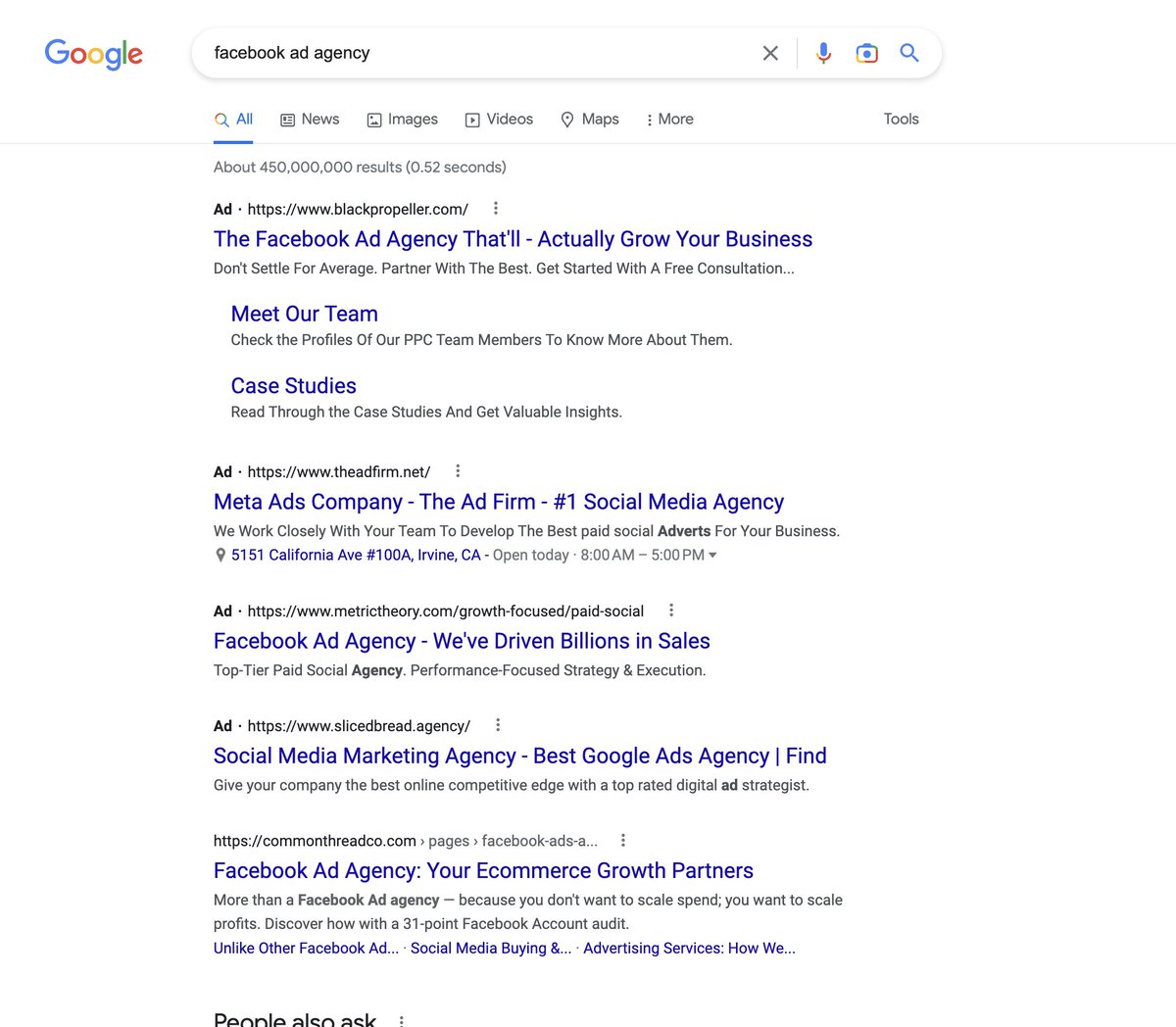
The final quadrant is the "Insurance Quadrant". These are HIGH VALUE keywords with low volume.
Think FB Ad Agency.
Tons of competition, low volume, high value.
Its a blood bath battle for clicks that can be worth millions.
Think FB Ad Agency.
Tons of competition, low volume, high value.
Its a blood bath battle for clicks that can be worth millions.
Depends on where you brand sits, Google can be a gold mine or an after thought by default.
That said I believe there is a way that ANY brand can move itself into the "arbitrage" quadrant and break that down in depth in this youtube video:
youtube.com
That said I believe there is a way that ANY brand can move itself into the "arbitrage" quadrant and break that down in depth in this youtube video:
youtube.com
Or if you prefer the audio format we released an awesome conversation:
"A google reps reveals his secrets"
Where @Ben__Kruger shared how he helps brands to accomplish exactly this...
commonthreadco.com
"A google reps reveals his secrets"
Where @Ben__Kruger shared how he helps brands to accomplish exactly this...
commonthreadco.com
@Ben__Kruger That's a wrap!
If you enjoyed this thread:
1. Follow me @TaylorHoliday for more of these
2. RT the tweet below to share this thread with your audience
If you enjoyed this thread:
1. Follow me @TaylorHoliday for more of these
2. RT the tweet below to share this thread with your audience
Loading suggestions...