

About 2,000 years ago, a Roman workman presented emperor Tiberius with a brand new invention of his—a wine goblet unlike any other of the time.
It looked beautiful and sparkled like glass. The Caesar loved it but it was no novelty.
So the workman proceeded to give a demo.
It looked beautiful and sparkled like glass. The Caesar loved it but it was no novelty.
So the workman proceeded to give a demo.
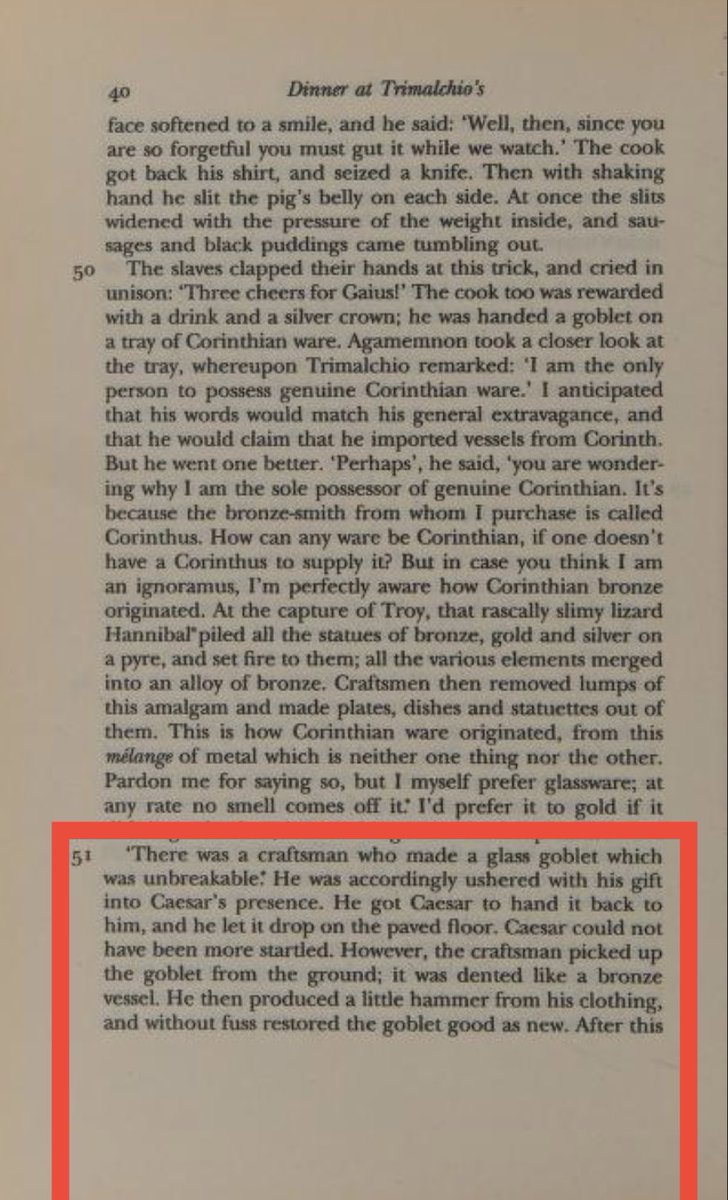
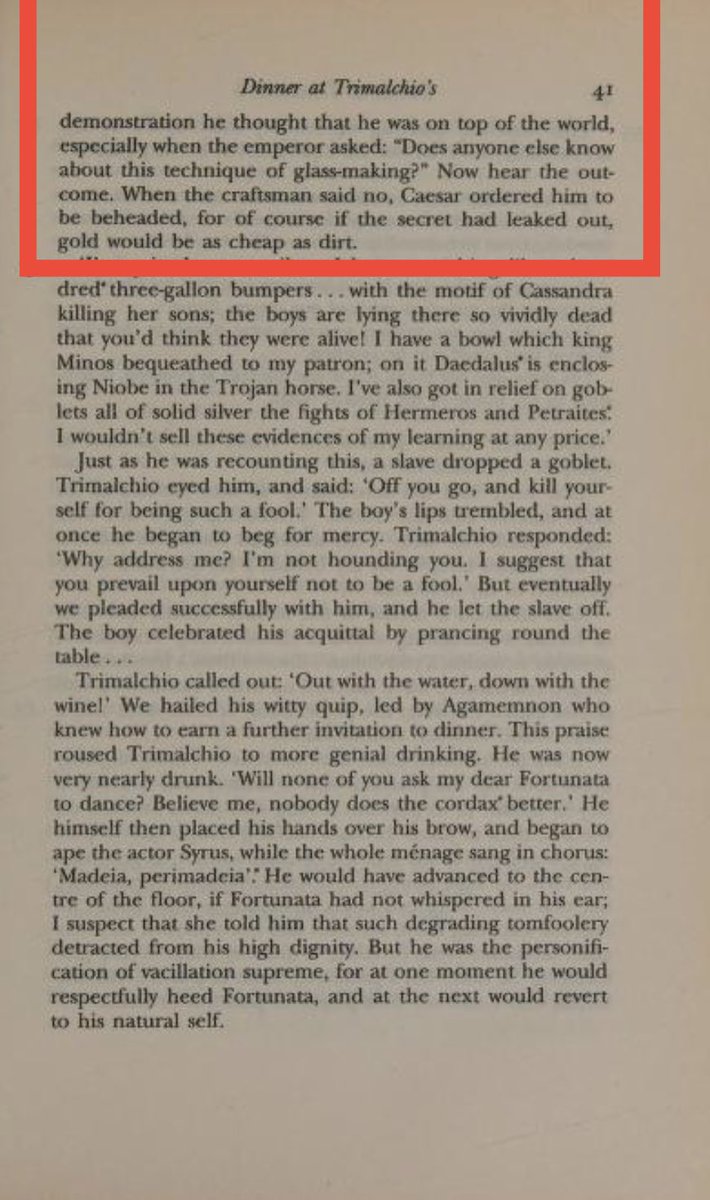
He smashed the goblet on the floor. Violently. To everyone’s shock, it didn’t shatter. Instead, it dented like bronze!
That’s when they all realized that the goblet wasn’t glass but a mysterious new metal that sparkled like glass but held like bronze.
Now *this* was a novelty.
That’s when they all realized that the goblet wasn’t glass but a mysterious new metal that sparkled like glass but held like bronze.
Now *this* was a novelty.
Unfortunately, the novelty cost the workman his life, for the emperor promptly ordered his execution. Why? Because he feared a threat to gold should knowledge of this new metal become public.
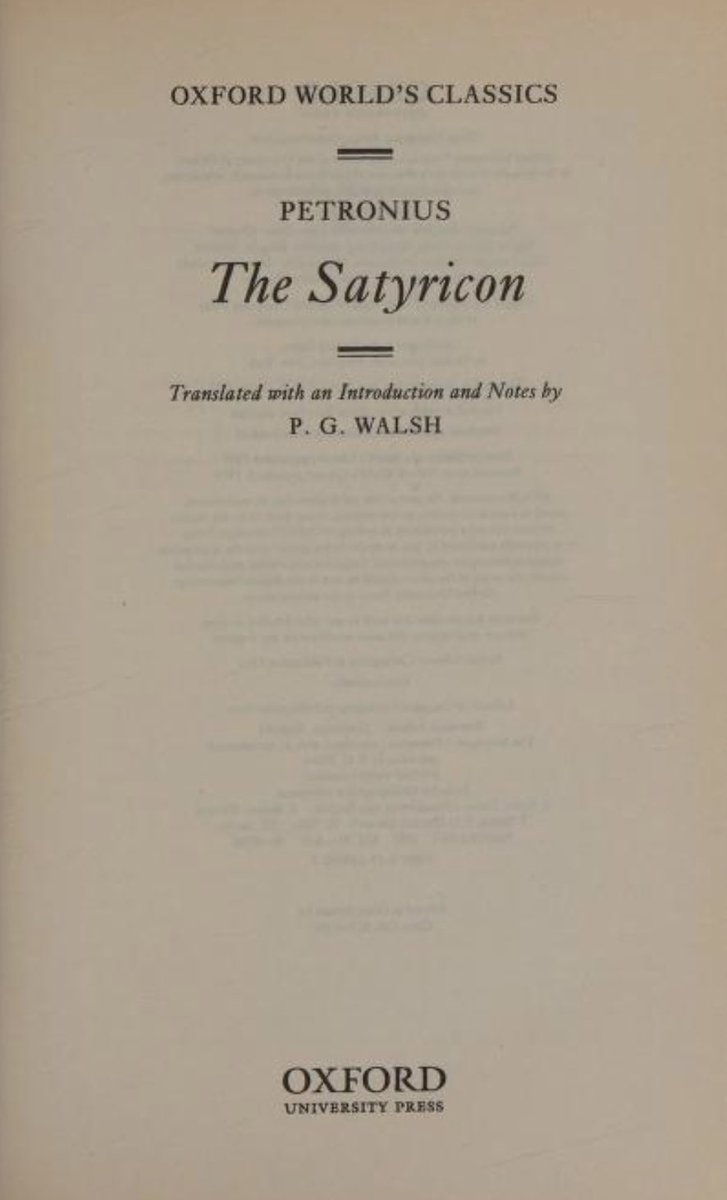
The story comes from a 1st century Latin fiction called Satyricon.
The story comes from a 1st century Latin fiction called Satyricon.
The execution expectedly buried the identity of the mystery metal. What it failed to bury was curiosity around it.
Over centuries some alchemists did manage to establish the source of the metal though and all fingers pointed at a not so uncommon “salt of the earth”—alum.
Over centuries some alchemists did manage to establish the source of the metal though and all fingers pointed at a not so uncommon “salt of the earth”—alum.
But knowing the metal comes from alum and actually extracting it from alum are two different things. Many tried but failed.
Europeans learned of alum only after the Crusades, thanks to the Ottomans who themselves learned of it from the Chinese.
Europeans learned of alum only after the Crusades, thanks to the Ottomans who themselves learned of it from the Chinese.
The Renaissance brought a fresh injection of scientific temper and renewed vigor to alum research. Part of this was due to Europe’s emergent need for self-sufficiency. They could not forever depend on the Muslims for their supply of alum and must learn to make their own.
By now everyone knew alum was a salt. So it must consist of a metal. They named it aluminum. And yet, nobody was able to extract this mystery metal out of the salt. It existed only in name.
Like aether.
Or soul.
But the endeavors didn’t stop. Until…
Like aether.
Or soul.
But the endeavors didn’t stop. Until…
…1845, when, more than a thousand years since Rome fell and more than 300 years since the Renaissance, a German chemist named Friedrich Wöhler finally made a breakthrough!
He was able to isolate metallic aluminum from alum, albeit some say it wasn’t pure.
He was able to isolate metallic aluminum from alum, albeit some say it wasn’t pure.
News spread like wildfire. The mystery metal of Tiberius had finally been realized!
Soon enterprising chemists started producing aluminum tableware for the elites. Because Wöhler’s method produced so little aluminum, scale still remained a problem.
Soon enterprising chemists started producing aluminum tableware for the elites. Because Wöhler’s method produced so little aluminum, scale still remained a problem.
What this meant was scarcity. And scarcity drives price. The new metal was scarce…scarer than even gold!
While the poor ate out of iron or steel, the wealthy ate out of gold. But the real elites, the super rich of the time, quickly switched to aluminum.
While the poor ate out of iron or steel, the wealthy ate out of gold. But the real elites, the super rich of the time, quickly switched to aluminum.
But the entire frenzy predicated on scarcity…which abruptly came to an end in the 1890s when a new method of smelting aluminum ore on scale was invented. Virtually overnight, prices dropped to levels far below even silver.
Leaving many riches-to-rags stories in its wake.
Leaving many riches-to-rags stories in its wake.
For a brief three-decade window in the second half of the 19th century, the humble aluminum sold for twice the price of gold in Europe.
A giant aluminum capstone made during this window still sits on top of America’s Washington Memorial as a testimony to the times.
A giant aluminum capstone made during this window still sits on top of America’s Washington Memorial as a testimony to the times.
One British metal industrialist wore an aluminum hat to the inauguration of his aluminum factory just for PR. The first such factory however had opened in France where the metal went to market for 8 francs an ounce.
Napoleon emerged as the metal’s biggest patron.
Napoleon emerged as the metal’s biggest patron.
Aluminum helped cement his image as a man of technology and scientific prowess—a true technocrat. Whether he was, is another story but “pursuit of knowledge” certainly became one of his defining features, thanks to the Rosetta Stone and aluminum.
Among the last entrants to the game was India. Here, industrial production only began in the final decade of the Raj.
Today, however, it’s the second largest producer of the metal that once got an inventor executed in the court of Rome.
Today, however, it’s the second largest producer of the metal that once got an inventor executed in the court of Rome.
Loading suggestions...