

What did people eat before European colonisation?
Here is one specific vegetarian example from Tamil Nadu. This meal is typically made once a year as part of a religious celebration to remember ancestors
Here is one specific vegetarian example from Tamil Nadu. This meal is typically made once a year as part of a religious celebration to remember ancestors
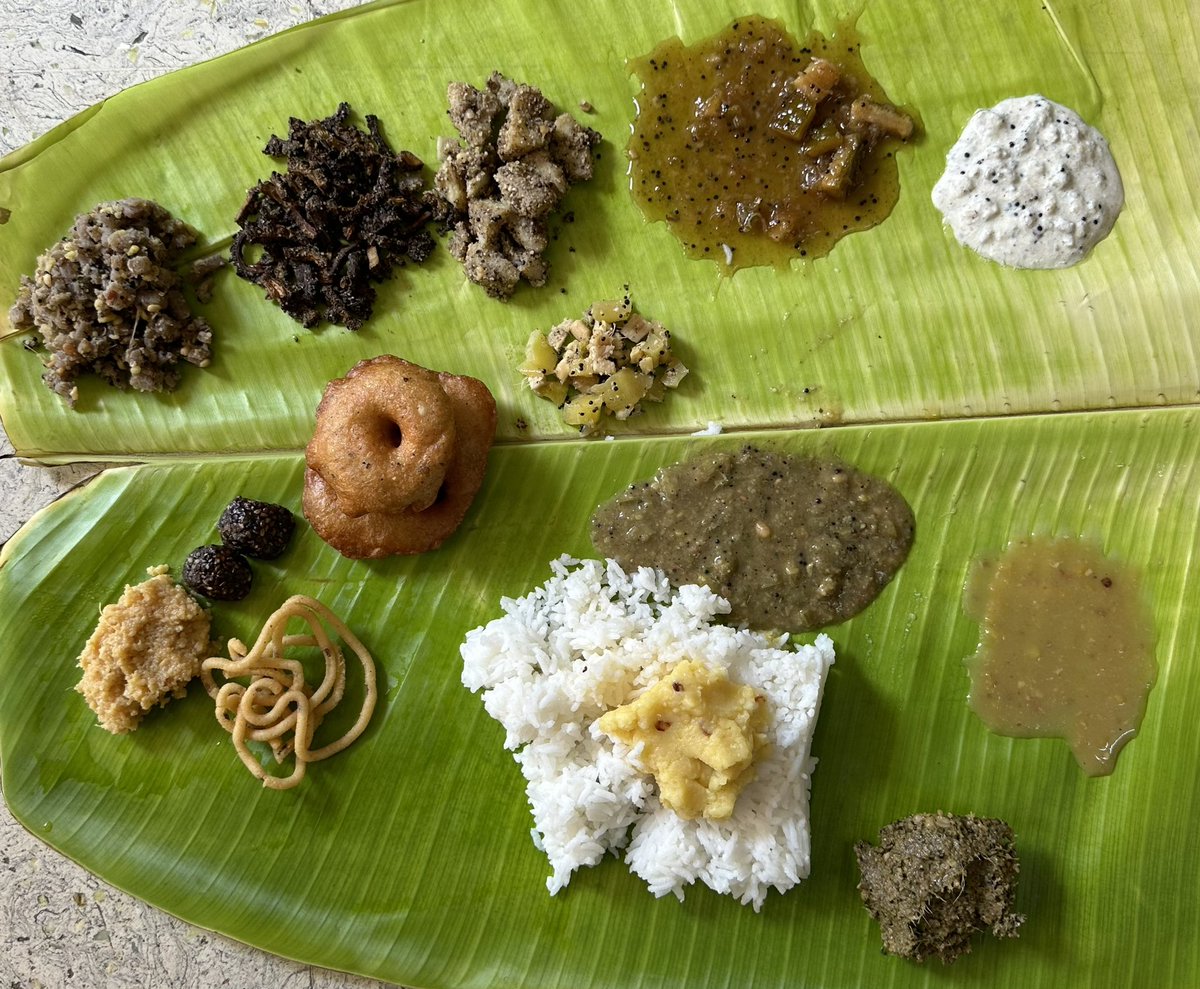
Unsurprisingly, none of these dishes contain the following ingredients: Chillies 🌶️ , Tomato 🍅, Potato 🥔 , Cabbage, cauliflower, beans, carrot 🥕 etc. Because all of them arrived post-colonisation.
Interestingly, no coriander as well. It is estimated that coriander arrived with the Greeks (circa Alexander), so while it is tempting to believe that these dishes pre-date that, there is no corroborating evidence.
The other interesting absence - Toor dal. This is more of an internal agricultural history thing - Moong dal has always been the primary legume in Tamil Nadu (thus its use in Pongal) and toor dal likely arrived much later.
If you assumed tamarind was the souring agent - nope! The choice of acid was largely either citrus (citron, not the ubiquitous limes that originated in South East Asia) or raw mango.
The flavour base for this meal
Acids - Citron, Raw mango
Spices - Black Pepper, Ginger, Turmeric, Cumin, Curry Leaf
Fats - Gingelly (Sesame) oil & ghee
The primary source of heat is pepper & ginger
Acids - Citron, Raw mango
Spices - Black Pepper, Ginger, Turmeric, Cumin, Curry Leaf
Fats - Gingelly (Sesame) oil & ghee
The primary source of heat is pepper & ginger
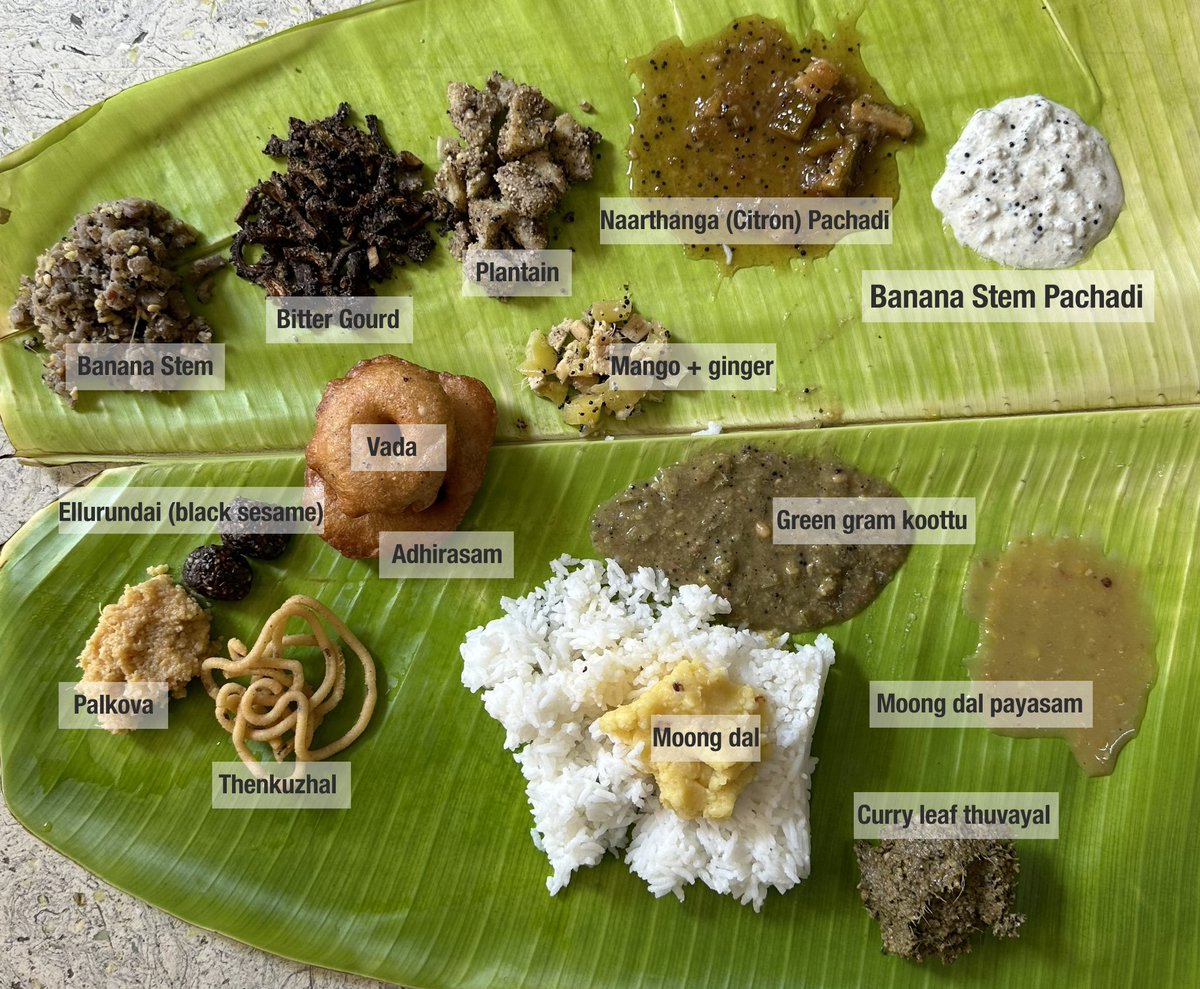
So while we know what is missing, what produce was locally available in this region back then? Root vegetables like colocasia and elephant foot yam, gourds, and literally every part of the banana plant
While it's fascinating from a historical standpoint, & a delicious meal no doubt as a one-off annual experience, my personal opinion - Pretty one-dimensional flavour profile. Indian food has been tremendously enriched by chillies, tomatoes and potatoes
The lack of alliums (onion, garlic), which tend to add an insane amount of flavour, is a product of satvik/rajasik/tamasik classifications of ingredients for religious purposes. The average daily meal likely included both!
And of course, the vast majority of people likely also had one or more sources of animal protein - fish, poultry, mutton or beef as part of their meal.
And thanks to the ginger and pepper heavy flavour base in every side dish, I'm still hiccupping while nursing a sustained gingerol throat burn.
This article by @YasaswiniSampat goes into more details - bbc.com
Loading suggestions...