

The Prisoner's Dilemma shows that cooperation in international politics (and other areas) is hard.
But it's not right, nor is it useful.
That's what Harrison Wagner taught us.
[THREAD]
But it's not right, nor is it useful.
That's what Harrison Wagner taught us.
[THREAD]

In the 1970s and early 1980s, game theory -- a tool for deriving the consequences of strategic interactions -- became the rage in international relations scholarship.
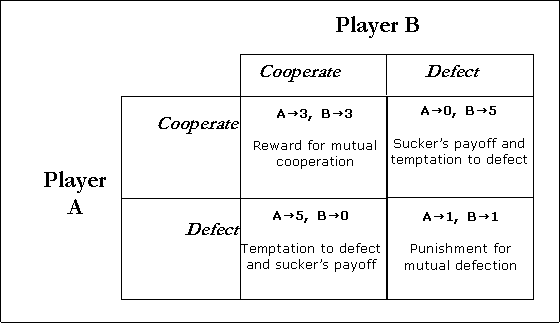
In particular, LOTS of work was applying the Prisoner's Dilemma...
In particular, LOTS of work was applying the Prisoner's Dilemma...
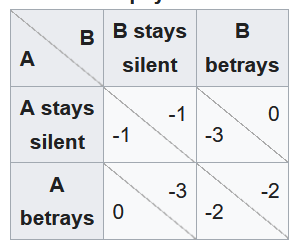
...to the area of international cooperation.
Long story short: without centralized enforcement (i.e. world government) actors (i.e. states) have an incentive to cheat/defect on agreements. Cooperation fails because I don't want to be the "sucker" by cooperating if you defect.
Long story short: without centralized enforcement (i.e. world government) actors (i.e. states) have an incentive to cheat/defect on agreements. Cooperation fails because I don't want to be the "sucker" by cooperating if you defect.
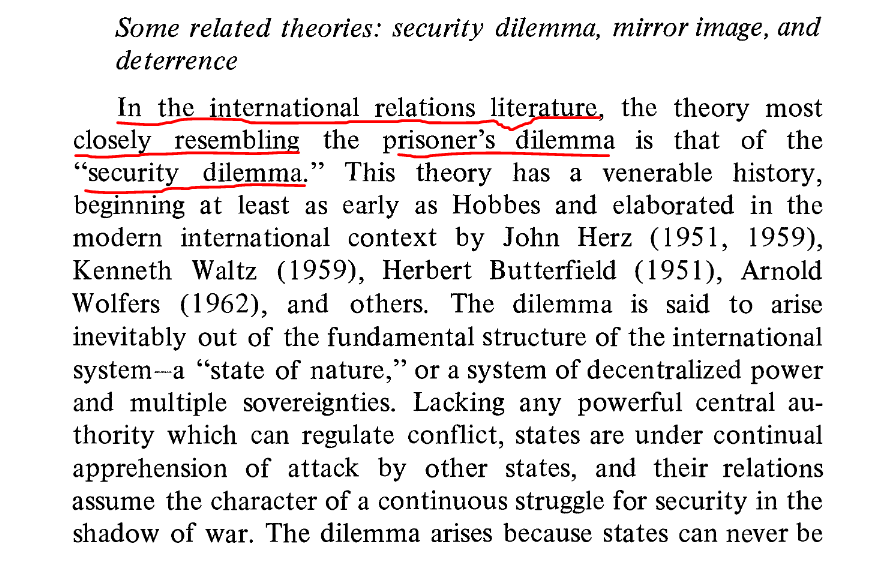
Indeed, the application of the Prisoner's Dilemma was sufficiently prominent by the early 1970s that Glenn Snyder wrote an @ISQ_Jrnl piece in 1971 on its use.
academic.oup.com
academic.oup.com

He writes how the security dilemma -- the idea that even if two parties don't want conflict, both have an incentive to arm -- "most closely resembles" the prisoner's dilemma.
Snyder's paper cites some work by Bob Jervis. That's important, because Jervis' later paper, his 1978 @World_Pol article, became a "go to" cite for using the prisoner's dilemma to depict the difficulties of international cooperation.
cambridge.org
cambridge.org

Shortly after Jervis published his work, another Bob, Bob Axelrod, published a piece in @ScienceMagazine about how cooperation may not be as hard as the prisoner's dilemma suggests.
science.org
science.org

Specifically, if the game is repeated, then the parties could have an incentive to cooperate (i.e. knowing that I may need your cooperation in the future gives me an incentive to not cheat now).
Jervis fleshed out this idea in his 1984 book.
amazon.com
Jervis fleshed out this idea in his 1984 book.
amazon.com
While Axelrod's work became the major cite in international relations regarding the power of repeated games, it's building on a point made much earlier (in a 1970 JCR article) by Martin Shubik.
journals.sagepub.com
journals.sagepub.com
But Shubik's paper is important for a larger reason: he questions the very utility of using 2x2 games.
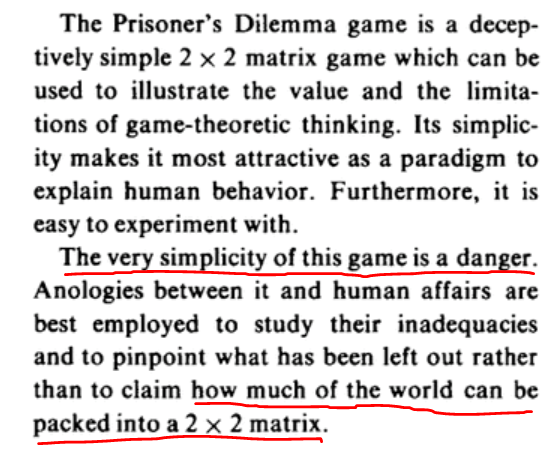

The main idea of the paper is develop the idea that Prisoner's Dilemma (and related models, like Stag Hunt) are not up to the task that they purport to show.
They are worse than just wrong. They are misleading.
They are worse than just wrong. They are misleading.
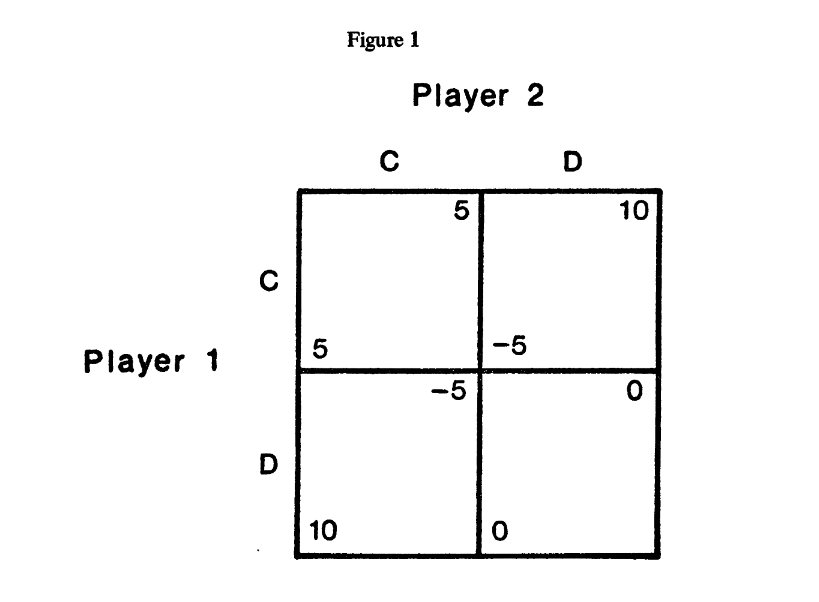
Wagner starts my taking the common 2x2 matrix depiction of the dilemma...
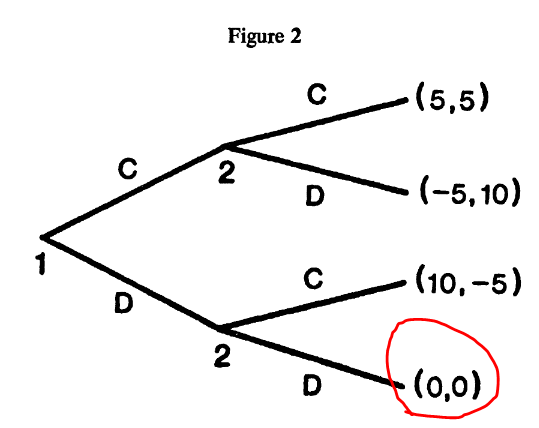
...and writing it instead in extended form: rather than player 1 and player 2 making their decisions simultaneously, player 1 goes first, then player 2.
The outcome is the same: backwards induction shows that they still end up not cooperating.
The outcome is the same: backwards induction shows that they still end up not cooperating.
But Wagner then poses a key question: "why must the end of the tree look like that?"
In other words, don't states get a chance to observe what the other is doing before they fully commit to a course of action?
This would suggest that the standard game should look like 👇
This would suggest that the standard game should look like 👇
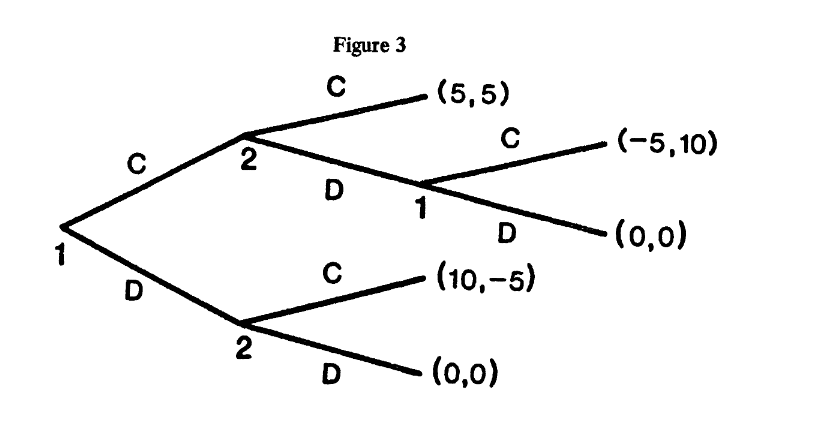
Wagner makes clear that this is NOT the same as simply iterating the game. Instead, the game is different, but more accurate.
Iterating means we play the same game over and over.
Here, the states still just play the game one time, but now have an opportunity to make cooperation conditional.
Here, the states still just play the game one time, but now have an opportunity to make cooperation conditional.
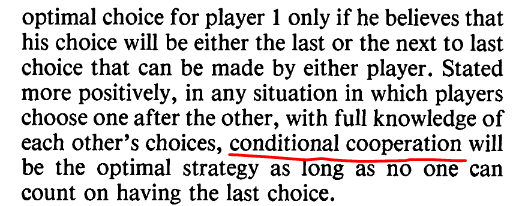
Stated differently, iterated games hold that cooperation occurs because I worry about what will happen with THE NEXT arms control treaty.
Wagner's game holds that cooperation occurs because I can observe what happens with THIS arms control treaty.
Wagner's game holds that cooperation occurs because I can observe what happens with THIS arms control treaty.
In other words, compliance with New START isn't about fear over missing out on New New START, it's possible because the sides know the other will see if it cheated (which, by the way, is what happened).
nytimes.com
nytimes.com

Same with trade treaties: states cooperate with them, not because they hope to gain the NEXT trade treaty, but because they know that non-compliance can be observed.
piie.com
piie.com

Wagner's simple yet underappreciated proposal -- adding a branch to the Prisoner's Dilemma game -- more correctly & usefully depicts of the challenges of & opportunities for cooperation.
It, not PD, SHOULD be the standard game theoretic model of international politics.
[END]
It, not PD, SHOULD be the standard game theoretic model of international politics.
[END]
Loading suggestions...