

Short 🧵(for people going into critical care) regarding when a tracheostomy tube is the same 'size' as its endotracheal tube counterpart, and when it is not.
Warning: minutiae follows here...if you're not into critical care, get out now.
(1/ )
Warning: minutiae follows here...if you're not into critical care, get out now.
(1/ )

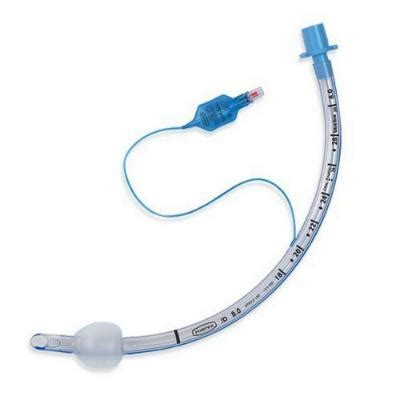
First of all, for the students:
When we say an endotracheal tube is a certain size, say an "8", we mean that the *inner diameter* of the tube is 8.0 mm.
When we say an endotracheal tube is a certain size, say an "8", we mean that the *inner diameter* of the tube is 8.0 mm.


And so you would think this would be the case with tracheostomy tubes as well...but it is not always so.
This is one of the newer Shiley tubes that most of us usually call an '8 Shiley'.
But once the inner cannula is in place, the internal diameter is actually only 7.5 mm.
This is one of the newer Shiley tubes that most of us usually call an '8 Shiley'.
But once the inner cannula is in place, the internal diameter is actually only 7.5 mm.

Similarly (but in the opposite direction):
We call this a '6 Shiley' tracheostomy tube, but with the inner cannula in place, it actually has an internal diameter of 6.5 mm.
We call this a '6 Shiley' tracheostomy tube, but with the inner cannula in place, it actually has an internal diameter of 6.5 mm.

So in a sense, the '8 Shiley' is not quite as good as you thought it was, and the '6 Shiley' is a little better than you thought it was.
They are analogous to 7.5 and 6.5 endotracheal tubes, respectively.
They are analogous to 7.5 and 6.5 endotracheal tubes, respectively.


On the other hand, a '7 Shiley' tracheostomy tube is exactly what you think it is.
I don't have the proper part of the kit to take a picture of, but the '7 Shiley' actually *does* have an inner diameter of 7.0 mm.
I don't have the proper part of the kit to take a picture of, but the '7 Shiley' actually *does* have an inner diameter of 7.0 mm.


As you may know, there also are 'XLT' versions ('extra long trachs) that come in 'proximal' and 'distal' versions.
For the XLT tracheostomy tubes, what you see is what you get: sizes 6, 7, and 8 all have inner diameters of 6, 7, and 8 mm, respectively.
For the XLT tracheostomy tubes, what you see is what you get: sizes 6, 7, and 8 all have inner diameters of 6, 7, and 8 mm, respectively.


Put another way, in terms of inner diameter:
A normal 8 Shiley is 'smaller' than an 8 endotracheal tube (or XLT trach)
-but-
A normal 6 Shiley is 'larger' than a 6 endotracheal tube (or XLT trach).
A normal 8 Shiley is 'smaller' than an 8 endotracheal tube (or XLT trach)
-but-
A normal 6 Shiley is 'larger' than a 6 endotracheal tube (or XLT trach).


This has been a brief foray into details that only critical care practitioners and ENT surgeons are likely to care about, so I apologize to any urologists, neurosurgeons, or other surgical specialists who made it to the end of this thread 😬.

Loading suggestions...