

I have an MBA and work as a professional investor.
If you invest, you MUST know how to analyze a 10-K.
I'll teach you everything you need to know:
If you invest, you MUST know how to analyze a 10-K.
I'll teach you everything you need to know:
1️⃣ The importance of a 10-K
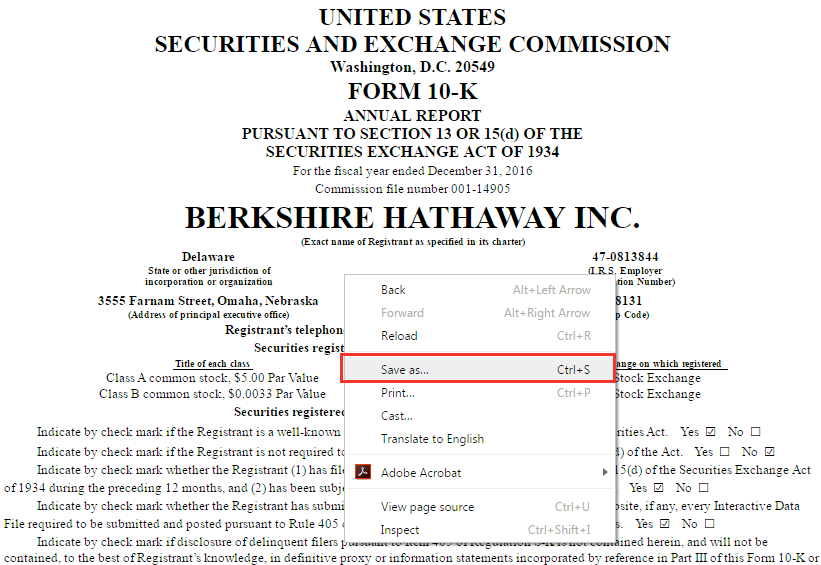
According to Jim Rogers, 98% (!) of people on Wall Street don’t read the annual report.
As a Fund Manager, I can confirm that most professional investors don’t read the 10-K before they invest in a company.
According to Jim Rogers, 98% (!) of people on Wall Street don’t read the annual report.
As a Fund Manager, I can confirm that most professional investors don’t read the 10-K before they invest in a company.
This means that you can create a BIG advantage for yourself if you read 10-Ks.
Successful investing is hard work. The best way to outperform the market is by becoming a learning machine.
Successful investing is hard work. The best way to outperform the market is by becoming a learning machine.
2️⃣ What is a 10-K?
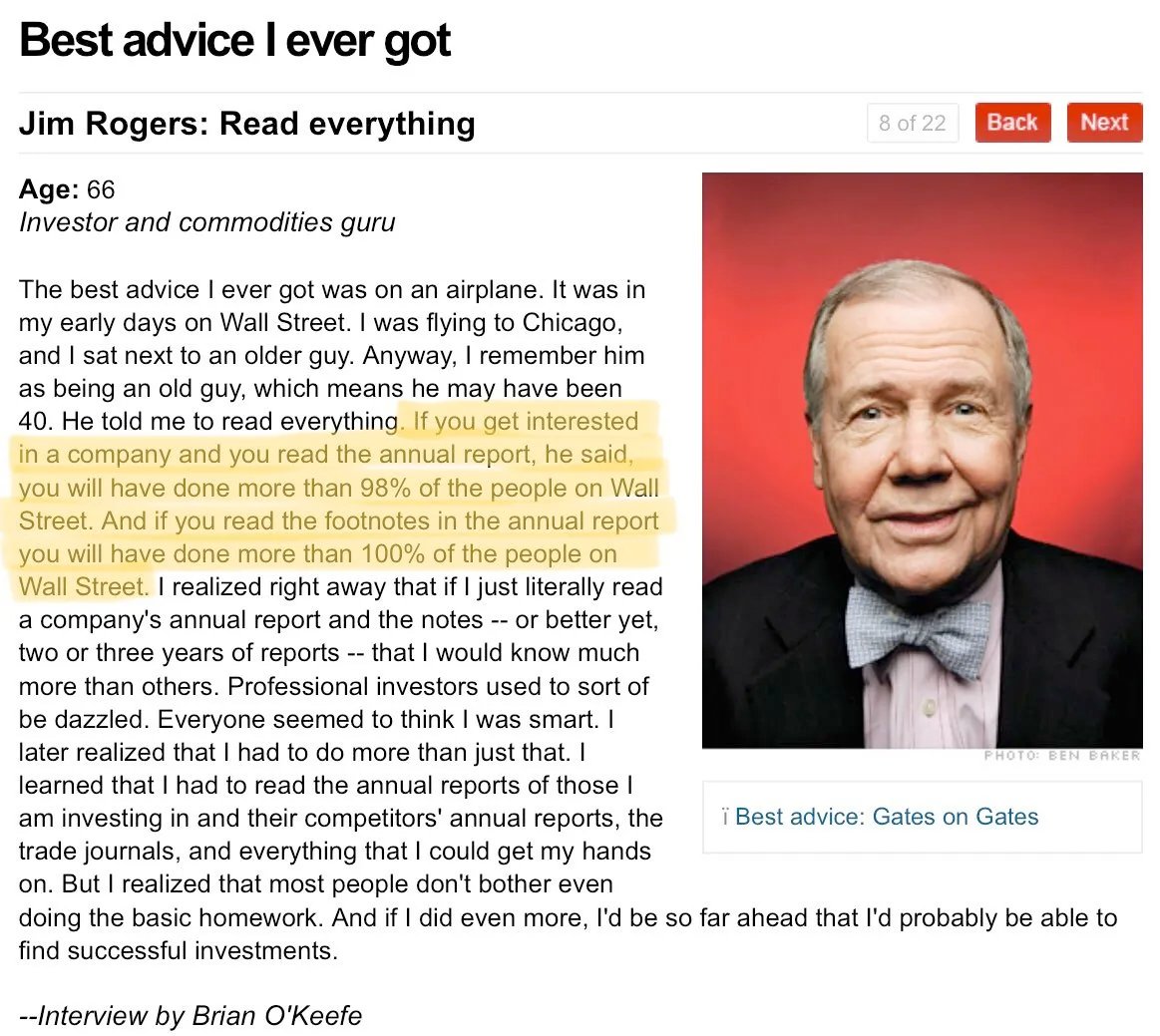
Every year, companies must publish their 10-K.
It’s the most important document a company publishes.
The better you know how to read an annual report, the better you’ll be able to understand the companies you invest in.
Every year, companies must publish their 10-K.
It’s the most important document a company publishes.
The better you know how to read an annual report, the better you’ll be able to understand the companies you invest in.
But what is a 10-K?
A 10-K is an official document that contains a lot of information about the company.
The SEC requires US listed companies to publish this report to inform (potential) investors about their financial conditions.
A 10-K is an official document that contains a lot of information about the company.
The SEC requires US listed companies to publish this report to inform (potential) investors about their financial conditions.
You’ll learn about the company’s history, it’s organizational structure, financial statements, executive compensation and so on.
A 10-K can usually be found on the Investor Relations section of a company's website:
A 10-K can usually be found on the Investor Relations section of a company's website:

3️⃣ Structure of a 10-K
The beautiful thing about a 10-K is that they all have the same structure.
This means that the more 10-Ks you read, the faster and the better you’ll get at it.
The beautiful thing about a 10-K is that they all have the same structure.
This means that the more 10-Ks you read, the faster and the better you’ll get at it.
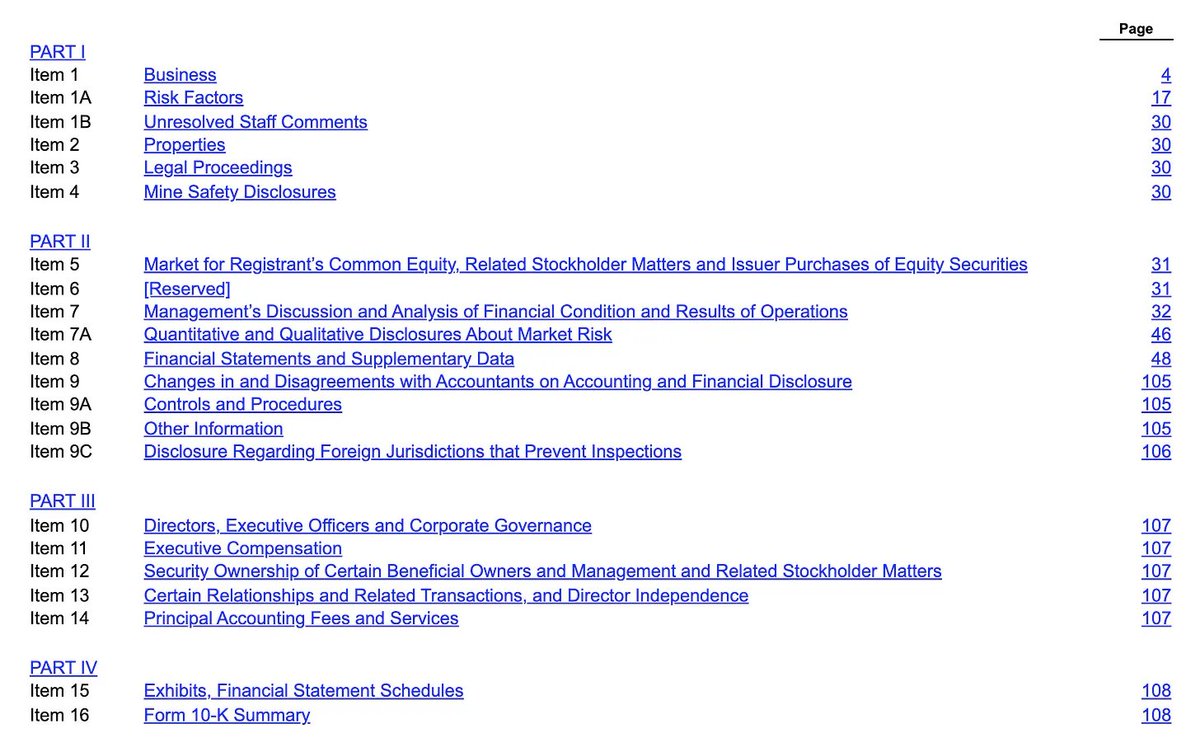
The structure of a 10-K looks as follows:
1. Business: an overview of the company’s main operations. This section shows you how the company makes money
2. Risk factors: shows the major risks of the company. The risk are typically listed in order of importance.
1. Business: an overview of the company’s main operations. This section shows you how the company makes money
2. Risk factors: shows the major risks of the company. The risk are typically listed in order of importance.
3. Financial statements: specific financial information about the business
4. Management discussions and analysis (MD&A): Management's view on the business results of the past fiscal year
4. Management discussions and analysis (MD&A): Management's view on the business results of the past fiscal year
We’ll now dig into each section using Visa as an example.
You can find Visa’s 10-K on the Investor Relations section of their website.
You can find Visa’s 10-K on the Investor Relations section of their website.
1. Business
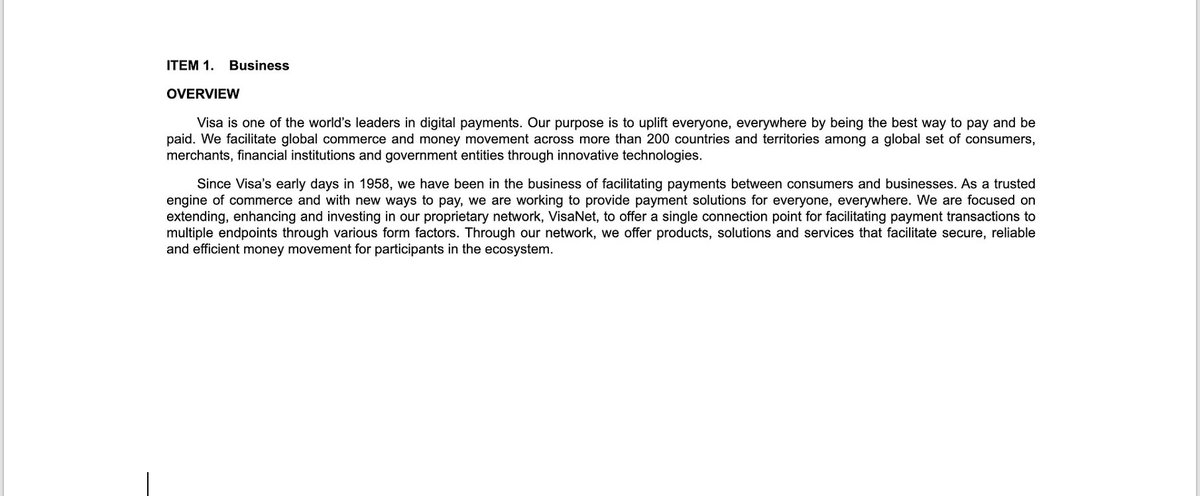
This section describes the company’s main products and services.
It's a good place to start as it tells you how a company makes money.
This section describes the company’s main products and services.
It's a good place to start as it tells you how a company makes money.
It’s very important to always invest within your circle of competence. If you don’t understand the business model, you can skip the company right away
The business segment can usually be found at the beginning of the 10-K.
The business segment can usually be found at the beginning of the 10-K.
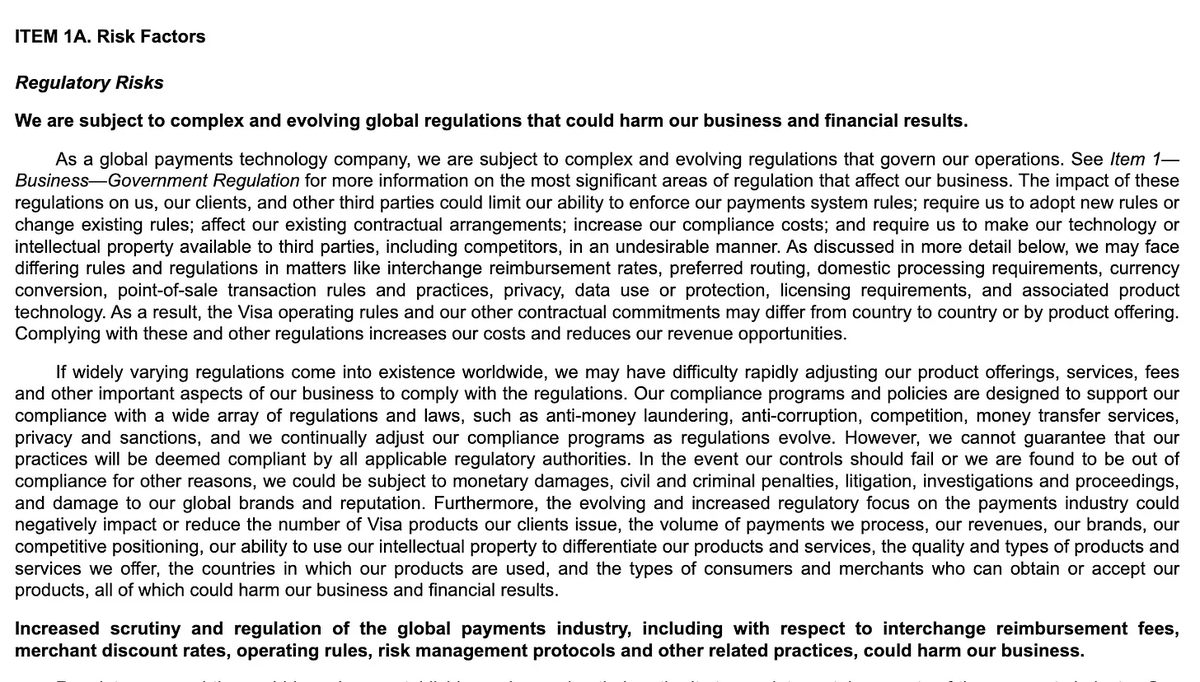
2. Risk factors
This section shows the risks a company faces, usually listed in order of importance.
Going through this section is very important. As Benjamin Graham once said:
“The essence of investment management is the management of risks, not the management of returns."
This section shows the risks a company faces, usually listed in order of importance.
Going through this section is very important. As Benjamin Graham once said:
“The essence of investment management is the management of risks, not the management of returns."
When a company has a lot of goodwill on its balance sheet, generates a significant percentage of its revenue from a few clients, has low margins, or is active in a highly competitive market, it increases the risk for you as an investor.
3. Financial statements
As an investor you want to buy financially healthy companies with high margins and plenty of reinvestment opportunities.
That’s why the Financial Statements are one of the most important sections of a 10-K.
As an investor you want to buy financially healthy companies with high margins and plenty of reinvestment opportunities.
That’s why the Financial Statements are one of the most important sections of a 10-K.
There are 3 Financial Statements in a 10-K:
- Balance sheet
- Income statement
- Statement of cash flows
- Balance sheet
- Income statement
- Statement of cash flows
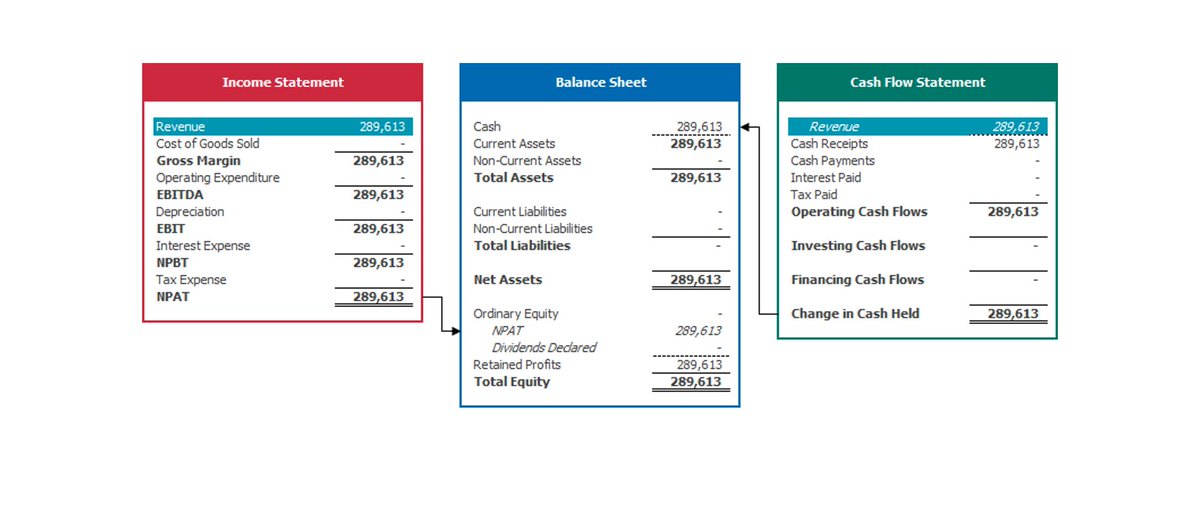
- Balance Sheet: gives you an overview of a company's main assets and liabilities.
You want to invest in companies which don't have too much debt
You want to invest in companies which don't have too much debt
- Income Statement: shows the company's revenues and expenses over a certain period.
You want to invest in profitable companies which can grow their revenue organically at an attractive rate.
You want to invest in profitable companies which can grow their revenue organically at an attractive rate.
- Cash Flow Statement: gives an overview about how much cash goes in and out a company over a certain period.
You want to invest in companies that are cash flow positive.
You want to invest in companies that are cash flow positive.
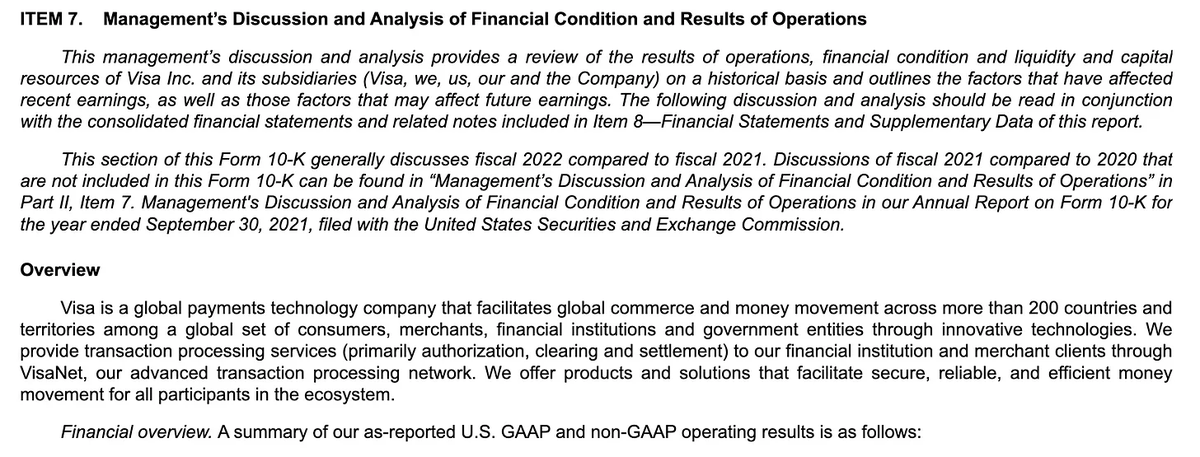
4. Management discussions and analysis (MD&A)
This section shows the view of management on the business results of the past fiscal year.
This section shows the view of management on the business results of the past fiscal year.
It’s always important to look at the qualitative factors behind the numbers.That’s why it’s key that management can tell its story in its own words.
Is the increasing revenue structural? Or is it because of a one-off event?
Is the increasing revenue structural? Or is it because of a one-off event?
You want to invest in companies with an integer management with skin in the game.
Management should always give you a reliable view about the performance of the company.
Avoid companies that do not give an honest representation of their results.
Management should always give you a reliable view about the performance of the company.
Avoid companies that do not give an honest representation of their results.
That's it for today!
If you liked this, you'll love our website.
▪️ Each Tuesday we share 5 investment insights
▪️ Each Thursday we publish a deeper investment article
Start your journey here:
qualitycompounding.substack.com
If you liked this, you'll love our website.
▪️ Each Tuesday we share 5 investment insights
▪️ Each Thursday we publish a deeper investment article
Start your journey here:
qualitycompounding.substack.com

Loading suggestions...