

Great Britain would use its superpower might into bullying much of the world to abolish slavery, despite this evil being the global norm.
A thread on how under the Union Jack, slavery was globally challenged for the first time ever. 🧵🇬🇧
(Sources cited at the end.)
A thread on how under the Union Jack, slavery was globally challenged for the first time ever. 🧵🇬🇧
(Sources cited at the end.)
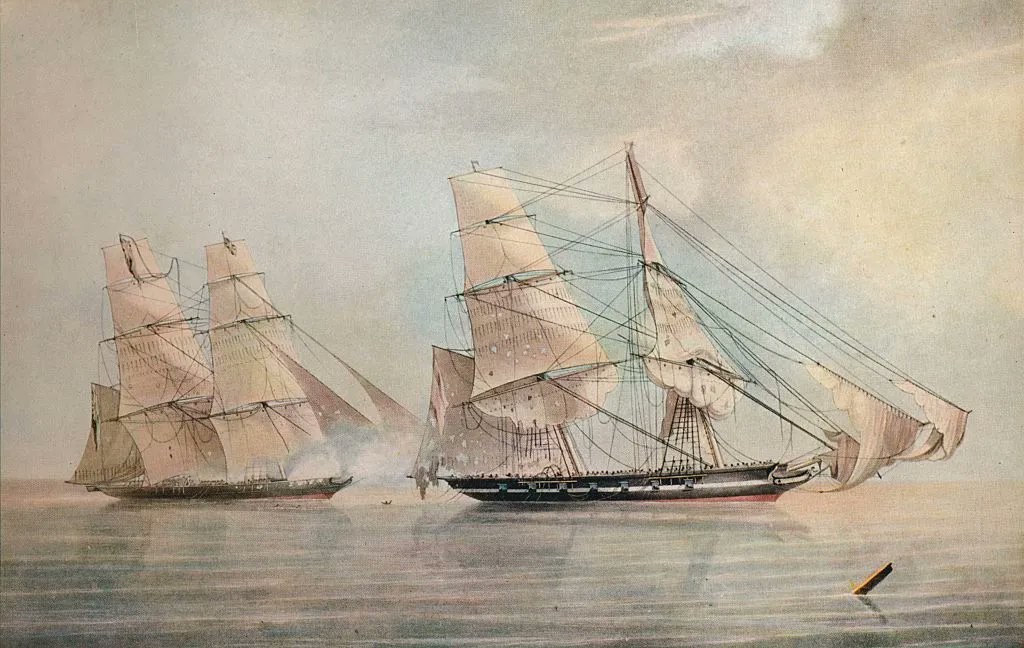
By the 1700s, slavery and the slave trade was practised across all races, continents and many cultures.
Many Euro-Americans bought slaves from the West Africa, with Arab traders dominating East Africa.
Many native Africans would capture & sell their fellow man at the coast.
Many Euro-Americans bought slaves from the West Africa, with Arab traders dominating East Africa.
Many native Africans would capture & sell their fellow man at the coast.
In the process, they would reap in gross profits. Some people attempt to the excuse this by saying that they were forced by European colonists.
This is false, they did it to reap gross profits. Europeans generally lacked the resources to go deep into the African continent.
This is false, they did it to reap gross profits. Europeans generally lacked the resources to go deep into the African continent.
Slavery was also widespread in caste based cultures & competing tribes.
Britain was a very large player in the abominable trade.
However, it would later go against the global consensus, wage war, lose thousands of lives & spend lots of money to try to rid slavery from Earth:
Britain was a very large player in the abominable trade.
However, it would later go against the global consensus, wage war, lose thousands of lives & spend lots of money to try to rid slavery from Earth:
By the 1700s, Britain pioneered classical liberal thought which naturally, coincided with a rise of abolitionist sentiment.
Societies were formed promoting abolition at home at in the Empire.
This included, the 'Society for Effecting the Abolition of the Slave Trade' (1787),
Societies were formed promoting abolition at home at in the Empire.
This included, the 'Society for Effecting the Abolition of the Slave Trade' (1787),
The 'Quakers', the Anti-Slavery Society (1823) and the Anti-Slavery International (formed in 1839, still exists) and others.
These groups helped to bring change both culturally and politically.
Their first major victory was in Somerset v Stewart (1772). The result saw...
These groups helped to bring change both culturally and politically.
Their first major victory was in Somerset v Stewart (1772). The result saw...
the de-facto end of slavery on English soil. Funded by the key abolitionist Granville Sharp, a run-away slave was declared free from his owner.
Many laws would be passed, slowly cutting away at the slave trade and slavery itself. This included, Slave Trade Act of 1807...
Many laws would be passed, slowly cutting away at the slave trade and slavery itself. This included, Slave Trade Act of 1807...
which banishing the trade across the Empire and the Abolition Act of 1833, with the end result of complete abolition in the British Empire.
However, Britain quickly realised that much of the world would not follow in its enlightened footsteps.
However, Britain quickly realised that much of the world would not follow in its enlightened footsteps.
Thus, in a largely humanitarian push, Britain decided that it would instead force the world to follow the abolitionist cause.
It utilised 3 key methods in bullying slave traders & nations into ending their involvement in slavery and the slave trade:
It utilised 3 key methods in bullying slave traders & nations into ending their involvement in slavery and the slave trade:
1) Diplomatic Pressure (soft power) to force countries & Empires into anti-slavery treaties.
2) Using the unrivalled power of the Royal Navy - military intervention.
3)'Gun boat diplomacy' - essentially a mix of the two above.
Following the defeat of Napoleon, Britain took...
2) Using the unrivalled power of the Royal Navy - military intervention.
3)'Gun boat diplomacy' - essentially a mix of the two above.
Following the defeat of Napoleon, Britain took...
the position as the world's only superpower. Known as the period of Pax Britannica, it was neither fun or easy to say 'no' to Britain.
Many nations needed to be on good terms with Britain to maintain their own sovereignty against foreign threats.
A key example was Portugal.
Many nations needed to be on good terms with Britain to maintain their own sovereignty against foreign threats.
A key example was Portugal.
It 1815 the Portuguese had a treaty with Britain drafted which banned the slave trade north of the equator.
When the treaty was signed, in 1817, a clause was added allowing Britain to detain their ships, north of the equator, if they were deemed to hold slaves.
When the treaty was signed, in 1817, a clause was added allowing Britain to detain their ships, north of the equator, if they were deemed to hold slaves.
Britain would go on to sign many treaties with other nations to try to bring the trade and institution to an end.
Another example was the Anglo-Brazilian treaty of 1826. This international treaty made the entire Brazilian slave trade illegal in 1830.
Another example was the Anglo-Brazilian treaty of 1826. This international treaty made the entire Brazilian slave trade illegal in 1830.
However, the slave trade continued illegally in Brazil with over 750,000 slaves imported between 1831-1850.
Despite 🇬🇧 using its Royal Navy to capture ships, free slaves & try the slave traders in courts, Brazil refused to renew its treaty with the UK, in 1844.
Despite 🇬🇧 using its Royal Navy to capture ships, free slaves & try the slave traders in courts, Brazil refused to renew its treaty with the UK, in 1844.
Britain responded by passing the Slave Trade Brazil Act of 1845, declaring any Brazilian ships partaking in the slave trade as piracy. This was despite Brazil's protests.
The Royal Navy essentially ignored Brazil and continued capturing their ships and freeing slaves.
The Royal Navy essentially ignored Brazil and continued capturing their ships and freeing slaves.
Under authority from this Act, Great Britain sent some of its squadron that had been growing in numbers in the South Atlantic to invade Brazil’s territorial waters in 1850.
Before long, British warships exchanged fire with Brazilian coastal fortresses - in Paranaguà, for example
Before long, British warships exchanged fire with Brazilian coastal fortresses - in Paranaguà, for example
Of course, this naval blockade was a complete violation of internationally recognised territory. But Britain did not care. It would force Brazil to end slavery.
Brazil’s foreign minister admitted that the ‘ideas of the age in which we live’ could no longer be ignored.'
Brazil’s foreign minister admitted that the ‘ideas of the age in which we live’ could no longer be ignored.'
Brazil, like all nations, could not afford war with the UK. So, in September 1850 they passed a new anti-slavery bill, with the numbers of slaves traded there dropping drastically, ending in 1855. Moreover, Great Britain refused to repeal the Act until 1869,
In case it had to teach Brazil another lesson in abolition.
What we see here is a key example of Britain's navy taking the role of global police.
Between 1808-1860 the Royal Navy’s West Africa Squadron captured 1600 slave ships and freed 150,000 slaves.
What we see here is a key example of Britain's navy taking the role of global police.
Between 1808-1860 the Royal Navy’s West Africa Squadron captured 1600 slave ships and freed 150,000 slaves.
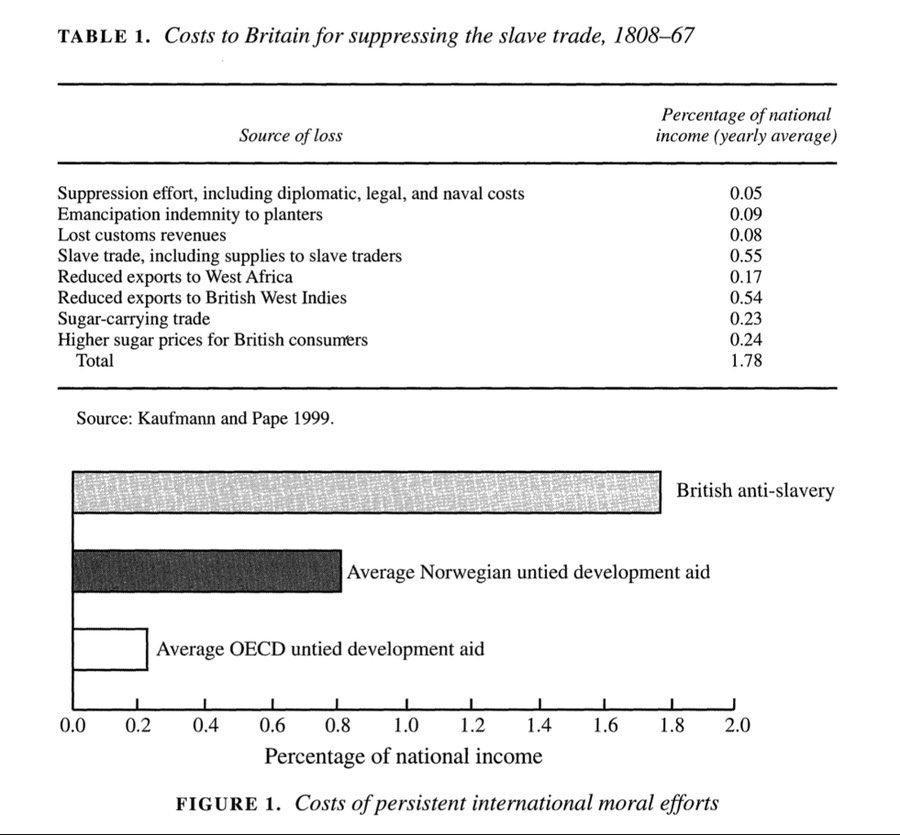
But the role of world police was expensive. Not just in resources (as suppression of the Atlantic Slave trade cost the UK around 1.8% of yearly GNI between 1807-1867. A far higher cost than modern humanitarian efforts) but also in lives.
Britain was a maritime power.
Britain was a maritime power.
Losing sailors was especially dangerous then for its global power status.
Between 1808-1860, over 2000 Royal Navy soldiers in the West Africa would die, either in conflict with slave traders or because of disease.
Resources were stretched, which is why gun boat diplomacy...
Between 1808-1860, over 2000 Royal Navy soldiers in the West Africa would die, either in conflict with slave traders or because of disease.
Resources were stretched, which is why gun boat diplomacy...
was so important as simply capturing slave ships wasn't enough to enforce abolition.
But there was another problem, Britain lacked the resources to go into Africa and enforce abolition in the continent.
Slavery itself was an important part of many African economies,
But there was another problem, Britain lacked the resources to go into Africa and enforce abolition in the continent.
Slavery itself was an important part of many African economies,
Ranging from the Aro-Niger Delta Confederacy to Zanzibar.
African traders often captured innocents through brute force, be it village raids or wars. Many times force was used through cooperation with other slavers with village slave raids being a common occurrence.
African traders often captured innocents through brute force, be it village raids or wars. Many times force was used through cooperation with other slavers with village slave raids being a common occurrence.
It didn't help that within Africa, slaves were often used as commodity of exchange or that ivory and slaves were exchanged for ammunition in many places.
Unyamwezi being a clear example.
For the Bemba chiefs, these same trades vastly contributed to their power.
Unyamwezi being a clear example.
For the Bemba chiefs, these same trades vastly contributed to their power.
The increase in firearms for the Bemba establishment allowed their control over the populous to grow. In turn, they enslaved more of the population for more firearms, especially as the supply of ivory decreased.
Britain did its best to alleviate the internal African trade by...
Britain did its best to alleviate the internal African trade by...
Creating the 'free colonies', where Africans could live in their continent without fear of slavery. A key example being the colony of Sierra Leone.
However, a rightful criticism of the British is that in many abolitionist areas, indentured servitude existed for a period after
However, a rightful criticism of the British is that in many abolitionist areas, indentured servitude existed for a period after
which took longer to get rid of. But Britain remained the driving force in emancipation.
It did its best to eradicate slavery. Such a task was and still is impossible. Via diplomatic pressure, be it with slave trading nations, influence in African politics or threats of war...
It did its best to eradicate slavery. Such a task was and still is impossible. Via diplomatic pressure, be it with slave trading nations, influence in African politics or threats of war...
and direct conflict. Ultimately, if this quest was not largely humanitarian, why bother?
Economically, it was costly to Britain. It cost thousands of valuable Royal Navy lives. It caused lots of geopolitical friction between Britain and much of the world.
Economically, it was costly to Britain. It cost thousands of valuable Royal Navy lives. It caused lots of geopolitical friction between Britain and much of the world.
I wrote an article about this very topic for The Spectator. Feel free to give it a read:
spectator.co.uk
spectator.co.uk

We must never forget the many faults and evils in Britain's history. At the same time we should never forget this Kingdom decided at the height of its power, to try to rid the world of this universal evil.
Loading suggestions...