

In the context of a global war on Islam, one group of Muslims making peace with an aggressing enemy is a kind of betrayal.
The allowance for making treaties with kuffar from classical texts on fiqh originated in discussion on a unified jama'ah, so a peace treaty would cover...
The allowance for making treaties with kuffar from classical texts on fiqh originated in discussion on a unified jama'ah, so a peace treaty would cover...
...all of the Muslim lands. And as for those who settle among the mushrikeen, the Prophet ﷺ freed himself from them, saying:
أنا بريء من كل مسلم يقيم بين أظهر المشركين
"I am not responsible for any Muslim who stays among polytheists."
[Sunan Abu Dawud 2645]
أنا بريء من كل مسلم يقيم بين أظهر المشركين
"I am not responsible for any Muslim who stays among polytheists."
[Sunan Abu Dawud 2645]
When a single enemy is fighting against the Muslims, one group making a peae treaty with them allows them to focus their resources on others.
To illustrate, look at US troop levels in Afghanistan and Iraq - as the level in Iraq declined, it increased in Afghanistan.
To illustrate, look at US troop levels in Afghanistan and Iraq - as the level in Iraq declined, it increased in Afghanistan.
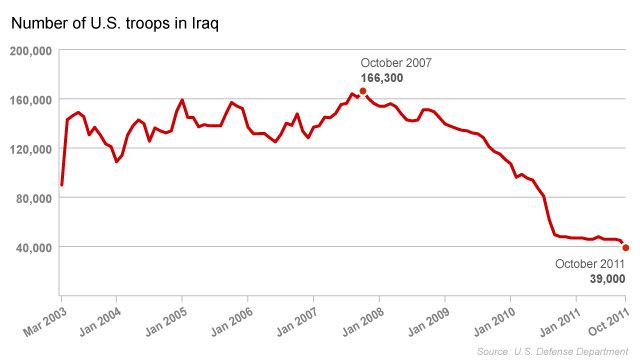
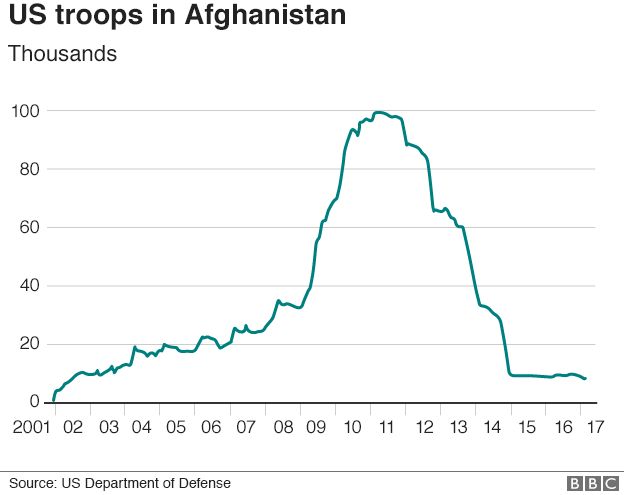
Resources were shifted according to strategic priorities.
This means that if Muslims adopt an overly localized or factionalized perspective, they can easily gain benefit for themselves at the expense of harm to other Muslims.
This means that if Muslims adopt an overly localized or factionalized perspective, they can easily gain benefit for themselves at the expense of harm to other Muslims.
This recalls the words of Umar ibn al Khattab, radhi Allahu anhu:
لا إسلام إلا بجماعة ولا جماعة إلا بإمارة ولا إمارة إلا بطاعة
"There is no Islam without unity, and no unity without leadership, and no leadership without obedience."
[Sunan al Darimi, 1/91]
لا إسلام إلا بجماعة ولا جماعة إلا بإمارة ولا إمارة إلا بطاعة
"There is no Islam without unity, and no unity without leadership, and no leadership without obedience."
[Sunan al Darimi, 1/91]
The ummah has a leadership vacuum due to the heavy burden of leadership. To truly lead the ummah means to take on responsibility for the whole ummah.
This is especially difficult when you are offered respite, rewards, and privileges at every turn for neglecting this mantle.
This is especially difficult when you are offered respite, rewards, and privileges at every turn for neglecting this mantle.
We should be ashamed for falling short in this regard, because the kuffar currently exceed us in this regard, although Allah azza wa jal says about them:
تحسبهم جميعا وقلوبهم شتى
"You think they are together, but their hearts are divided"
[59:14]
تحسبهم جميعا وقلوبهم شتى
"You think they are together, but their hearts are divided"
[59:14]
To give you an example, if a group of Muslims wanted to enter a peace treaty with the US, but as a condition for this peace treaty insisted that they reserved the right to attack France.
Do you think the US would ever accept such a condition?
Do you think the US would ever accept such a condition?
They would never, because their interests are so closely aligned with France's, they would perceive an attack on France as all but identical to an attack on themselves.
This also points to the importance of economic relations.
This also points to the importance of economic relations.
The economies of France and the US are so interconnected that a major disruption of the French economy would have major repercussions for the US economy. When it comes to Muslim countries, however, these interconnections are missing to a large extent.
This is because the economies have been restructured according to colonial logic. To see this logic, looking at a map of colonial railroads in Africa can be helpful.
With the exception of South Africa, almost all railroads connect inlands to ports.
With the exception of South Africa, almost all railroads connect inlands to ports.
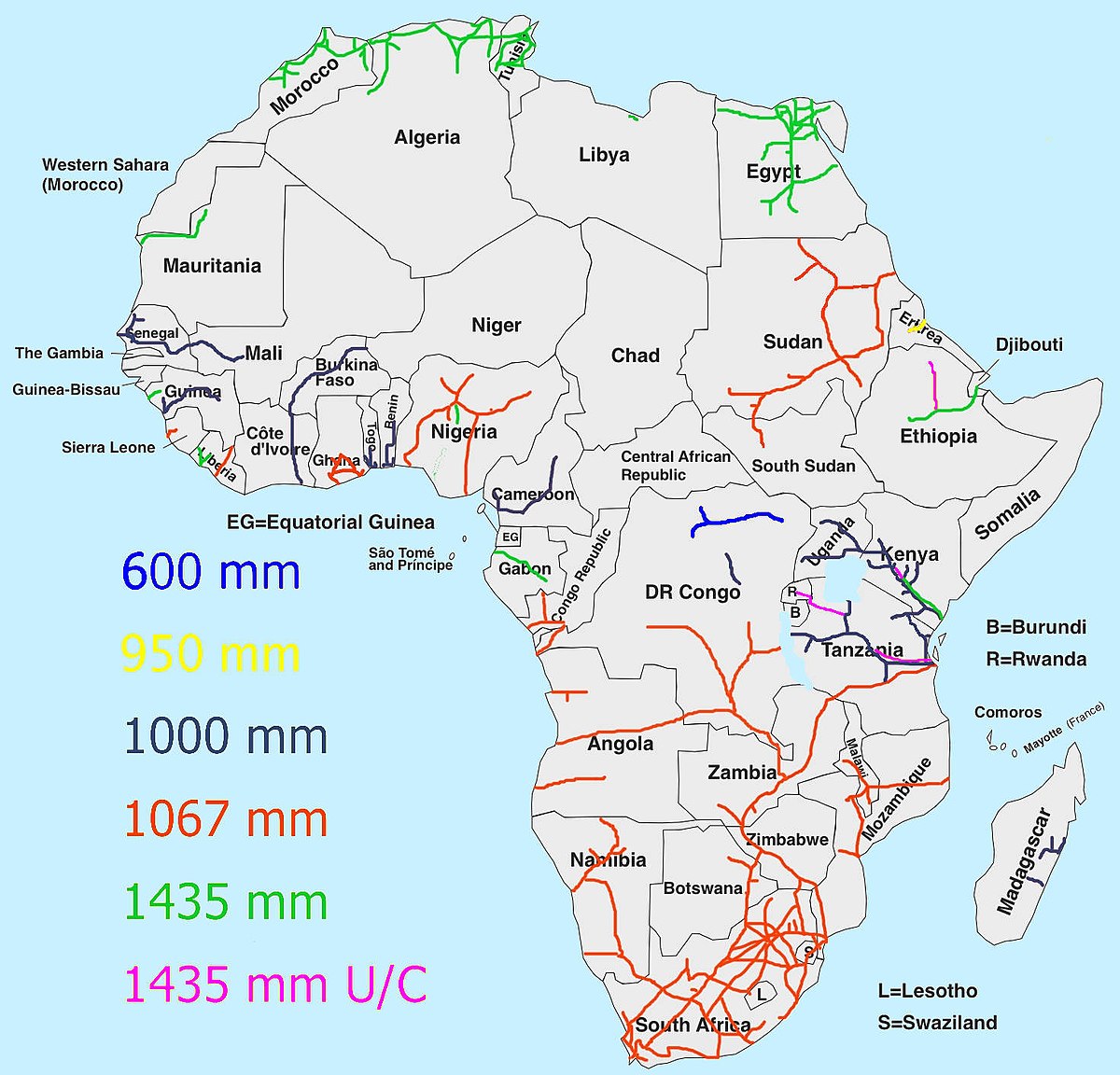
There are very few connections between African countries. Rather, infrastructure connected resource producing interior to ports where goods would be transported to and from Europe.
South Africa is an exception. Why?
South Africa is an exception. Why?
Europeans permanently settled there, partly because the climate was more suitable to their temperament. Since they began to view it as their home, they built infrastructure in a way to truly build the country rather than just extract wealth from it.
As long as Muslim countries have resource flows of this nature, solidarity among Muslim countries will be limited.
It's very difficult to get out of this situation, because breaking the dependence on supply routes under the control of the kuffar comes with extreme hardship.
It's very difficult to get out of this situation, because breaking the dependence on supply routes under the control of the kuffar comes with extreme hardship.
However, when we are facing sanctions, starvation, and economic crises, we must remember:
ان يمسسكم قرح مس القوم قرح مثله
"If a wound should touch you, then a similar wound has touched the [other] people." [3:140]
ان يمسسكم قرح مس القوم قرح مثله
"If a wound should touch you, then a similar wound has touched the [other] people." [3:140]
Sanctions and blockades disrupt the flow of goods to Muslim lands, but they also deprive the kuffar of access to the resources and markets of the Muslim lands.
This may not be apparent when it is limited to one or two small countries.
This may not be apparent when it is limited to one or two small countries.
However, if more Muslims join it could have a much more powerful effect.
Damage inflicted upon the enemy, even if it is imperceptible, still can carry heavy reward, and this must be the true focus of struggle for the sake of Allah azza wa jal.
Damage inflicted upon the enemy, even if it is imperceptible, still can carry heavy reward, and this must be the true focus of struggle for the sake of Allah azza wa jal.
So we should beware of any economic prosperity or peace that comes at the expense of appeasing enemies who are still waging savage wars against Muslims in other areas, lest we be resurrected among the treacherous.
ان الله لا يحب الخآىنين
ان الله لا يحب الخآىنين
We cannot expect victory over the enemy when they, despite their division, are more united than us.
So we must heed the command of Allah azza wa jal:
و قاتلوا المشركين كآفة كما يقاتلونكم كآفة
"And fight the polytheists all together, as they fight you all together." [9:36]
So we must heed the command of Allah azza wa jal:
و قاتلوا المشركين كآفة كما يقاتلونكم كآفة
"And fight the polytheists all together, as they fight you all together." [9:36]
Loading suggestions...