

Why did 🇺🇸 invade 🇮🇶 in 2003?
It wasn't because Saddam Hussein was an imminent threat. It was to prove a point.
[THREAD]
It wasn't because Saddam Hussein was an imminent threat. It was to prove a point.
[THREAD]
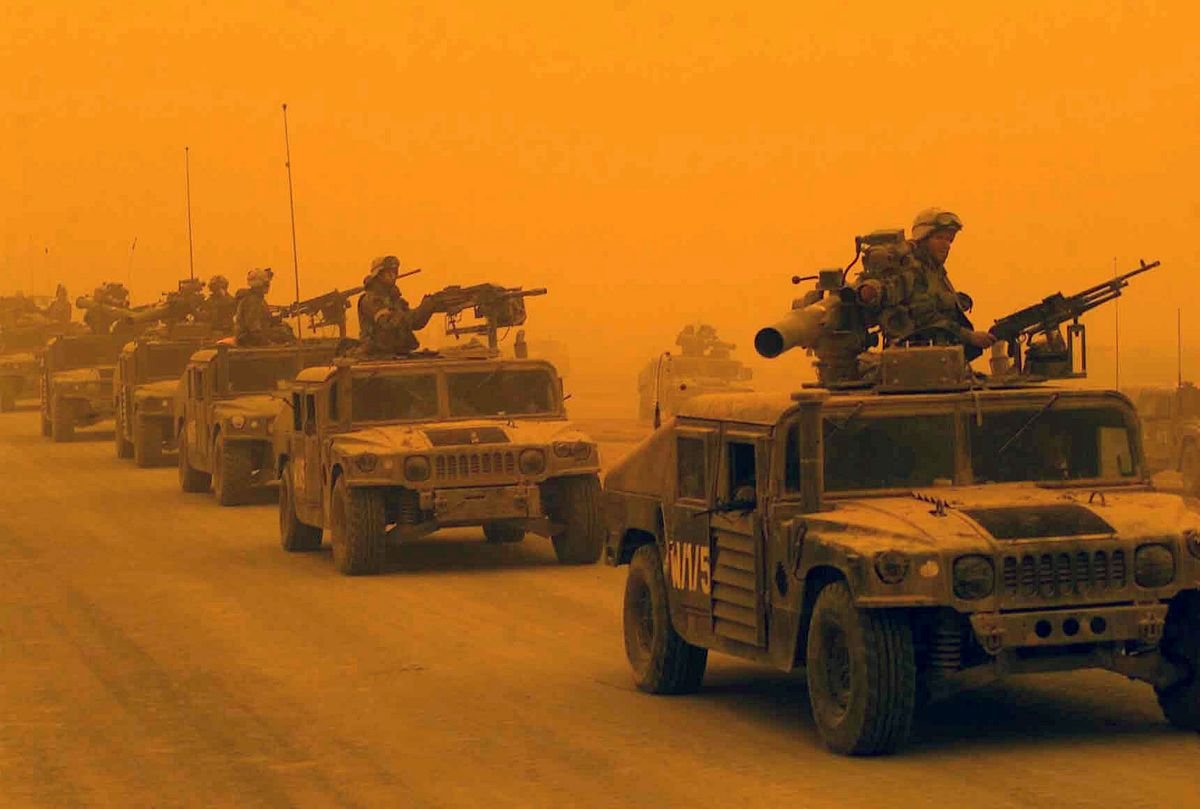
As many are aware, Sunday marks the 20th anniversary of the start of the 2003 US-led invasion of Iraq.
Lots of pieces are being written to mark the anniversary. The range of views in those pieces suggests that debate over the war is far from over.
worldpoliticsreview.com
Lots of pieces are being written to mark the anniversary. The range of views in those pieces suggests that debate over the war is far from over.
worldpoliticsreview.com
But why did the US invade? Last year, I wrote a 🧵 that covered a number of possible explanations.
As I continue reflecting on the war, I've become convinced that one particular explanation stands out.
This 🧵 is about that explanation.
This 🧵 is about that explanation.
War ultimately comes down to a decision by a leader to approve the use of force.
This why leaders matter...
amazon.com
This why leaders matter...
amazon.com
...especially in the case of uses of force by the United States.
amazon.com
amazon.com

It's also why predicting when a specific crisis will become a full-fledged war is very hard to do.
cambridge.org
cambridge.org
Hence, to understand why the United States invaded Iraq in 2003, we need to focus on the US leader at that time: George W. Bush
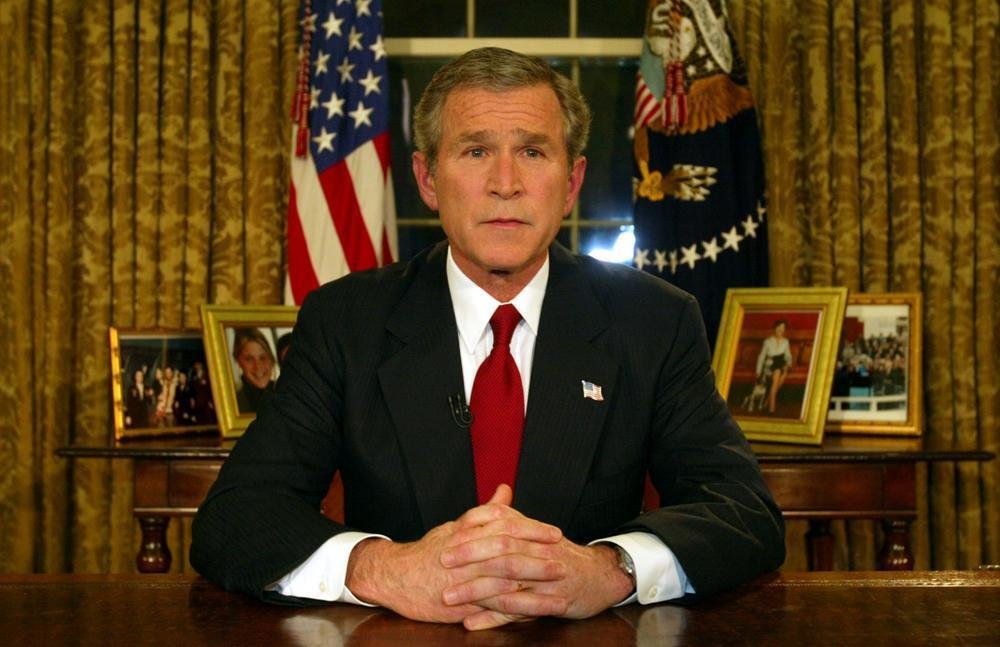
It's true that he was taking advise from a host of individuals, but the decision was ultimately his and his alone.
What rationale did he give? What ultimately convinced him to make the decision?
What rationale did he give? What ultimately convinced him to make the decision?
His decision must be placed in the context of the event that would shape his presidency: the September 11, 2001 attacks.
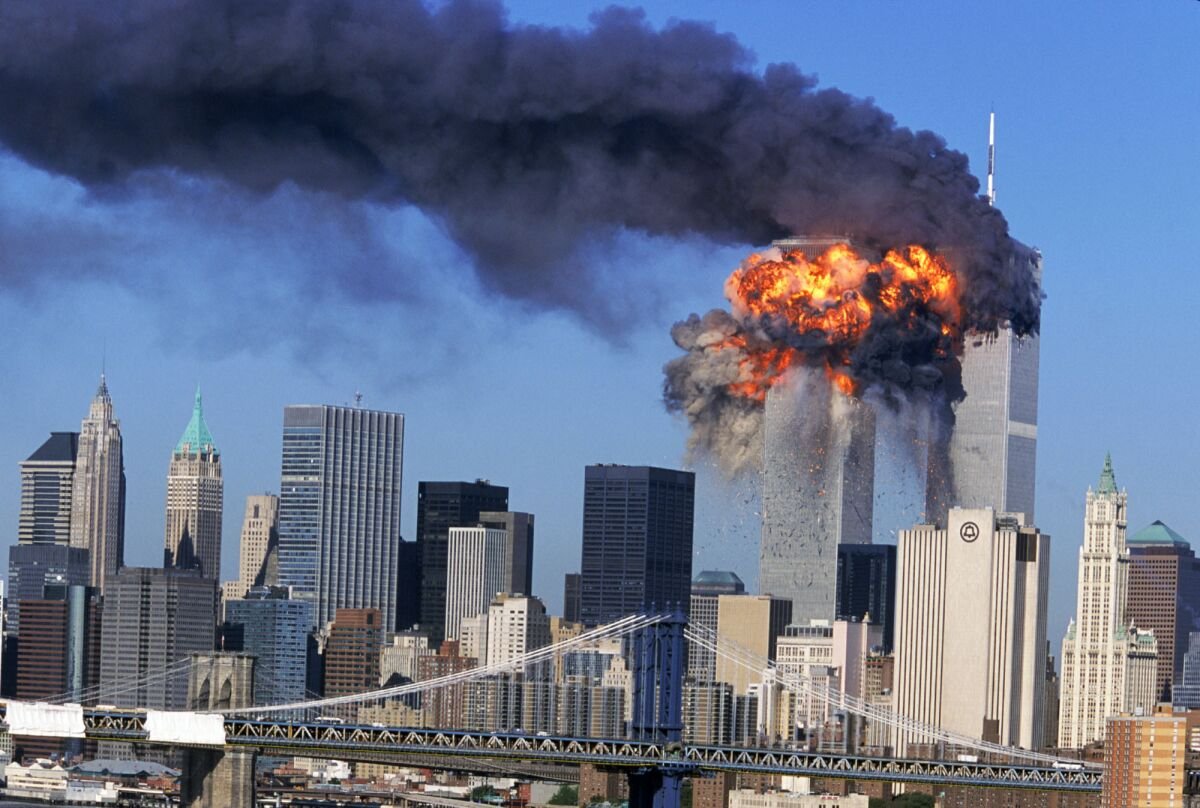
Those attacks made the United States an anxious nation. Bush himself was anxious.
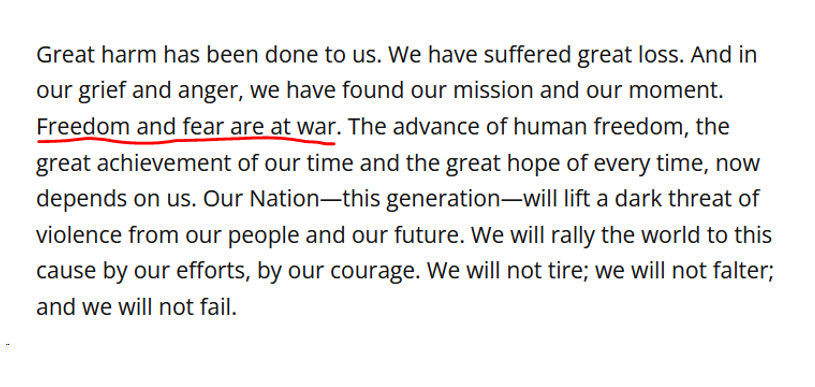
The US was weakened and looked vulnerable. This was captured well by his words to the nation in a September 20, 2001 address to Congress.
youtube.com
The US was weakened and looked vulnerable. This was captured well by his words to the nation in a September 20, 2001 address to Congress.
youtube.com
He used the word "fear" a lot in the speech.
Link: presidency.ucsb.edu
Link: presidency.ucsb.edu
Of course, the US would take almost immediate action, invading Afghanistan (where the Al-Qaeda organization, which carried out the 9/11 attacks, were based)
But 🇦🇫 wasn't enough. Return again to his September 20 speech. He views 🇺🇸 as "called" to a greater mission: bring justice to 🌍.
"Tonight we are a country awakened to danger and called to defend freedom....Whether we bring our enemies to justice or bring justice to our enemies"
"Tonight we are a country awakened to danger and called to defend freedom....Whether we bring our enemies to justice or bring justice to our enemies"
My view is that Bush saw this time period as an opportunity to address ALL of the enemies of 🇺🇸, which by extension were "enemies of freedom" on 🌍
In other words, it was time to address the "rogue states" who didn't buy into the international order.
foreignaffairs.com
In other words, it was time to address the "rogue states" who didn't buy into the international order.
foreignaffairs.com
This view was famously captured by the "axis of evil" remarks in Bush's January 2002 State of the Union Address, where he singled out 🇮🇶🇮🇷&🇰🇵 as targets against whom the US would "have the privilege to fight freedom's fight."
youtube.com
youtube.com
This view became official policy with the release of the Bush Administration's National Security Strategy in September 2002.
Link: nssarchive.us
Link: nssarchive.us
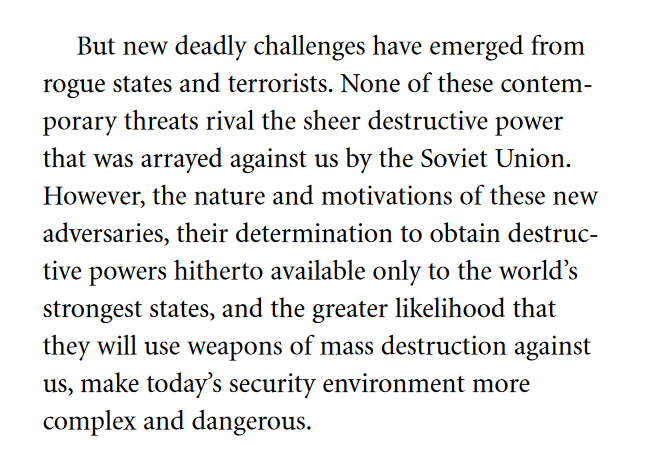
But which one to target next?
This is where it's useful to turn to Bush's memoirs (though, of course, this is a less than perfect source, given that memoirs are subject to "post-hoc" justification).
amazon.com
This is where it's useful to turn to Bush's memoirs (though, of course, this is a less than perfect source, given that memoirs are subject to "post-hoc" justification).
amazon.com
By mid-August of 2002, it was confirmed to Bush that Iran had a nuclear program (as Bush describes, page 415, of his memoir). As he says, "All of the sudden, there weren't so many complaints about Iran in the axis of evil"
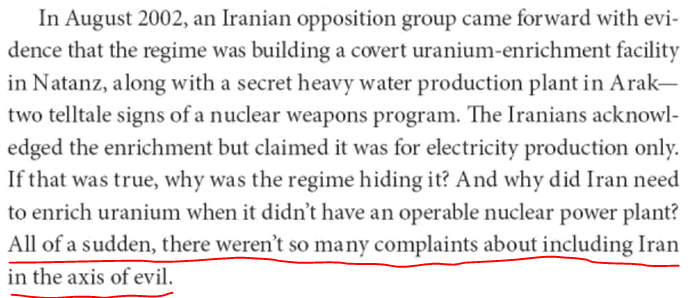
In many respects, Iran was more important of a target than Iraq. Consider again Bush's "Axis of Evil" remarks. When he lists the members of that Axis, he mentions Iran before Iraq.
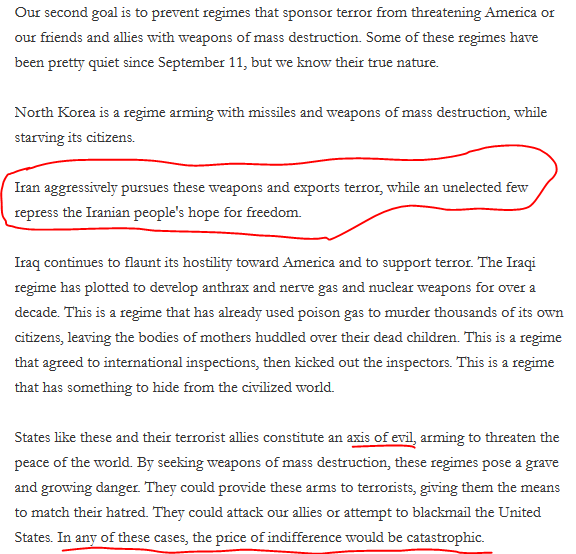
But Bush apparently had two reasons to NOT attack Iran:
1) it appears that Bush found the "budding freedom movement" in Iran encouraging
1) it appears that Bush found the "budding freedom movement" in Iran encouraging
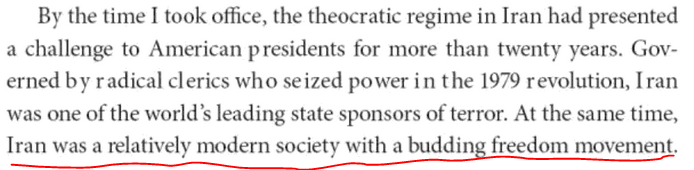
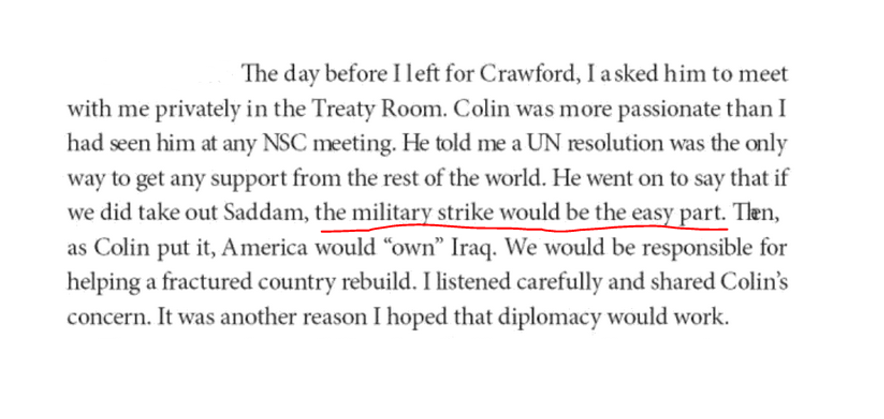
2) It's very likely that Iraq was viewed as the "easier" target. Here is Bush describing what Colin Powell said to him about invading Iraq.
So the ultimate goal might have been to stop Iran, but do so by striking Iraq and using that as a demonstration of US power and US resolve.
Moreover, since the US already controlled Iran's Eastern neighbor, Afghanistan, conquering Iraq would enable the US to encircle Iran.
Moreover, since the US already controlled Iran's Eastern neighbor, Afghanistan, conquering Iraq would enable the US to encircle Iran.
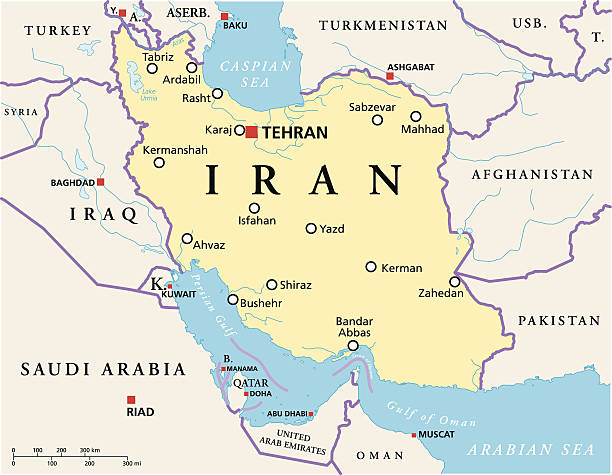
In a sense, this explanation -- that invading Iraq was about making a point to Iran -- is a variation of the argument put forward by Ahsan Butt: that the invasion was intended as a demonstration of US power.
tandfonline.com
tandfonline.com

In sum, Bush authorized the invasion of Iraq to demonstrate to other threats, notably Iran, that the United States was a powerful nation willing to use force to eliminate threats to the world order.
[END]
[END]
Loading suggestions...