
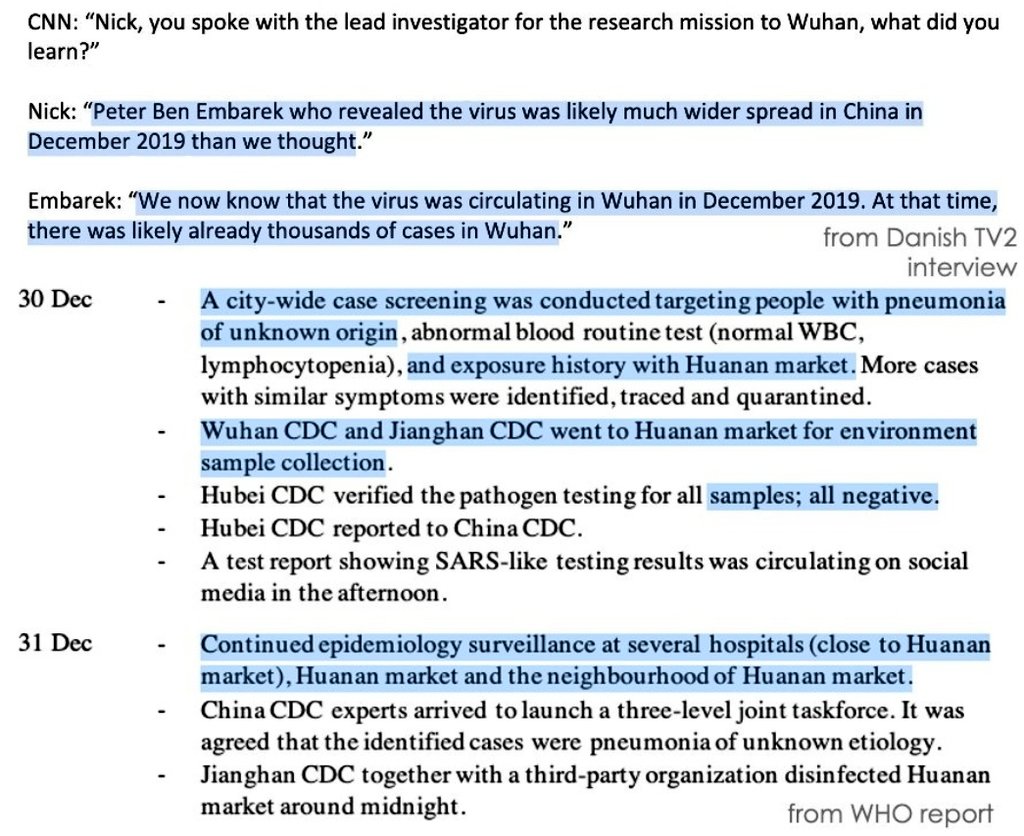
@berkley_lynch @abhishek_s_1 @KatzOnEarth @sylvio_si @SherylNYT @benjmueller @ScienceMagazine The Science papers rely on what David Relman described as "hopelessly impoverished" early case data. WHO & the Taiwanese CECC consider market origin unlikely as there were earlier cases. WHO investigator Peter Ben Embarek said there were thousands of cases by Dec 2019.
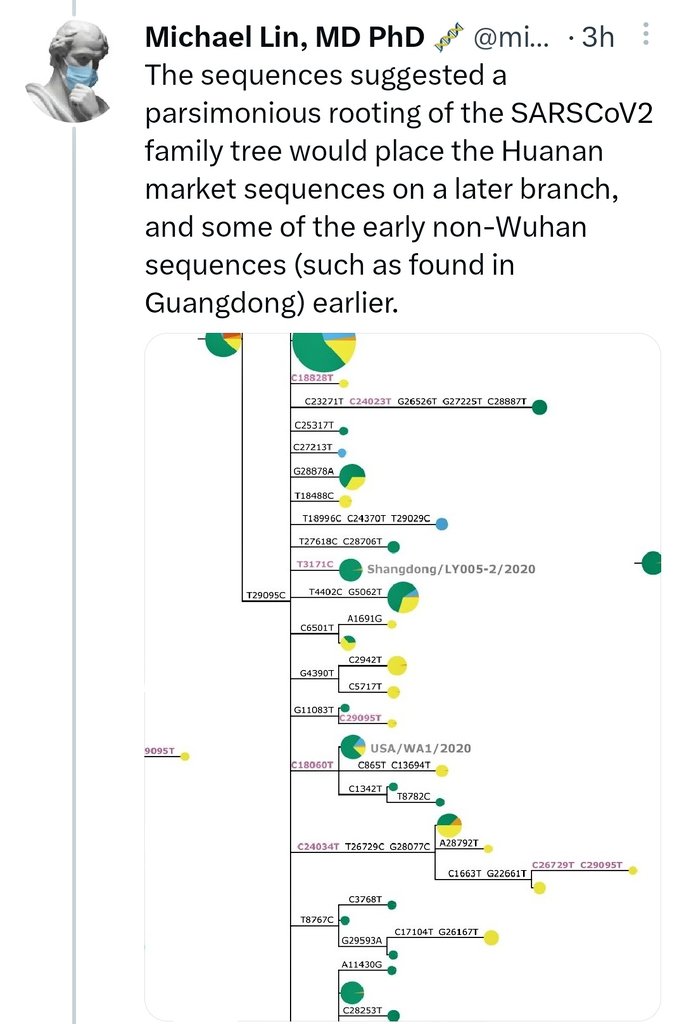
@berkley_lynch @abhishek_s_1 @KatzOnEarth @sylvio_si @SherylNYT @benjmueller @ScienceMagazine Michael Lin notes there is evidence of sequences that predate those found in the market.
@berkley_lynch @abhishek_s_1 @KatzOnEarth @sylvio_si @SherylNYT @benjmueller @ScienceMagazine Sudhir Kumar's group used sequences recovered by Jesse Bloom and estimated a single point of emergence in September or early October 2019.
academic.oup.com
academic.oup.com
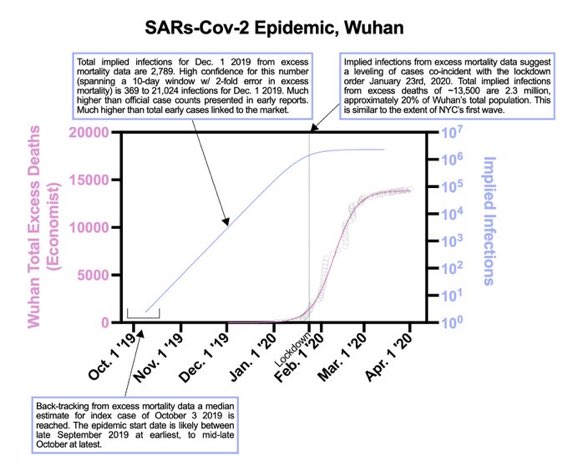
@berkley_lynch @abhishek_s_1 @KatzOnEarth @sylvio_si @SherylNYT @benjmueller @ScienceMagazine That date fits with excess death data per @scotub
@berkley_lynch @abhishek_s_1 @KatzOnEarth @sylvio_si @SherylNYT @benjmueller @ScienceMagazine @scotub In terms of Wuhan, the nearest relatives to SARS-CoV-2 are found in Yunnan and Laos (~1,000 miles). Both areas the Wuhan Institute of Virology collected samples. They were experimenting for spillover risk in hACE2 mice. Now refuse to share their records. thebulletin.org
Loading suggestions...