

How does a broker make money?
How are brokers able to offer zero-cost brokerage?
A thread on the broking business
How are brokers able to offer zero-cost brokerage?
A thread on the broking business
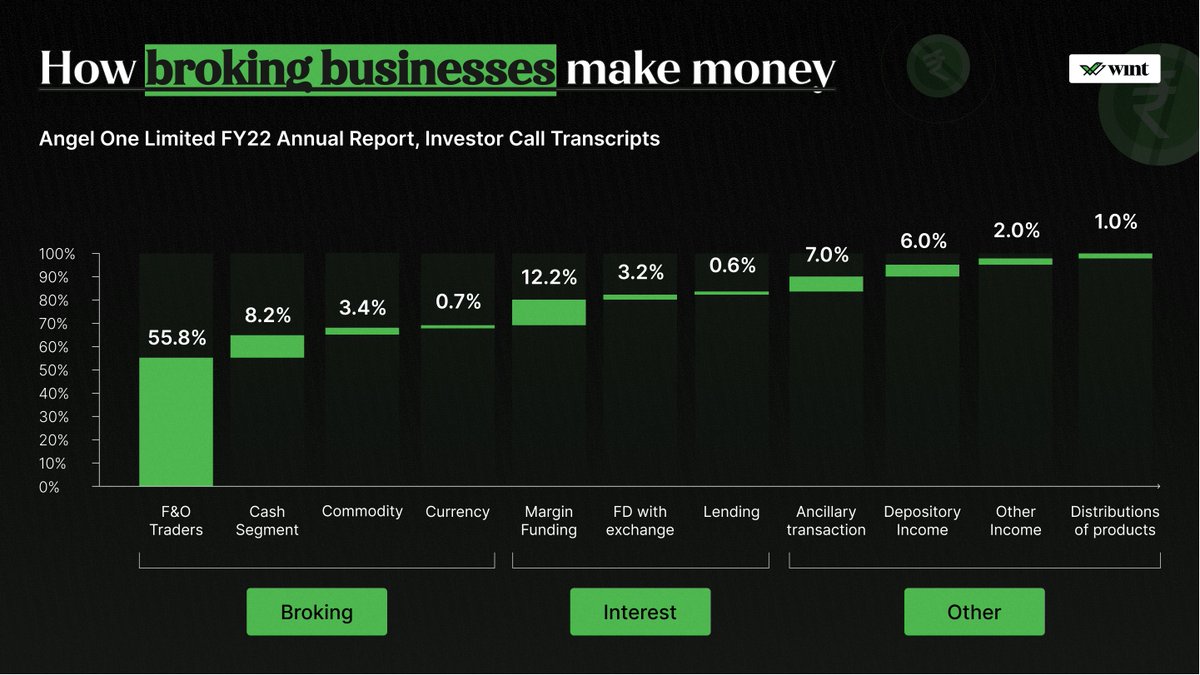
1. Brokers help investors and traders access markets.
Investors focus on the long-term picture but unfortunately, they don’t make brokers much money.
The traders are the ones who bring in the money. Every trade = more brokerage
Investors focus on the long-term picture but unfortunately, they don’t make brokers much money.
The traders are the ones who bring in the money. Every trade = more brokerage
In broking, there are 4 segments - Cash, Futures and options, Currency, and Commodity.
In the Cash segment, you pay for the shares upfront and the shares are delivered to you. This is where most people learn how to trade.
But here you are limited by your own capital.
In the Cash segment, you pay for the shares upfront and the shares are delivered to you. This is where most people learn how to trade.
But here you are limited by your own capital.
People then move to the next segment - futures, and options where the majority of trading happens.
Futures and options are derivative instruments where you can take larger positions on the same amount of money.
Futures and options are derivative instruments where you can take larger positions on the same amount of money.
These high-risk high reward payoffs are not only addictive for traders but also where brokers make their money.
To make these trades in the cash segment, you need funds. When you pledge securities, you get a margin that people used for trading.
But recently SEBI changed the margin rules, and traders now have to put up 100% of their margin in cash.
But recently SEBI changed the margin rules, and traders now have to put up 100% of their margin in cash.
This blocks up capital, adds a cost to trading, and limits the number of trades a person can take.
On the other hand, in futures and options, traders can still operate on a lot of leverage.
This trend is driving volumes from the cash segment to FnO.
On the other hand, in futures and options, traders can still operate on a lot of leverage.
This trend is driving volumes from the cash segment to FnO.
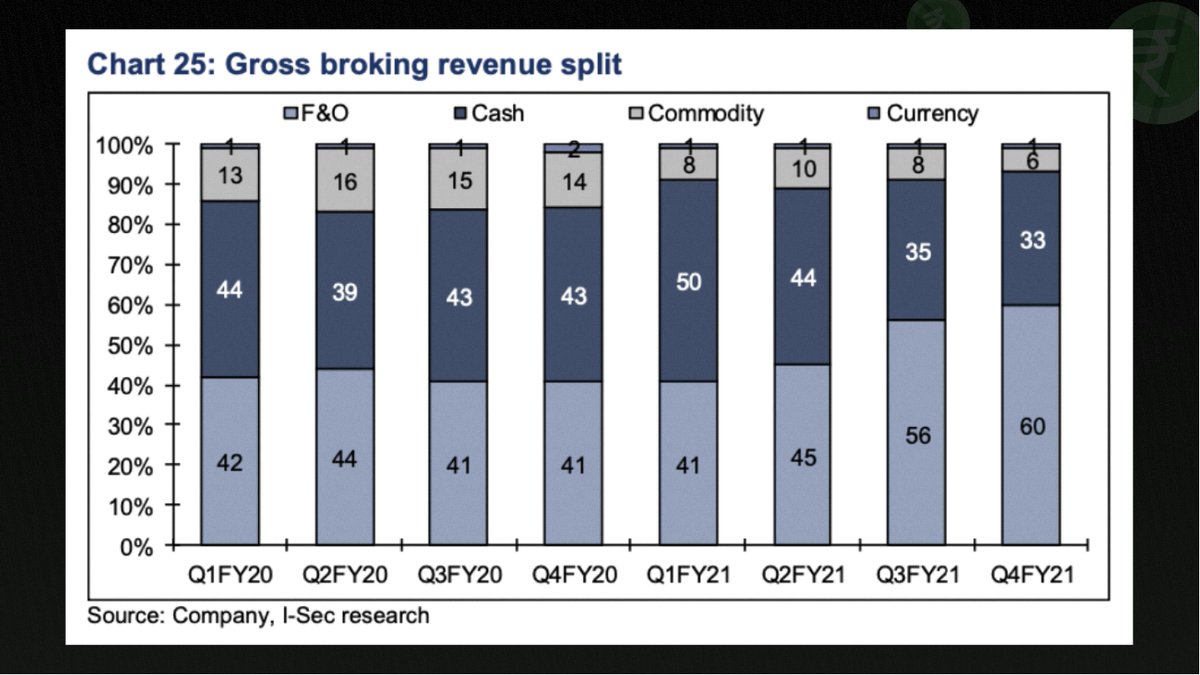
One important thing to note here is monthly unique active users.
FnO volumes have spiked as intraday traders switched to options. But in terms of unique active users, long-term investors have a much larger share than the intraday or FnO segment.
FnO volumes have spiked as intraday traders switched to options. But in terms of unique active users, long-term investors have a much larger share than the intraday or FnO segment.
Commodity and currency markets are fairly underdeveloped so there is no significant contribution to broking.
2. When someone starts trading, they start with their own capital initially.
But there is a famous 90-90-90 rule in broking. It means 90% of traders lose 90% of their money in 90 days.
But there is a famous 90-90-90 rule in broking. It means 90% of traders lose 90% of their money in 90 days.
If customers run out of money, they stop trading and income stops.
So how do you keep the party going? You lend to the customers so they can trade.
This means they continue to trade and their volume of trading also goes up and you earn interest.
So how do you keep the party going? You lend to the customers so they can trade.
This means they continue to trade and their volume of trading also goes up and you earn interest.
There are four main components of interest income here
a) Margin Funding - When clients purchase securities on margin, they pay interest on this margin.
a) Margin Funding - When clients purchase securities on margin, they pay interest on this margin.
b) Interest income from FDs
Brokers are required to hold funds in FDs lien marked to the exchange to ensure liquidity. And they also individually hold their own funds in FDs.
Brokers are required to hold funds in FDs lien marked to the exchange to ensure liquidity. And they also individually hold their own funds in FDs.
c) Loan Against Securities
As a product, this has not penetrated yet in India but it is a secured loan that lowers costs for borrowers and is easy to underwrite for lenders.
As a product, this has not penetrated yet in India but it is a secured loan that lowers costs for borrowers and is easy to underwrite for lenders.
d) Float income
When clients keep their funds idle with brokers, brokers can invest this money and earn float income on these idle funds.
When clients keep their funds idle with brokers, brokers can invest this money and earn float income on these idle funds.
However, in the past few years, the contribution of interest income to revenues has reduced with the various rules by SEBI regarding leverage and client funds which have cut down on this interest income.
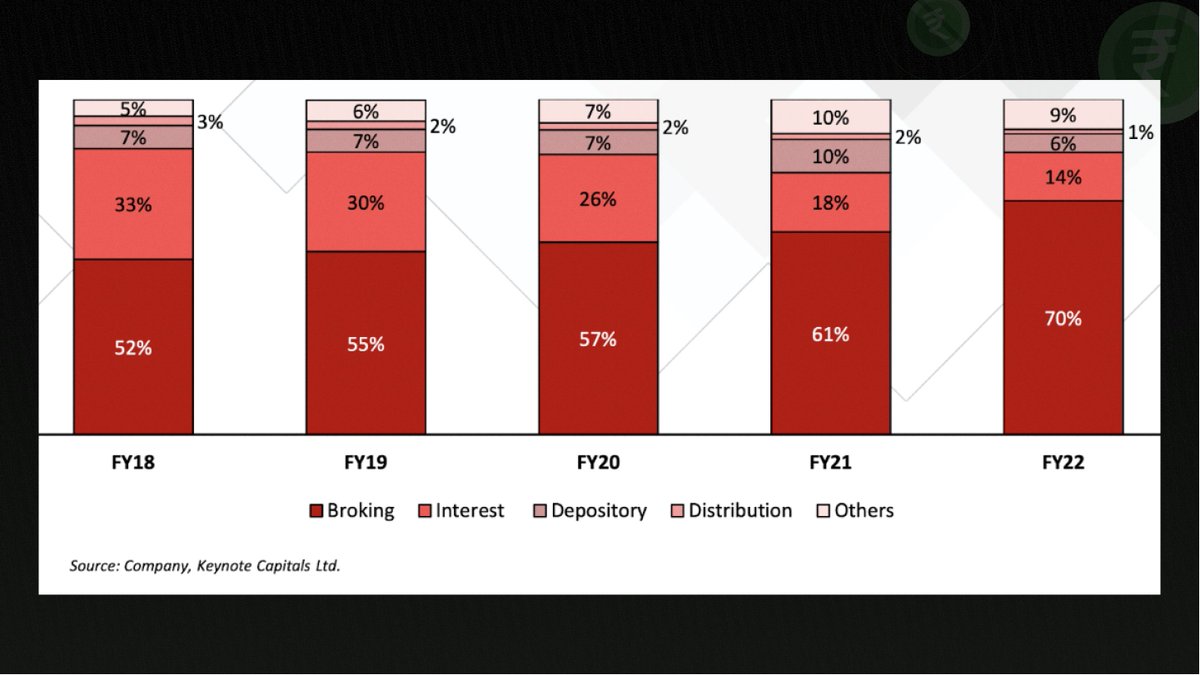
3. Depository income -
When you purchase a share from the exchange, most brokers take ~0 fees for delivery.
But when you sell, brokers (aka depository participants) charge you some fees. This makes up depository income.
When you purchase a share from the exchange, most brokers take ~0 fees for delivery.
But when you sell, brokers (aka depository participants) charge you some fees. This makes up depository income.
4. Growth -
Due to attrition or losses, many stop trading. So brokers need a steady stream of fresh customers to maintain their revenues.
Due to attrition or losses, many stop trading. So brokers need a steady stream of fresh customers to maintain their revenues.
And to grow, you either need to
a) monetise the same users better
b) ensure new customers are more than the customers turning inactive
c) wait for a bull run
a) monetise the same users better
b) ensure new customers are more than the customers turning inactive
c) wait for a bull run
5. Cross-selling of financial products -
And finally, to increase wallet share and retain customers for the long term, brokers cross-sell other financial products, but it needs a mature audience, trust, and good commissions.
This still only makes 1% of angel’s revenues.
And finally, to increase wallet share and retain customers for the long term, brokers cross-sell other financial products, but it needs a mature audience, trust, and good commissions.
This still only makes 1% of angel’s revenues.
So that is how a broking business makes money.
In a nutshell, Acquire -> Remove all barriers to trading -> Keep the customer trading -> Look for ways to maintain monthly users -> Cross-sell.
In a nutshell, Acquire -> Remove all barriers to trading -> Keep the customer trading -> Look for ways to maintain monthly users -> Cross-sell.
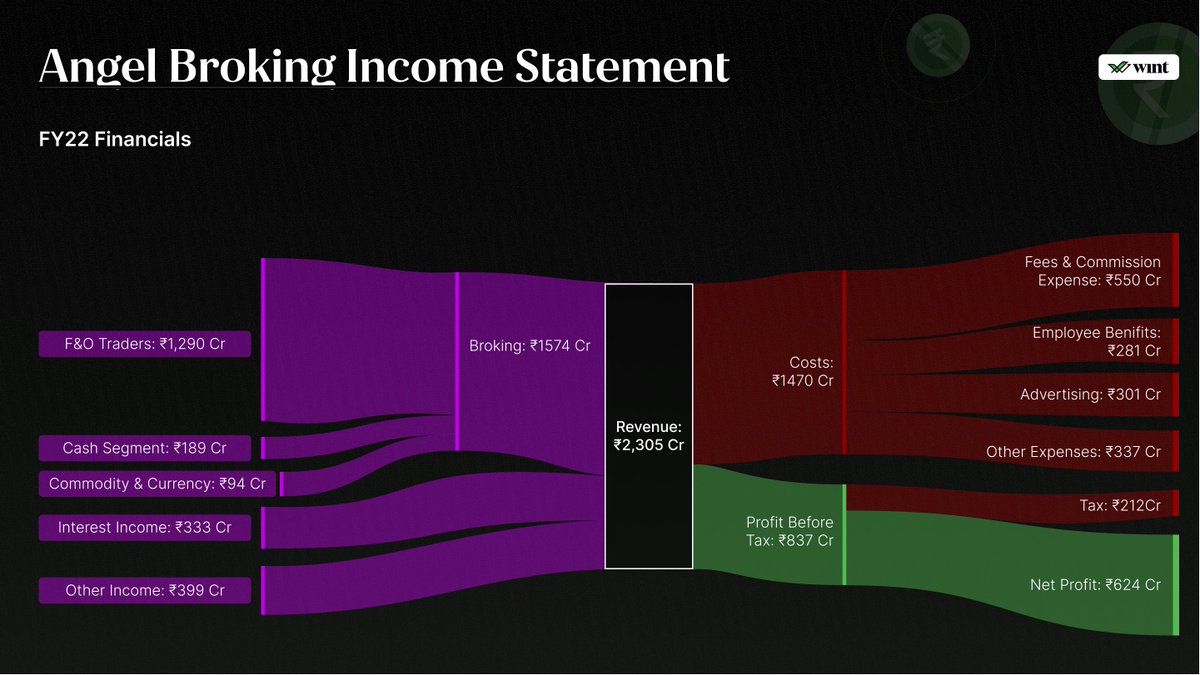
6. How do discount brokers offer you zero brokerage?
The traders and other streams of income subsidize the costs for regular equity delivery. While this cuts profits compared to a traditional broker, it gives discount brokers volumes.
The traders and other streams of income subsidize the costs for regular equity delivery. While this cuts profits compared to a traditional broker, it gives discount brokers volumes.
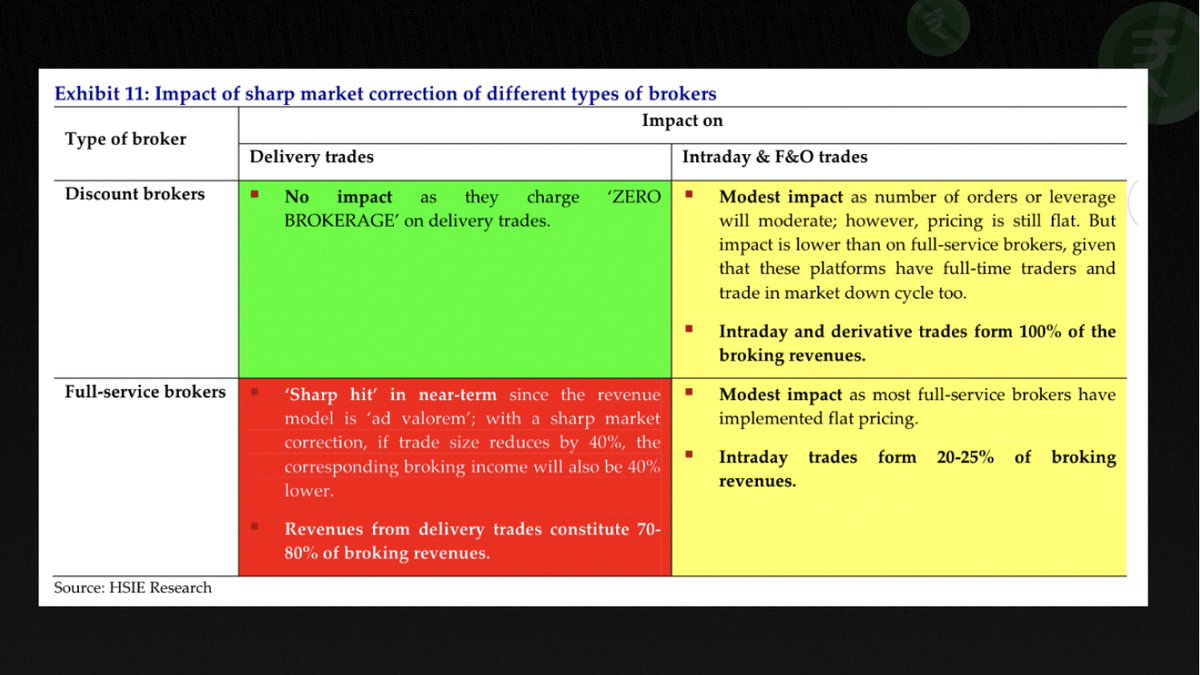
7. Impact of a market crash on regular and discount brokers
Broking income is highly correlated with market levels. When markets go on a bull run, people invest more, open new demat accounts, etc. When markets crash, active traders and trade volumes fall.
Broking income is highly correlated with market levels. When markets go on a bull run, people invest more, open new demat accounts, etc. When markets crash, active traders and trade volumes fall.
But it impacts traditional brokers more than discount brokers. How?
There are two kinds of trades -
1) delivery
2) intraday/F&O
Delivery trades make ~ 0 income for discount brokers but traditional brokers earn a significant amount from them.
There are two kinds of trades -
1) delivery
2) intraday/F&O
Delivery trades make ~ 0 income for discount brokers but traditional brokers earn a significant amount from them.
If markets crash 30%, each trade will be 30% smaller and brokerage will also take a hit. These traders also stop trading in market downtrends.
On the other hand, intraday/F&O has full-time traders who also trade in down cycles.
On the other hand, intraday/F&O has full-time traders who also trade in down cycles.
With the recent regulations by SEBI, float income for many brokers has been on a declining trend.
E.g. Returning idle money back to clients on a regular frequency.
E.g. Returning idle money back to clients on a regular frequency.
SEBI has also proposed an ASBA-like facility for trading where money won’t need to leave the bank account which will hurt discount brokers.
Do you think discount brokers will be able to sustain in this kind of environment?
Do you think discount brokers will be able to sustain in this kind of environment?
Loading suggestions...