
[🧵 Were the majority of scholars Ashʿarī?]
Thought I’d respond to the common argument that many Ashʿarīs resort to: “But… but… the majority of the scholars were Ashʿarī!” Well, let’s begin with the Salaf…
Thought I’d respond to the common argument that many Ashʿarīs resort to: “But… but… the majority of the scholars were Ashʿarī!” Well, let’s begin with the Salaf…
Abū Zurʿah (d. 264) and Abū Ḥātim (d. 277) both said, “We encountered the ʿUlamāʾ across all the lands—from Ḥijāz, ʿIrāq, Shām, Yemen…
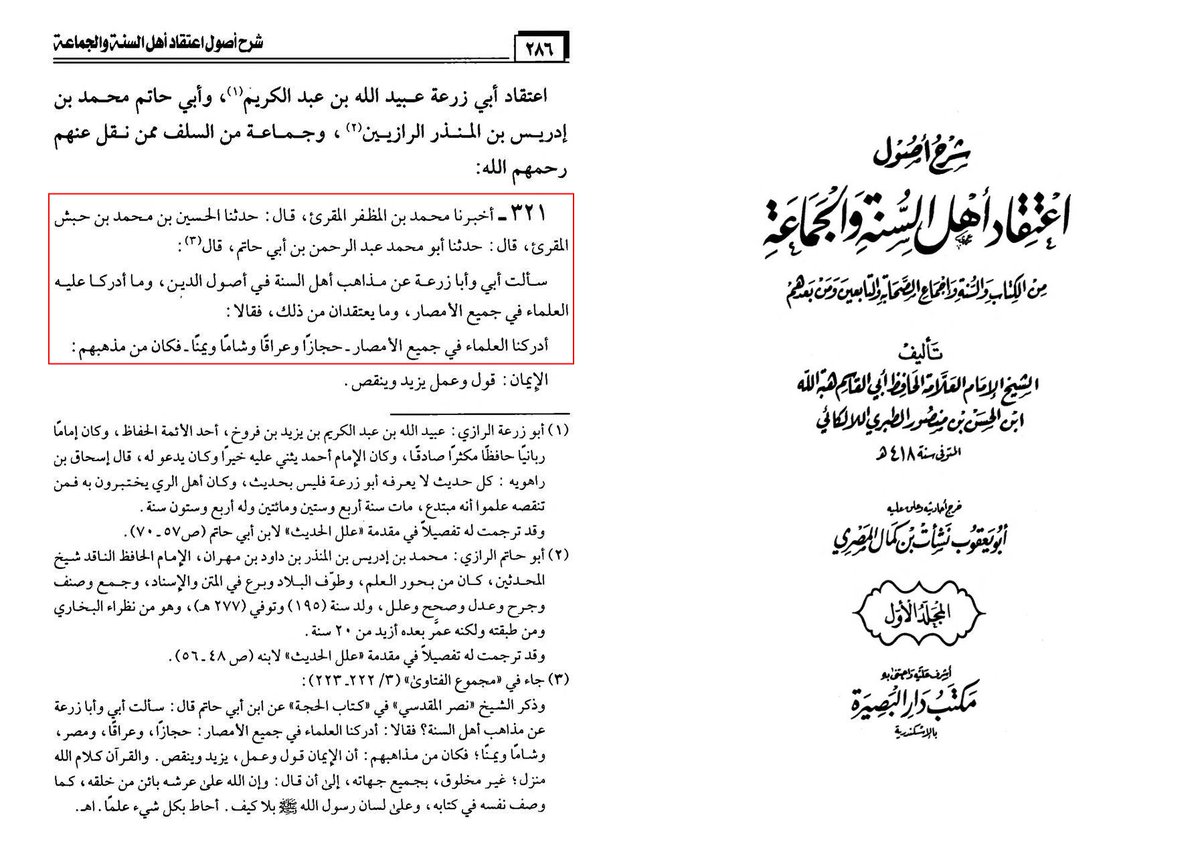
“…and their maḏhab was that whoever says, ‘My lafẓ of the Qurʾān is makhlūq (created),’ then he is a Jahmī.” So this is the agreed-upon view of the Salaf al-Ṣāliḥ across all the lands.
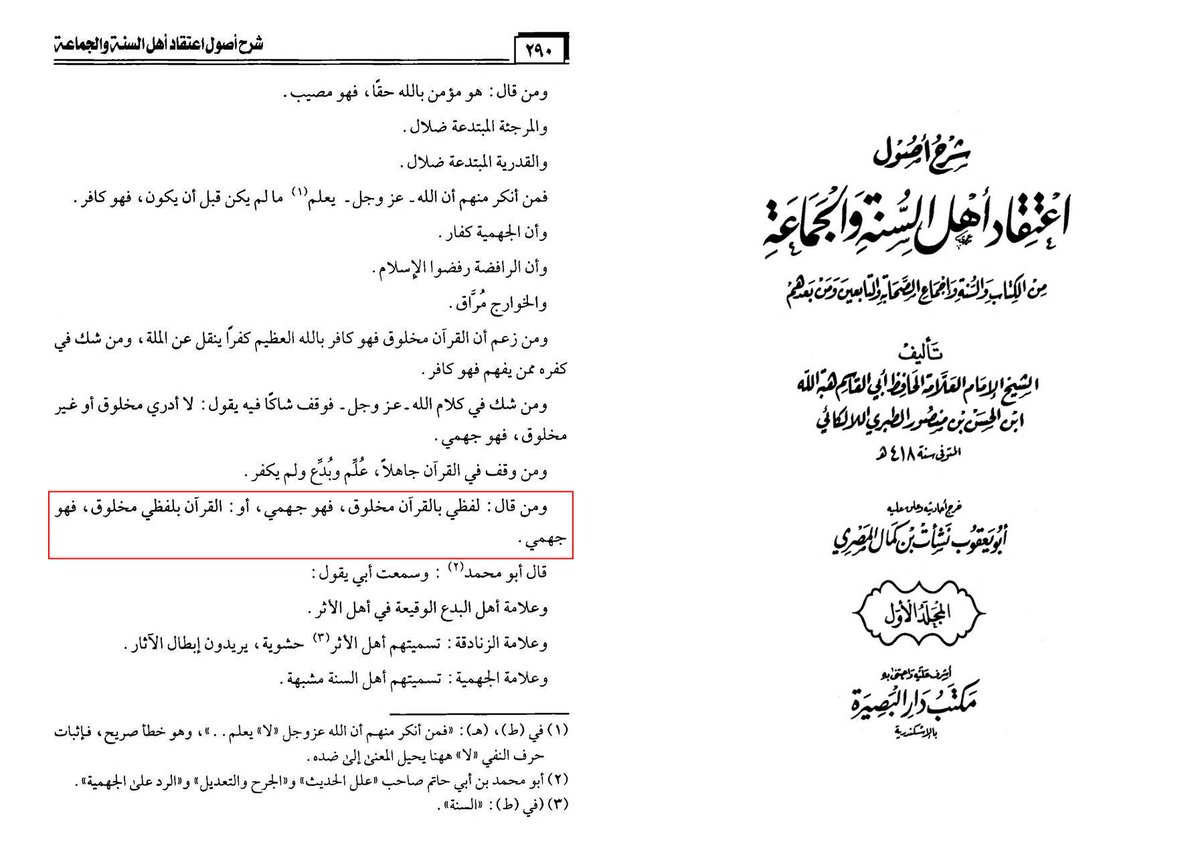
As for the Ashāʿirah, then Al-Bayjūrī (d. 1276) says, “Know that the Kalām of Allāh in the sense of Kalām Nafsī is eternal […] but in the sense of the lafẓ (of the Qurʾān), then it is makhlūq (created).”

Al-Juwaynī (d. 478) quotes the Muʿtazilah as saying, “This (i.e., the lafẓ of the Qurʾān we recite) is an expression of the Kalām of Allāh, and it is created,” and Al-Juwaynī then agrees with them, saying, “We (i.e., the Ashāʿirah) do not deny that it is the creation of Allāh.”

Al-Ījī al-Ashʿarī (d. 756) likewise quotes the Muʿtazilah as saying that the Qurʾān we recite (i.e., the lafẓ) is created, and Al-Ījī then says, “We say the same as them (i.e., the Muʿtazilah), and there is no dispute between us and them on this issue.”

So, is the Ashʿarī belief on lafẓ al-Qurʾān shared by the majority of the Salaf? Nope. On the contrary, it goes against the Ijmāʿ of the Salaf and falls in agreement with the Muʿtazilah (as they themselves have admitted).
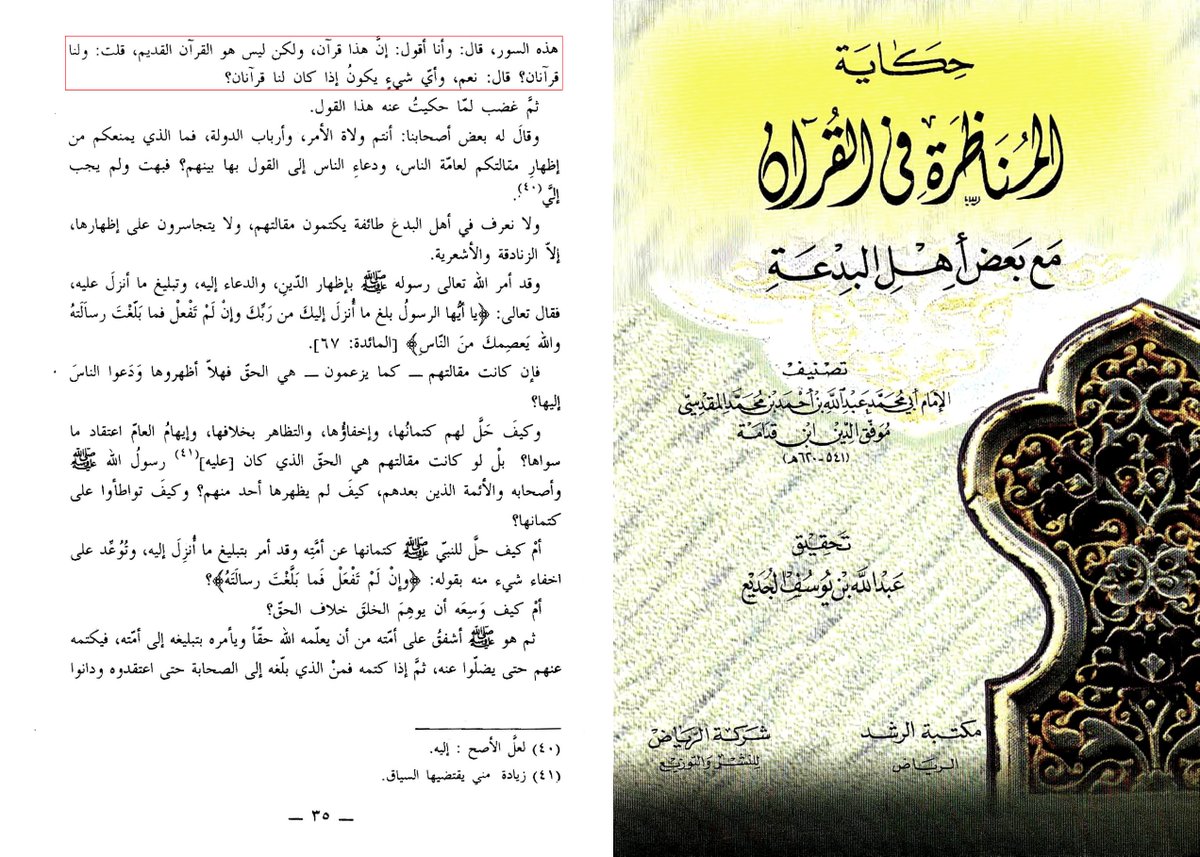
The Ashāʿirah believe in two Qurʾāns: the Kalām Nafsī, which they say is uncreated and established in the Essence of Allāh, and the Qurʾān which we recite, which they say is created. Al-Bāqillānī (d. 403) states that the Qurʾān revealed to the Prophet ﷺ is the kalām of Jibrīl!

Ibn Qudāmah (d. 620) asked one of the Ashāʿirah about this Qurʾān that we recite, so they replied, “I say that this is also Qurʾān, but this is not the eternal Qurʾān.” Ibn Qudāmah said, “So there are two Qurʾāns?” The Ashʿarī said, “Yes; so what if we believe in two Qurʾāns?”
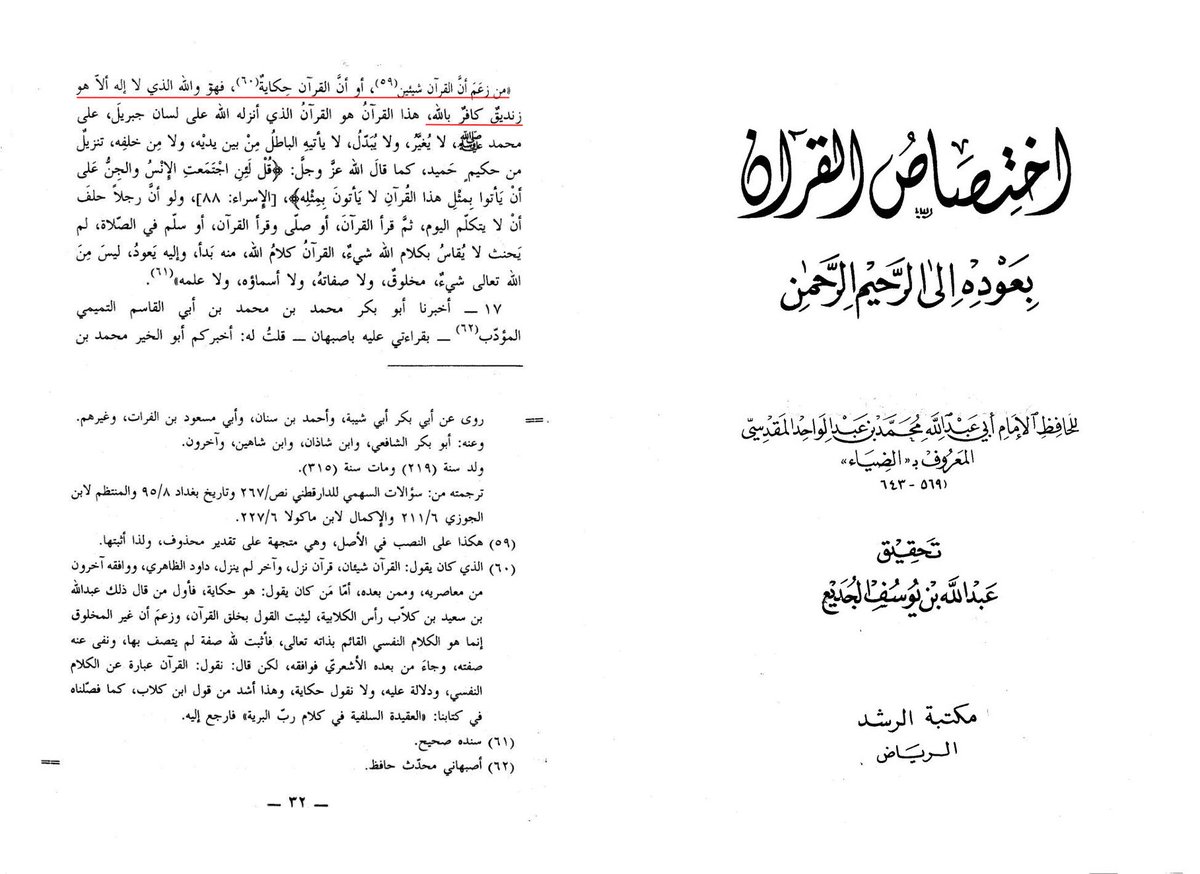
Meanwhile, Aḥmad ibn Sinān al-Wāsiṭī (d. 258), the shaykh of Al-Bukhārī (d. 256) and Muslim (d. 261), said, “Whoever divides the Qurʾān into two types or claims that the Qurʾān is a ḥikāyah (quotation), then by Allāh, he is a zindīq kāfir.” Its isnād is ṣaḥīḥ.
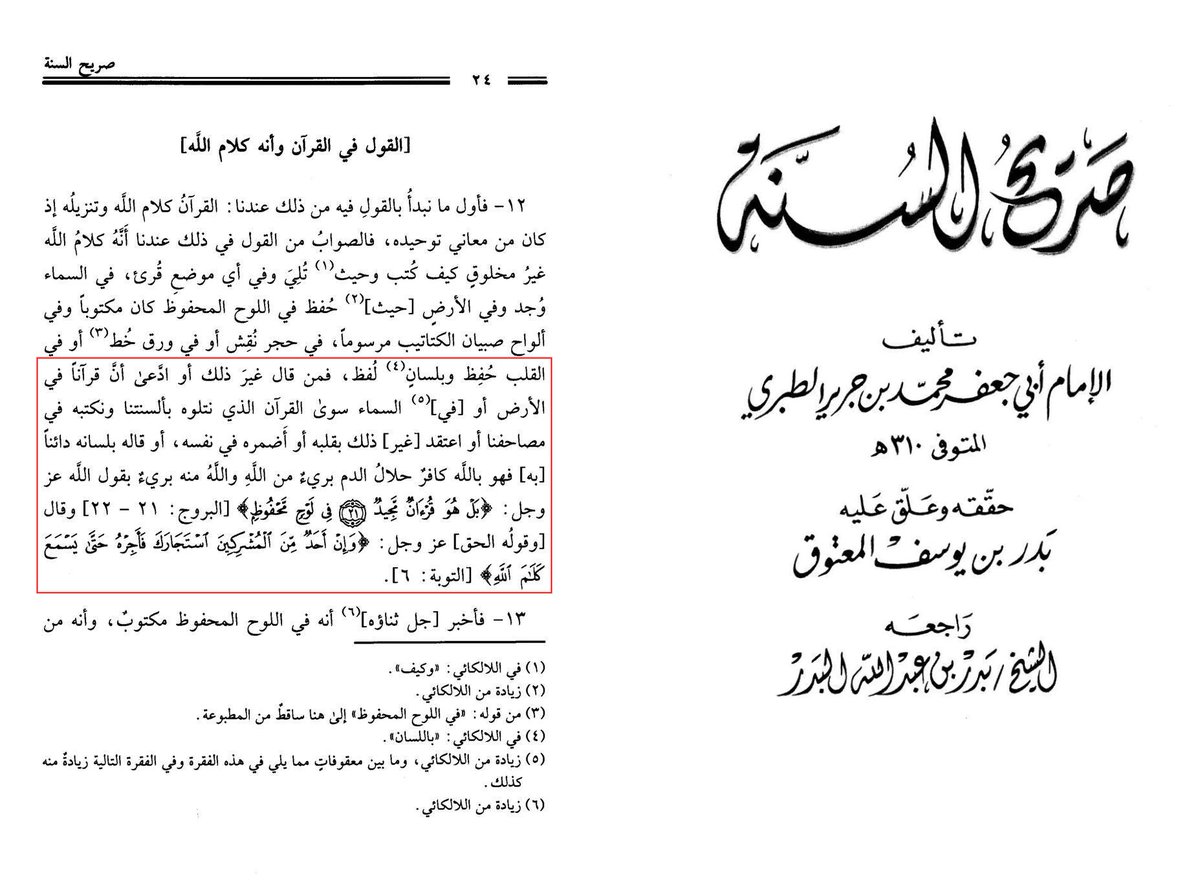
And Imām al-Ṭabarī (d. 310) said, “Whoever claims that there is a Qurʾān on the earth and another Qurʾān in the heaven that is different to the one which we recite with our tongues […] then he is a kāfir, his blood is permissible, and he is free from Allāh and Allāh from him.”
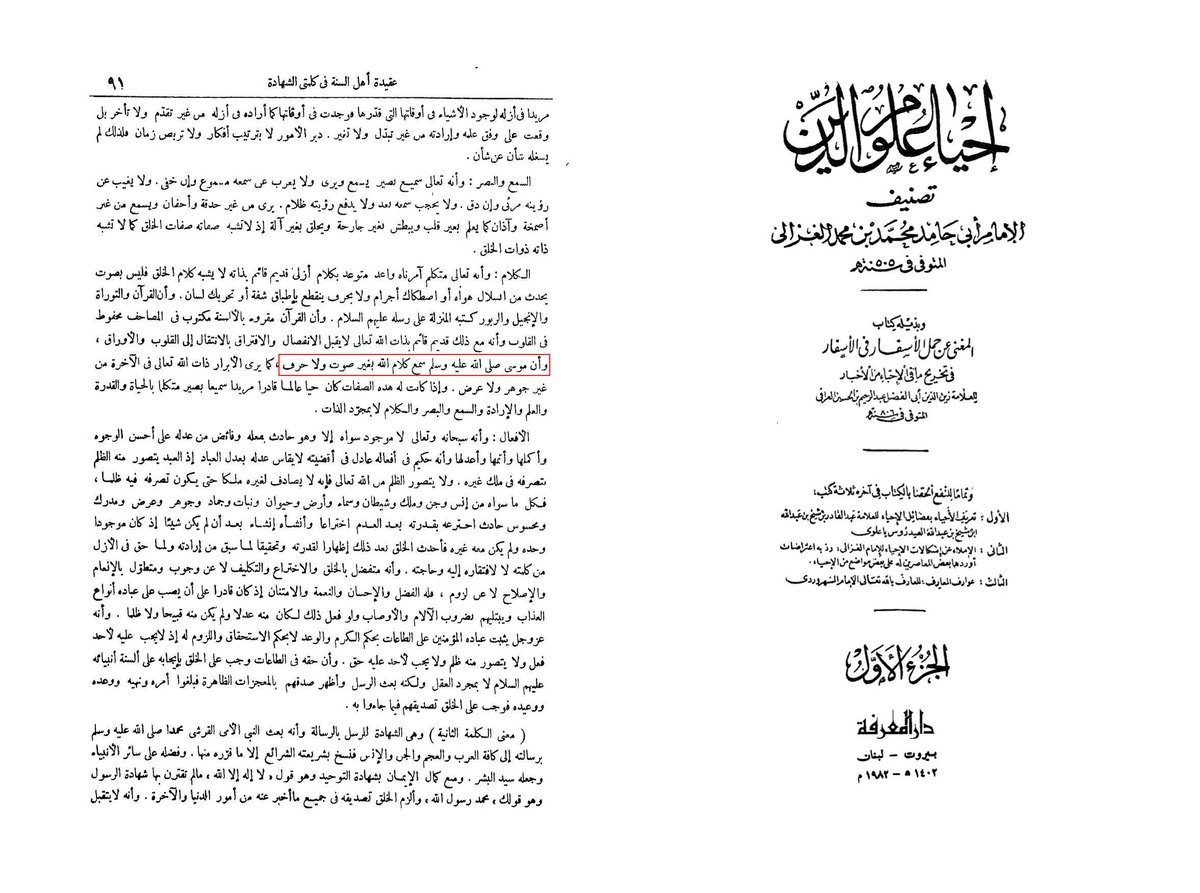
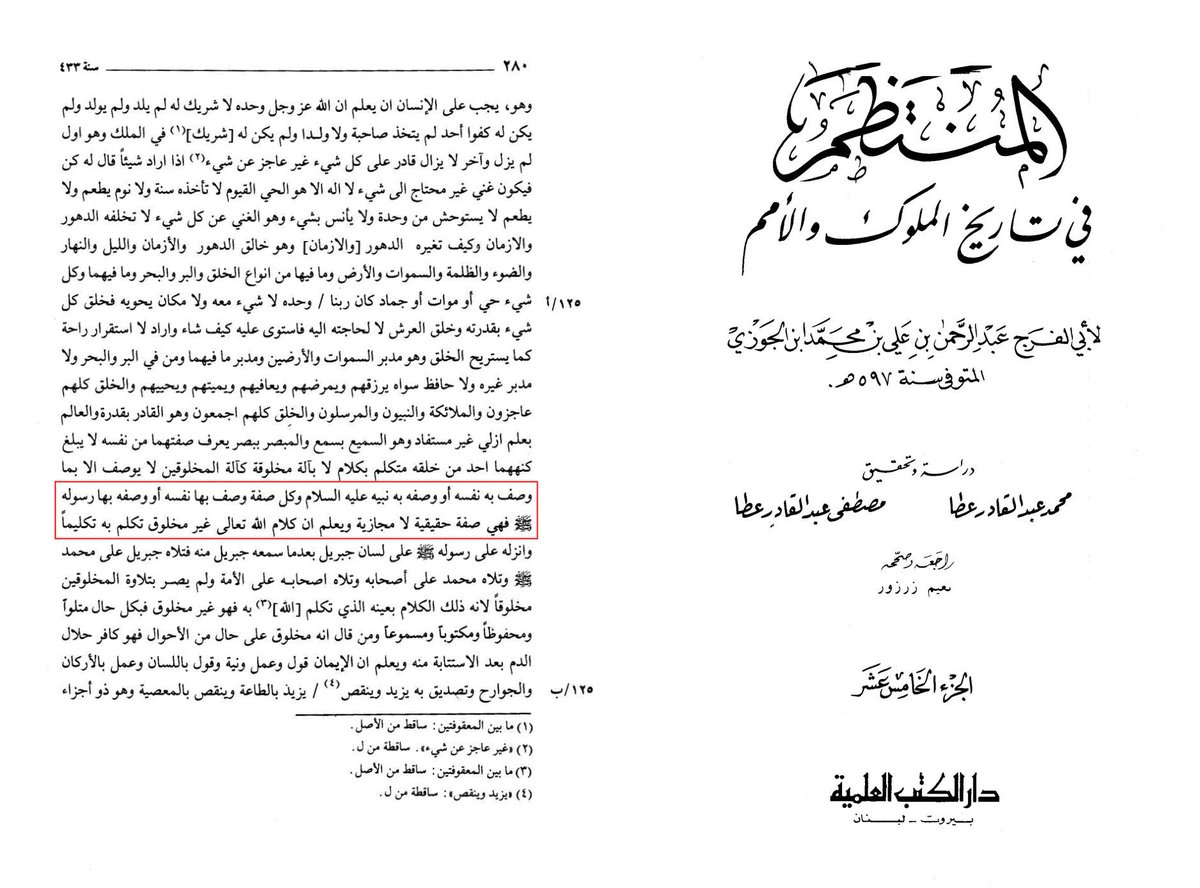
And in his Iḥyāʾ ʿUlūm al-Dīn (1/91), Abū Ḥāmid al-Ghazālī (d. 505) states that Mūsā ﷺ heard the speech of Allāh without the Kalām of Allāh being with sound.
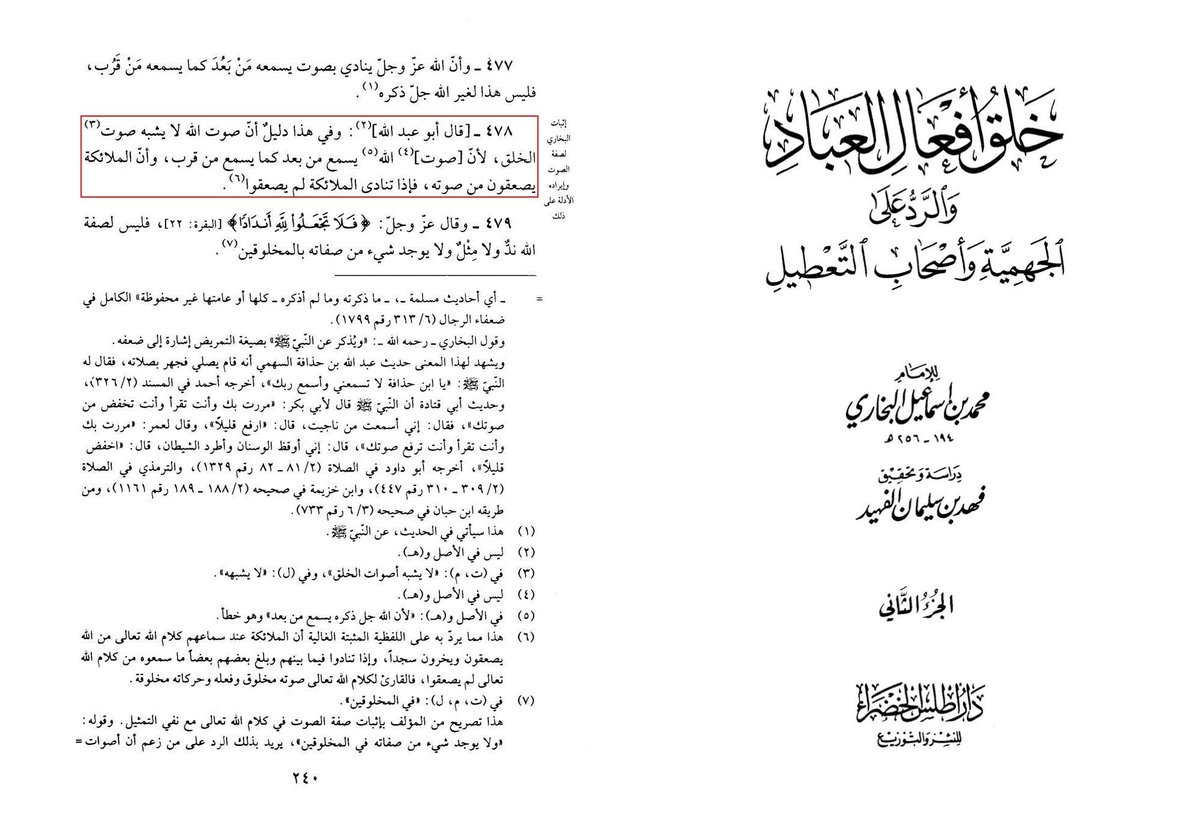
Meanwhile, in his Khalq Afʿāl al-ʿIbād (2/240), Imām al-Bukhārī (d. 256) affirms that Allāh speaks with sound, and he says, “The voice of Allāh does not resemble the voices of the creation.”
Imām al-Bukhārī (d. 256) also said, “I met more than one thousand of the ʿUlamāʾ across the lands, and I did not see any one of them disagree that Al-Īmān consists of speech and actions, and that it increases and decreases.” Al-Ḥāfiẓ ibn Ḥajar (d. 852) authenticated its isnād.
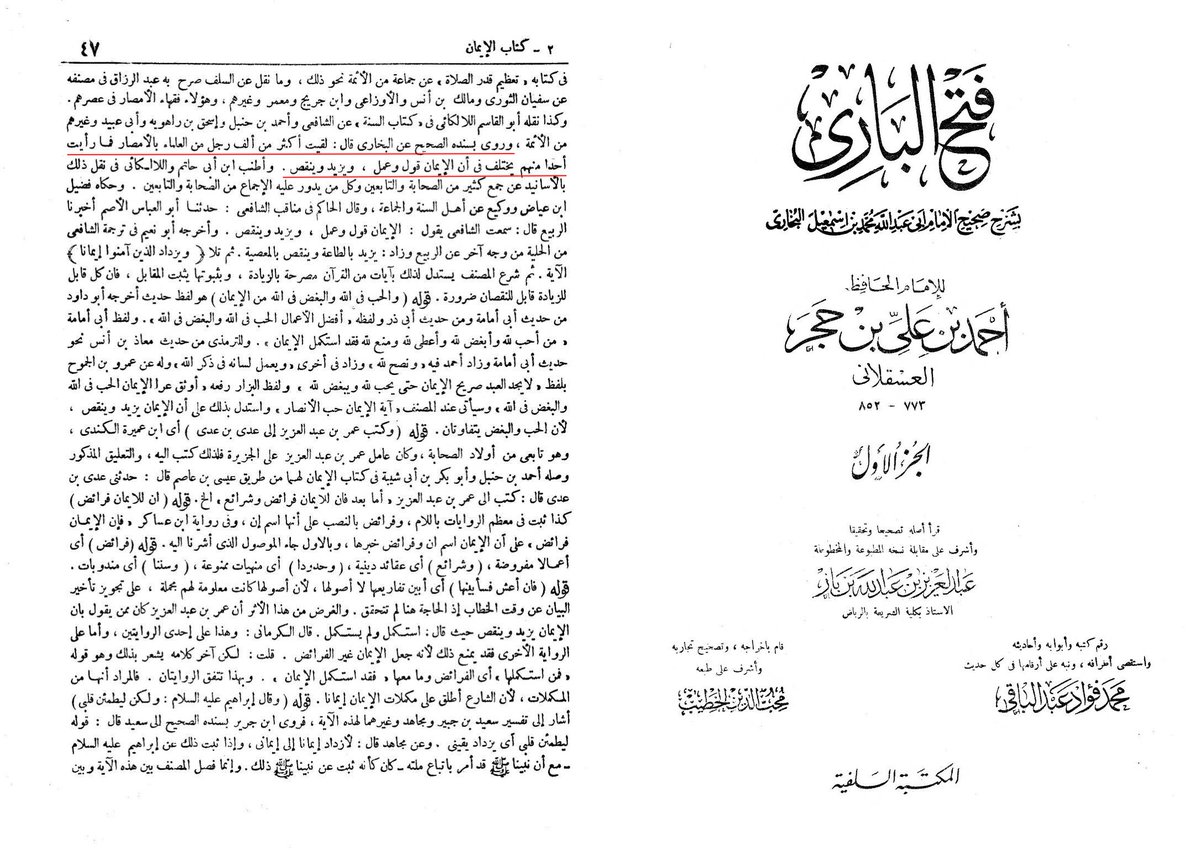
Meanwhile, Al-Juwaynī (d. 478) states that Al-Īmān is only al-taṣdīq (to believe in Allāh), and that it neither increases or decreases. Yikes…

And in Kitāb al-Inṣāf (p. 75), Al-Bāqillānī (d. 403) states that the Kalām of Allāh is qadīm (eternal) and that it is not emergent, in that the Kalām of Allāh does not emerge from Him.

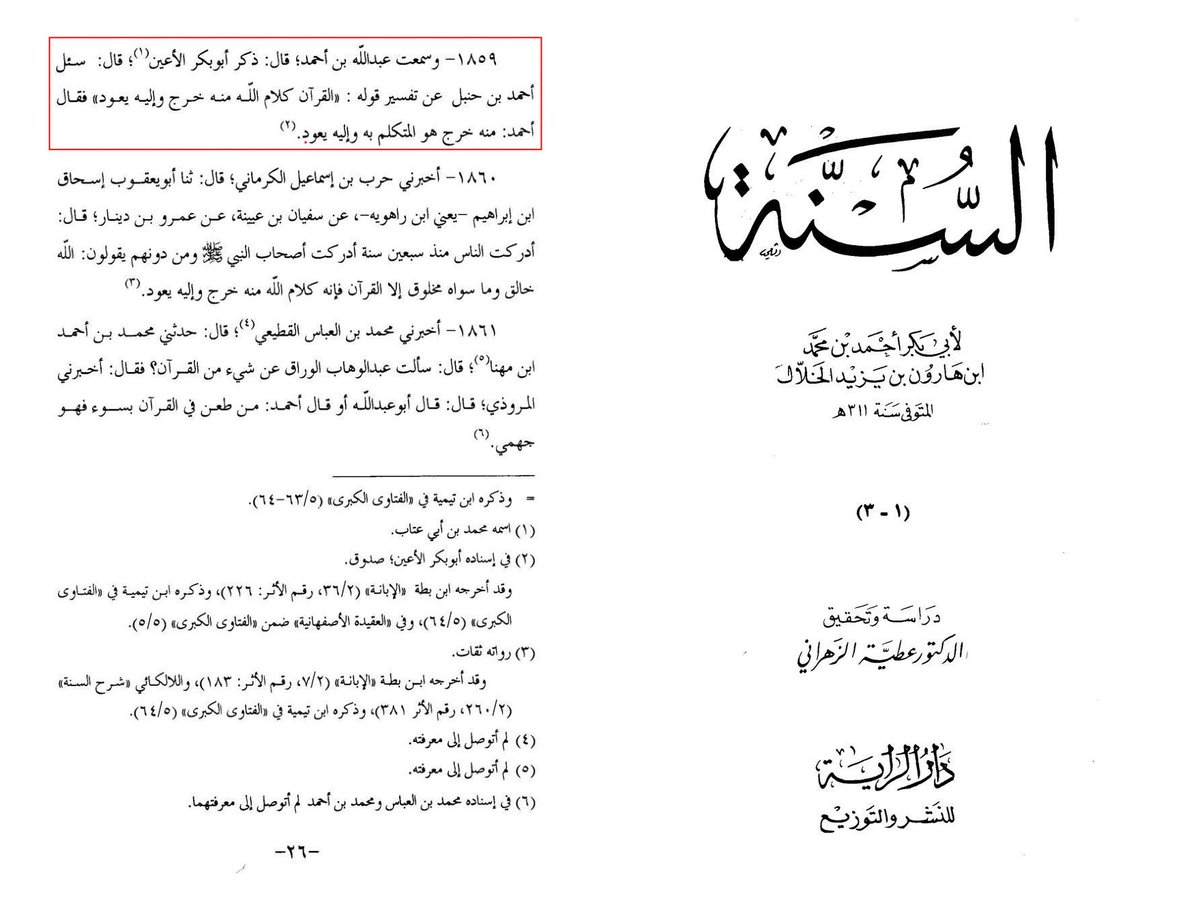
Imām Aḥmad ibn Ḥanbal (d. 241) directly contradicts this when he said about the Qurʾān, “He spoke it; from Him it emerged (خرج), and to Him it will return.”
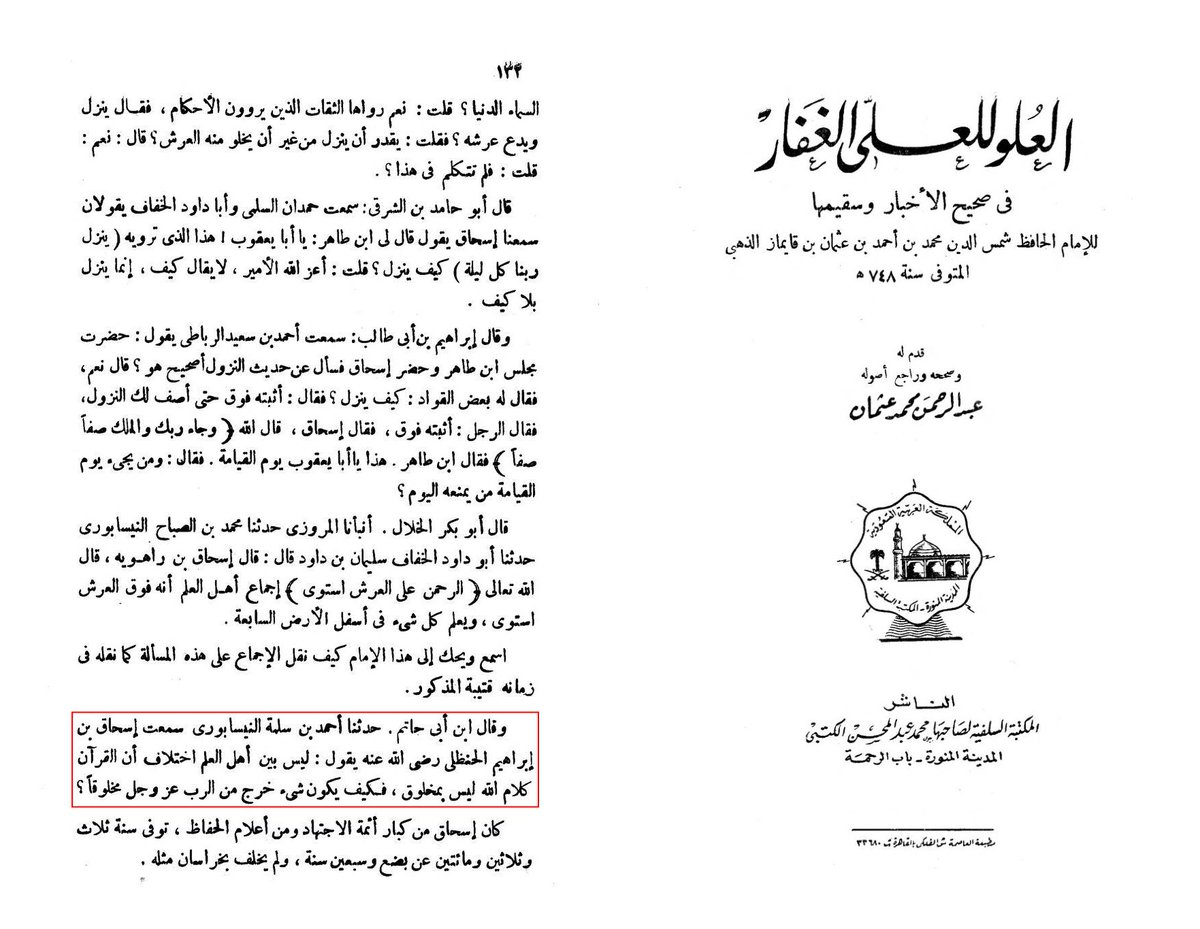
And Isḥāq ibn Rāhawayh (d. 238), the shaykh of Imām al-Bukhārī (d. 256), said, “There is no difference of opinion between the people of knowledge that the Qurʾān is the Kalām of Allāh, not created; how can something which emerged (خرج) from Allāh be created?”
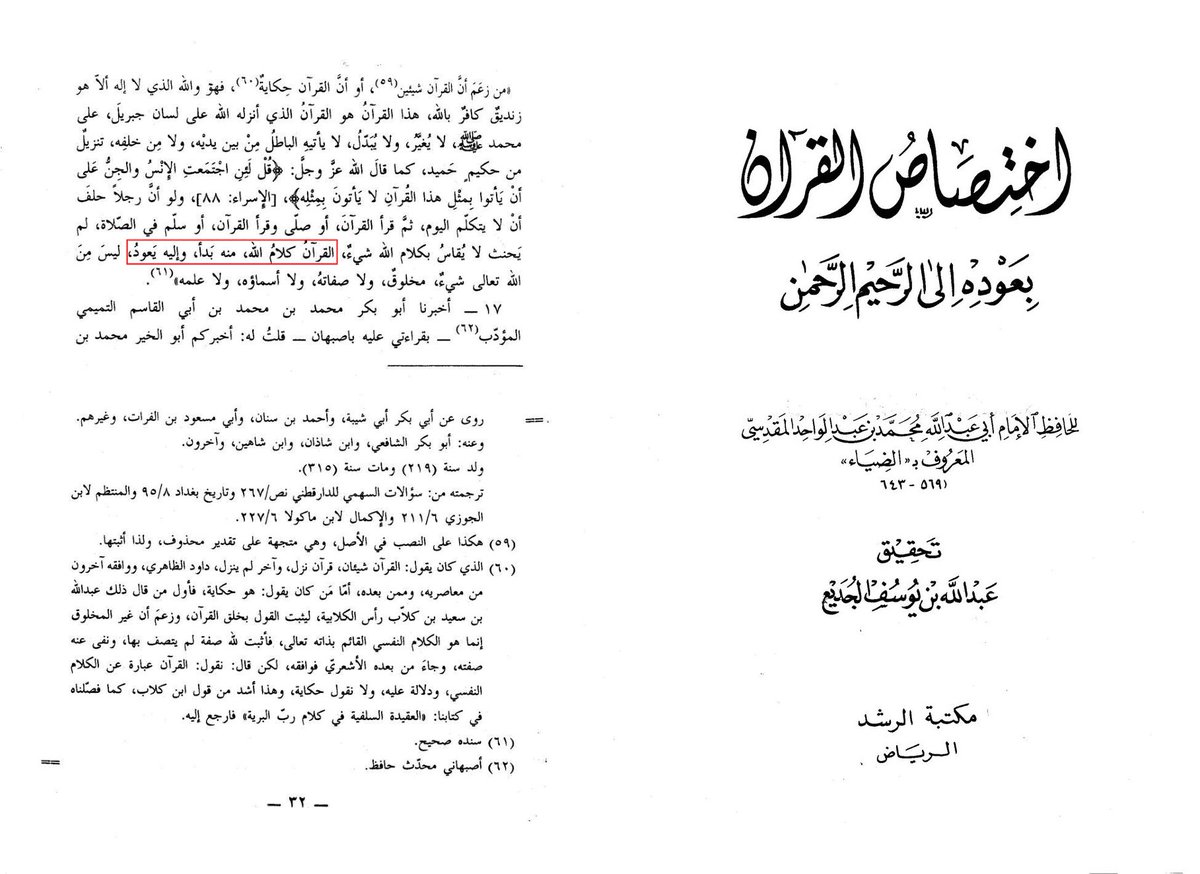
Al-Ḥāfiẓ Aḥmad ibn Sinān al-Wāsiṭī (d. 258) said, “The Qurʾān is the Kalām of Allāh, not created; from Him it originated (بدأ), and to Him it will return.”
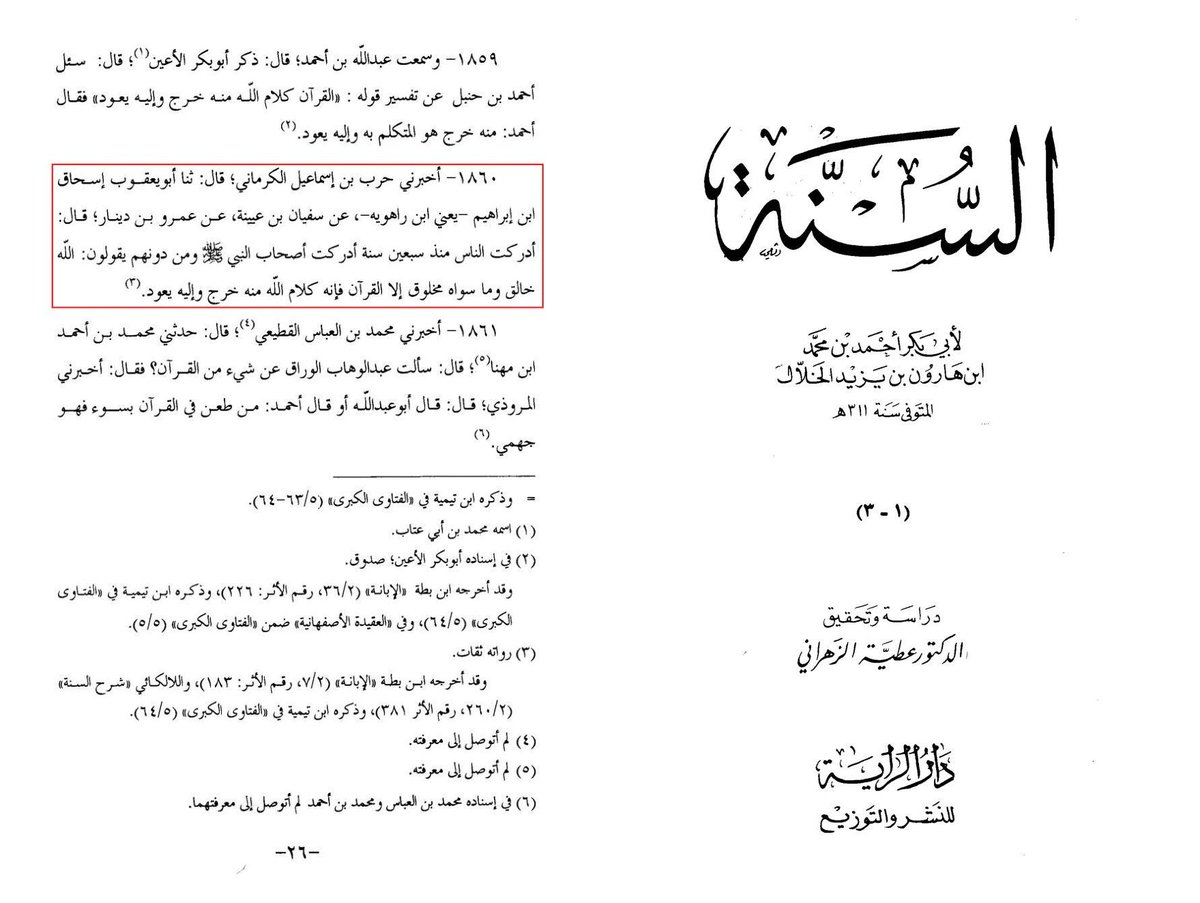
And ʿAmr ibn Dīnār (d. 126) said, “I observed the people across seventy years and encountered the Ṣaḥābah of the Prophet ﷺ and other than them, saying, ‘The Qurʾān is the Kalām of Allāh; from Him it emerged (خرج), and to Him it will return.’”
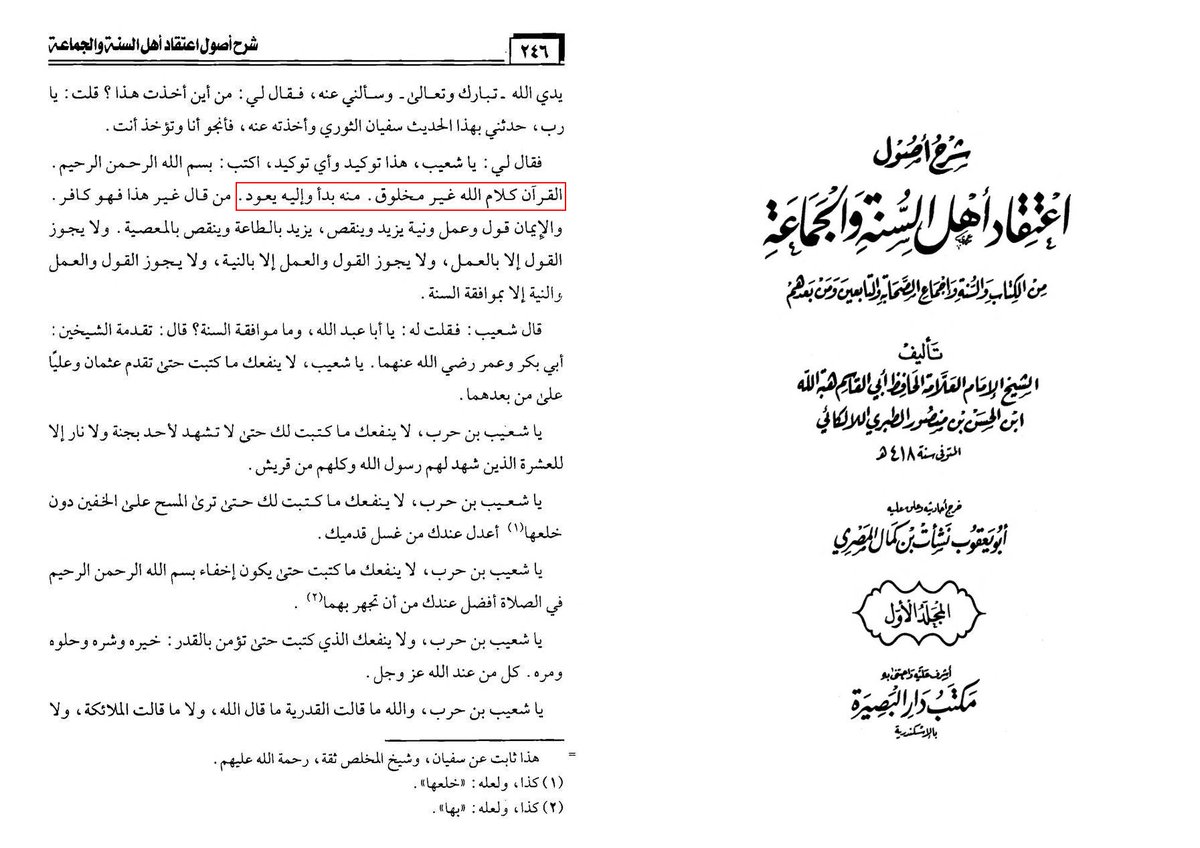
Sufyān al-Thawrī (d. 161) said, “The Qurʾān is the Kalām of Allāh, not created; from Him it originated (بدأ), and to Him it will return. Whoever says other than this, then he is a kāfir.”
All these Aʾimmah al-Salaf are affirming Al-Ṣifāt al-Ikhtiyāriyyah for Allāh, which the Ashʿarīs negate. Further, Isḥāq ibn Rāhawayh (d. 238) said about the majīʾ (coming) of Allāh, “If He will come on the Day of Resurrection, what prevents Him from (descending) today?”

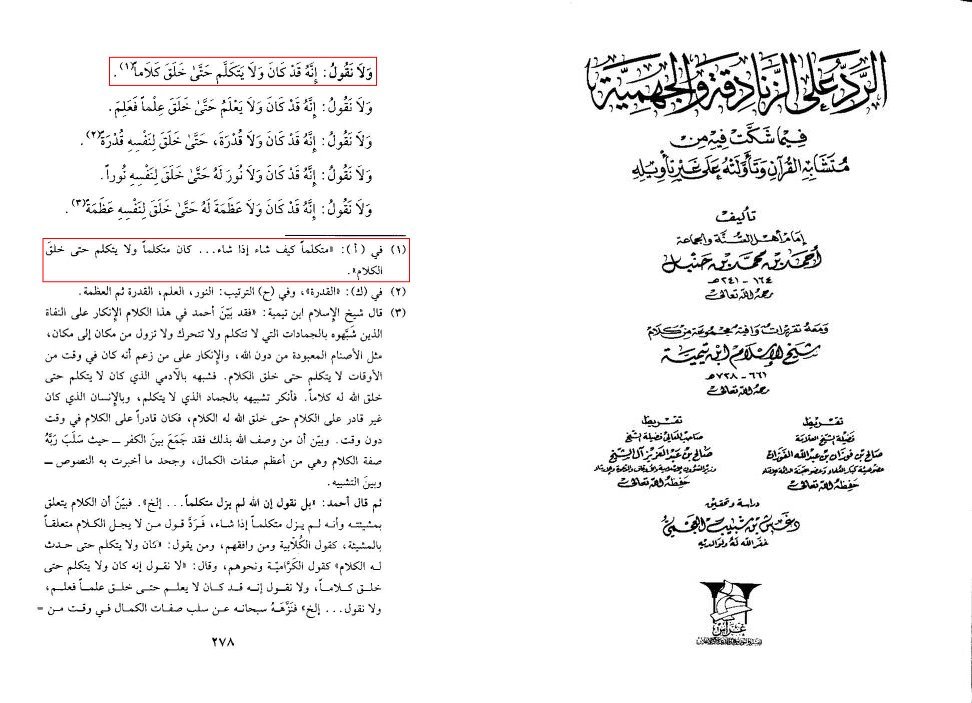
Imām Aḥmad (d. 241) said in his Radd ʿalā al-Zanādiqah wa al-Jahmiyyah, “We do not say that He (i.e., Allāh) did not speak until He created His speech; rather, we say that Allāh speaks however He wills, whenever He wills.” This is clear affirmation of Al-Afʿāl al-Ikhtiyāriyyah.
And Imām al-Mufassirīn ibn Jarīr al-Ṭabarī (d. 310) said, “He Istawā (rose) above His Throne on the seventh day, after having created the heavens and the earth and what is between them.”

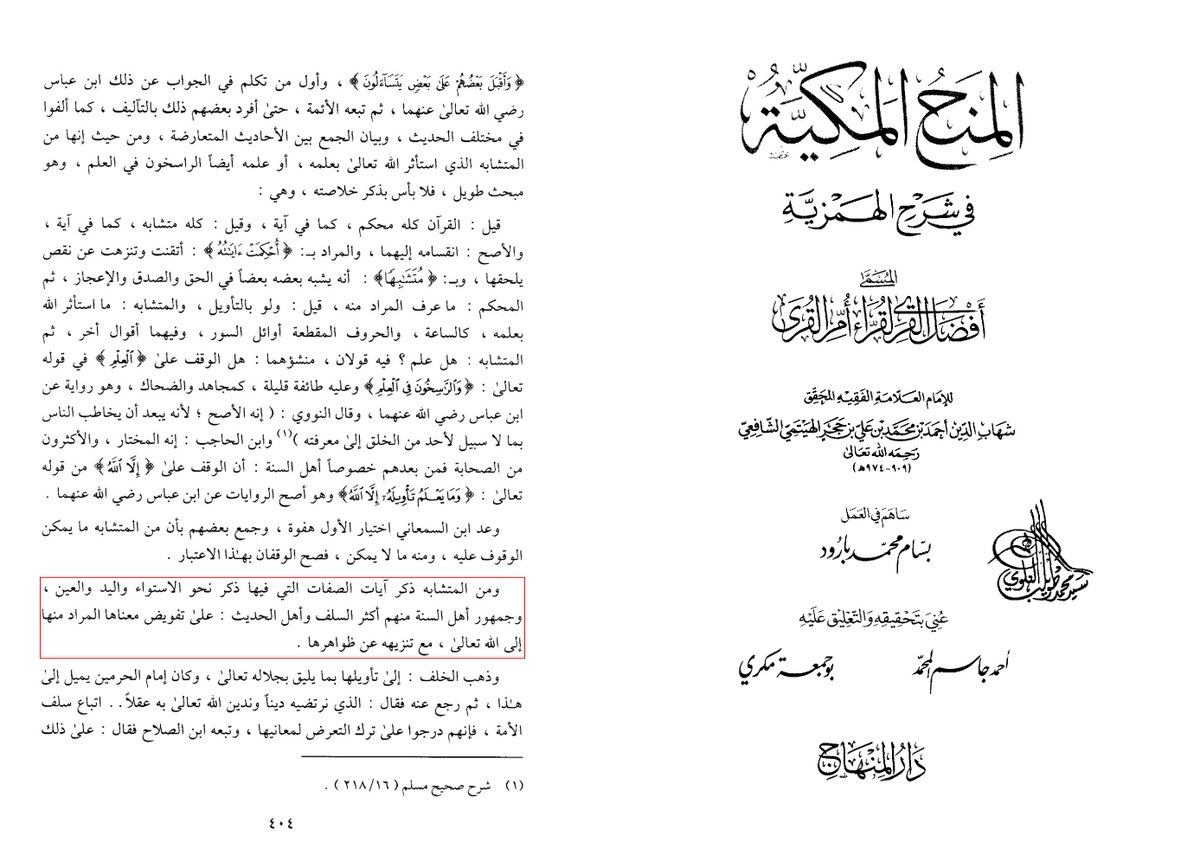
Why do we see the Ashāʿirah contradicting the Salaf on so many of these matters? It's simple: because the Salaf were not Ashʿarī. The same goes for the claim of many of the later Ashʿarīs, such as Ibn Ḥajar al-Haytamī (d. 973): “The majority of the Salaf were upon tafwīḍ!”
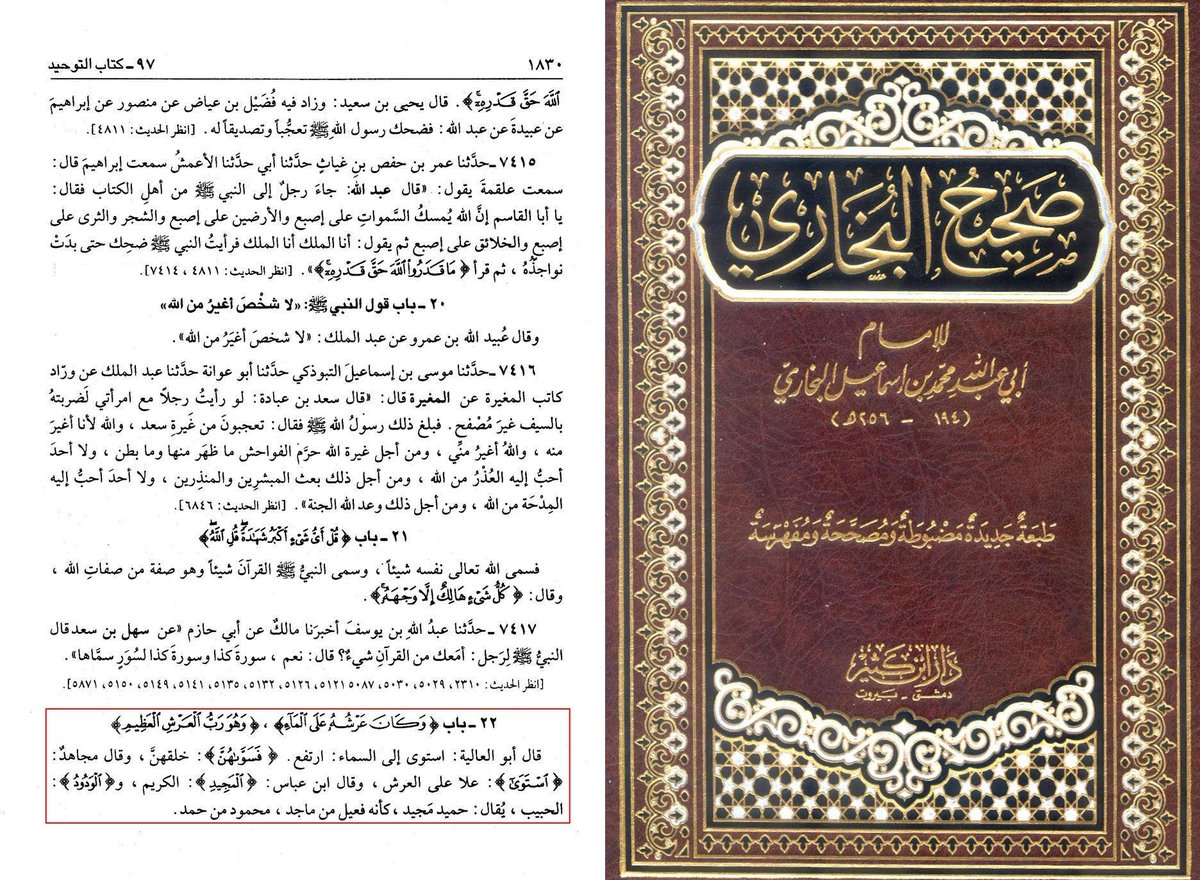
Imām al-Bukhārī (d. 256), under Al-Radd ʿalā al-Jahmiyyah, quotes Abū al-ʿĀliyah (d. 93) explaining ‘Istawā’ to mean Irtafaʿ (rose over), and Mujāhid (d. 103) explaining ‘Istawā’ to mean ʿAlā (ascended). Both are students of Ibn ʿAbbās (d. 68).
On the Āyah, “Do they await but that Allāh should arrive to them,” Abū al-ʿĀliyah (d. 93) said, “The angels will come in the shade of clouds, and Allāh will come (yajīʾ) however He wills.” He explains al-ityān (arriving) to mean al-majīʾ (coming). (Credit: @iFlashFX)

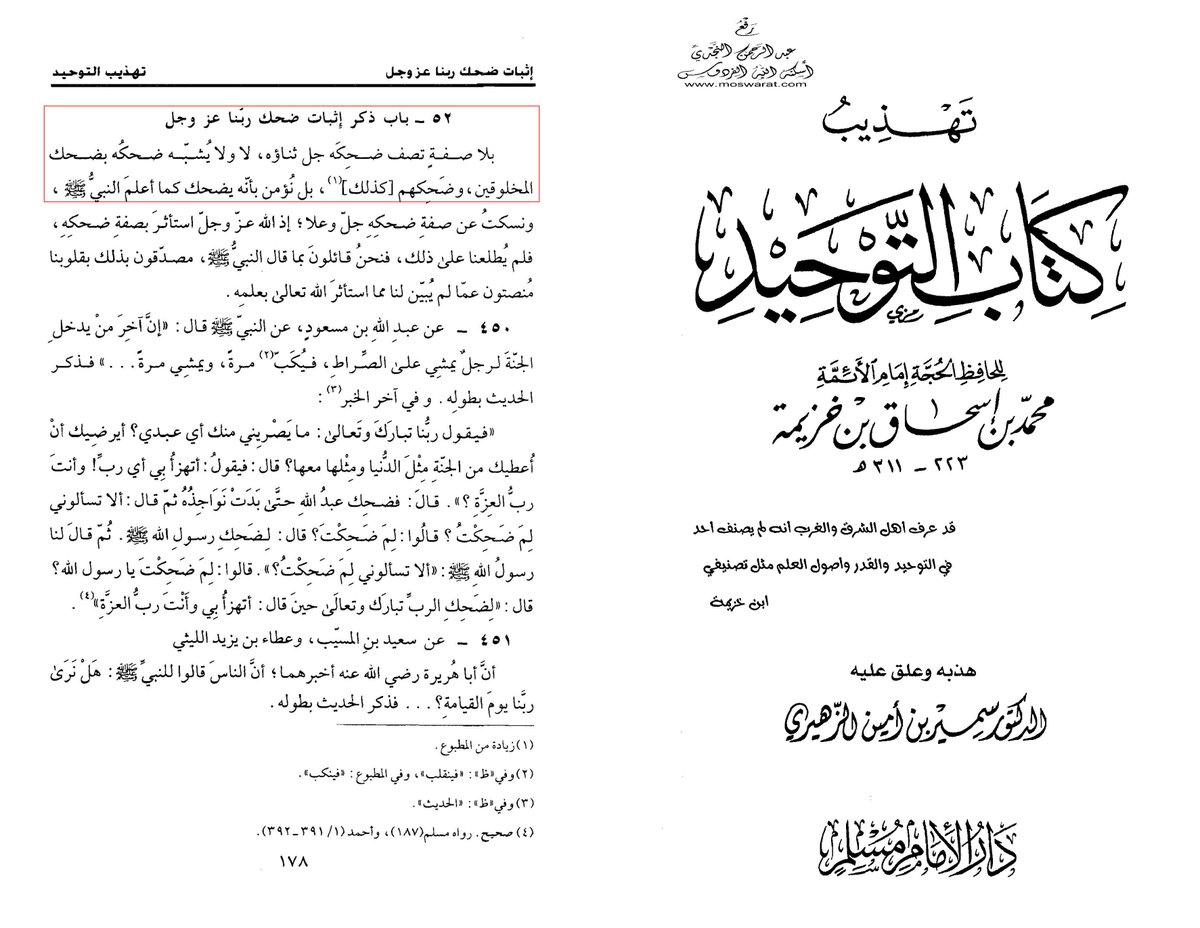
The Messenger of Allāh ﷺ said, “Our Lord laughs for the despair of His servant, as He will soon relieve them.” Abū Razīn asked, “O Messenger of Allāh, does the Lord laugh?” He (ﷺ) replied, “Yes.” Abū Razīn said, “We will never be deprived of good by a Lord who laughs.”
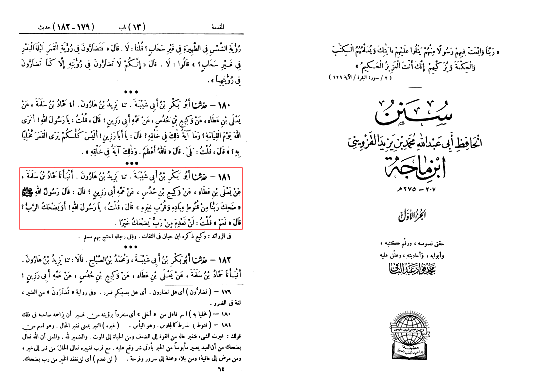
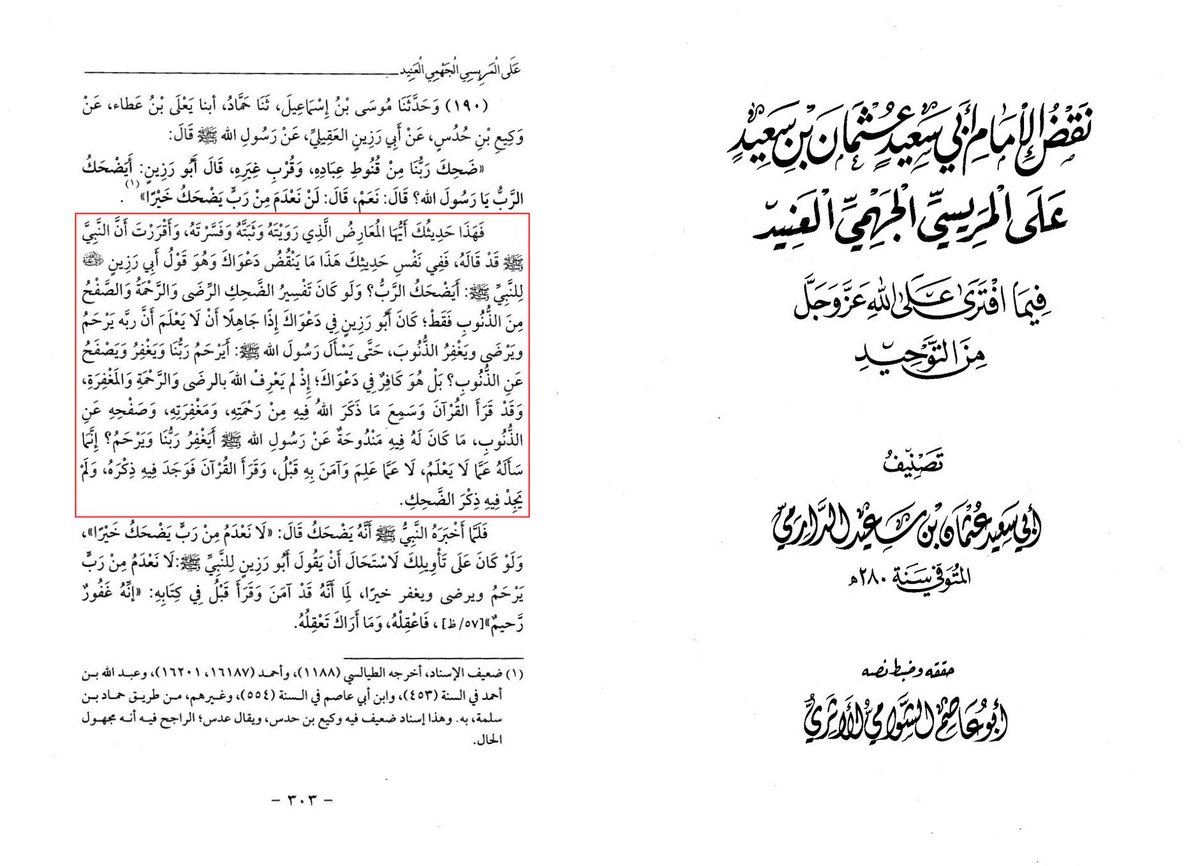
Imām al-Dārimī (d. 280) uses this ḥadīth to argue that the laughing of Allāh is in a real sense, not as a metaphor for ‘Mercy’ or ‘pleasure,’ since Abū Razīn wouldn’t have been amazed if he understood ‘laughing’ to only be a metaphor, and this completely contradicts tafwīḍ.
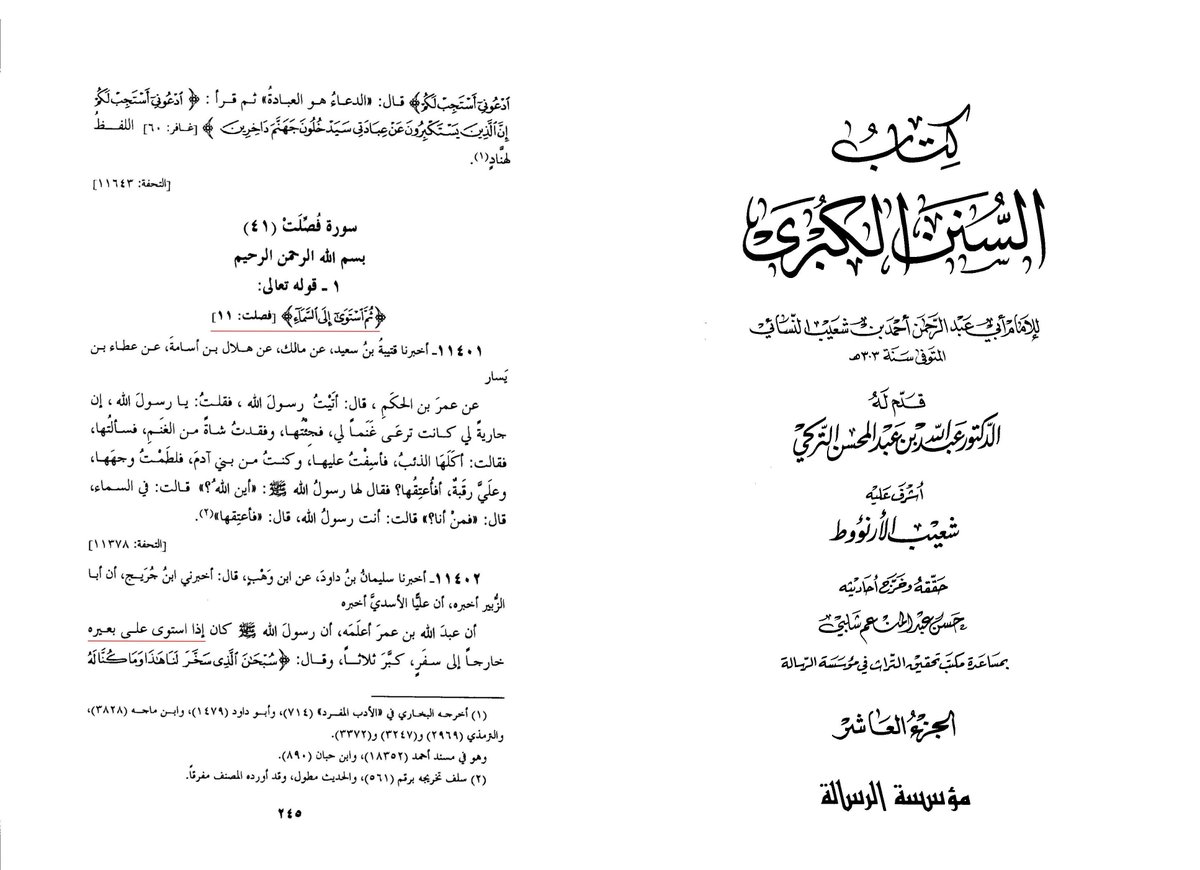
Imām al-Nasāʾī (d. 303), Maʿmar ibn al-Muthannā (d. 210), and Al-Khalīl ibn Aḥmad (d. 170) all explained Al-Istiwāʾ with examples such as someone rising upon a rooftop or an animal.
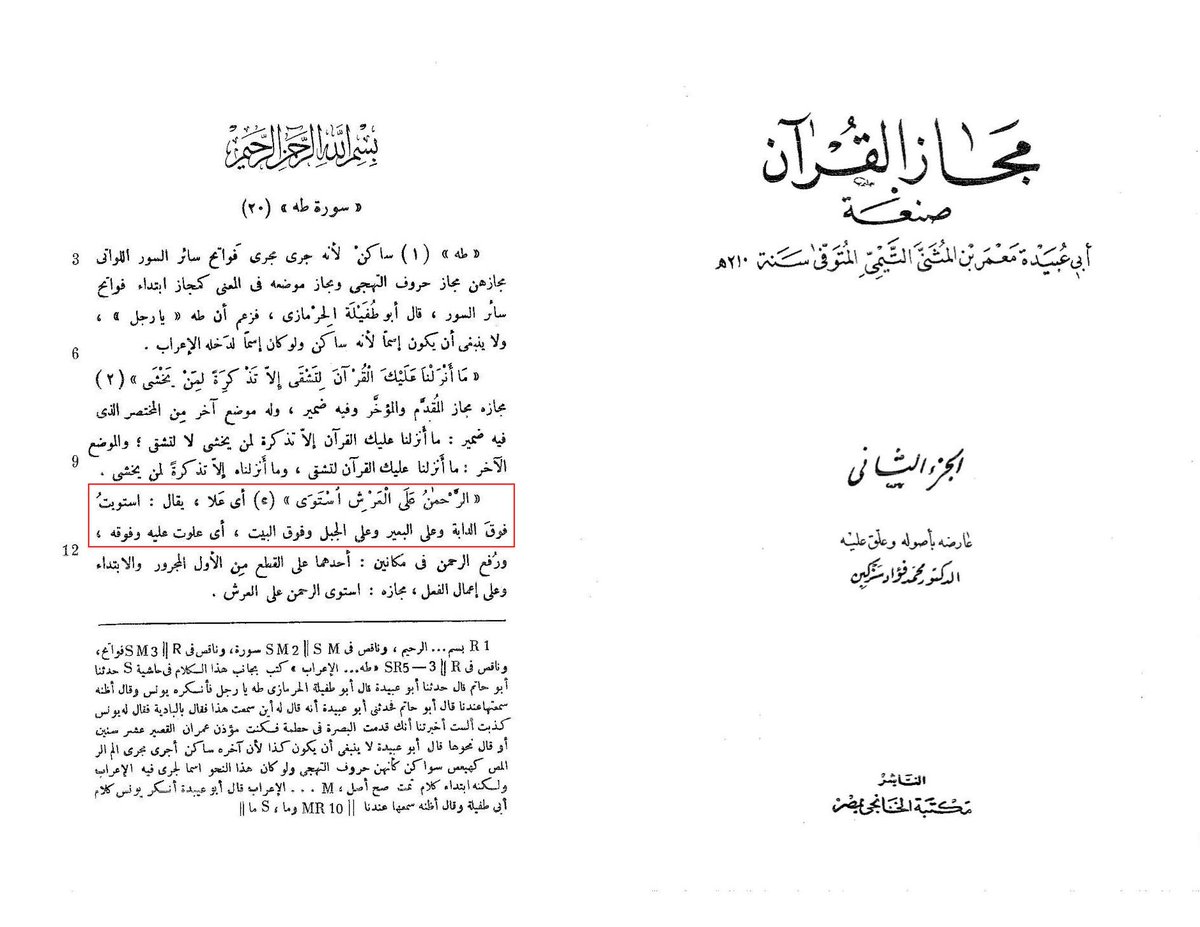
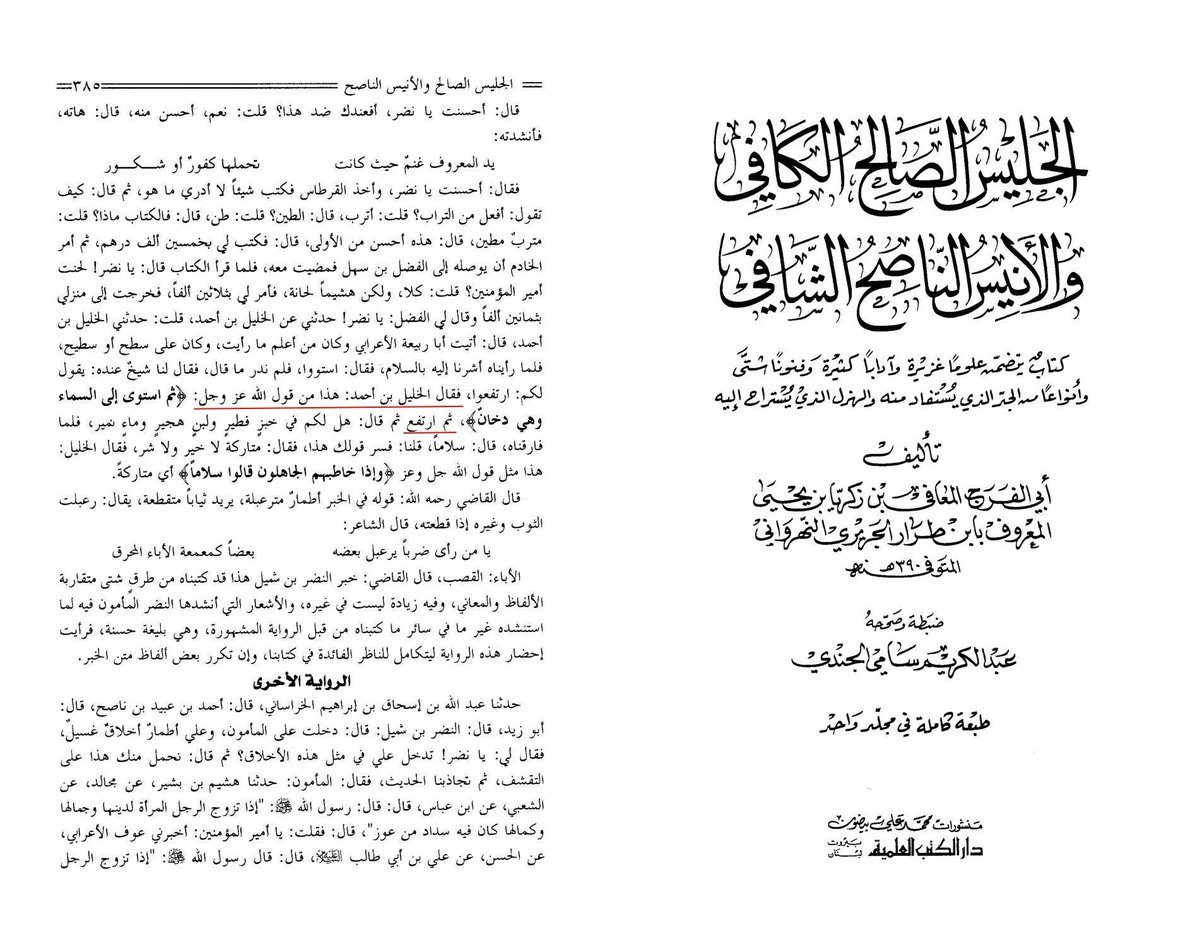
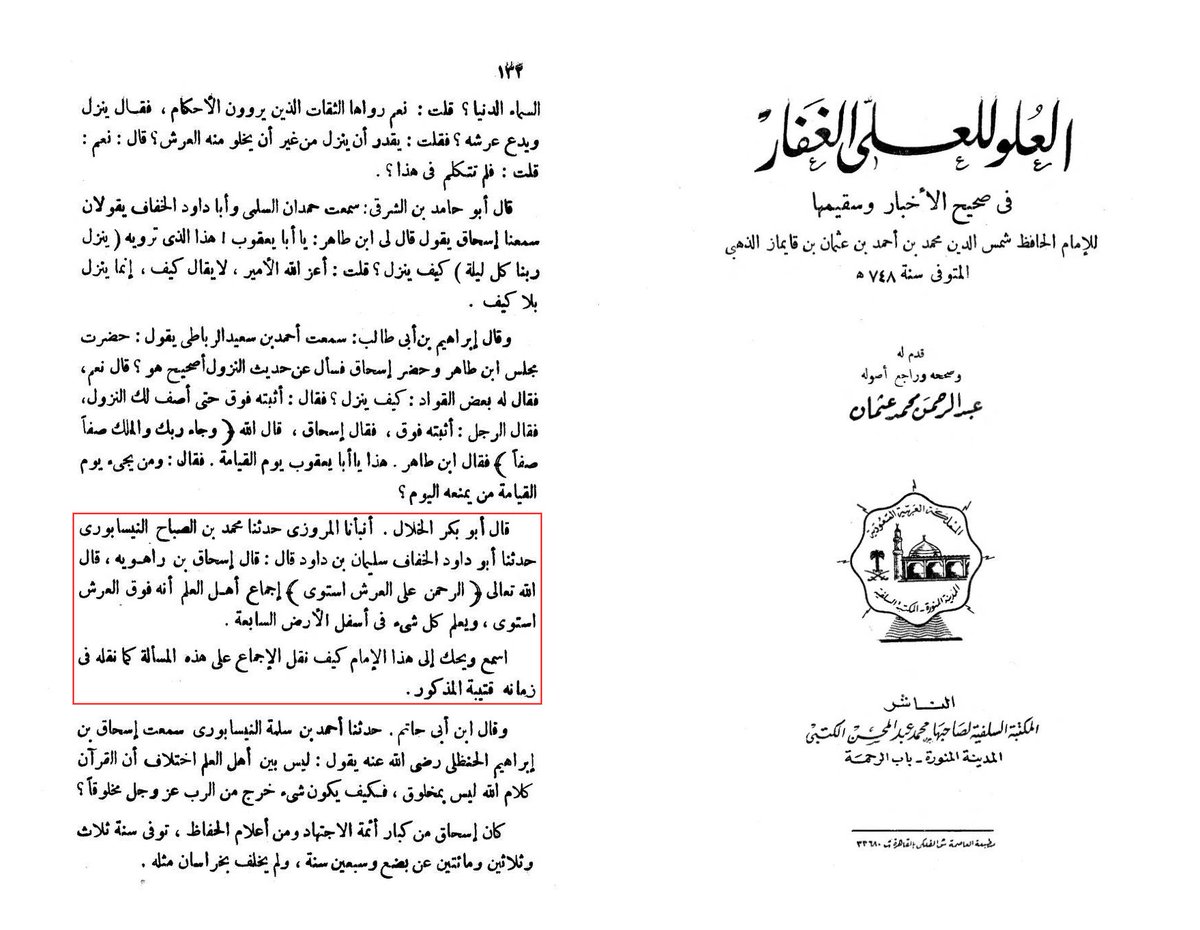
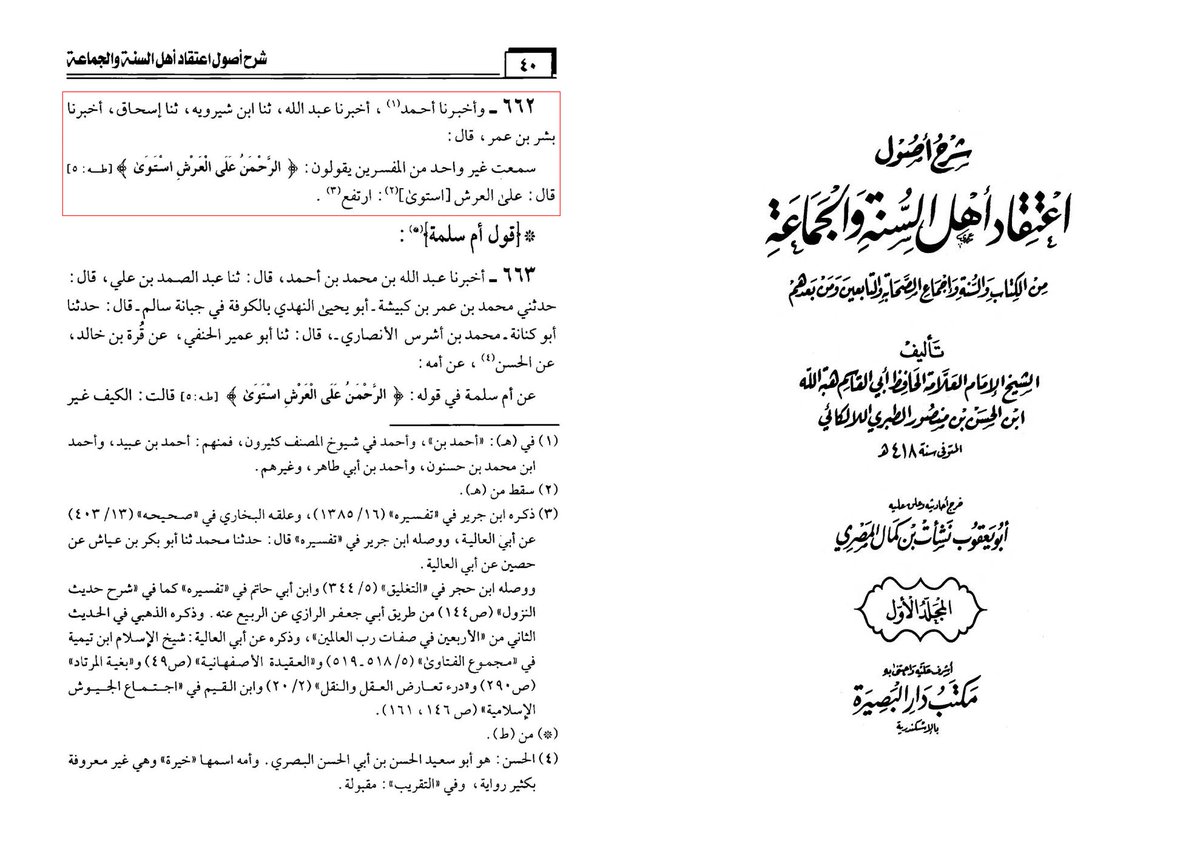
Isḥāq ibn Rāhawayh (d. 238) reports the Ijmāʿ of the ʿUlamāʾ on affirming Al-Istiwāʾ, and he said: Bishr ibn ʿUmar (d. 206) told us, “I heard more than one of the Mufassirīn explain ‘The Most Merciful Istawā above the Throne’ by saying, ‘Irtafaʿ (rose over) the Throne.’”
ʿAbd al-Wahhāb al-Warrāq (d. 251) explained Al-Istiwāʾ to mean sitting, and Ibn Qutaybah (d. 276) explained Al-Istiwāʾ to mean settling; both are direct students of Aḥmad ibn Ḥanbal (d. 241).

And Isḥāq ibn Rāhawayh here (d. 238) links the majīʾ (coming) of Allāh with His nuzūl (descending), and he uses one to argue for the other, thus demonstrating that he understands their meanings.
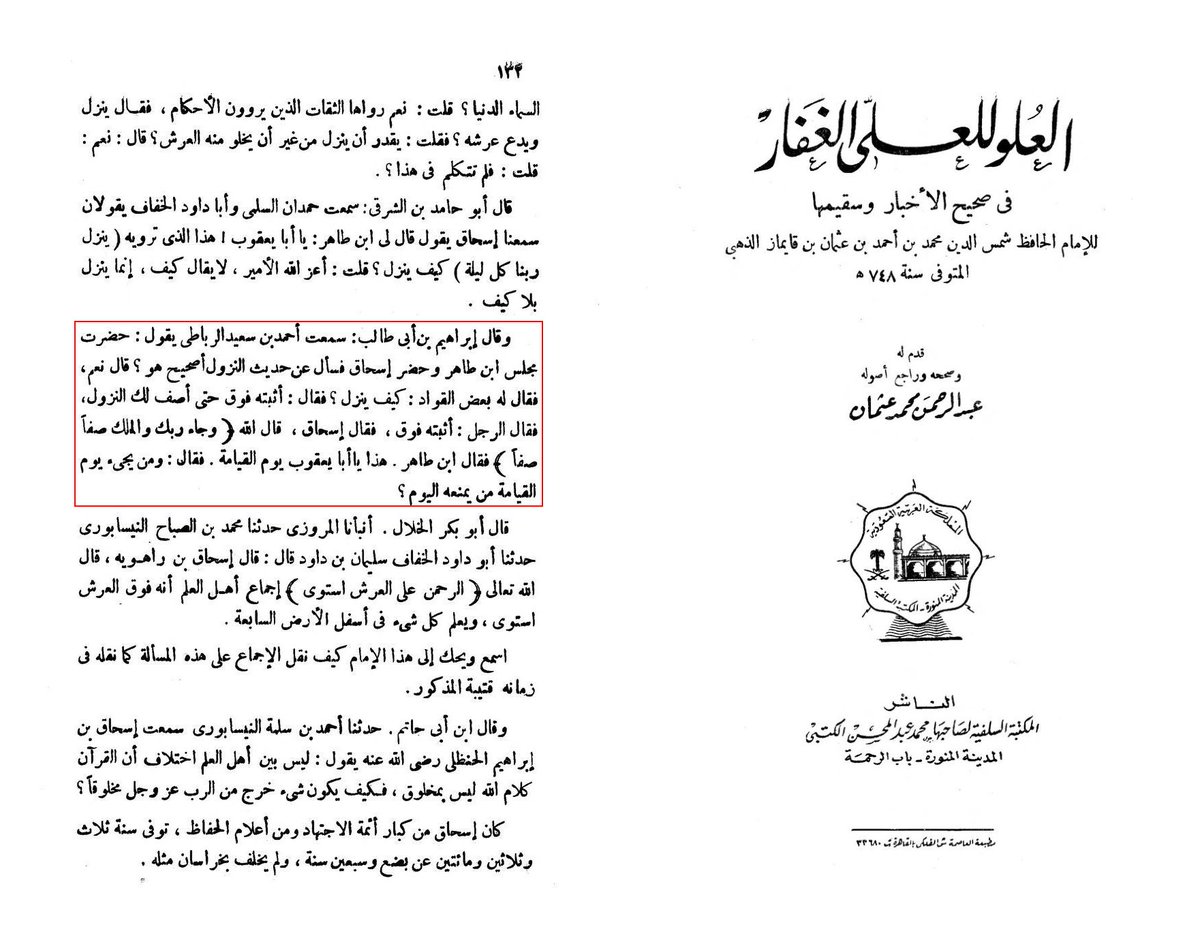
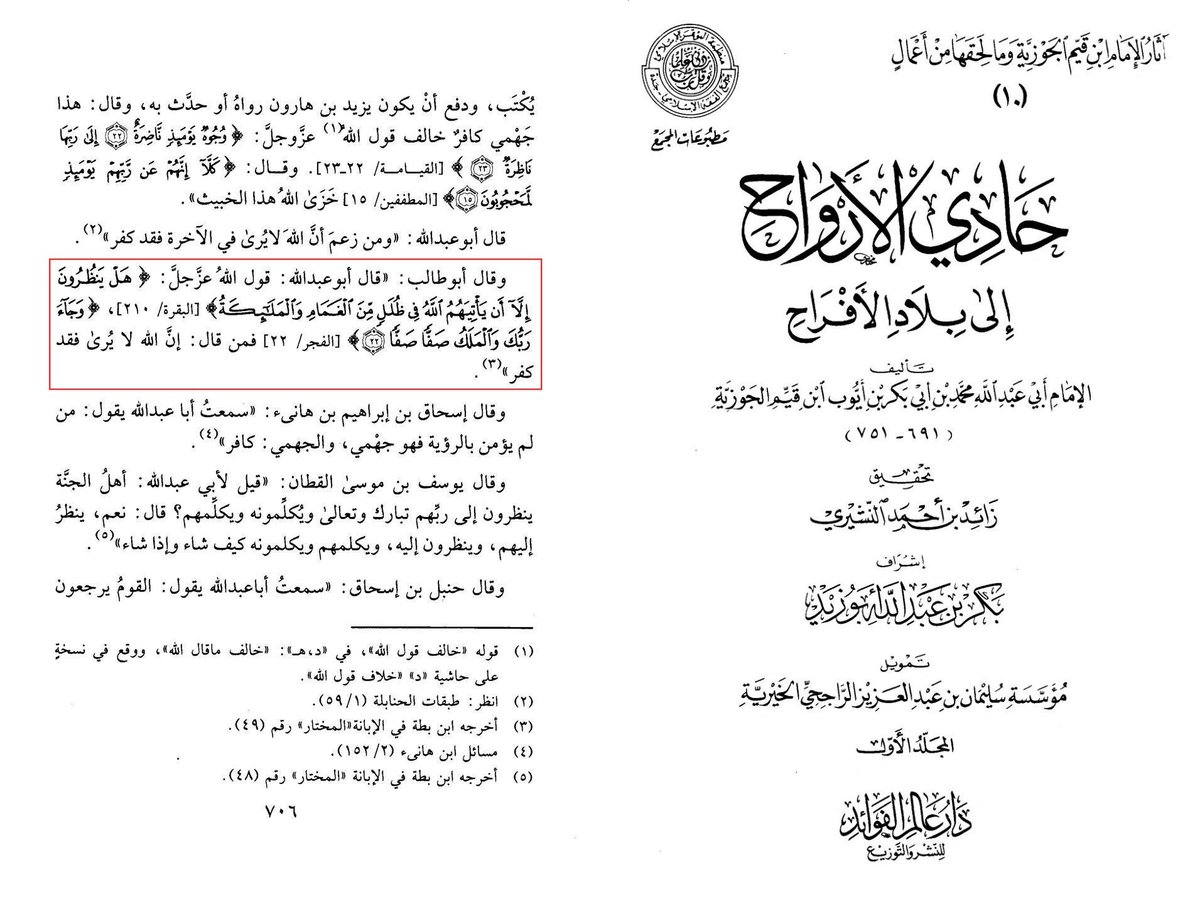
Imām Aḥmad ibn Ḥanbal (d. 241) also links the majīʾ (coming) and ityān (arriving) of Allāh and uses them to argue for the fact that Allāh will be seen in the Hereafter. This is also impossible if he was upon tafwīḍ al-maʿnā.
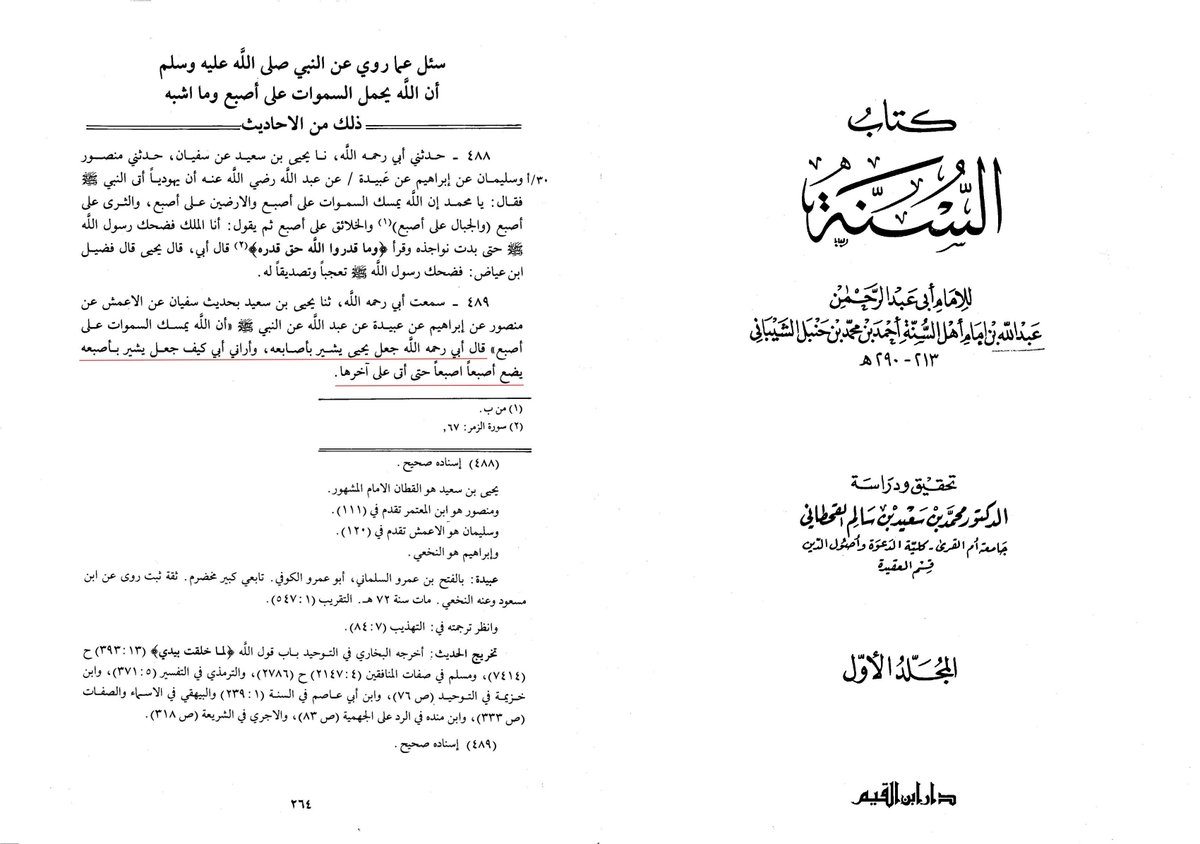
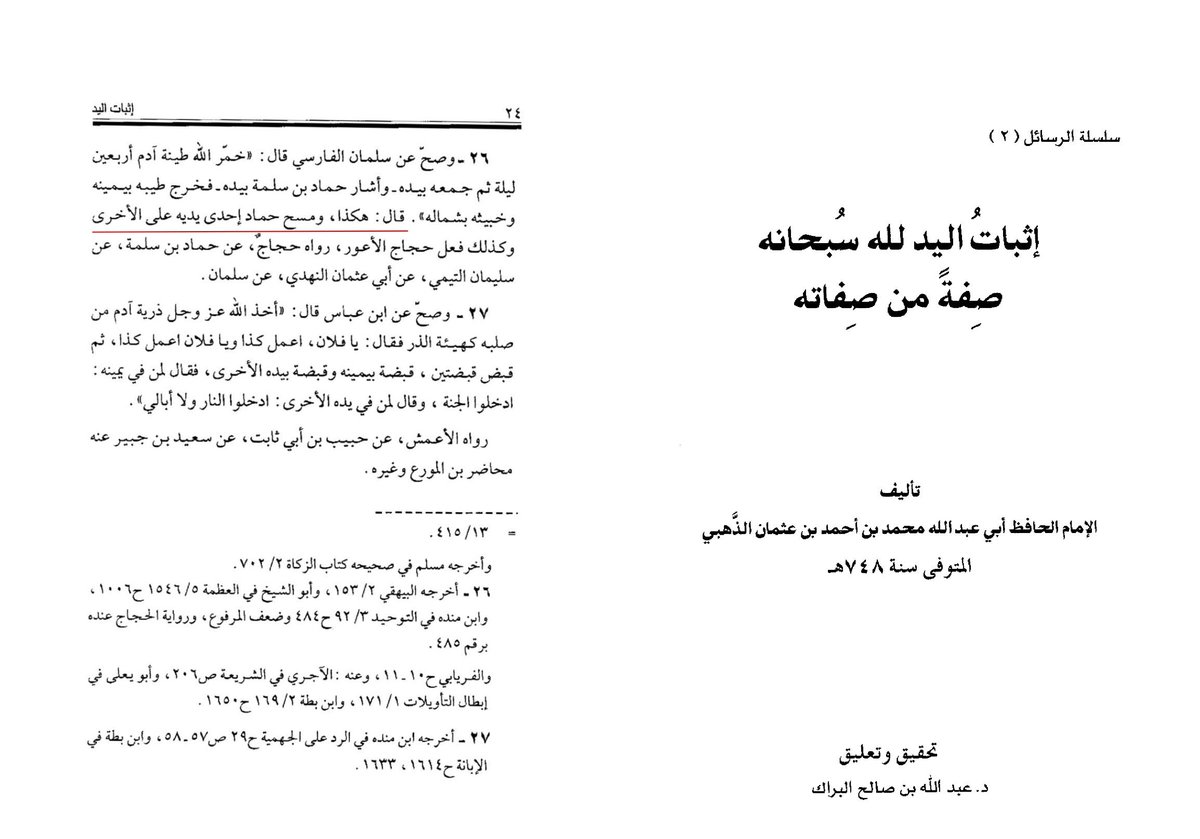
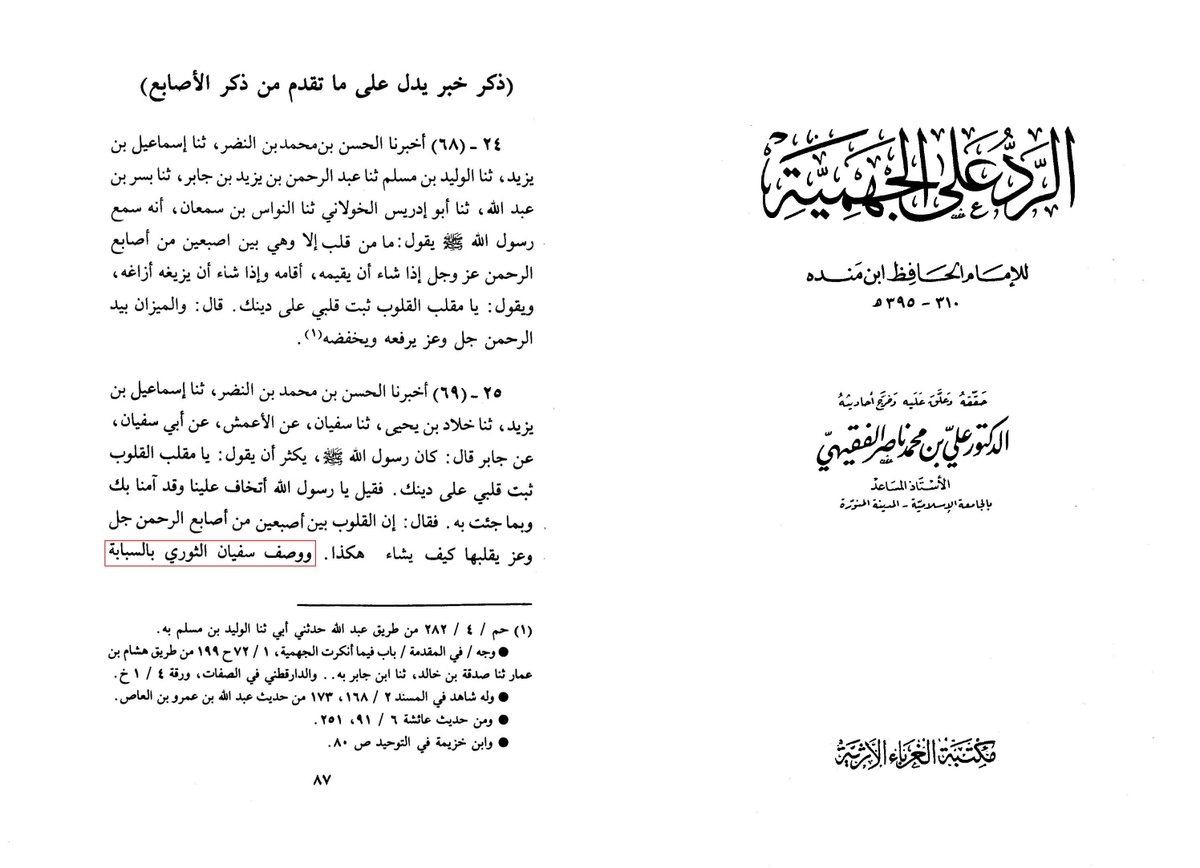
Al-Ḥajjāj and Ḥammād ibn Salamah (d. 167) gestured with their hands when narrating a mawqūf athar on the Yadayn of Allāh. Similarly, Imām Aḥmad (d. 241), Al-Qaṭṭān (d. 198), and Al-Thawrī (d. 161) gestured with their fingers when narrating aḥādīth on the Aṣābiʿ of Allāh.
Imām al-Tirmidhī (d. 279) clearly mentions that Ahl al-ʿIlm, such as Imām Mālik (d. 179), Sufyān ibn ʿUyaynah (d. 198), and ʿAbdullāh ibn al-Mubārak (d. 181), would give tafsīr of the Āyāt al-Ṣifāt, while the Jahmiyyah would explain the meanings in another way by making taʾwīl.

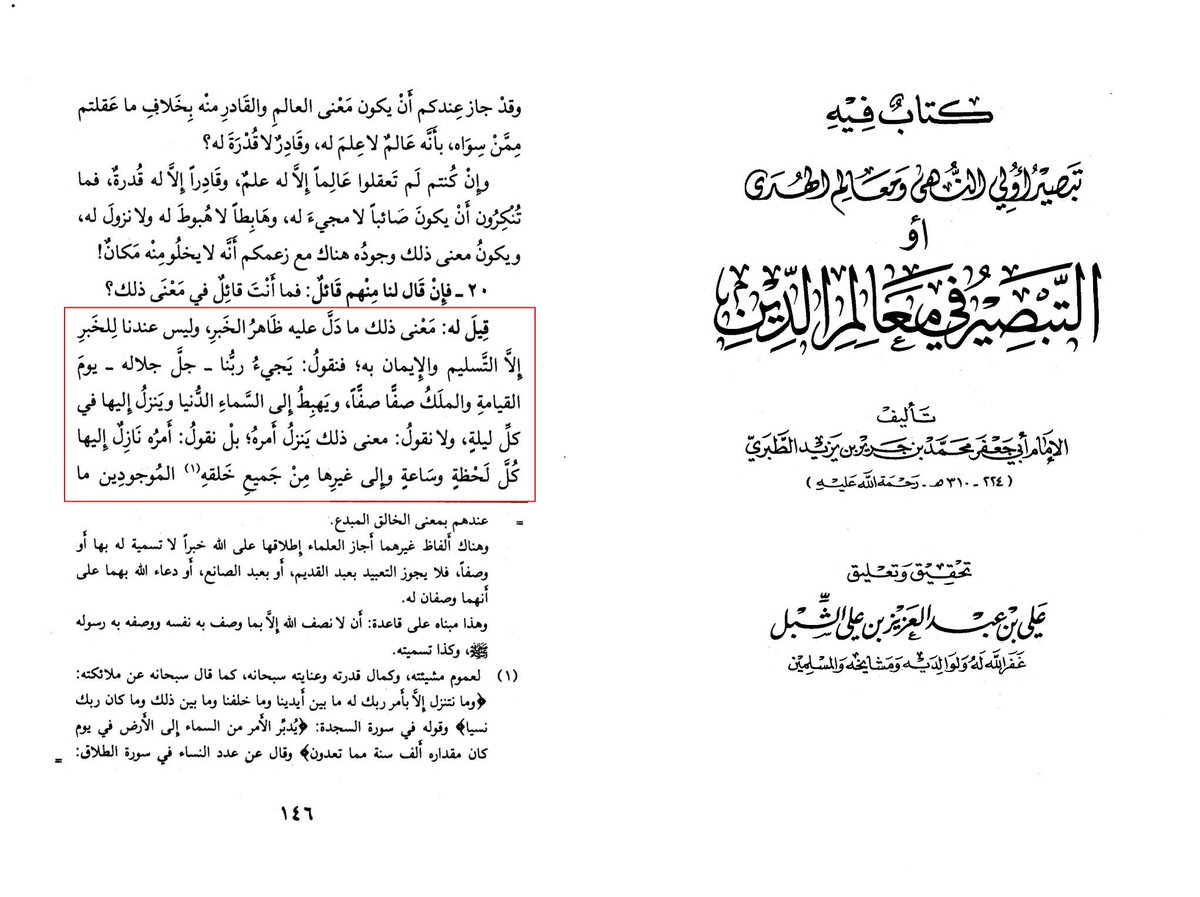
And Imām ibn Jarīr al-Ṭabarī (d. 310) states that the majīʾ (coming) and nuzūl (descending) of Allāh are to be affirmed on the ẓāhir without taʾwīl, and on the next page, he states that the same is to be done with all the Ṣifāt.
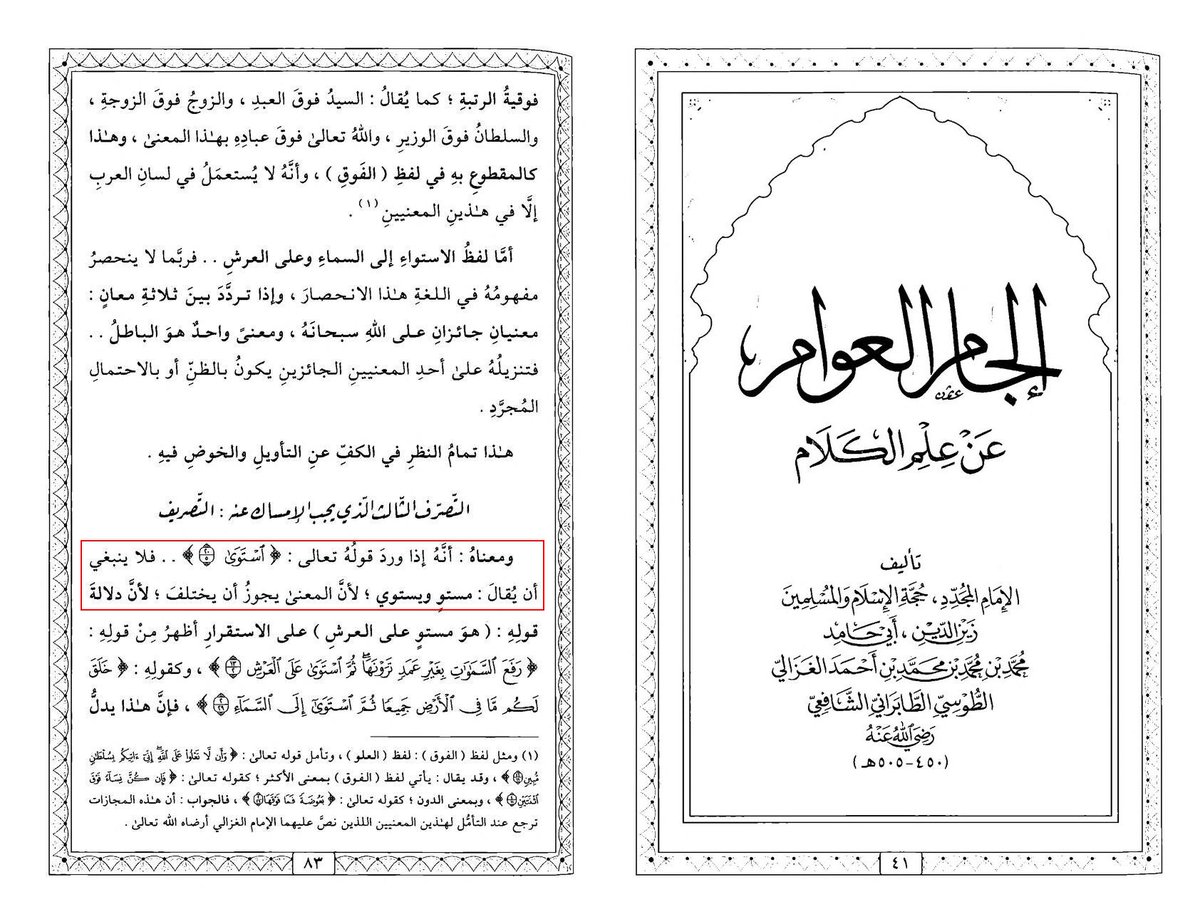
And Ibn Khuzaymah (d. 311) understood the maʿnā of the Istiwā (rising) of Allāh and deduced therefrom that He is accordingly currently in a state of Istiwā above His Throne. Hence, he said, “He is mustaw (risen) above His Throne,” thus making taṣrīf (conjugation) of Al-Istiwāʾ.
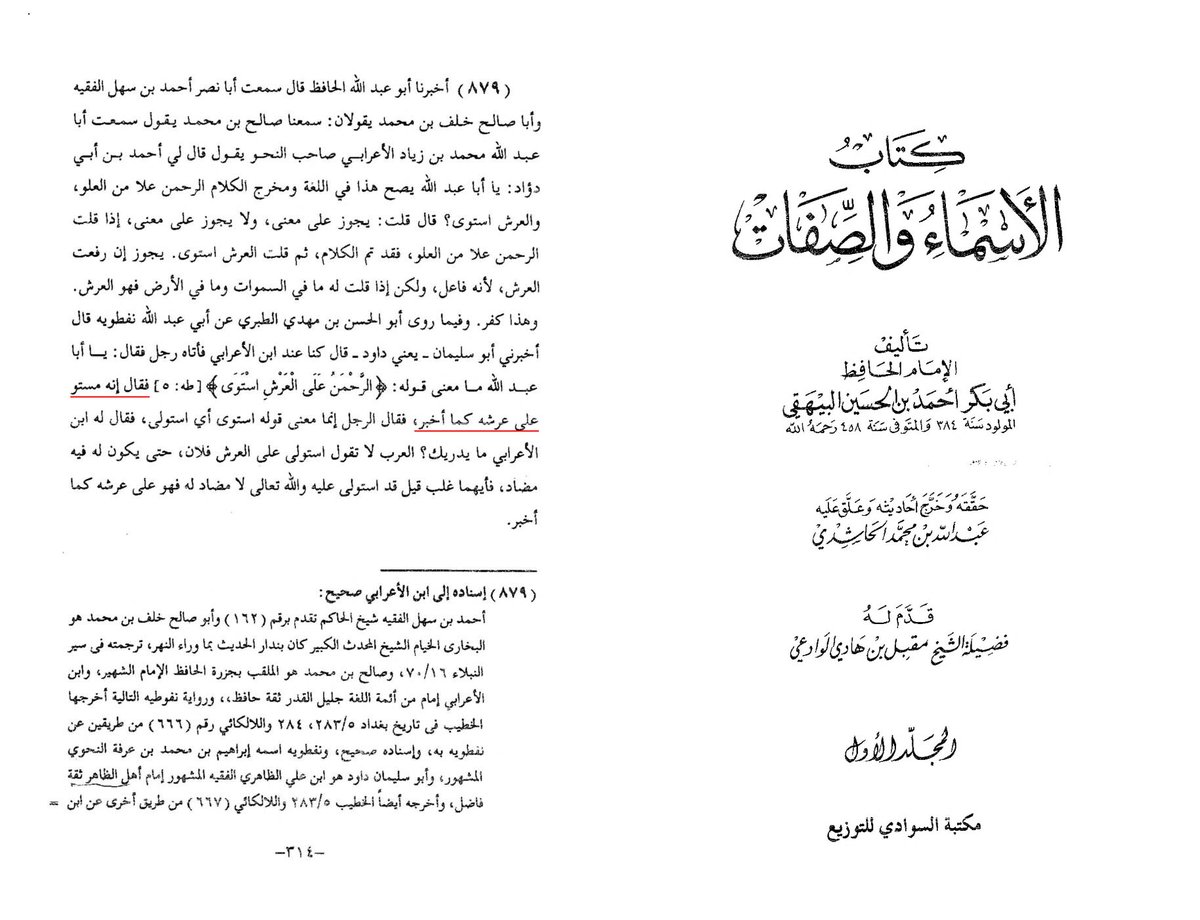
Similarly, when Ibn al-Aʿrābī (d. 231) was asked about the meaning of the Āyah, “The Most Merciful Istawā above the Throne,” he replied, “Verily, He is mustaw (risen) above the Throne, as He has informed us.”
On the other hand, Al-Ghazālī (d. 505) prohibits one from describing Allāh as mustaw (risen), since conjugating Al-Istiwāʾ—under the paradigm of tafwīḍ—may end up changing its meaning. (Credit: Br. Bassām Zawwādī)
So once it is established that the Salaf were neither Ashāʿirah nor Muʾawwilah nor Mufawwiḍah, does it matter if even the majority of the Khalaf disagreed with the Salaf on these matters? Not really. As the Prophet ﷺ said, the best of people are the first three qurūn.

If the Ashʿarī ʿAqīdah cannot be proven from the early generations of Islām, this argument really holds no weight. Abū Naṣr al-Sijzī al-Ḥanafī (d. 444) highlights in his treatise the lack of differing in ʿAqīdah until the advent of Ibn Kullāb (d. 240) and his likes.
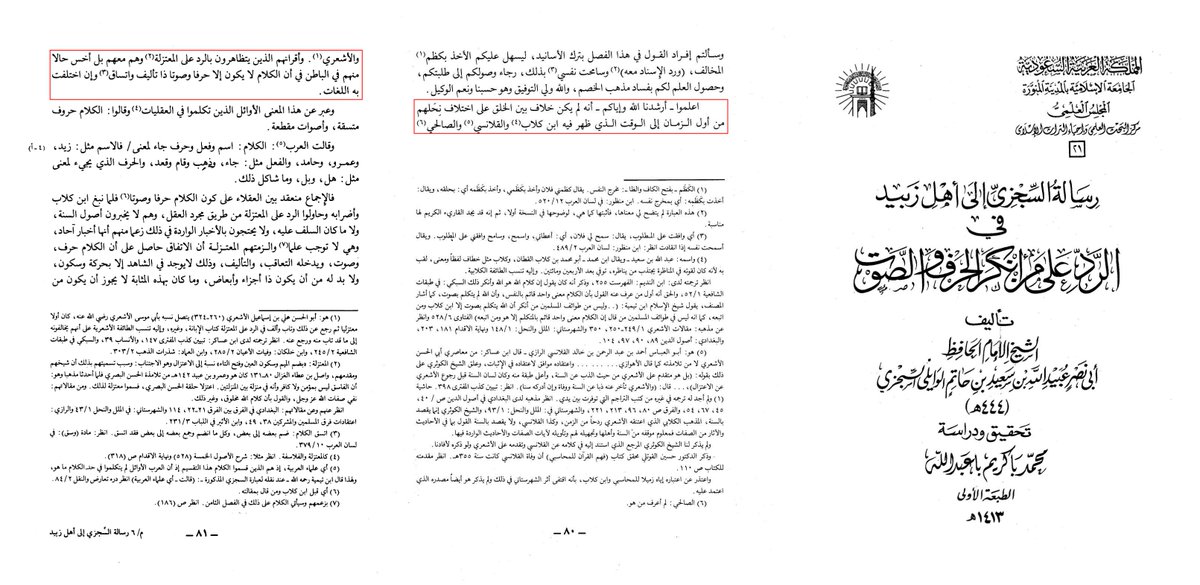
This is not to mention the harsh criticism which Ibn Kullāb (d. 240) and his companions were met with, which is significant, considering the fact that the Kullābiyyah are the group from which the Ashāʿirah stem. mobile.twitter.com
Imām Abū Sulaymān al-Khaṭṭābī (d. 388) wrote, “As for what you have asked regarding the Ṣifāt […] then the maḏhab of the Salaf is to affirm them and observe them upon their apparent meanings (ʿalā ẓāhirihā).” Note how he only references the Salaf, skipping over the Khalaf.
![Imām Abū Sulaymān al-Khaṭṭābī (d. 388) wrote, “As for what you have asked regarding the Ṣifāt […] th...](https://pbs.twimg.com/media/FswFcL6aQAEN-KZ.jpg)
Al-Khaṭīb al-Baghdādī (d. 463) also said, “As for the Ṣifāt […] then the maḏhab of the Salaf is to affirm and observe them apparent meanings (ʿalā ẓawāhirihā).” Again, we find the maḏhab of the Salaf referenced and the differing of the Khalaf from the Salaf disregarded.
![Al-Khaṭīb al-Baghdādī (d. 463) also said, “As for the Ṣifāt […] then the maḏhab of the Salaf is to a...](https://pbs.twimg.com/media/FswFvnYaUAAvoME.jpg)
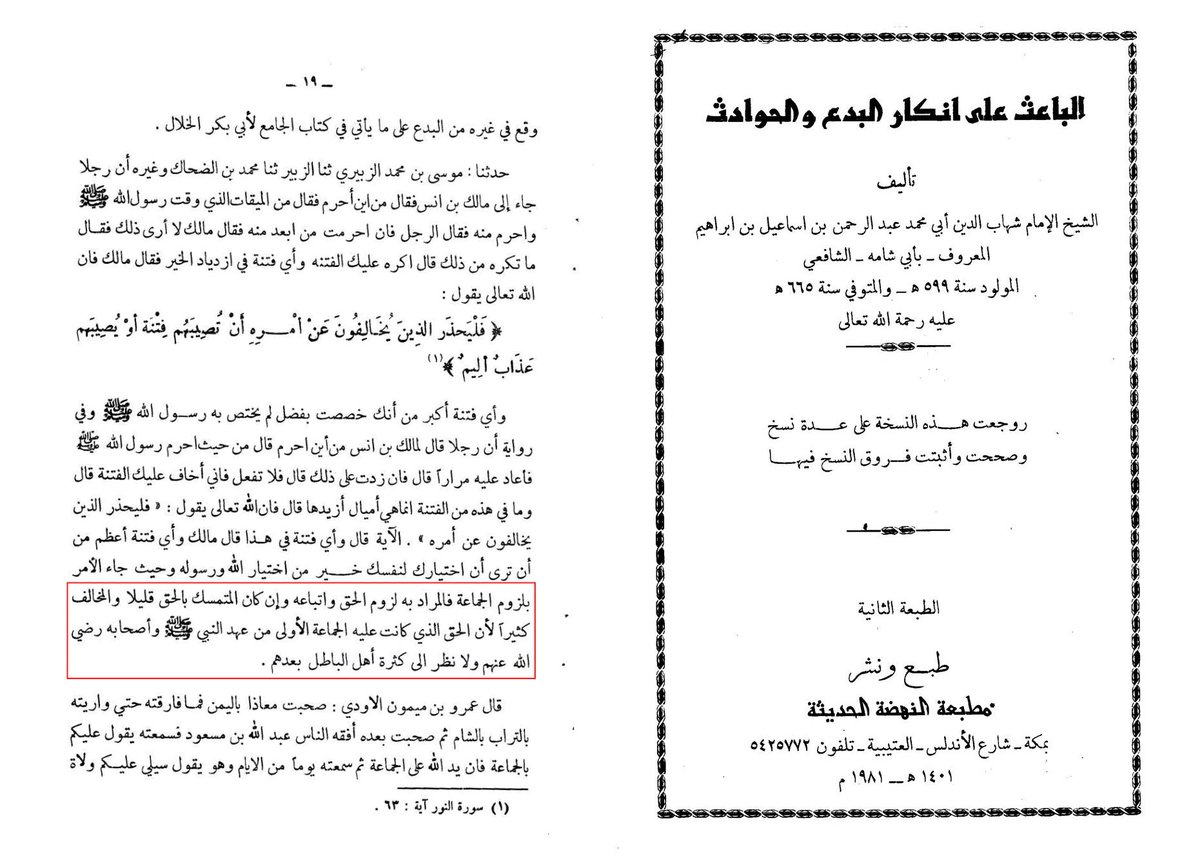
Even Abū Shāmah al-Maqdisī (d. 665) states clearly that we should follow the truth even if its followers are few and many oppose it, and that the Jamāʿah is what the Ṣaḥābah were upon without any consideration being given to the numbers of the deviants who came after them.
As for the ‘Ashʿarī majority’ argument, then it is forced to appeal primarily to the opinions of the Khalaf, which are not a ḥujjah and do not hold weight in light of the agreement of the Salaf; hence, this argument fails to serve any real purpose.
With that being said, regarding the claim that the majority of the Khalaf were Ashʿarī, then it itself can be challenged from a number of angles.
Al-Qaṣṣāb (d. 360) wrote a treatise on ʿAqīdah where he, among other points, states that the Ṣifāt are to be affirmed on the ḥaqīqah, not majāz. This treatise was approved by the ʿUlamāʾ of the time and distributed across the lands, indicating that the masses weren’t Ashʿarī.
Ibn ʿAsākir (d. 571), in his attempt to list the Ashʿarī ʿUlamāʾ, failed to reach even one hundred, while Ibn Mibrad al-Ḥanbalī (d. 909) provides a list which exceeds four hundred ʿUlamāʾ that opposed the Ashāʿirah, and he mentions that he was informed of over one thousand.

For similar lists, one may refer to Ithbāt Ṣifah al-ʿUluww by Ibn Qudāmah (d. 620), Ijtimāʿ al-Juyūsh al-Islāmiyyah by Ibn al-Qayyim (d. 751), Al-ʿUluww lil-ʿAlī al-Ghaffār by Al-Dhahabī (d. 748), and Ṭabaqāt al-Ḥanābilah by Al-Qāḍī Abū Yaʿlā (d. 458).
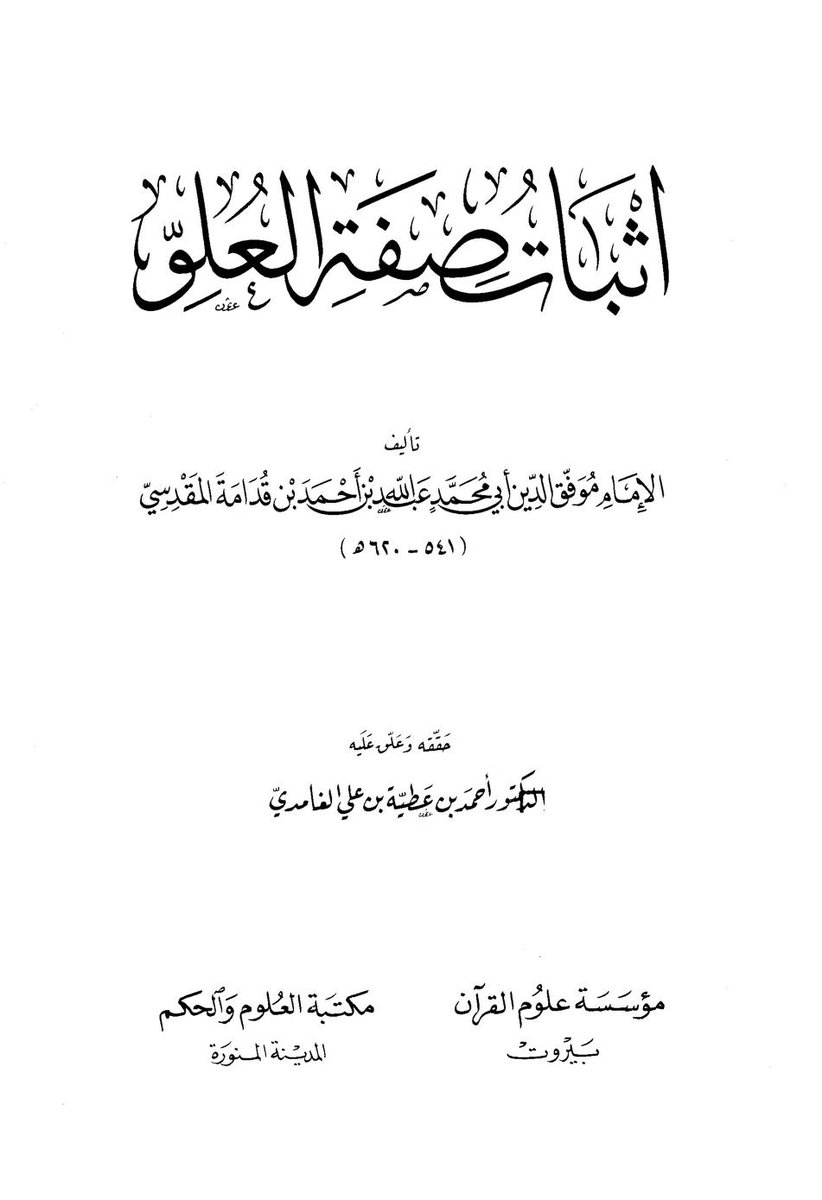
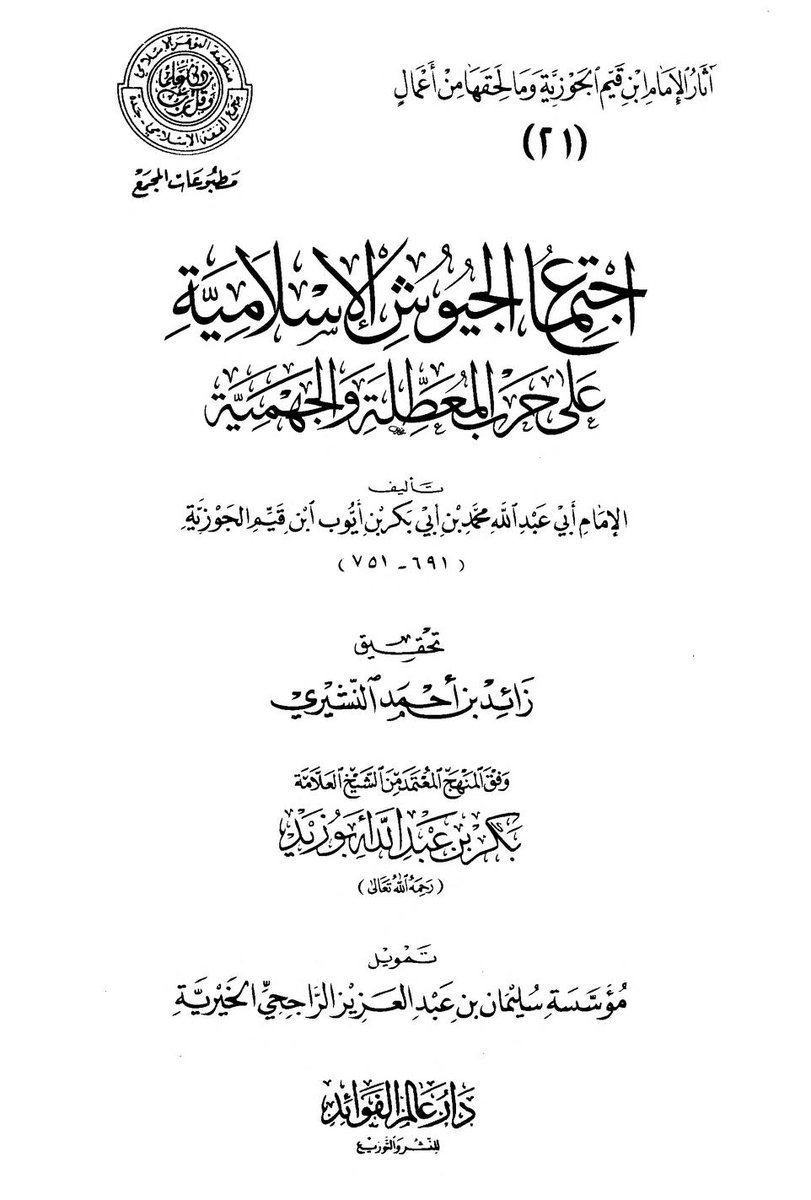
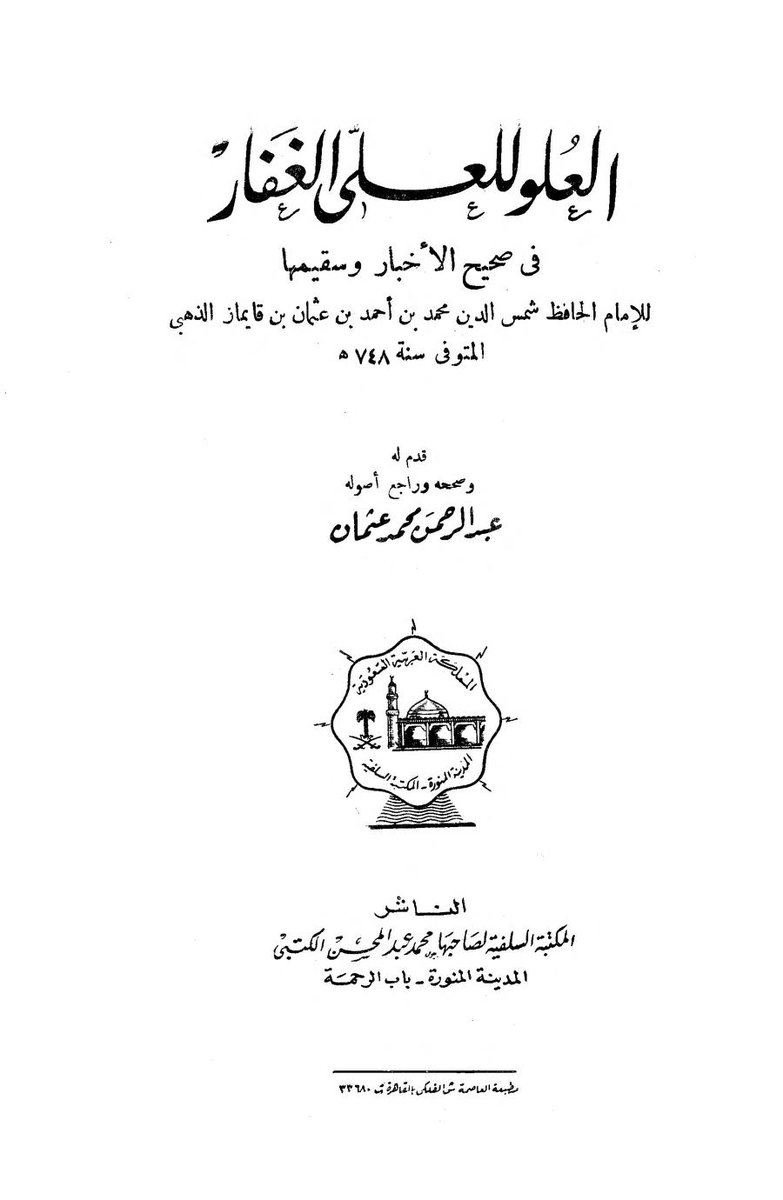
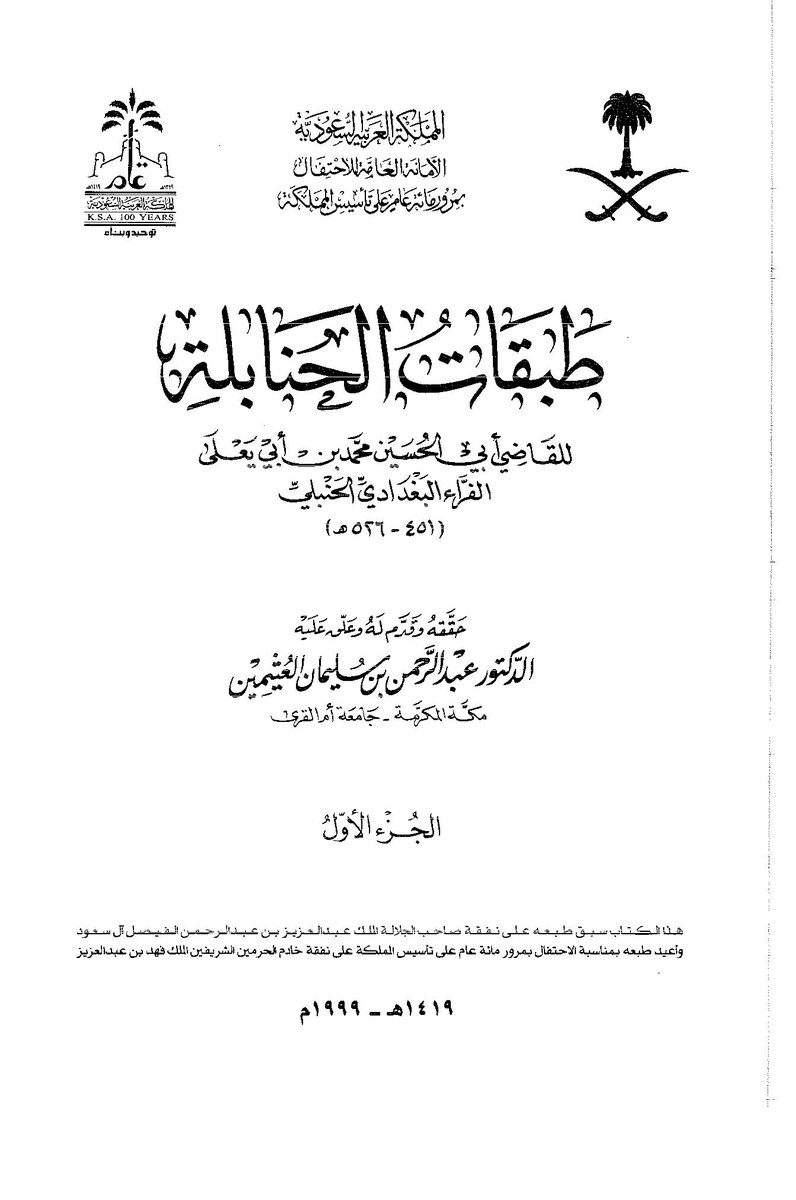
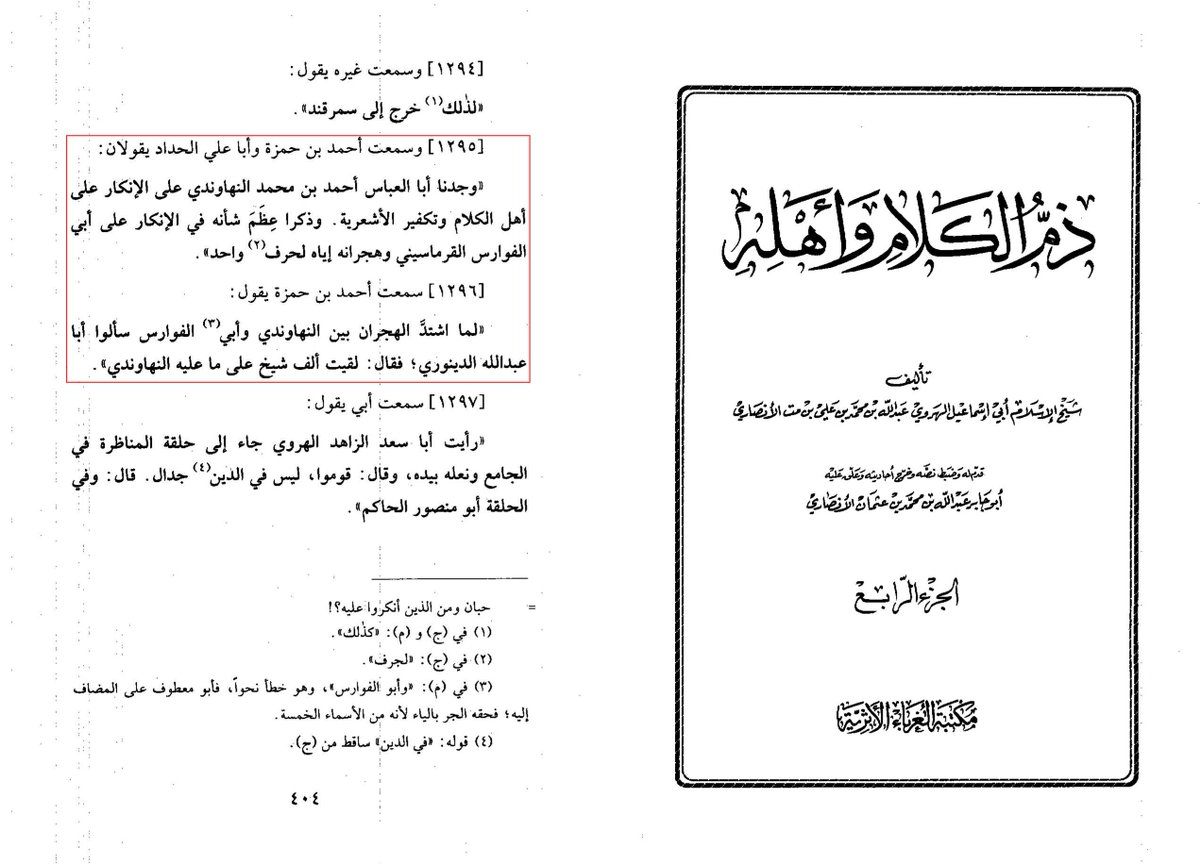
And regarding Imām Abū al-ʿAbbās al-Nihāwandī (d. ~370), who was very harsh against Ahl al-Kalām and would make takfīr of the Ashāʿirah, Abū ʿAbdillāh al-Dīnawarī said, “I met one thousand scholars who are in agreement with Al-Nihāwandī.” (Credit: @OneofYoda)
For more details, one may refer to this article: islamicdiscourse.substack.com

Note that this is only regarding the ʿAqīdah of the scholars; when it comes to the ʿāmmah al-nās (general masses of people), things get even worse for the Ashʿarīs, as their own scholars admit that the masses do not and cannot accept the Ashʿarī ʿAqīdah.
For instance, Fakhr al-Dīn al-Rāzī (d. 606) admits that the fiṭrah of the majority of people leads them to affirm that Allāh is above the heavens.
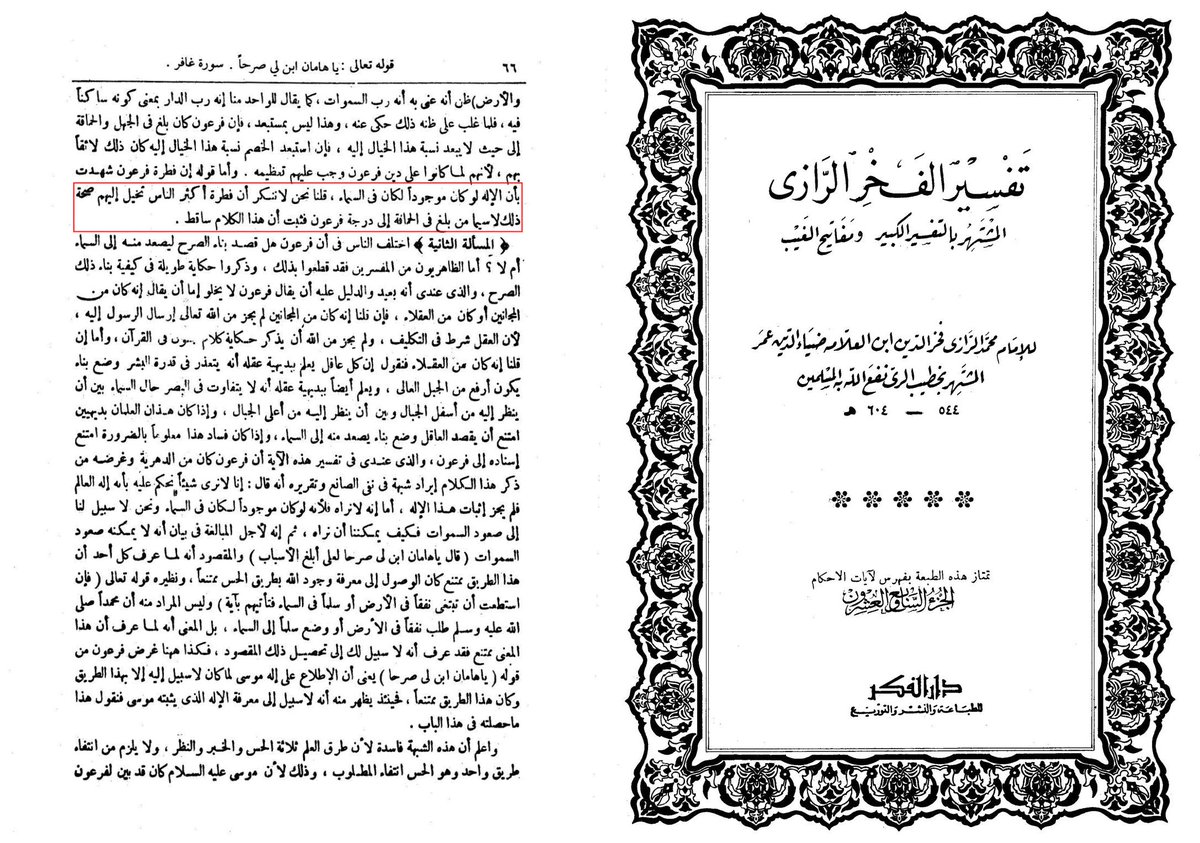
Similar statements are found in the works of Al-ʿIzz ibn ʿAbd al-Salām (d. 660), Al-Taftazānī (d. 792), Al-Sanūsī (d. 895), and others, as is listed and explained here: islamicdiscourse.substack.com

In closing, the fact that Ashʿariyyah has gained popularity in more recent years is not something which can be used as evidence in support of it. As we know, the followers of the truth will be few, and all sects will be in the Fire with the exception of only one.
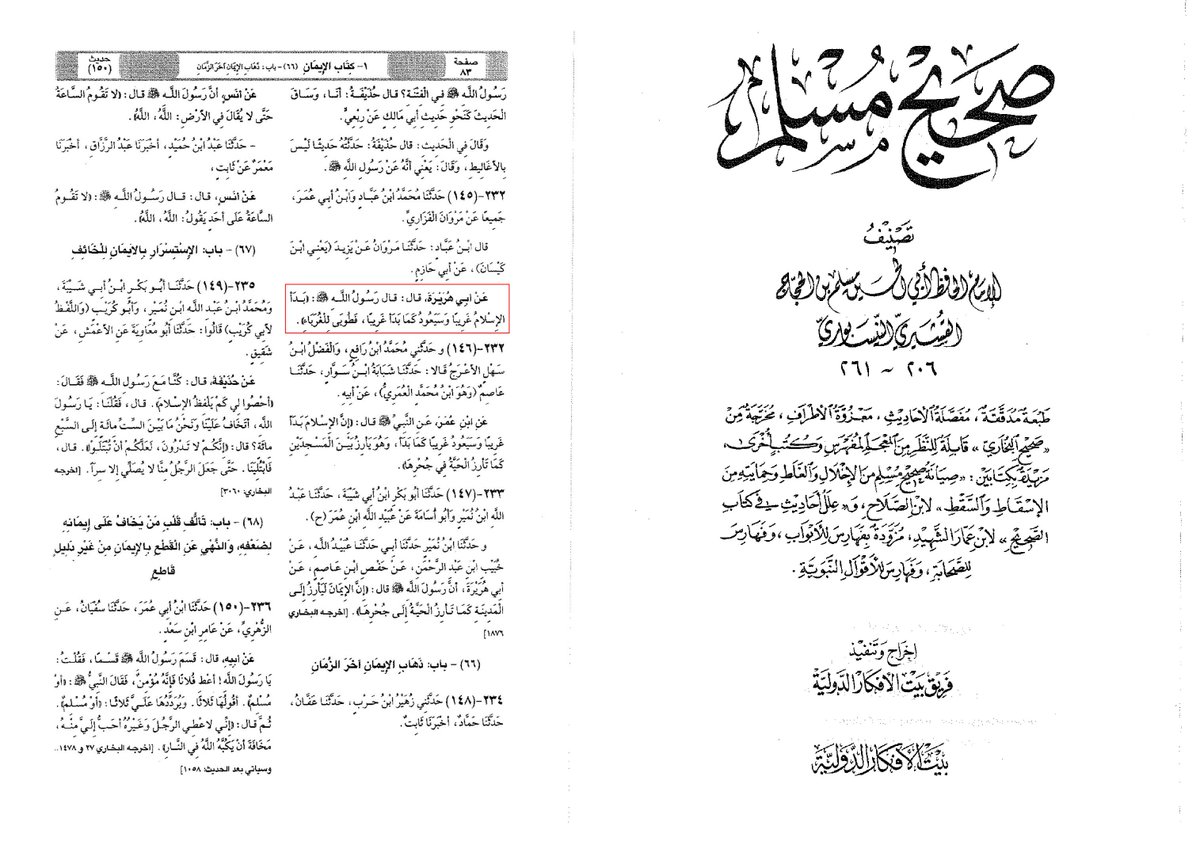
The Prophet ﷺ said, “Islām began as (something) strange, and it will return to being strange, as it had begun. So glad tidings be to the ghurabāʾ (strangers).”
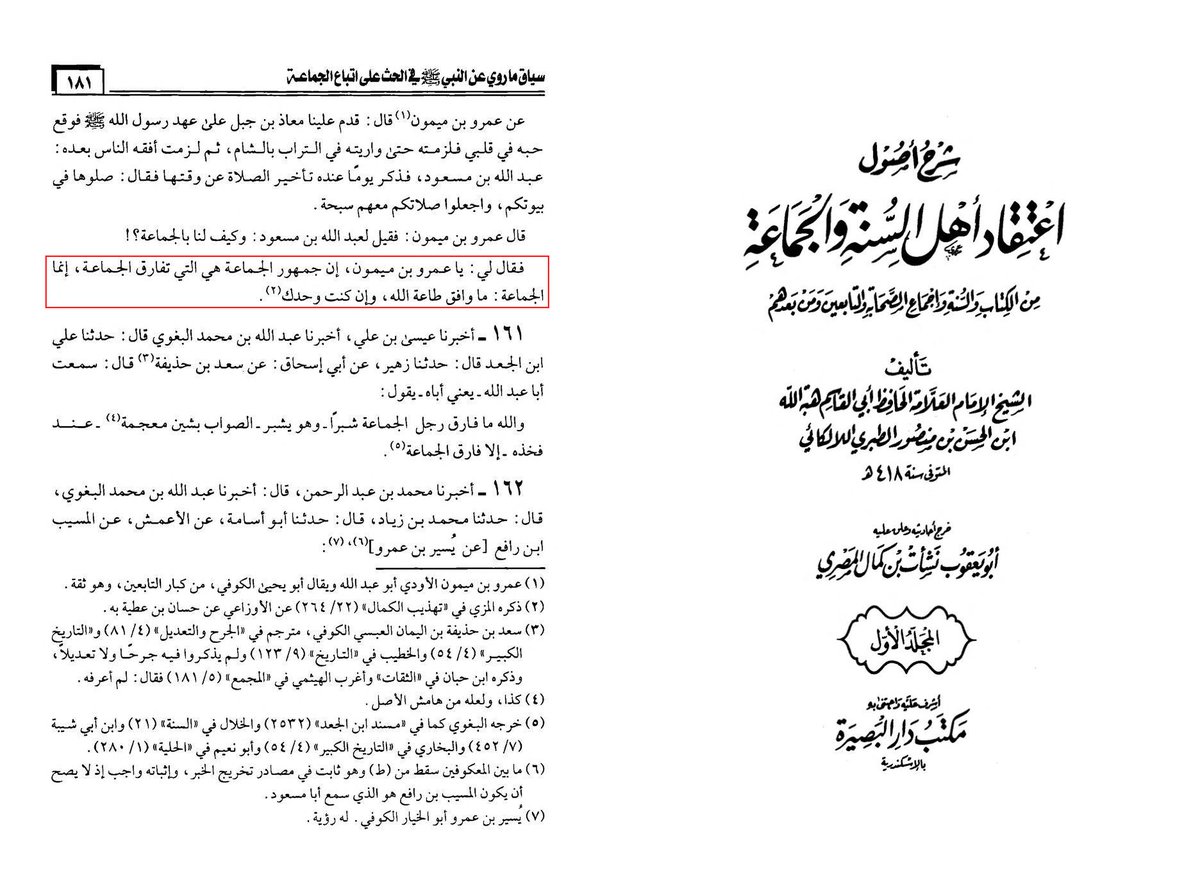
ʿAbdullāh ibn Masʿūd (d. 32) said, “The Jamāʿah is whoever obeys Allāh, even if they are a single person.”
And Imām al-Awzāʿī (d. 157) said, “Upon you is to follow the āthār of the Salaf, even if the people oppose you. And beware of the mere opinions of men, even if they beautify it with their words.”
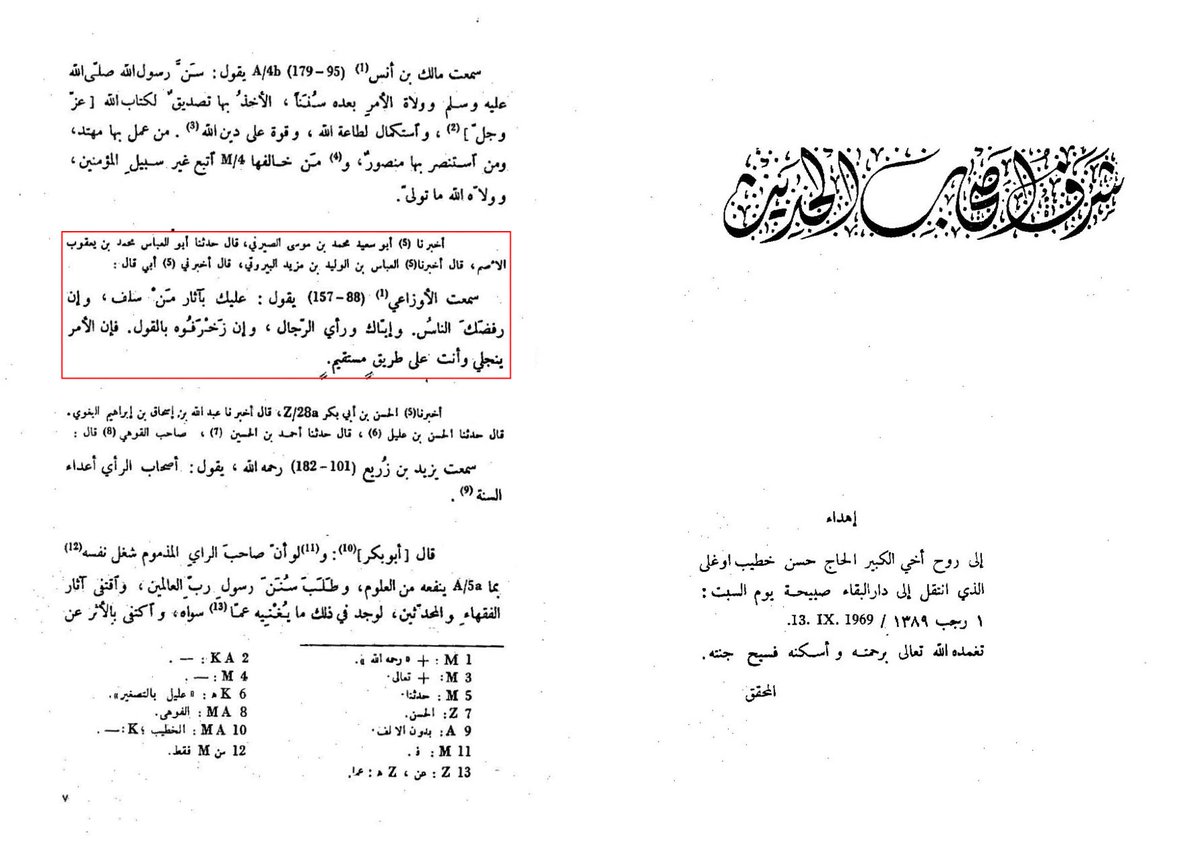
So in following this advice, we should follow the path of the Salaf even if the people have abandoned it, and we should adhere to it even if the people call against it.
And Allāh knows best.
And Allāh knows best.
@JohnDoe69230127 And Isḥāq ibn Rāhawayh used the fact that the Qurʾān emerged from Allāh as a proof that it is not makhlūq. If خرج means Allāh sent the Qurʾān down, not that it emerged from Him, then there are many things which Allāh sends down which are makhlūq, so this would make no sense.
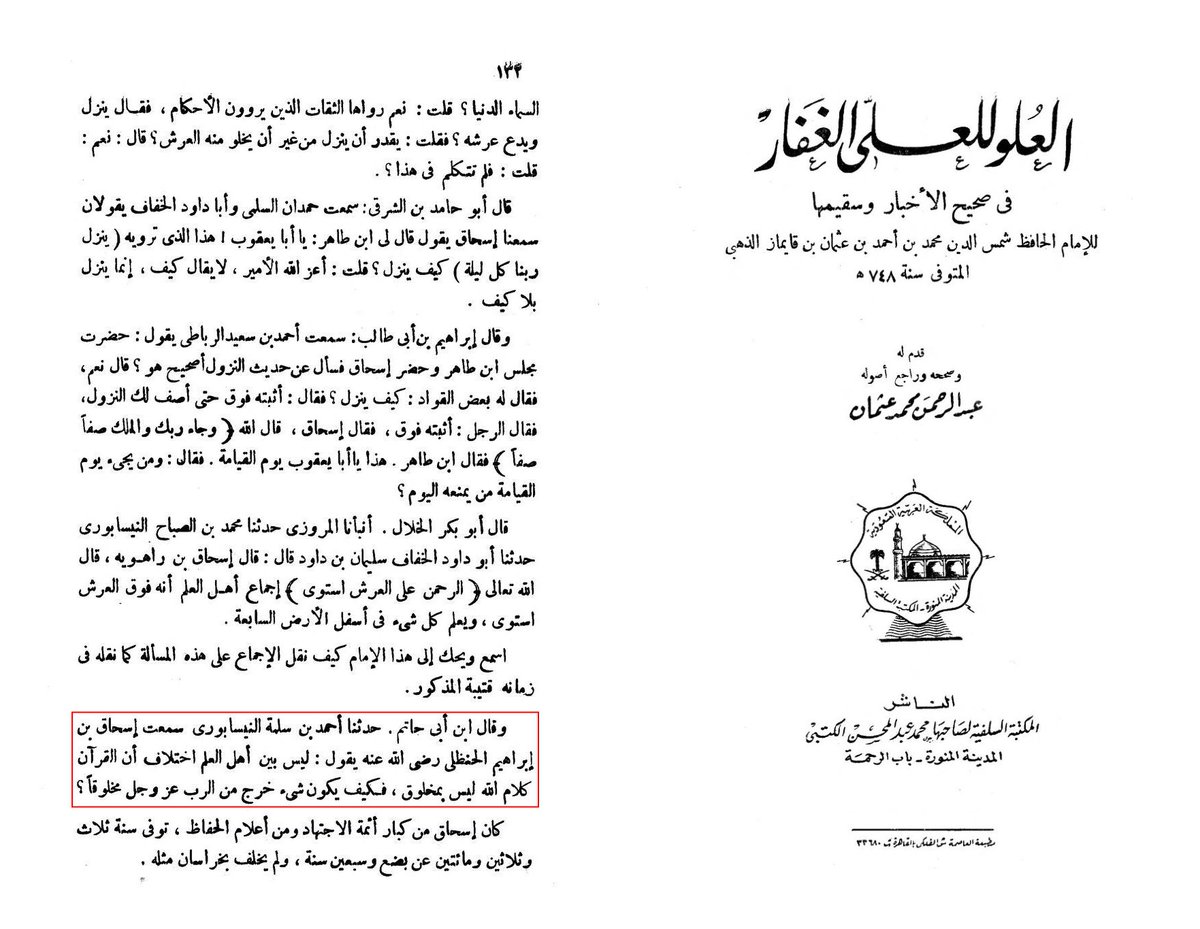
@JohnDoe69230127 @D1mashqi If you were consistent, you would accept that a more honest translation would be that the Qurʾān is revealed to the earth, not that it is created on earth and uncreated in the heaven. Otherwise, you'd have to say that Isḥāq is contradicting himself.
@JohnDoe69230127 @D1mashqi You can also go to the Masāʾil of Ḥarb ibn Ismāʿīl and see Isḥāq's view on the lafẓ which we recite.
Loading suggestions...