

🧵regarding the Combat Application Tourniquet:
its parts, how it's applied, some history of tourniquets;
and an experiment to see if my mother (75 years old) is strong enough to tighten a tourniquet on the thigh of a 215 lb. man enough to suppress the distal pulses.
(1/ )
its parts, how it's applied, some history of tourniquets;
and an experiment to see if my mother (75 years old) is strong enough to tighten a tourniquet on the thigh of a 215 lb. man enough to suppress the distal pulses.
(1/ )
The term ultimately derives from the Greek word Τόρνος. It then went through various Latin and French versions and finally into the modern word 'tourniquet'.
The term appears as early as 1689, but was popularized by Petit in 1718 when he developed one with a screw tightener.
The term appears as early as 1689, but was popularized by Petit in 1718 when he developed one with a screw tightener.

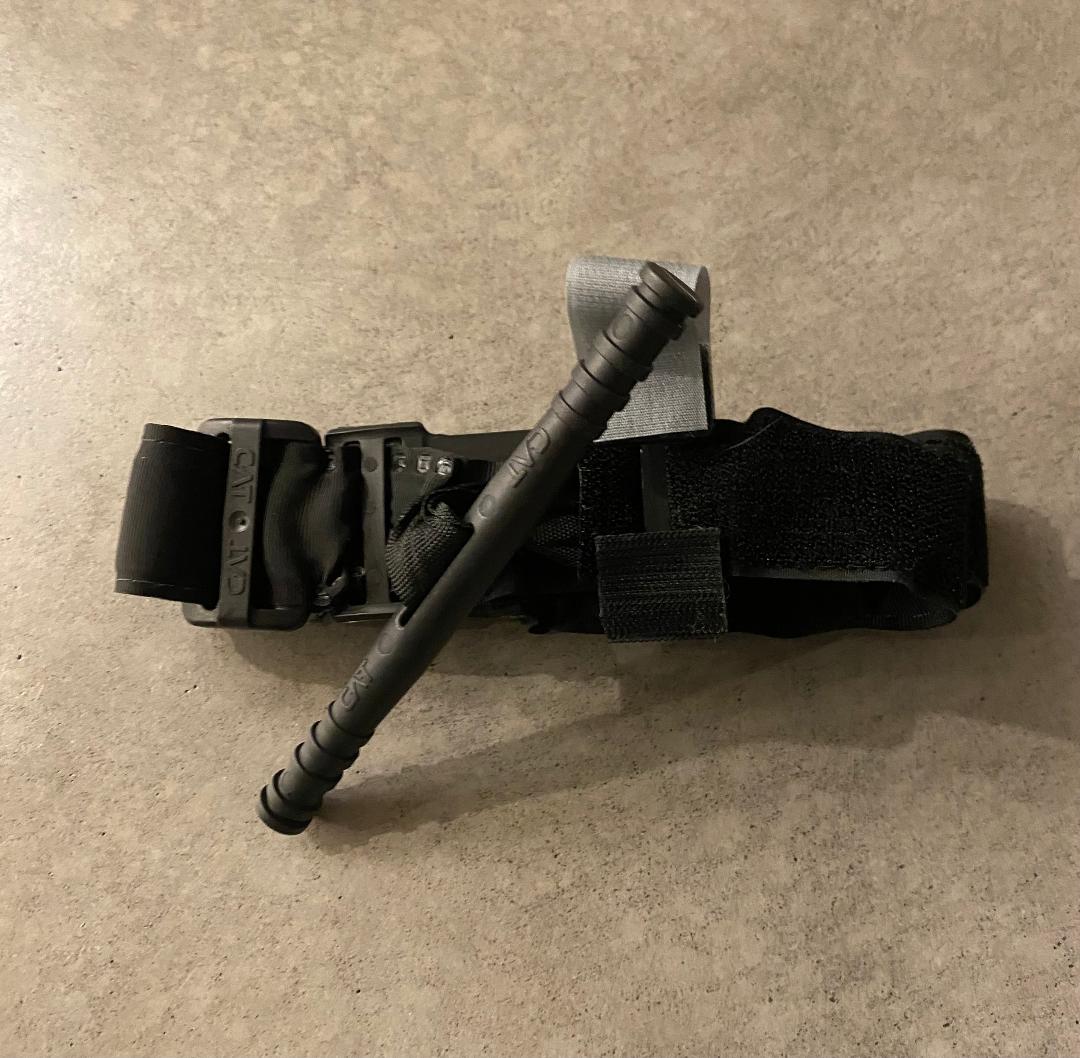
Tourniquets have come in many forms over the years, but perhaps the one most commonly found in the US today is called the Combat Application Tourniquet, which is currently in its 7th generation.
This is the version we'll look at.
This is the version we'll look at.
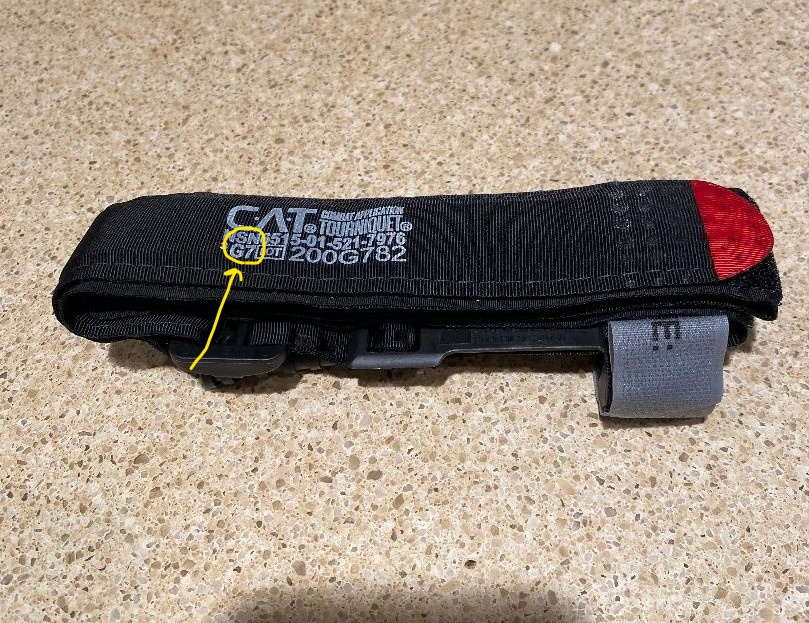
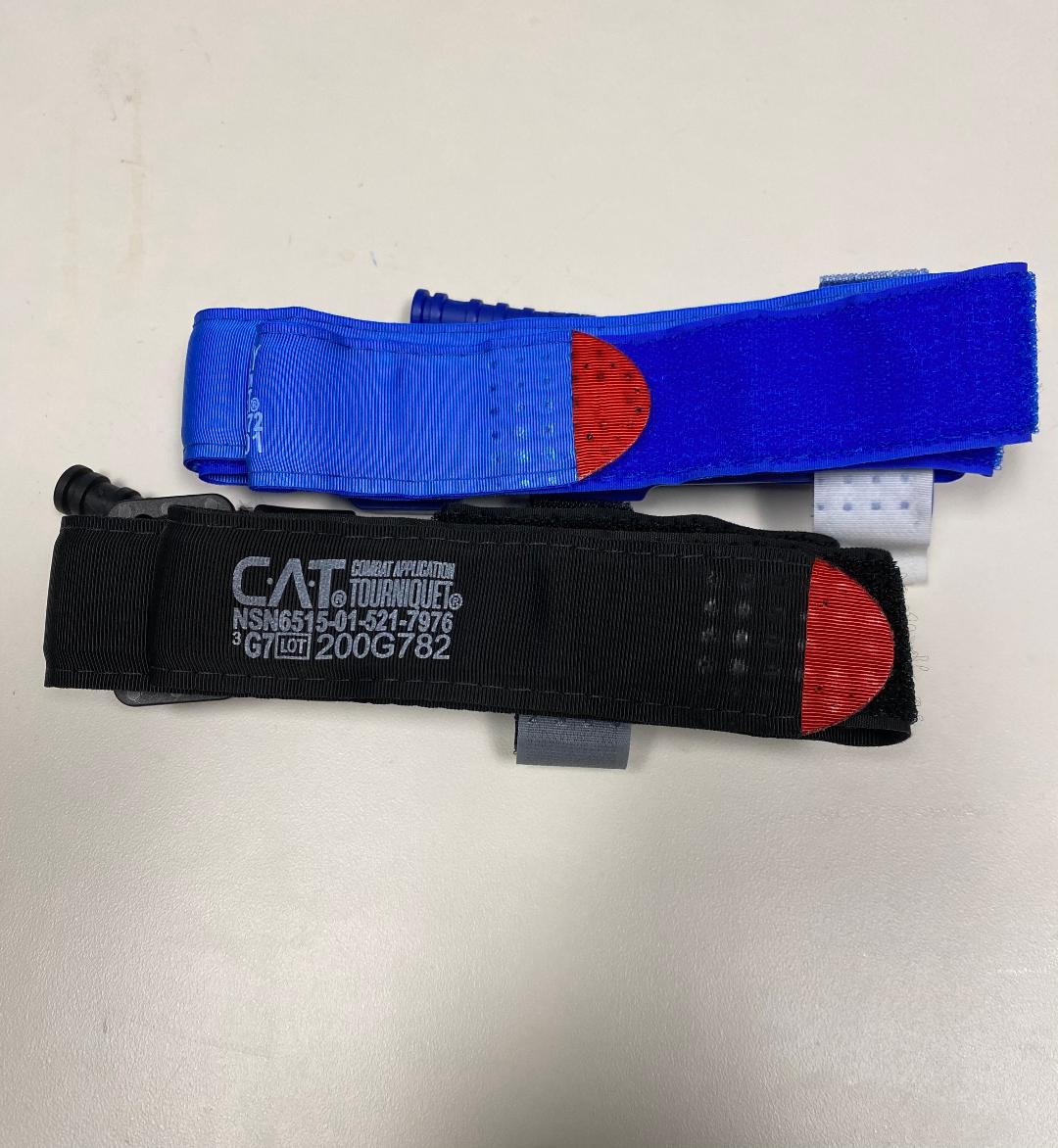
The CAT comes in different colors. Note that the strap often has a red tip, so that it can be more easily found when it's dark.
When you unfold the CAT, it is already in the form of a loop, and is ready to be placed over a bleeding extremity.
When you unfold the CAT, it is already in the form of a loop, and is ready to be placed over a bleeding extremity.

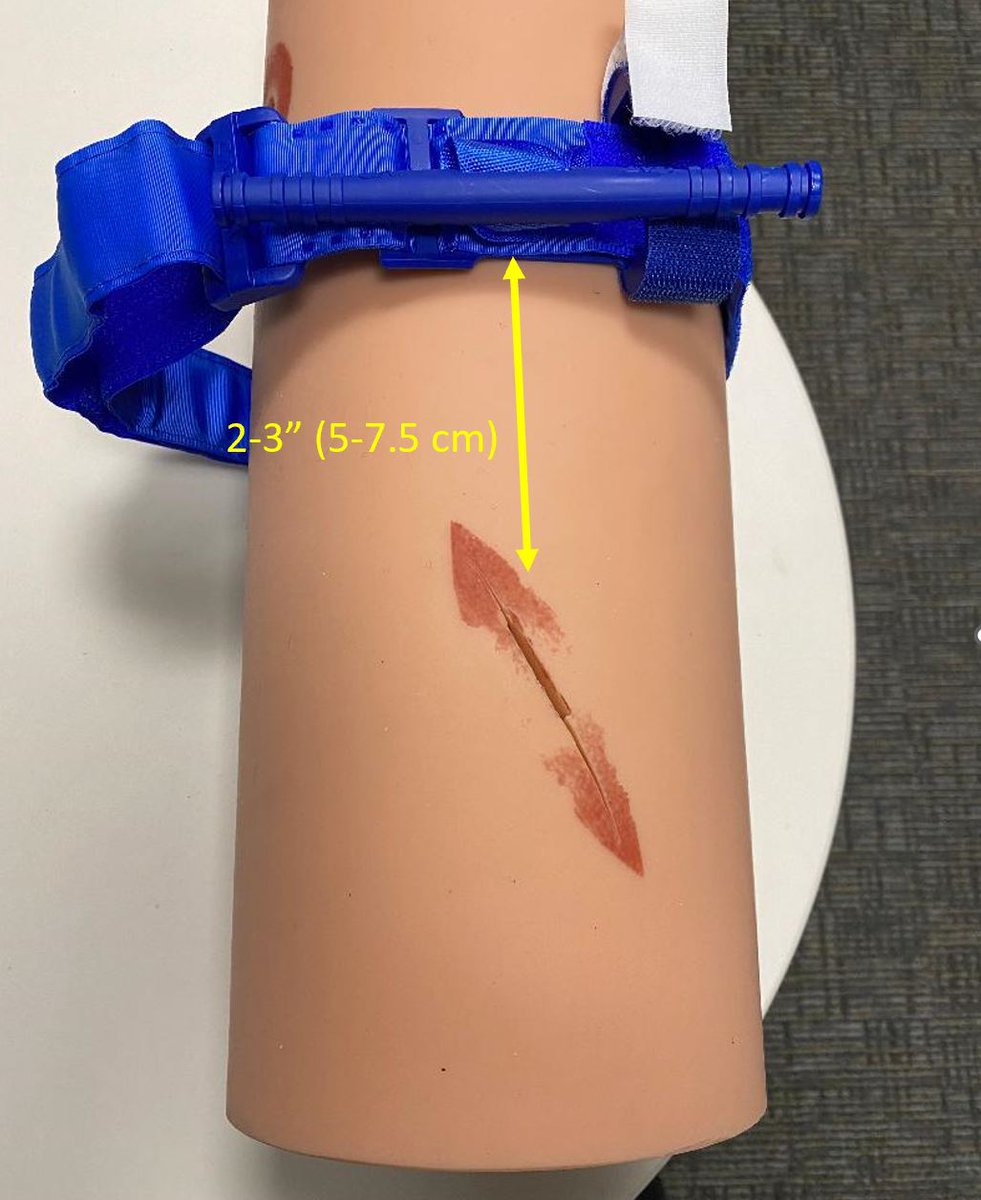
I'm not trying to include all the knowledge from a Stop The Bleed course (link at the end) but it should be noted that the tourniquet should be:
- applied only if pressure fails to control bleeding
- at least 2-3" above the bleeding area
- on uncovered skin (when possible)
- applied only if pressure fails to control bleeding
- at least 2-3" above the bleeding area
- on uncovered skin (when possible)
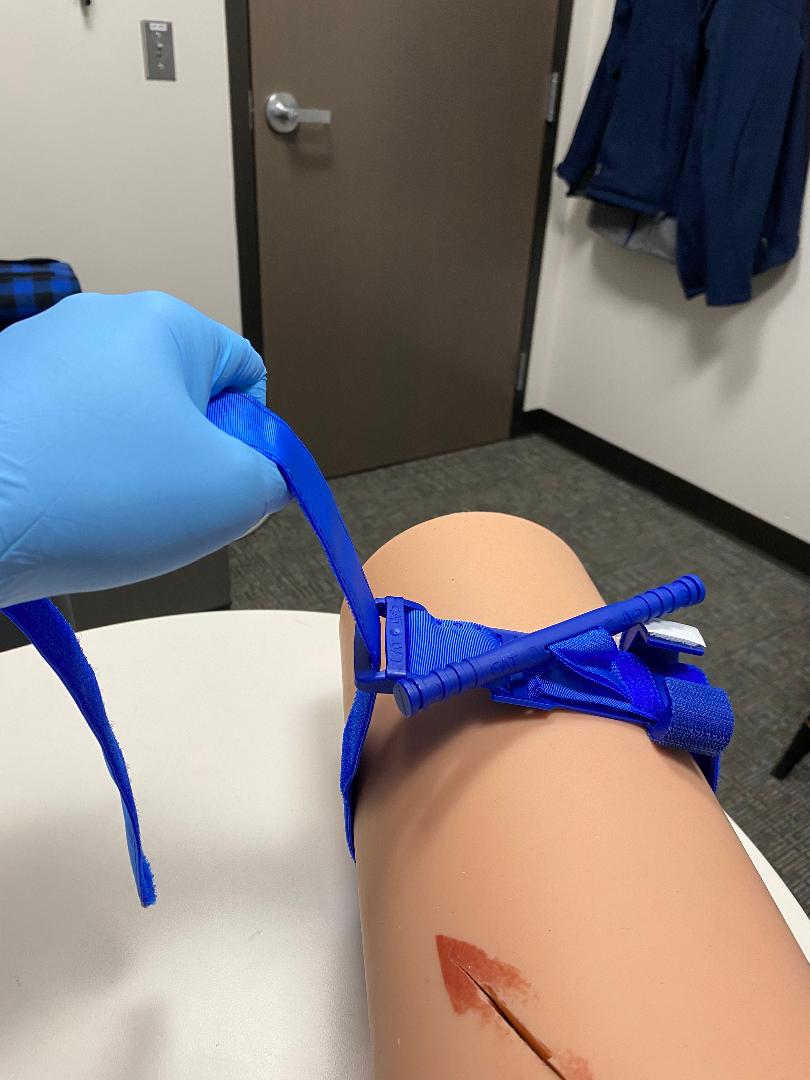
After placing the tourniquet in an appropriate place, you then start pulling the strap as tight as you can.
Next you will wrap it around behind the extremity (red arrow).
Next you will wrap it around behind the extremity (red arrow).
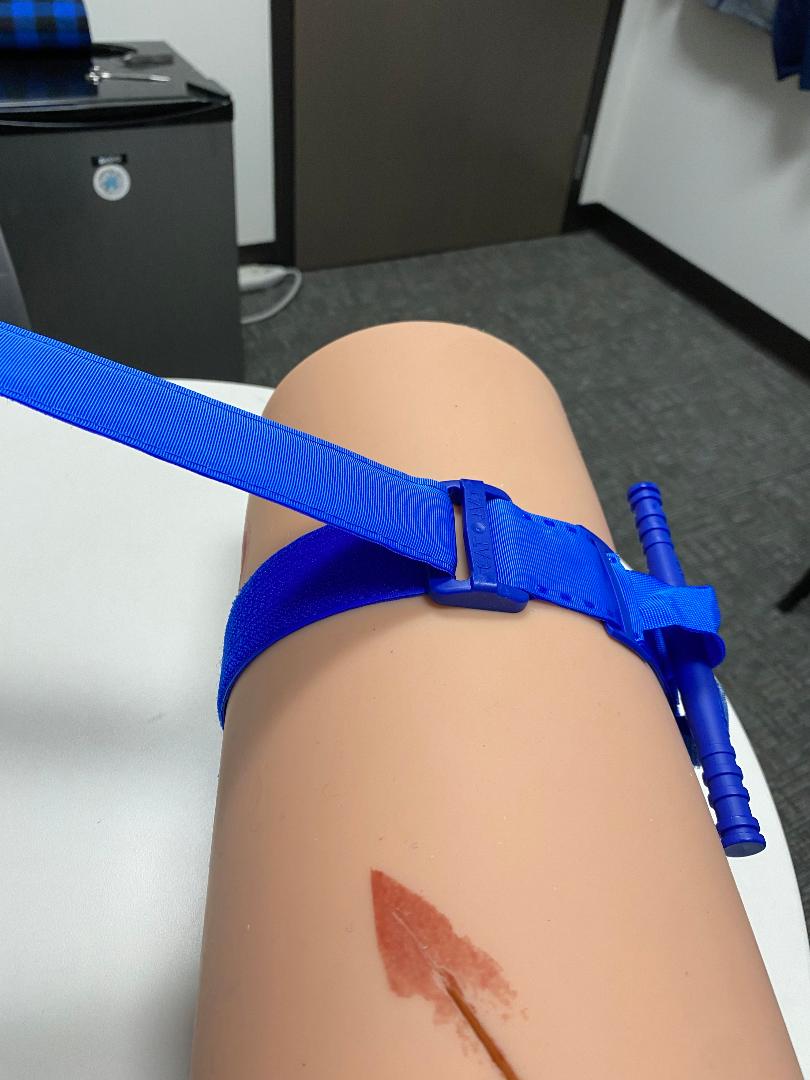

Once you've wrapped the strap around the back of the extremity, you'll want to stop just short of the clip (where the red line is).
The reason is that you need the strap out of the way when you use the windlass and the clip in the next step.
The reason is that you need the strap out of the way when you use the windlass and the clip in the next step.
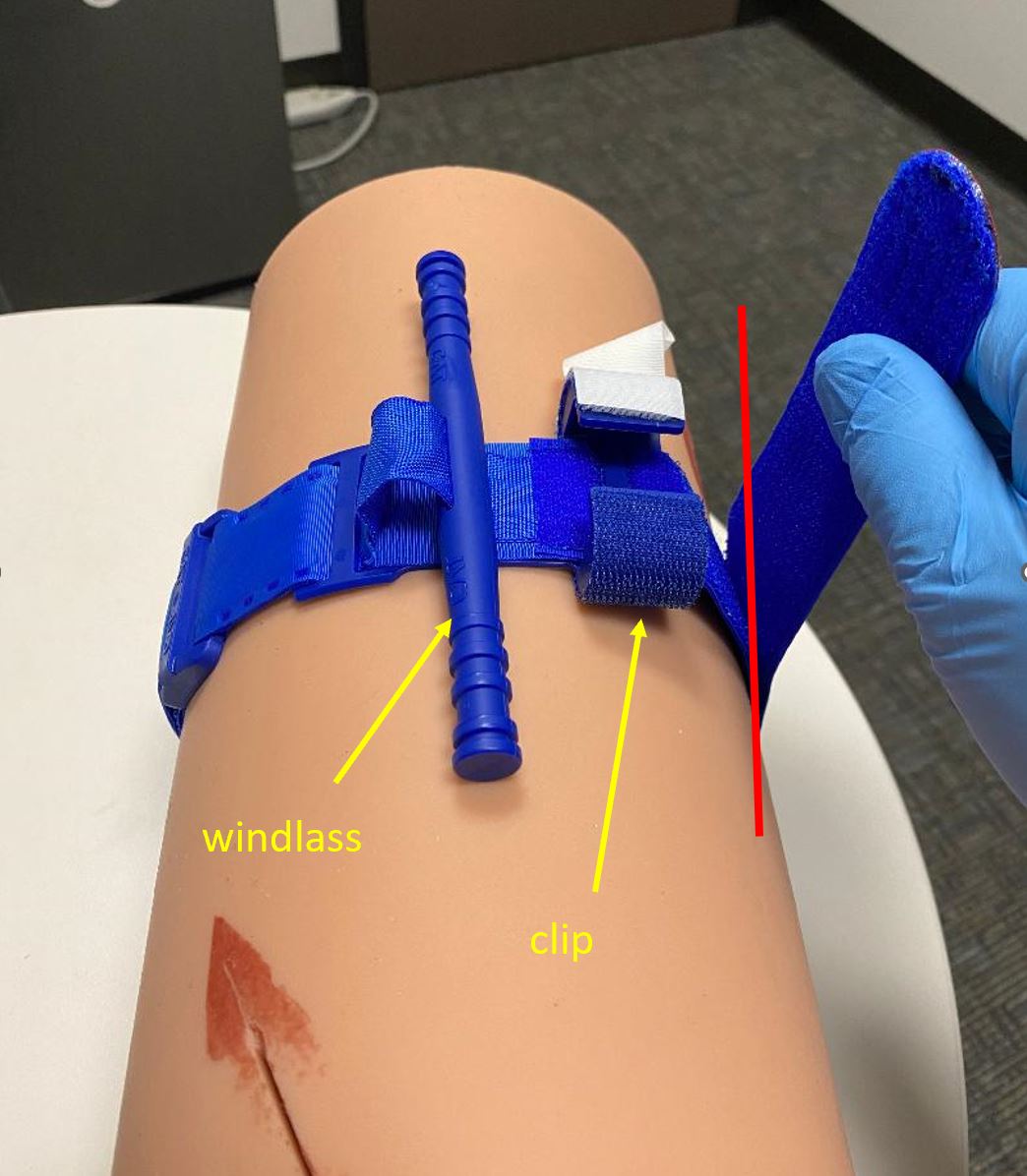
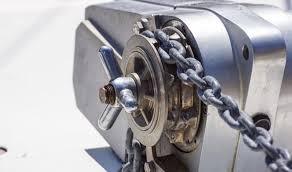
'Windlass' refers to various devices for moving weights, all of which involve rotational force. Often, windlasses have been used to lift boat anchors.
The windlass is a key part of the tourniquet. You would NOT be able to pull it tight enough just by pulling hard on the strap.
The windlass is a key part of the tourniquet. You would NOT be able to pull it tight enough just by pulling hard on the strap.
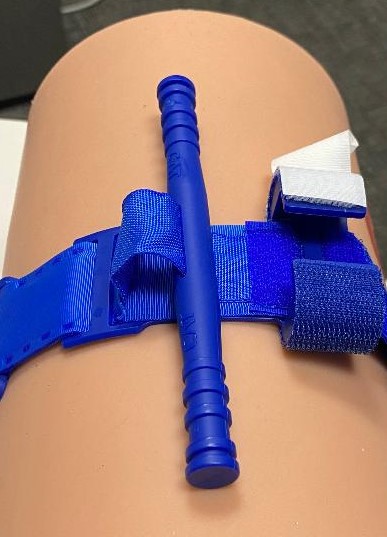
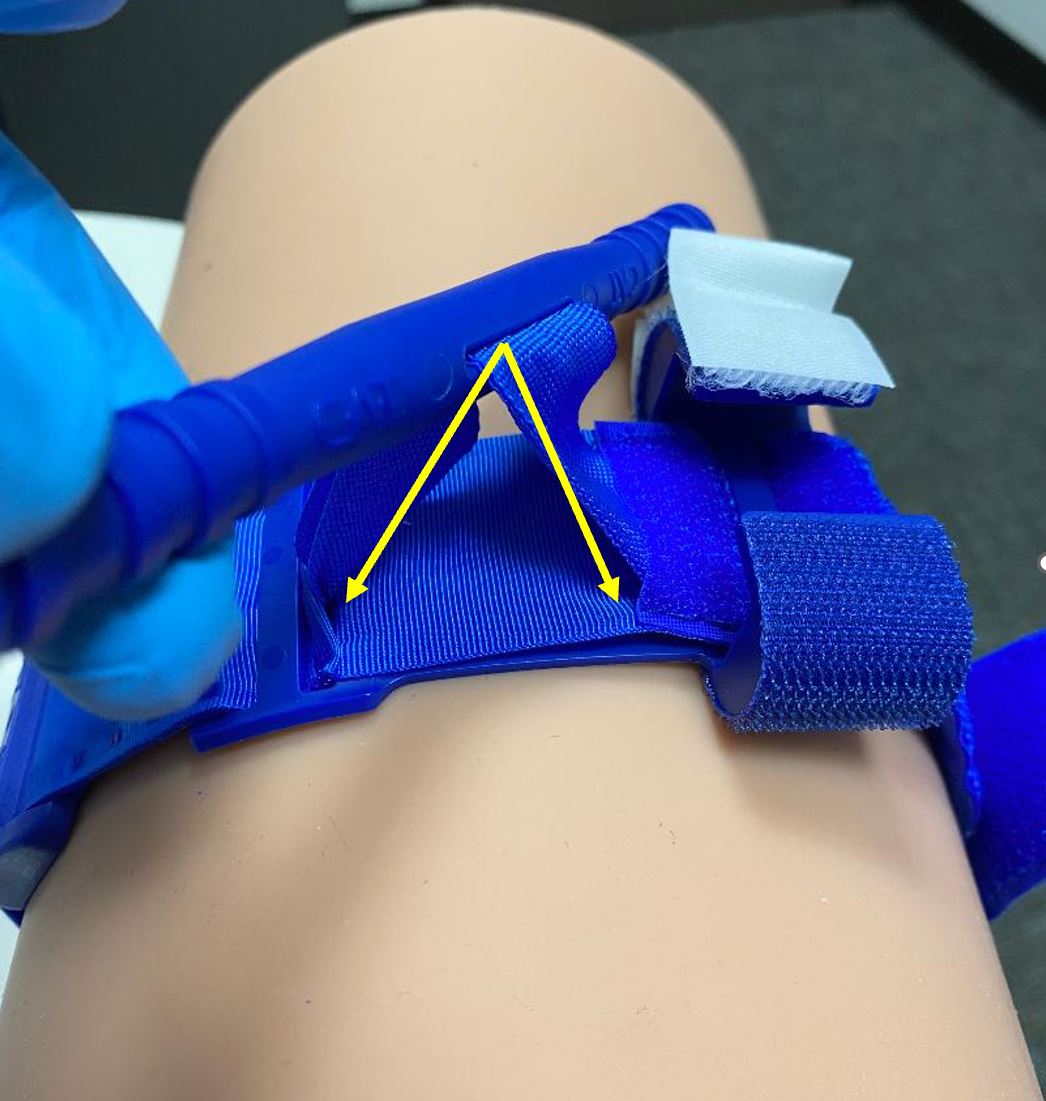
The windlass has grooves in the handle to make it easier to grip. It is connected to the strap at 2 points (yellow arrows), so that when it's rotated, the strap shortens, making the tourniquet tighter.
Keep rotating until tight enough that bleeding stops. It will be painful.
Keep rotating until tight enough that bleeding stops. It will be painful.
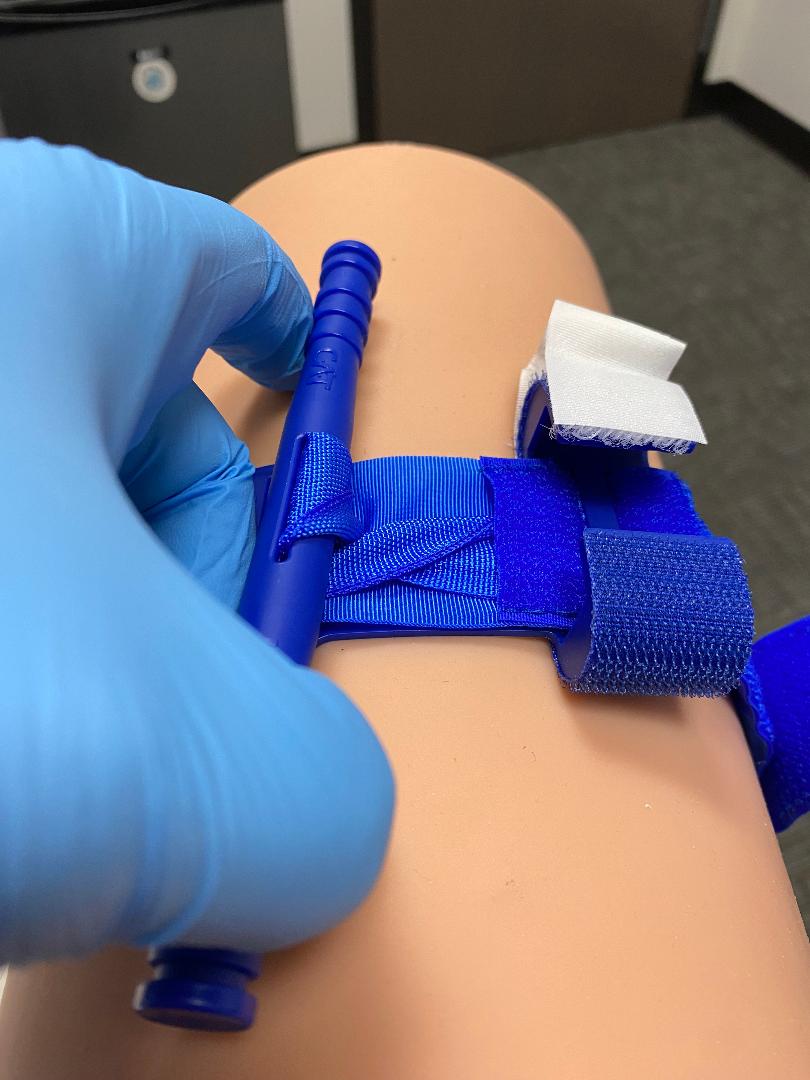
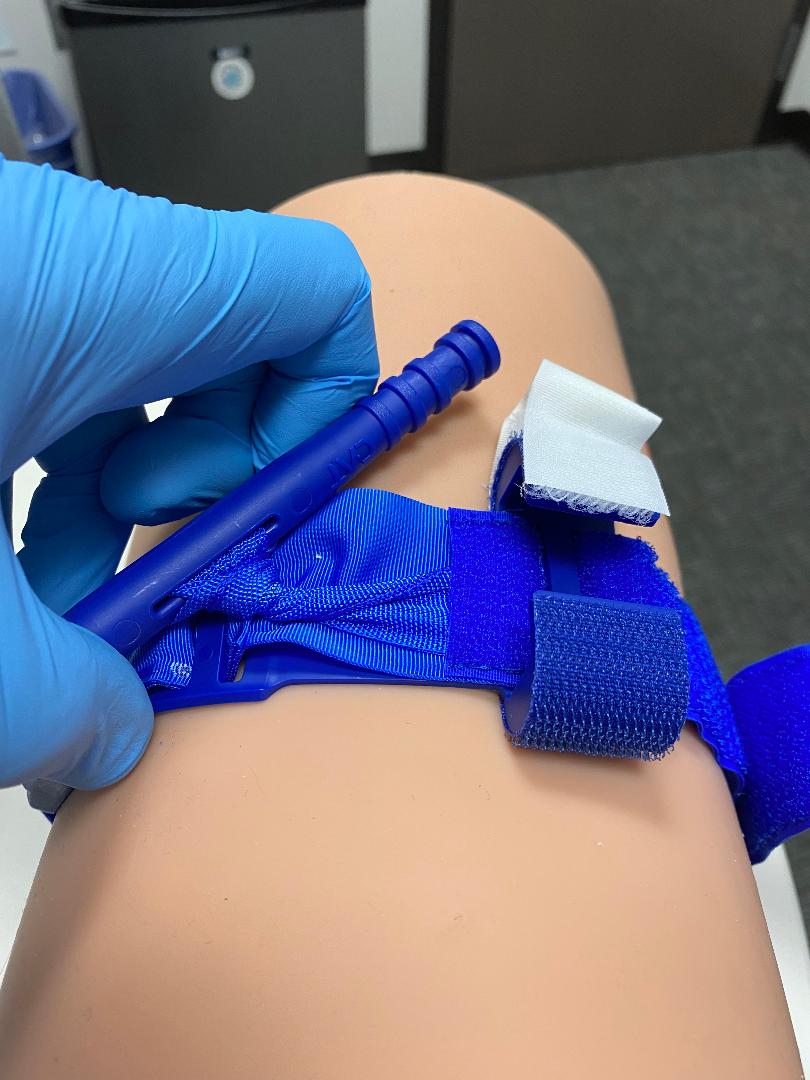
When you've cranked the windlass around enough times that the bleeding has stopped (and the tourniquet is tight), place the end into the clip as seen here.
Check for a distal pulse. It it's still there, consider trying to tighten the windlass some more.
Check for a distal pulse. It it's still there, consider trying to tighten the windlass some more.

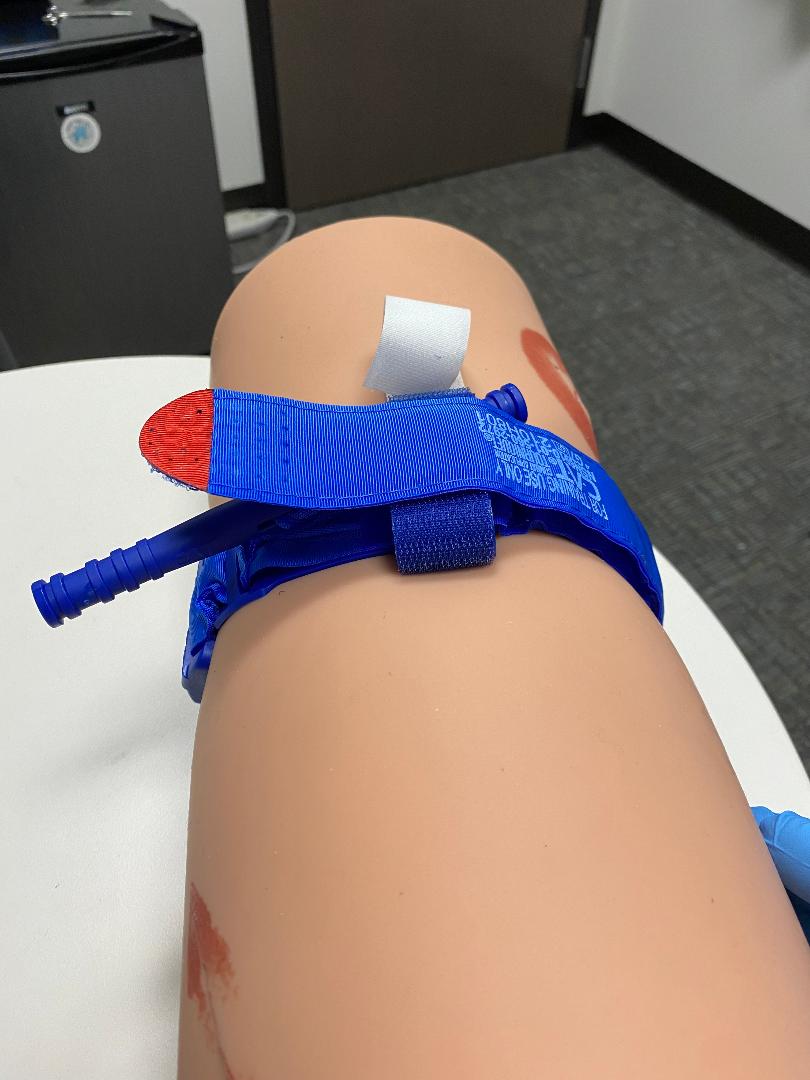
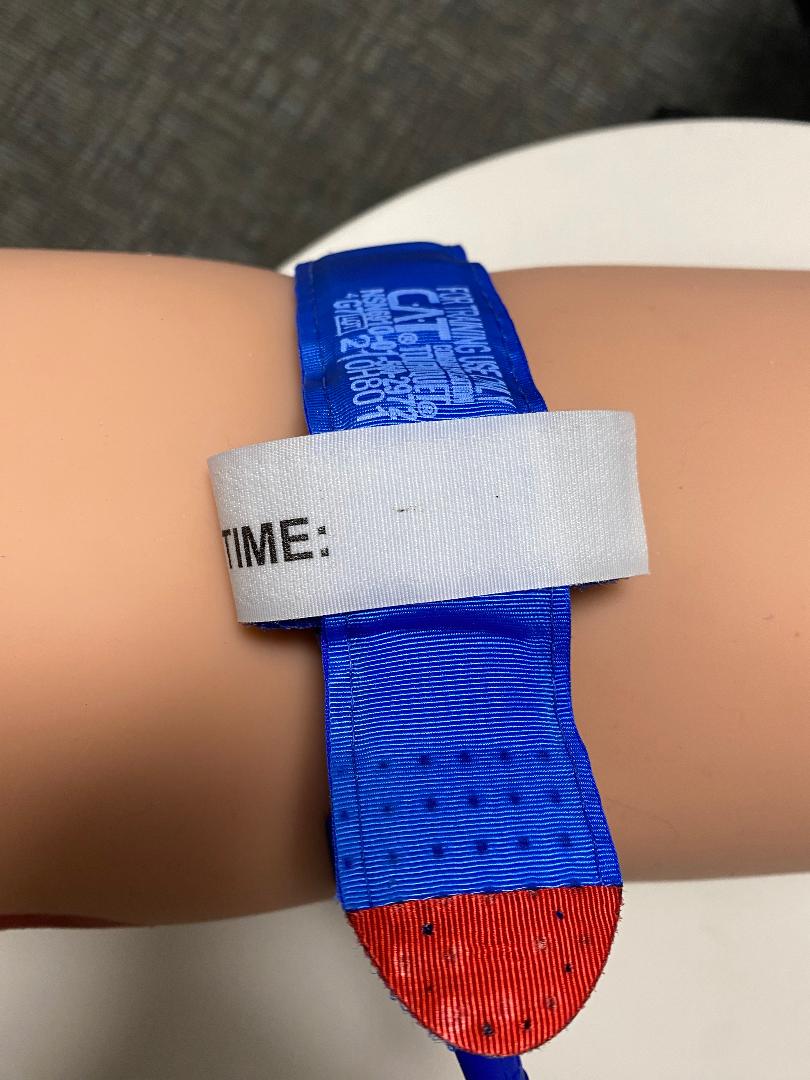
After the windlass has been tightened and placed in the clip, you can take that extra strap and fold it over the clip, and then fold the white strap over that. This helps keep things in place.
The kit comes with a marking pen, and you can write the time on the white strap.
The kit comes with a marking pen, and you can write the time on the white strap.

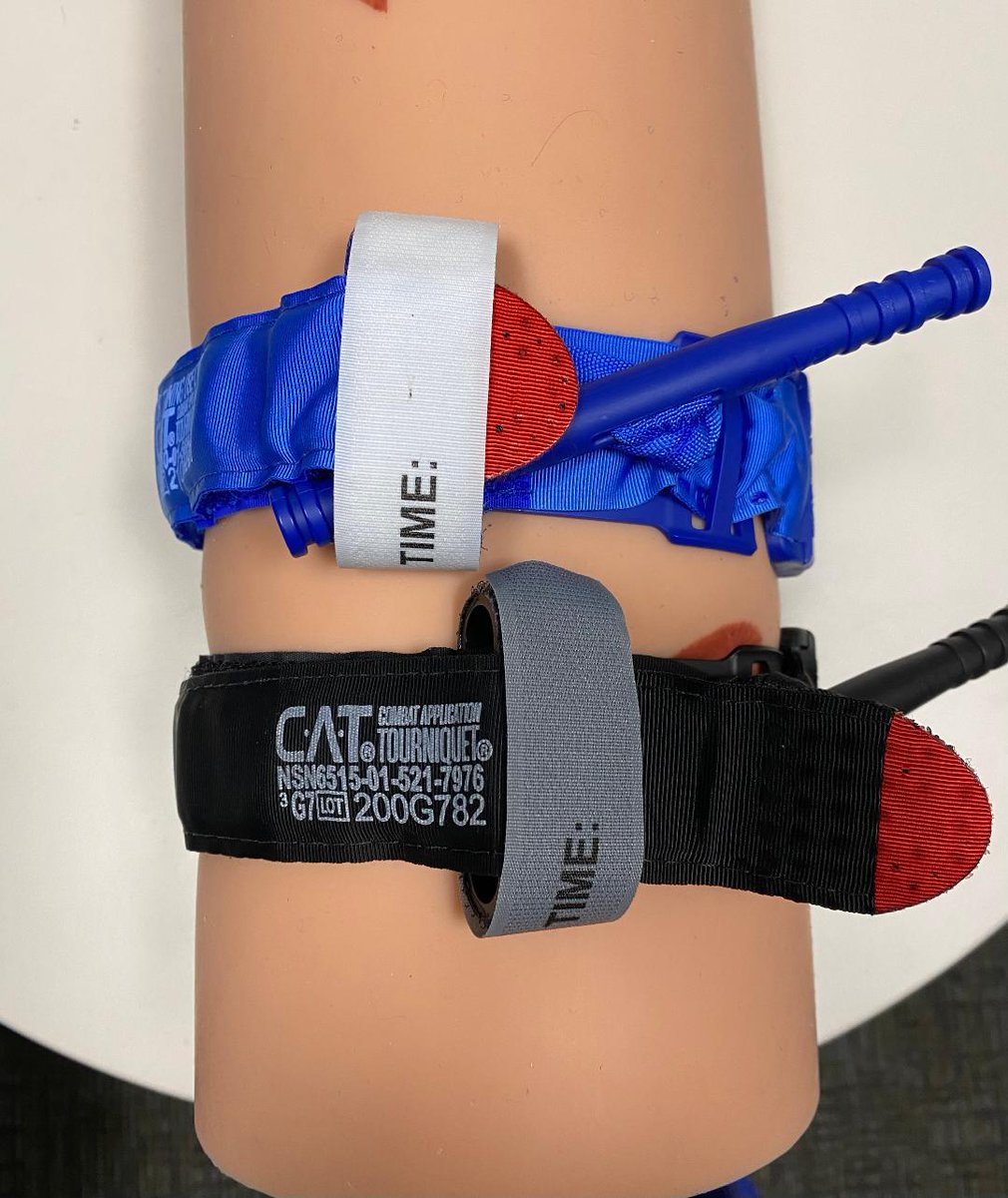
If one tourniquet does not stop the bleeding (often because of the person's large body habitus), then an additional tourniquet can be placed. It should be:
- above the existing tourniquet
- adjacent to the existing tourniquet (as close as you can get it).
- above the existing tourniquet
- adjacent to the existing tourniquet (as close as you can get it).
Now for the experiment....
Again, my mother is an active 75 yo woman. If the tourniquet is placed on my thigh (I'm not small at 215 lb or 97 kg), will she have the strength to twist the windlass hard enough to render my right leg pulseless?
Here's our starting position:
Again, my mother is an active 75 yo woman. If the tourniquet is placed on my thigh (I'm not small at 215 lb or 97 kg), will she have the strength to twist the windlass hard enough to render my right leg pulseless?
Here's our starting position:
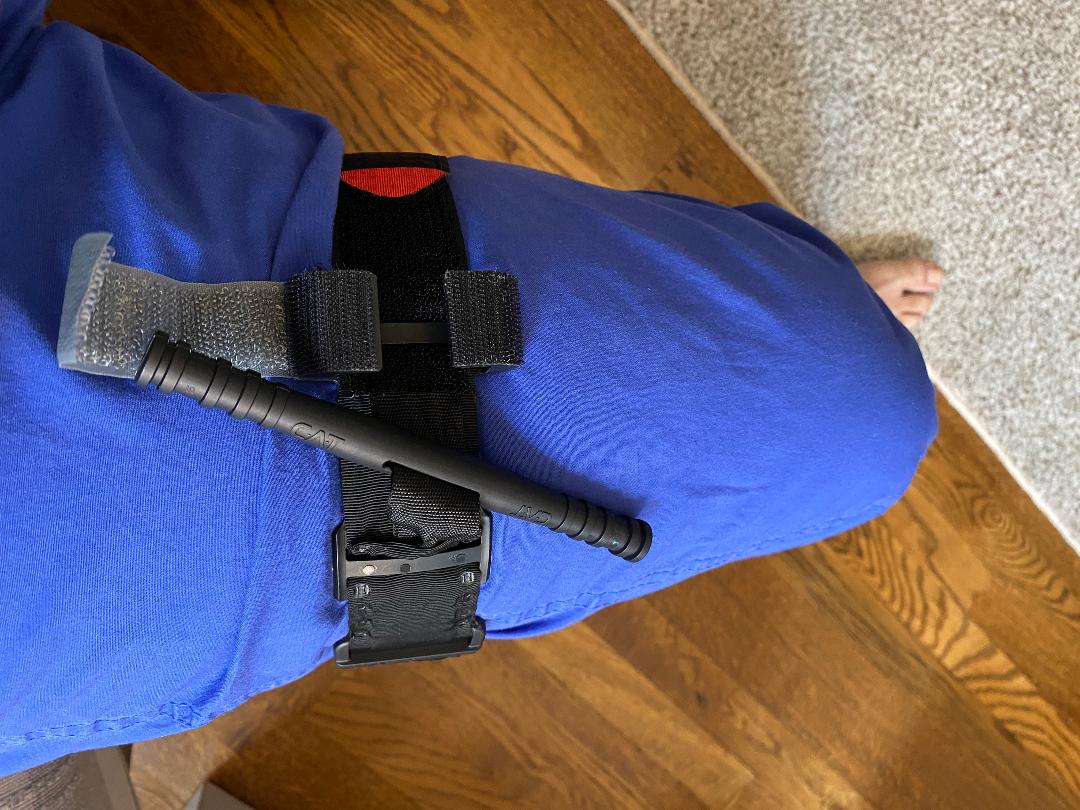
After several turns of the windlass, the tourniquet is tight. Pain is moderate but bearable.
At this point we have a conundrum. Should it be tightened more? Perhaps she can crank it one more half turn. That will be difficult for her and painful for me. Can she do it?
At this point we have a conundrum. Should it be tightened more? Perhaps she can crank it one more half turn. That will be difficult for her and painful for me. Can she do it?
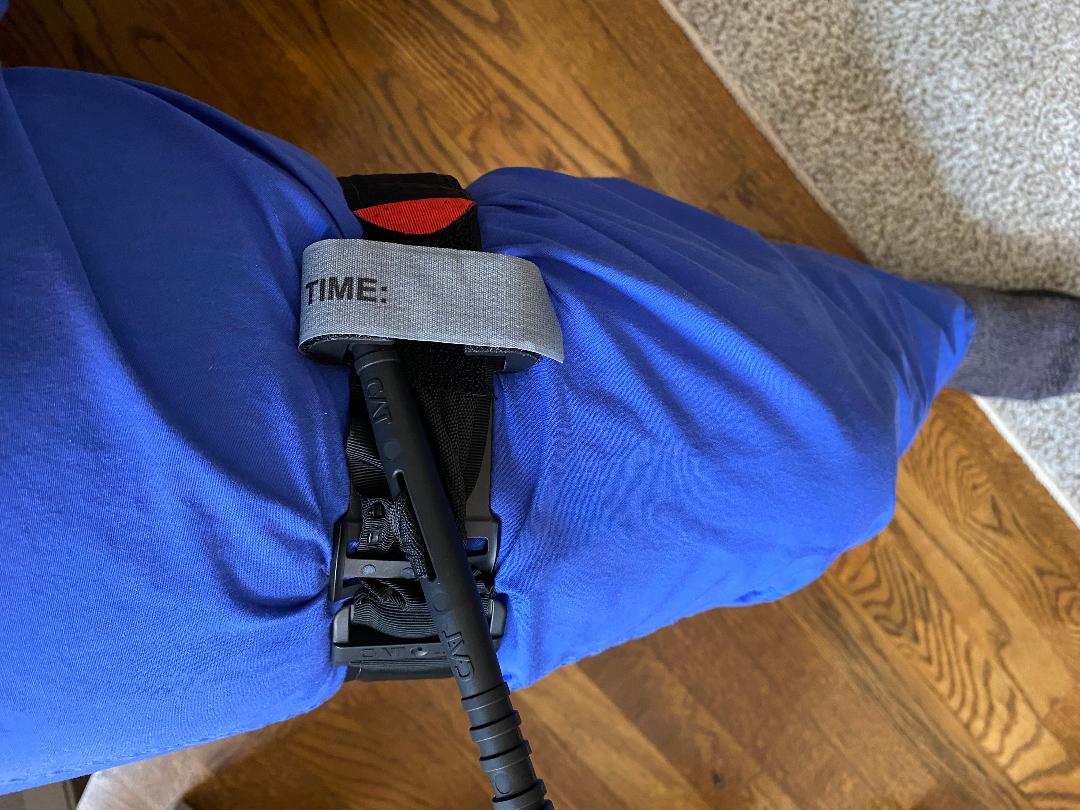
She was able to turn it one more half turn without a problem. 😎
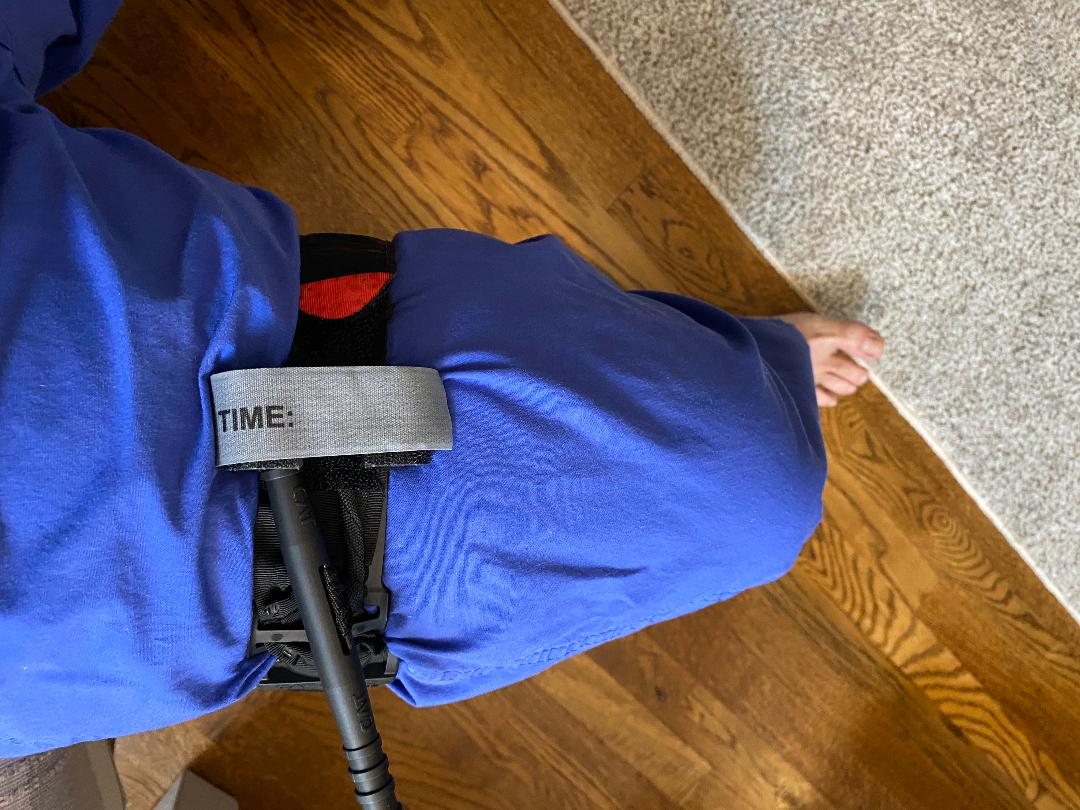
Now it is clearly as tight as it's going to get. Pain is excruciating. I have difficulty tolerating it for long. Another half turn will not be possible.
Exam shows that distal pulses are now absent.
Now it is clearly as tight as it's going to get. Pain is excruciating. I have difficulty tolerating it for long. Another half turn will not be possible.
Exam shows that distal pulses are now absent.
In a Stop the Bleed class, students can learn how to apply pressure, how to pack bleeding wounds, how to apply a tourniquet, and more.
STB courses are now available across the country, and increasingly across the world. Click below for the website:
stopthebleed.org
STB courses are now available across the country, and increasingly across the world. Click below for the website:
stopthebleed.org
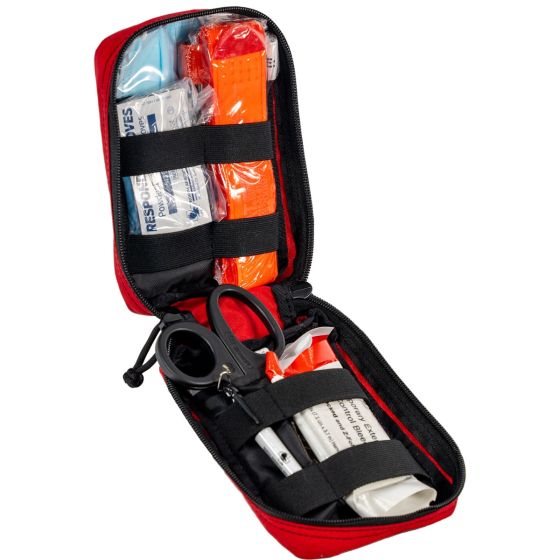
The Stop The Bleed website also has information on how to get STB kits to keep in your car, home, or other places.
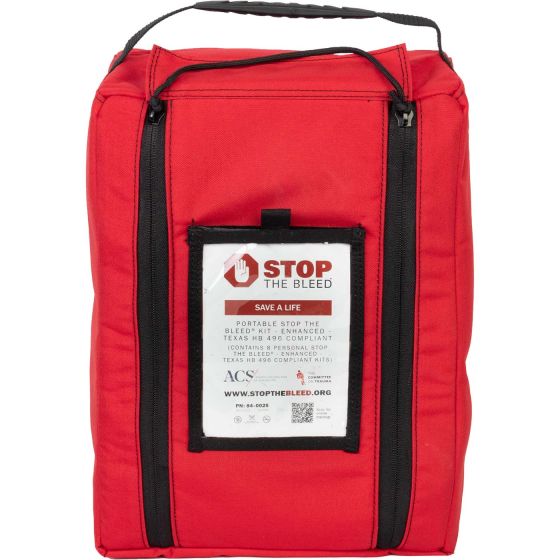
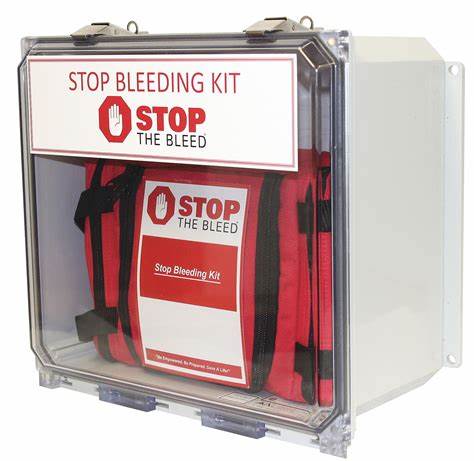
Also there are larger kits that have enough equipment to take care of multiple casualties, and white boxes that can store these kits in public places.
⬛️
Also there are larger kits that have enough equipment to take care of multiple casualties, and white boxes that can store these kits in public places.
⬛️
Loading suggestions...