

There’s a massive boom in US manufacturing 🏭 thanks to the Chips Act, the IRA and the Infrastructure Bill 💥
Short 🧵 below on industrial policy, trade, clean energy, globalization and deglobalization (1/19)
Cc: @Noahpinion @erikbryn @JesseJenkins @ElbridgeColby @RanaForoohar
Short 🧵 below on industrial policy, trade, clean energy, globalization and deglobalization (1/19)
Cc: @Noahpinion @erikbryn @JesseJenkins @ElbridgeColby @RanaForoohar
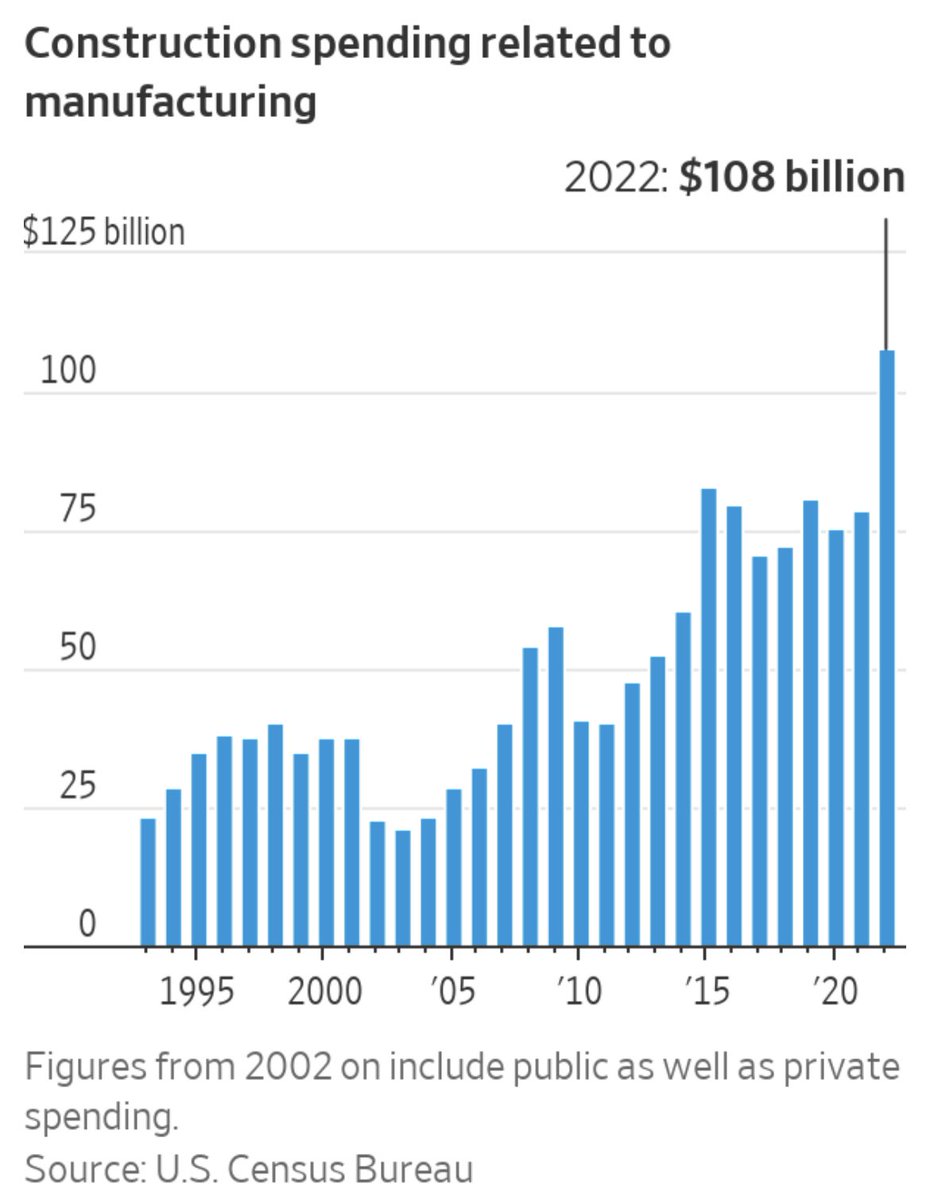
The US 🇺🇸 manufacturing boom is driven by a new commitment to industrial policy (2/19)

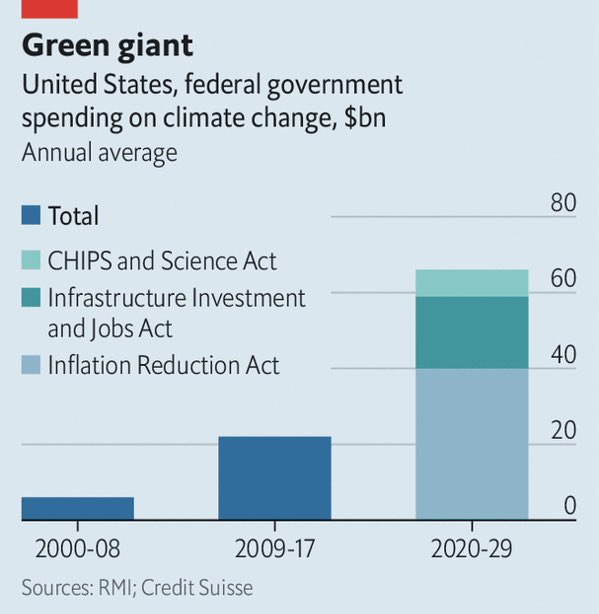
Overall levels of US 🇺🇸 government spending on clean energy are forecast to skyrocket (3/19)
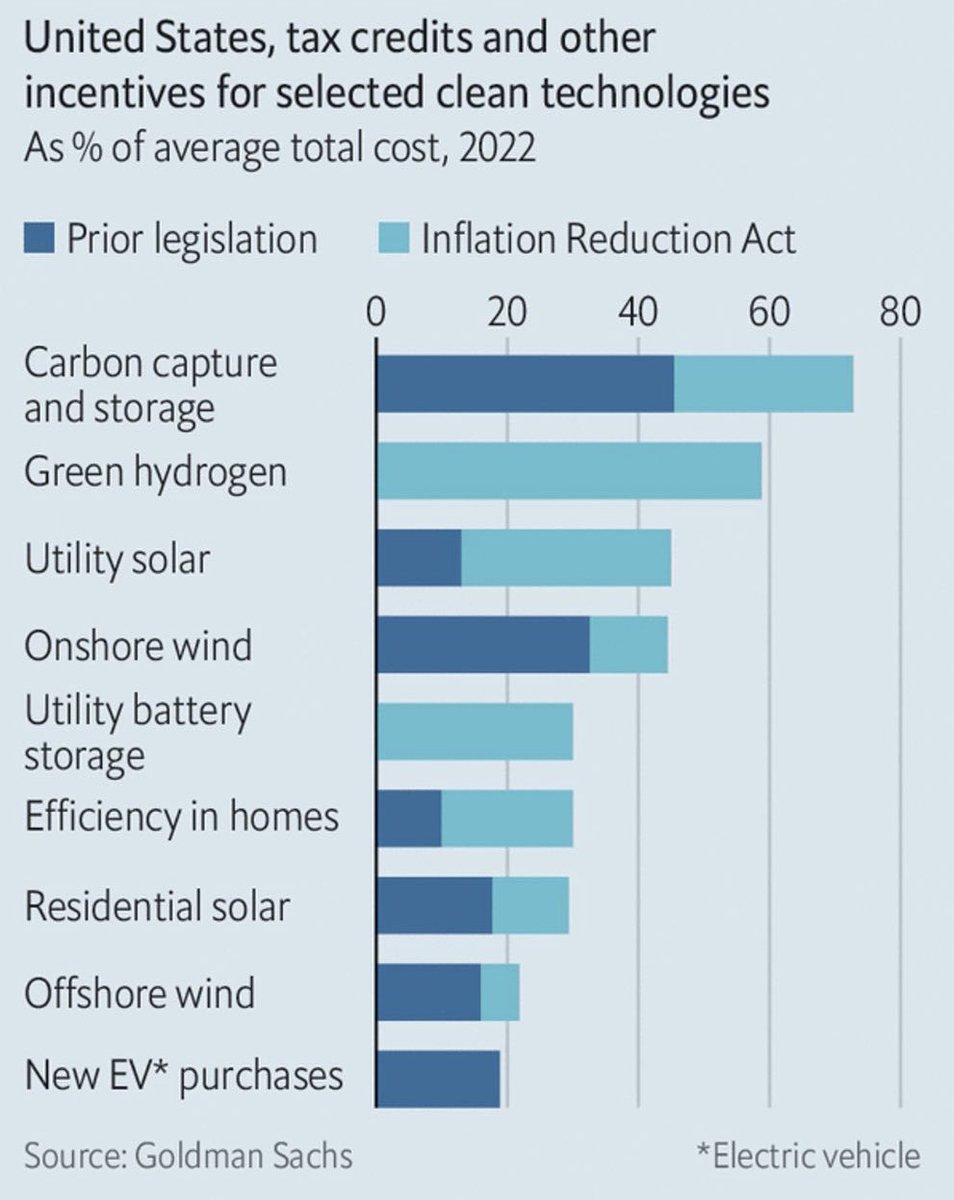
The IRA provides very meaningful incentives💰for the deployment of key green technologies ☀️💨
(4/19)
(4/19)
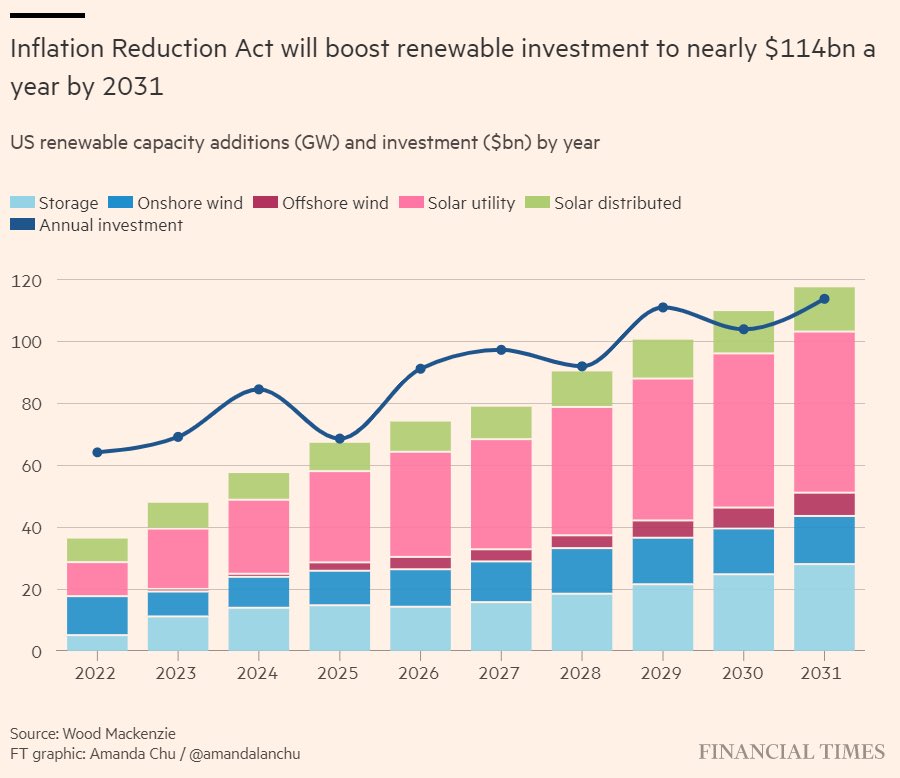
The IRA is forecast to generate a massive boom in US 🇺🇸 renewables investments and deployment (5/19)
Overall, the IRA is forecast to stimulate $1.6 trillion in investment in clean energy by 2030 (forecast by Goldman Sachs) (6/19)

The Chips Act was aimed at addressing the US’s 🇺🇸 total reliance on Taiwan 🇹🇼 for the manufacturing of the most advanced semiconductors (7/19)
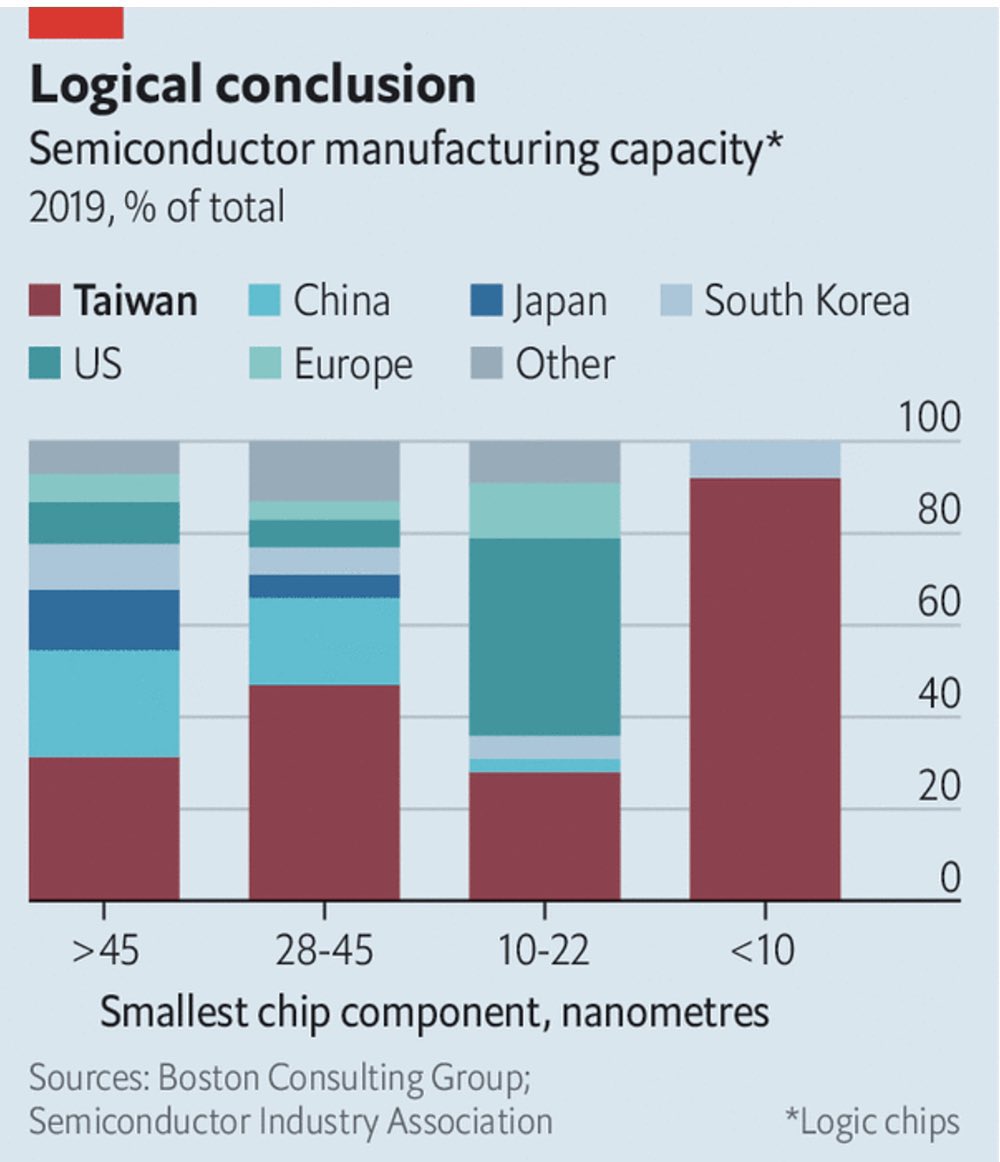
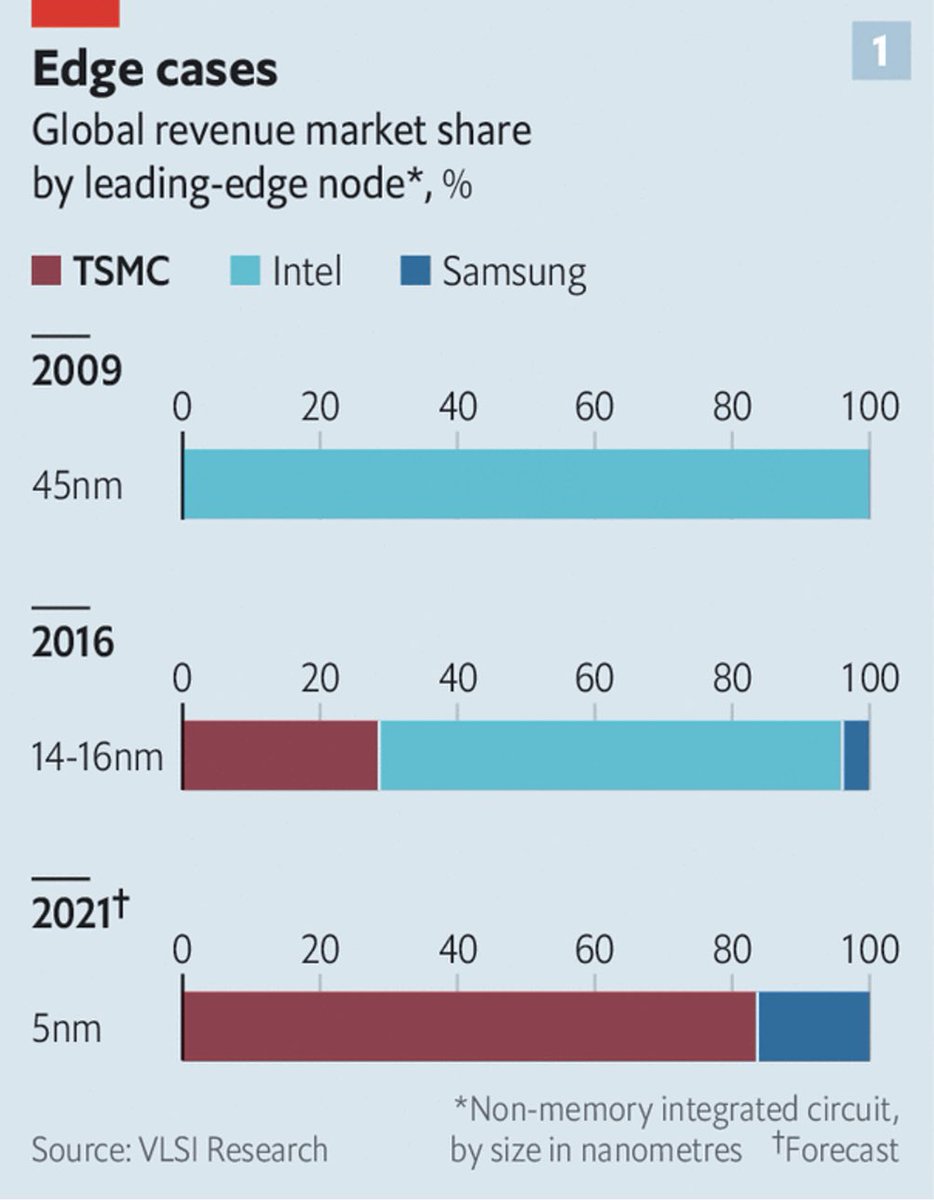
This US 🇺🇸 dependence on Taiwan 🇹🇼 and TSMC occurred as Intel went from being the undisputed semiconductor leader to not even a player at the most advanced production nodes (8/19)
The CHIPS Act, passed in July 2022, includes $39bn to spur domestic production of semiconductors, along with even bigger investments in R&D.
Chipmakers have since announced an amazing $200bn in investment across 16 states (9/19)
economist.com
Chipmakers have since announced an amazing $200bn in investment across 16 states (9/19)
economist.com
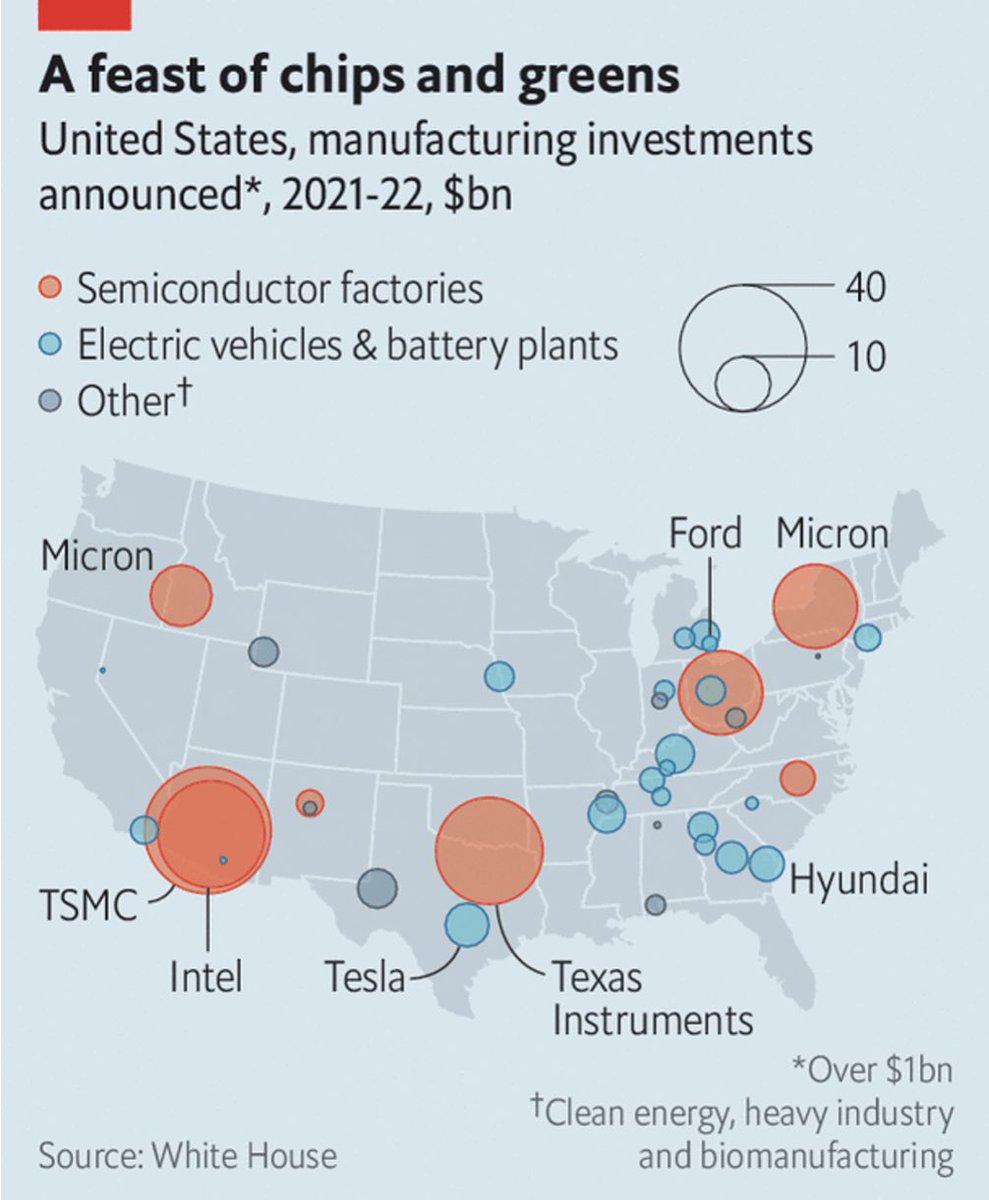

The single most important investment in the US 🇺🇸 semiconductor industry is likely TSMC’s decision to build a new Fab in Arizona.
✅ $40bn total investment
✅ Will manufacture 4-nm chips from 2024, and 3-nm chips by 2026
✅ 4,000 direct high paying jobs
(10/19)
✅ $40bn total investment
✅ Will manufacture 4-nm chips from 2024, and 3-nm chips by 2026
✅ 4,000 direct high paying jobs
(10/19)
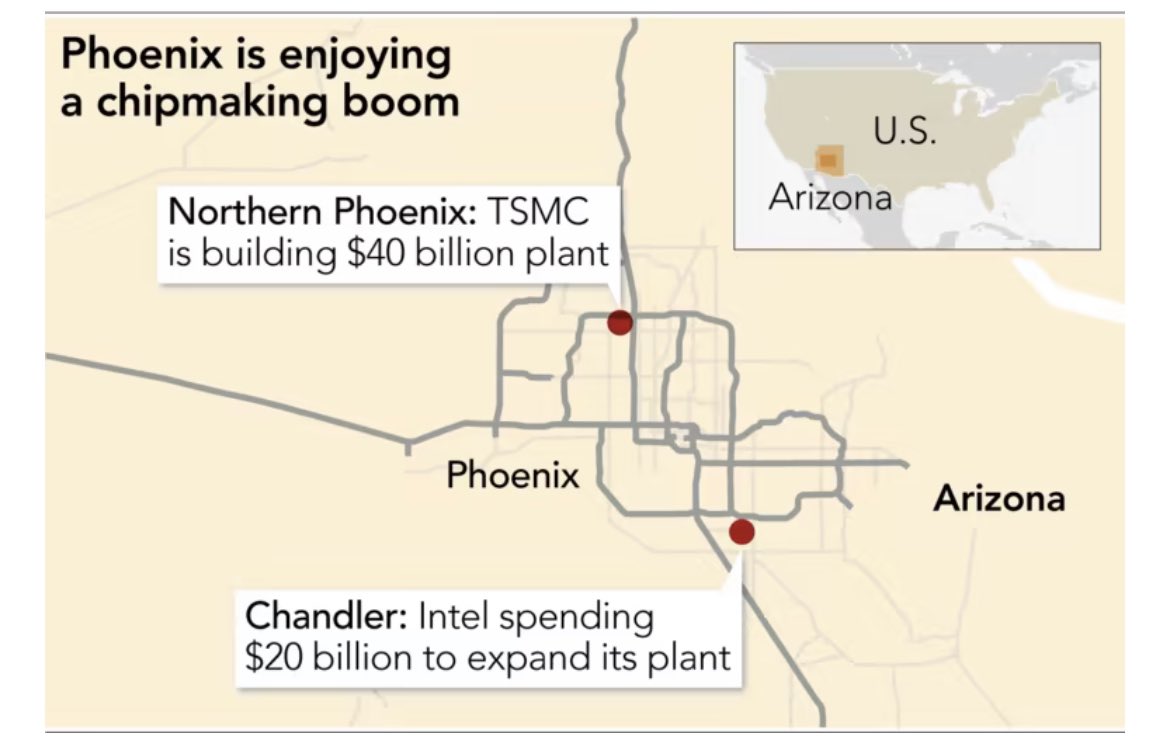
TSMC’s Arizona semiconductor investments are also forecast to create 10,000 supply chain jobs in advanced industrial areas like machinery, chemicals and engineering services (11/19)
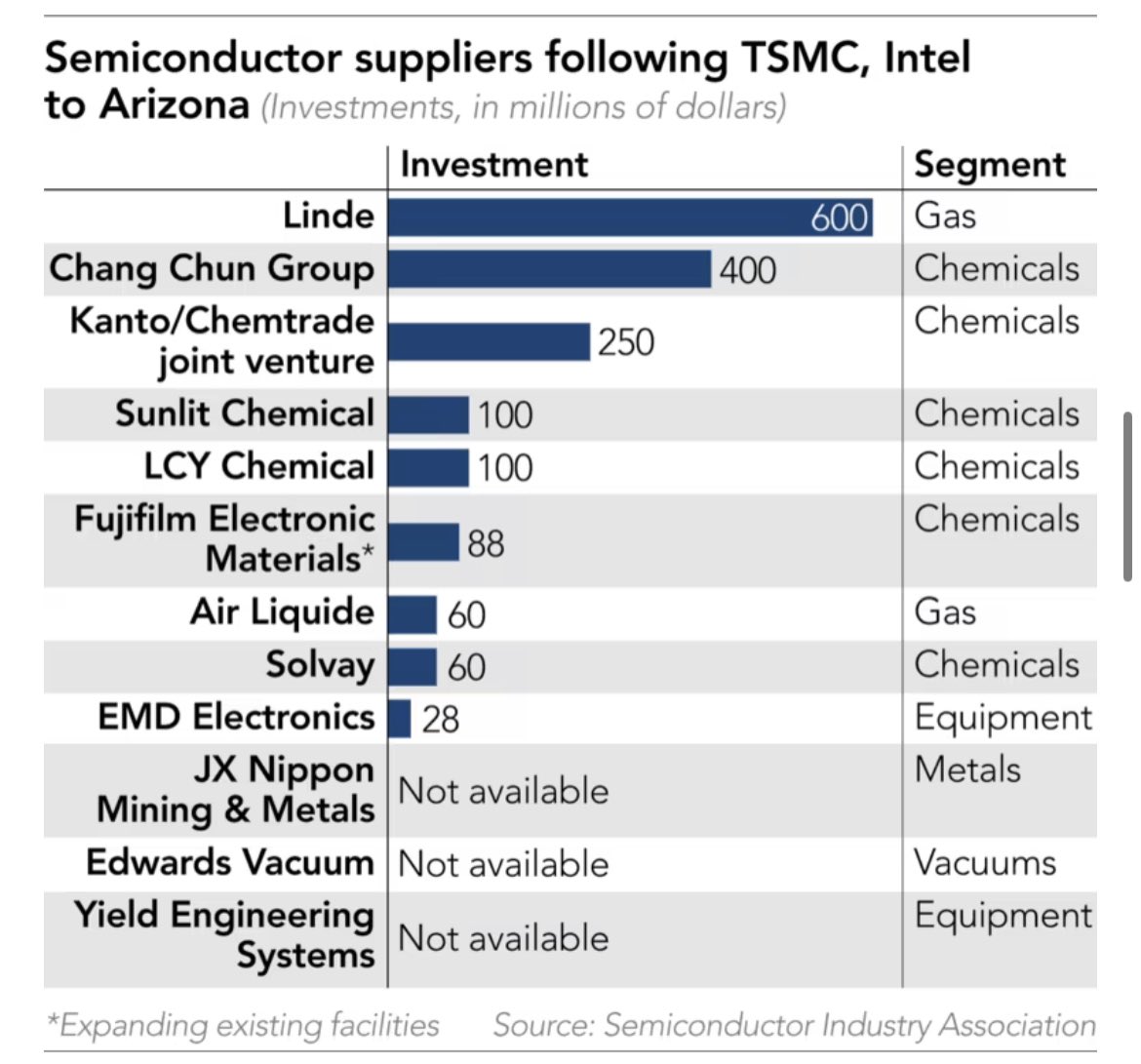
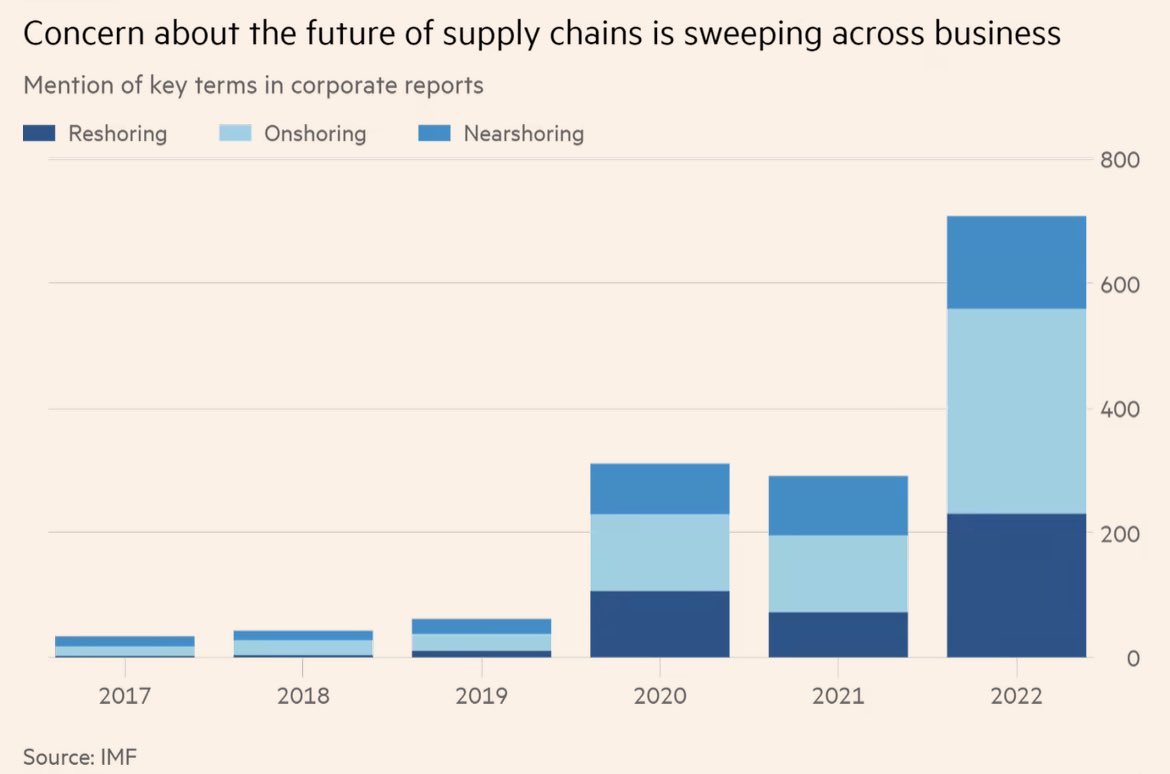
Overall, US business interest in reshoring, onshoring and nearshoring has spiked dramatically 📈
(12/19)
(12/19)
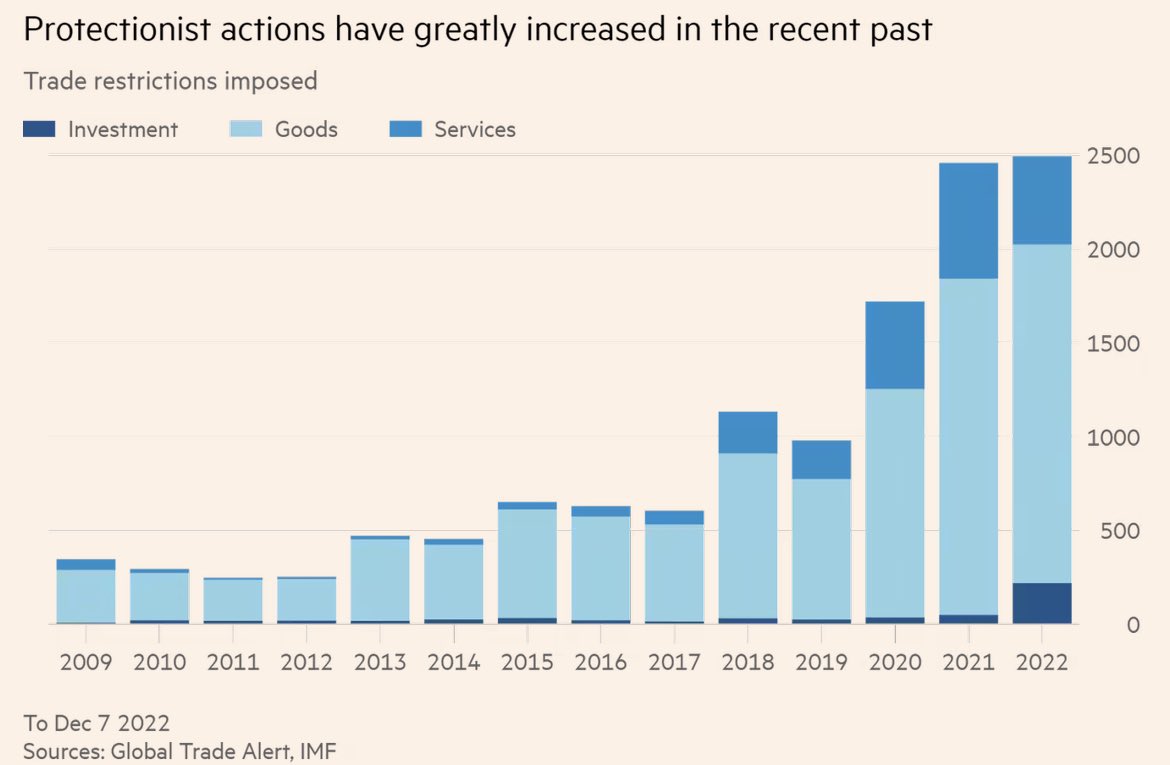
Industrial policy can also sometimes be pursued alongside damaging protectionist policies, which on balance have a record of reducing overall wealth and prosperity 📉 (13/19)
ft.com
ft.com

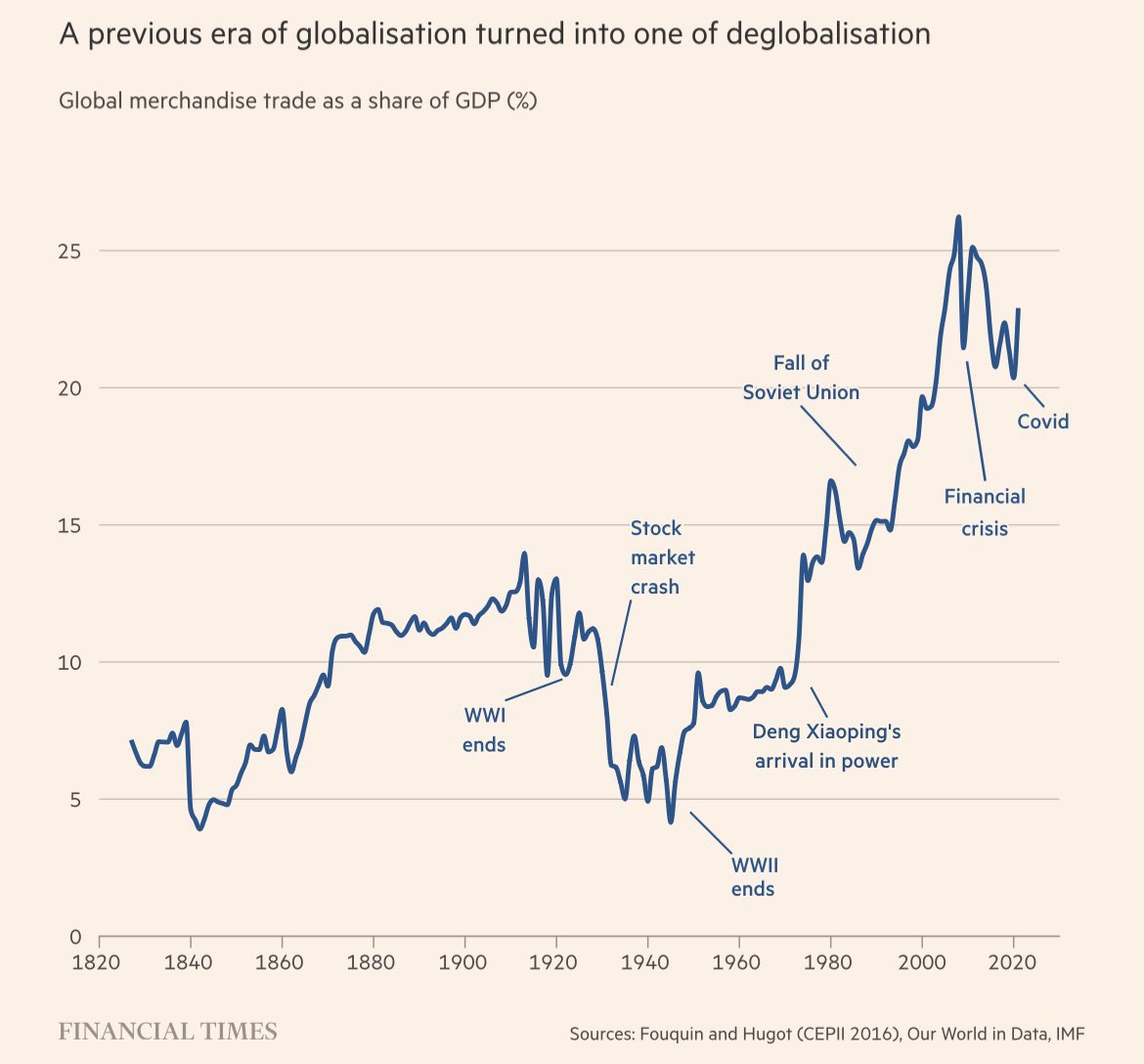
The economic loss 📉 from the disintegration of world trade could be very large (14/19)
ft.com
ft.com
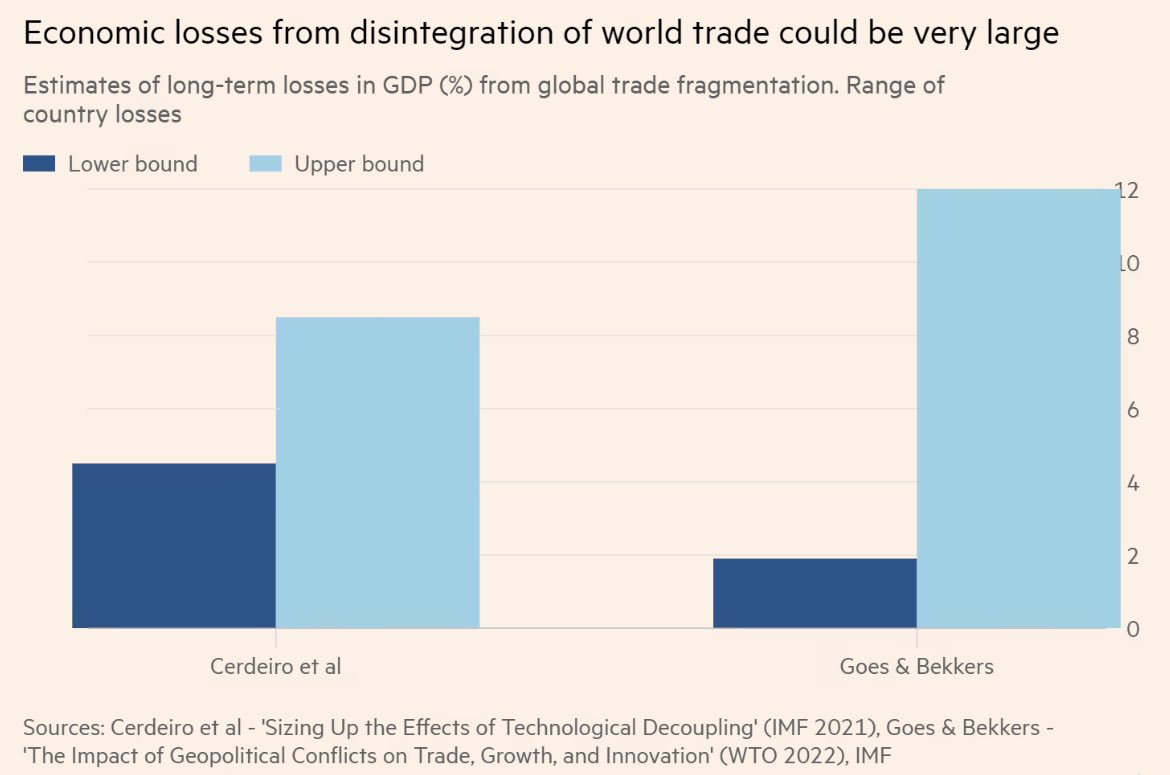
One major risk for the world is moving from an age of globalization 🌎🌍🌏 to one of deglobalization (15/19)
ft.com
ft.com

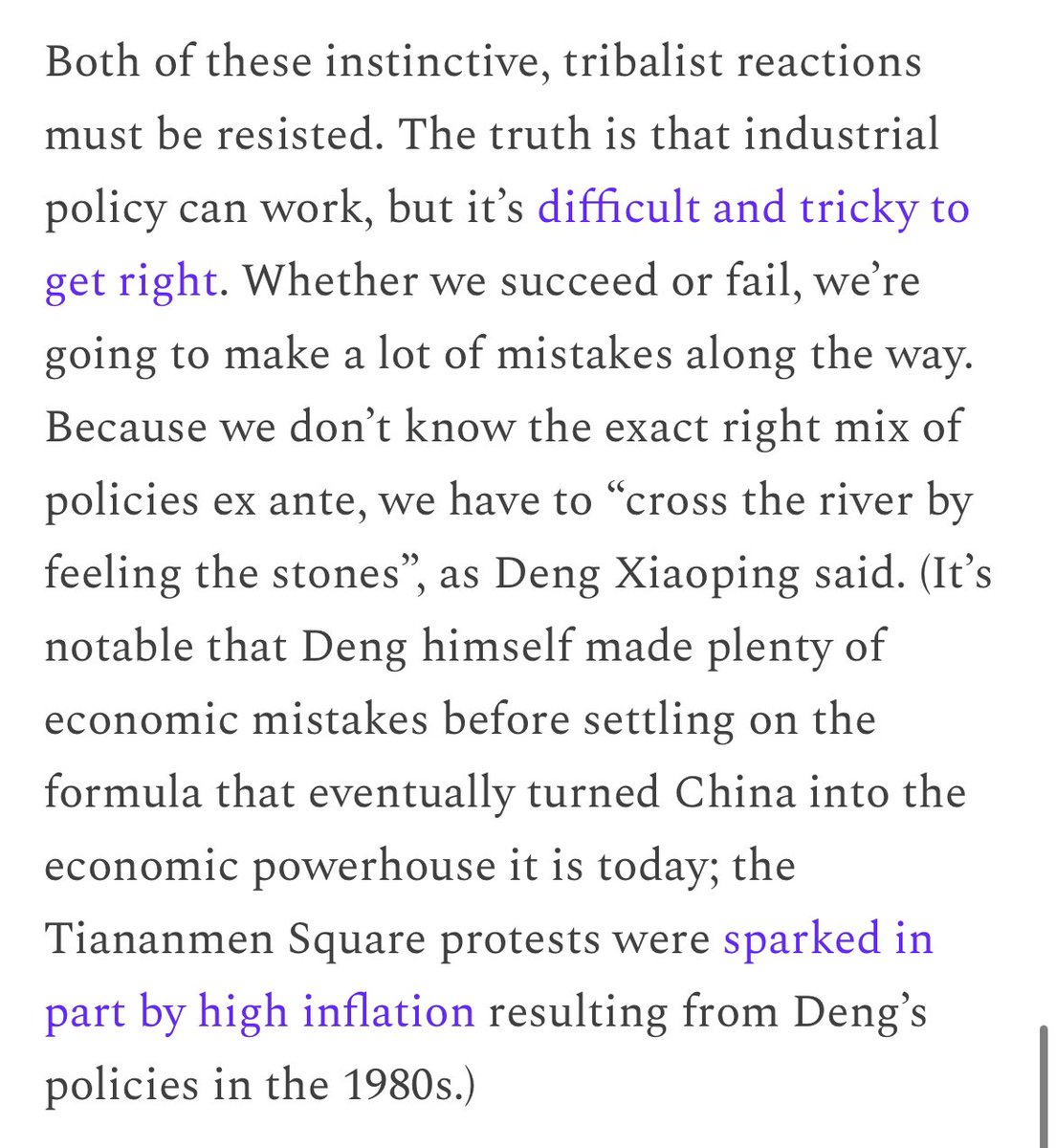
Smart commentators like @Noahpinion have written about how industrial policy needs to be experimental, responsive, flexible and iterative in order to be successful (16/19)
[go to @Noahpinion’s substack for the full story, which is banned from being shared on Twitter]
[go to @Noahpinion’s substack for the full story, which is banned from being shared on Twitter]
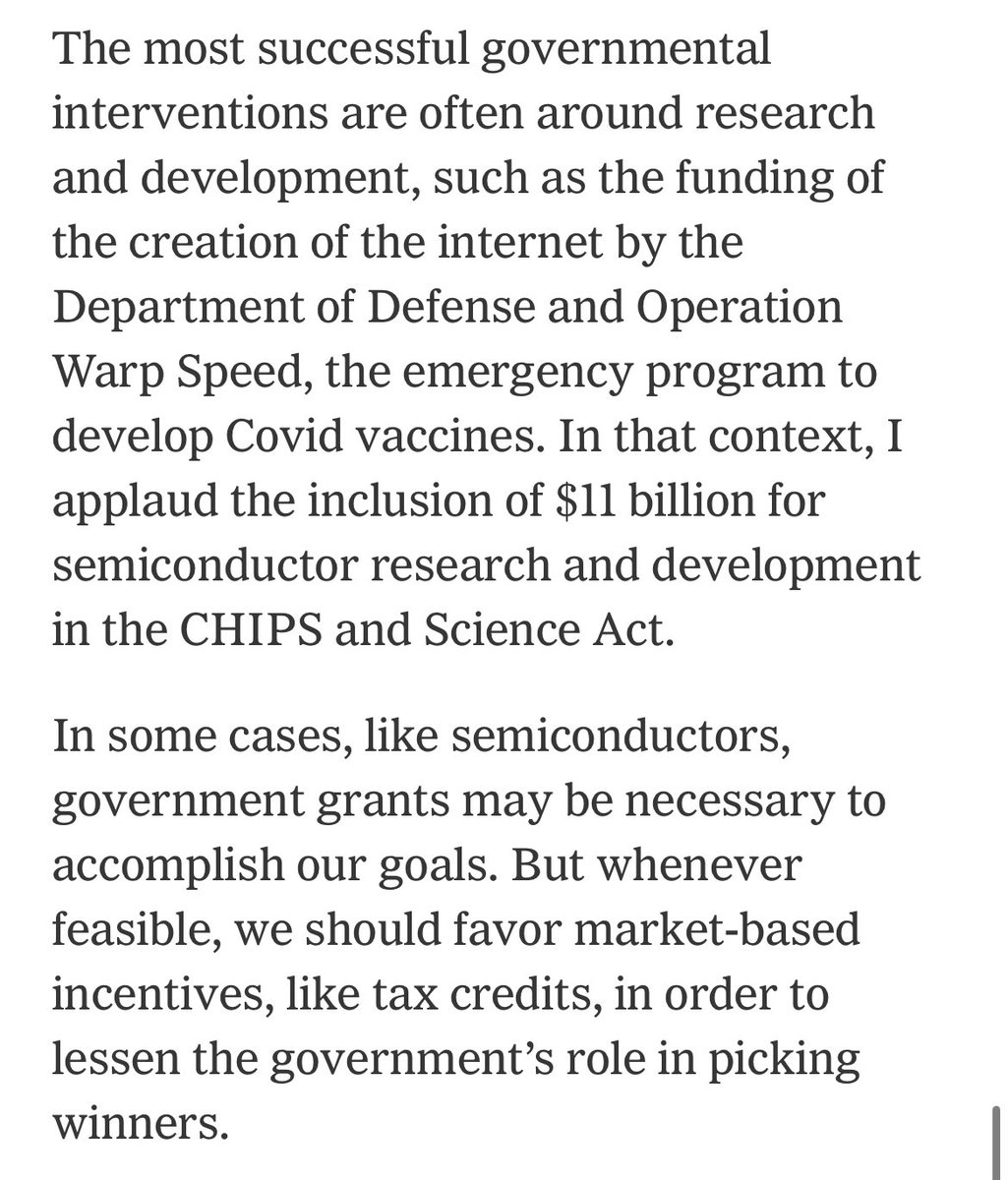
Financier and former auto czar @SteveRattner has written about how industrial policy needs to work within certain market guardrails and learn from history to be successful (17/19)
nytimes.com
nytimes.com
For more on the US manufacturing boom, see this informative WSJ story by @JohnKeilman (18/19)
wsj.com
wsj.com

Finally, if you’ve found this thread to be informative and useful, follow the instructions below for more 👇

Loading suggestions...