

How British learned Plastic Surgery from Indians and Sushrutha Samhitha #Thread
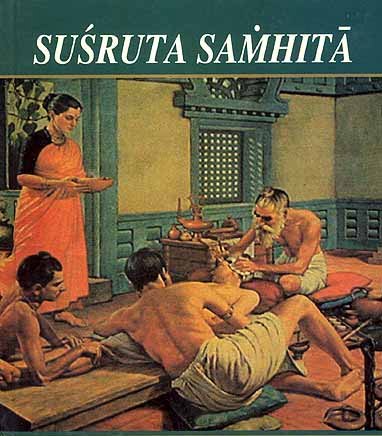
Sushrutha Samhita is a Sanskrit text on surgery, attributed to Sushruta, a physician who possibly resided in Varanasi around 6th century BCE.
Susrutha-Salya-Tantra were composed about 6th century B.C. It has been revised by Nagarjuna in the later part of 4th century BCE.
Susrutha-Salya-Tantra were composed about 6th century B.C. It has been revised by Nagarjuna in the later part of 4th century BCE.
The plastic in plastic surgery actually has its root in the Greek word plastikos meaning to give something shape or form. Evidence exists that cosmetic surgery was done by ancient physicians in India eight centuries before Christ.
The word Rhino came from Rhonoceros with large horn above its nose.
There were a surprisingly large number of noses in India that needed to be reconstructed. Noses were considered symbols of pride, therefore they proved to be quite tempting targets during warfare.
There were a surprisingly large number of noses in India that needed to be reconstructed. Noses were considered symbols of pride, therefore they proved to be quite tempting targets during warfare.
Besides the multiple damages to Indian noses as a result of warfare, other noses required surgical repair following the damage brought on by punishment for legal transgressions.
Amputation of the nose was considered proper and just punishment for a multitude of offenses, including adultery. The roots of ancient Indian surgery go back to more than 4000 years ago.
Sushrutha, one of the earliest surgeons of recorded history (600 BCE) is believed to be the first individual to describe Rhinoplasty.
Between 1769 AD to 1799 AD, four Mysore Wars were fought between Hyder Ali and his son Tipu Sultan and the British.
During these wars the British learnt two very important Indian techniques: Rocketry and plastic surgery.
During these wars the British learnt two very important Indian techniques: Rocketry and plastic surgery.
A Maratha cart-driver, Kawasajee, who had served the British, and four tilanges (Indian soldiers of British army) had fallen into the hands of the Sultan of Srirangapattam. Their noses and right arms were cut off as a punishment for serving the enemy.
Then they were sent back to the English command.
After some days, when dealing with an Indian merchant, the English commanding officer noticed that he had a peculiar nose and scar on his forehead.
After some days, when dealing with an Indian merchant, the English commanding officer noticed that he had a peculiar nose and scar on his forehead.
On inquiry, he learnt that the merchant’s nose had been cut off as a punishment for adultery & that he had a substitute nose made by a Maratha Vaidya of the kumhar(potter)caste. The commanding officer sent for Vaidya and asked him to reconstruct the nose of Kawasajee & others.
The operation was performed near Pune in the presence of two English doctors, Thomas Cruso and James Findlay. An illustrated account of this operation, carried out by an unnamed Vaidya, appeared in the Madras Gazette.
Subsequently, the article was reproduced in the Gentleman’s Magazine of London in October 1794.
Loading suggestions...