

.@liyuan6 in her recent NYT article focuses on Shangqiu 商丘 as part of a broader theme of over-investment "splurge" in HSR, among others.
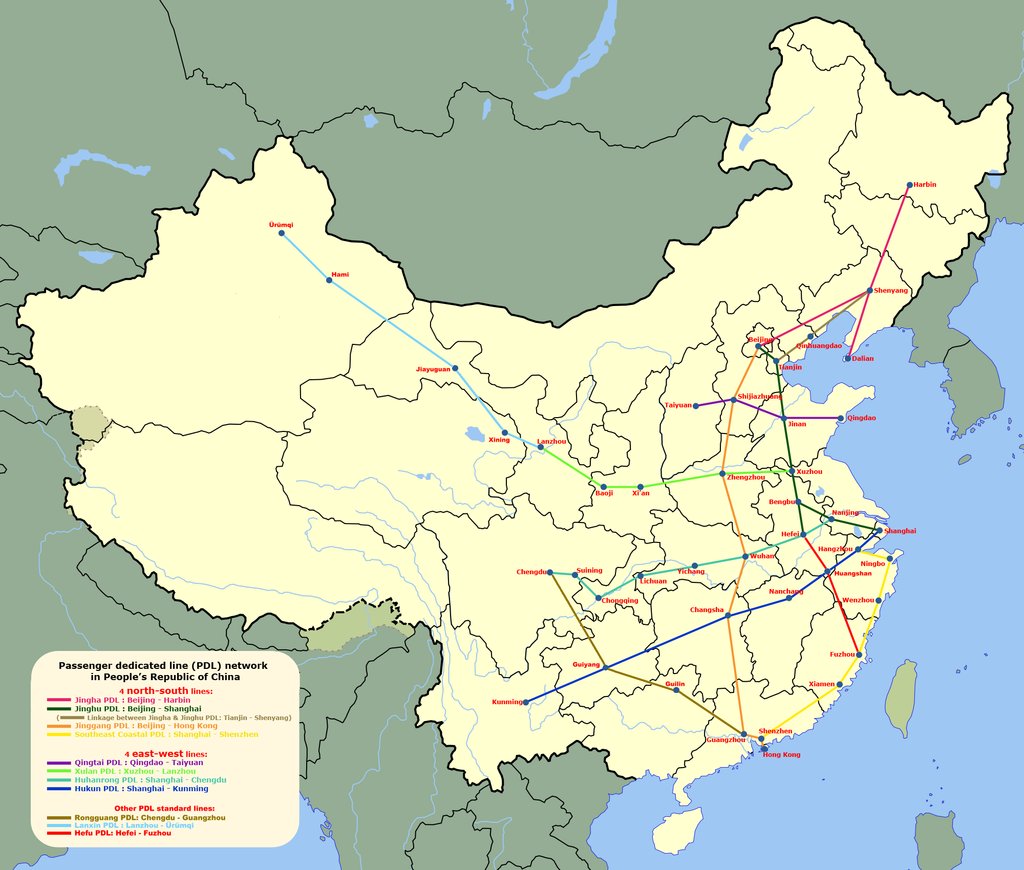
Shangqiu was connected to the HSR network as part of the expansion from "4x4" to "8x8"
Shangqiu was connected to the HSR network as part of the expansion from "4x4" to "8x8"
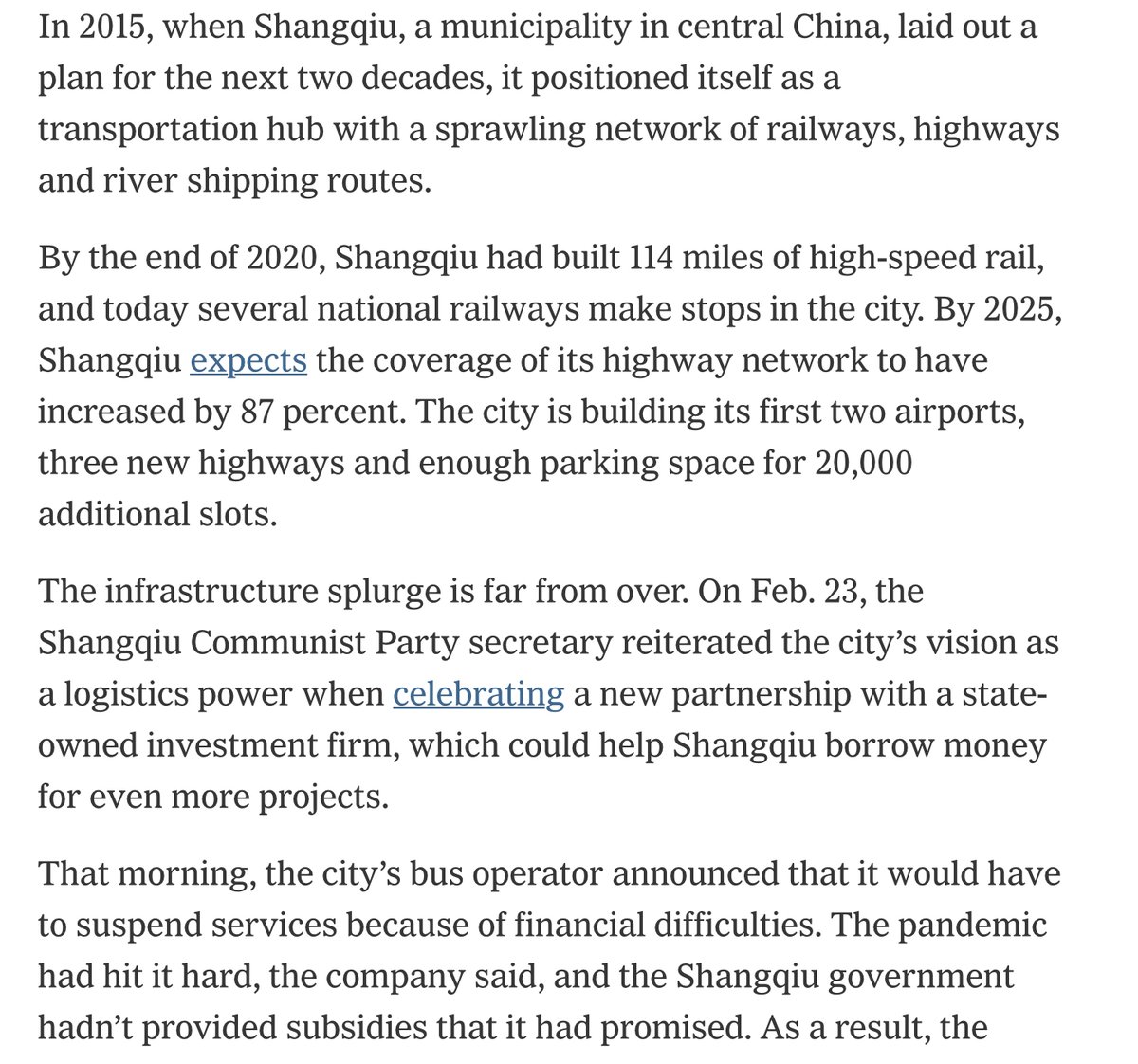
The original 4x4 connected all of the Tier I cities and many Tier II to Tier IV cities. The expansion to 8x8 meant increasing the concentration of lines within the same footprint + connecting most remaining Tier III and Tier IV cities.
Shangqiu was one of these Tier IV cities.
Shangqiu was one of these Tier IV cities.
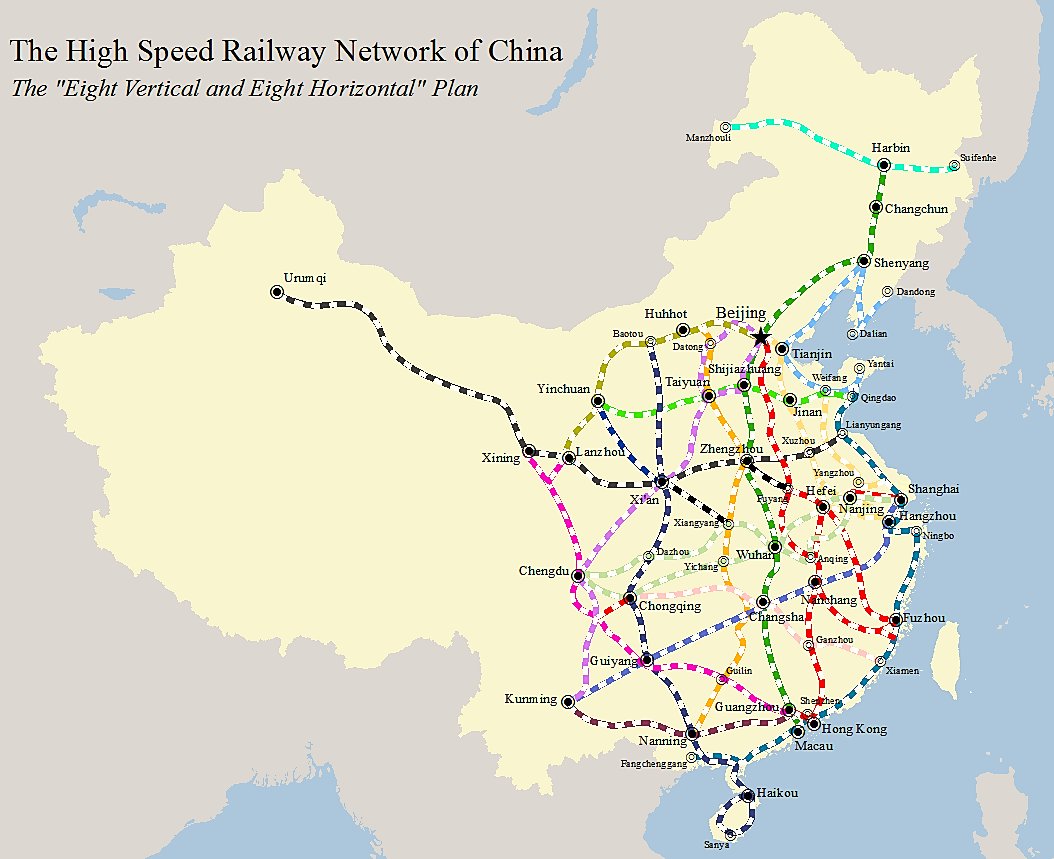
Shangqiu is in eastern Henan province, a city with an urban* population of 1.8M with pop. density of 2,800 per sq. mi.
It is about two hours by car east of Zhengzhou, the provincial capital w/over 6M urban residents
* total pop. is 7M but here we just focus on the urban pop
It is about two hours by car east of Zhengzhou, the provincial capital w/over 6M urban residents
* total pop. is 7M but here we just focus on the urban pop
A similar comp would be Baltimore and Philadelphia.
Shangqiu is about the same size and density as Baltimore and Zhengzhou is about the same size (with 3x the density) as Philadelphia
Baltimore and Philadelphia are also around 2 hours apart.
Shangqiu is about the same size and density as Baltimore and Zhengzhou is about the same size (with 3x the density) as Philadelphia
Baltimore and Philadelphia are also around 2 hours apart.
Shangqiu sits between Zhengzhou and the wealthy and even more densely populated Yangtze delta region to the east.
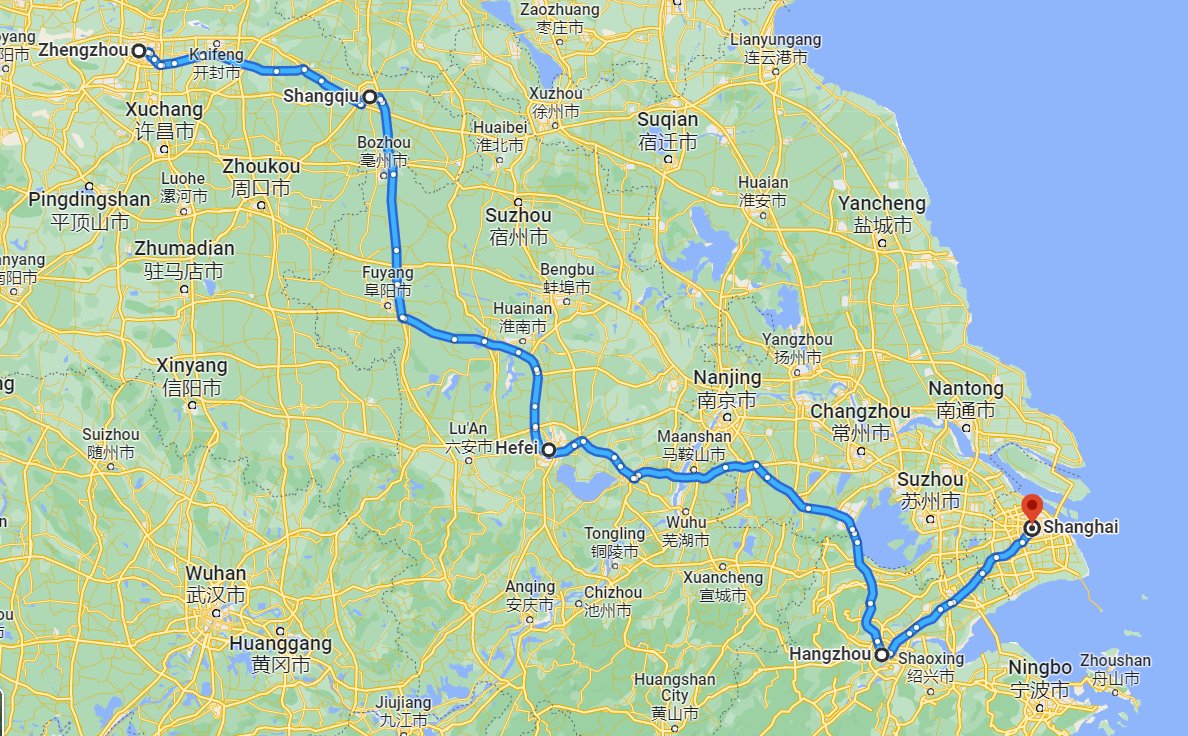
Tier IV cities similar to Shangqiu with urban populations of 1-3 million sit along this line - cities like Bozhou, Fuyang and Huainan
They were all connected to the HSR network when the Shanghai-Hangzhou line opened in 2020
en.wikipedia.org
They were all connected to the HSR network when the Shanghai-Hangzhou line opened in 2020
en.wikipedia.org
While the NYT article made it seem like China was connecting poor, distant regions at the fringes, the Shangqiu-Hangzhou line was far more representative of the types of cities that were connected to the grid.
Ultimately, the proof as to whether these lines should have been built can really be tested by seeing how much passenger demand they are attracting
I counted roughly 80 pairs of high-speed trains between Zhengzhou and Shangqiu.
I counted roughly 80 pairs of high-speed trains between Zhengzhou and Shangqiu.
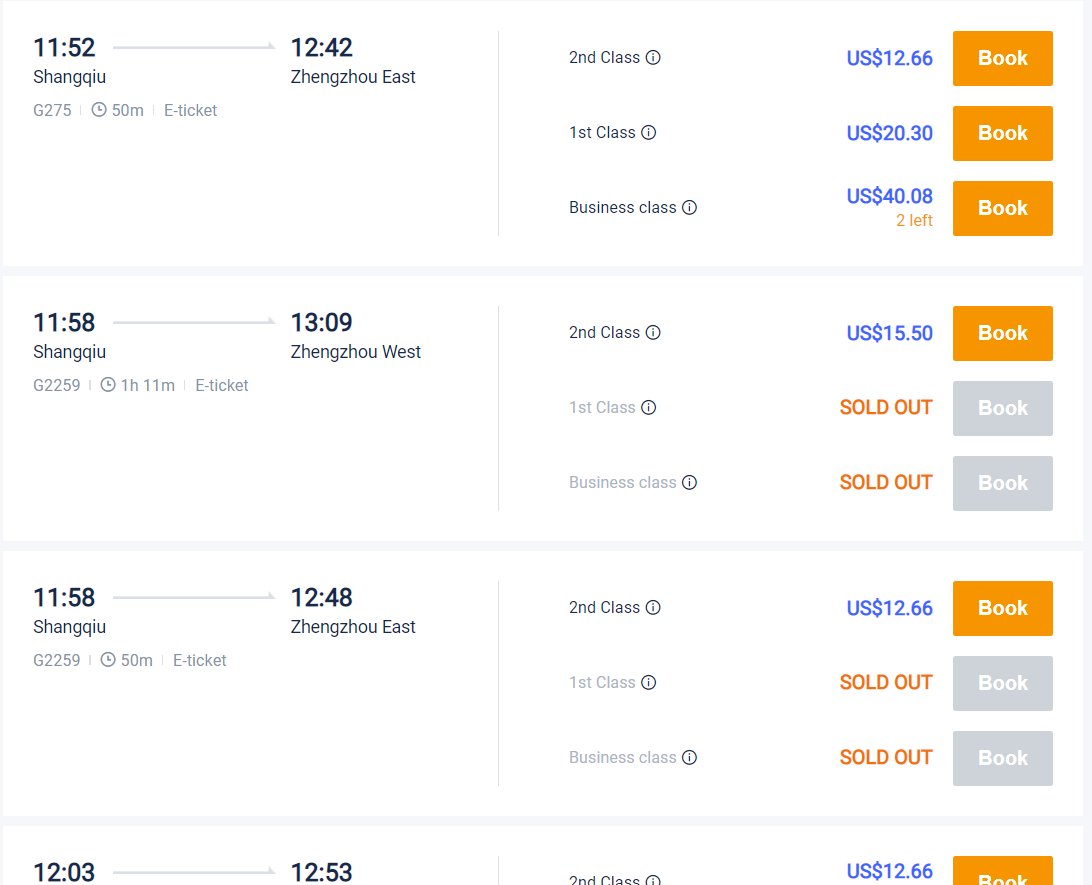
Assuming conservatively that each is the smaller 8-train set (~560 passengers) & assuming 75% capacity utilization (target is typically >80%) yields about 72,000 riders per day along this pair route, or ~20 million per year.
Avg. travel time has been cut in half and is <1 hour.
Avg. travel time has been cut in half and is <1 hour.
By comparison, Amtrak's entire passenger ridership is ~22 million.
If we looked at just Baltimore to Philadelphia which comps to Shangqiu/Zhengzhou, that number would be at least an order-of-magnitude lower.
If we looked at just Baltimore to Philadelphia which comps to Shangqiu/Zhengzhou, that number would be at least an order-of-magnitude lower.
The ridership data very much supports the idea that these recent expansions have been economic.
In its 2019 report, the World Bank studied how adding new line extensions to an existing network created a "bonus" effect on ridership
In its 2019 report, the World Bank studied how adding new line extensions to an existing network created a "bonus" effect on ridership
HSR network planners weren't blindly shooting in the dark when they were choosing line expansions. They relied heavily on existing data on the conventional network. Most HSR lines tracked existing conventional routes.
To top it off, once HSR lines were completed, the existing track was often retrofitted for the freight network to ship heavier, bulk goods that were less time-sensitive.
Loading suggestions...