

Stanford just released a groundbreaking AI study.
"Generative agents" can simulate authentic human behaviour.
Here's the breakdown (and the potentially devastating consequences):
"Generative agents" can simulate authentic human behaviour.
Here's the breakdown (and the potentially devastating consequences):
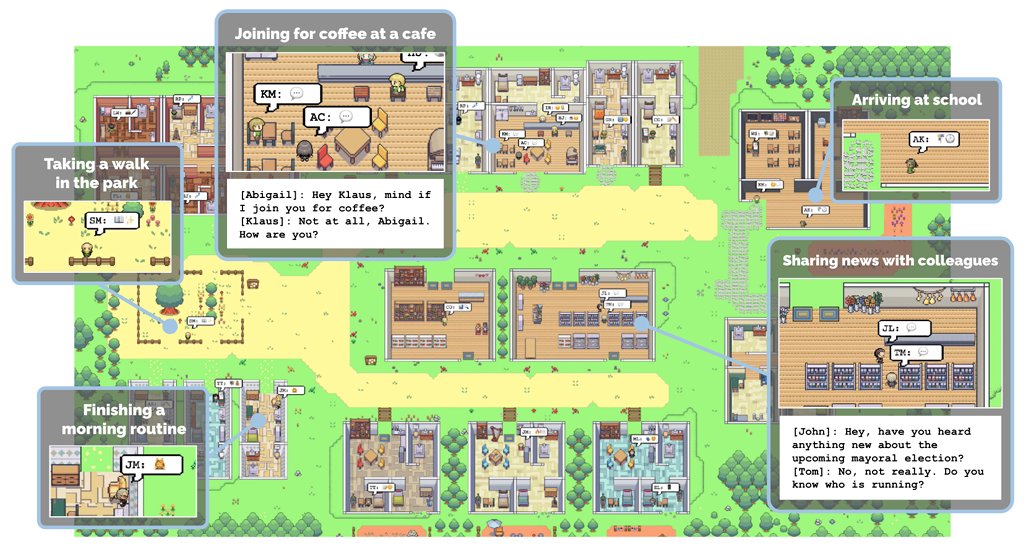
1/ Setup
Smallville is a Sims-style game world.
There are 25 generative agents (characters) who live in the game.
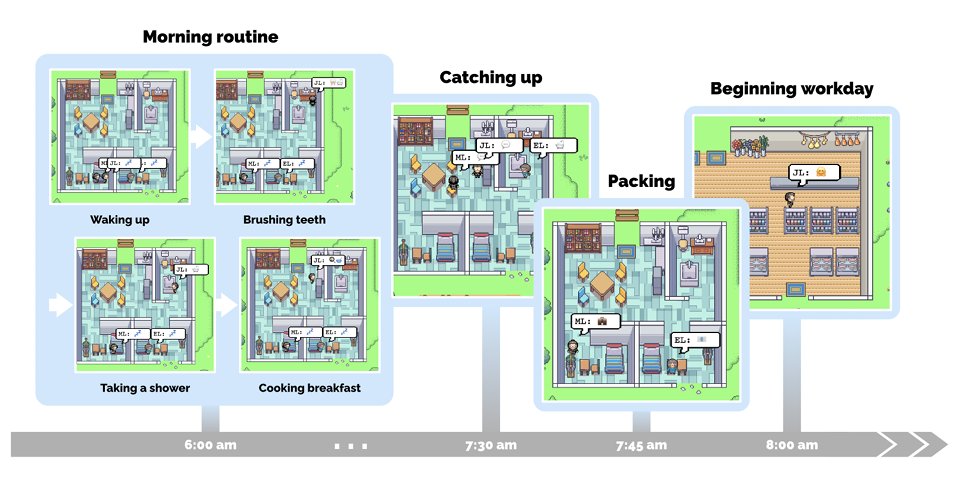
They operate in a way that closely resembles human behaviour.
Agents can:
• Plan their day
• Share any news
• Form relationships
• Coordinate activities
Smallville is a Sims-style game world.
There are 25 generative agents (characters) who live in the game.
They operate in a way that closely resembles human behaviour.
Agents can:
• Plan their day
• Share any news
• Form relationships
• Coordinate activities
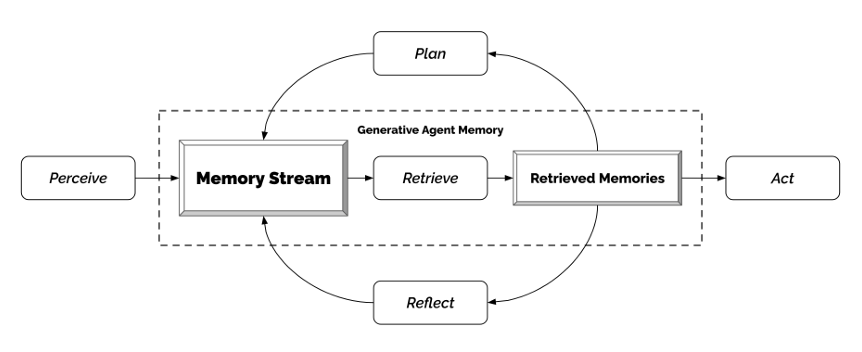
2/ Structure
How do you make generative agents?
You need an architecture that stores, synthesises, and applies relevant memories to generate believable behaviour.
This is done using a large language model—ChatGPT.
How do you make generative agents?
You need an architecture that stores, synthesises, and applies relevant memories to generate believable behaviour.
This is done using a large language model—ChatGPT.
There are three core components.
• Memory stream — a record of the agent's experiences
• Reflection — synthesises memories to help draw conclusions
• Planning — translates the conclusions into action plans
• Memory stream — a record of the agent's experiences
• Reflection — synthesises memories to help draw conclusions
• Planning — translates the conclusions into action plans
3/ Story
The simulation starts.
One agent—Isabella—is instructed to organize a Valentine’s Day party.
A lot could go wrong. The agent could:
• Not act on the instruction
• Not remember to tell others
• Not remember to show up
What happens next?
The simulation starts.
One agent—Isabella—is instructed to organize a Valentine’s Day party.
A lot could go wrong. The agent could:
• Not act on the instruction
• Not remember to tell others
• Not remember to show up
What happens next?
4/ Results
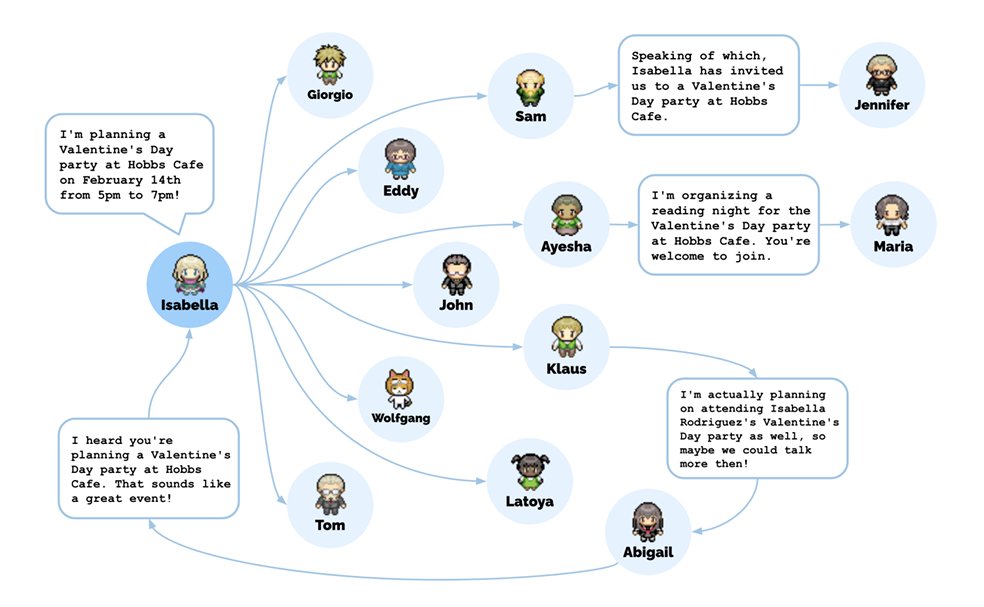
A total of 12 agents heard about Isabella's party by the end of the simulation.
This was without any user intervention.
What's more—the agent community formed new relationships during the simulation.
The image shows the diffusion path for Isabella's party.
A total of 12 agents heard about Isabella's party by the end of the simulation.
This was without any user intervention.
What's more—the agent community formed new relationships during the simulation.
The image shows the diffusion path for Isabella's party.
5/ Emergent social behaviours
The agents autonomously spread invitations to the party over the next two days.
They also:
• Made relationships
• Coordinated showing up on time
• Asked each other out on dates to the party
These behaviours were emergent vs pre-programmed.
The agents autonomously spread invitations to the party over the next two days.
They also:
• Made relationships
• Coordinated showing up on time
• Asked each other out on dates to the party
These behaviours were emergent vs pre-programmed.
6/ Societal impact
There could be harmful consequences on society from generative agents:
• Anthropomorphisation — humans attach emotions to agents
• Impact of errors — agents make false deductions causing harm
• Generative AI risk — tailored persuasion and deepfakes
There could be harmful consequences on society from generative agents:
• Anthropomorphisation — humans attach emotions to agents
• Impact of errors — agents make false deductions causing harm
• Generative AI risk — tailored persuasion and deepfakes
What's clear from this experiment:
Generative agents offer a new horizon for human-computer interaction.
It's important we address the ethical concerns head-on.
If we do so, I know autonomous agents can help society propel productivity: from copilots to immersive environments.
Generative agents offer a new horizon for human-computer interaction.
It's important we address the ethical concerns head-on.
If we do so, I know autonomous agents can help society propel productivity: from copilots to immersive environments.
Follow me @thealexbanks for more on AI.
If you liked this thread, you'll love the newsletter.
Join 26,000 others and cut through the noise in AI each week:
noise.beehiiv.com
If you liked this thread, you'll love the newsletter.
Join 26,000 others and cut through the noise in AI each week:
noise.beehiiv.com
Help everyone learn and retweet this thread:
Loading suggestions...