

The "Green Transition" is here.
And it's one the most bullish events in metals and mining's history.
This month, the OECD released a paper on "Raw Materials Critical For The Green Transition."
I read it so you don't have to.
A thread on what I found most important ... 🧵
And it's one the most bullish events in metals and mining's history.
This month, the OECD released a paper on "Raw Materials Critical For The Green Transition."
I read it so you don't have to.
A thread on what I found most important ... 🧵

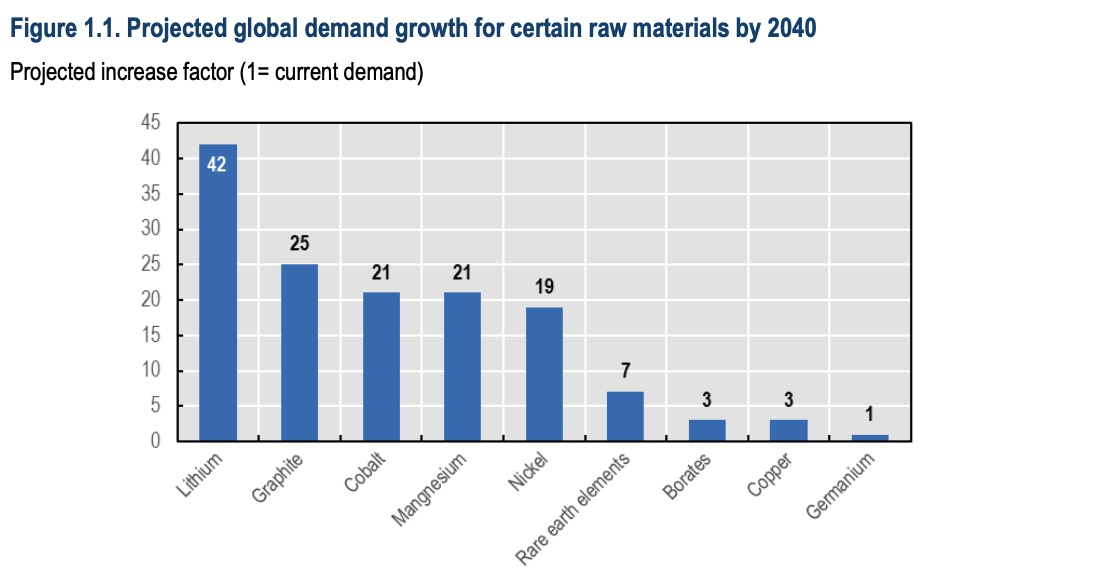
1/ Metals With The Most Torque
"The IEA projects that in the next twenty years the clean energy sector's demand for materials such as cobalt, natural graphite, or lithium will increase from twenty to more than forty times."
Demand for minerals will grow on avg. 4-6x by 2030.
"The IEA projects that in the next twenty years the clean energy sector's demand for materials such as cobalt, natural graphite, or lithium will increase from twenty to more than forty times."
Demand for minerals will grow on avg. 4-6x by 2030.
2/ Mineral Importance Increases Restrictions
We're seeing a negative feedback loop happening in critical metal exports.
The more important these minerals become to our energy future, the less willing countries are to sell them to other countries.
It's Metallic Nationalism.
We're seeing a negative feedback loop happening in critical metal exports.
The more important these minerals become to our energy future, the less willing countries are to sell them to other countries.
It's Metallic Nationalism.

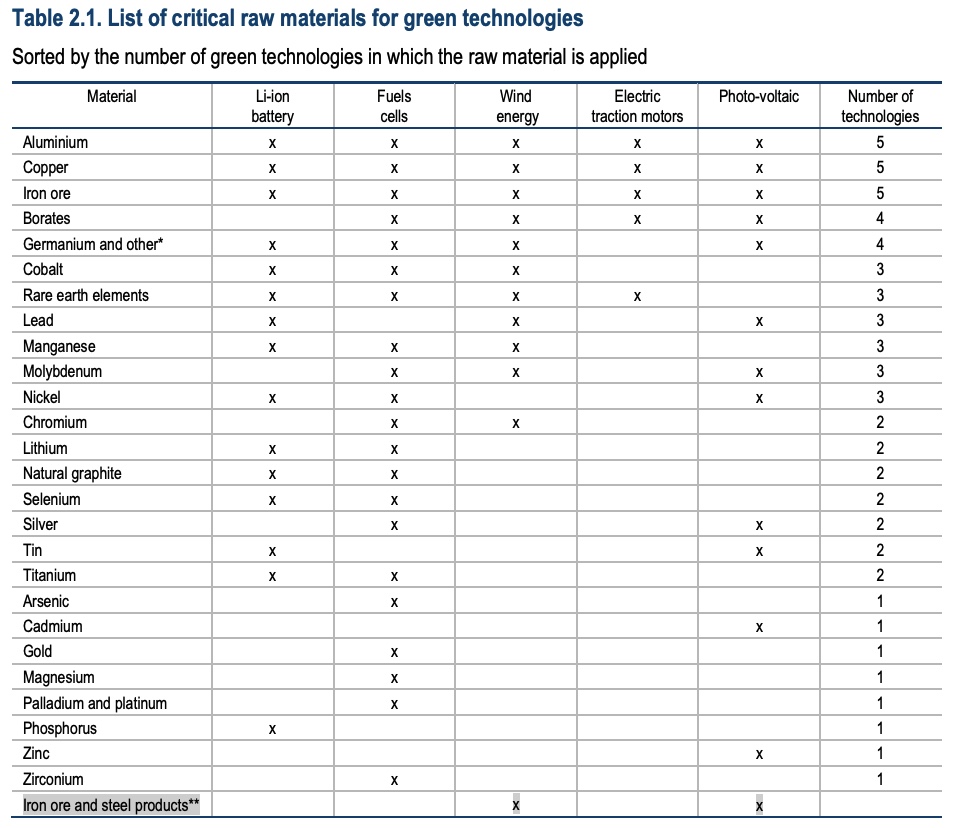
3/ Three Metals To Rule Them All
Three metals have the most green technology use-cases:
• Aluminum
• Copper
• Iron Ore
Said differently, these three metals will experience disproportionately more demand from green tech. Not to mention existing non-green tech demand.
Three metals have the most green technology use-cases:
• Aluminum
• Copper
• Iron Ore
Said differently, these three metals will experience disproportionately more demand from green tech. Not to mention existing non-green tech demand.
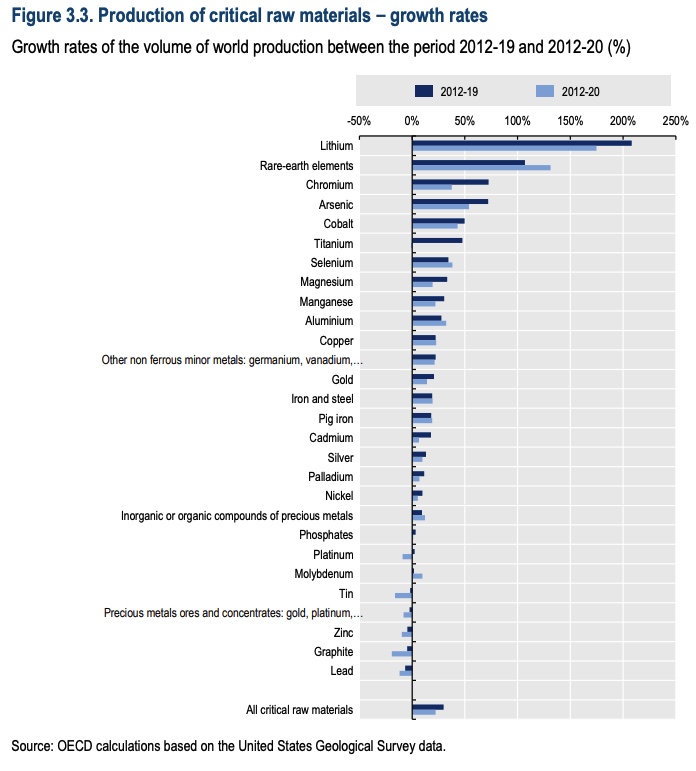
4/ Critical Metals Growth Rates
"On average, global production of critical raw materials increased by 30% from 2012-19."
Largest growth metals:
• Lithium: >200%
• Rare-earth: >100%
• Chromium: >50%
Declining production growth metals:
• Platinum
• Tin
• Graphite
"On average, global production of critical raw materials increased by 30% from 2012-19."
Largest growth metals:
• Lithium: >200%
• Rare-earth: >100%
• Chromium: >50%
Declining production growth metals:
• Platinum
• Tin
• Graphite
5/ Concentrated Production Creates Potential Supply Problems
As we mentioned earlier, these critical metals will become geopolitical pawns for global power.
More concentrated supply creates fragility within the entire system.
We're seeing this w/ tin currently.
As we mentioned earlier, these critical metals will become geopolitical pawns for global power.
More concentrated supply creates fragility within the entire system.
We're seeing this w/ tin currently.
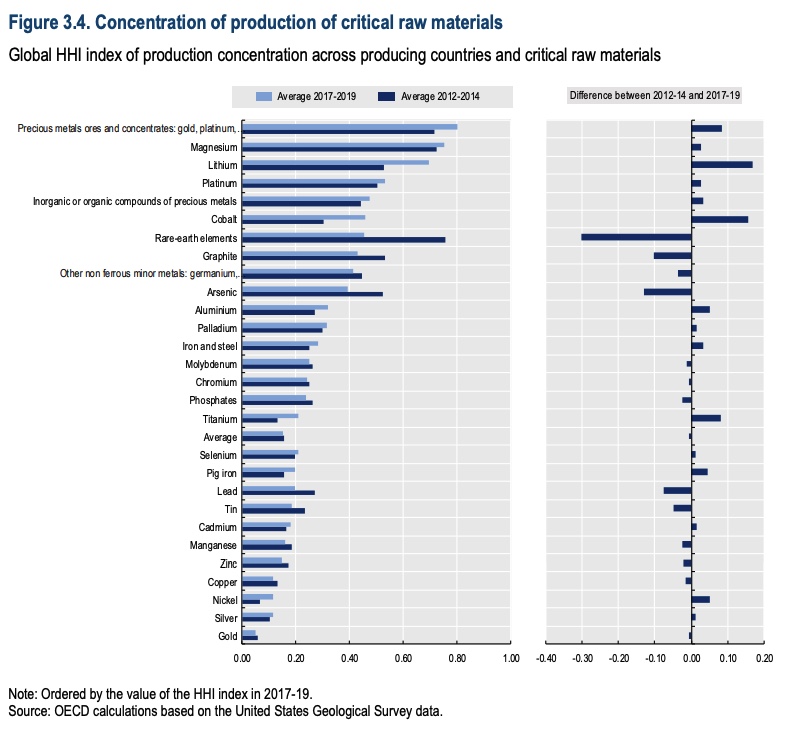
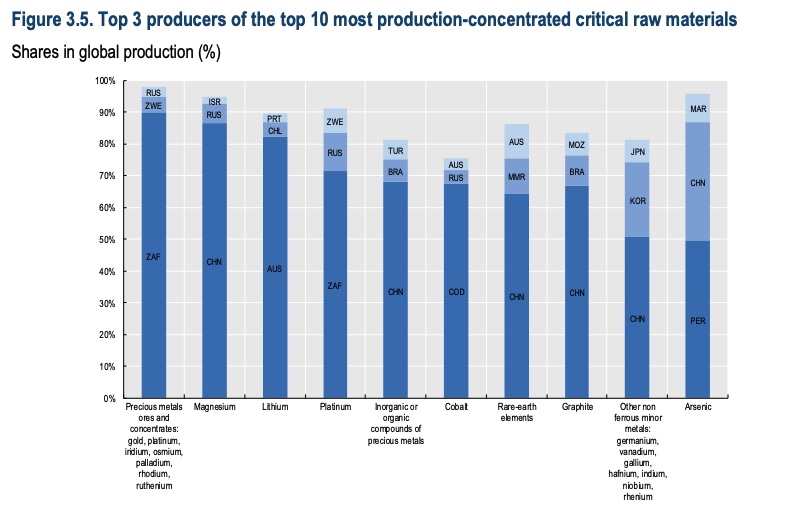
6/ Top 3 Producers of Top 10 Critical Raw Materials
• PMs: South Africa, Zimbabwe, and Russia
• Magnesium: China, Russia, Israel
• Lithium: Australia, Chile, Portugal
• Platinum: SA, Russia, Zimbabwe
• Cobalt: DRC, Russia, Australia
• Graphite: China, BRA, AUS
• PMs: South Africa, Zimbabwe, and Russia
• Magnesium: China, Russia, Israel
• Lithium: Australia, Chile, Portugal
• Platinum: SA, Russia, Zimbabwe
• Cobalt: DRC, Russia, Australia
• Graphite: China, BRA, AUS
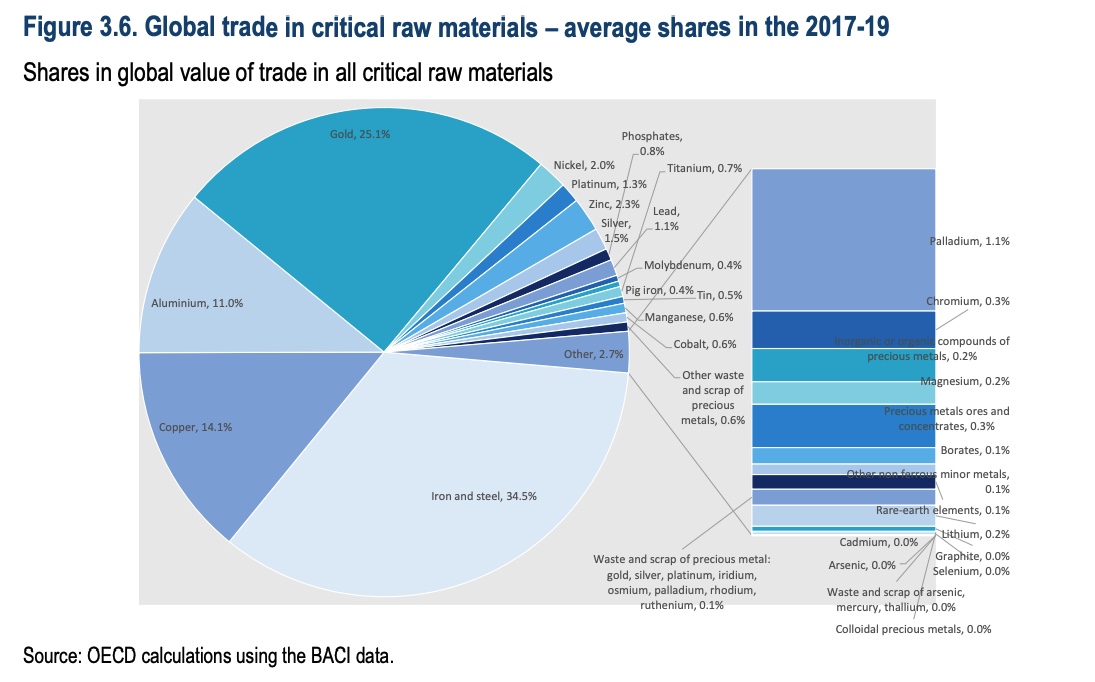
7/ Global Trade Share of Value
There are four metals that comprise 84%+ of global value in critical raw materials:
1) Iron and steel: 34.5%
2) Gold: 25%
3) Copper: 14%
4) Aluminum: 11%
There are four metals that comprise 84%+ of global value in critical raw materials:
1) Iron and steel: 34.5%
2) Gold: 25%
3) Copper: 14%
4) Aluminum: 11%
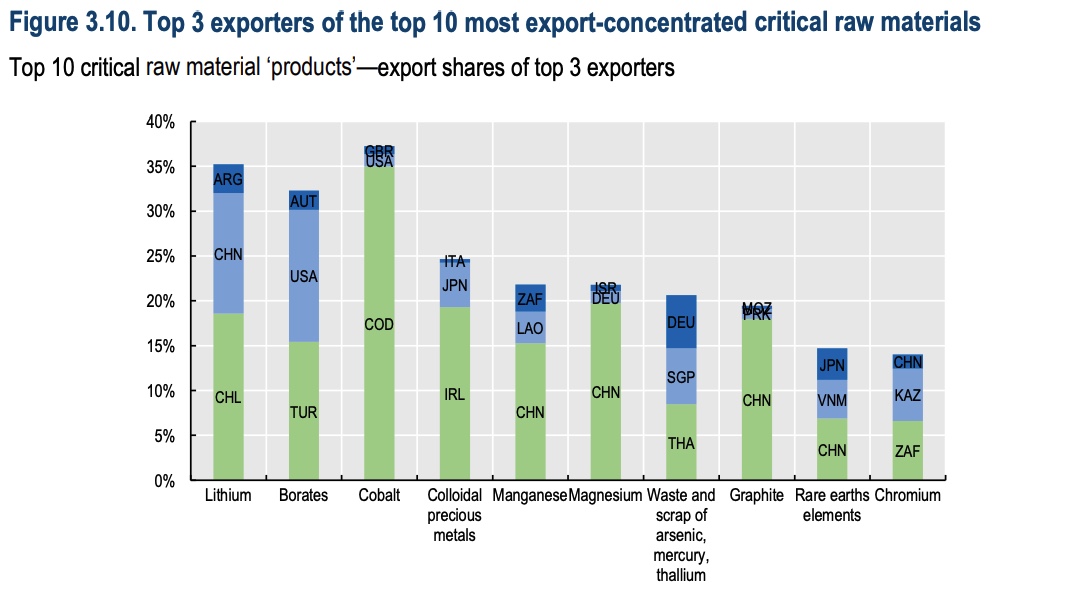
8/ Top 3 Exporters of Top 10 Critical Raw Materials
• Lithium: Chile, China, Argentina
• Borates: Turkey, USA, Austria
• Cobalt: DRC, USA, UK
• Magnesium: China, DEU, Israel
• Graphite: China
• Chromium: South Africa, Kazakhstan, China
• Lithium: Chile, China, Argentina
• Borates: Turkey, USA, Austria
• Cobalt: DRC, USA, UK
• Magnesium: China, DEU, Israel
• Graphite: China
• Chromium: South Africa, Kazakhstan, China
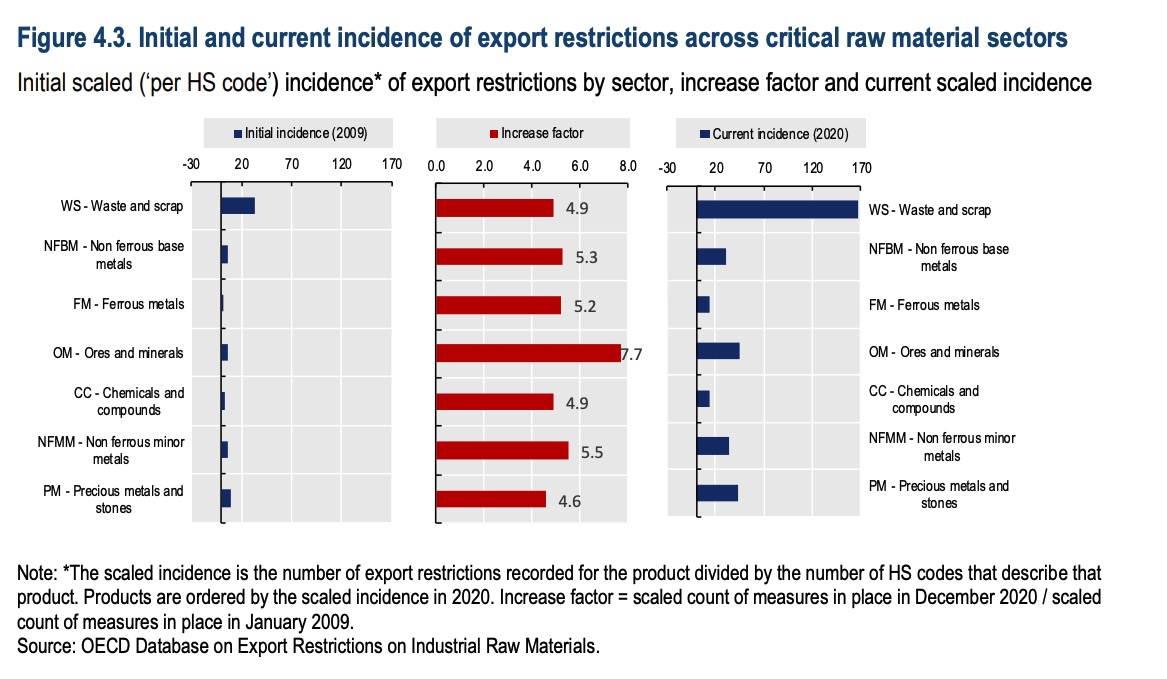
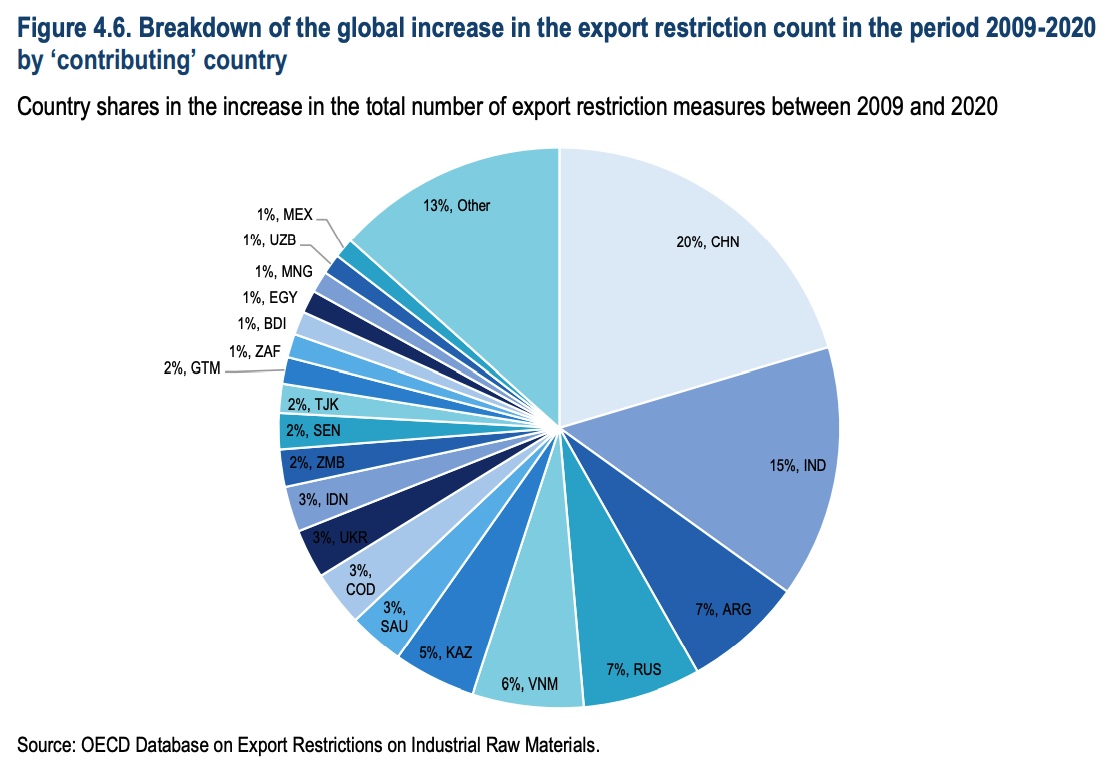
9/ Increase in Export Restrictions
Ores and minerals have increased export restrictions by a factor of 7.7x.
Meanwhile, precious metals have increased export restrictions by a factor of 4.6x.
Also, note that China leads the way in increased export restrictions (20%).
Ores and minerals have increased export restrictions by a factor of 7.7x.
Meanwhile, precious metals have increased export restrictions by a factor of 4.6x.
Also, note that China leads the way in increased export restrictions (20%).
10/ Possible Economic Impacts
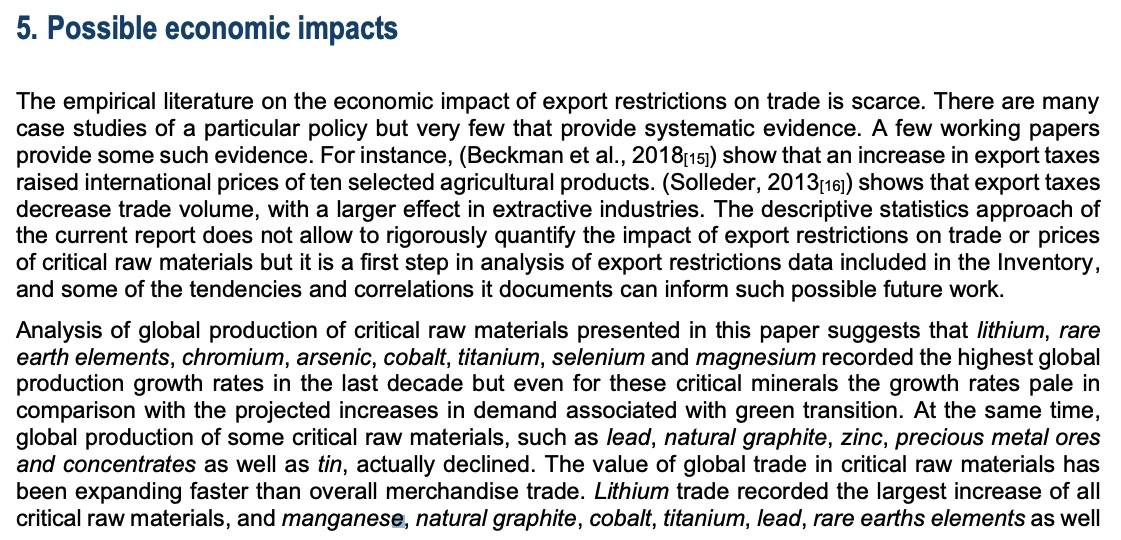
• Rapid production growth in green technology metals/minerals like lithium, cobalt, titanium, and magnesium pale in comparison to expected future demand.
• Critical metal production from lead, graphite, zinc, and tin actually DECLINED.
Cont...
• Rapid production growth in green technology metals/minerals like lithium, cobalt, titanium, and magnesium pale in comparison to expected future demand.
• Critical metal production from lead, graphite, zinc, and tin actually DECLINED.
Cont...
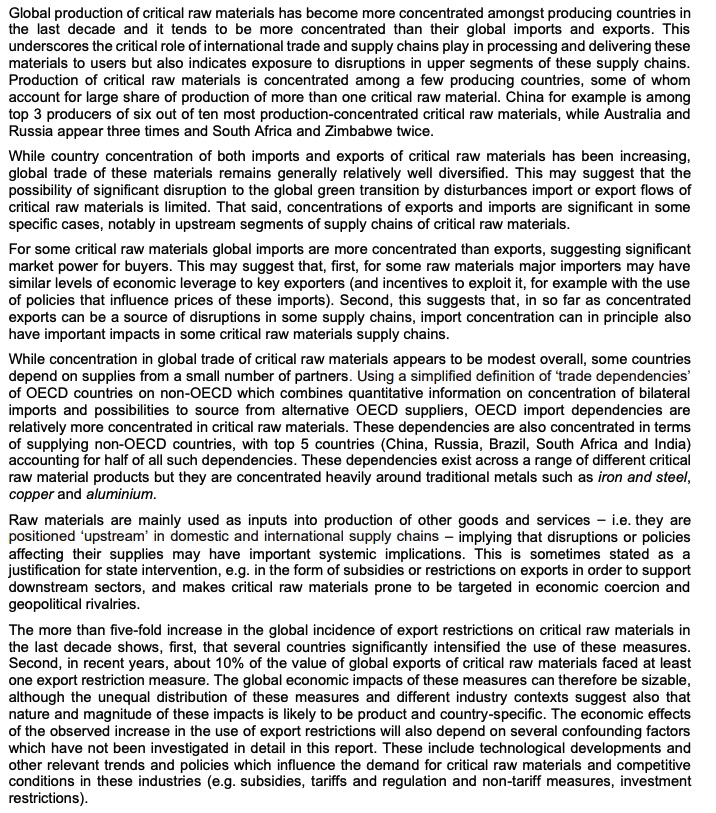
• Global production of critical raw materials has become more concentrated among producing countries.
• Export restrictions will play an increasingly important role in supply chain fragility/stability
Read further below ...
• Export restrictions will play an increasingly important role in supply chain fragility/stability
Read further below ...
11/ Where To Learn More
I learned a ton from reading this paper, and I know you will too.
If you want to dive deeper into some of the concepts, check out the white-paper for yourself here: oecd-ilibrary.org
I learned a ton from reading this paper, and I know you will too.
If you want to dive deeper into some of the concepts, check out the white-paper for yourself here: oecd-ilibrary.org
12/ Conclusion
I hope you enjoyed this thread and learned something new!
If you did, please consider liking, RT, and sharing with friends.
Also, check out what we're doing at Macro Ops if you want to learn more about the coming Commodity Super Cycle.
macro-ops.com
I hope you enjoyed this thread and learned something new!
If you did, please consider liking, RT, and sharing with friends.
Also, check out what we're doing at Macro Ops if you want to learn more about the coming Commodity Super Cycle.
macro-ops.com
Loading suggestions...