

(1/17) Today a thread on a very different subject:
This #thread is about one of the theoretically earliest Indo-European peoples in #historiography and what the #Tocharians might have to do with it.
(Pictures are mainly from external sources)
This #thread is about one of the theoretically earliest Indo-European peoples in #historiography and what the #Tocharians might have to do with it.
(Pictures are mainly from external sources)


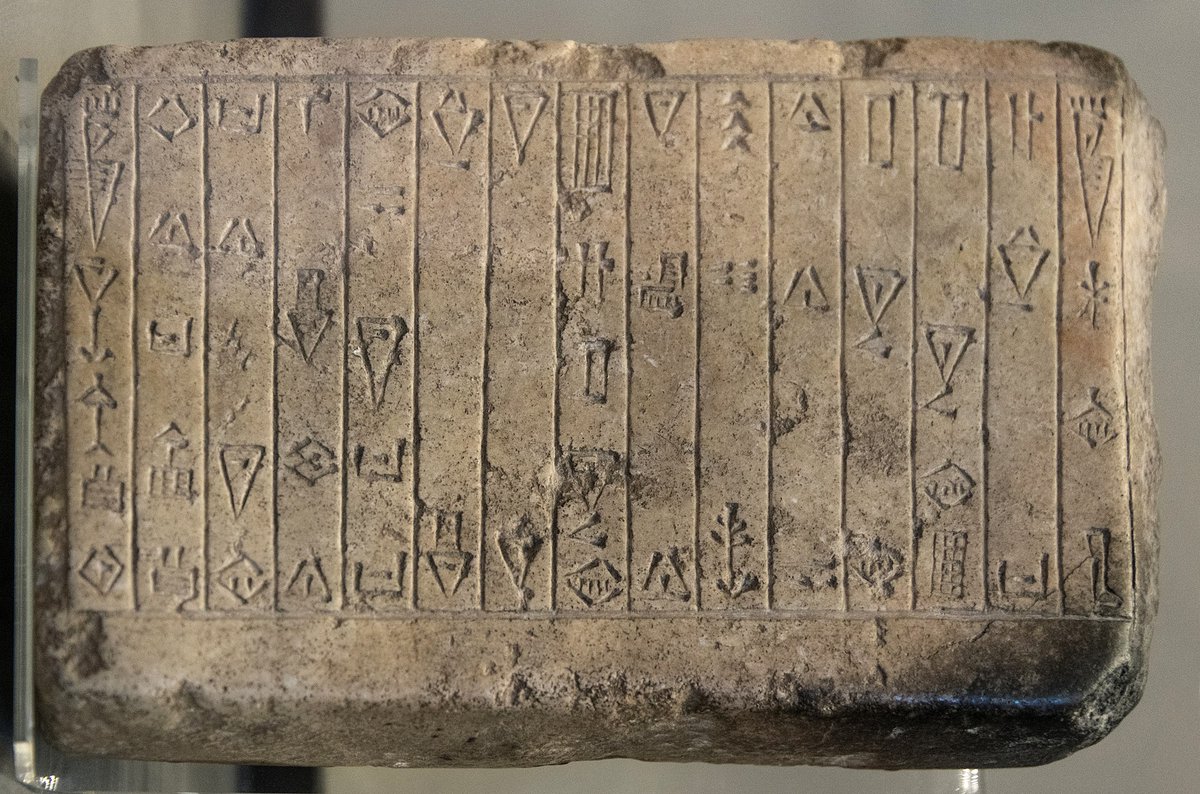
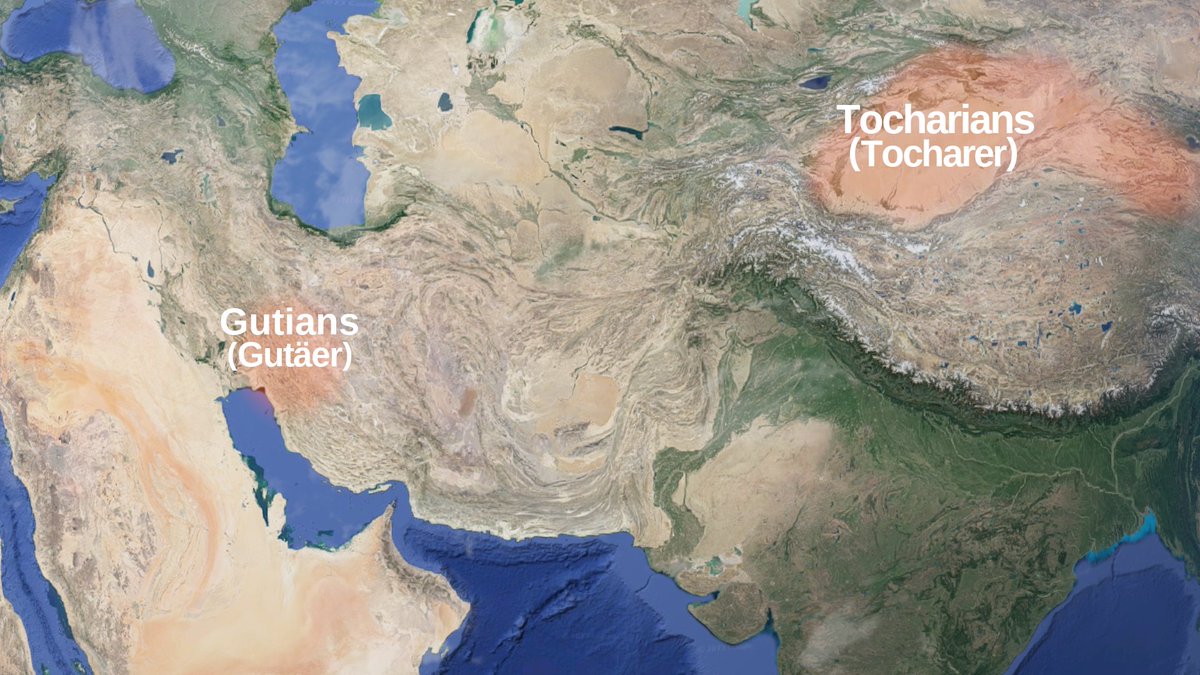
(2/17) There is a #theory that the one of the first Indo-European peoples whose language has been documented in fragments were the #Gutians.
The Gutians were a #nomadic people that appeared in the late 3rd millennium BC on the outskirts of #Mesopotamia.
The Gutians were a #nomadic people that appeared in the late 3rd millennium BC on the outskirts of #Mesopotamia.

(3/17) The #Gutians succeed in ruling #Mesopotamia from about 2150 to 2050 BC after the collapse of the #empires there. Their #kings probably ruled hegemonically over the area. However, they were perceived as strangers by the native #Akkadians and #Sumerians.

(4/17) Later, #Hammurapi (1890-1750 BC) would also refer to the Gutian #language as explicitly foreign. However, the #Gutians did not produce records in their own language. The only remaining language testimonies of the #Gutian language are therefore the names of their kings.
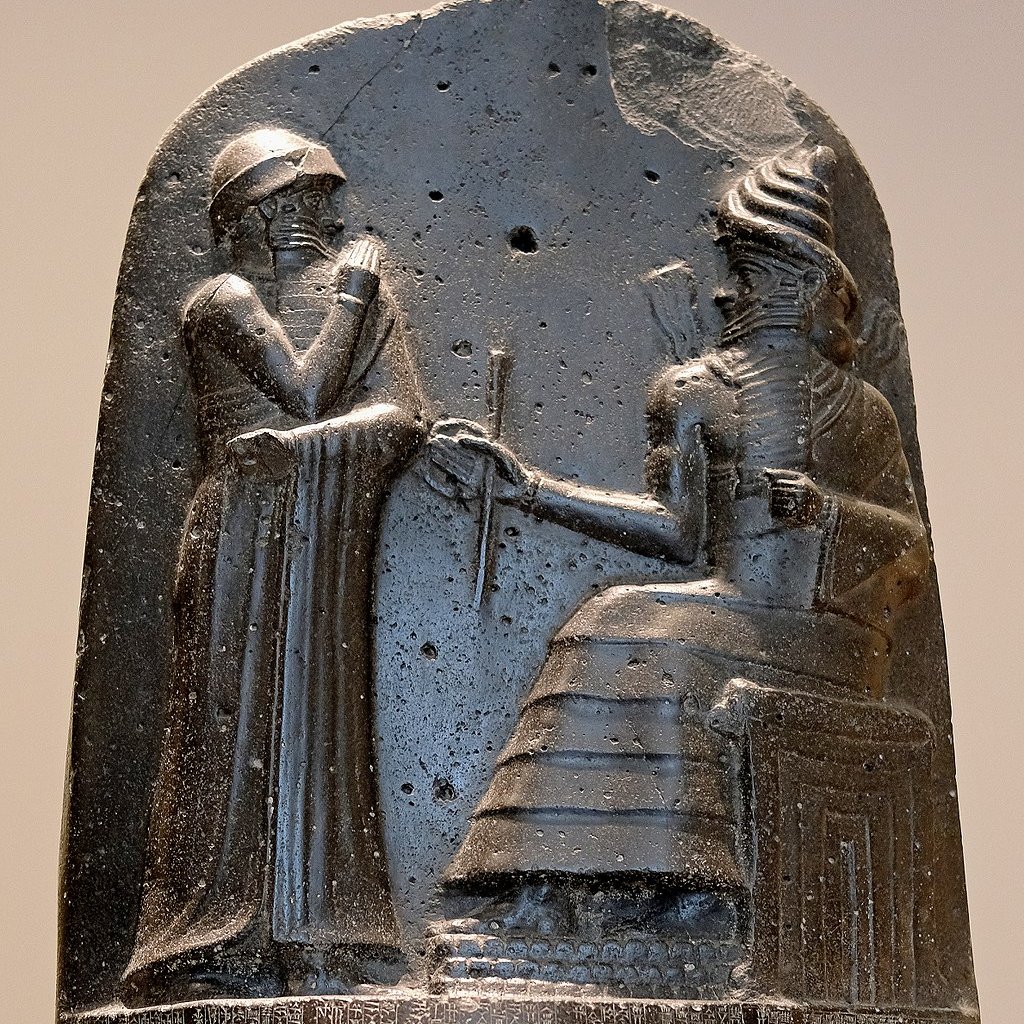
(5/17) Decisively based on these records, the #linguist W. B. #Henning was to put forward the thesis that the #Gutians might have been a people related to the #Tocharians and that they were therefor Indo-Europeans.

(6/17) His #theory is interesting in that it could be used to answer the question of the #origin of the #Gutians, as well as clarify some of the #paradoxes surrounding the #Tocharians.
(7/17) Indeed, #Henning argues that the #Tocharians are, at first glance, a peculiar people for Indo-Europeans:
unlike other groups, they apparently never undertook campaigns of conquest, and in the long run were relatively quickly defeated and assimilated by the Chinese.
unlike other groups, they apparently never undertook campaigns of conquest, and in the long run were relatively quickly defeated and assimilated by the Chinese.
(8/17) Apparently there is not much to see of the #resistance and #warrior culture of the other Indo-European peoples. While Indo-European languages have prevailed all over the world, the #Tocharians seem to have disappeared in silence. And here the #Gutians come into play.
(9/17) According to #Henning, it is possible that the #Gutians were a sub-people of the #Tocharians who set out on such conquering campaigns very early. This would explain why the #Tocharians were apparently not too expansionist: actually they were, just at a very early time!
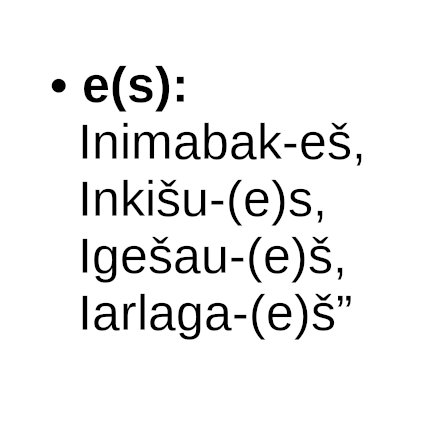
(10/17) However, his main arguments are mainly linguistic. #Henning thinks that he can recognize in the names of the #Gutian kings an Indo-European, and more specifically a linguistic substrate similar to early #Tocharian. He saw signs of kinship especially in the name endings.
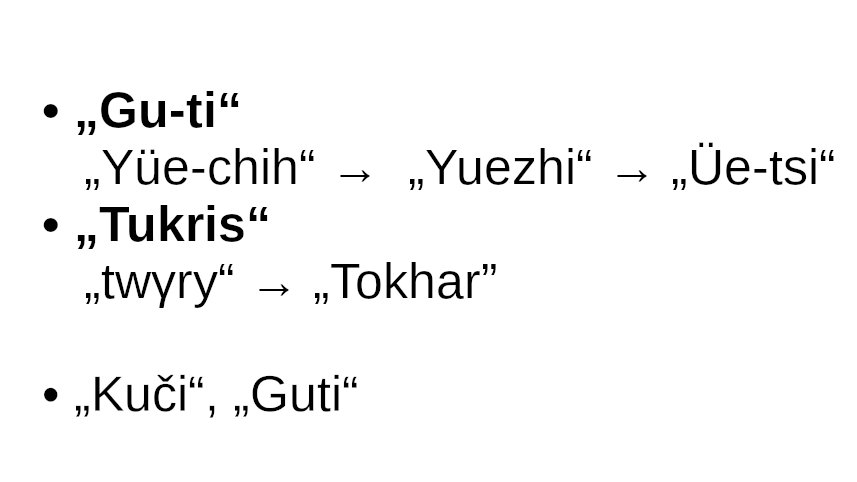
(11/17) In addition, #Tocharians who lived in the region around #Kucha called themselves "Kuči".
They used this name for their people themselves. Both banally and syllabically, a similarity to the word "Guti" (the original basis for "#Gutian") is striking.
They used this name for their people themselves. Both banally and syllabically, a similarity to the word "Guti" (the original basis for "#Gutian") is striking.
(12/17) The #Chinese also mentioned the so-called "Yuezhi" in the first M BC. Although this term was used specifically for a presumably #Scythian people, it could have generally described #nomadic peoples in the northwest to #China, including parts of the #Tocharians, as well.
(13/17) There is a name similarity between the word "Yuezhi" and "Guti" too. The same is true for the land name "Tukris" which is said to have been located next to the Gutian land. It has similarity with the word "Twγry" which was used by other peoples to refer to the Tocharians.
(14/17) Although this #theory is quite interesting and would answer some open questions, it is mostly rejected today. The main reason is that the #linguistic evidence for it is scattered over many centuries and #geographical areas. The #kings names are also not telling enough.
(15/17) Furthermore, one of #Henning's basic assumptions was that it is in itself a paradox that the #Tocharians would not have spread widely. Besides the now obvious #political dimension, there may be various reasons for this, such as their settlement area and their way of life.
(17/17) Also for the reason and because it could add an extra dimension to one of our favorite lost peoples, the #Tocharians, I wanted to share this thesis here anyway. Personally, however, I also think it is rather unlikely.
Loading suggestions...