

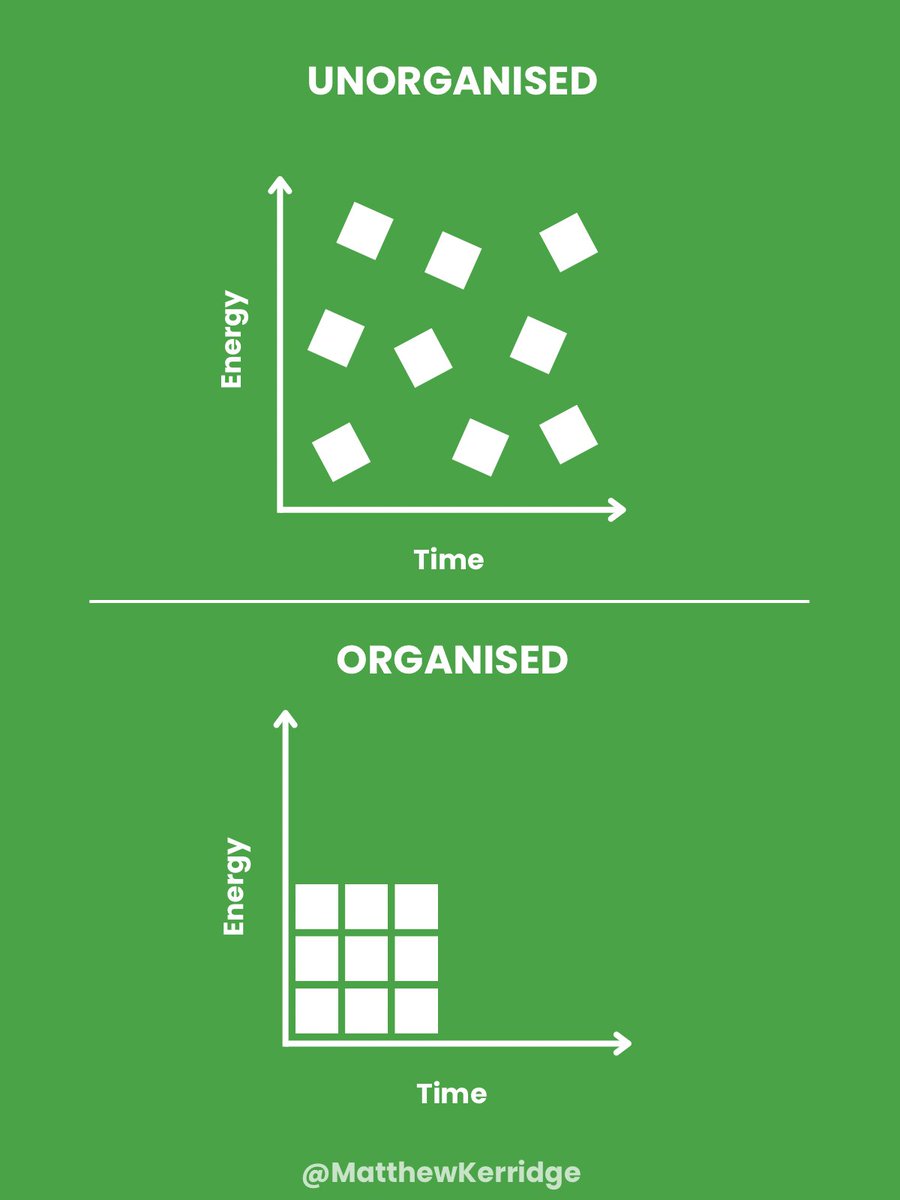
Being unorganised wastes your precious time and energy.
Here’s 10 easy ways you can get more organised today:
Here’s 10 easy ways you can get more organised today:
1. Get everything out of your head
Your mind is for having ideas, not for remembering them.
Get everything you need to remember out of your head and into one central system you know you’ll review often.
Now you’re ready for the next step:
Your mind is for having ideas, not for remembering them.
Get everything you need to remember out of your head and into one central system you know you’ll review often.
Now you’re ready for the next step:
2. Create a “today” list
Looking at all your tasks is overwhelming.
Instead, create a separate smaller list of just the main things you want to do today.
If you use a digital tool create a filter to only see the tasks you have on your plate for today.
Ignore the rest.
Looking at all your tasks is overwhelming.
Instead, create a separate smaller list of just the main things you want to do today.
If you use a digital tool create a filter to only see the tasks you have on your plate for today.
Ignore the rest.
3. Commit to your tasks
Take your “today” list and add it to your calendar as a time block.
This makes you think how long a task will need and by committing to a time to dedicate your time and energy to it will not only help you get it done, it will also protect your time from.
Take your “today” list and add it to your calendar as a time block.
This makes you think how long a task will need and by committing to a time to dedicate your time and energy to it will not only help you get it done, it will also protect your time from.
4. Break your tasks down
Large tasks are overwhelming. Make things easier by breaking your tasks down.
Instead of “write report” break this down into “outline report heading”, “wrote report intro”, “bullet point main sections”.
Breaking tasks down makes it easier to begin.
Large tasks are overwhelming. Make things easier by breaking your tasks down.
Instead of “write report” break this down into “outline report heading”, “wrote report intro”, “bullet point main sections”.
Breaking tasks down makes it easier to begin.
5. Create deadlines and reminders
Add deadlines to your tasks and setup reminders ahead of your deadlines to make sure things don’t fall through the cracks.
Knowing you have alerts setup will give your brain peace of mind.
Add deadlines to your tasks and setup reminders ahead of your deadlines to make sure things don’t fall through the cracks.
Knowing you have alerts setup will give your brain peace of mind.
6. Create a filing system
Don’t leave information on your inbox. Add improtant documents and info to a digital filing system. Use a cloud based system like Dropbox to ensure they are backed up.
Know exactly where you can find important information when you need it.
Don’t leave information on your inbox. Add improtant documents and info to a digital filing system. Use a cloud based system like Dropbox to ensure they are backed up.
Know exactly where you can find important information when you need it.
7. Plan tomorrow today
Before you finish your day roughly plan tomorrow’s most important tasks.
Create a “today” list that you can jump straight into tomorrow.
Add your list important tasks to your calendar for tomorrow before your time and energy can be taken by others.
Before you finish your day roughly plan tomorrow’s most important tasks.
Create a “today” list that you can jump straight into tomorrow.
Add your list important tasks to your calendar for tomorrow before your time and energy can be taken by others.
8. Use the 2 minute rule
If a small task arrives on your plate and you can complete it in less than 2 minutes see to it there and then.
The time it takes to capture to your task list and return to later isn’t worth it.
See to small tasks inmediately and protect your wider list
If a small task arrives on your plate and you can complete it in less than 2 minutes see to it there and then.
The time it takes to capture to your task list and return to later isn’t worth it.
See to small tasks inmediately and protect your wider list
9. Capture outside of your inbox
When you get tasks you need to action via email write the tasks down outside of your inbox.
Stay out of your inbox as much as possible.
Your inbox is a terrible task management system.
Use it to get things “in” but organise these elsewhere.
When you get tasks you need to action via email write the tasks down outside of your inbox.
Stay out of your inbox as much as possible.
Your inbox is a terrible task management system.
Use it to get things “in” but organise these elsewhere.
10. Review and reflect
Take some time each week or month to review your progress, reflect on what's working and what's not, and make adjustments as needed.
This can help you stay on track and make continuous improvements.
Take some time each week or month to review your progress, reflect on what's working and what's not, and make adjustments as needed.
This can help you stay on track and make continuous improvements.
Takeaways:
- Get everything out of your head
- Capture outside of your inbox
- Use deadlines and reminders
- Break your tasks down
- Commit to your tasks
- Plan tomorrow today
- Use the minute rule
- Use a filing system
- Use a “today” list
- Review & reflect
- Get everything out of your head
- Capture outside of your inbox
- Use deadlines and reminders
- Break your tasks down
- Commit to your tasks
- Plan tomorrow today
- Use the minute rule
- Use a filing system
- Use a “today” list
- Review & reflect
I hope you've found this thread helpful.
If you enjoyed this thread please:
1. Follow me @matthewkerridge for more.
2. Like / Retweet the first tweet below:
Thank you for reading 🙏
If you enjoyed this thread please:
1. Follow me @matthewkerridge for more.
2. Like / Retweet the first tweet below:
Thank you for reading 🙏
Loading suggestions...