

Qurʾan refers to “the believers, the Jews, the Christian, and the Sabians (allaḏīn ʾāminū wa’llaḏīna hādū wa’l-naṣārā wa-l-ṣābiʾīn)” (2:62, 5:69; cf. 22:17). Who are these Sabians? Scholars offer many answers, but I think the most interesting one comes from the ḥadīth corpus
It’s often forgotten how frequently Muḥammad’s enemies call him “the Ṣābian” in the sīrah-maghāzī and the ḥadīth literature. The story of ʿUmar’s conversion from Ibn Isḥāq's Maghāzī (d. 767), for instance, depicts ʿUmar referring to Muḥammad as a Ṣābian b4 to his conversion
"'Where are you headed for, ʿUmar?' asked Nuʿaym b. ʿAbdallāh.
'I’m after Muḥammad, this Ṣābiʾan (hāḏā l-ṣābiʾ) who’s caused chaos among Quraysh, sought to make fools of their wisemen, impugned their religion, and insulted their gods! I'll kill him!'"
archive.org
'I’m after Muḥammad, this Ṣābiʾan (hāḏā l-ṣābiʾ) who’s caused chaos among Quraysh, sought to make fools of their wisemen, impugned their religion, and insulted their gods! I'll kill him!'"
archive.org


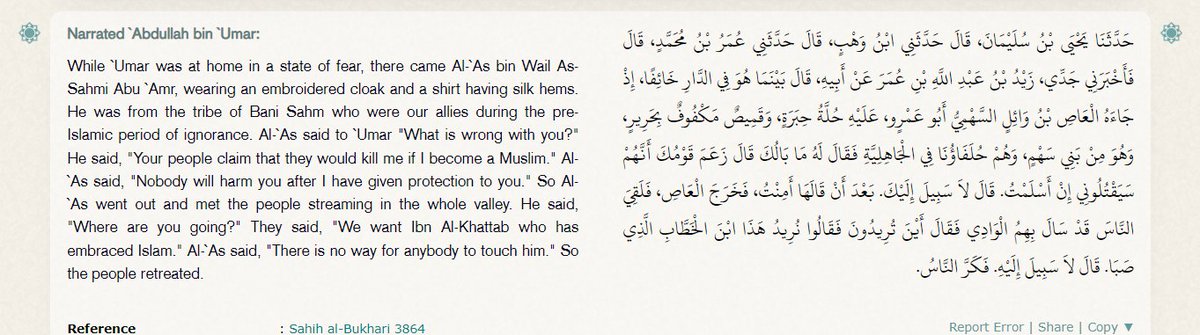
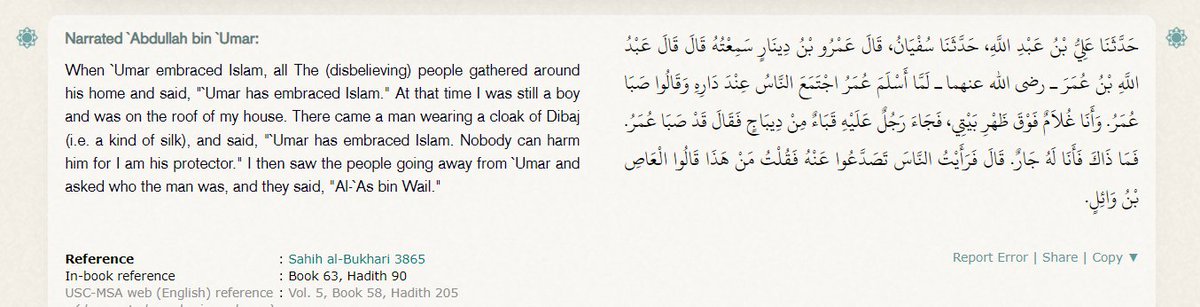
Soon, of course, Quraysh would say the same of ʿUmar after he become Muslim. This incident appears in a number of ḥadīth. Two from al-Bukhārī’s Ṣaḥīḥ have Quraysh say of ʿUmar, “ʿUmar has become a Ṣābian (qad ṣabaʾa ʿumaru)!” , or something very similar.
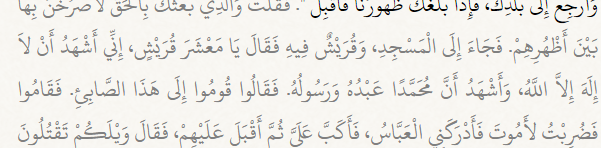
The topos appears again in the story of Abū Ḏarr al-Ġifārī’s conversion in Bukhārī’s Ṣaḥīḥ. Abū Ḏarr converts when ʿAlī introduces him to Muḥammad in Mecca. Though instructed to keep his conversion secret, he insists on announcing his conversion publicly before Quraysh.
“Men of Quraysh!” he says, “I testify that there is no god but God and that Muḥammad is his servant and messenger.” The men of Quraysh then say, “Get after this Ṣabian (qūmū ʾilā hāḏa l-ṣābiʾ)!” Ibn ʿAbbās then intervenes to save his life.
sunnah.com
sunnah.com

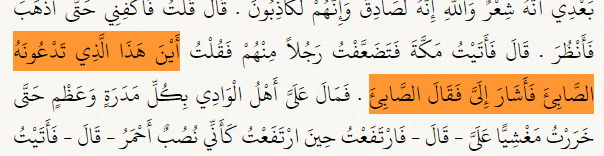
Another story, in Muslim's Ṣaḥīḥ, features Abū Ḏarr’s brother, Unays. He arrives in Mecca and asks a lowly man, “Where is this man who you call the Ṣābian [i.e., Muhammad]?” The man then cries out, “This man is a Ṣābian!”, and the people attack him.sunnah.com
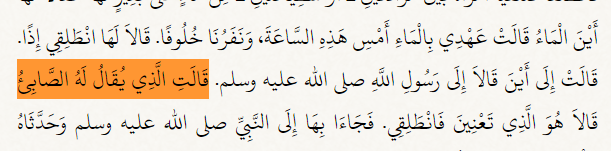
In a tradition on tayammum in Bukhārī’s Ṣaḥīḥ, Muḥammad’s Companions meet a woman whom they ask to come w/ them to see the messenger of God. And she ask, “The man whom they call the Ṣābian (allaḏī yuqālu lahu l-ṣābiʾ)?” she asks. "Yes," they answer. sunnah.com

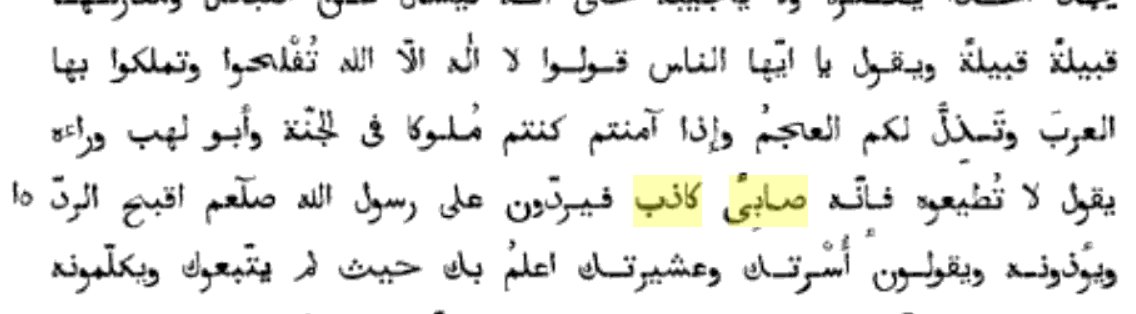
According Ibn Saʿd, the prophet’s uncle Abū Lahab likewise stood behind him as he preached to the Arabs and said, “Pay him no heed. He is a lying Ṣabian (innahu ṣābiʾun kāḏibun)!”
google.com
google.com

All of these examples, of course, raise a simple question. What does the word ṣābiʾ|صابئ mean in these traditions? It’s not hard to answer. It likely means a person who abandons one’s ancestral religion.
* ʿAbbās, not Ibn ʿAbbās
Loading suggestions...