

Rollups today aim to scale ETH
However, as they aim to scale, they face a major tradeoff: centralized sequencers
Although CS is highly performant it faces its issues
Hence the need for Decentralized Shared Sequencers
A thread 🧵 on DSS
However, as they aim to scale, they face a major tradeoff: centralized sequencers
Although CS is highly performant it faces its issues
Hence the need for Decentralized Shared Sequencers
A thread 🧵 on DSS
Before I proceed, check @_SSLocket recent article on this topic for a broader understanding and subscribe to newsletter
DSS is simply a sequencer layer shared across multiple rollups
At the moment every rollup has a Centralized sequencer layer ;(
DSS is decentralized cos any rollup can opt into operating the sequencer
At the moment every rollup has a Centralized sequencer layer ;(
DSS is decentralized cos any rollup can opt into operating the sequencer
Hence, adding max security cos of huge staked value & other benefits which will be discussed 👇🏻
In this thread we’ll look at
• Current State of Rollup stack
• Centralized Sequencers and issues
• The messiah — Decentralized Shared Sequencers
• Teams building it
In this thread we’ll look at
• Current State of Rollup stack
• Centralized Sequencers and issues
• The messiah — Decentralized Shared Sequencers
• Teams building it
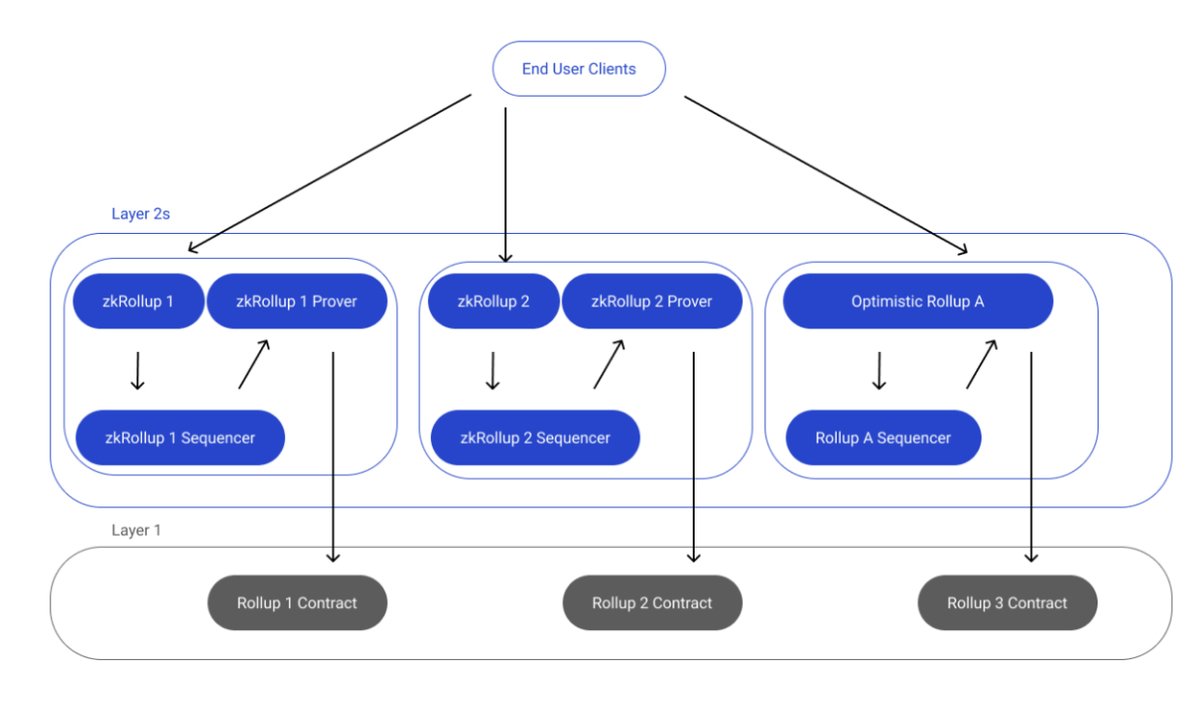
1/ The current Rollup stack is made up of these components:
Client software
Rollup VM
Mempool
Sequencer
Prover (zkRs)
Rollup contract on ETH
1. Users create txn with the client software (wallet)
2. These txns are sent to the rollup and then queued in the mempool
Client software
Rollup VM
Mempool
Sequencer
Prover (zkRs)
Rollup contract on ETH
1. Users create txn with the client software (wallet)
2. These txns are sent to the rollup and then queued in the mempool

2/ (The mempool is a storage area where unconfirmed txns are temporarily held until they can be processed)
3. The sequencer in a rollup gets txns from the mempool, determines their execution order and provides the instructions to the VM,
3. The sequencer in a rollup gets txns from the mempool, determines their execution order and provides the instructions to the VM,
3/
publishing checkpoints periodically to the rollup contract on ETH
4. For zkRs, a prover generates proof for VM state transition, which is then submitted as a new state root to rollup contract on ETH
The image below is a representation of a Centralized Sequencer
publishing checkpoints periodically to the rollup contract on ETH
4. For zkRs, a prover generates proof for VM state transition, which is then submitted as a new state root to rollup contract on ETH
The image below is a representation of a Centralized Sequencer
4/
5. The rollup contract then checks to confirm the validity of the proof; if valid, state transitions will be registered
Centralized Sequencer
We could use the L1 as a sequencer but it has its many downsides
5. The rollup contract then checks to confirm the validity of the proof; if valid, state transitions will be registered
Centralized Sequencer
We could use the L1 as a sequencer but it has its many downsides
5/ - low txn and data throughput
• L1 computational bottlenecks will be elevated, slower txn confirmation
Users will experience the issue modularity is trying to solve— L1 congestion which has led to high gas and low throughput
• L1 computational bottlenecks will be elevated, slower txn confirmation
Users will experience the issue modularity is trying to solve— L1 congestion which has led to high gas and low throughput
6/ However, Rollups today choose to assume control and try to figure out how to decentralize their own sequencers all on their own, which they fail to
We’ve seen the case with the L1 sequencer option too and it’s disadvantages
We’ve seen the case with the L1 sequencer option too and it’s disadvantages
7/ Rollups should therefore, opt into Shared Sequencer design
Messiah ie DSS
These are the many benefits:
• Sequencer Simplification: It seems it’s hard for rollups to decentralize their sequencer
Hence, this option is best, opt to a DSS and scale better
Messiah ie DSS
These are the many benefits:
• Sequencer Simplification: It seems it’s hard for rollups to decentralize their sequencer
Hence, this option is best, opt to a DSS and scale better
8/ Also, it means you being Modular enough; as it stands and left to me we are in the Modular age of web3.
• Shared Security and Decentralization: Rather than a single sequencer committee, Rollups should aim to opt into a shared sequencer committee cos
• Shared Security and Decentralization: Rather than a single sequencer committee, Rollups should aim to opt into a shared sequencer committee cos
9/ it comes with benefits like: a well protected layer of high value staked efficient sequencer nodes and this yields decentralization
Rather than a few committee of sequencer nodes with low value stake to protect the layer
And this doesn’t yield Censorship resistance (CR)
Rather than a few committee of sequencer nodes with low value stake to protect the layer
And this doesn’t yield Censorship resistance (CR)
10/ CR? What’s that?
Sequencers are used to batch txns and post to the L1 contract
So a user might want to include his/her txn in a contract by bribing $$ thanks to MEV
Then Sequencer sees it, accepts and promises to add txn to L1
Sequencer then posts this txns to L1
Sequencers are used to batch txns and post to the L1 contract
So a user might want to include his/her txn in a contract by bribing $$ thanks to MEV
Then Sequencer sees it, accepts and promises to add txn to L1
Sequencer then posts this txns to L1
11/ The bridging of funds from L1 to L2 vice versa is via a mint and burn process
Also, users bridging funds from L1 to L2 is done by the L1 telling the L2 that it can mint funds on L2 backed by the locked asset on L1
Also, users bridging funds from L1 to L2 is done by the L1 telling the L2 that it can mint funds on L2 backed by the locked asset on L1
12/ If user wants to get funds back to L1 from L2, it’s done through a burn process
The user can burn it on L2 and tell L1 to accept funds
However, in unforeseen circumstances the L1 is unaware of whatever issue might be going on in L2
The user can burn it on L2 and tell L1 to accept funds
However, in unforeseen circumstances the L1 is unaware of whatever issue might be going on in L2
13/ This is where not being CR comes in, the L2 might not like the user for a reason; either he’s a known scammer etc or used a banned L1 (e.g the Tornado situation)
The user can force include the tx into L1 to force withdrawal from L2
The user can force include the tx into L1 to force withdrawal from L2
14/ but this option isn't available for all of the current rollups and is expensive for an average user
Hence, Rollups should increase their CR assurances as L1
L1 eth in this instance has lot of staked value to protect network with wide node sequencer consensus
Hence, Rollups should increase their CR assurances as L1
L1 eth in this instance has lot of staked value to protect network with wide node sequencer consensus
15/ But Rollup (L2) can’t use L1 cos of hindrances we explained earlier
Now, DSS comes as the Messiah to enable CR effectiveness
With shared sequencer value stacked node
User shouldn’t be scared of CR
Now, DSS comes as the Messiah to enable CR effectiveness
With shared sequencer value stacked node
User shouldn’t be scared of CR
16/ - Cross-Chain Atomicity:
Atomicity 🤔, Chemistry! Nah, chill
Atomicity derives from the word atomic, which means it has no substates
ie it’s either it happens or doesn’t
Cross Chain Atomicity in here, denotes txns that occur between different rollups
Atomicity 🤔, Chemistry! Nah, chill
Atomicity derives from the word atomic, which means it has no substates
ie it’s either it happens or doesn’t
Cross Chain Atomicity in here, denotes txns that occur between different rollups
17/ User- Potter would execute a txn differently from User- Wesley
Potter’s txn might get sequenced before Wesley’s
This will give Wesley an opportunity abort the txn
This causes unfairness which is mitigated by SS
Leaving Potter and Wesley can submit their txns together
Potter’s txn might get sequenced before Wesley’s
This will give Wesley an opportunity abort the txn
This causes unfairness which is mitigated by SS
Leaving Potter and Wesley can submit their txns together
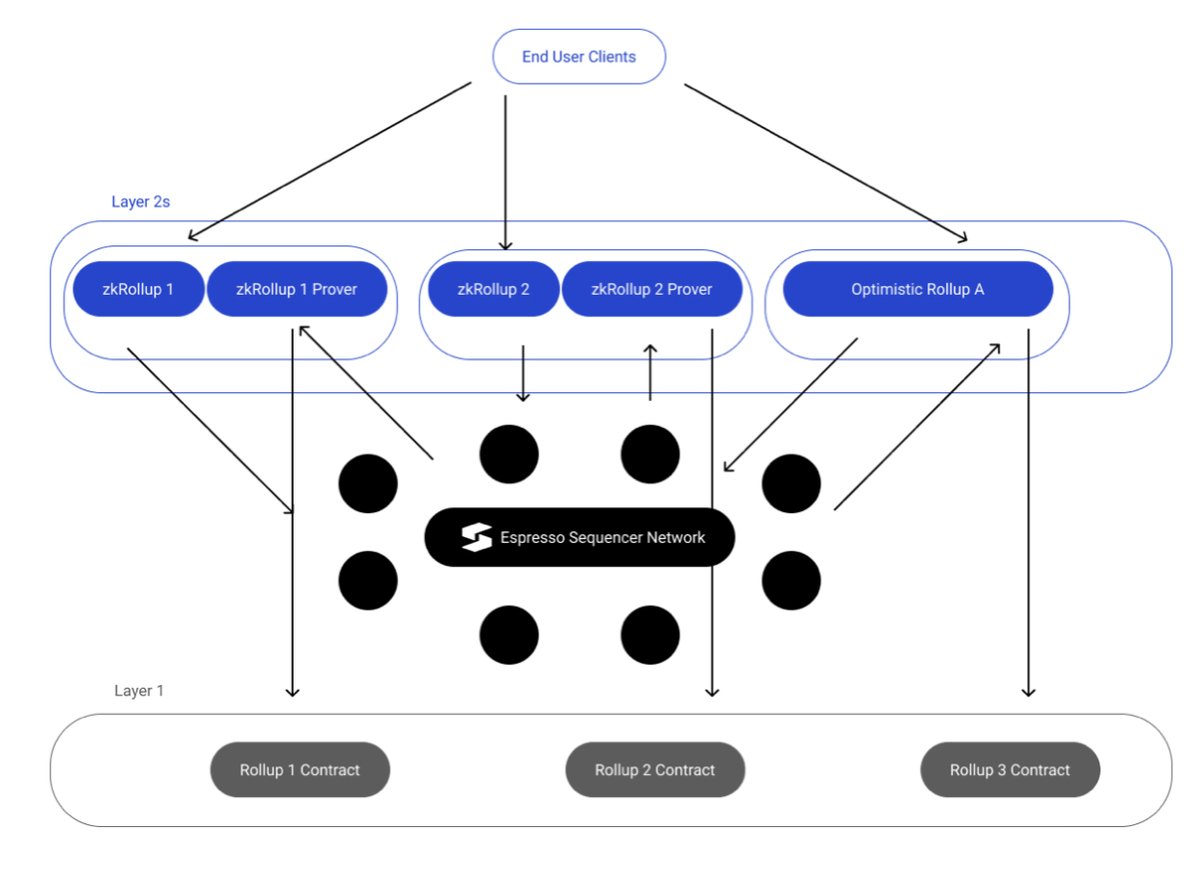
18/ Teams building DSS
Espresso Systems @EspressoSys
DA- EspressoDA
Security layer - Eigenlayer @eigenlayer
Espresso Systems @EspressoSys
DA- EspressoDA
Security layer - Eigenlayer @eigenlayer
19/ Astria- @AstriaOrg
DA - @CelestiaOrg
-
@radius_xyz too, they paved the way in this tech 👏
• Resources came from espresso and @jon_charb
Guudd docs
Will write in detail about their tech in future threads
S/o to @ShivanshuMadan for the review 🫶🫶
DA - @CelestiaOrg
-
@radius_xyz too, they paved the way in this tech 👏
• Resources came from espresso and @jon_charb
Guudd docs
Will write in detail about their tech in future threads
S/o to @ShivanshuMadan for the review 🫶🫶
Please rt and like for a broader audience
Loading suggestions...