

NEW FROM US:
Icahn Enterprises—The Corporate Raider Throwing Stones From His Own Glass House
hindenburgresearch.com $IEP
(1/n)
Icahn Enterprises—The Corporate Raider Throwing Stones From His Own Glass House
hindenburgresearch.com $IEP
(1/n)

Icahn Enterprises (IEP) is an ~$18 billion market cap holding company run by corporate raider and activist investor Carl Icahn, who, along with his son Brett, own approximately 85% of the company. (2/n)
We found $IEP units to be inflated by 75%+:
(i) IEP trades at a 218% premium to NAV, vastly higher than comps
(ii) we've uncovered clear evidence of inflated marks for IEP's less liquid assets
(iii) IEP has suffered additional losses YTD following its last disclosure
(3/n)
(i) IEP trades at a 218% premium to NAV, vastly higher than comps
(ii) we've uncovered clear evidence of inflated marks for IEP's less liquid assets
(iii) IEP has suffered additional losses YTD following its last disclosure
(3/n)
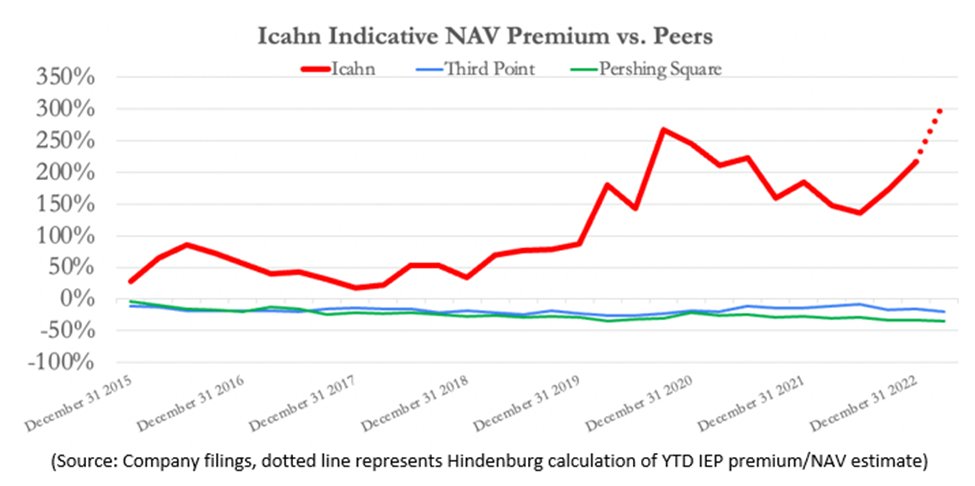
Most closed-end holding companies trade around or at a discount to their NAVs.
By comparison, vehicles run by other star managers, like Dan Loeb’s Third Point and Bill Ackman’s Pershing Square, trade at discounts of 14% and 35% to NAV, respectively.
(4/n)
By comparison, vehicles run by other star managers, like Dan Loeb’s Third Point and Bill Ackman’s Pershing Square, trade at discounts of 14% and 35% to NAV, respectively.
(4/n)
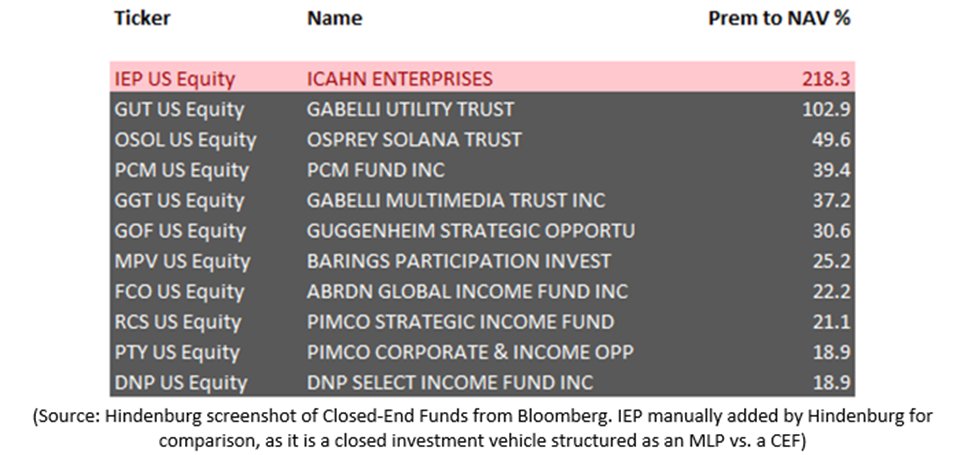
We further compared IEP to all 526 U.S.-based closed end funds (CEFs) in Bloomberg’s database.
Icahn Enterprises’ premium to NAV was higher than all of them and more than double the next highest we found. (5/n)
Icahn Enterprises’ premium to NAV was higher than all of them and more than double the next highest we found. (5/n)
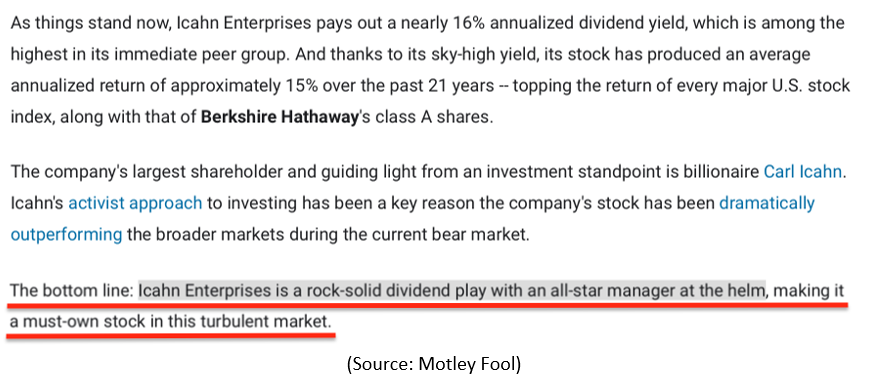
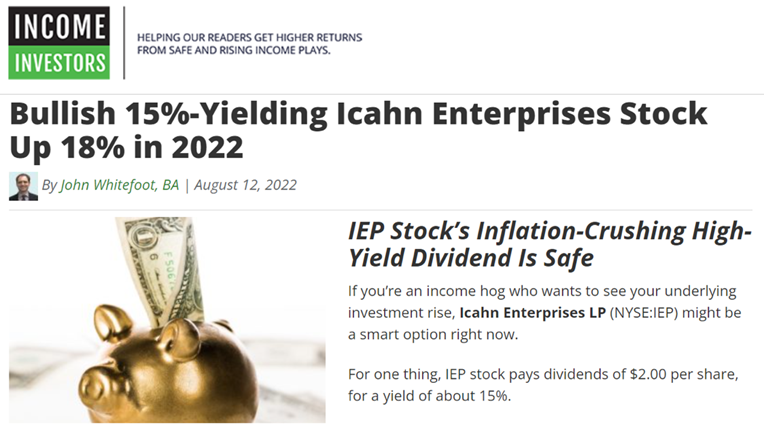
Reasons for IEPs extreme premium to NAV, based on a review of retail-oriented media:
(a) IEP’s large dividend yield &
(b) the prospect of investing alongside Wall Street legend Carl Icahn.
Institutional investors have virtually no ownership in IEP.
(6/n)
(a) IEP’s large dividend yield &
(b) the prospect of investing alongside Wall Street legend Carl Icahn.
Institutional investors have virtually no ownership in IEP.
(6/n)
$IEP's current dividend yield is ~15.8%, making it the highest dividend yield of any U.S. large cap company by far, with the next closest at ~9.9%. (7/n)
As a result of the $IEP's elevated unit price, its annual dividend rate equates to an absurd 50.5% of last reported indicative net asset value. (8/n)
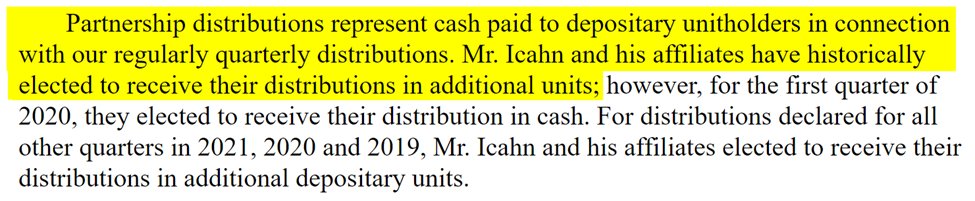
The company’s outlier dividend is made possible (for now) because Carl Icahn owns roughly 85% of $IEP and has been largely taking dividends in units (instead of cash), reducing the overall cash outlay required to meet the dividend payment for remaining unitholders. (9/n)
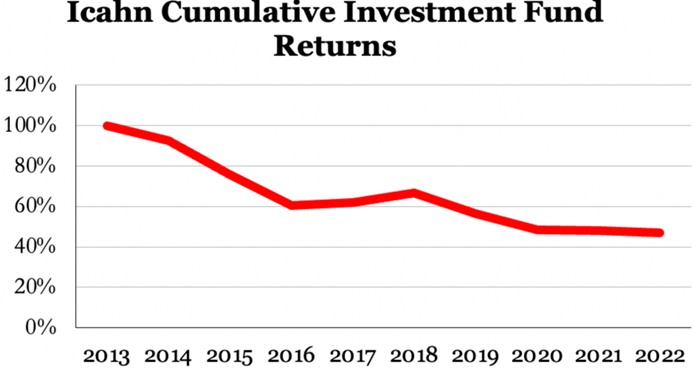
The dividend is entirely unsupported by IEP’s cash flow and investment performance, which has been negative for years.
IEP’s investment portfolio has lost ~53% since 2014.
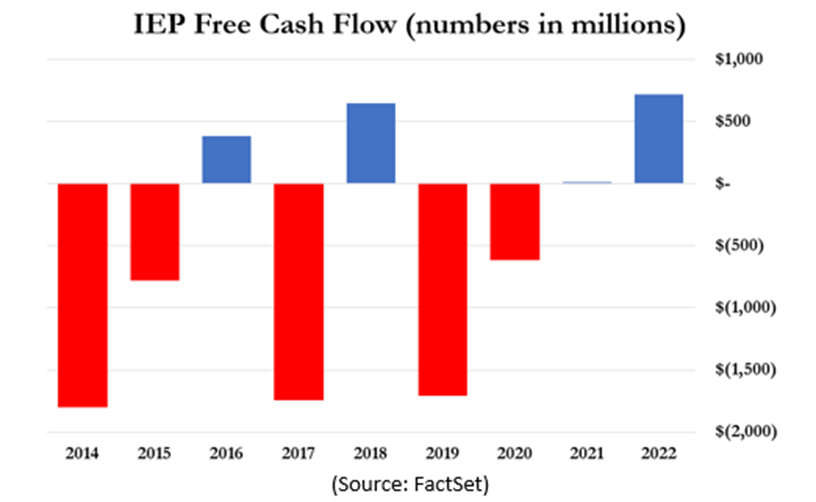
The company’s free cash flow figures show IEP has cumulatively burned ~$4.9B over the same period (10/n)
IEP’s investment portfolio has lost ~53% since 2014.
The company’s free cash flow figures show IEP has cumulatively burned ~$4.9B over the same period (10/n)
Despite its negative financial performance, $IEP has raised its dividend 3 times since 2014.
IEP’s most recent dividend increase came in 2019 when it raised quarterly distributions from $1.75 to $2.00 per unit.
IEP’s free cash flow was -$1.7 billion in the same year (11/n)
IEP’s most recent dividend increase came in 2019 when it raised quarterly distributions from $1.75 to $2.00 per unit.
IEP’s free cash flow was -$1.7 billion in the same year (11/n)
Given that the investment and operating performance of $IEP has burned billions in capital, the company has been forced to support its dividend using regular open market sales of IEP units through at-the-market (ATM) offerings, totaling $1.7 billion since 2019. (12/n)
In brief, Icahn has been using money taken in from new investors to pay out dividends to old investors.
Such ponzi-like economic structures are sustainable only to the extent that new money is willing to risk being the last one “holding the bag”. (13/n)
Such ponzi-like economic structures are sustainable only to the extent that new money is willing to risk being the last one “holding the bag”. (13/n)
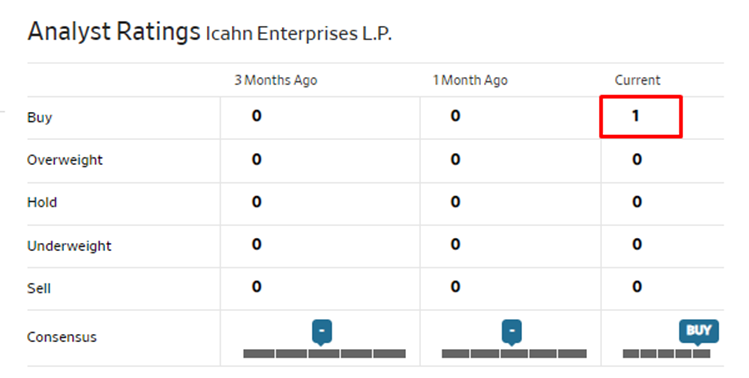
Supporting this structure is Jefferies, the only bank covering $IEP.
It has continuously placed a “buy” on IEP & in one of the worst cases of sell-side malpractice we’ve seen, it assumes in all cases, even in its bear case, IEP’s dividend will be safe “into perpetuity” (14/n)
It has continuously placed a “buy” on IEP & in one of the worst cases of sell-side malpractice we’ve seen, it assumes in all cases, even in its bear case, IEP’s dividend will be safe “into perpetuity” (14/n)
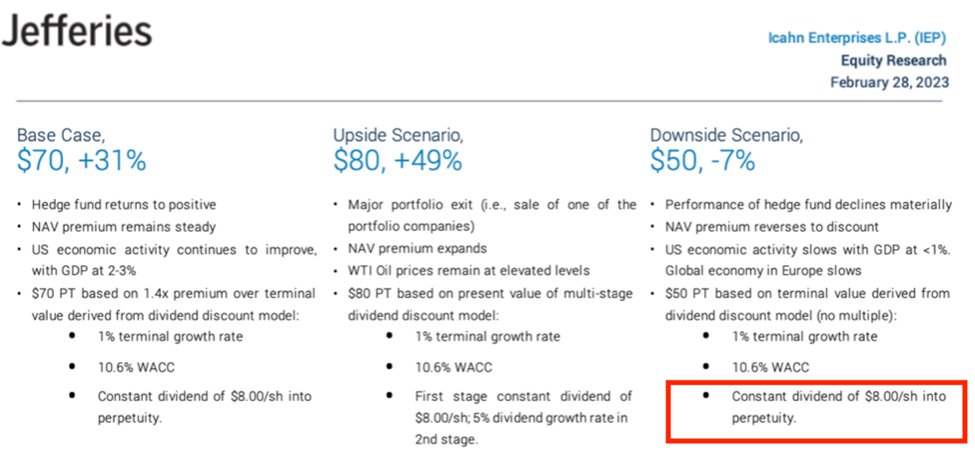
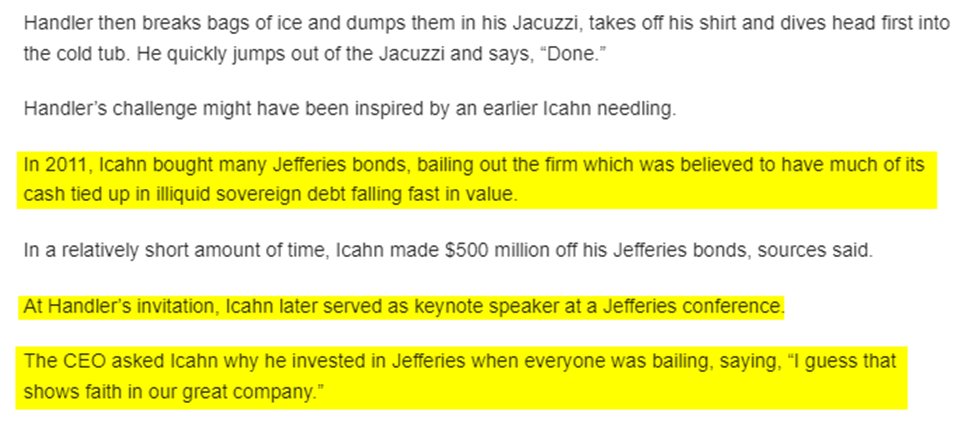
Since ‘19 one bank has run IEPs $1.7B in ATM offerings: Jefferies.
In essence, Jefferies lures in retail through its research on IEP’s ‘safe’ dividend, while selling billions in IEP units via its banking arm to support the dividend.
Icahn & Jefferies have long history. (15/n)
In essence, Jefferies lures in retail through its research on IEP’s ‘safe’ dividend, while selling billions in IEP units via its banking arm to support the dividend.
Icahn & Jefferies have long history. (15/n)
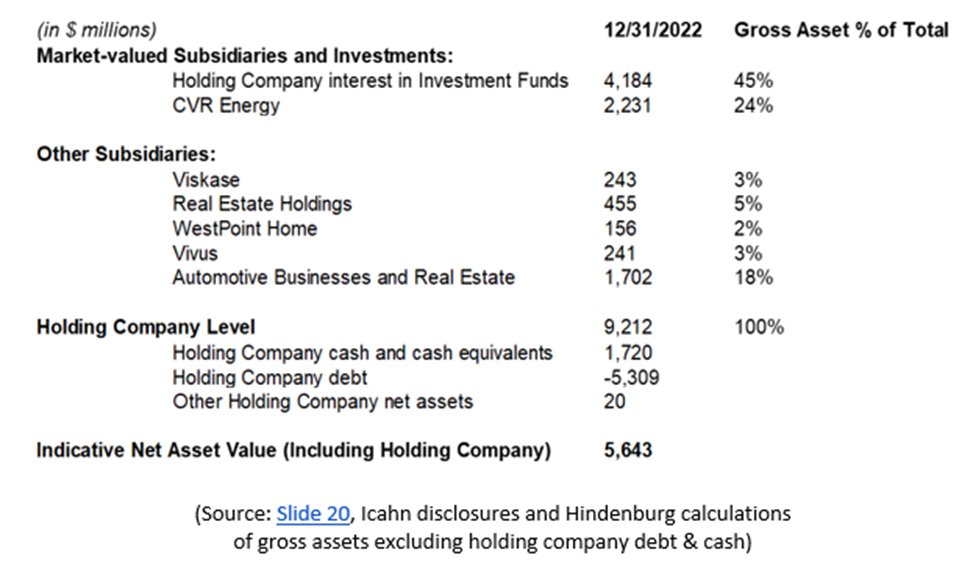
Adding to evidence of $IEP's unsustainability, we estimate IEP’s last reported indicative NAV of $5.6 billion is inflated by at least 22%, owing to a combination of overly aggressive marks on IEP’s less liquid/private investments & continued year to date underperformance. (16/n)
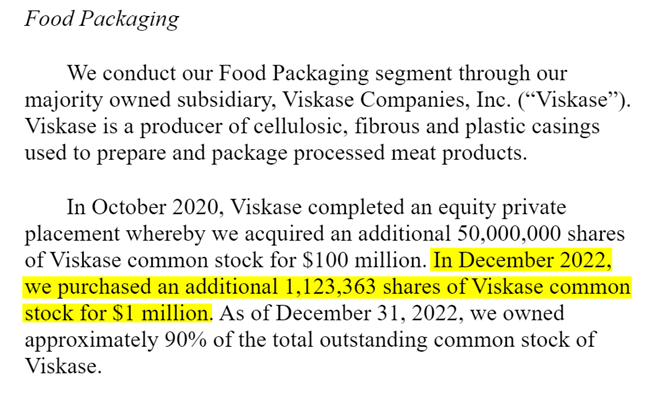
In one example, $IEP owns 90% of a publicly traded meat packaging business it valued at $243m at year-end. The company had a market value of only $89m at the time.
In other words, IEP marked the value of its holdings 204% above the prevailing public market price. (17/n)
In other words, IEP marked the value of its holdings 204% above the prevailing public market price. (17/n)
The mark is even more irregular given that $IEP bought over a million shares of the company in December before immediately writing up the value of those shares by 194% in the same month (18/n)
In another instance, $IEP marked its “Automotive Parts” division at $381 million in December 2022.
Its key subsidiary declared bankruptcy a month later (19/n)
Its key subsidiary declared bankruptcy a month later (19/n)
$IEP reported $455m in “real estate holdings” at year-end.
Values have been stable for years despite declining net income & despite including Trump Plaza in AC, which was razed to the ground in 2021, along with a lack of transparency on other troubled assets. (20/n)
Values have been stable for years despite declining net income & despite including Trump Plaza in AC, which was razed to the ground in 2021, along with a lack of transparency on other troubled assets. (20/n)

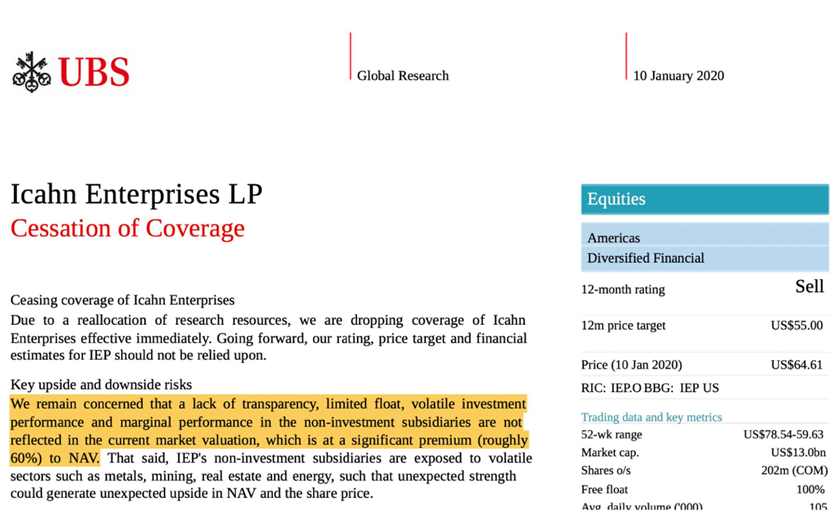
The irregular valuation marks fit a pattern: In January of 2020, UBS dropped coverage of IEP following research citing a “lack of transparency” and marks that were “divergent from their public market values”, among other issues. (21/n)
Beyond aggressive marks, Icahn’s liquid portfolio has continued to generate losses.
Our analysis of Icahn's December 2022 13-F filing indicates $IEP's long holdings have lost ~$471 million in value year to date, despite the S&P gaining ~9.2% in the same time frame. (22/n)
Our analysis of Icahn's December 2022 13-F filing indicates $IEP's long holdings have lost ~$471 million in value year to date, despite the S&P gaining ~9.2% in the same time frame. (22/n)
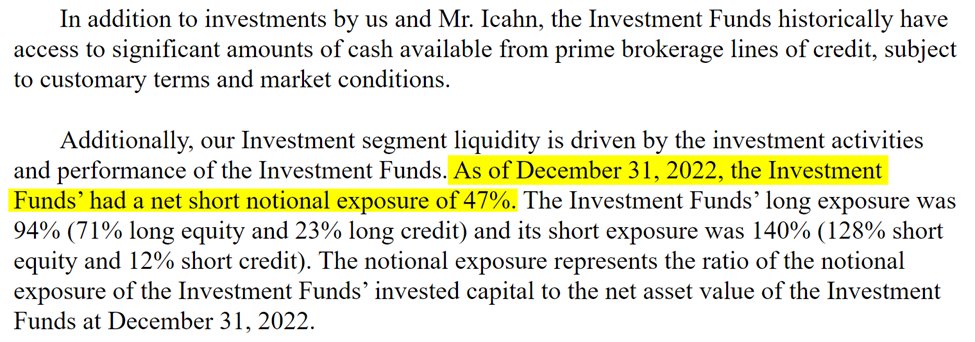
$IEP disclosed that its investment fund had a 47% notional short bet in its December 2022 filings.
Given the positive market performance, we estimate this short bet has contributed at least a further $272 million in year-to-date losses. (23/n)
Given the positive market performance, we estimate this short bet has contributed at least a further $272 million in year-to-date losses. (23/n)
Overall, we estimate $IEP's current NAV as being closer to $4.4 billion, or 22% lower than its disclosed year-end indicative NAV of $5.6 billion.
The analysis suggests that units currently trade at a 310% premium to NAV, with an annual dividend rate of 64% of NAV. (24/n)
The analysis suggests that units currently trade at a 310% premium to NAV, with an annual dividend rate of 64% of NAV. (24/n)
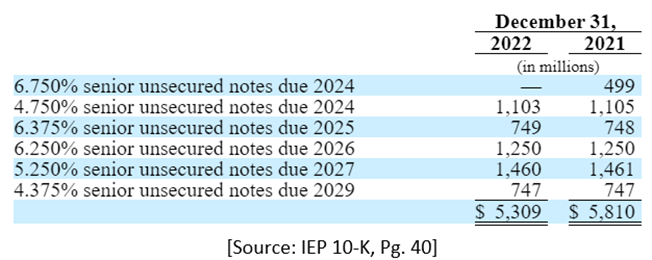
Tightening matters further, $IEP is highly levered, with $5.3 billion in Holdco debt and maturities of $1.1 billion, $1.36 billion, and $1.35 billion due in 2024, 2025, and 2026, respectively. (25/n)
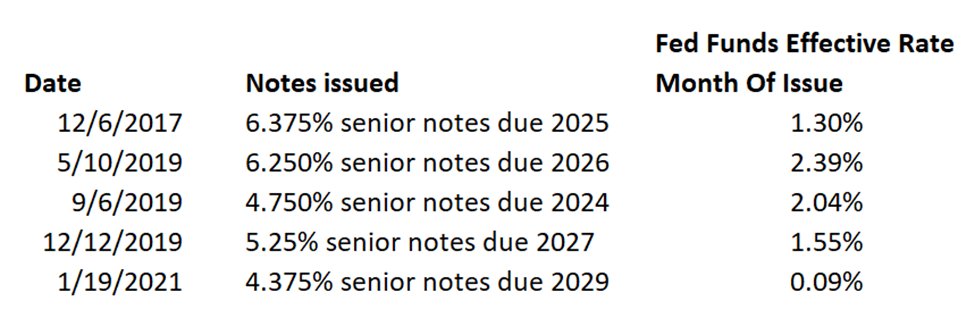
$IEP debt covenants limit the company’s flexibility: IEP is not permitted to incur additional indebtedness & is only allowed to refinance old debt.
With rates higher, $IEP will need to pay significantly higher interest on future refinancings (26/n)
With rates higher, $IEP will need to pay significantly higher interest on future refinancings (26/n)
Carl Icahn’s ownership comprises ~85% of his net worth, according to Forbes, giving him little room to maneuver with his outside capital.
We've assessed Icahn has little ability or reason to bail out IEP with a capital injection, particularly at such elevated unit prices. (27/n)
We've assessed Icahn has little ability or reason to bail out IEP with a capital injection, particularly at such elevated unit prices. (27/n)
Further underscoring Icahn’s limited financial flexibility, he has pledged 181.4 million units, ~60% of his IEP holdings, for personal margin loans.
Margin loans are a risky form of debt often reliant on high share (or unit) prices. (28/n)
Margin loans are a risky form of debt often reliant on high share (or unit) prices. (28/n)
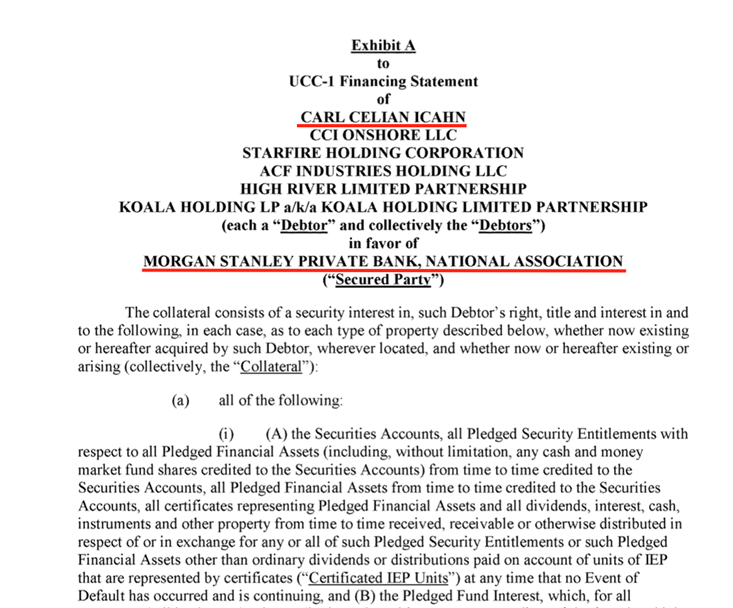
Icahn has not disclosed basics about his margin loans like loan to value, maintenance thresholds, principal amount or rates.
We think unitholders deserve this info to understand the risk of margin calls should $IEP units revert toward NAV, a reality we see as inevitable (29/n)
We think unitholders deserve this info to understand the risk of margin calls should $IEP units revert toward NAV, a reality we see as inevitable (29/n)
Given limited financial flexibility and worsening liquidity, we expect Icahn Enterprises will eventually cut or eliminate its dividend entirely, barring a miracle turnaround in investment performance. (30/n)
Overall, we think Icahn, a legend of Wall Street, has made the classic mistake of taking on too much leverage in the face of sustained losses: a combination that rarely ends well.
hindenburgresearch.com
(31/n)
hindenburgresearch.com
(31/n)
Loading suggestions...