

Tried this 100% rice whiskey recently. Not bad.
Anyone experimenting with rice whiskey in India?
General wonderment. We have some rice wines across India. We ferment it. Why has no one tried to distill it? Or are there distilled rice liquors in India I've never heard of?
Anyone experimenting with rice whiskey in India?
General wonderment. We have some rice wines across India. We ferment it. Why has no one tried to distill it? Or are there distilled rice liquors in India I've never heard of?
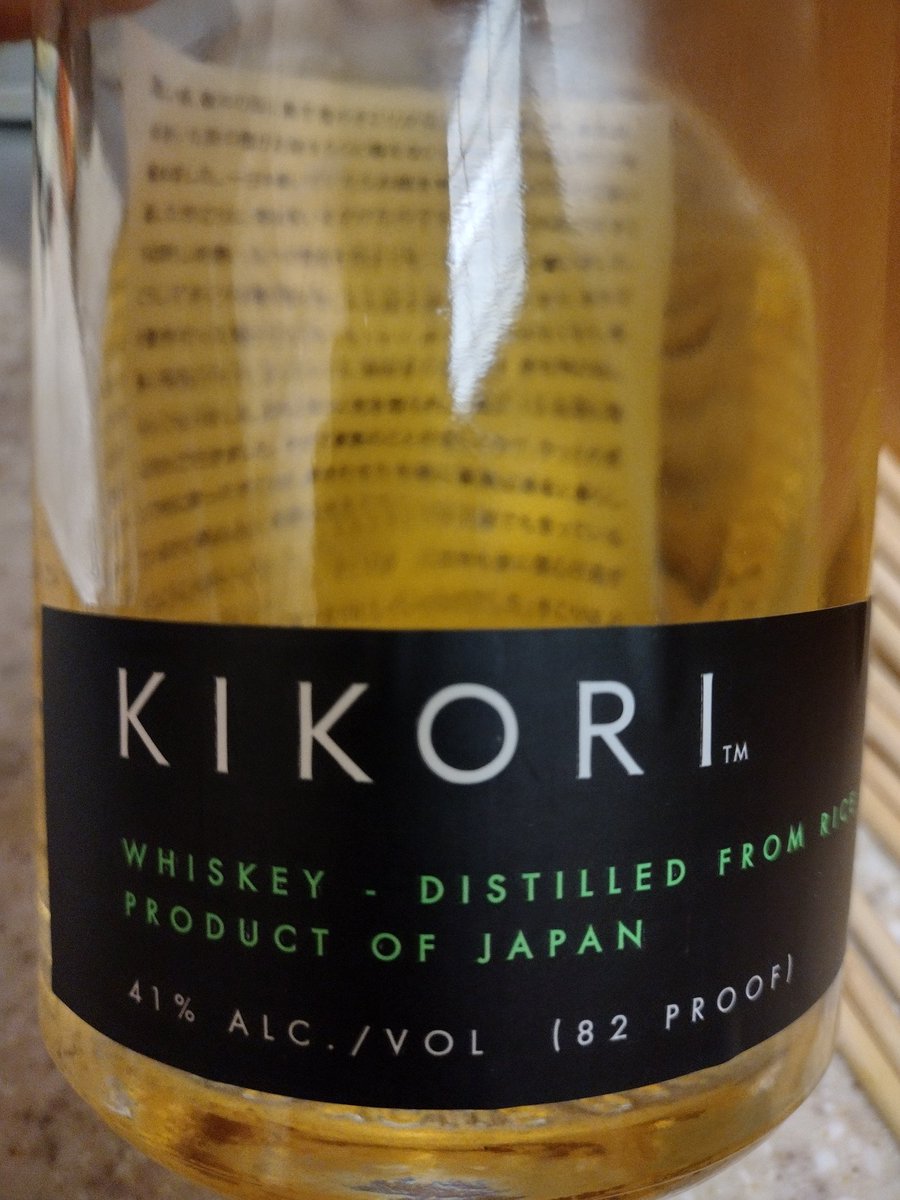
In the last 20 years, Japan, China, and South Korea, Mexico have seen a great modern tech meets traditional brews meets hipster western markets boom.
Indian brewers & distillers have gone the opposite direction of copying western liquor that don't make sense in Indian resources.
Indian brewers & distillers have gone the opposite direction of copying western liquor that don't make sense in Indian resources.
India's few moderate international liquor successes are in single malt whiskey and beer, both made of barley. Amrut & Paul John are nice and all. But it's still British Raj like niche to make scotch in peninsular India, a very dry place as opposed to freshwater rich Japan.
China's jowar based booze, once seen as local swill, is now selling at red label black label prices. Mezcal, whose agaves were being sold to sugar refineries 20 years ago, is being sold at Blue Label prices.
Our deshi jowar liquor sits waiting for a generational change.
Our deshi jowar liquor sits waiting for a generational change.
It's something that will take a couple of generations to change.
Liquor culture in India is still where the west was a century ago, in the temperance league & prohibition & blaming society's ills on alcohol stage.
That's Anna Hazare's original brand. Torturing alcoholics.
Liquor culture in India is still where the west was a century ago, in the temperance league & prohibition & blaming society's ills on alcohol stage.
That's Anna Hazare's original brand. Torturing alcoholics.
Anna Hazare's origin story is that in Ralegan-Siddhi, he used the age old globally universal "these working class people drink too much and beat their wives" complaints to round up alcoholics, and literally torture them. Tie them up, beat them, & worse to get them to quit booze.
Yup. There's a deep cultural stigma on drinking in the general population, built up over years of Muslim rule, Victorian rule, Victorian educated desis rule, and now modi & Nitish both being into prohibition.
Not changing for decades.
Not changing for decades.
So legitimacy or clout or social stature of premium alcohols in India needs a western brand of approval.
Diageo friend told me Indian market is just not too curious about Japanese whiskey.
"They'll pay more for Glenlivet 12 than Hibiki 12. 🤷"
Diageo friend told me Indian market is just not too curious about Japanese whiskey.
"They'll pay more for Glenlivet 12 than Hibiki 12. 🤷"
Sure, there will be enclaves in Bangalore and Bombay and Calcutta who will go weak kneed if offer you them a bottle of Hibiki 12 or a Yamazaki 12.
But the liquor culture is still more about a few people with western like behavior, not a larger market. Not a premium one anyway.
But the liquor culture is still more about a few people with western like behavior, not a larger market. Not a premium one anyway.
Sharad Pawar is the only prominent politician I've seen in India who has tried to promote local liquors, safe regulated retail of liquor, and talk about it as an economic growth sector and NOT a social crisis.
India really doesn't have an alcoholism problem. It's made up.
India really doesn't have an alcoholism problem. It's made up.
Outside the Islamic world, India has the lowest percentage of alcohol drinkers, and among women, extremely low.
For those people who think even one drink is alcoholism, this might be a good thing.
For people with a broad understanding of addiction, it's a self inflicted wound.
For those people who think even one drink is alcoholism, this might be a good thing.
For people with a broad understanding of addiction, it's a self inflicted wound.
Yes, but that extra high price, ironically, is because of the low interest in it. 😁
One of those pricing lessons I was recently telling my students.
If there's no supply constraint but baseline demand is low, premium brands have to over charge for BEP.
One of those pricing lessons I was recently telling my students.
If there's no supply constraint but baseline demand is low, premium brands have to over charge for BEP.
To put it simply, Laphroaig is $50 in US cos millions pay that $50 for it as opposed to $15 for an Old Crow.
In India, it costs about $120-150 dollars. Cos there aren't as many buyers in India. And the company has to at least justify existing in the market.
In India, it costs about $120-150 dollars. Cos there aren't as many buyers in India. And the company has to at least justify existing in the market.
Bill Bryson in his Australia book notes being struck by how white complaints about aborigines followed EXACTLY the tropes about native Americans - drink too much, gamble too much, petty crime too much.
And realized, it's us, not them!
And realized, it's us, not them!
This is the crux of it. We need to research and promote liquors that don't need extra fresh water. Like palm liquor and fruit liquor and succulents.
At the mezcal distilleries, they kept stressing how little water the whole process uses. Cos desert.
At the mezcal distilleries, they kept stressing how little water the whole process uses. Cos desert.
A contrast I observed in Mexico vs Indian distillers.
Mexican agave distillers kept talking about how it saves precious water, has minimal carbon footprint, sustainable.
Indian distillers go "we buy and filter the best most premium water available in India 😎".
Mexican agave distillers kept talking about how it saves precious water, has minimal carbon footprint, sustainable.
Indian distillers go "we buy and filter the best most premium water available in India 😎".
Axshully this is a contrast of Indian brewers and distillers with any other grain alcohol places.
In Scotland, upstate NY, Colorado, Kentucky, the distilleries start off telling you about their plentiful natural free perennial water source.
Not an option in most of India.
In Scotland, upstate NY, Colorado, Kentucky, the distilleries start off telling you about their plentiful natural free perennial water source.
Not an option in most of India.
A friend bought some really high quality gin from India that was "triple distilled".
It was good, but it felt icky.
Triple distilled means many times that volume of fresh water was just boiled away. In a country with no universal tap water.
It was good, but it felt icky.
Triple distilled means many times that volume of fresh water was just boiled away. In a country with no universal tap water.
Loading suggestions...