
Everything is falling into place in India's quest to be a great power
- $3.5tn econ that will double by 2031
- 2.6 million+ strong military with 4th highest defence budget
-183 million+ demographic dividend
But there's one thing our foreign policy isn't getting right🧵
- $3.5tn econ that will double by 2031
- 2.6 million+ strong military with 4th highest defence budget
-183 million+ demographic dividend
But there's one thing our foreign policy isn't getting right🧵
In short: India's foreign policy "software" is broken
What does that mean?
-🇮🇳's Foreign Ministry lacks the capacity to carry out policies
-🇮🇳's foreign affairs media, think-tanks * universities don't produce quality work
-Public remains largely uninterested in foreign policy
What does that mean?
-🇮🇳's Foreign Ministry lacks the capacity to carry out policies
-🇮🇳's foreign affairs media, think-tanks * universities don't produce quality work
-Public remains largely uninterested in foreign policy
Why does that matter?
As 🇮🇳's economy grows, it will need a well-informed public, strong researchers & a capable Foreign Ministry to achieve Foreign policy goals
While India may acquire the "hardware" for great power status (economic growth), it lacks the "software" needed
As 🇮🇳's economy grows, it will need a well-informed public, strong researchers & a capable Foreign Ministry to achieve Foreign policy goals
While India may acquire the "hardware" for great power status (economic growth), it lacks the "software" needed
US diplomat Daniel Markey says
"🇮🇳’s diplomatic service, think-tanks & unis are not yet up to the task of managing an agenda befitting a great power. As a result, even a.. more powerful 🇮🇳 may remain politically inconsequential, unable to..implement a realistic global agenda"
"🇮🇳’s diplomatic service, think-tanks & unis are not yet up to the task of managing an agenda befitting a great power. As a result, even a.. more powerful 🇮🇳 may remain politically inconsequential, unable to..implement a realistic global agenda"
So what are the issues?
1⃣. Ministry of External Affairs
Former 🇮🇳 diplomats believe the Foreign Ministry faces challenges
1. Too small: 🇮🇳 has just 1000 professional diplomats, smaller than Brazil, China & America
MEA's size has📈steadily over last 10 yrs but not enough
1⃣. Ministry of External Affairs
Former 🇮🇳 diplomats believe the Foreign Ministry faces challenges
1. Too small: 🇮🇳 has just 1000 professional diplomats, smaller than Brazil, China & America
MEA's size has📈steadily over last 10 yrs but not enough
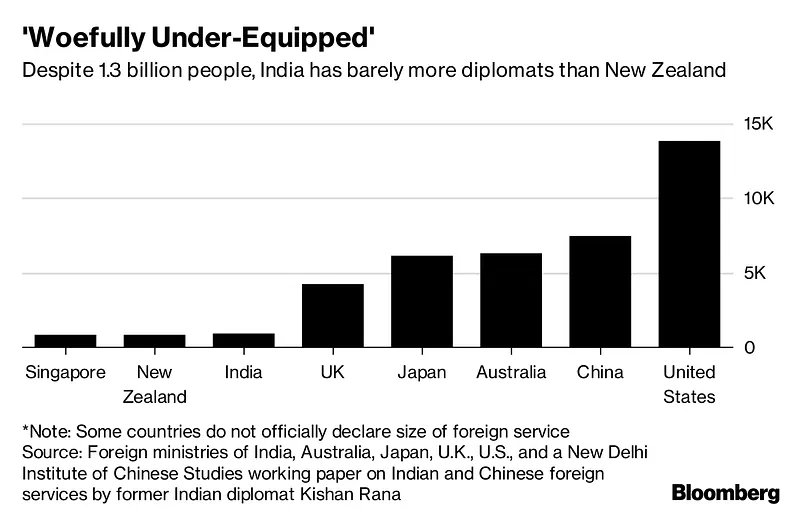
That size means that 🇮🇳's diplomats, despite being highly skilled, are overworked & distracted
Daniel Markey says that the MEA suffers from a "One Track" problem
When US diplomats were working on nuclear deal w. 🇮🇳, they noticed that the deal tied up the MEA's focus totally
Daniel Markey says that the MEA suffers from a "One Track" problem
When US diplomats were working on nuclear deal w. 🇮🇳, they noticed that the deal tied up the MEA's focus totally
Other priorities like agriculture, trade suffered because MEA could only handle one thing at a time
Pushing several parallel priorities, which is a hallmark of a great power, is a problem for 🇮🇳
(My take: This is one of the most common complaints I hear from foreign diplomats)
Pushing several parallel priorities, which is a hallmark of a great power, is a problem for 🇮🇳
(My take: This is one of the most common complaints I hear from foreign diplomats)
2. MEA's organisation
Former diplomat Kishen Rana says that 🇮🇳 vests too much power in the Foreign Secretary (head of the MEA)
FS is chief counsellor to the Prime Minister, head of the Foreign Service, personally oversees relations with a dozen key countries etc
Former diplomat Kishen Rana says that 🇮🇳 vests too much power in the Foreign Secretary (head of the MEA)
FS is chief counsellor to the Prime Minister, head of the Foreign Service, personally oversees relations with a dozen key countries etc
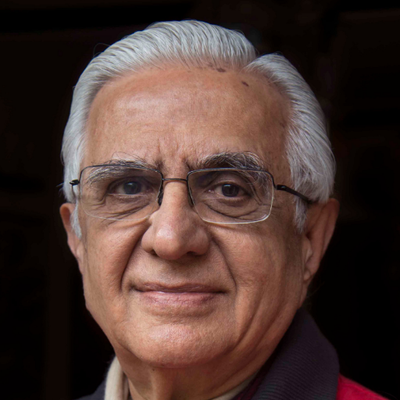
While MEA has four Secretary-rank officers, Amb. Rana (@diplophile) says the others are underworked
This is unlike China, which has many Vice-Ministers, who are autonomous & almost equally powerful
Equally distributing power & decision making authority will lead to📈efficiency
This is unlike China, which has many Vice-Ministers, who are autonomous & almost equally powerful
Equally distributing power & decision making authority will lead to📈efficiency
3. Long Range planning & expertise
According to Kanti Bajpai, 🇮🇳's Foreign Ministry lacks the ability to plan for long term crises
Its diplomats are too caught up in day-to-day challenges
MEA also lacks expertise on defence, tech etc that other foreign ministries have
According to Kanti Bajpai, 🇮🇳's Foreign Ministry lacks the ability to plan for long term crises
Its diplomats are too caught up in day-to-day challenges
MEA also lacks expertise on defence, tech etc that other foreign ministries have
For example, while America uses industry associations like USIBC & NGO's like the Nat'l Democratic Institute to push for foreign policy priorities abroad, 🇮🇳's MEA has tended to exclude these expert groups
🇮🇳 doesn't have a diplomatic network in the same way France or the US do
🇮🇳 doesn't have a diplomatic network in the same way France or the US do
2⃣. Media, Think-Tanks & Unis
These entities also make up 🇮🇳's foreign policy ecosystem
However, each of these remain underdeveloped tools in foreign policy
Media lacks the resources to train journalists in foreign languages, send them abroad & develop them as experts
These entities also make up 🇮🇳's foreign policy ecosystem
However, each of these remain underdeveloped tools in foreign policy
Media lacks the resources to train journalists in foreign languages, send them abroad & develop them as experts
Meanwhile, Markey finds that think-tanks are often cut out of the foreign policy decision making process
Those scholars with the most access are former diplomats & security officials
That makes it hard to develop external expertise outside of the Ministry
Those scholars with the most access are former diplomats & security officials
That makes it hard to develop external expertise outside of the Ministry
(Quick aside: as a researcher for the ORF, I was told that journalists had far more access than subject experts)
Unis are part of the problem since there are few good IR programs in the country
Quality research & output, which then informs diplomats, is lacking
Unis are part of the problem since there are few good IR programs in the country
Quality research & output, which then informs diplomats, is lacking
China does it differently
The China Institute for Contemporary International Relations, the Chinese Academy of Social Sciences & the China Institute of International Studies have thousands of researchers
They work closely with the Foreign Ministry & advise it
The China Institute for Contemporary International Relations, the Chinese Academy of Social Sciences & the China Institute of International Studies have thousands of researchers
They work closely with the Foreign Ministry & advise it
3⃣. The General Public
Scholars point out that there is no domestic constituency of support for foreign policy among the public
It's still seen as an elite subject removed from the everyday priorities of citizens
Thus support for📈the MEA's budget or key policy priorities
Scholars point out that there is no domestic constituency of support for foreign policy among the public
It's still seen as an elite subject removed from the everyday priorities of citizens
Thus support for📈the MEA's budget or key policy priorities
🇮🇳's govt is using events like the G20 to better inform the public about foreign affairs
A more informed & educated citizenry, it is assumed, will prove more accepting of📈expenditures on foreign affairs & developing "software" because of desire to make 🇮🇳 a great power
A more informed & educated citizenry, it is assumed, will prove more accepting of📈expenditures on foreign affairs & developing "software" because of desire to make 🇮🇳 a great power
Loading suggestions...