

1. Much (if not most) of China's policymaking, particularly the last two decades, has revolved around urbanization
2. Urbanization is tied integrally into land development
3. Land is a local/provincial - not central - government responsibility
2. Urbanization is tied integrally into land development
3. Land is a local/provincial - not central - government responsibility
Understanding the funding structure of the HSR buildout helps shed light into the relationship between the central and local/provincial governments when it comes to funding and the role that land plays in the relationship
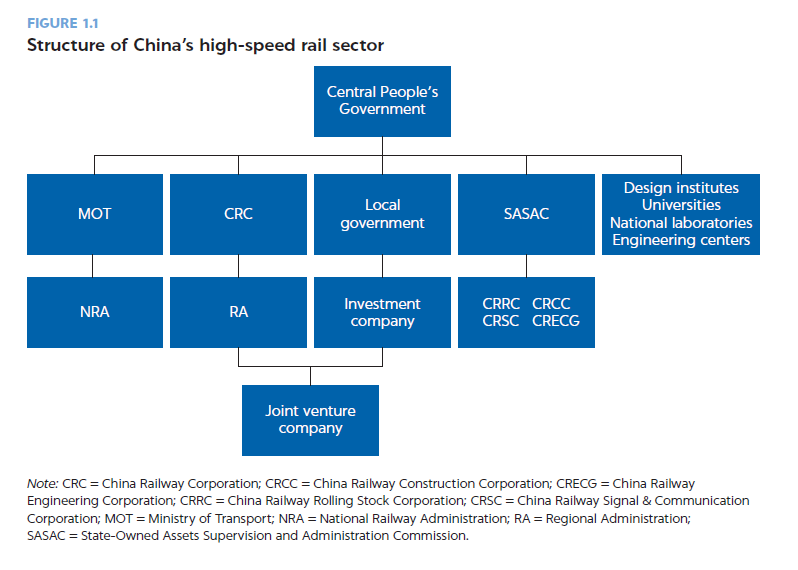
China Railway is a 100% national-level SOE and represents the central government
It has subsidiary companies that represent regional networks but in reality CR retains highly centralized control
It has subsidiary companies that represent regional networks but in reality CR retains highly centralized control
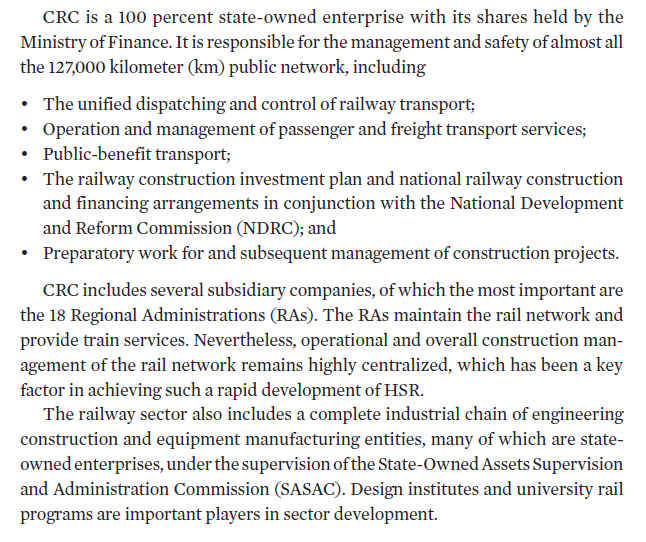
To fund construction of individual lines, typically CR would setup a 50/50 JV structure between the central and provincial governments
The central government would contribute cash and the provincial government often making its contribution "in the form of land"
The central government would contribute cash and the provincial government often making its contribution "in the form of land"
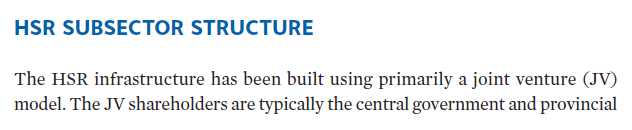
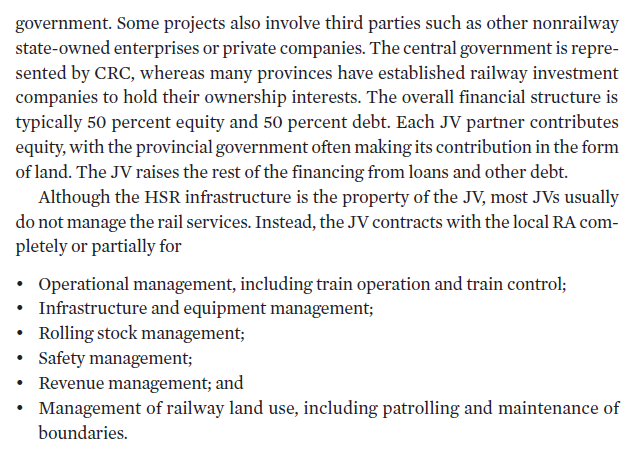
Funds for construction would be raised through a combination of loans from entities such as the China Development Bank and bonds from institutions & households at the Holdco (CR) level
CR is one of the largest bond issuers in China, which is why it reports financials quarterly
CR is one of the largest bond issuers in China, which is why it reports financials quarterly
The project-level loans (secured by land) are paid off w/revenue that is allocated to the regional JV, typically based on the traffic running across the lines in its region.
Residual cashflow after operating costs is allocated to the holdco (CR) to service the outstanding bonds
Residual cashflow after operating costs is allocated to the holdco (CR) to service the outstanding bonds
Here are the consolidated financials of CR.
This is the most comprehensive view of the rail network (both freight and passenger) and does not tell you how cashflow is allocated between the central government (CR) and the provincial rail subsidiaries
This is the most comprehensive view of the rail network (both freight and passenger) and does not tell you how cashflow is allocated between the central government (CR) and the provincial rail subsidiaries
It is well-known that some lines are very profitable while others are not.
In Q2, I estimate that around 60% of lines are profitable/breakevne while the remaining are not (overall network is breakeven i.e. covers operating costs and interest on debt)
In Q2, I estimate that around 60% of lines are profitable/breakevne while the remaining are not (overall network is breakeven i.e. covers operating costs and interest on debt)
CR uses certain adjustment mechanisms to allocate profits from the more profitable lines to subsidize the unprofitable ones
It is somewhat analogous to how the NBA uses luxury taxes where the larger-market franchises subsidize the smaller-market franchises
It is somewhat analogous to how the NBA uses luxury taxes where the larger-market franchises subsidize the smaller-market franchises
Like in the NBA, it is in the interests of the larger-market franchises to ensure smaller-market teams survive to maintain competition
Similarly, it is core national policy that the wealthier regions subsidize the poorer regions
Similarly, it is core national policy that the wealthier regions subsidize the poorer regions
Also, like the NBA this is an ongoing and dynamic negotiation between the central government (through CR) and provinces (through the regional JVs)
HSR is just one example of the relationship between the central and provincial governments when it comes to funding infrastructure related to broad urbanization goals
Would love to learn more about others, particularly in the larger general real estate category
Would love to learn more about others, particularly in the larger general real estate category
High-level view is that local RE development was much more hit-or-miss compared to central SOE-driven infrastructure investment like HSR
Other large infrastructure categories like power and telecom are structured similarly to HSR w/ SOE centrally managing regional operations
Other large infrastructure categories like power and telecom are structured similarly to HSR w/ SOE centrally managing regional operations
Whereas RE development was largely controlled by local authorities
Lower institutional capacity, greater participation by the private sector and higher scope for corruption is why most malinvestment likely can be found in local RE projects
Lower institutional capacity, greater participation by the private sector and higher scope for corruption is why most malinvestment likely can be found in local RE projects
Bringing it back to @ZichenWanghere original thread, local governments are responsible for lion’s share of financing & funding because they are also sitting on the most biggest finance-able asset class: land for development.
But the central government is responsible for setting national policies, coordinating the provinces and deciding the optimal level of central/de-centralization between the major entities: central, provincial/local government, private sector businesses and households
Loading suggestions...