

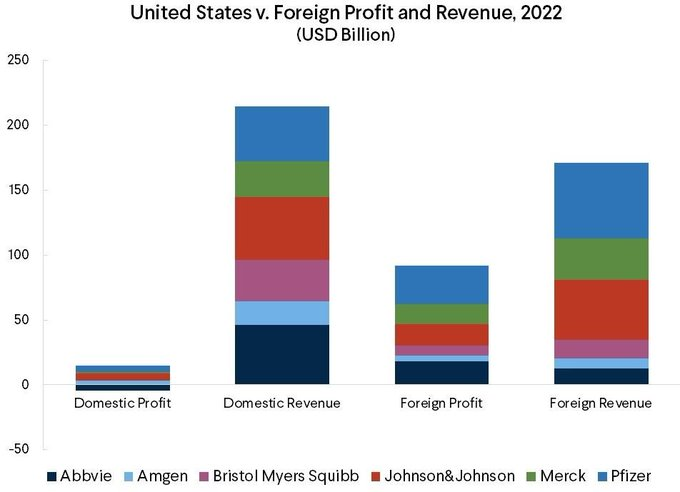
US pharmaceutical companies charge Americans more than anyone else. They report generating the bulk of the revenue in the US.
But they apparently earn almost no (taxable) income in the United States.
Rather remarkable.
1/
But they apparently earn almost no (taxable) income in the United States.
Rather remarkable.
1/
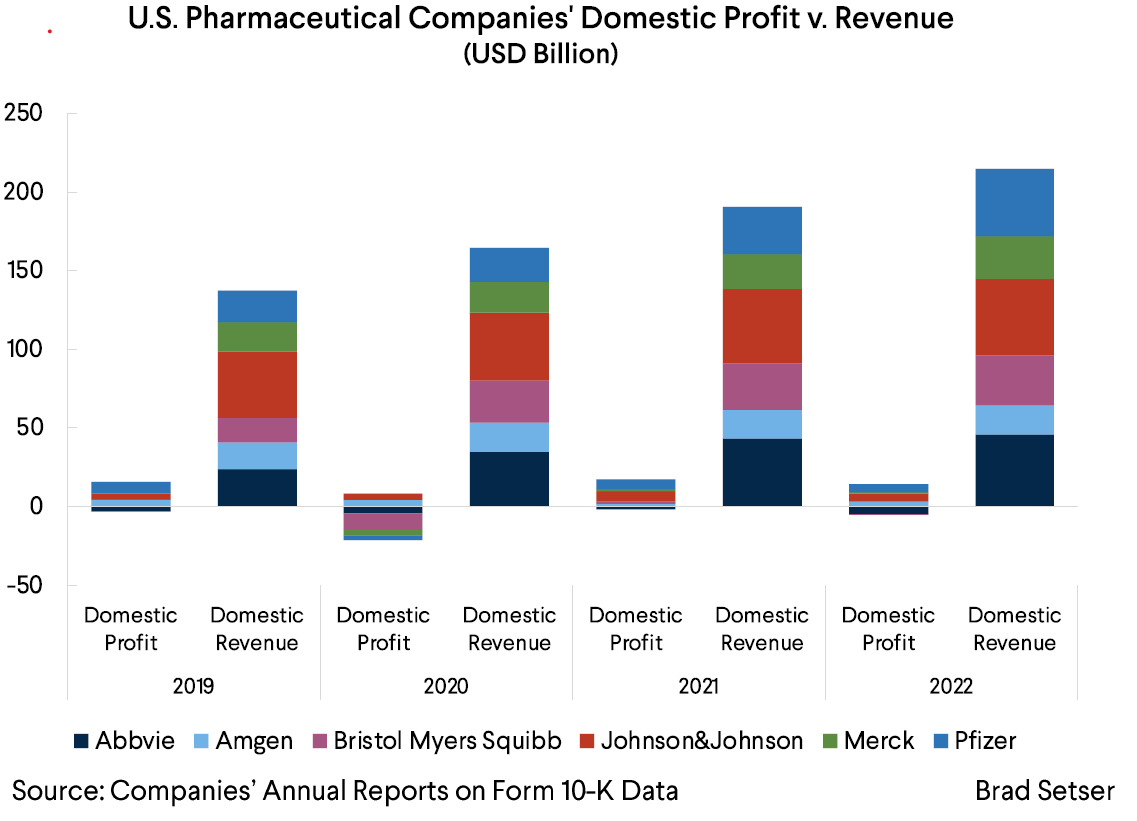
2022 is in no way usual -- America's largest pharmaceutical companies have consistently reported very modest (or no) profits in the US.
Pretty amazing.
2/
Pretty amazing.
2/

Those same countries report earning enormous sums outside the US.
(even though the price of most patent protected medicines is much lower outside the US than inside the US)
3/
(even though the price of most patent protected medicines is much lower outside the US than inside the US)
3/
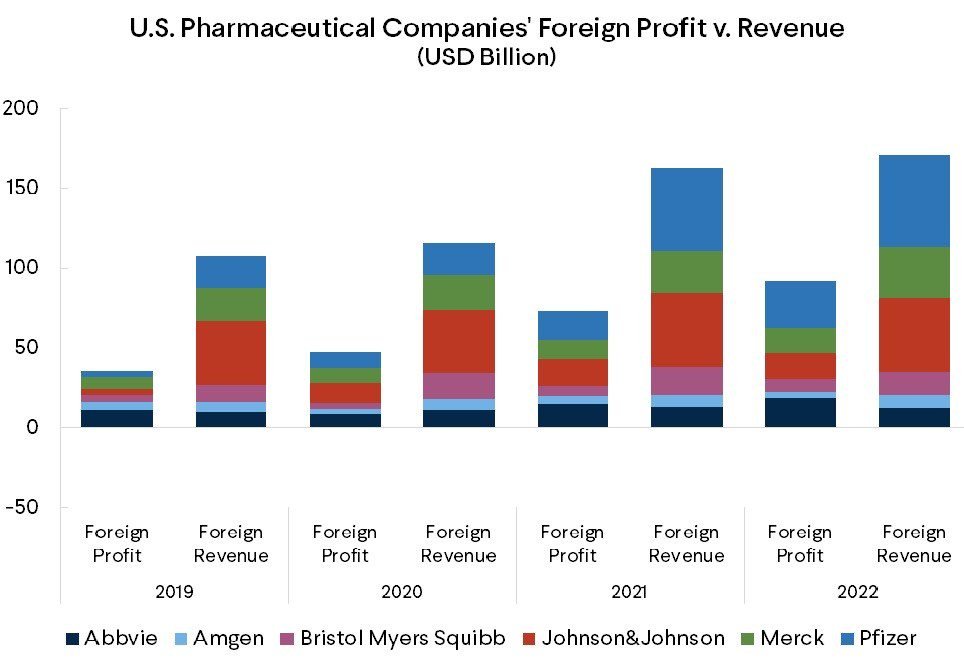
The numbers I think speak for themselves.
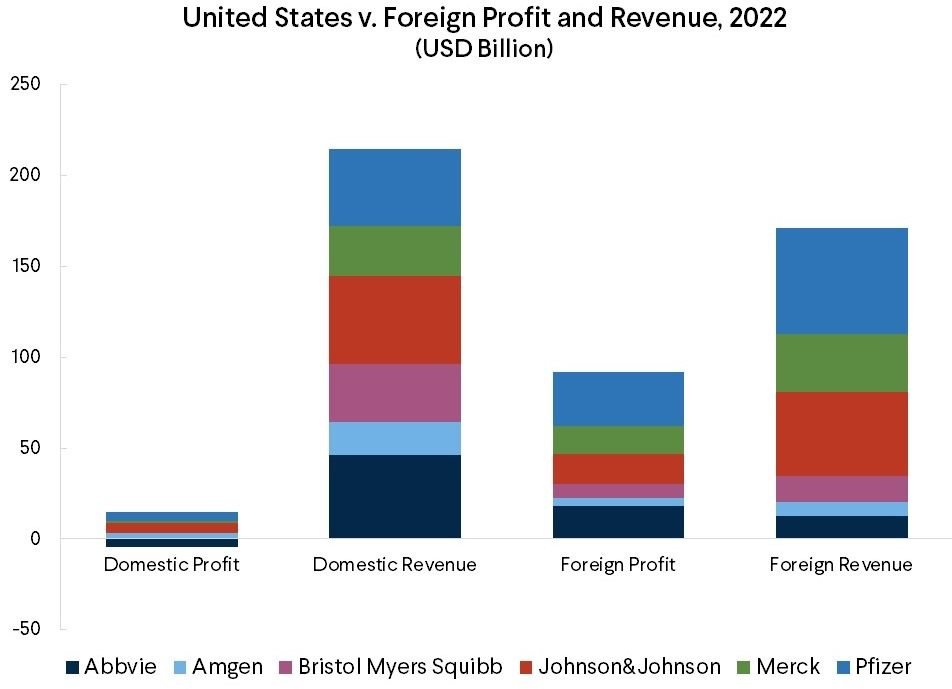
US companies report that they struggle to make a real profit in the US (even with inflated prices) -- earning something like $10b on close to $215b in revenue.
The US must be a really hard market ...
4/
US companies report that they struggle to make a real profit in the US (even with inflated prices) -- earning something like $10b on close to $215b in revenue.
The US must be a really hard market ...
4/
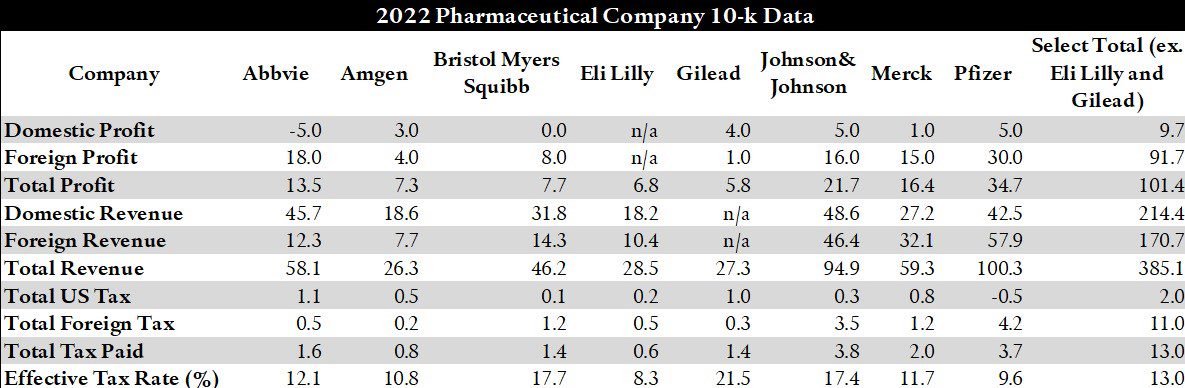
Those same firms report generated $90b in offshore profit off $171b in foreign sales. An implied profit margin in low priced jurisdictions of over 50%.
Those totals don't include Eli Lilly, which clearly shifts profit abroad but didn't provide a US profit line item.
5/
Those totals don't include Eli Lilly, which clearly shifts profit abroad but didn't provide a US profit line item.
5/
So how do U.S. pharmaceutical companies manage to basically report that the don't make any real money in the US and make all their profits offshore --
The trade data provides one big hint ...
6/
The trade data provides one big hint ...
6/
The interim report of the Senate Finance Committee showed how one firm does it --
AbbVie transferred (a long time ago) the rights to its most valuable drugs to Bermuda, and books all its profits there (with manufacturing mostly in Puerto Rico)
7/
finance.senate.gov
AbbVie transferred (a long time ago) the rights to its most valuable drugs to Bermuda, and books all its profits there (with manufacturing mostly in Puerto Rico)
7/
finance.senate.gov
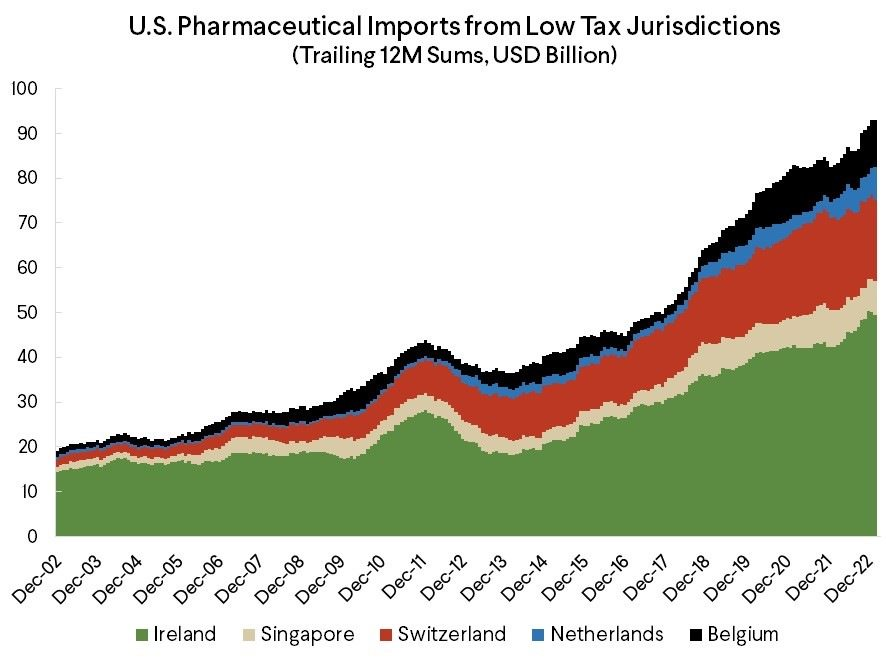
Imports of pharmaceuticals actually have spiked after the Tax Cuts and Jobs Act (Trump's corporate tax cut, especially for big Pharma)
That's mostly profit shifting out of the US
(there are an additional $30b in imports from Puerto Rico)
8/
That's mostly profit shifting out of the US
(there are an additional $30b in imports from Puerto Rico)
8/
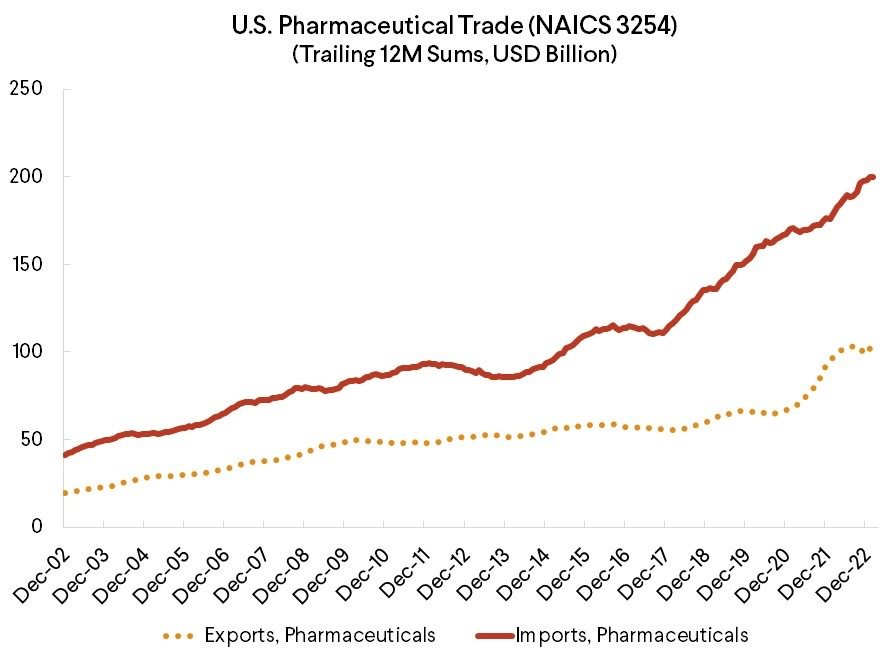
Eagle eyed analysts may note that US exports of pharmaceuticals jumped in 2021.
That's the vaccine -- which the US government more or less required be produced in the US. No opportunities for tax games there.
9/
That's the vaccine -- which the US government more or less required be produced in the US. No opportunities for tax games there.
9/
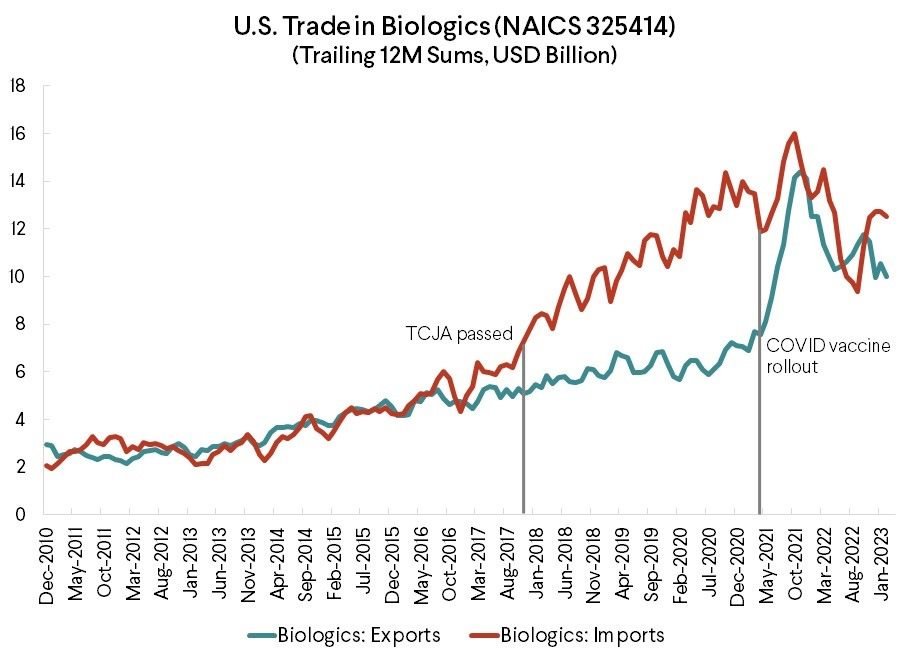
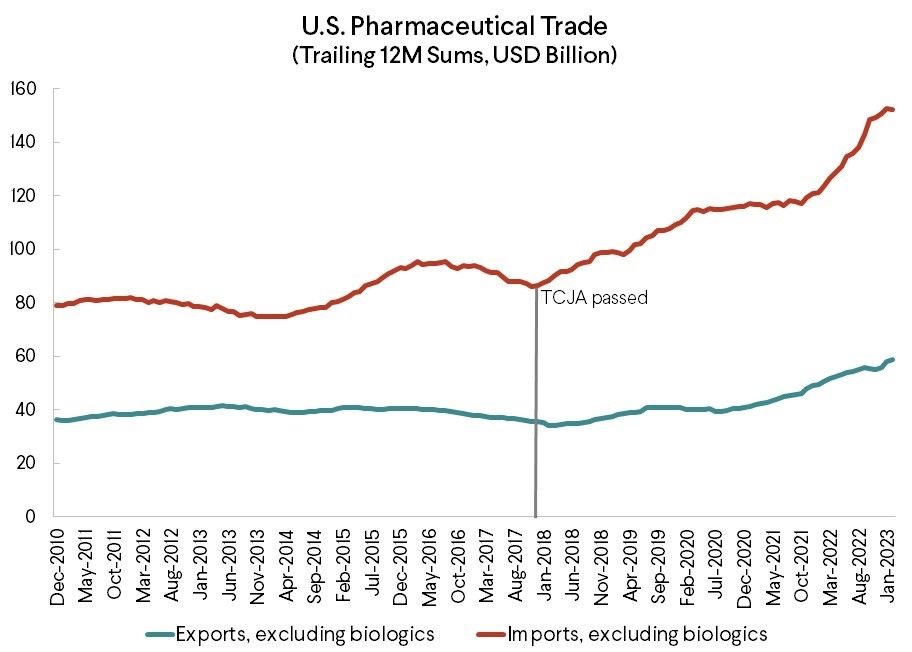
Excluding the trade category that includes the vaccine, US pharma imports have basically doubled since the Trump tax cuts.
Rather than encouraging US production, the Trump tax cuts effectively incentivized offshoring.
10/
Rather than encouraging US production, the Trump tax cuts effectively incentivized offshoring.
10/
I think the facts here largely speak for themselves.
Google, Facebook, Qualcomm and now perhaps Nvidia have onshored the bulk of their IP. But Apple, Microsoft and big Pharma have not.
11/
Google, Facebook, Qualcomm and now perhaps Nvidia have onshored the bulk of their IP. But Apple, Microsoft and big Pharma have not.
11/

Huge thanks to the wonder @tessturner17 who helped prepare the charts and graphs --
12/
12/
Tomorrow's hearing should be fun --
I don't think you can talk about tax avoidance without being willing to name some names. I will let firms 10-ks speak for themselves.
13/
finance.senate.gov
I don't think you can talk about tax avoidance without being willing to name some names. I will let firms 10-ks speak for themselves.
13/
finance.senate.gov

Combine the hearing with the enormously well deserved Clark Prize recently awarded to @gabriel_zucman and perhaps the media's attention will turn back to industrial scale tax avoidance ....
14/
aeaweb.org
14/
aeaweb.org

I am confident that the U.S. Congress will eventually close to the "America last" provisions of the 2017 tax reform.
The evidence demands it.
I also think that changes here are essential to supply chain security, and thus to national security.
15/15
The evidence demands it.
I also think that changes here are essential to supply chain security, and thus to national security.
15/15
I actually intended to start with this chart (right now the same two charts repeat the start)
Shows just how ridiculous the domestic/ foreign split of the reported earning of big Pharma is.
The tax games are obvious to the naked eye. No fancy econometrics needed.
Shows just how ridiculous the domestic/ foreign split of the reported earning of big Pharma is.
The tax games are obvious to the naked eye. No fancy econometrics needed.
@George_A_Callas I think if you got rid of the tax advantage for Ireland/ Singapore/ Switzerland/ Belgium (PR isn't credible any more b/c it actually needs corp tax revenue), PR would do well -- domestic for supply chain security reasons, relatively low cost labor supply interested in man. jobs
@George_A_Callas but need to get the basics (stable reliable electricity, hurricane resilient basic infrastructure) right too -- and that has been a struggle.
see my Foreign Affairs article on PR for more. Don't know if you remember, but I worked on PROMESA
see my Foreign Affairs article on PR for more. Don't know if you remember, but I worked on PROMESA
Loading suggestions...