

Nick Sleep compounded his investors’ money at roughly 20% per year and retired at 45.
His partnership letters from Nomad Investment Partnership are an absolute treasure for every investor.
Here are 8 of his BIG IDEAS from them: 🧵⬇️
His partnership letters from Nomad Investment Partnership are an absolute treasure for every investor.
Here are 8 of his BIG IDEAS from them: 🧵⬇️

1/ Scaled Economics Shared (SES)
The strategy of SES creates a perpetual growth machine.
A company benefitting from economies of scale chooses to lower its prices and improve its offerings to customers to win market share over the long term.
The strategy of SES creates a perpetual growth machine.
A company benefitting from economies of scale chooses to lower its prices and improve its offerings to customers to win market share over the long term.
As SES businesses grow larger, it becomes harder for competitors to offer as much value to customers.
This creates a flywheel effect that becomes unstoppable.
SES businesses delay gratification while giving their customers instant gratification.
This creates a flywheel effect that becomes unstoppable.
SES businesses delay gratification while giving their customers instant gratification.
Amazon and Costco are two of the best SES businesses and comprised roughly two-thirds of Nomad’s portfolio.
Here’s how Amazon’s SES flywheel works:
Here’s how Amazon’s SES flywheel works:
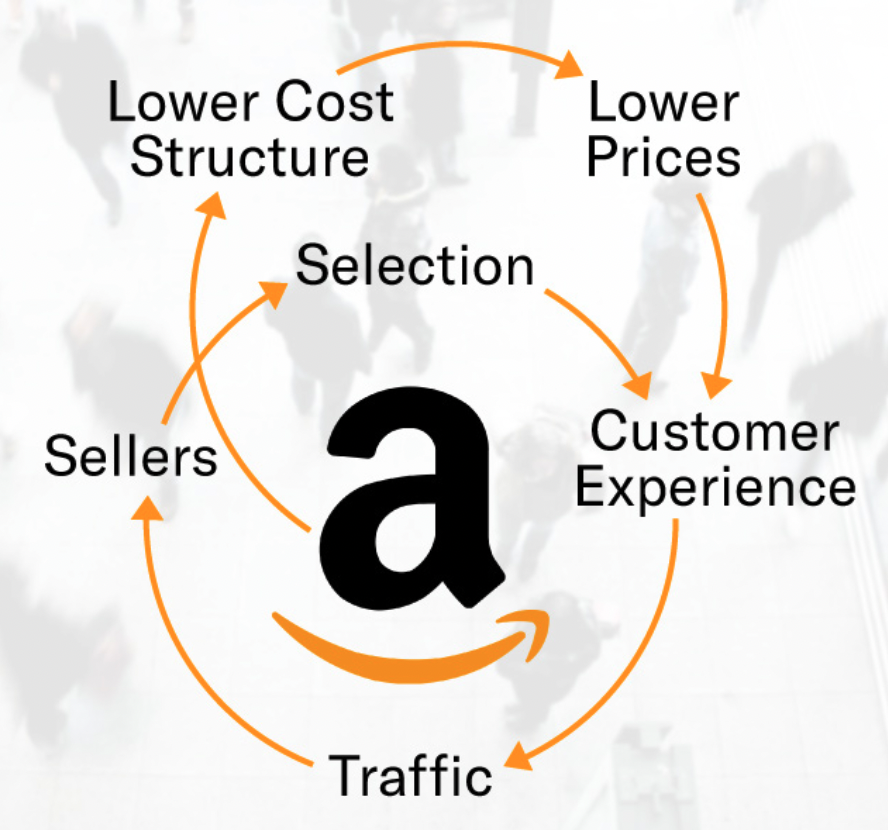
2/ Hidden Investments
Amazon regularly offers price-givebacks and gives customers 2-10% savings compared to shopping elsewhere.
The revenue “lost” from price givebacks is not captured anywhere in the financial statements, yet, it creates lasting and loyal customers.
Amazon regularly offers price-givebacks and gives customers 2-10% savings compared to shopping elsewhere.
The revenue “lost” from price givebacks is not captured anywhere in the financial statements, yet, it creates lasting and loyal customers.
3/ The Aggregation of Marginal Gains
Rather than invest in companies that rely on one big advantage, such as brand name, location, or a patent, Sleep likes to buy companies that do many little things well.
Companies that do many small things well are “simply harder to beat.”
Rather than invest in companies that rely on one big advantage, such as brand name, location, or a patent, Sleep likes to buy companies that do many little things well.
Companies that do many small things well are “simply harder to beat.”
4/ Portfolio Inactivity
Not doing anything is, strangely, hard to do.
Fund managers are paid to be active investment managers.
Sleep says to only buy new companies for your portfolio if they are clearly superior to what you own.
Otherwise, do nothing.
Not doing anything is, strangely, hard to do.
Fund managers are paid to be active investment managers.
Sleep says to only buy new companies for your portfolio if they are clearly superior to what you own.
Otherwise, do nothing.
5/ Information Diet
Information, like food, has an expiration date.
Sleep feels investors should focus on thinking about the factors that make a business great.
It can become very easy to get lured into endless data collection.
Resist. Put yourself on an information diet.
Information, like food, has an expiration date.
Sleep feels investors should focus on thinking about the factors that make a business great.
It can become very easy to get lured into endless data collection.
Resist. Put yourself on an information diet.
6/ Thoughts on Volatility
Resist the urge to sell your winners to add to your losers, and vice versa.
Good investing is about the destination and is rarely a smooth ride.
Embrace the volatility and focus on companies with lasting value.
Resist the urge to sell your winners to add to your losers, and vice versa.
Good investing is about the destination and is rarely a smooth ride.
Embrace the volatility and focus on companies with lasting value.
7/ An Investor’s Edge
There are three competitive advantages as an investor: informational, analytical, and psychological.
Of the three, only analytical and psychological are sustainable.
There are three competitive advantages as an investor: informational, analytical, and psychological.
Of the three, only analytical and psychological are sustainable.
Mr. Market is efficient, but not all the time.
It is during pockets of market inefficiencies where analytical and psychological competitive advantages are most important.
It is during pockets of market inefficiencies where analytical and psychological competitive advantages are most important.
8/ Super High-Quality Thinkers
Sleep’s criteria for evaluating great management:
-Leaders that are intellectually honest and economically rational
-Able to resist growing when returns on capital are poor
Sleep’s criteria for evaluating great management:
-Leaders that are intellectually honest and economically rational
-Able to resist growing when returns on capital are poor
-Have been chosen to out-think their competition and allocate capital over many years with the discipline to reinforce their competitive advantage.
Nick Sleep didn’t rely on complex models, non-public information, or business relationships to deliver incredible returns.
Instead, much like Charlie Munger, he thought deeply and developed mental models he successfully applied to the investing arena.
Instead, much like Charlie Munger, he thought deeply and developed mental models he successfully applied to the investing arena.
He and his partner, Qais Zakaria ran a very concentrated fund.
When they closed Nomad, the fund consisted primarily of three holdings — Costco, Berkshire Hathaway, and Amazon.
When they closed Nomad, the fund consisted primarily of three holdings — Costco, Berkshire Hathaway, and Amazon.
This goes against the conventional wisdom, but as Sleep said, “good investing is a minority sport, which means that in order to earn better returns than everyone else we need to be doing things different to the crowd. And one of the things the crowd is not, is patient.”
To learn more about the investment philosophy of Nick Sleep, be sure to check out the Nomad Partnership letters.

We hope you found these helpful.
If you did, will you take a second to jump back up top to:
• Like
• Retweet
• Hit reply with your biggest takeaway
If you did, will you take a second to jump back up top to:
• Like
• Retweet
• Hit reply with your biggest takeaway
If you like Tweets like this, you will enjoy our free daily newsletter, We Study Markets.
Sign up here:
Sign up here:
Loading suggestions...