
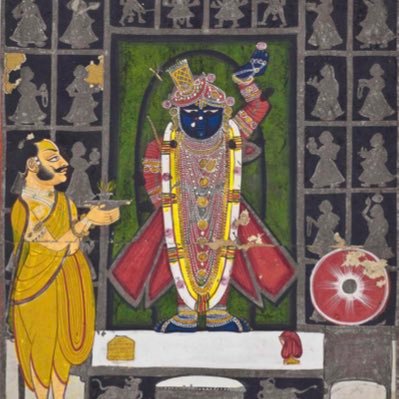
Thread: Muslim chroniclers, in their attempt to identify a centre of Hindu idolatry elevated the importance of Somanātha, and in turn, equated Mahmud’s destruction of Somanātha with the conquest of India and the destruction of idolatry as a whole.
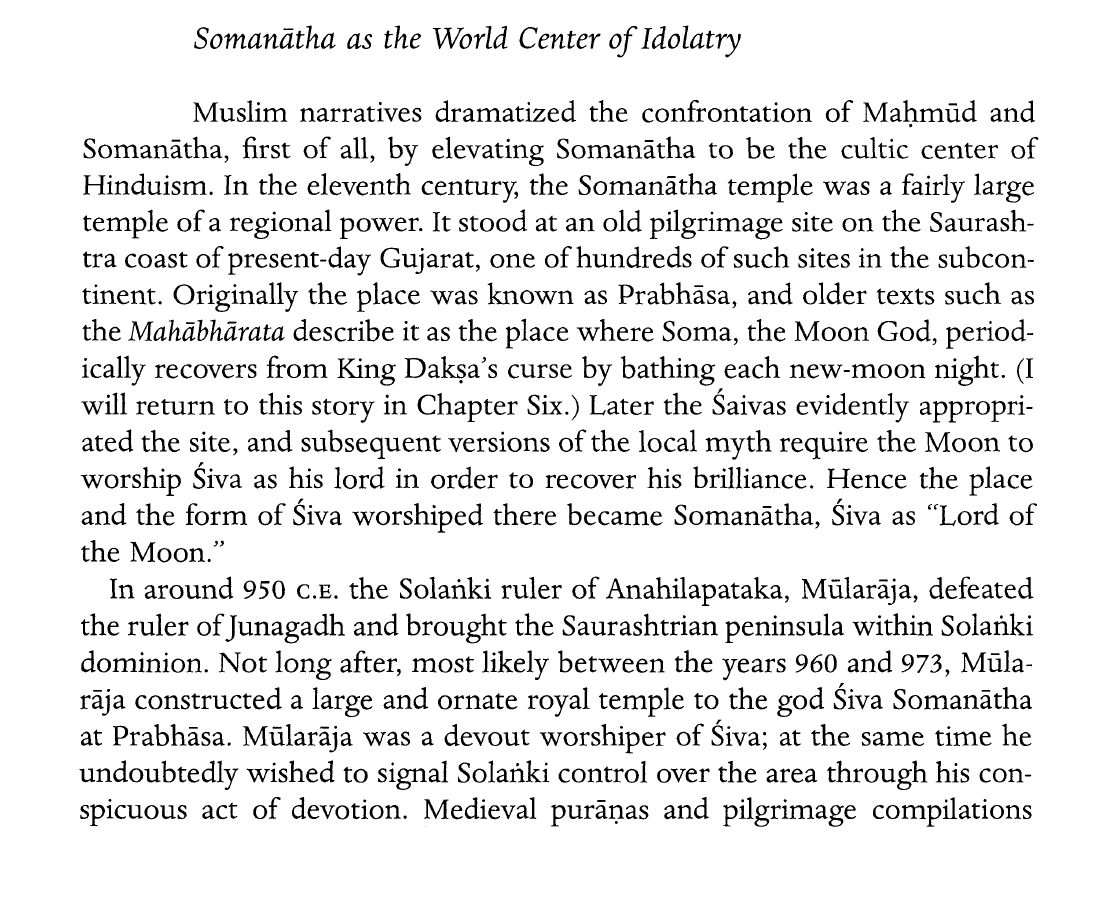
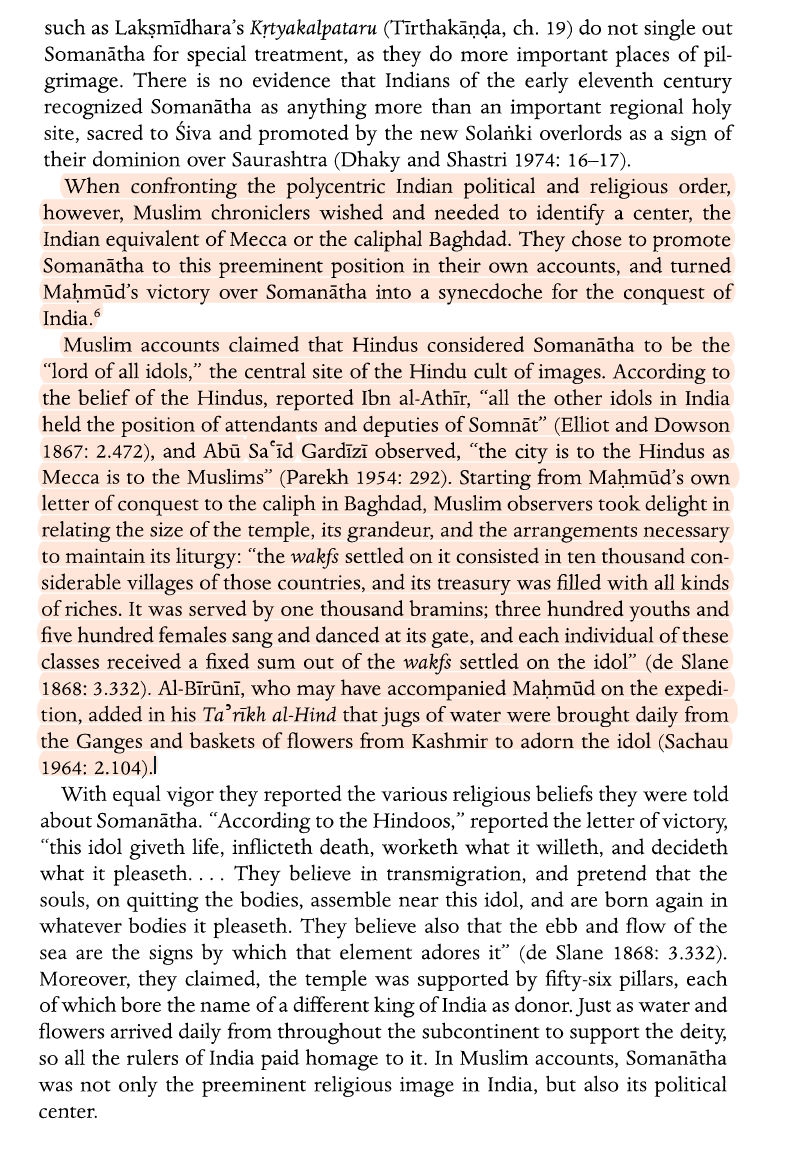
The identification of Somanātha with the pre-Islamic idol of Mecca led to its portrayal as the last remaining idol in the world. Muḥammad was the exemplary destroyer of idols, and the pragmatic moment was the Prophet’s destruction of the idols of the Ka’ba in Mecca.
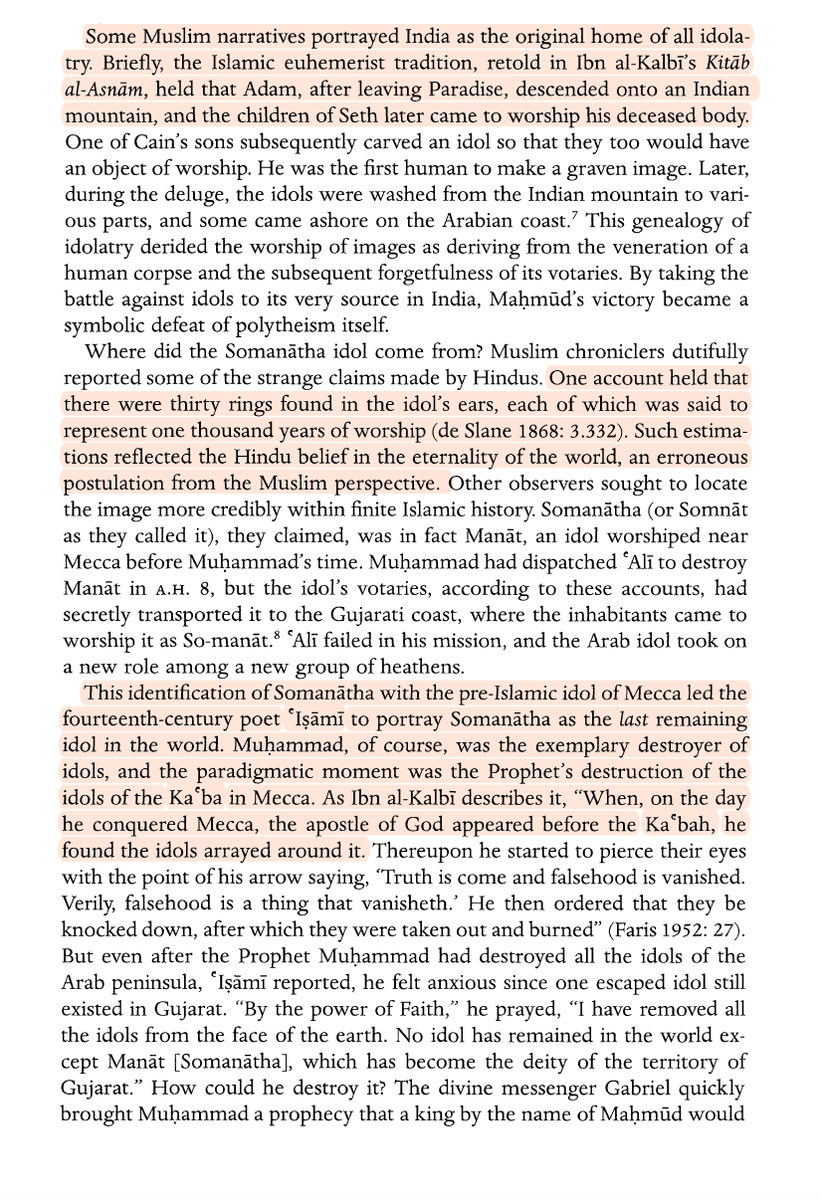
“By destroying Somanātha, Maḥūd not only reenacted Muḥammad’s destruction of the Ka’ba idols, but also carried out the Prophet’s direct order, left incomplete by Alī, to destroy Manāt and thereby completed Muḥammad’s mission to remove all idols in the world.”
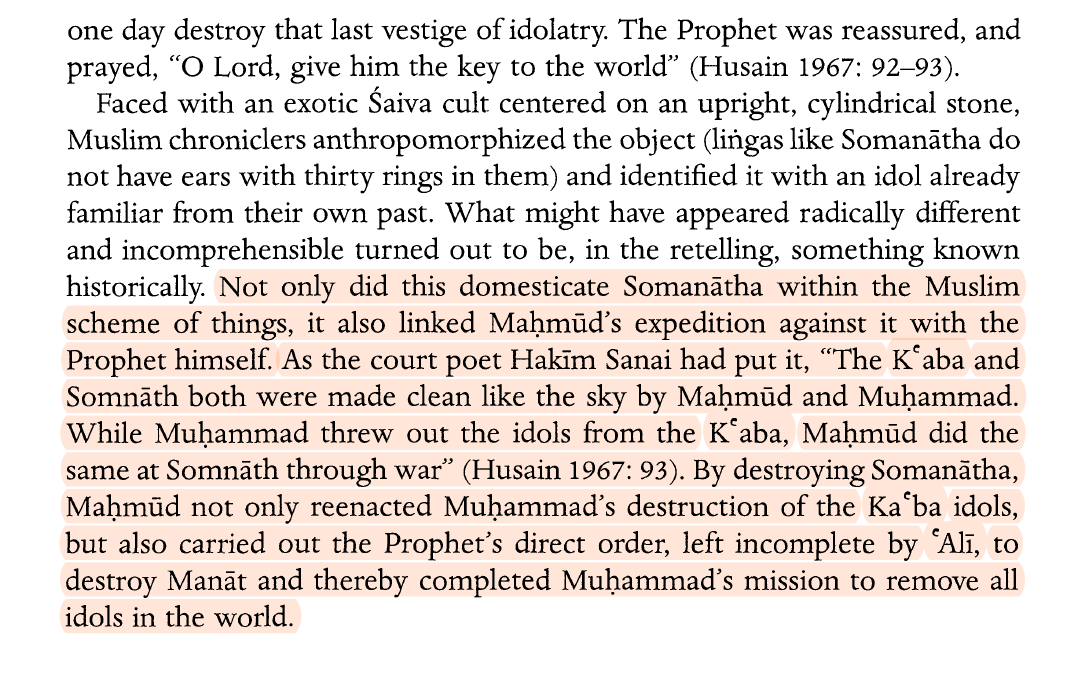
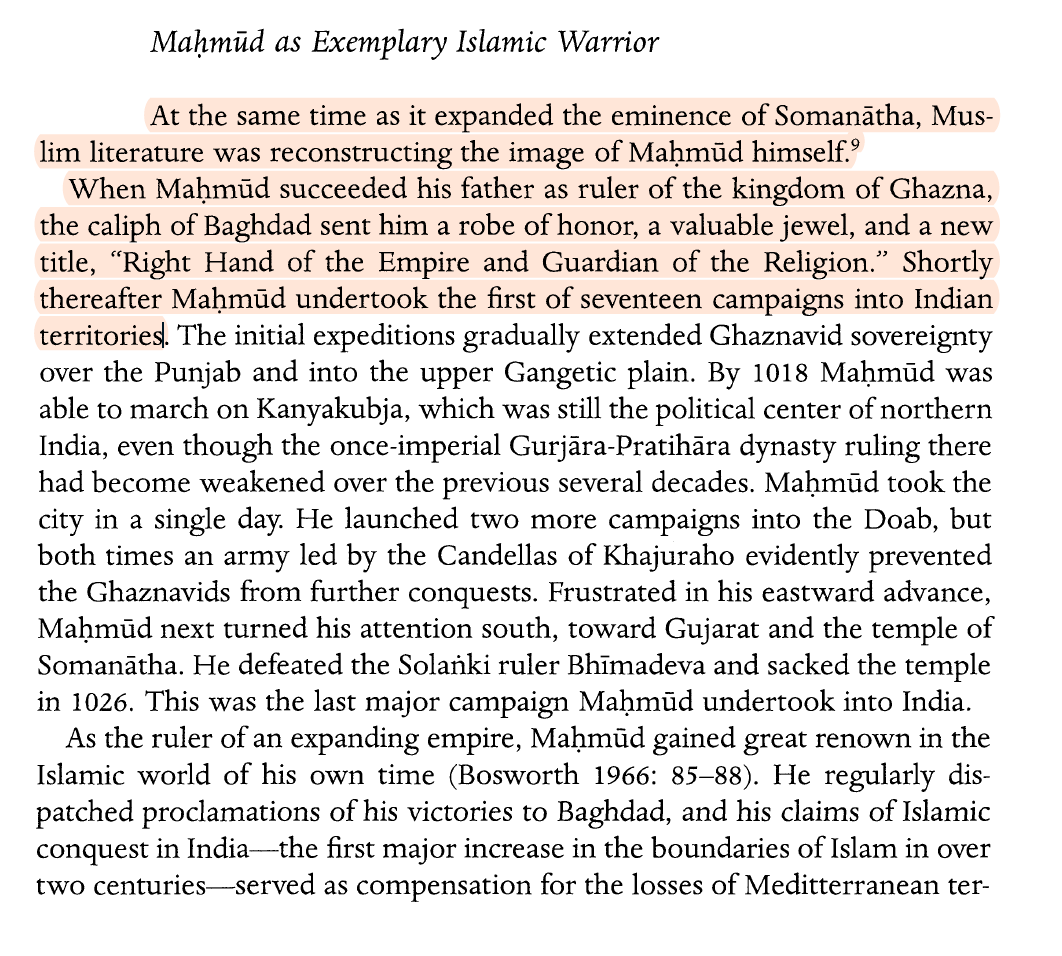
Maḥmūd was exalted to the status of warrior of Islam, and with the Turkish sultanate viewing Delhi as the bastion of Islam.
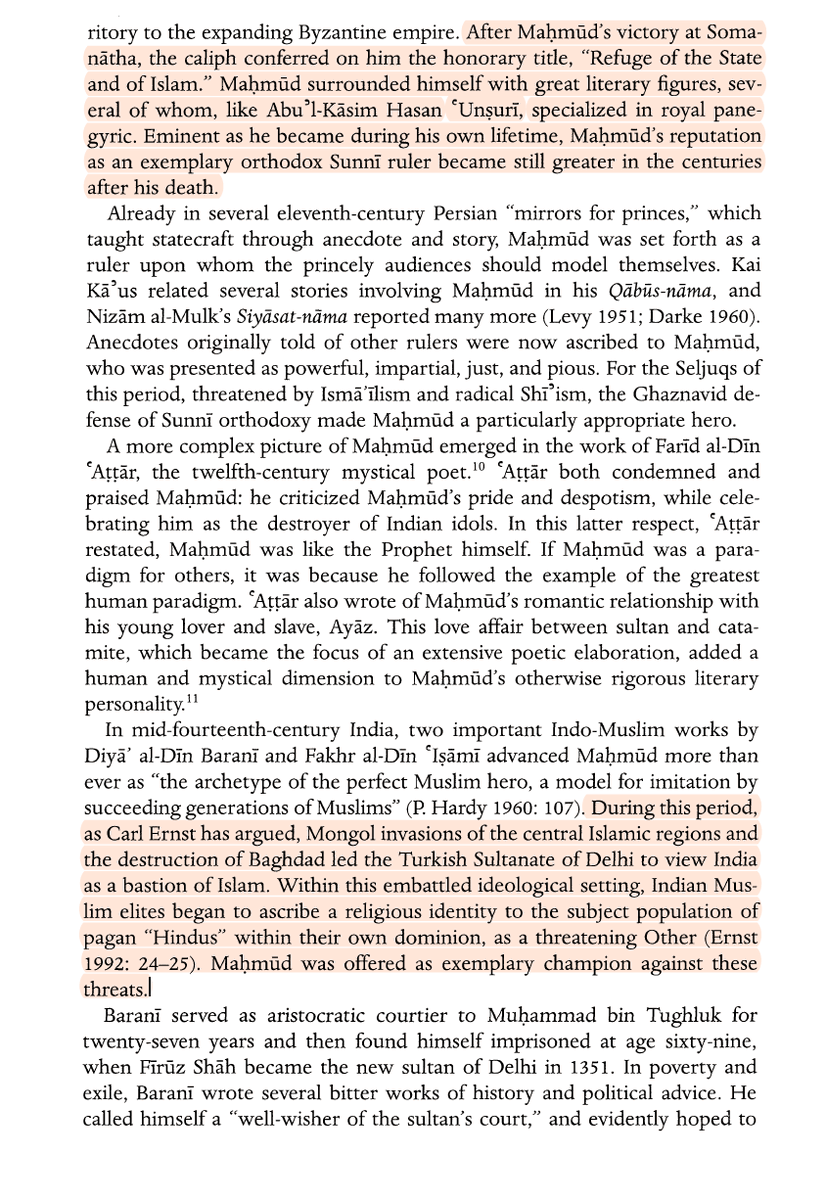
“Within this embattled ideological setting, Indian Muslim elites began to ascribe religious identity to the subject population of pagan “Hindus” within their own dominion, as a threatening Other. Maḥmūd was offered as exemplary champion against these threats.”
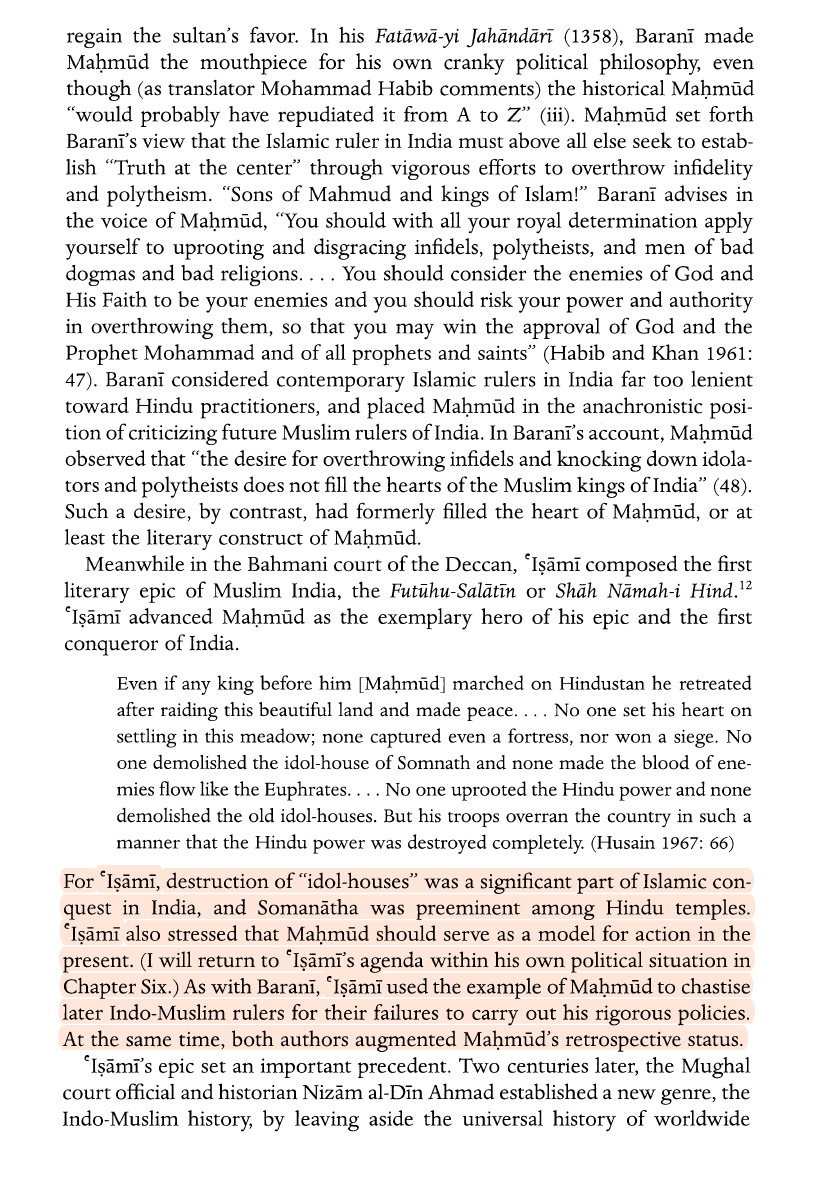
“For 'Iṣāmi, destruction of "idol-houses" was a significant part of Islamic conquest in India, and Somanātha was preeminent among Hindu temples… Iṣāmi used the example of Mahmüd to chastise later Indo-Muslim rulers for their failures to carry out his rigorous policies.”
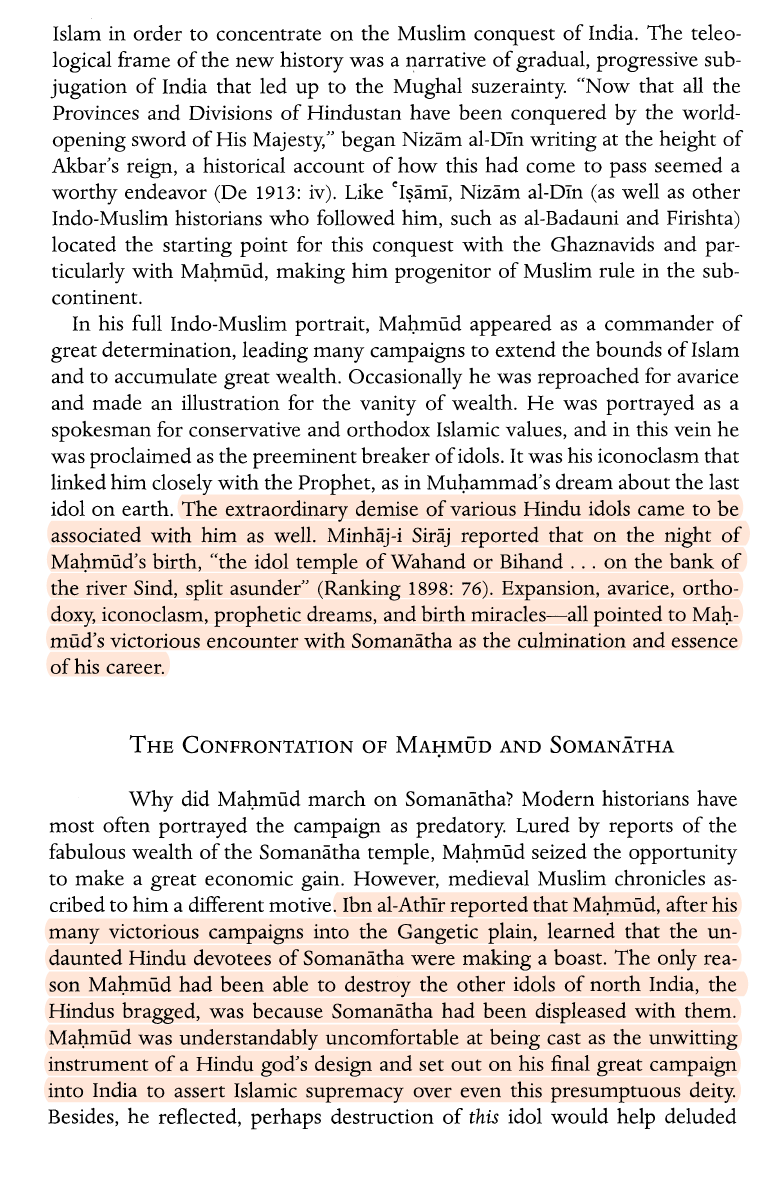
“Expansion, avarice, orthodoxy, iconoclasm, prophetic dreams, and birth miracles — all pointed to Maḥmūd's victorious encounter with Somanātha as the culmination and essence of his career.”
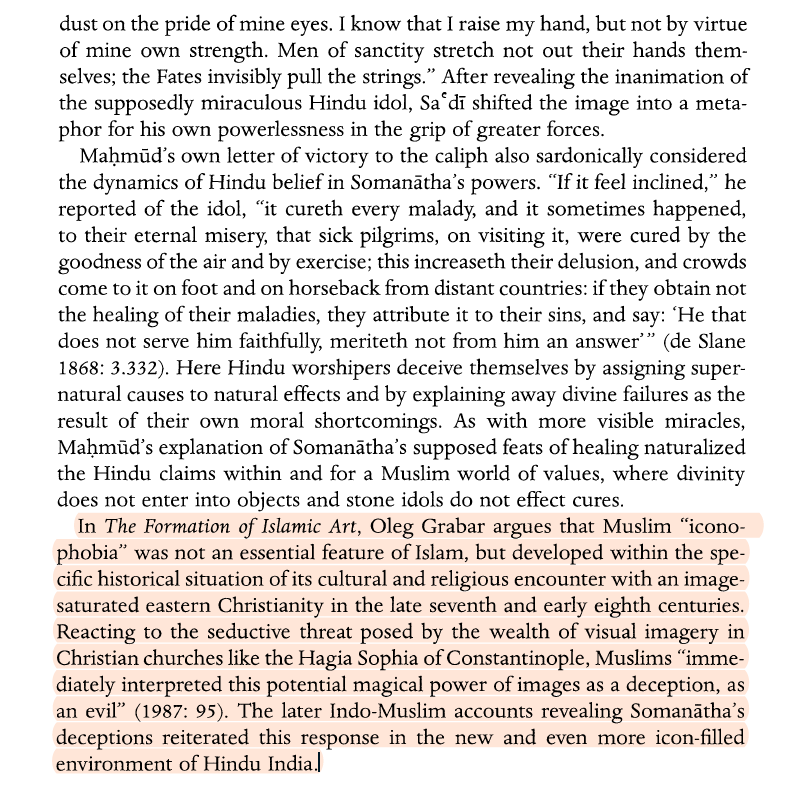
“Reacting to the seductive threat posed by the wealth of visual imagery in Christian churches like the Hagia Sophia of Constantinople, Muslims "immediately interpreted this potential magical power of images as a deception, as an evil"."
"The later Indo-Muslim accounts revealing Somanatha's deceptions reiterated this response in the new and even more icon-filled environment of Hindu India.”
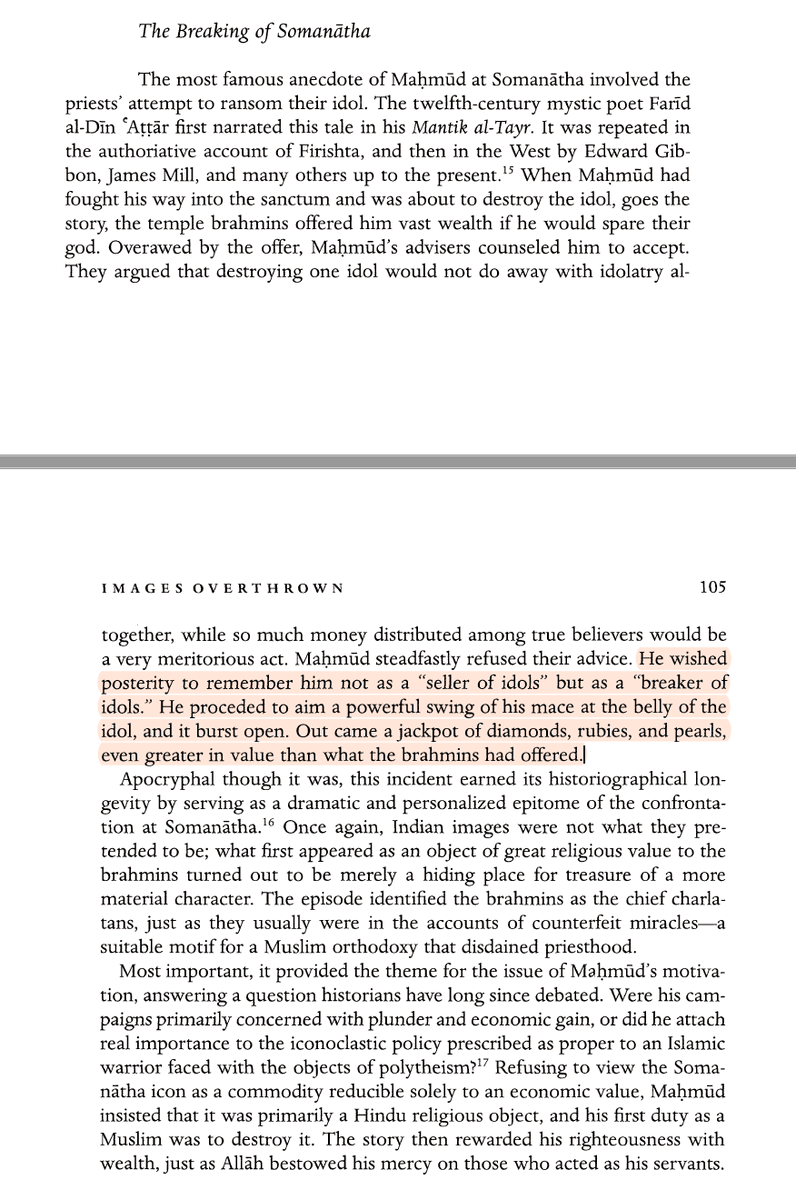
The Breaking of Somanātha
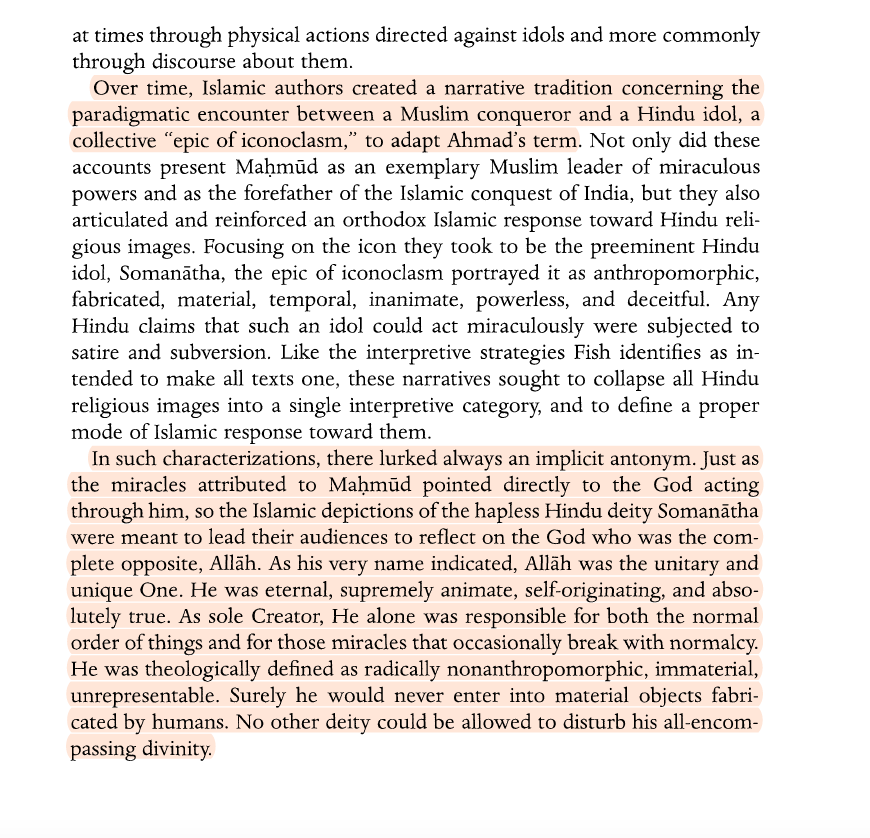
“Not only did these accounts present Maḥmūd as an exemplary Muslim leader of miraculous powers and as the forefather of the Islamic conquest of India, but they also articulated and reinforced an orthodox Islamic response toward Hindu religious images."
"Focusing on the icon they took to be the preeminent Hindu idol, Somanātha, the epic of iconoclasm portrayed it as anthropomorphic, fabricated, material, temporal, inanimate, powerless, and deceitful.”
Source: Davis, Richard H. 1997. Lives of Indian Images. Princeton: Princeton University Press.
Loading suggestions...