
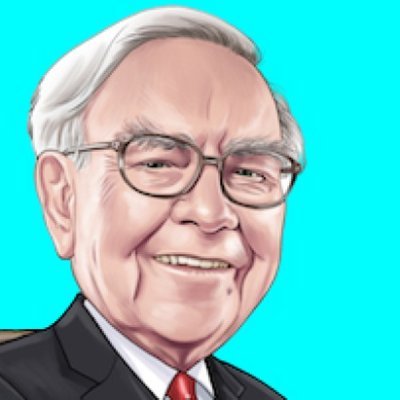
He Averaged a 40% Return Per Year From 1985 to 1995
Once investing 40% of his fund into a stock that looked like garbage, getting an incredible result within 3 months.
The story of Joel Greenblatt's unique rise to $1 billion net worth:
🧵
Once investing 40% of his fund into a stock that looked like garbage, getting an incredible result within 3 months.
The story of Joel Greenblatt's unique rise to $1 billion net worth:
🧵

Joel gets his break into Wall Street by joining the hedge fund Halcyon.
His job is in risk arbitrage or merger arbitrage.
That's when you invest in a company that is about to be acquired.
His job is in risk arbitrage or merger arbitrage.
That's when you invest in a company that is about to be acquired.
Say Company A is trading at $20 a share.
Company B offers to buy Company A for $30.
Often, Company A's price rises to $28 or $29, not $30. The reason for the gap is that the deal may not go through.
Company B offers to buy Company A for $30.
Often, Company A's price rises to $28 or $29, not $30. The reason for the gap is that the deal may not go through.
As a risk arbitrager, you buy the stock at $28 and profit $2 if the deal goes through.
But if the deal doesn't go through, the price could drop back to $20.
Basically, you hope to make $2 but risk $8.
But if the deal doesn't go through, the price could drop back to $20.
Basically, you hope to make $2 but risk $8.
Joel isn't a massive fan of this strategy, so in 1985, he starts Gotham Capital with funding from the junk bond investor Michael Milken (you might recognize that name from our story on Howard Marks).
The strategy of the fund is to invest in special situations, such as spinoffs and mergers.
He runs a concentrated portfolio of 6-8 stocks.
In his first 15 months, he makes 140%.
You can read more about the strategy in the book You Can Be a Stock Market Genius.
He runs a concentrated portfolio of 6-8 stocks.
In his first 15 months, he makes 140%.
You can read more about the strategy in the book You Can Be a Stock Market Genius.
In the 1980s, Marriott Corporation expands its empire, building hundreds of hotels.
But it makes most of its money managing hotels for others.
They build a hotel and sell it, but still get paid to manage it.
But it makes most of its money managing hotels for others.
They build a hotel and sell it, but still get paid to manage it.
The real estate market takes a dive in the '90s, and Marriott is stuck with hotels it can't sell and billions of debt.
The company's solution is to spin off the hotel business with all the debt and call it Host Marriott.
The lucrative hotel management business with no debt is called Marriott International.
The lucrative hotel management business with no debt is called Marriott International.
Greenblatt, being a master of special situations, sees an amazing opportunity, not in the good business Marriott International but in what he calls the ‘toxic waste’ Host Marriott.
This business is going to look like a pile of garbage.
The investors who will be given shares will likely sell, driving the price far below fair value.
The investors who will be given shares will likely sell, driving the price far below fair value.
So why does he like Host Marriott?
Four reasons:
1. Institutions won't want to own it.
The stock is only going to have a market cap of $2 billion. Far too small for any institution to hold a sizable position in. They will be selling.
Four reasons:
1. Institutions won't want to own it.
The stock is only going to have a market cap of $2 billion. Far too small for any institution to hold a sizable position in. They will be selling.
2. Shareholders don't want it.
This is a bad business with a massive amount of debt.
Shareholders are more interested in the Hotel Management Business (Marriott International). They will be selling.
This is a bad business with a massive amount of debt.
Shareholders are more interested in the Hotel Management Business (Marriott International). They will be selling.
3. Insiders do want it.
Insiders are the owners and management of the company.
Stephen Bollenbach - savior of Donald Trump's gambling empire and the person who came up with the idea to do the spinoff - is going to become the CEO of the bad business (Host Marriott).
Insiders are the owners and management of the company.
Stephen Bollenbach - savior of Donald Trump's gambling empire and the person who came up with the idea to do the spinoff - is going to become the CEO of the bad business (Host Marriott).
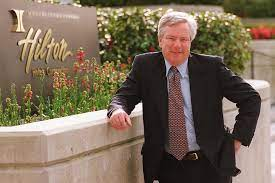
There is no way this man is going to create a lifeboat for the good business, just to go down with a sinking ship in the bad business.
On top of this, the Marriott Family is still going to own 25% of Host Marriott.
It will benefit them if the company does well.
It will benefit them if the company does well.
4. The company is loaded up with debt.
While this might sound like a bad thing, it can also be a good thing.
Aka "leveraged"
It works similarly to this:
While this might sound like a bad thing, it can also be a good thing.
Aka "leveraged"
It works similarly to this:
I buy a house for $500,000.
I pay $100,000 upfront; this is my equity.
I borrow $400,000; this is my debt.
I pay $100,000 upfront; this is my equity.
I borrow $400,000; this is my debt.
Let's say the value of the house goes up 10% to $550,000.
The value of my equity has now risen from $100,000 to $150,000 (the $100,000 I invested + the $50,000 appreciation).
The value of my equity has gone up 50%, even though the value of the asset has only gone up 10%.
The value of my equity has now risen from $100,000 to $150,000 (the $100,000 I invested + the $50,000 appreciation).
The value of my equity has gone up 50%, even though the value of the asset has only gone up 10%.
Any appreciation in the value of Host Marriott's assets would see a magnified increase in its share price.
This works in reverse if the value of the assets goes down.
Greenblatt sees a huge opportunity and invests 40% of his fund in Host Marriott.
This works in reverse if the value of the assets goes down.
Greenblatt sees a huge opportunity and invests 40% of his fund in Host Marriott.
So how does it go?
Host Marriott nearly triples within 3 months of the spinoff.
Host Marriott nearly triples within 3 months of the spinoff.
While Greenblatt sees massive success running a concentrated portfolio, there is one issue.
Such a concentrated portfolio can be down 20 or 30% in any given year.
Something that will result in getting some angry phone calls from investors.
Such a concentrated portfolio can be down 20 or 30% in any given year.
Something that will result in getting some angry phone calls from investors.
The stress of dealing with other people's money becomes too much for Greenblatt, so he returns it to investors in 1995.
By this stage, he has earned 50% a year (before taxes) for ten years.
By this stage, he has earned 50% a year (before taxes) for ten years.
Greenblatt and his team keep investing, but they develop a new strategy. They are going to be buying quality businesses at cheap prices.
And lots of them.
And lots of them.
They develop the Magic Formula strategy explained in his book The Little Book That Beats the Market.
With an adapted version of the Magic Formula, he sees huge success.
But in 1998, the market is up 28.6%. Greenblatt's fund is down 5%. It is the first year they record a loss.
With an adapted version of the Magic Formula, he sees huge success.
But in 1998, the market is up 28.6%. Greenblatt's fund is down 5%. It is the first year they record a loss.
In 1999, the market is up 21%. Greenblatt's fund is down another 5%.
People believe that value investing is dead, and like Buffett, they believe Greenblatt is missing out on a new way to invest.
People believe that value investing is dead, and like Buffett, they believe Greenblatt is missing out on a new way to invest.
Seemingly unfazed, he perseveres with his strategy, and in 2000, the market is down 9%. Greenblatt is up 114%.
A benefit of his new investment strategy is that it is highly diversified.
This means it has smaller drawdowns.
This also means he has fewer angry investors calling him demanding their money back, which is why he closed Gotham Capital in the first place.
This means it has smaller drawdowns.
This also means he has fewer angry investors calling him demanding their money back, which is why he closed Gotham Capital in the first place.
In 2009, he decides to start accepting money from outside investors again.
He now runs Gotham Funds with his partner Robert Goldstein.
He now runs Gotham Funds with his partner Robert Goldstein.

He is a New York Times bestselling author and has written books on investing, including:
- You Can Be a Stock Market Genius
- The Little Book That Still Beats the Market.
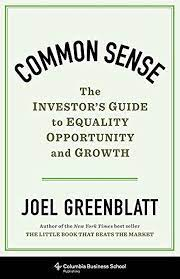
His most recent book, Common Sense, tackles the issues of education, inequality and immigration reform.
- You Can Be a Stock Market Genius
- The Little Book That Still Beats the Market.
His most recent book, Common Sense, tackles the issues of education, inequality and immigration reform.
Want to know what stocks Buffett, Munger or Greenblatt are buying?
There's a tool for that in my "Toolkit For the Value Investor".
Get a FREE copy here:
valueinvestoracademy.com
There's a tool for that in my "Toolkit For the Value Investor".
Get a FREE copy here:
valueinvestoracademy.com

I dissect the:
- Investing techniques
- Stock holdings
- Stories
of the world's greatest investors.
Follow for more:
@ValueInvestorAc
Enjoyed this? Please help us reach a greater audience, retweet the 1st tweet of this thread. Thanks!
- Investing techniques
- Stock holdings
- Stories
of the world's greatest investors.
Follow for more:
@ValueInvestorAc
Enjoyed this? Please help us reach a greater audience, retweet the 1st tweet of this thread. Thanks!
Loading suggestions...