

Creator Brahma
Preserver Vishnu
Destroyer Shiva
This is the norm.
But the norm breaks with one Vishnu avatar that’s yet to arrive—Kalki. In Kalki, Vishnu assumes the role of Destroyer. Destroys the old world order, births a new one.
Who came up with the idea?
And why?
Preserver Vishnu
Destroyer Shiva
This is the norm.
But the norm breaks with one Vishnu avatar that’s yet to arrive—Kalki. In Kalki, Vishnu assumes the role of Destroyer. Destroys the old world order, births a new one.
Who came up with the idea?
And why?
Kalki made its debut in a Hindu text called Garuda Purana. Counted among the eighteen Mahapuranas, Garuda introduced Kalki in the penultimate verse of Achara Kanda chapter 145 as a Vishnu incarnate riding a pristine white stallion sent to “punish the evildoer.”
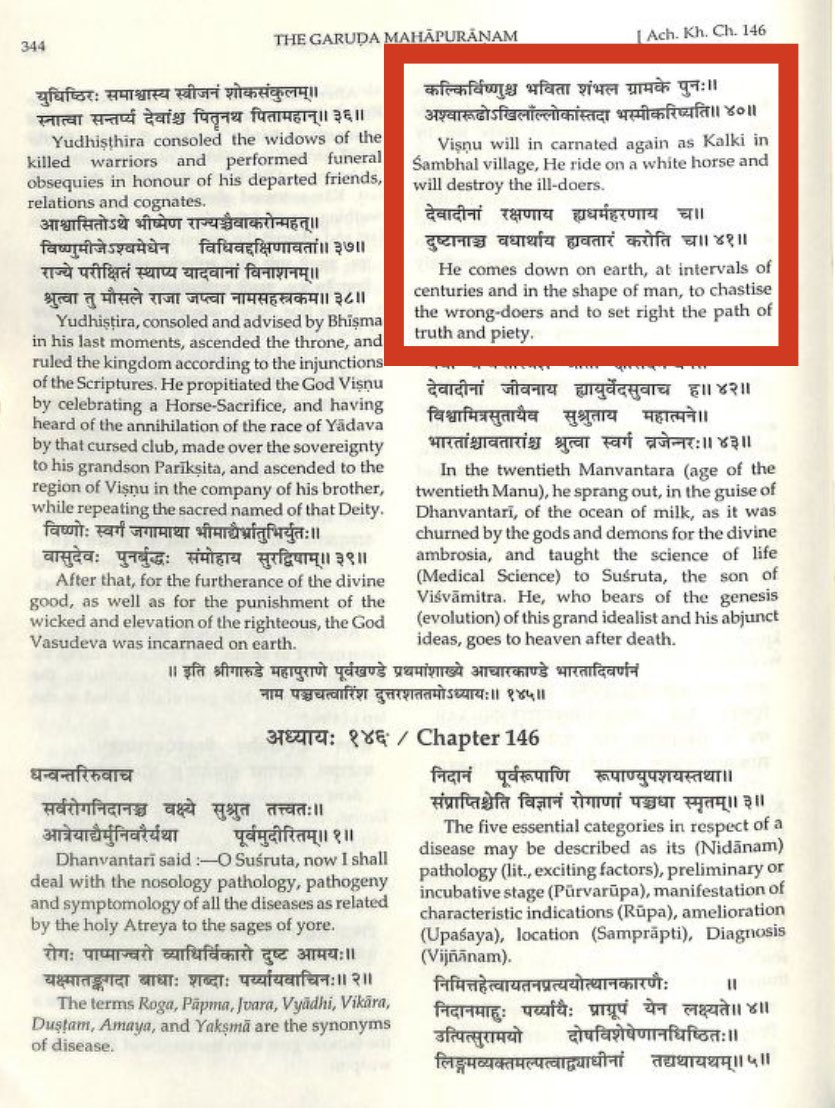
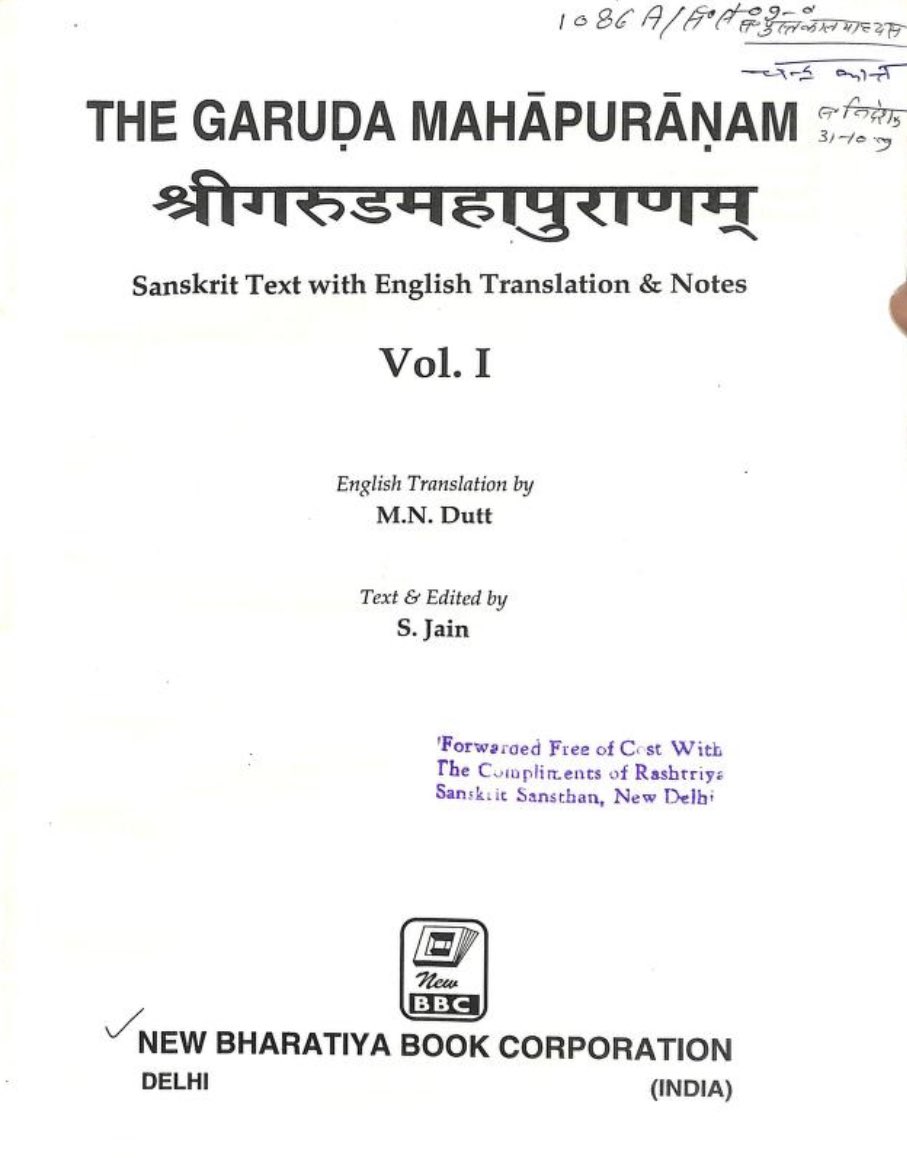
Garuda, like most other Puranas, is a product of Late Antiquity. Also like most texts of the time, it wasn’t composed by one author in one go. The corpus had formed over centuries. The window for Garuda is between 4th and 11th centuries.
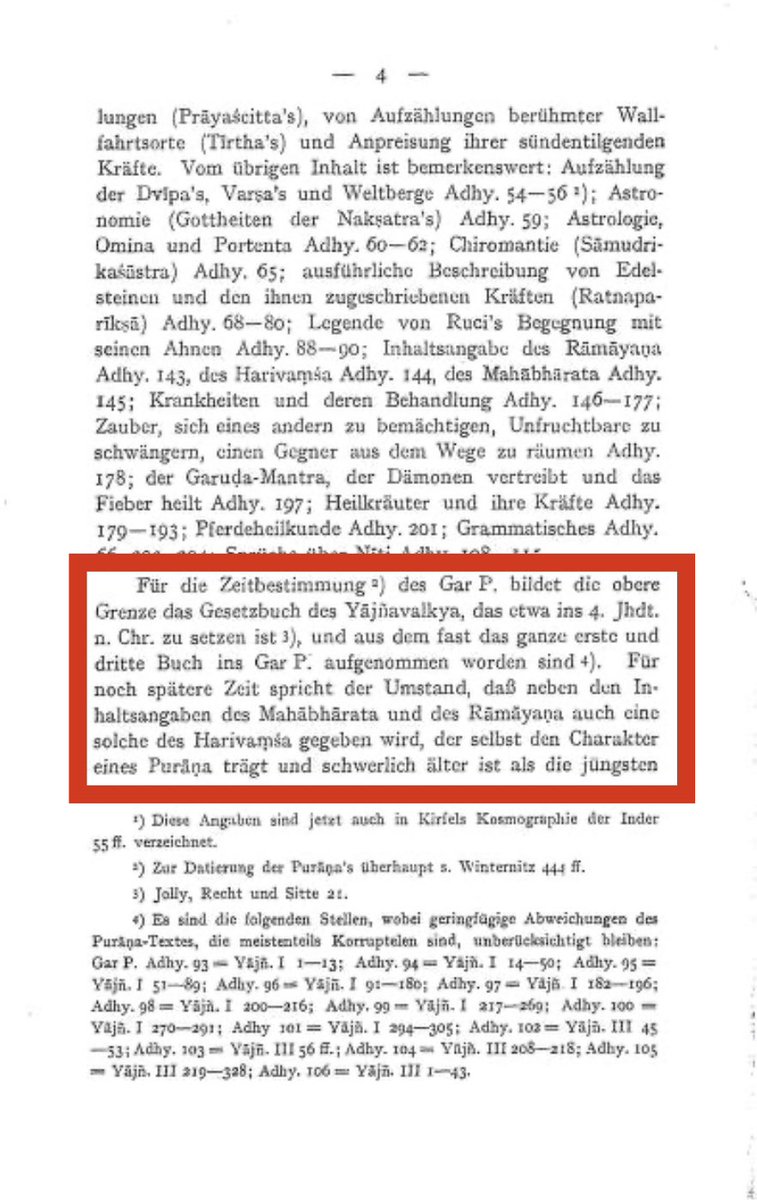
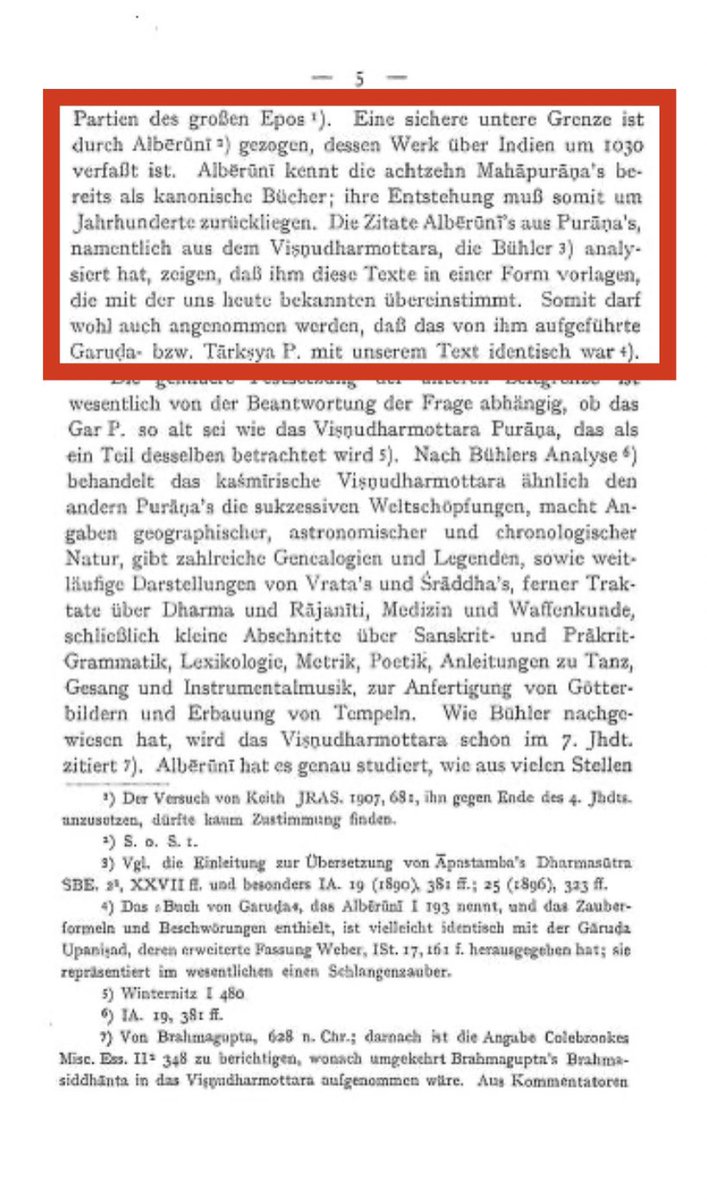
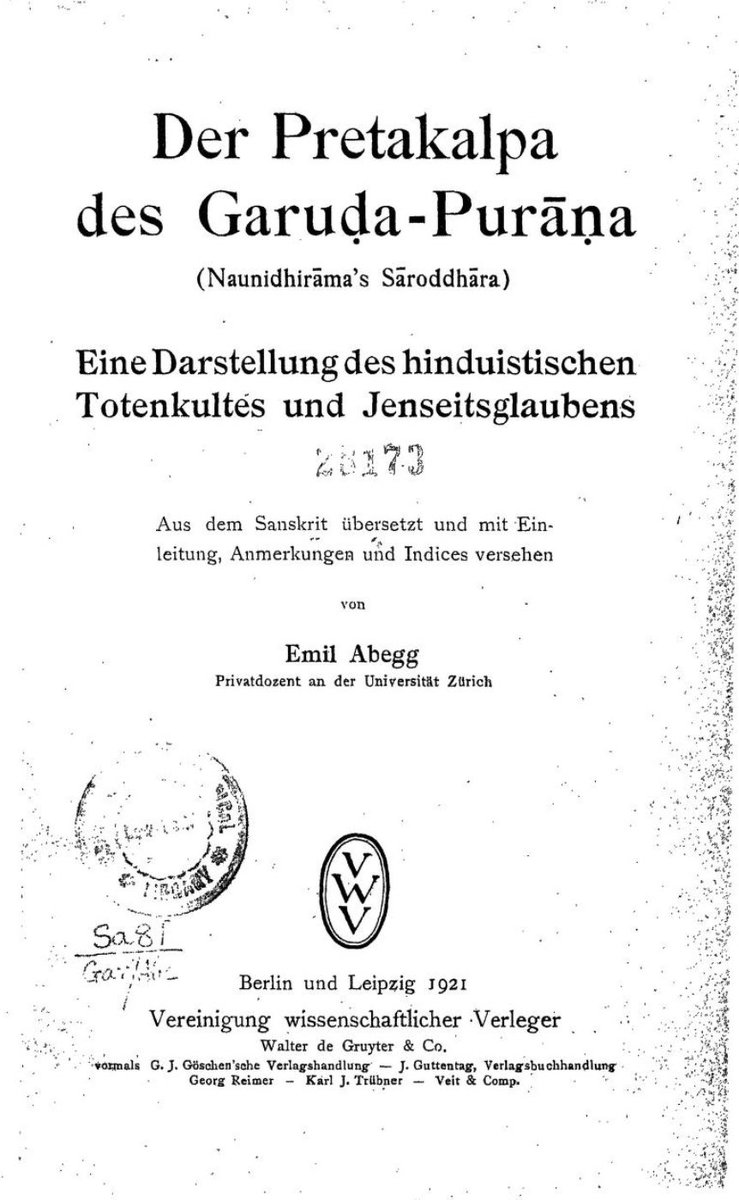
The window can forever be narrowed down for the verses on Kalki to around sixth century AD. We know this because Brahma Kanda chapter 16 names one Vishnugupta as the incarnate’s designated father. And was Vishnugupta? A Gupta king who reigned between 540 and 550 AD.
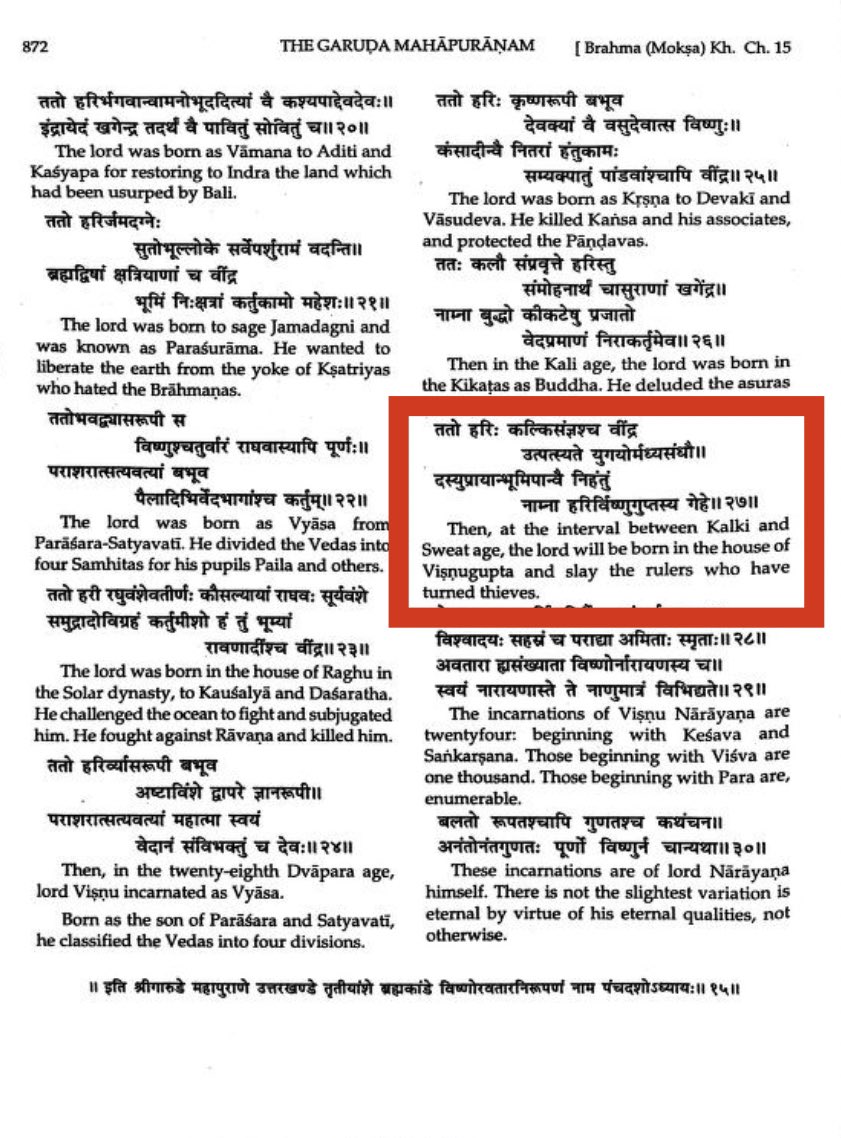
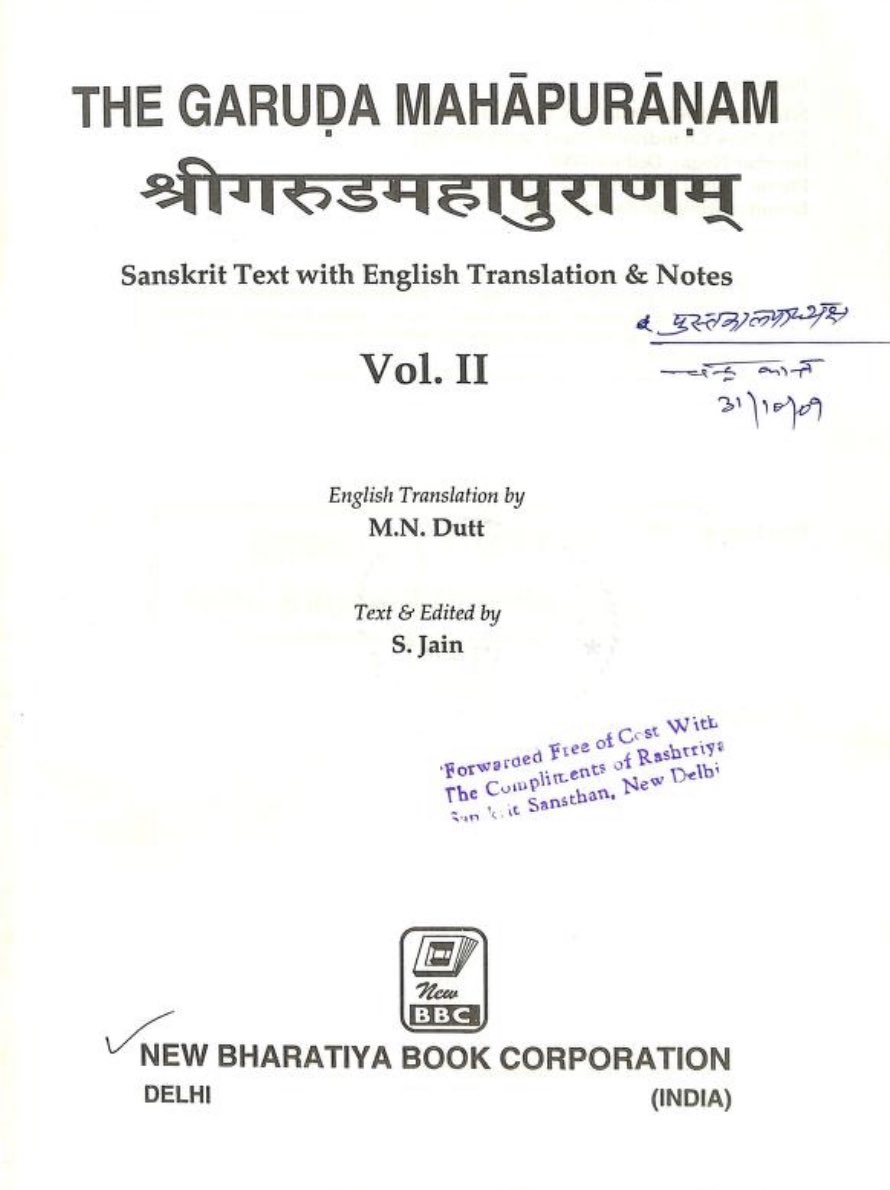
We’ll get back to any this dating is interesting but first a little clarification.
Kalki also appears in the epic of Mahabharata which predates the Purana by at least a millennium, if not more. Almost the exact same story. Born to Vishnugasha, destroyer of world.
Kalki also appears in the epic of Mahabharata which predates the Purana by at least a millennium, if not more. Almost the exact same story. Born to Vishnugasha, destroyer of world.
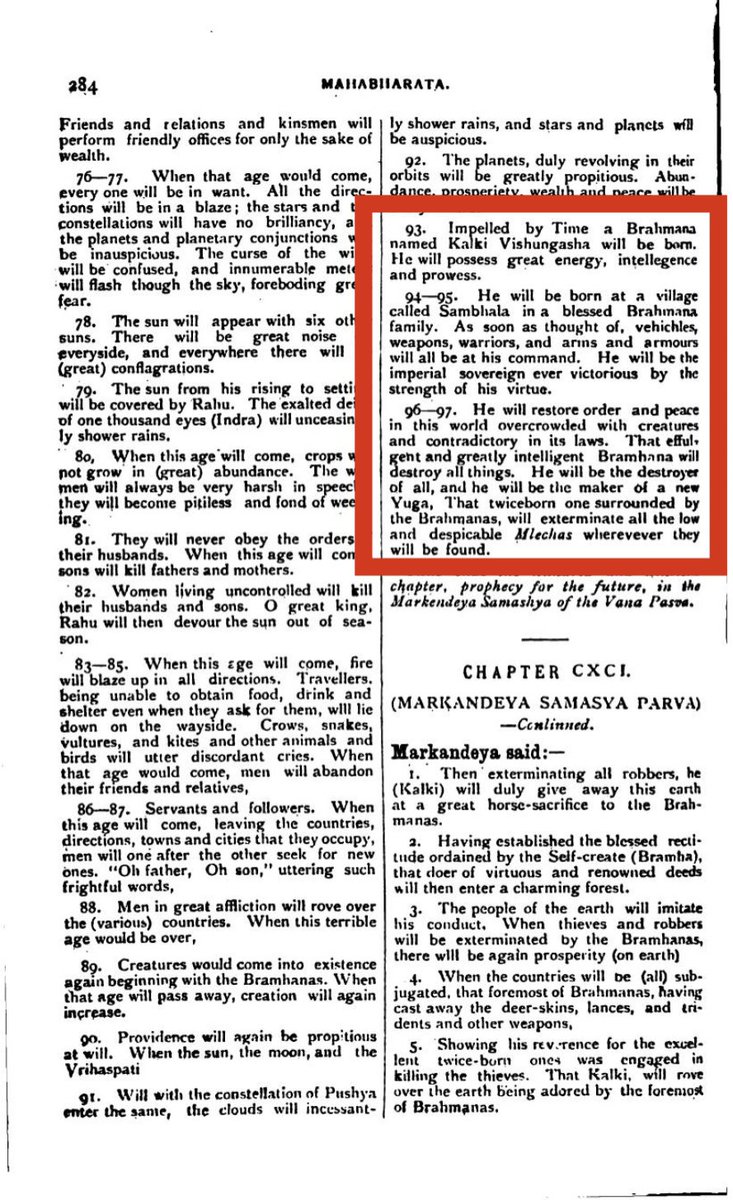
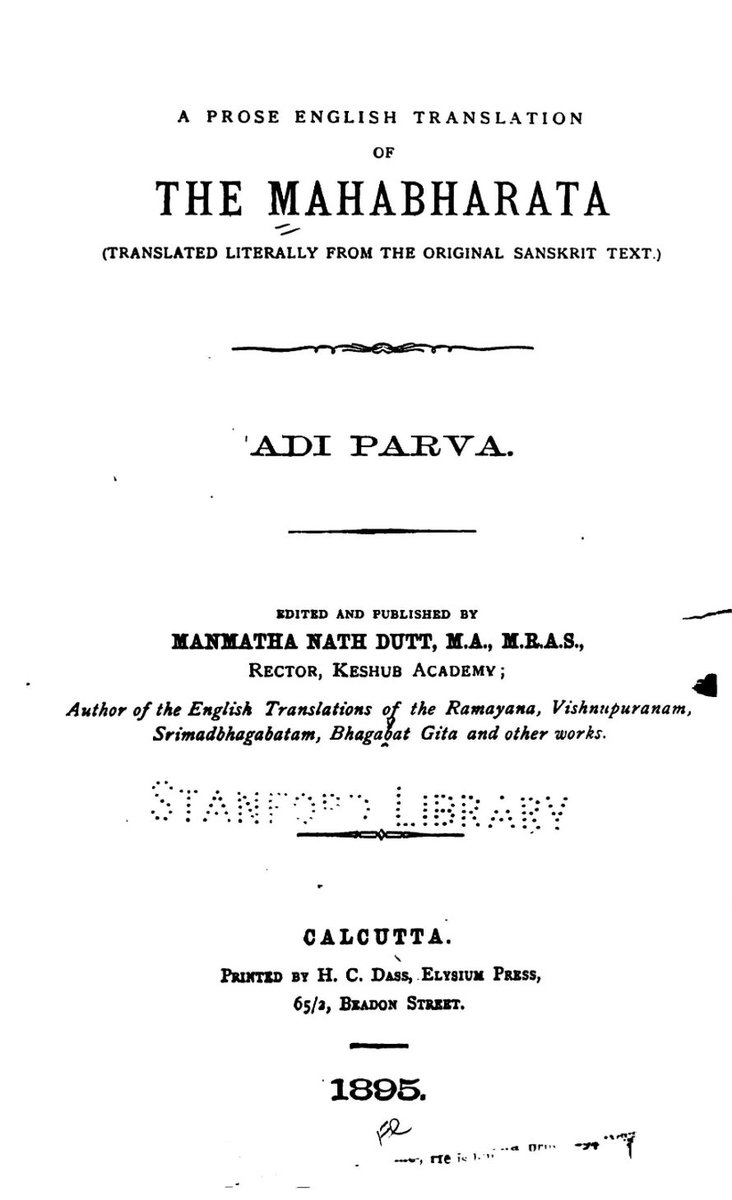
But like other texts of the time, Mahabharata too wasn’t composed in one go. There’s layers added to layers over centuries, and this one is clearly among the latest. There’s a dedicated Kalki Purana too but that one came much, much later, hence inconsequential to this story.
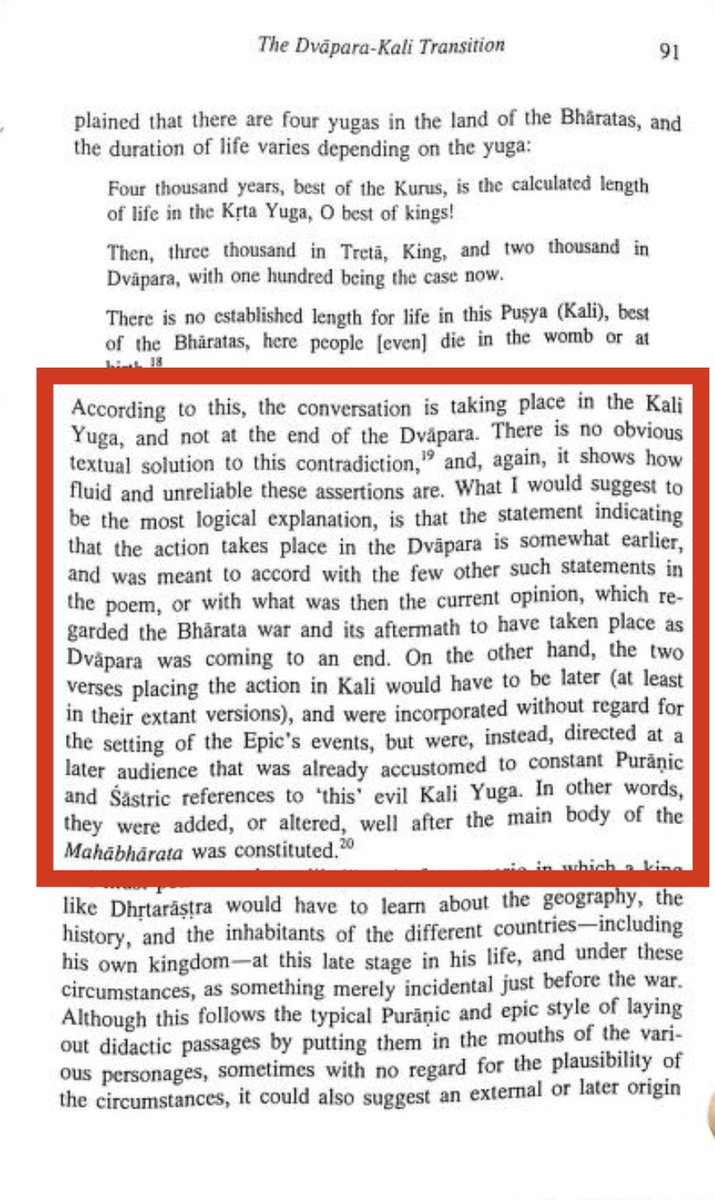
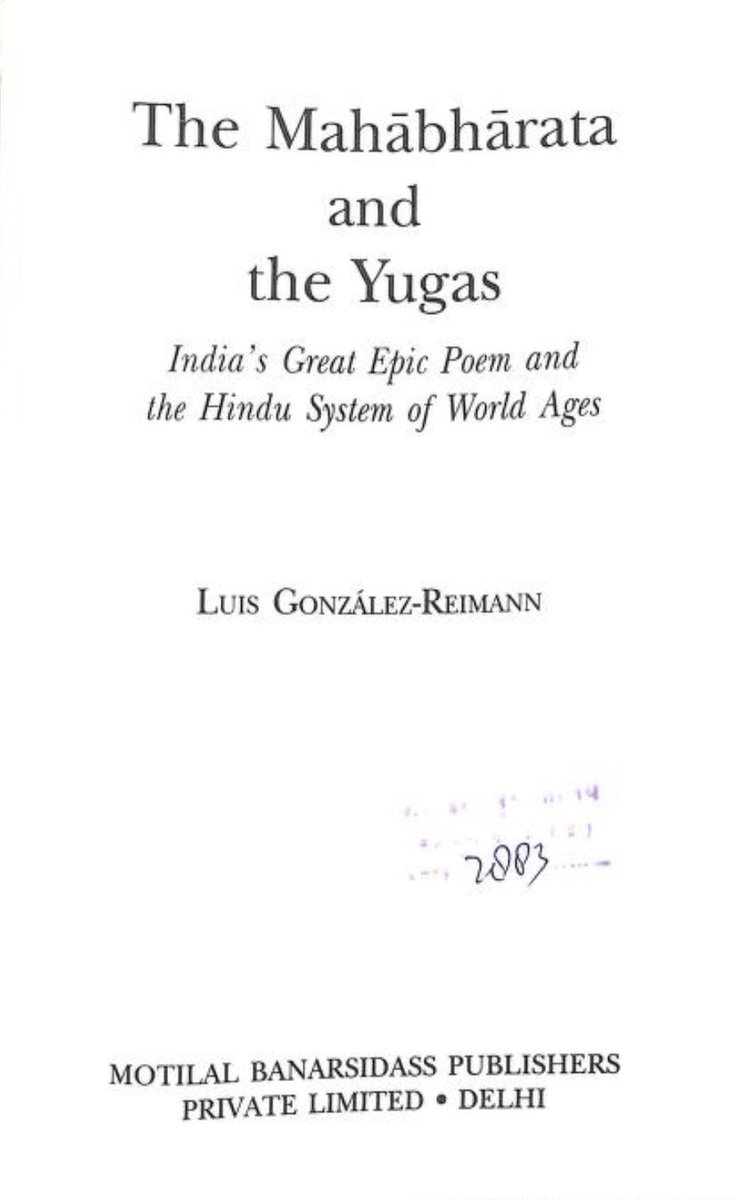
So long story short, the idea of a destroyer/restorer horseback-riding Vishnu named Kalki emerged sometime in the middle of the sixth century. And now we can return to the original question—why?
Clearly something happened in that window to make people imagine a messiah?
Clearly something happened in that window to make people imagine a messiah?
This story begins with a legend, thousands of miles away, in the third century BC. A community of nomads collectively called Xiongnu was driven out of its Yellow River homeland by another community of nomads. In search of a new homeland, the community galloped east.
Their leader, a man named Modu, had a contingent of 10,000 horseback riders under his command. But their loyalty was crucial to his mission. So he decided to test them. This of where the legend begins.
It’s called the “whistling arrow test.”
It’s called the “whistling arrow test.”
The test involved a simple rule—that he’d shoot the whistling arrow first and then, they were to blindly shoot in the whistle’s direction, whatever or whoever be at the receiving end.
First he shot at a wild animal.
About half of his 10,000 men followed suit.
First he shot at a wild animal.
About half of his 10,000 men followed suit.
The remaining, hesitant to kill an innocent animal, failed the test and got swiftly executed.
The next step involved Modu’s favorite horse. Again, half passed, the remainder died.
The third and final step was none other than his own wife. And again, half failed and died.
The next step involved Modu’s favorite horse. Again, half passed, the remainder died.
The third and final step was none other than his own wife. And again, half failed and died.
In the end, only 2,500 warriors remained, but their loyalty was blind. Modu was now ready for conquest.
Although more legend, this story sets the stage for two overarching themes of our story. First is the preeminence of horses, even the wife is more dispensable.
Although more legend, this story sets the stage for two overarching themes of our story. First is the preeminence of horses, even the wife is more dispensable.
Second is that of the infamous Xiongnu barbarity. If you could sacrifice 75% of your finest horsemen to a mere loyalty test, imagine what you’d do to an adversary. This unremitting brutality would underscore the Xiongnu way of life for the rest of this story.
The tribe expanded in a blitz over all of Eurasian steppes and branched out in multiple directions for further conquest. One went west and would eventually reach the frontiers of Rome, the other headed south and reached the Oxus Basin, roughly today’s Uzbekistan.
Here, they ended up as vassals to a more powerful regional entity—the Sassanians—who due to language differences, mispronounced Xiongnu first as Xwn, then as Hiyōn. Centuries later, the Europeans would record the name as Hun.
This vassal arrangement didn’t last long and the Huns had to once again flee for a new homeland. By now, it was more than 500 years since the flight from the Yellow River homeland.
The leader now was a man named Kidara under whom, they finally crossed the Hindu Kush.
The leader now was a man named Kidara under whom, they finally crossed the Hindu Kush.
Here, the Huns came in possession of Gandhara, Taxila, and what’s today Peshawar. The rest of the subcontinent was then mostly under the Guptas, Samudragupta to be precise. The Kidarites became a Gupta vassal.
We’re talking mid-fourth century here.
We’re talking mid-fourth century here.
This system did well for about a century, then things went south. Remember the branch that went west and reached Roman frontiers?
Well, under the infamous Attila it went on to occupy the Danube and drive Germanic locals—Goths, Vandals—into the heart of Rome.
Well, under the infamous Attila it went on to occupy the Danube and drive Germanic locals—Goths, Vandals—into the heart of Rome.
These “refugees” proved to be a fatal nuisance to the Roman society and the empire quickly started flailing. Attila died in 453, Rome fell thirty years later.
A direct consequence of this was on the Gupta economy that heavily depended on Roman trade. So the Guptas weakened too.
A direct consequence of this was on the Gupta economy that heavily depended on Roman trade. So the Guptas weakened too.
The Huns saw opportunity and, long story short, came to occupy much of northern India by 500 AD. The king at the time was Maharajadhiraj Toramana.
While tolerant to all religions, Toramana unleashed an unprecedented wave of destruction during his reign.
While tolerant to all religions, Toramana unleashed an unprecedented wave of destruction during his reign.
For all his tolerance, his biggest casualties were Taxila and the Buddhist seminary of Takht-i-Bahi. Goes without saying, many monks were killed too.
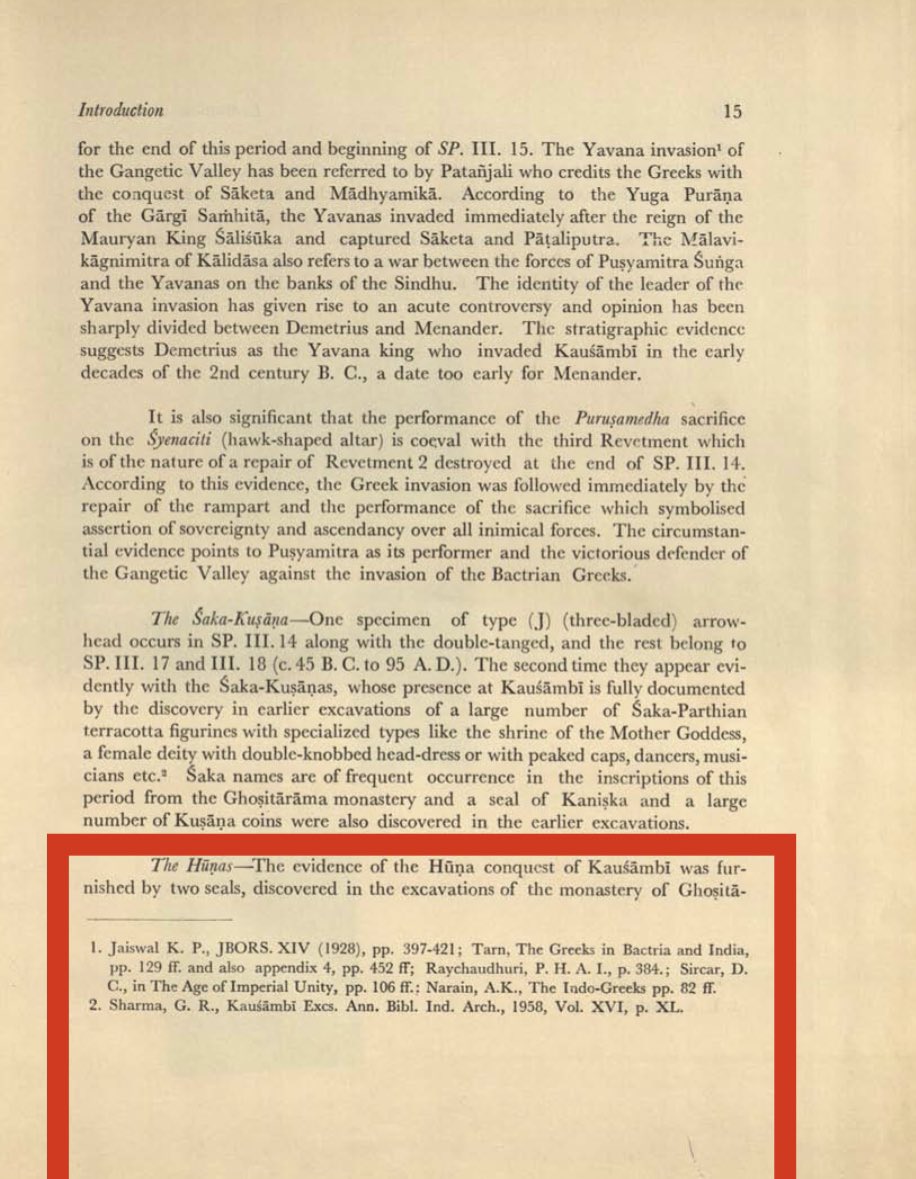
Then he turned east and reached Varanasi and Koshambi. Little distinction was made between soldiers and civilians.
Then he turned east and reached Varanasi and Koshambi. Little distinction was made between soldiers and civilians.
With a virtually unlimited supply of fine horses and barbed arrowheads from Central Asian Huns, Toramana’s juggernaut had few challengers. Koshambi would never recover.
But this was made foreshadowing, for after Toramana came his son, Mihirakula.
But this was made foreshadowing, for after Toramana came his son, Mihirakula.
Unlike his Zoroastrian father, Mihirakula had taken to Shaivism. Shiva’s destructive image appealed to his senses. In a sharp departure from his father’s religious tolerance, he went all-out on everything non-Shaivite in his realm.
The destruction produced by Mihirakula became a subject of folklore. If Buddhists suffered, so did Vaishnavites who had enjoyed somewhat of a patronage under the Guptas before.
The father-son duo ruled for less than 60 years. And then the Huns vanished.
The father-son duo ruled for less than 60 years. And then the Huns vanished.
Just two generations.
They killed and destroyed like nobody had done before. To the victims, it was almost like the end of the world.
When Mihirakula died, the man on Gupta throne was Kumaragupta III. People badly needed a savior. An avatar of Vishnu. Deliverance!
They killed and destroyed like nobody had done before. To the victims, it was almost like the end of the world.
When Mihirakula died, the man on Gupta throne was Kumaragupta III. People badly needed a savior. An avatar of Vishnu. Deliverance!
Of course, the only viable place this incarnation could be imagined was the one dynasty that still held out for the Vaishnavites, despite its military decline, the Guptas.
And who was Kumaragupta’s heir-apparent?
Prince Vishnugupta.
And who was Kumaragupta’s heir-apparent?
Prince Vishnugupta.
And that’s how the legend of Kalki as the destroyer of old world order and restore of a new one was born.
Since the tormentor had horses, Kalki ought to have too. Hence the pristine white stallion.
This was a literal Kalki event.
Indian history has 12 more.
Since the tormentor had horses, Kalki ought to have too. Hence the pristine white stallion.
This was a literal Kalki event.
Indian history has 12 more.
P.S. Further reading on Koshambi’s destruction..
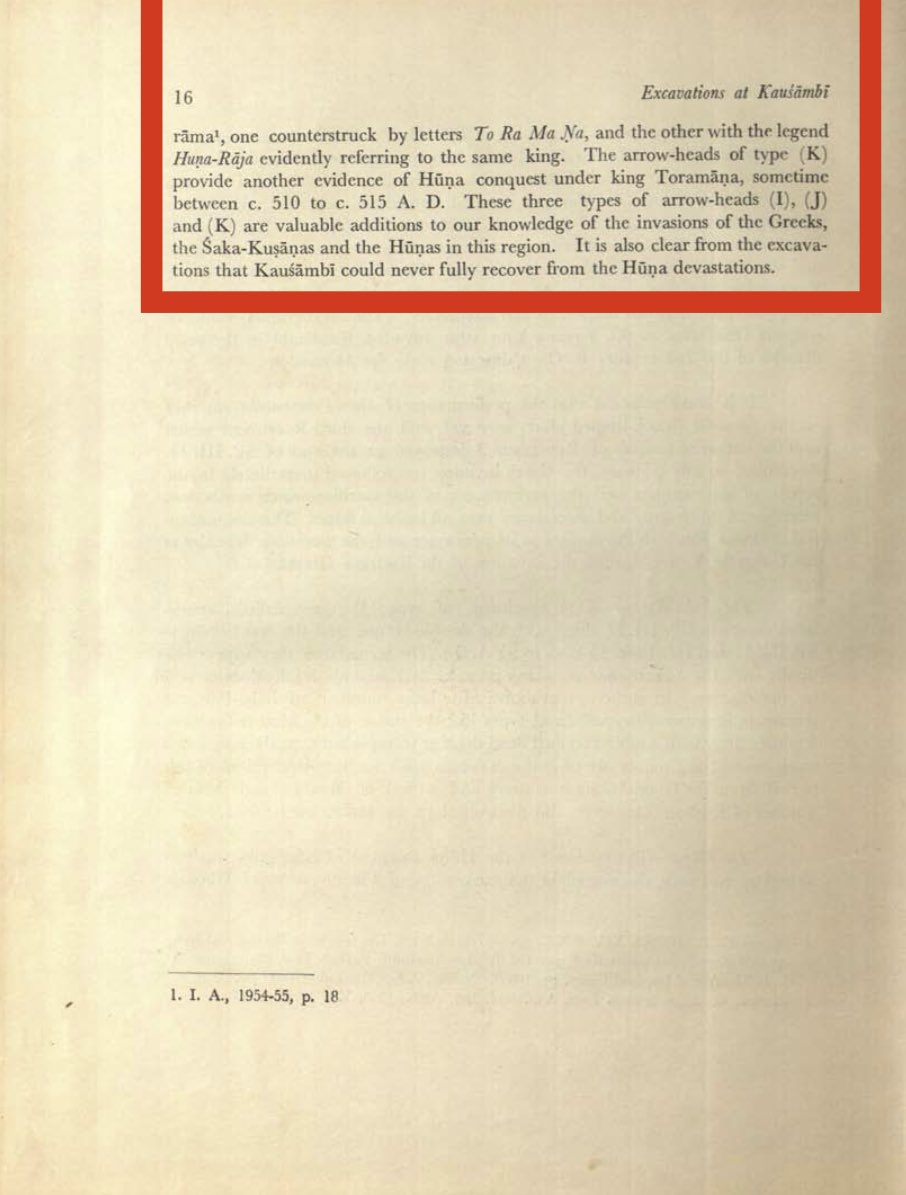
By the way, some traditions go even further and directly assign Kalki’s identity to Mihirakula himself. One 9th century Jain monk even refers to Mihirakula as Kalkiraja!
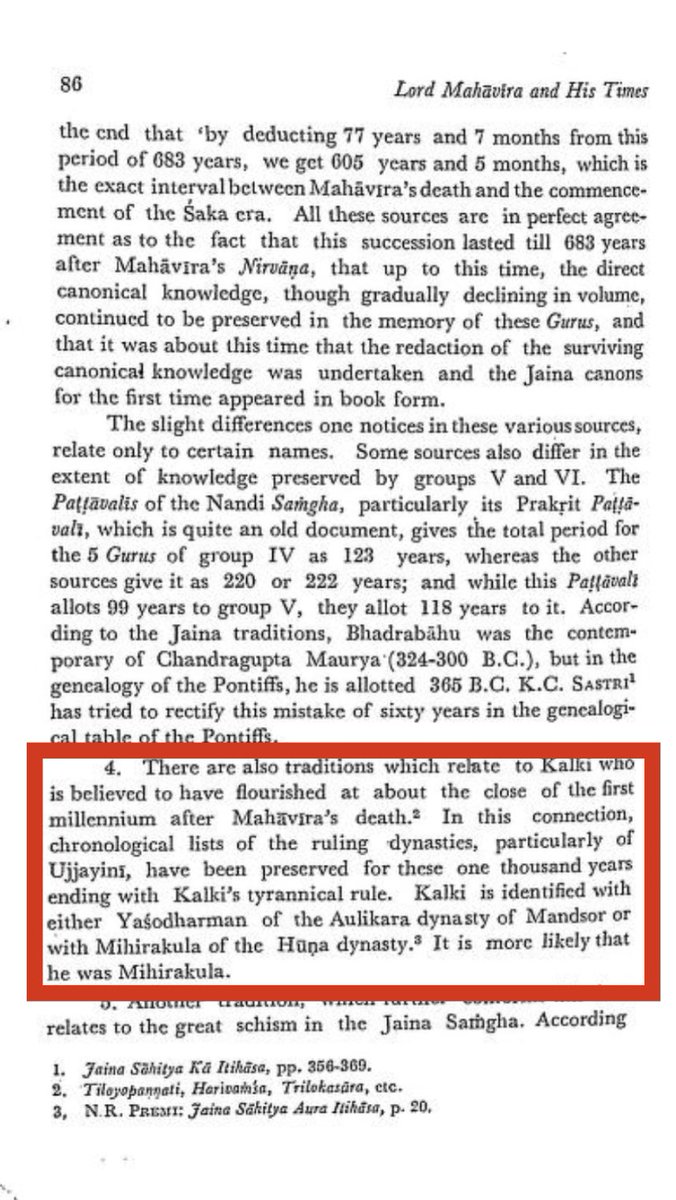
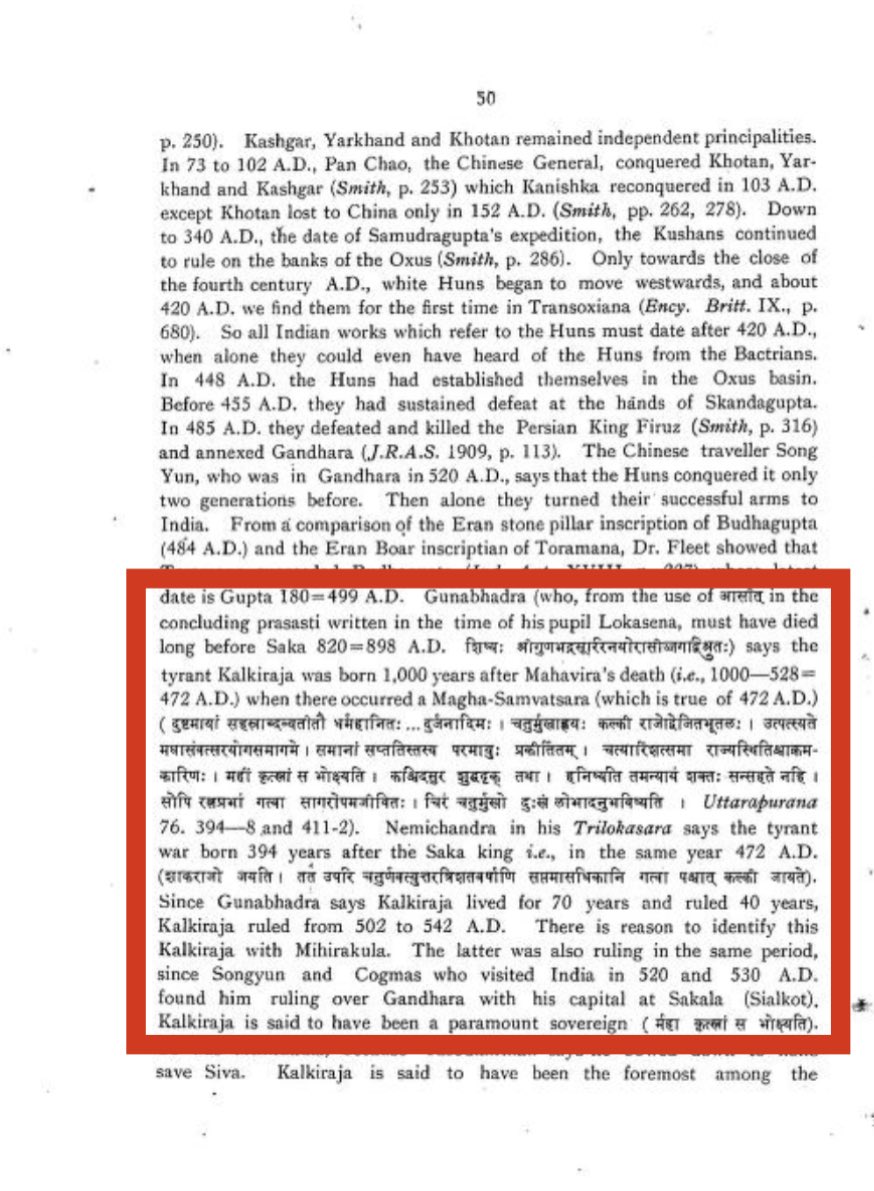
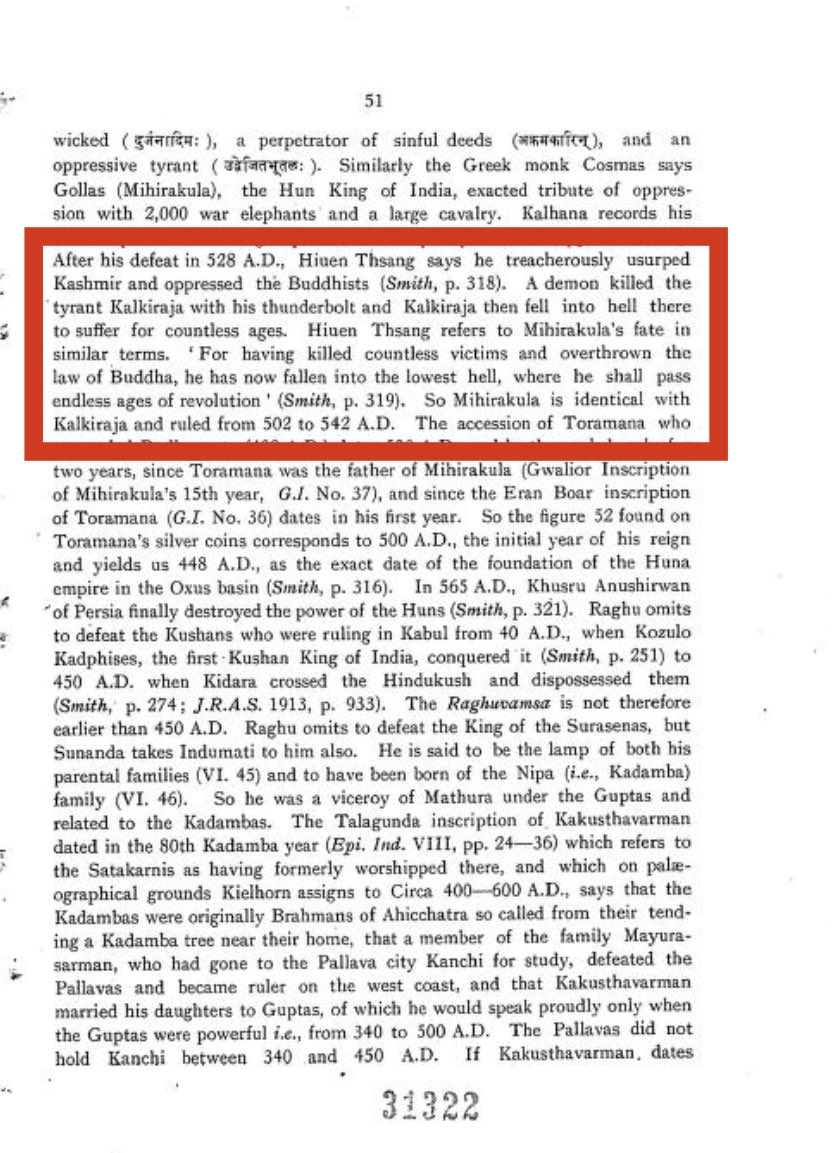
Even closer to Mihirakula’s time than the Jain monk we just met was the famous Chinese travel-blogger Xianzang, better known as Hiuen Tsang. He too referred to Mihirakula as Kalkiraja in his description of the atrocities in Kashmir.
Loading suggestions...