

🧵regarding some technical points about passing drains or chest tubes through the body wall.
Aside from the normal techniques, we will show what to do with the less common 'trocar' type of drains and chest tubes, and also what the 'pointy' part of the chest tube is for.
(1/ )
Aside from the normal techniques, we will show what to do with the less common 'trocar' type of drains and chest tubes, and also what the 'pointy' part of the chest tube is for.
(1/ )


Most commonly, a Jackson-Pratt or similar drain is pulled from the inside out.
A skin incision is made, and a clamp (often a tonsil clamp) is used to grab the end of the drain and pull it through.
A skin incision is made, and a clamp (often a tonsil clamp) is used to grab the end of the drain and pull it through.
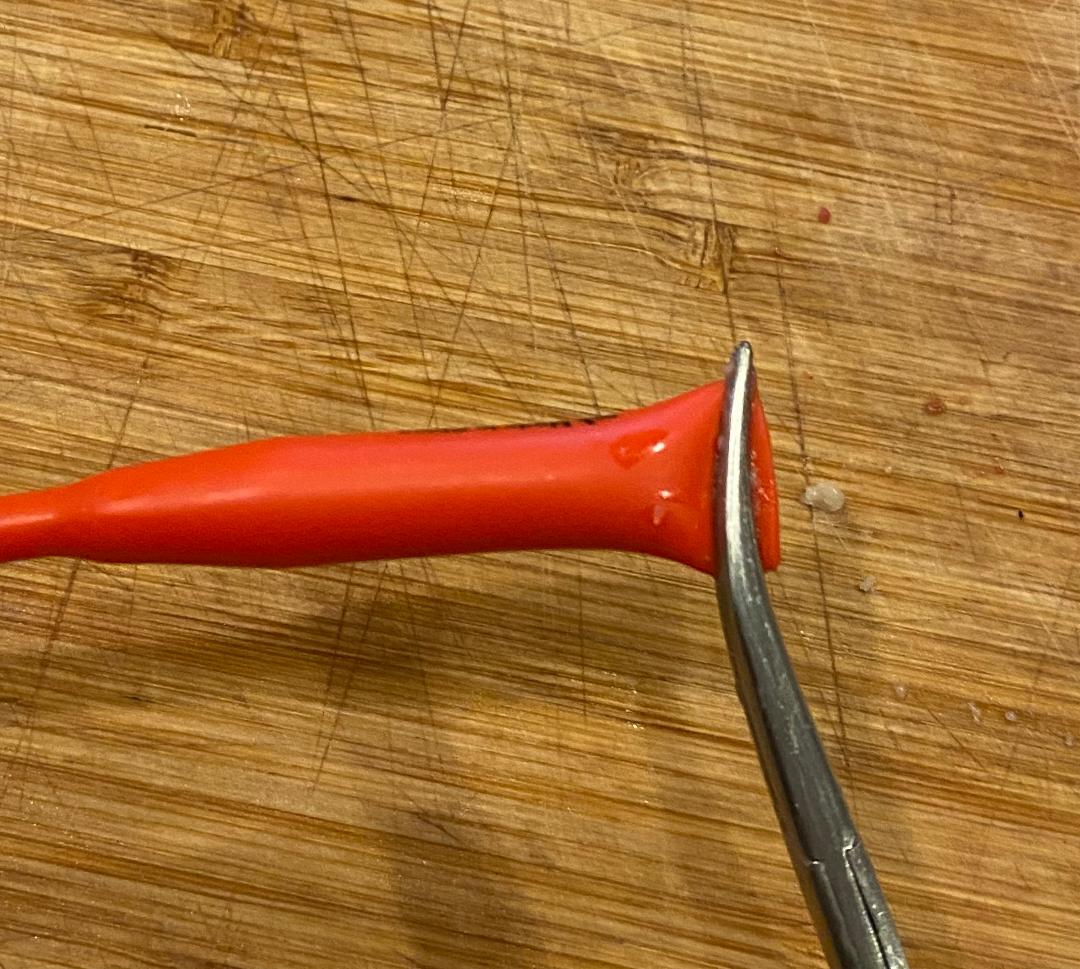
It gets a little harder when you need to pull through a drain that has a wider end, like the red rubber catheter shown here.
If you grab the red rubber catheter in the normal manner, it will flatten out and be hard to pull through because it's wider than the tract in the tissue.
If you grab the red rubber catheter in the normal manner, it will flatten out and be hard to pull through because it's wider than the tract in the tissue.


You can see here that I am able to cram the red rubber drain through the body wall. Here, I am showing it from the inside aspect.
Because the end is so wide, I have to pull noticeably harder than usual, causing more damage to both the tissue and the drain.
Because the end is so wide, I have to pull noticeably harder than usual, causing more damage to both the tissue and the drain.

An alternative way to grab the red rubber drain is like this (perpendicular and near the end). This will tend to help it pass through more easily.
Remember that this is only for instances where the end of the drain is considerably wider than the drain itself.
Remember that this is only for instances where the end of the drain is considerably wider than the drain itself.
Here, I am pulling the drain through using the alternate grip. Again, the view is from the inside.
It's hard to show in the video, but just as I pull it through, I am also rotating the tonsil clamp about 1/4 turn. The drain passes through the body wall much more easily.
It's hard to show in the video, but just as I pull it through, I am also rotating the tonsil clamp about 1/4 turn. The drain passes through the body wall much more easily.

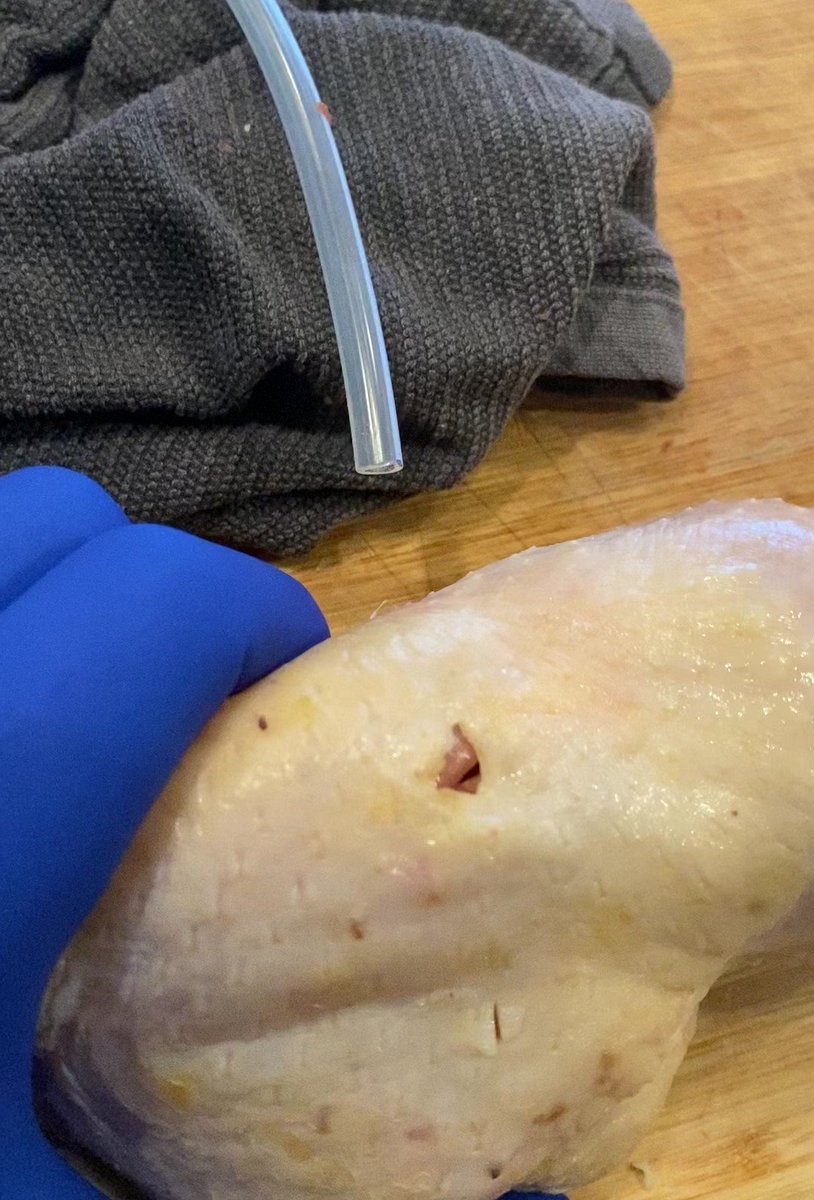
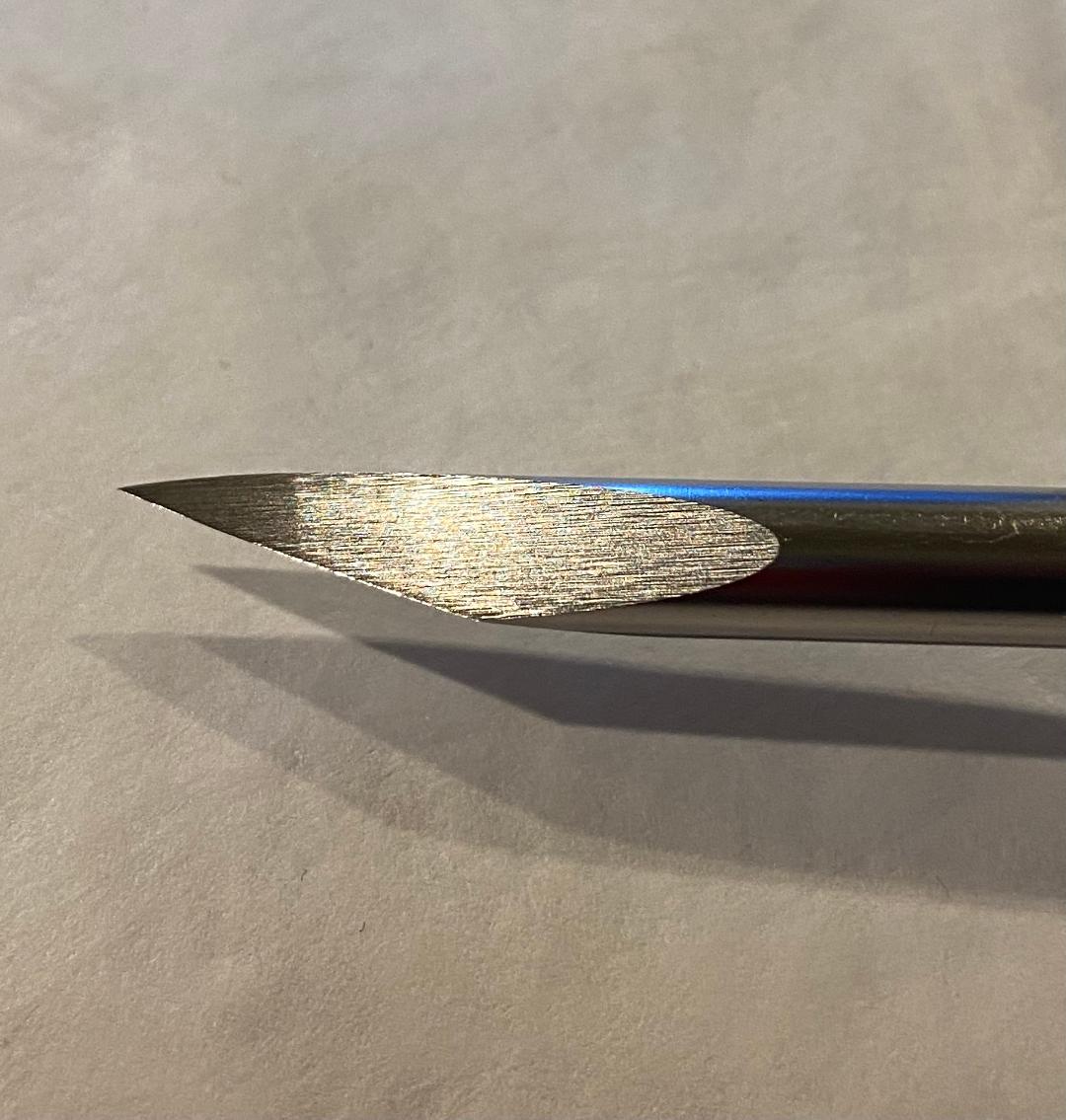
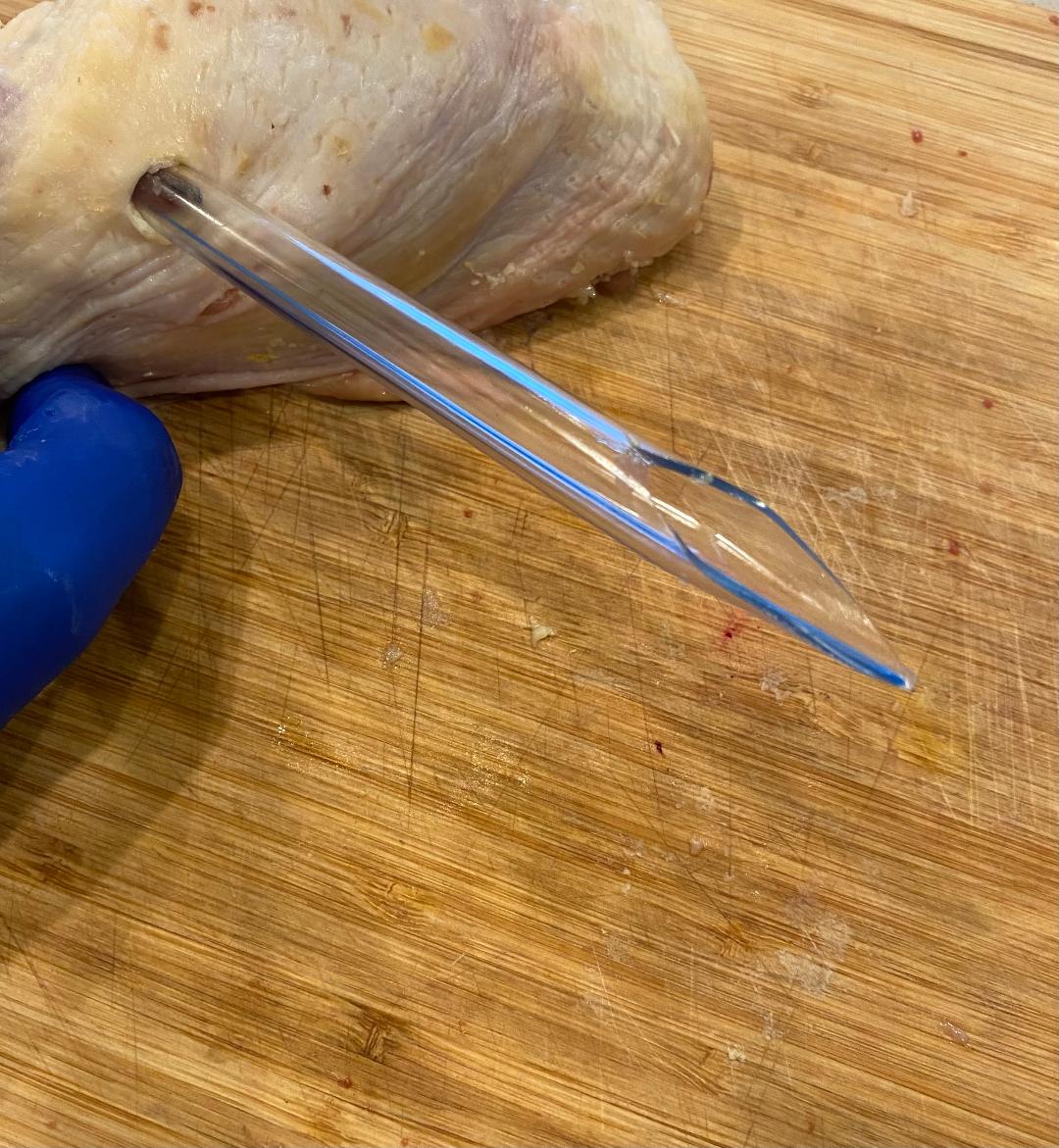
Some drains come with a sharp trocar on one end, though this is much less common. The tip is quite sharp, as seen in the closeup on the R.
These drains are passed through the tissue in the opposite direction - that is they are passed from the inside of the body outward.
These drains are passed through the tissue in the opposite direction - that is they are passed from the inside of the body outward.
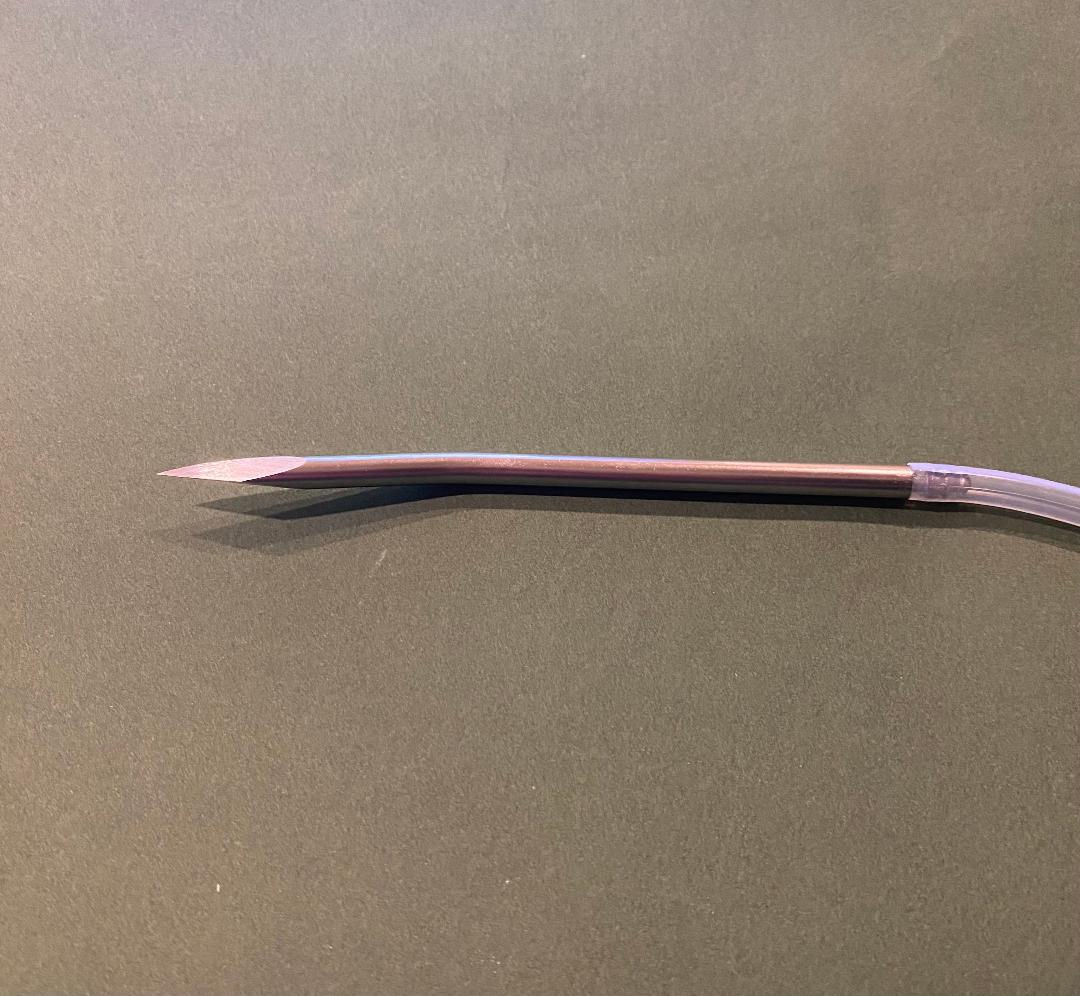
What's not widely known is that the trocars seen on JP drains were first described by Leonidas et al in a small case series (n=300) in which they had a ~100% mortality rate (±5%).
The authors said that further study was needed, and their use continues to this day.
The authors said that further study was needed, and their use continues to this day.
This view is from the inside of the chicken. The trocar of the drain is about to be passed through.
The main advantage is that you are pushing the sharp end *away* from the patient.
The main disadvantage is that it's very very sharp and you can easily injure yourself or others.
The main advantage is that you are pushing the sharp end *away* from the patient.
The main disadvantage is that it's very very sharp and you can easily injure yourself or others.
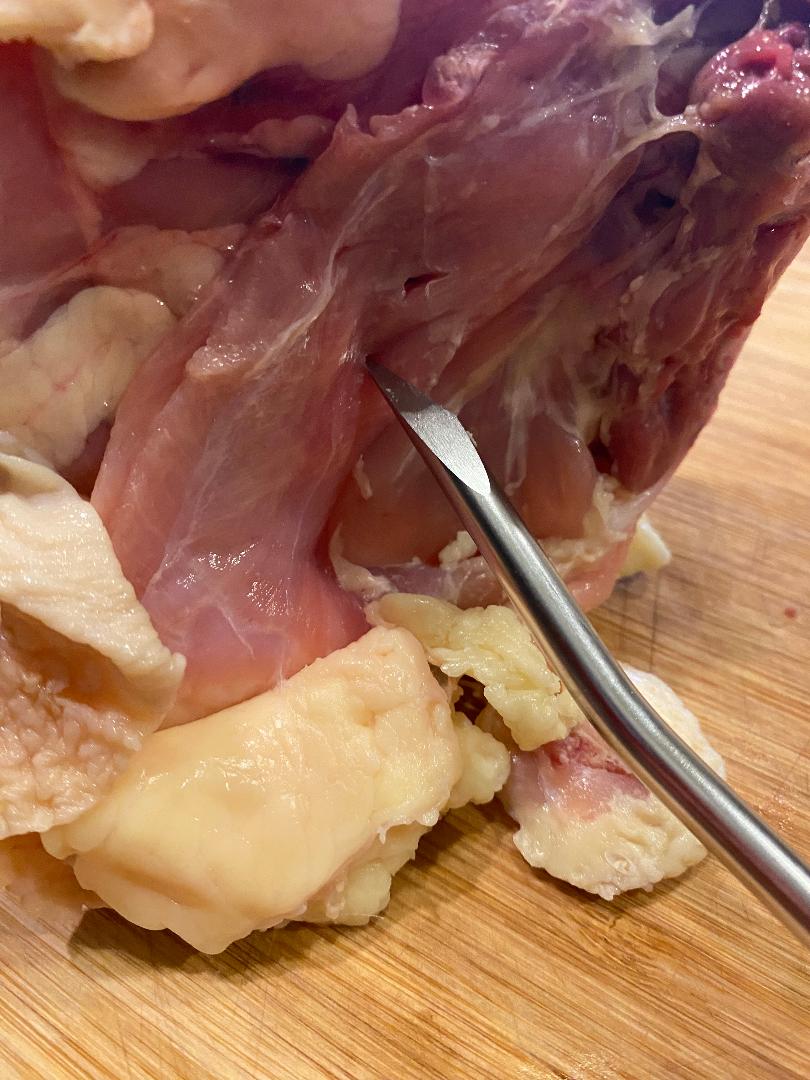
Here you can see the sharp trocar passing through the skin to the outside. Again, it's very sharp and hard, and both the point and the edge are sharp. It will very easily go through any number of gloves and skewer right through your hand or other body parts.

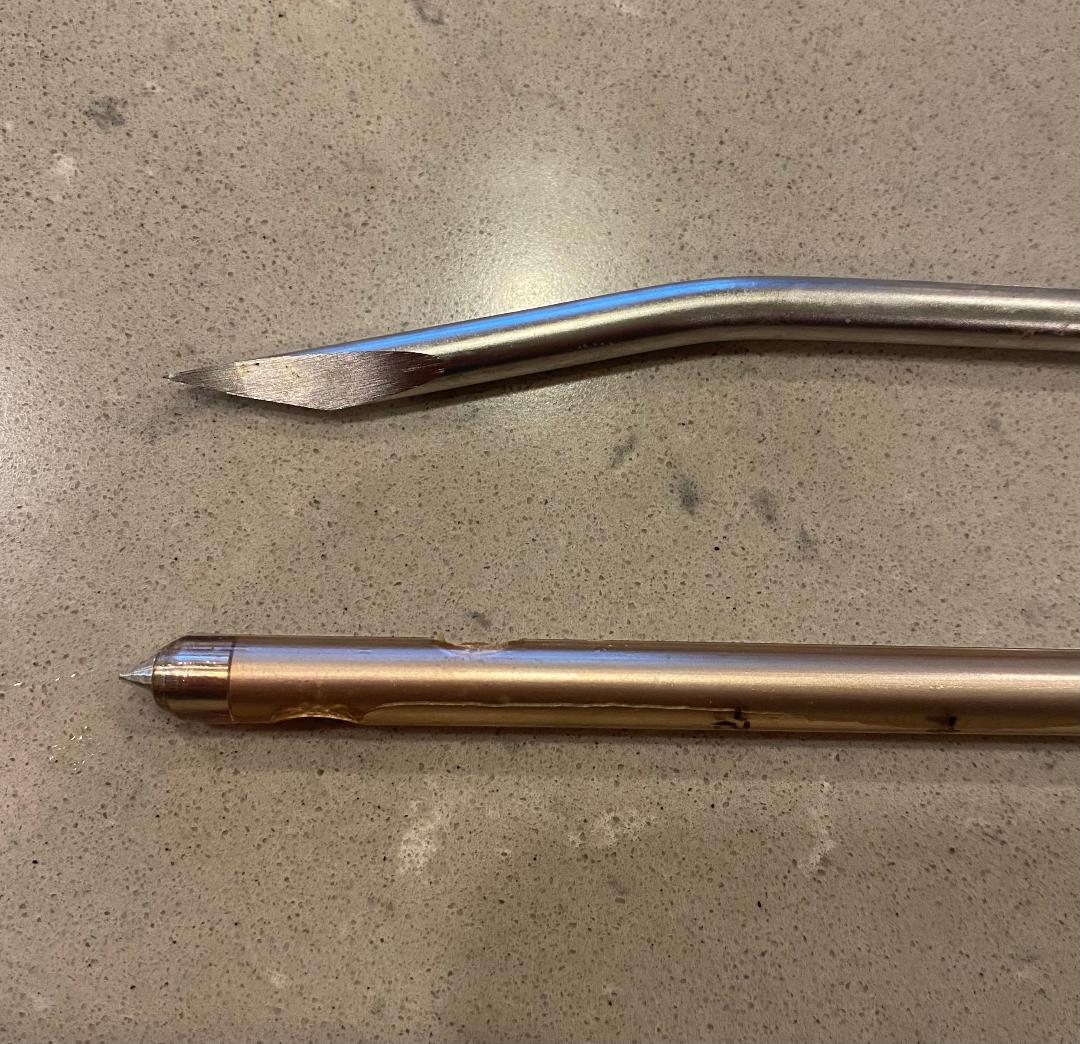
You are probably aware that a standard Argyle chest tube is usually pushed in through the chest wall, usually on a Kelly clamp (L picture).
And you've seen the pointy part that is on the other end of most of the tubes (R picture), but you may not know what it is for.
And you've seen the pointy part that is on the other end of most of the tubes (R picture), but you may not know what it is for.
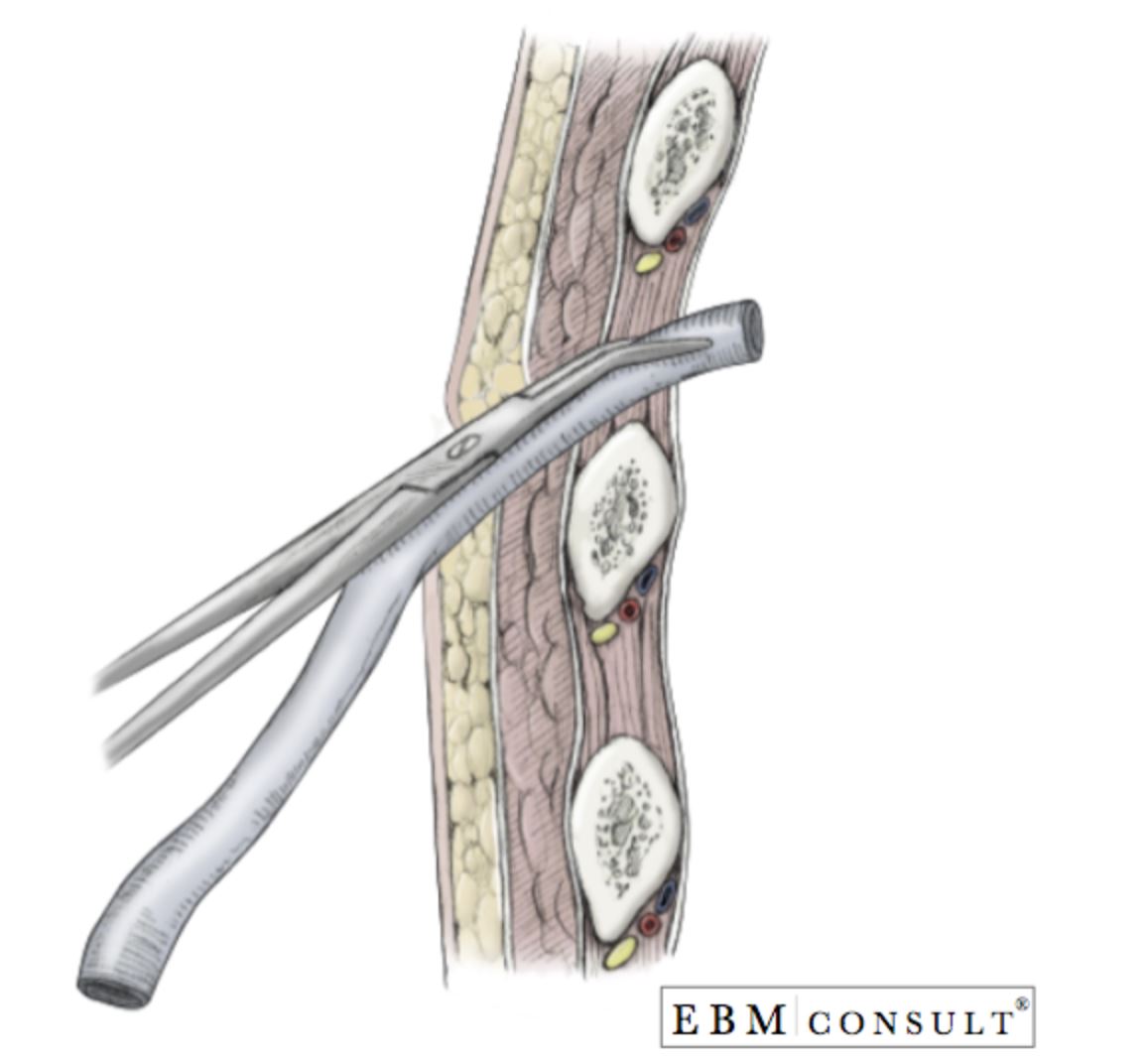
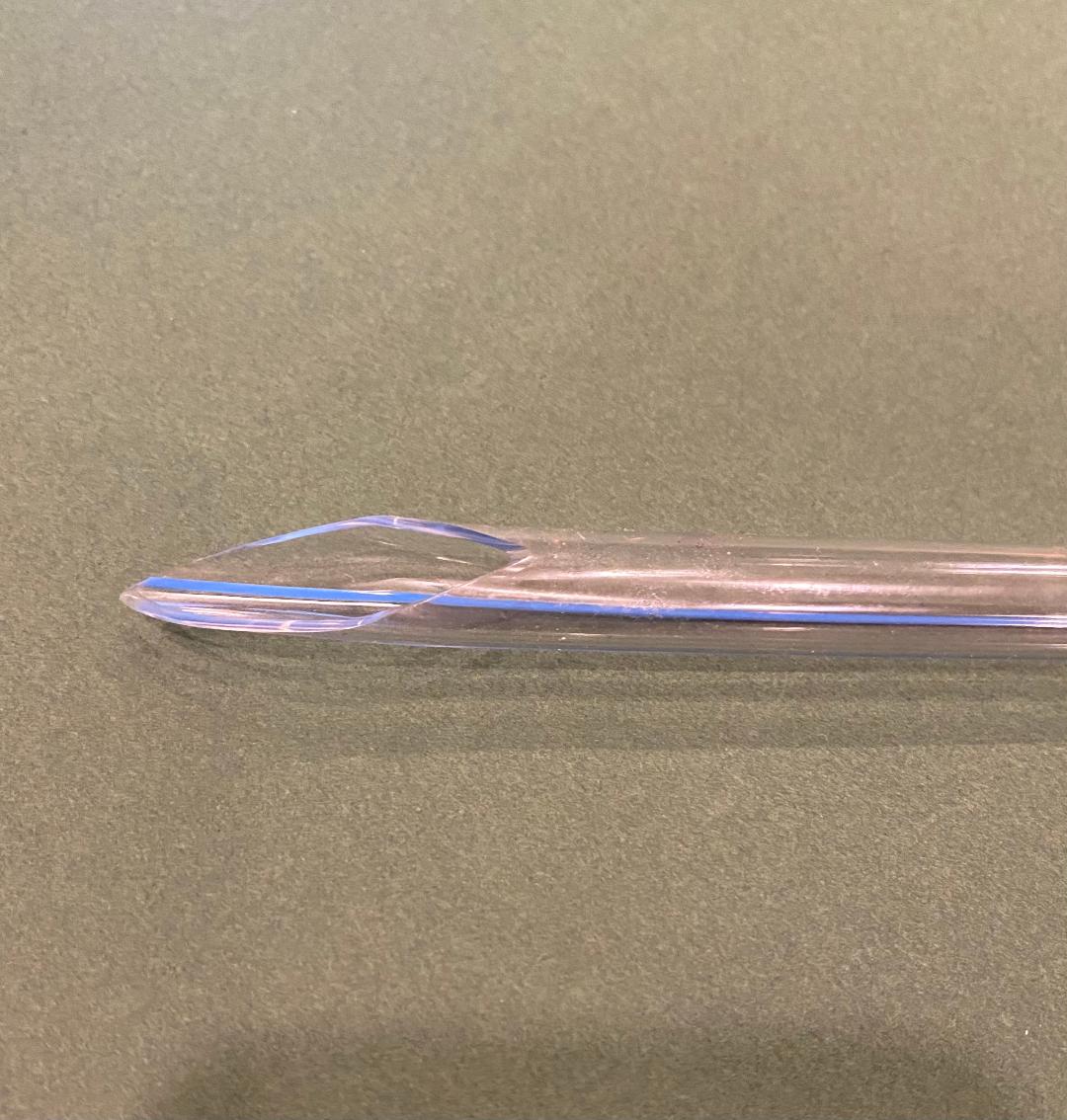
During an open thoracotomy, chest tubes are not usually 'pushed' in, as you would do for a bedside chest tube. Instead, they are dragged outward from the inside, just like a JP drain is.
The only purpose of the pointy part is to make it easier to drag through the chest wall.
The only purpose of the pointy part is to make it easier to drag through the chest wall.

Again, the 'pointy' part of the chest tube is only of relevance in a thoracotomy. It has no function in the normal bedside placement of the chest tube. In either case it should be cut off before attaching the tube to the Pleurevac, as it will make the connection less secure.
Trocar-type chest tubes still exist, but are much rarer. These contain what is basically a big metal spear on the inside, and the tube is pushed in through the chest wall.
On the R side are closeup photos of the tip of the trocar chest tube, both with and without the trocar.
On the R side are closeup photos of the tip of the trocar chest tube, both with and without the trocar.
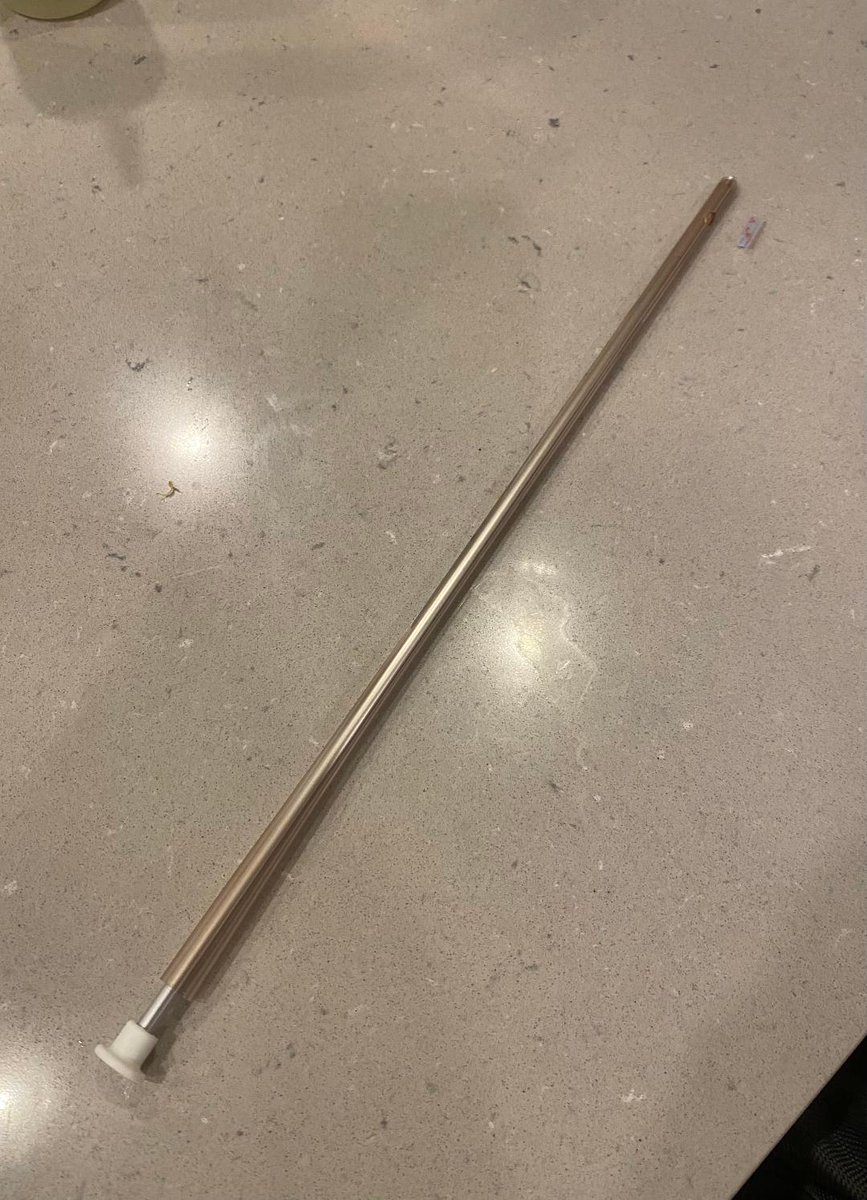
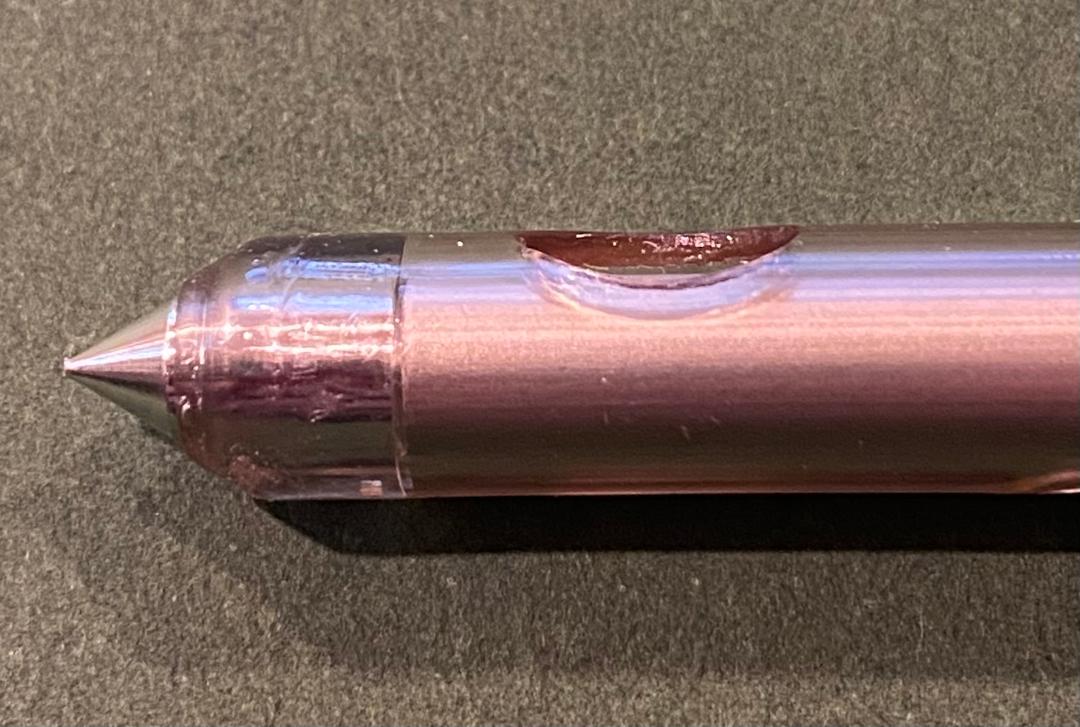
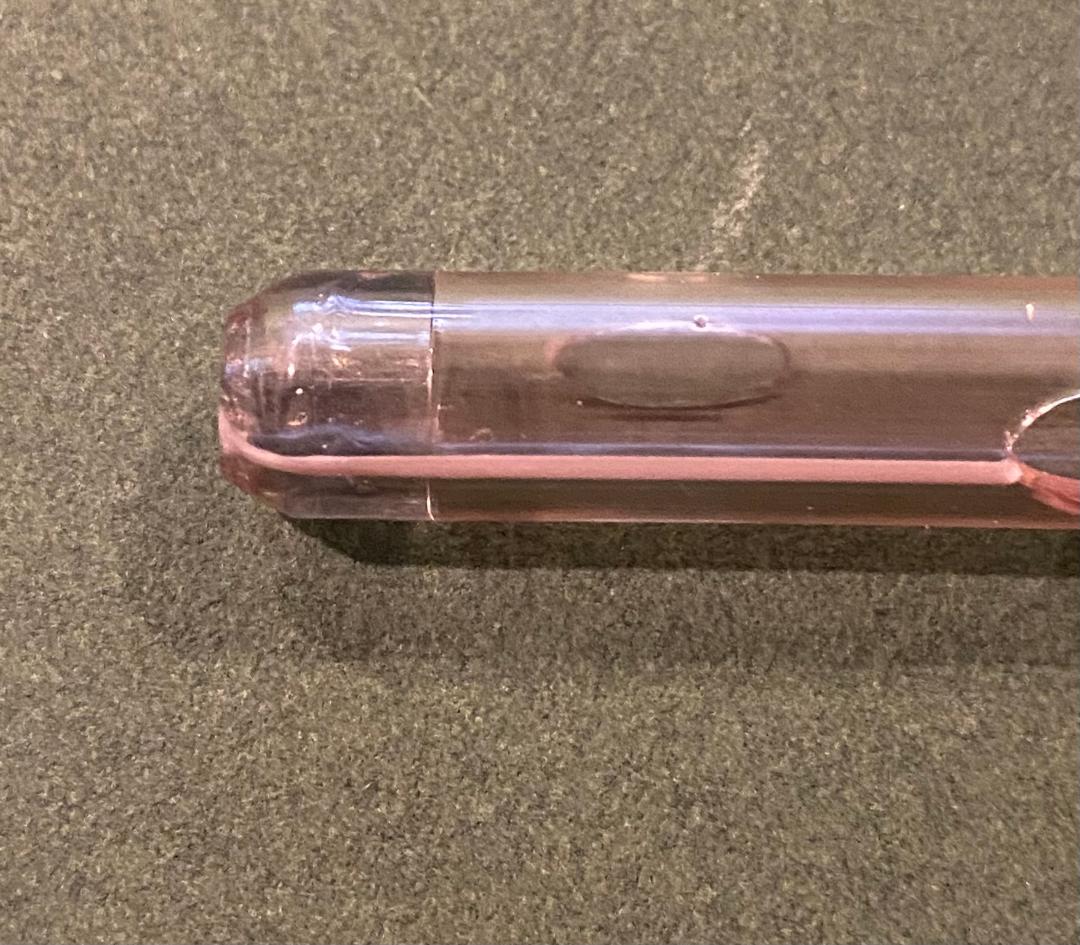
Here, a 'trocar' type chest is passing through the chicken. The advanrage is that the incision can be small, and one need not cram a Kelly clamp or your finger through the chest wall.
Unfortunately, the trocar is sharp and stiff, and you can easily pass it through organs.
Unfortunately, the trocar is sharp and stiff, and you can easily pass it through organs.

Of course, watermelons do not frequently get pneumothoraces, but if they did, and you used a trocar type chest tube, you could easily go through-and-through the entire watermelon before you realized it.

To further illustrate that it's not just the point of the trocar that's sharp, but also the edge, I'll show here that the skin of the watermelon can easily be shaved off with the edge of the trocar.
I keep emphasizing this because it is often the part people cut themselves on.
I keep emphasizing this because it is often the part people cut themselves on.

In summary, the 'trocar' types of drain and chest tubes are rare, but they still exist. On occasion you may be handed one of this type when you go to put in a drain or chest tube. They are usable, but both are dangerous in their own way and you have to be careful with them.
⬛️
⬛️
Loading suggestions...