

How understanding the structure of how a USMLE question is written can help optimize your performance on NBMEs & UW blocks...
In general, here are the building blocks of a USMLE style vignette.

Chief complaint:
∙ Generally broad
∙ The focal point of the patient presentation
🎯 Pay attention to tempo & setting:
∙ ED = acute pathology vs. office setting = indolent process
∙ < 2 wks = acute
∙ 2-4 wks = subacute
∙ >4 wks = chronic
🎯 Create a mini differential
∙ Generally broad
∙ The focal point of the patient presentation
🎯 Pay attention to tempo & setting:
∙ ED = acute pathology vs. office setting = indolent process
∙ < 2 wks = acute
∙ 2-4 wks = subacute
∙ >4 wks = chronic
🎯 Create a mini differential
HPI:
∙ Elaboration of CC
∙ Think of this part as a way to understand more of pt symptoms and progression of disease
🎯 Relate symptoms to pathophysiology
∙ ex: SOB on laying flat = transudative fluid in alveoli
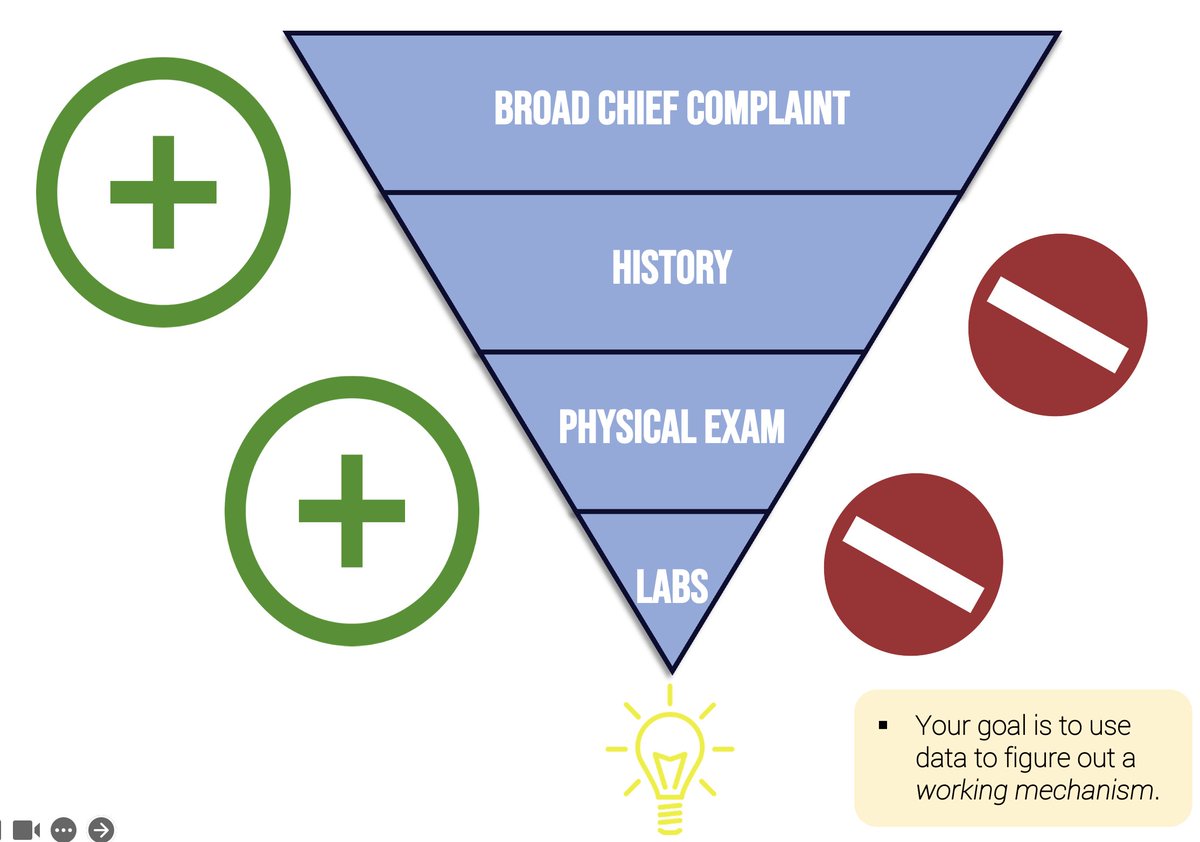
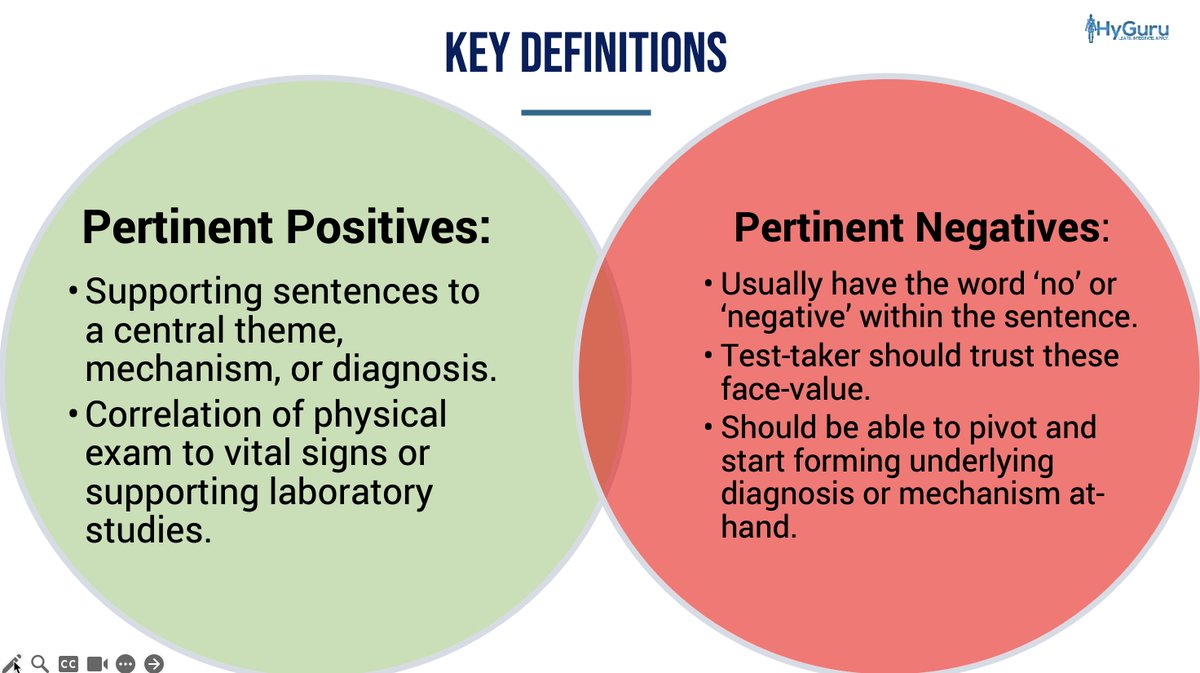
🎯 Hone in on pertinent ⊕ & ⊖
∙ Elaboration of CC
∙ Think of this part as a way to understand more of pt symptoms and progression of disease
🎯 Relate symptoms to pathophysiology
∙ ex: SOB on laying flat = transudative fluid in alveoli
🎯 Hone in on pertinent ⊕ & ⊖
Past Medical History (PMH):
∙ Gives an idea of what pathophysiologies the patient is predisposed towards.
🎯 Relate past medical history back to chief complaint
ex: PMH of DM, Htn, Dyslipidemia = atherosclerosis so now chest pain may be more 🫀
∙ Gives an idea of what pathophysiologies the patient is predisposed towards.
🎯 Relate past medical history back to chief complaint
ex: PMH of DM, Htn, Dyslipidemia = atherosclerosis so now chest pain may be more 🫀
Medications:
∙ Relate to PMH
∙ 3+ meds in a question could mean that the pt's chief complaint is due to a side effect or interaction of the medications
🎯 Active recall of MOA of meds helps you:
1️⃣ Understand how they modulate pathophys
2️⃣ Recall HY side effects
∙ Relate to PMH
∙ 3+ meds in a question could mean that the pt's chief complaint is due to a side effect or interaction of the medications
🎯 Active recall of MOA of meds helps you:
1️⃣ Understand how they modulate pathophys
2️⃣ Recall HY side effects
Social History:
∙ Stratifies patient as high risk vs. low risk based on lifestyle risk factors
🎯 Social history is important in understanding:
1. STI risk
2. Cancer risk
3. Pneumoconiosis
4. Atherosclerosis risk (i.e. from 🚬)
5. Immune status
∙ Stratifies patient as high risk vs. low risk based on lifestyle risk factors
🎯 Social history is important in understanding:
1. STI risk
2. Cancer risk
3. Pneumoconiosis
4. Atherosclerosis risk (i.e. from 🚬)
5. Immune status
Family History (FMH):
∙ Helps to identify genetic diseases or atopic states that the patient may be predisposed towards!
∙ Helps to identify genetic diseases or atopic states that the patient may be predisposed towards!
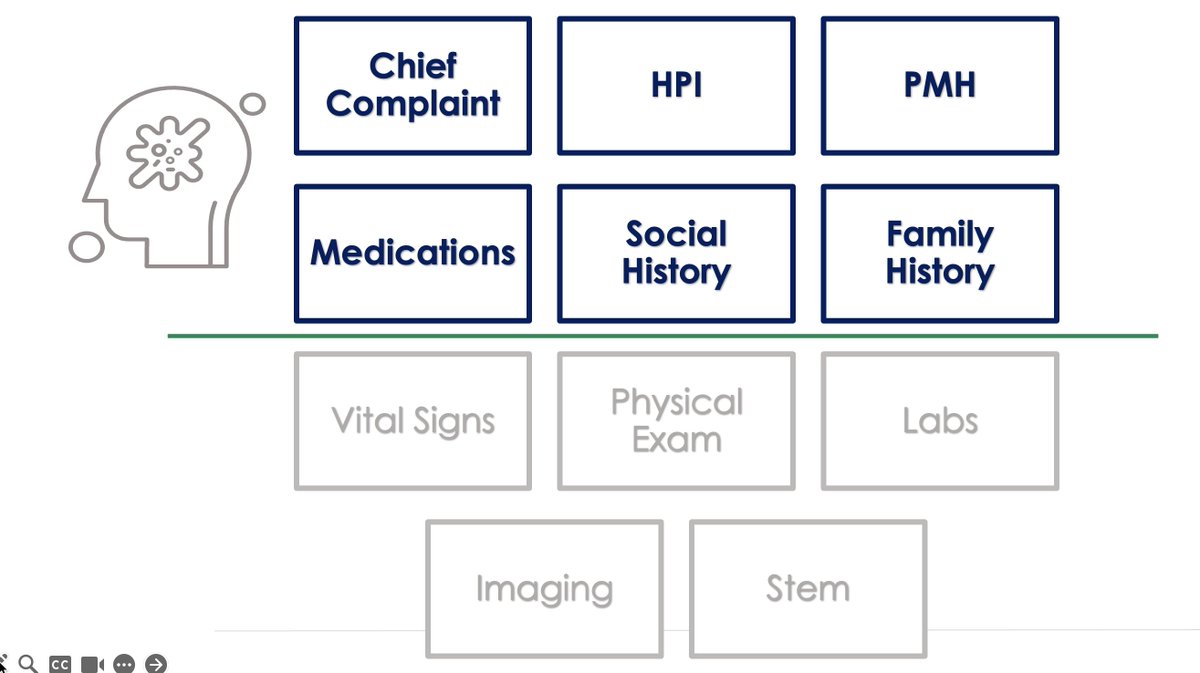
🛑 Now comes an important transition point in a vignette.
The building blocks thus far were from patient perspective.
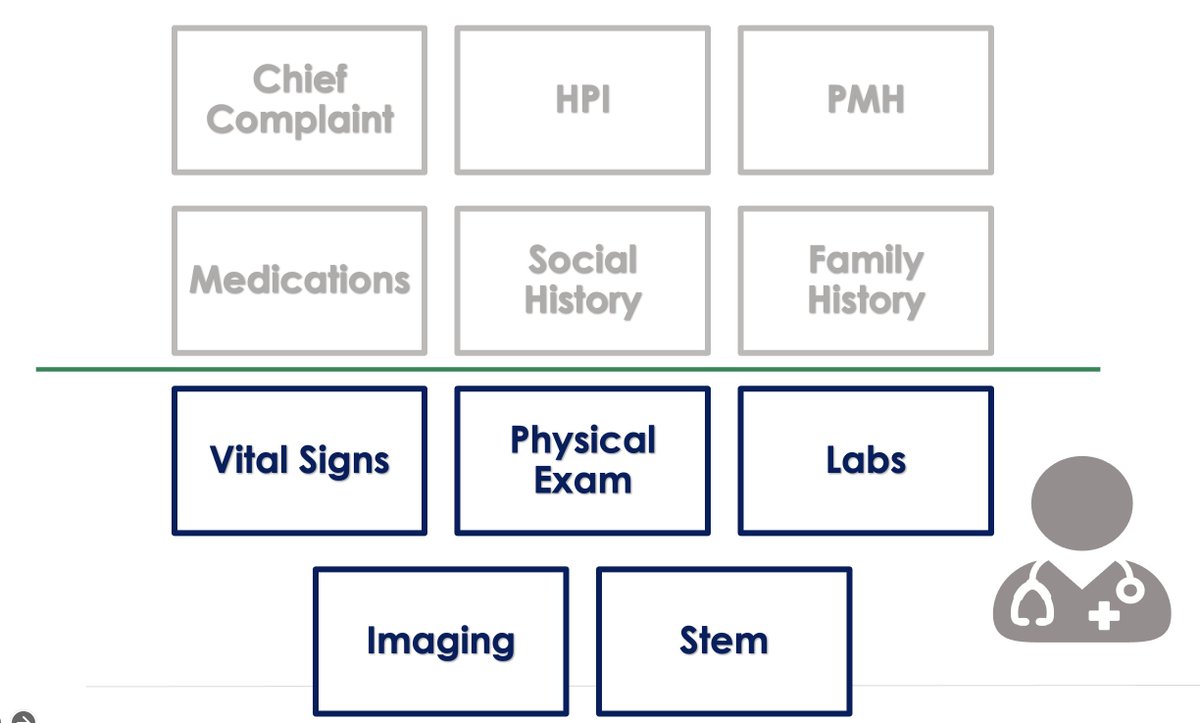
Now, we look at the (same) pathophysiologic mechanism from more of an objective/physician lens.
The building blocks thus far were from patient perspective.
Now, we look at the (same) pathophysiologic mechanism from more of an objective/physician lens.
Vital Signs:
∙ Quantitative data to help assess stability & systemic manifestations of disease
🎯 Fever = infectious or inflammatory
🎯 When vitals are unstable think SHOCK!
∙ Quantitative data to help assess stability & systemic manifestations of disease
🎯 Fever = infectious or inflammatory
🎯 When vitals are unstable think SHOCK!
Physical Exam (PE):
∙ Focused, hands on assessment of the pathophysiology
∙ Relate to the HPI (ex: paroxysmal nocturnal dyspnea in HPI = crackles on PE)
🎯 Understand the physics behind the PE
ex: dullness to percussion of chest = consolidation/fluid in that area!
∙ Focused, hands on assessment of the pathophysiology
∙ Relate to the HPI (ex: paroxysmal nocturnal dyspnea in HPI = crackles on PE)
🎯 Understand the physics behind the PE
ex: dullness to percussion of chest = consolidation/fluid in that area!
Labs/Imaging:
∙ Extension of PE
∙ It's a Kodak moment of the pathophysiology 📸
🎯 Know 'why' behind the lab tests
ex: BNP = stretching of atria due to volume overload
∙ Extension of PE
∙ It's a Kodak moment of the pathophysiology 📸
🎯 Know 'why' behind the lab tests
ex: BNP = stretching of atria due to volume overload
Stem 🍒
1️⃣ Step 1 stems like to test more mechanisms & diagnoses.
2️⃣Step 2 stems like to test diagnoses, next best step, and risk factors.
1️⃣ Step 1 stems like to test more mechanisms & diagnoses.
2️⃣Step 2 stems like to test diagnoses, next best step, and risk factors.
Tl;dr:
1. Each line of vignette is a building block that serves as a pertinent ⊕ or ⊖ to an underlying diagnosis or mechanism of disease.
2. The vignette can be divided into two 'perspectives': patient (i.e. subjective) & physician (i.e. objective).
3. Interrelate the blocks
1. Each line of vignette is a building block that serves as a pertinent ⊕ or ⊖ to an underlying diagnosis or mechanism of disease.
2. The vignette can be divided into two 'perspectives': patient (i.e. subjective) & physician (i.e. objective).
3. Interrelate the blocks
Hope this helps you clinically reason & think like the test maker as you approach vignettes for USMLE/NBME exams!
Slowing down & analyzing the vignette line by line will help you understand various patterns in USMLE style questions! 🙂
Best wishes!
Slowing down & analyzing the vignette line by line will help you understand various patterns in USMLE style questions! 🙂
Best wishes!
Loading suggestions...