

The Malaysian ringgit could fall to RM5.00 against the US dollar in the next few months, according to RHB Research.
The firm raised this alarming prediction after the local note surpassed its short-term target of RM4.60.
Here’s why this is happening. 🧵
The firm raised this alarming prediction after the local note surpassed its short-term target of RM4.60.
Here’s why this is happening. 🧵
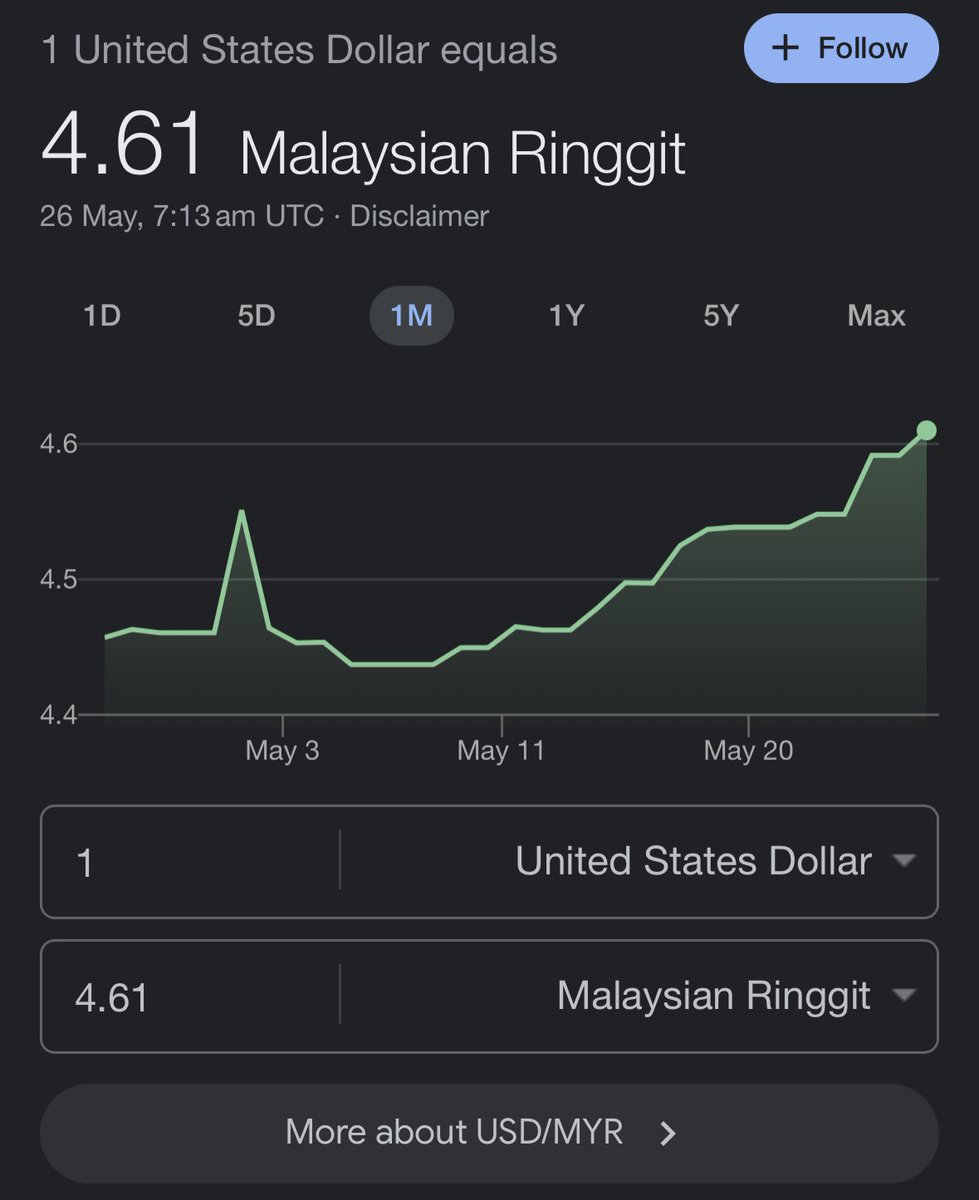
1. The USDMYR pair has been on a relentless upward momentum recently.
In the past 20 days, the greenback surged by 4.34% to a six-month high of RM4.636.
RHB Research has set its sights on RM4.75, and said that it is entirely possible for the dollar to hit RM5.00.
In the past 20 days, the greenback surged by 4.34% to a six-month high of RM4.636.
RHB Research has set its sights on RM4.75, and said that it is entirely possible for the dollar to hit RM5.00.

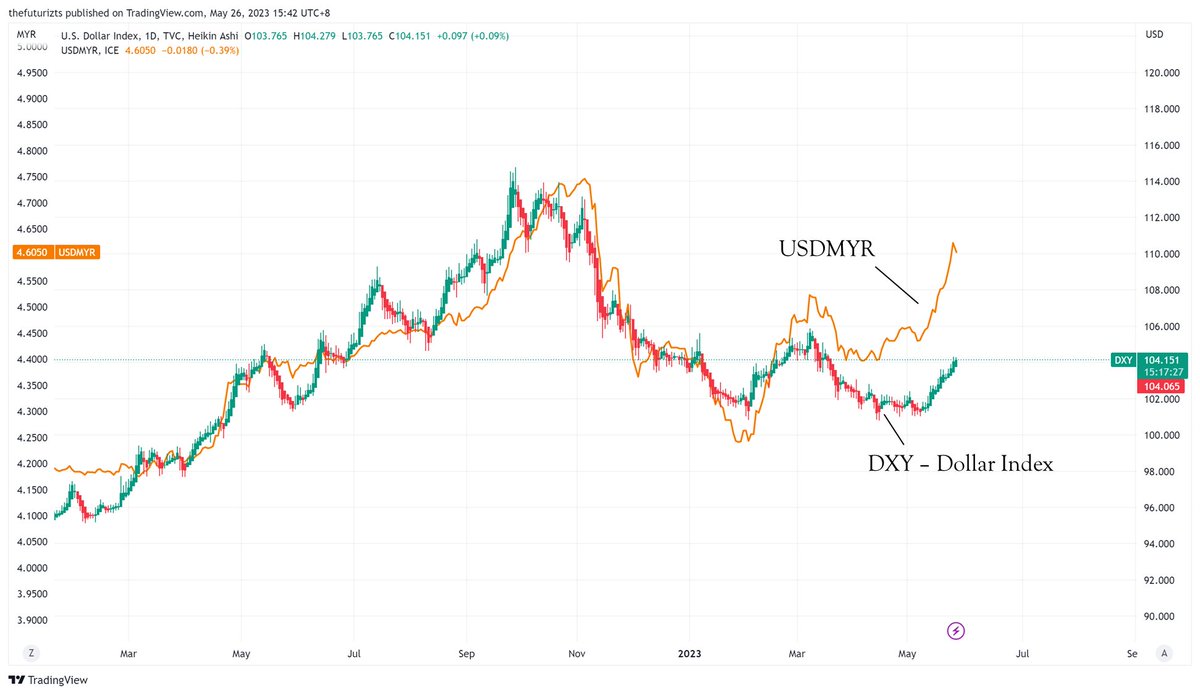
2. If you observe the DXY chart, which compares USD to a basket of other currencies such as euro, yen, and yuan,
you’ll see that it is the dollar that is strengthening, resulting in the weakness of the ringgit.
you’ll see that it is the dollar that is strengthening, resulting in the weakness of the ringgit.
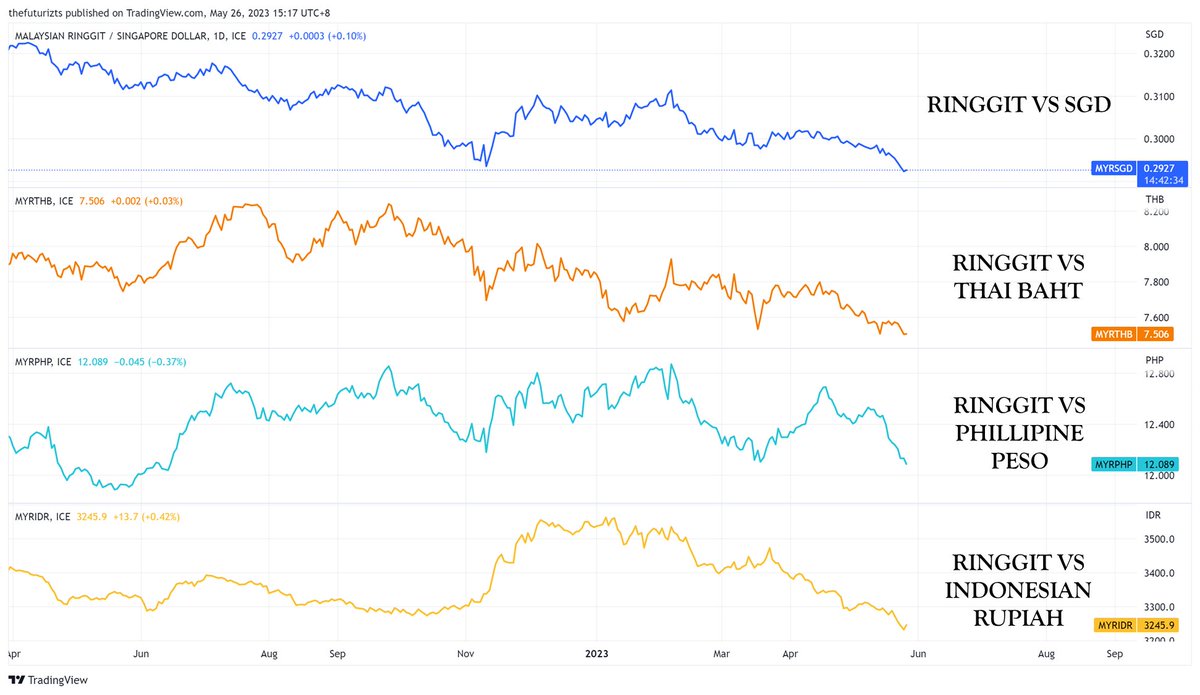
3. The ringgit itself has also been declining.
Our local note has slumped compared to our Southeast Asian counterparts, with the Sing dollar hitting an all-time high of RM3.41 on Thursday.
Economist @sanihamid believes that this is due to foreign net selling of assets.
Our local note has slumped compared to our Southeast Asian counterparts, with the Sing dollar hitting an all-time high of RM3.41 on Thursday.
Economist @sanihamid believes that this is due to foreign net selling of assets.

4. It's important to note that currencies fluctuate due to supply and demand.
Many factors affect this balance, but it mainly comes from the interest rates set by central banks.
The higher the interest rate, the stronger the currency (in a simple sense, at least).
Many factors affect this balance, but it mainly comes from the interest rates set by central banks.
The higher the interest rate, the stronger the currency (in a simple sense, at least).

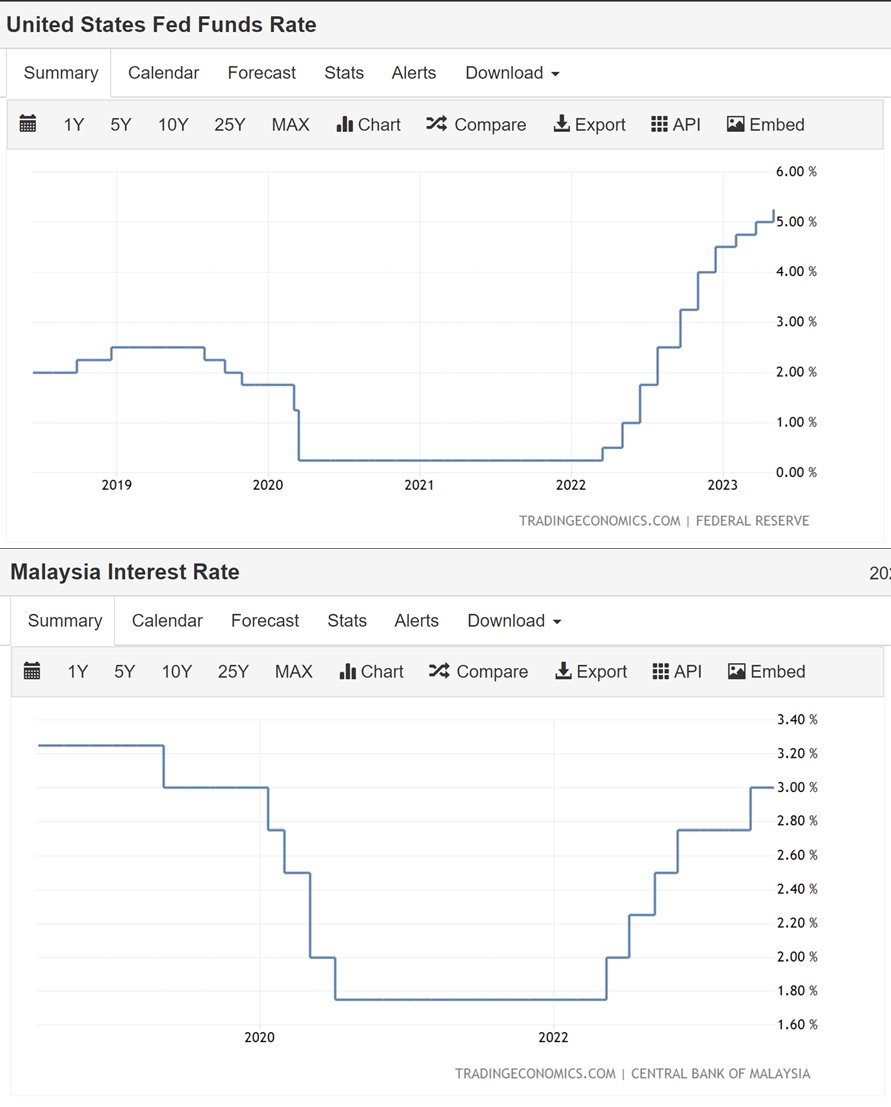
5. In the past year, the Federal Reserve has engaged in its most aggressive tightening campaign in 4 decades.
Interest rates in the US were raised 10 consecutive times, from 0.25% to 5.25% in just 14 months.
Interest rates in the US were raised 10 consecutive times, from 0.25% to 5.25% in just 14 months.
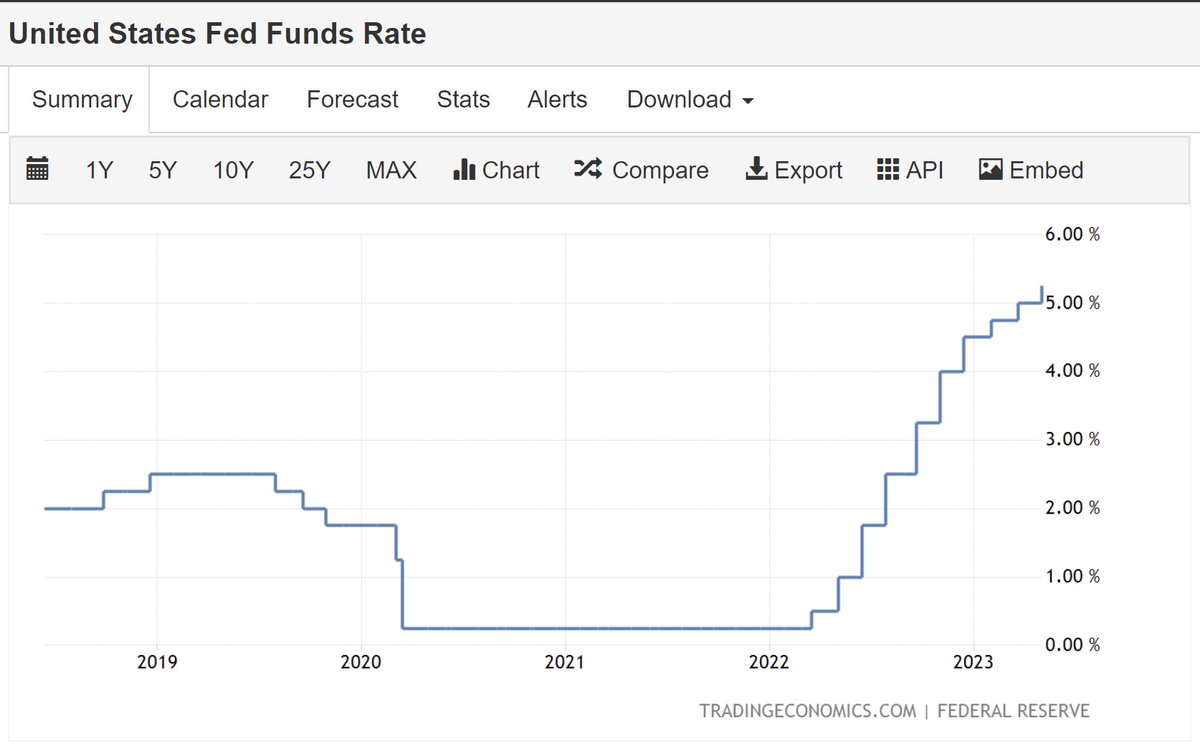
6. When compared to Malaysia, it’s plain to see why our ringgit has weakened significantly.
Though Bank Negara Malaysia (BNM) has raised the Overnight Policy Rate (OPR) five times in the past 12 months, it is nothing compared to the pace of the Fed.
Though Bank Negara Malaysia (BNM) has raised the Overnight Policy Rate (OPR) five times in the past 12 months, it is nothing compared to the pace of the Fed.
7. Why is the US hiking rates?
Inflation.
America's overall CPI jumped to a 40-year high in June due to the pandemic and the Ukraine war.
Supply chains were heavily disrupted, and prices soared through the roof.
Inflation.
America's overall CPI jumped to a 40-year high in June due to the pandemic and the Ukraine war.
Supply chains were heavily disrupted, and prices soared through the roof.

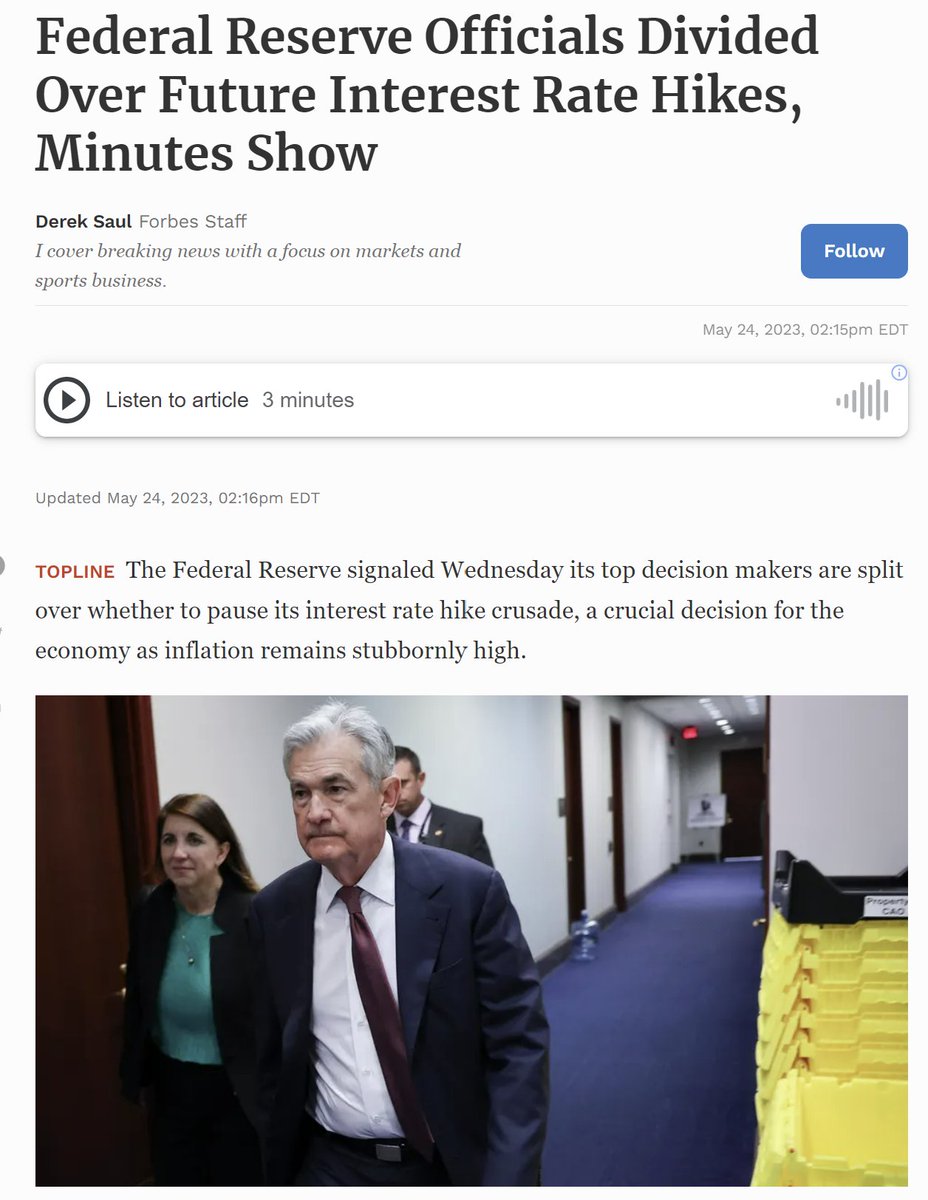
8. More recently, uncertainties in the Fed’s future rate hikes have surfaced again, despite inflation cooling.
In its recent minutes of meeting, the committee was split on whether to pause rate increases while inflation remains at multi-year highs.
In its recent minutes of meeting, the committee was split on whether to pause rate increases while inflation remains at multi-year highs.
9. "BNM should’ve raised the OPR faster to strengthen the ringgit."
This is a valid argument.
But you must understand that unlike the Fed, BNM cannot raise the OPR too quickly, or the rakyat will suffer and Malaysia will fall into a deep recession.
This is a valid argument.
But you must understand that unlike the Fed, BNM cannot raise the OPR too quickly, or the rakyat will suffer and Malaysia will fall into a deep recession.
10. RHB Research says that to bring the ringgit back to the RM4.40-4.60 range, the OPR needs to be hiked to 3.75%.
If this was realized, businesses and homeowners would struggle to repay their existing floating loans, causing a wave of defaults across the country.
If this was realized, businesses and homeowners would struggle to repay their existing floating loans, causing a wave of defaults across the country.
11. Already, the rakyat is suffering from BNM’s OPR hikes.
According to the founder of RinggitPlus, @ooihann, every 25 bps increase in the OPR adds an additional RM35 to a floating loan principal of RM250,000.
According to the founder of RinggitPlus, @ooihann, every 25 bps increase in the OPR adds an additional RM35 to a floating loan principal of RM250,000.
12. What now?
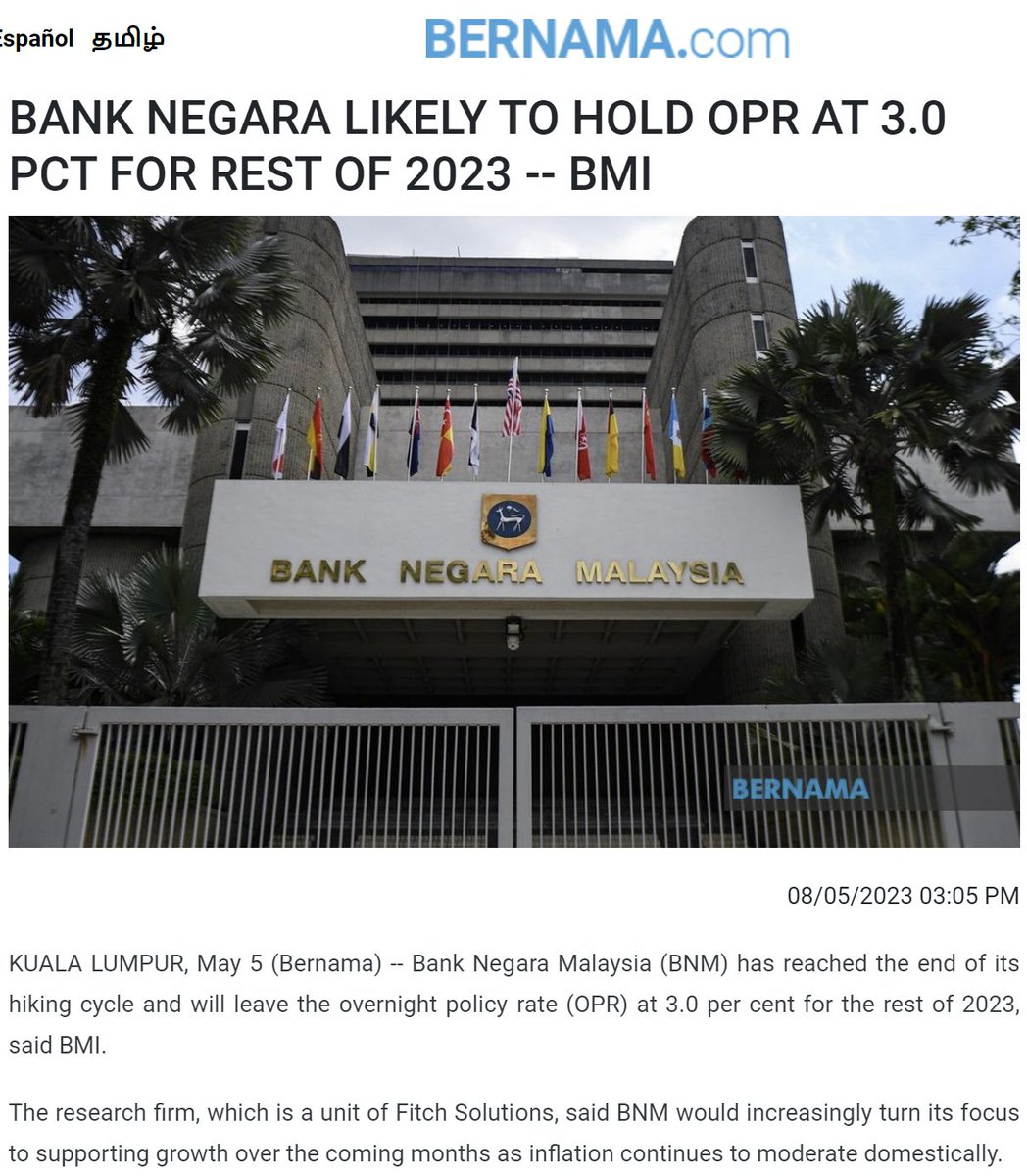
BNM has made it clear that its mandate is to tackle inflation, not to strengthen the ringgit.
Experts believe that the central bank should hold the OPR at 3.0% for the rest of the year, as inflation is forecasted to moderate further.
BNM has made it clear that its mandate is to tackle inflation, not to strengthen the ringgit.
Experts believe that the central bank should hold the OPR at 3.0% for the rest of the year, as inflation is forecasted to moderate further.
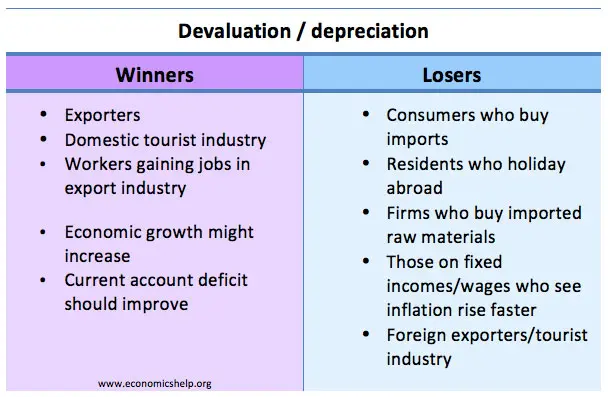
13. How will the weakening ringgit impact me?
• Imported goods will go up in price.
• Confidence in the ringgit will decline.
• Traveling overseas will be more costly.
• Foreign investments opportunities will be more expensive.
• Imported goods will go up in price.
• Confidence in the ringgit will decline.
• Traveling overseas will be more costly.
• Foreign investments opportunities will be more expensive.
TLDR:
The ringgit’s weakness can be attributed to:
• Expectations on BNM to hold the OPR steady at 3.0% for the rest of the year.
• The US Fed to keep rates higher for longer.
• Foreign net selling of assets.
The ringgit’s weakness can be attributed to:
• Expectations on BNM to hold the OPR steady at 3.0% for the rest of the year.
• The US Fed to keep rates higher for longer.
• Foreign net selling of assets.
Thanks for reading till end!
If you like what you’ve read, consider joining our private announcement group to start receiving daily market notifications from us.
It’s only $1/month, and you can cancel anytime:
patreon.com
If you like what you’ve read, consider joining our private announcement group to start receiving daily market notifications from us.
It’s only $1/month, and you can cancel anytime:
patreon.com


You may also be interested in:
Loading suggestions...