

Spain is renowned for its Islamic heritage. A legacy left after the Islamic Empire ruled & conquered the Iberian peninsula in 711. By 732, Al-Andalus was established, leaving behind Europe’s finest Islamic art collection.
A thread on Islamic architecture in Spain, reimagined…
A thread on Islamic architecture in Spain, reimagined…
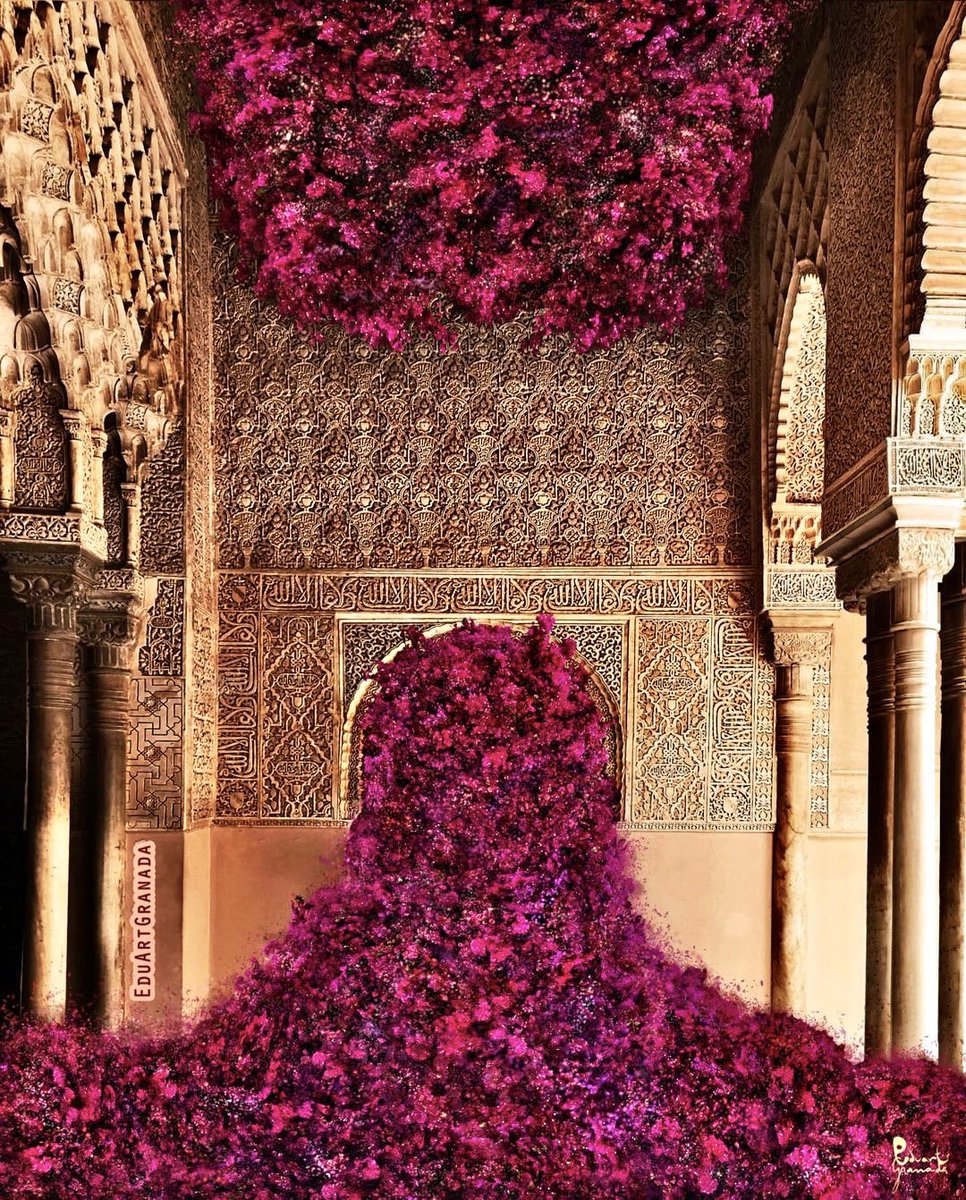
1/ In Spain, Islamic architecture is part of a larger movement that flourished in the Western Mediterranean area, leaving architectural marvels in modern Morocco, Tunisia, Libya, and Algeria.
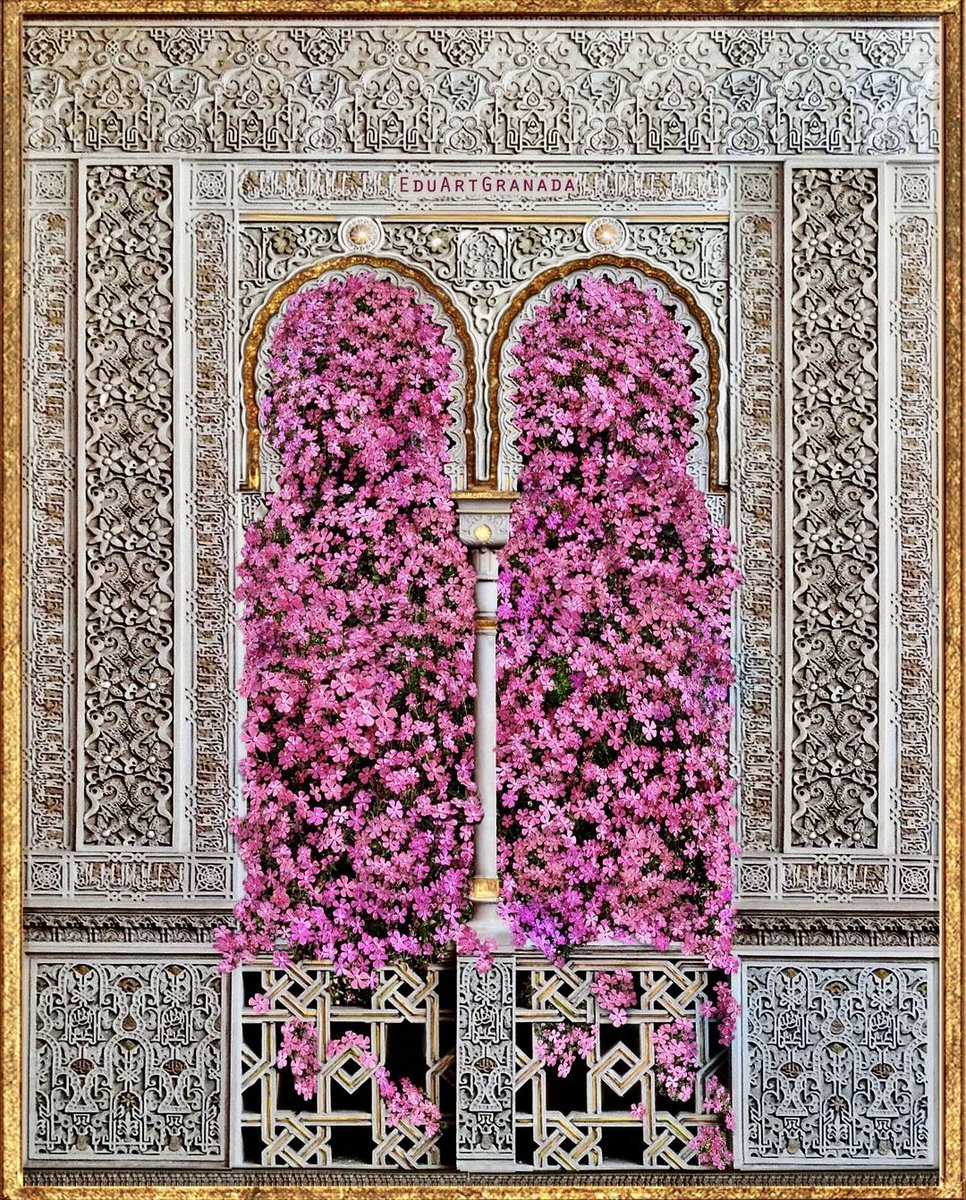
2/ Architecture and art are inextricably linked in Islamic culture. Islamic art showed the status of the caliph, and huge sums were spent on its production. This is evident in Andalusia.
Gate of Comares in bloom.
Gate of Comares in bloom.
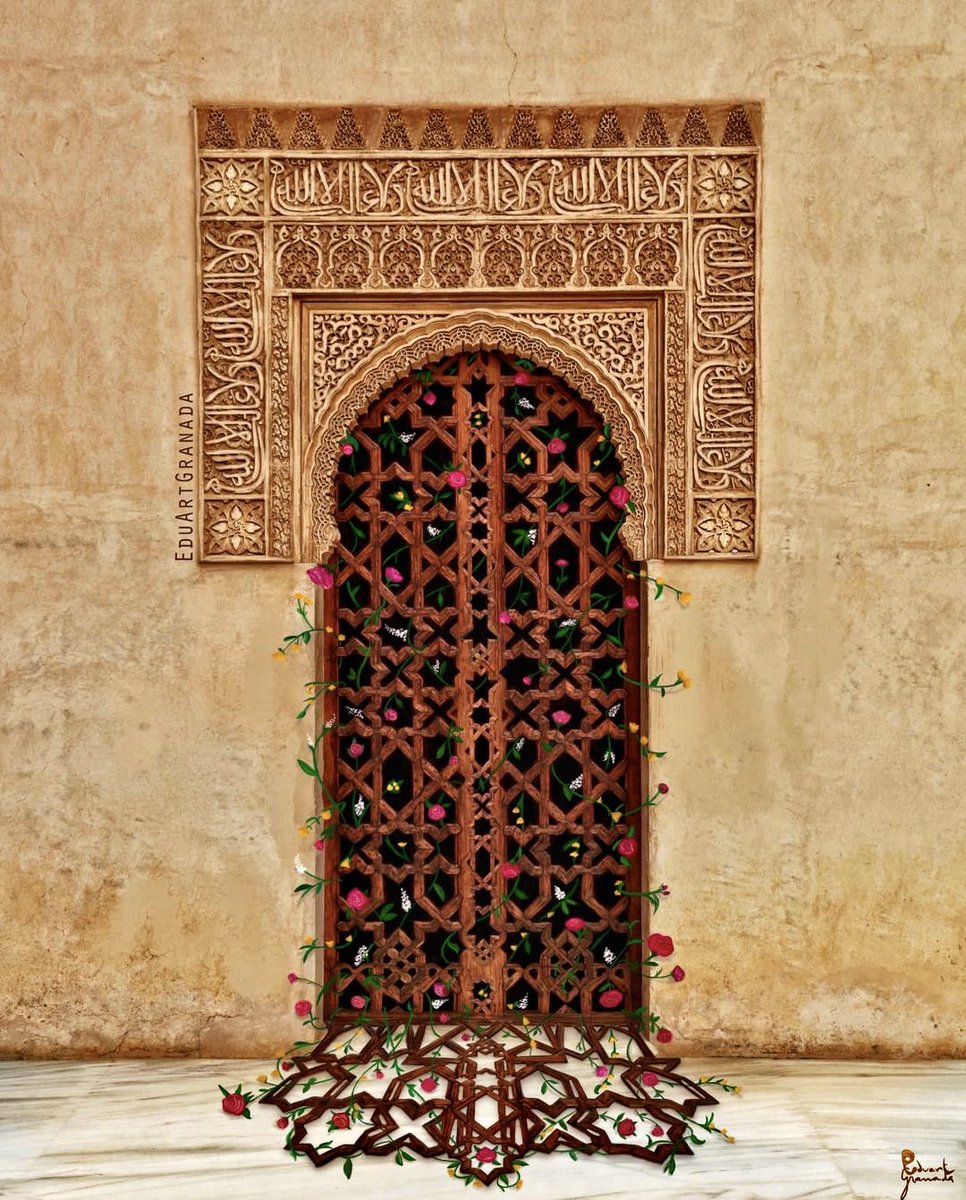
3/ Islamic art in Andalusia is described in several terms, each with a unique meaning. "Moorish art" is the most commonly used term. A less well-known term is Mudéjar, which describes the architecture created for Christian patrons by Muslim craftsmen
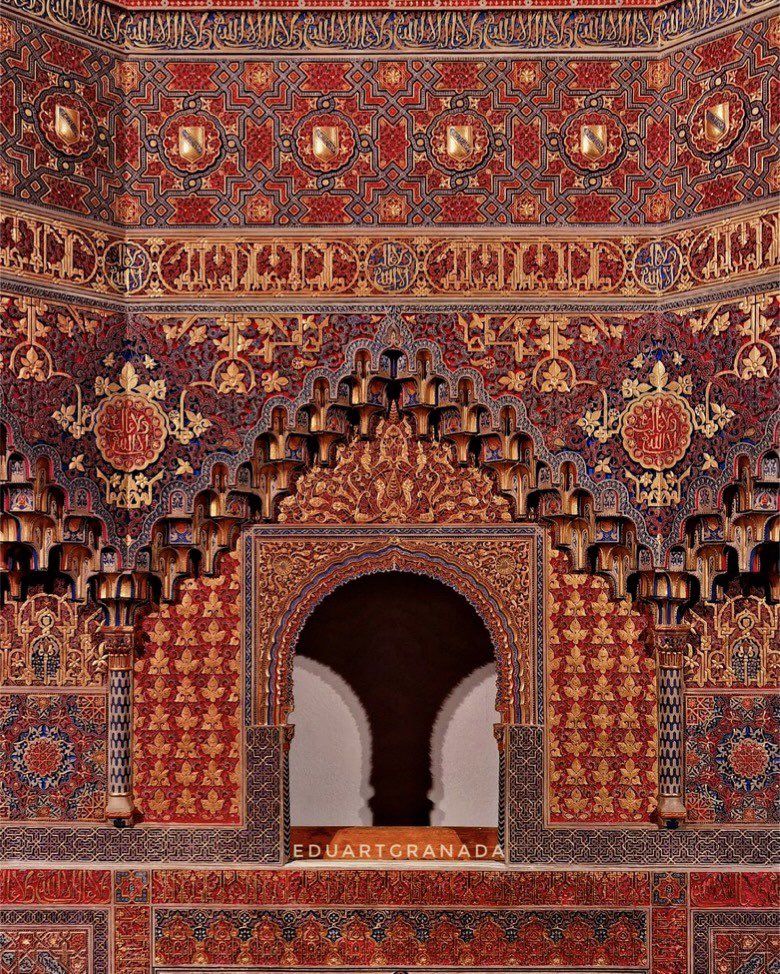
4/ The Moors originally “Maurus” in Latin, was used to describe Berbers and inhabitants of North Africa. Later, it referred to Muslims of Spain until King Phillip III of Spain decreed their expulsion
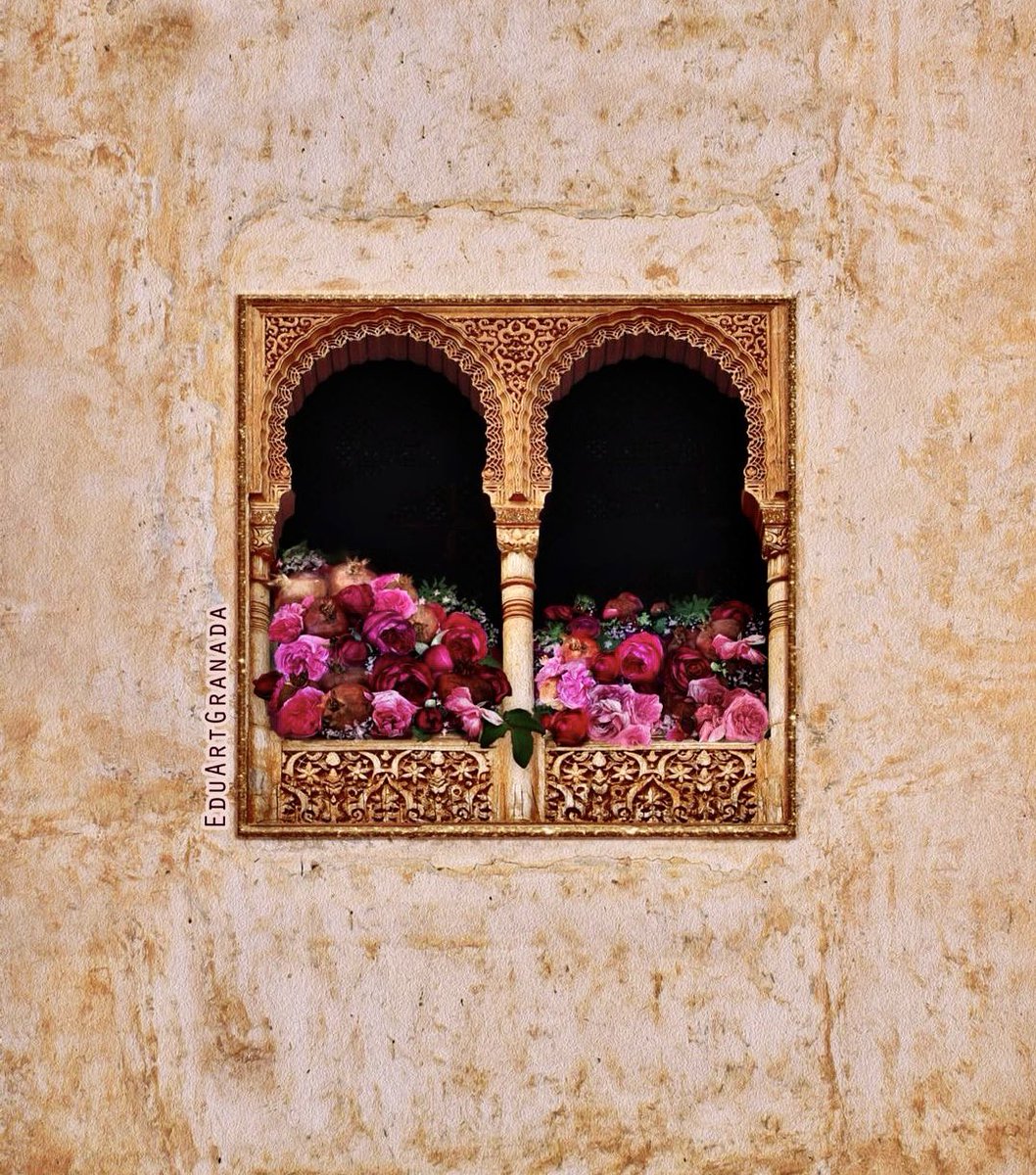
5/ Moorish art is characterised by its intricate and complex geometry, floral motifs, and horseshoe arches as well as its use of shade and light as can be found in Alhambra, The Alcazar of Seville & The Giralda Tower among others
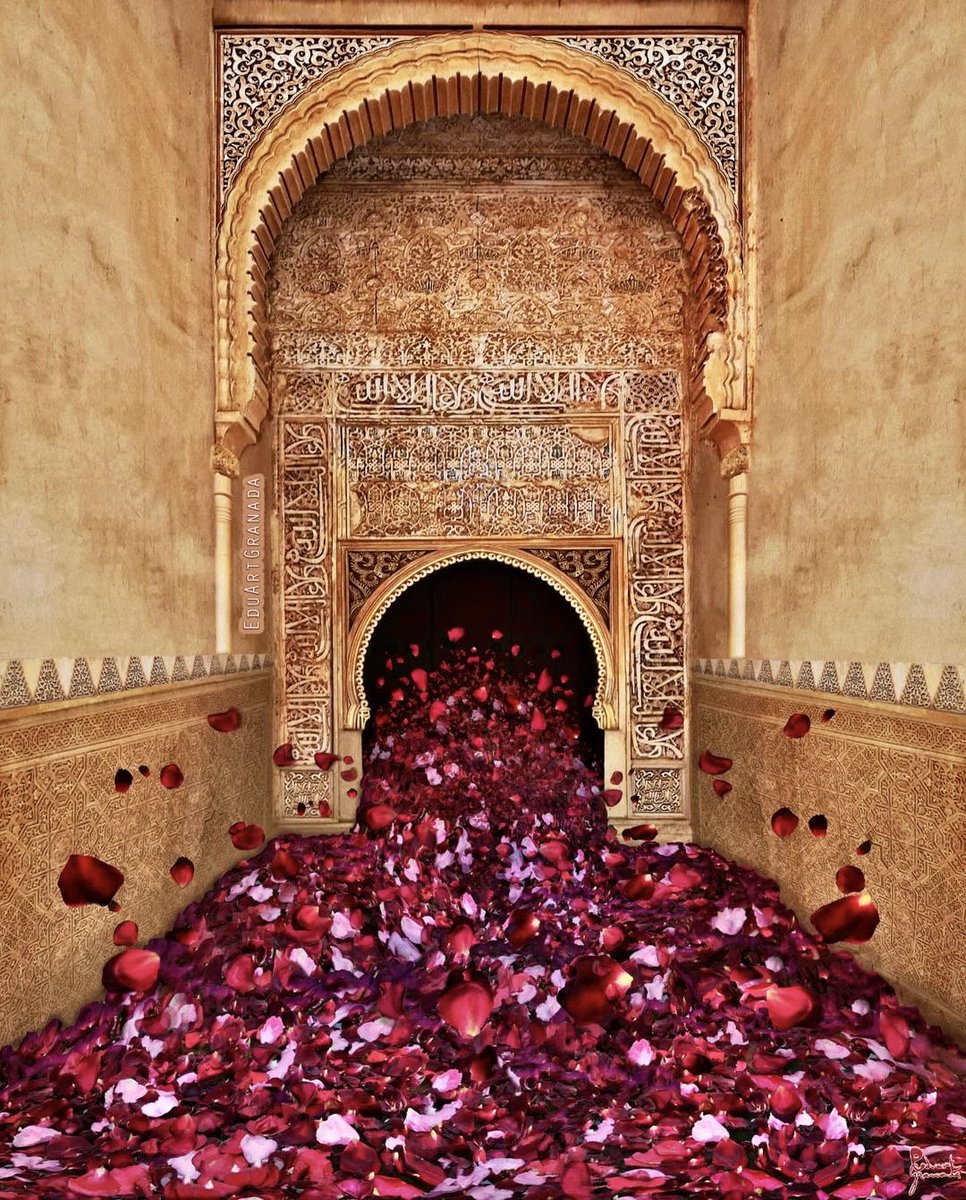
6/ There was always a fluid border between Muslim and Christian Spain. In a hybrid style known as Mudéjar, Islamic motifs passed through objects made for Christian patrons in an exchange of styles
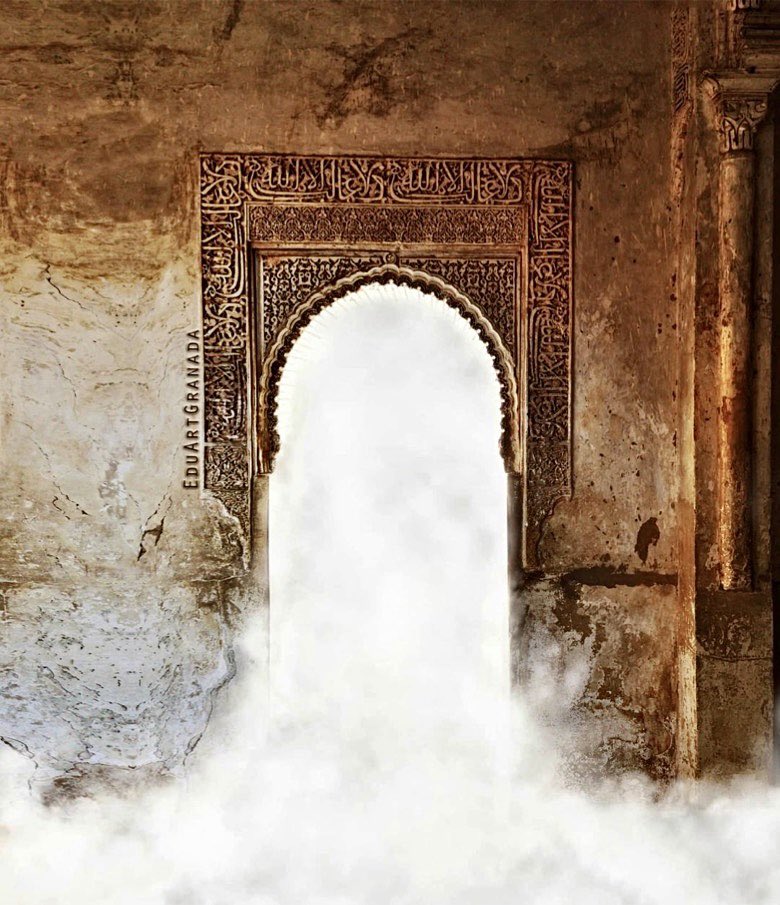
7/ Mudéjar style, which emerged in the 12th century, resulted from the spiritual convergence of cultures and religions known for its intricate Islamic geometric patterns on tiles, bricks & ornamental metals. Spanish architecture continues to incorporate many of these elements
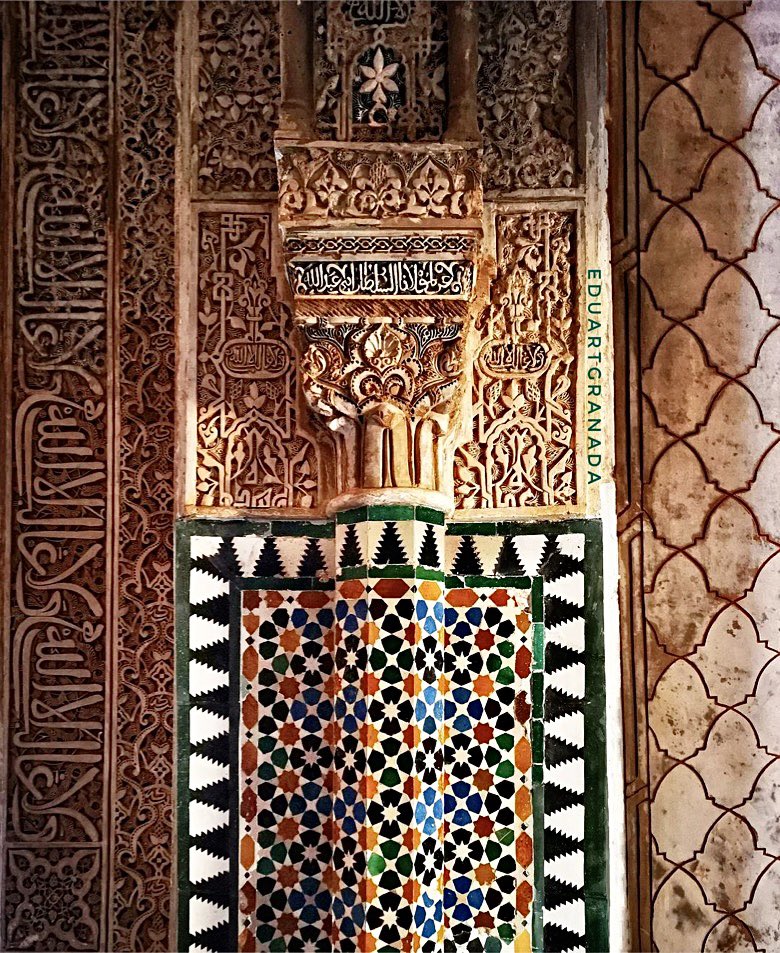
8/ In Spain, ornamental plaster, referred to as yeseria, was used to decorate upper walls.
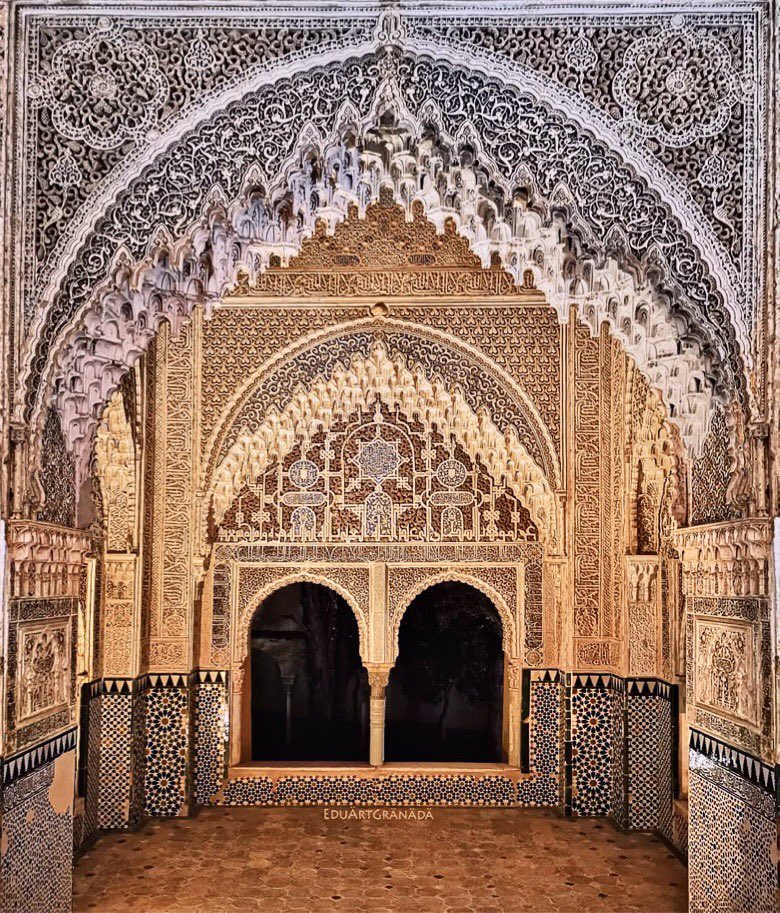
9/ Typically, Muqarnas were used around the mihrab in mosques and places adjacent to the mosque's central halls.
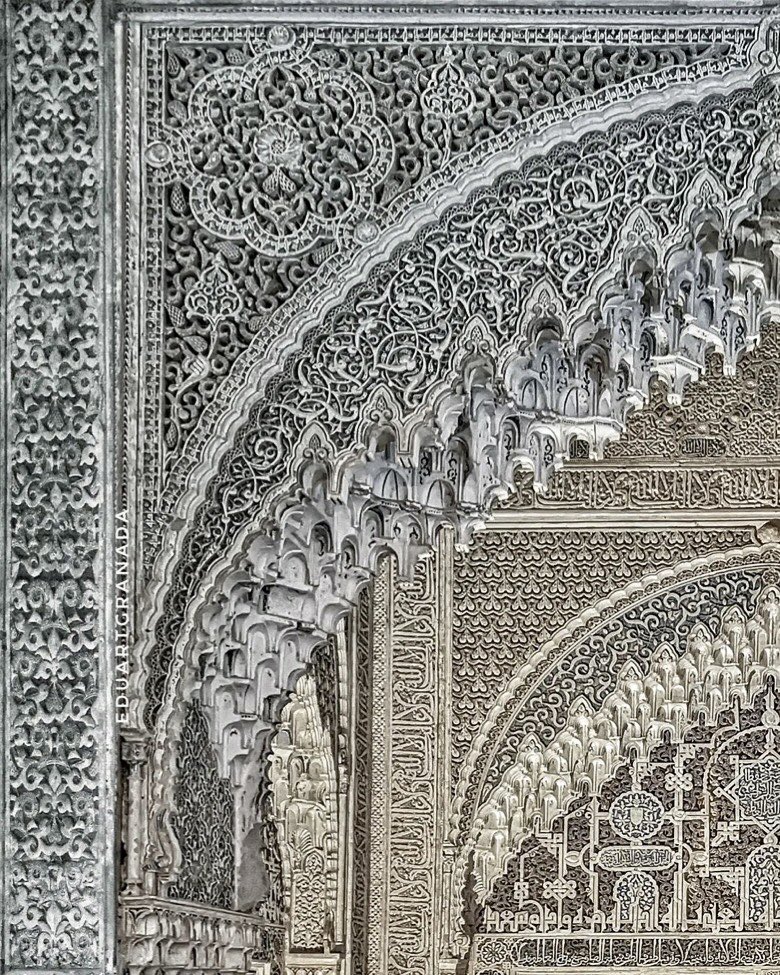
10/ Generally, courtyards and interiors were decorated with tiles in geometric patterns and inscriptions.
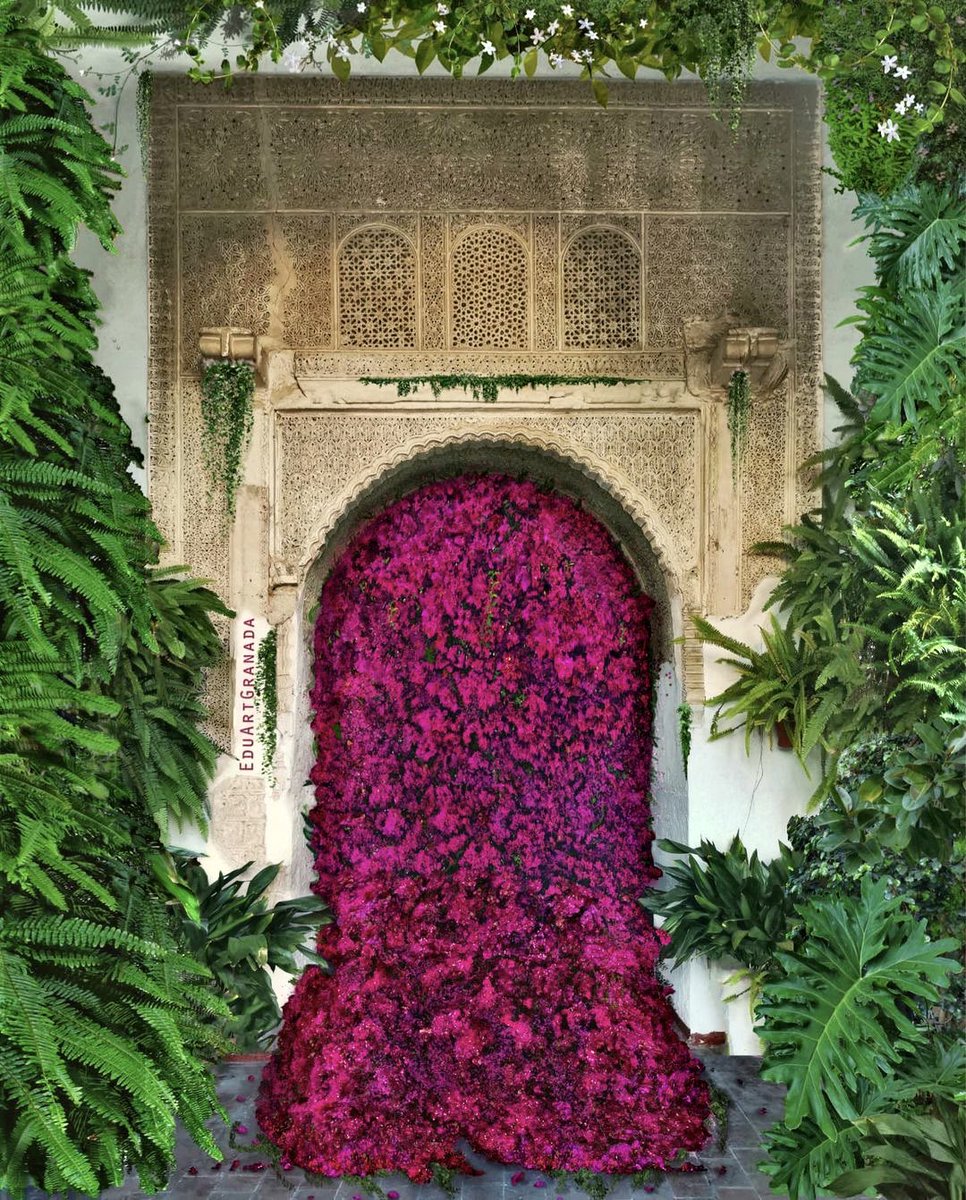
11/ The horseshoe arch (Spanish: arco de herradura), also called the Moorish arch & keyhole arch, is a type of arch in which the circular curve is continued below the horizontal line of its diameter, so that the opening at the bottom of the arch is narrower than the arch's span
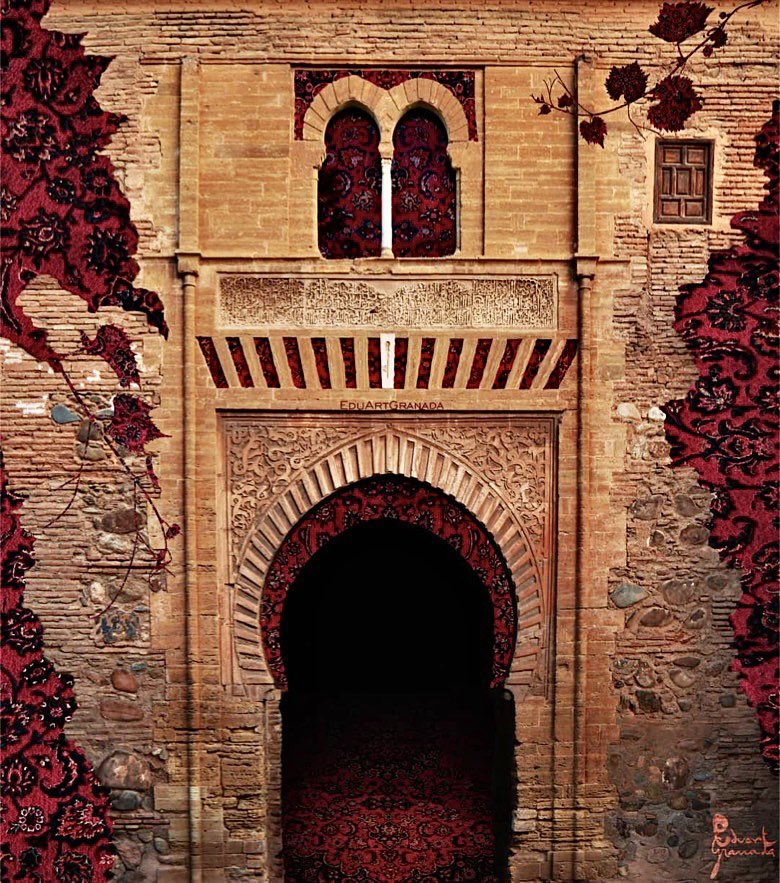
12/ Many Islamic buildings from the late middle ages are covered with tiles. Tiles are still used in modern Spanish construction (azulejos).
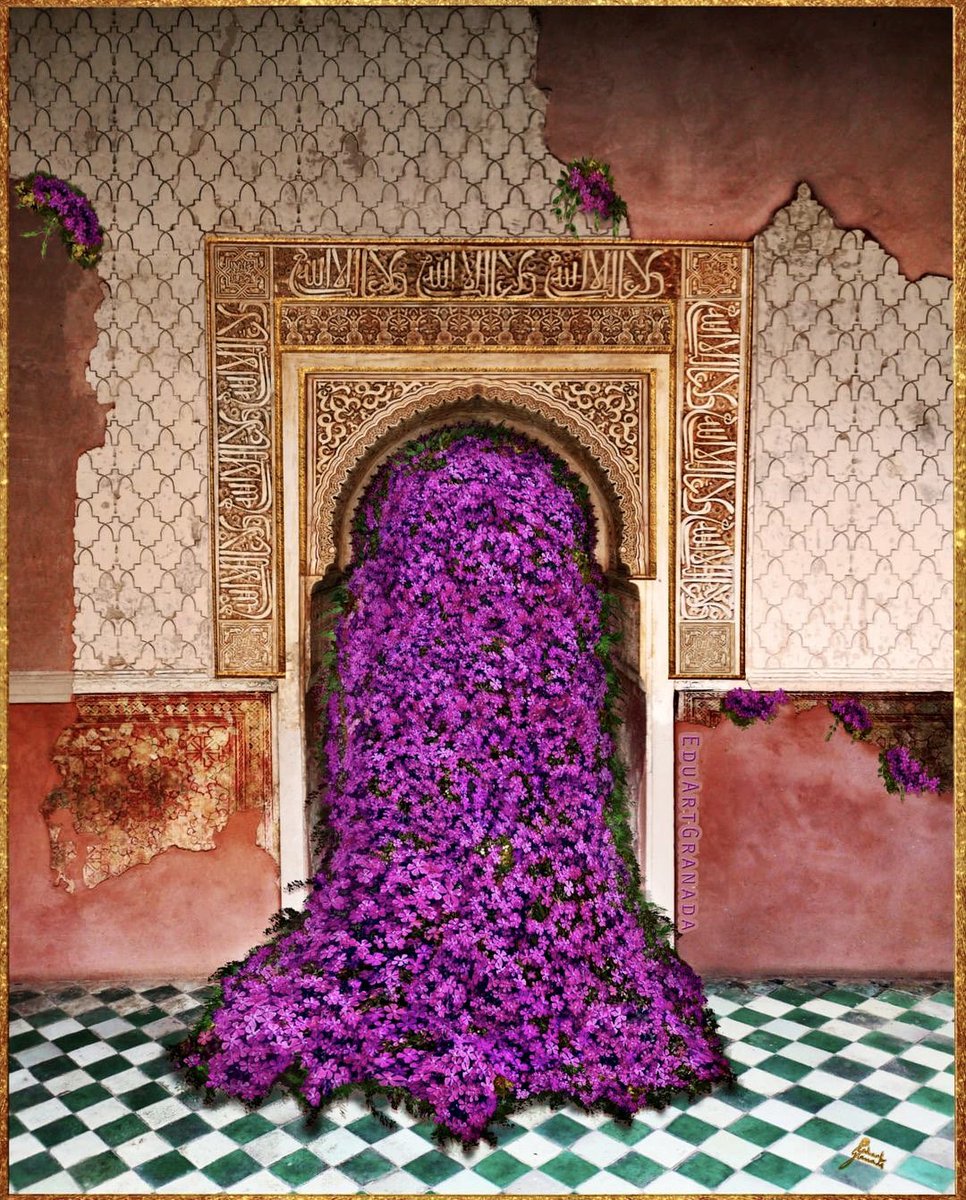
13/ One of the world's best collections of Islamic architecture can be found in Granada. In the 14th & 15th centuries, the Nasrids built the most magnificent palace in the city, the Alhambra, which had been controlled by the Zirids, Almoravids, Almohads & Banu'l-Ahmar.
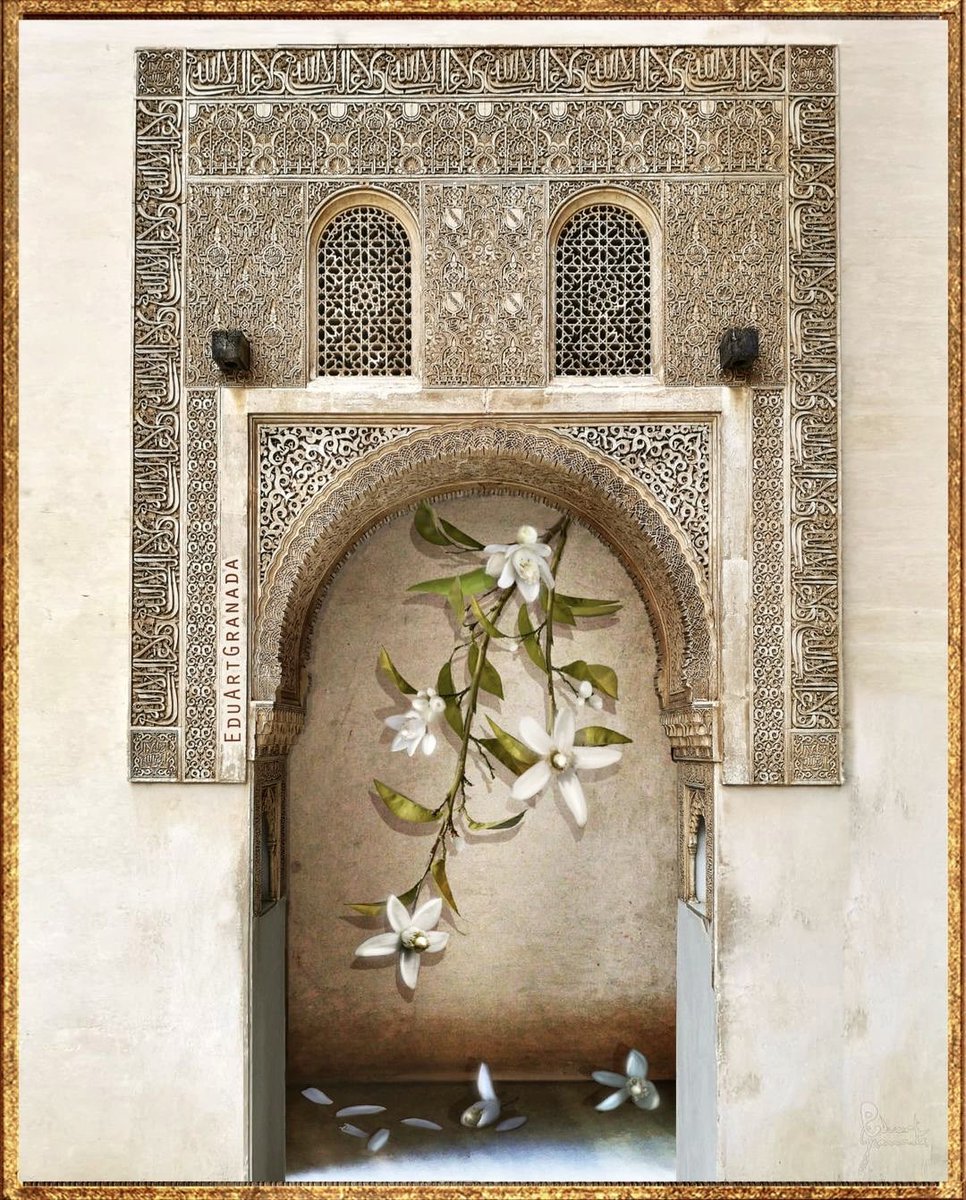
14/ Even though the Muslim areas in Spain were later seized, the influence of Islamic architecture and art continues to live, reimagined by artists & architects in new ways…
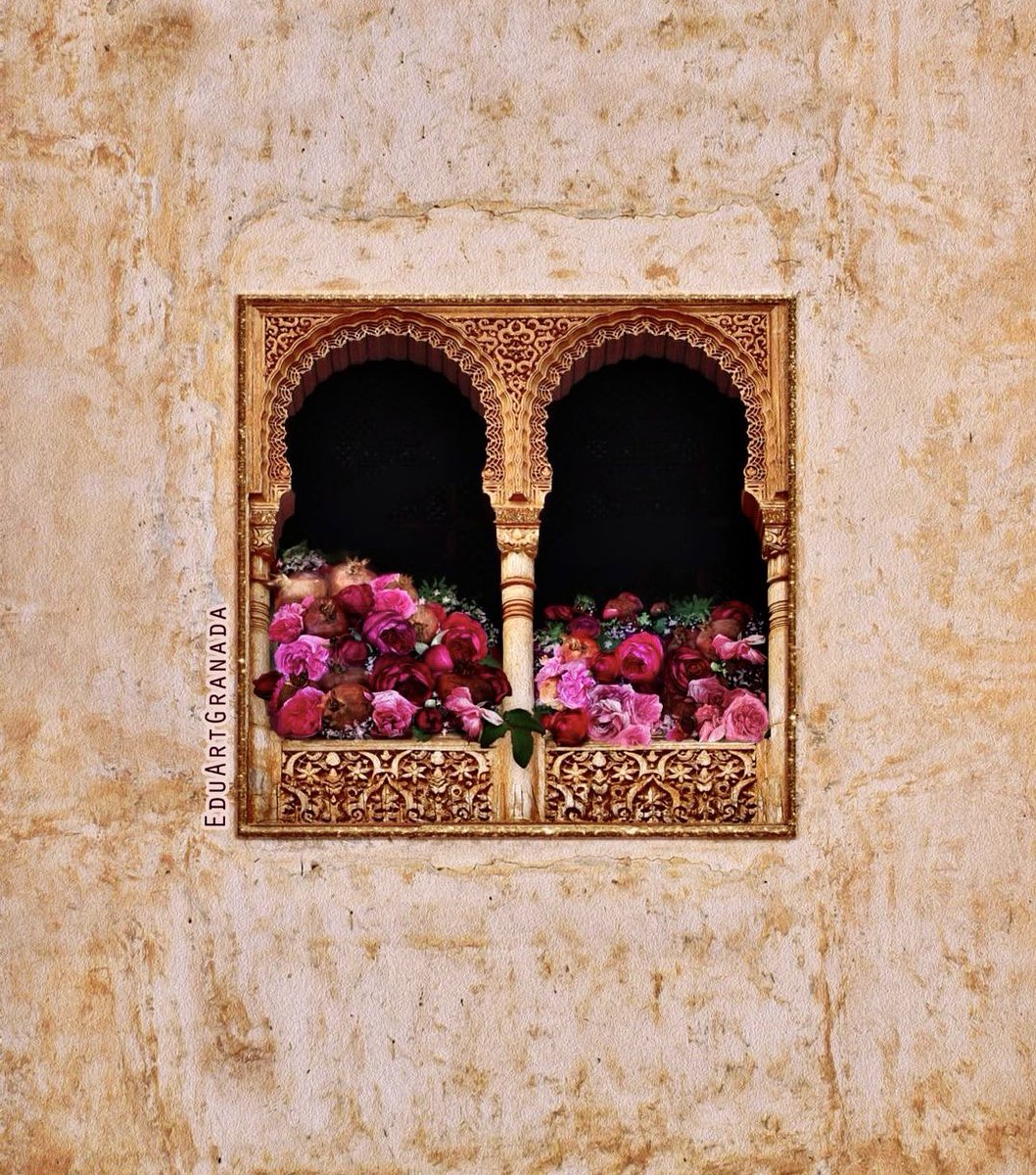
15/ The works in this thread are by visual poet Eduardo Gorlat, who reimagined the beauty and nostalgia of Islamic Spain…

16/ Welcome to the Eternal Dreamer's House.
I'm a blanket from which nothing has and everything waits.
My glazed tears are the prelude to your goodbye.
Work: Tears of Comares, Eduardo Gorlat
I'm a blanket from which nothing has and everything waits.
My glazed tears are the prelude to your goodbye.
Work: Tears of Comares, Eduardo Gorlat

Want to know more about Islamic architecture?
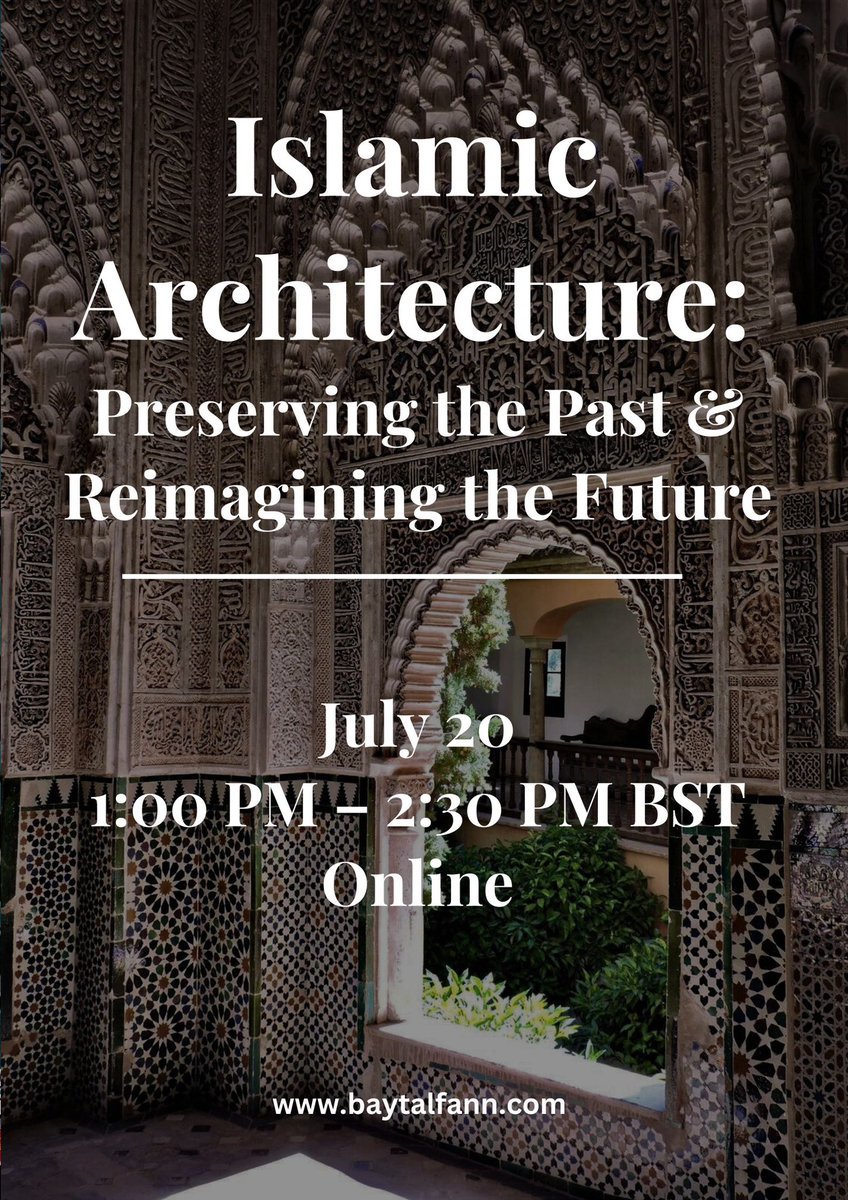
Join us for a fascinating online event exploring the past, present, and future of Islamic architecture.
Thursday 20 July
1:00pm - 2:30pm BST
If you can’t attend live don’t worry, everyone registered will receive a recording of the event.
This event is perfect for anyone interested in architecture, history, or Islamic culture. Hear from artists and renowned architects and experts in the field of Islamic architecture, who will share their knowledge and expertise on the topic. You will learn about the rich history of Islamic architecture, from its early origins to its modern-day manifestations.
Throughout the event, there will be discussions around the preservation of Islamic architecture and the importance of cultural heritage. You will also have the chance to explore the future possibilities of Islamic architecture, including the use of modern technology and sustainable design.
By the end of the event, you will have gained a deep appreciation for the beauty and complexity of Islamic architecture, as well as an understanding of the challenges and opportunities facing the field today.
Whether you are an architect looking to expand your knowledge and skills, or simply someone interested in learning more about Islamic architecture, this seminar is not to be missed. So, join us and discover the wonders of Islamic architecture!
Book tickets: baytalfann.com
Join us for a fascinating online event exploring the past, present, and future of Islamic architecture.
Thursday 20 July
1:00pm - 2:30pm BST
If you can’t attend live don’t worry, everyone registered will receive a recording of the event.
This event is perfect for anyone interested in architecture, history, or Islamic culture. Hear from artists and renowned architects and experts in the field of Islamic architecture, who will share their knowledge and expertise on the topic. You will learn about the rich history of Islamic architecture, from its early origins to its modern-day manifestations.
Throughout the event, there will be discussions around the preservation of Islamic architecture and the importance of cultural heritage. You will also have the chance to explore the future possibilities of Islamic architecture, including the use of modern technology and sustainable design.
By the end of the event, you will have gained a deep appreciation for the beauty and complexity of Islamic architecture, as well as an understanding of the challenges and opportunities facing the field today.
Whether you are an architect looking to expand your knowledge and skills, or simply someone interested in learning more about Islamic architecture, this seminar is not to be missed. So, join us and discover the wonders of Islamic architecture!
Book tickets: baytalfann.com
Loading suggestions...