

The biggest roadblock to business growth is money.
But how do you know which new initiative to chase?
Use this 5-part framework to decide:
But how do you know which new initiative to chase?
Use this 5-part framework to decide:
Tuesday I wrote about maintenance CapEx. This is the equipment needed to keep your business going at the same size.
Today, we talk about growth CapEx, which is what you need to grow your business.
We break the process down into 5 steps.
Let’s dig in:
Today, we talk about growth CapEx, which is what you need to grow your business.
We break the process down into 5 steps.
Let’s dig in:
1. Identify and prioritize
“I just evaluate the opportunities that are brought to me.”
Noooooo.
You prioritize the loudest people and they learn they have to be loud to win.
Every business should have annual strategic planning.
This moves you from reactive to proactive mode.
“I just evaluate the opportunities that are brought to me.”
Noooooo.
You prioritize the loudest people and they learn they have to be loud to win.
Every business should have annual strategic planning.
This moves you from reactive to proactive mode.
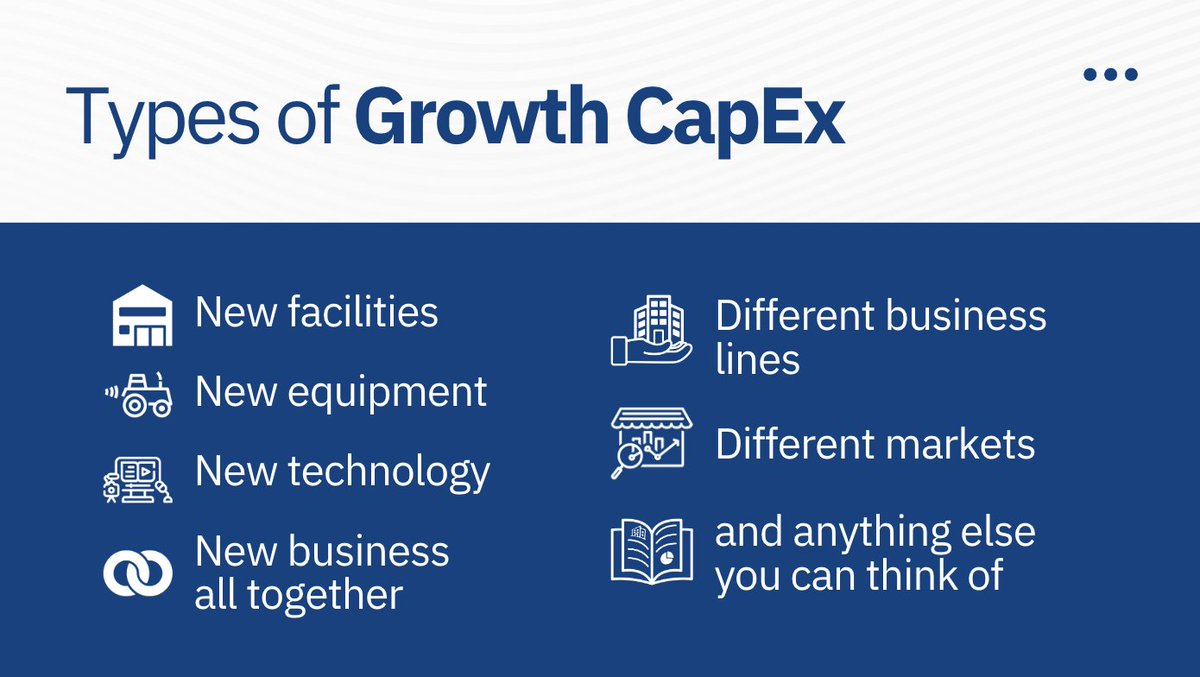
Start by creating a list of growth ideas & invite others into the process.
- What are their dreams or desires?
- What would make their jobs better?
- What opportunities are there in the market?
Look at:
1. Facilities
2. Equipment
3. Technology
4. Market Ops
5. Business lines
- What are their dreams or desires?
- What would make their jobs better?
- What opportunities are there in the market?
Look at:
1. Facilities
2. Equipment
3. Technology
4. Market Ops
5. Business lines
2. Evaluate proposals against your strategic goals
Ask:
1. Which most aligns with my goals?
2. Which pair together well?
3. What could I afford?
By evaluating them TOGETHER, we assure we don’t get bias that can occur when viewing them alone.
Rate them based on their urgency.
Ask:
1. Which most aligns with my goals?
2. Which pair together well?
3. What could I afford?
By evaluating them TOGETHER, we assure we don’t get bias that can occur when viewing them alone.
Rate them based on their urgency.
3. Calculate the cost
Hot take time: NPV and IRR stink.
They are:
- Complicated to calculate
- Easy to manipulate
- Ignore project size
Instead, I focus on:
• Payback
• Return on Investment (ROI)
• Cash flow impact
I go in-depth on NPV & IRR here:
kurtishanni.com
Hot take time: NPV and IRR stink.
They are:
- Complicated to calculate
- Easy to manipulate
- Ignore project size
Instead, I focus on:
• Payback
• Return on Investment (ROI)
• Cash flow impact
I go in-depth on NPV & IRR here:
kurtishanni.com

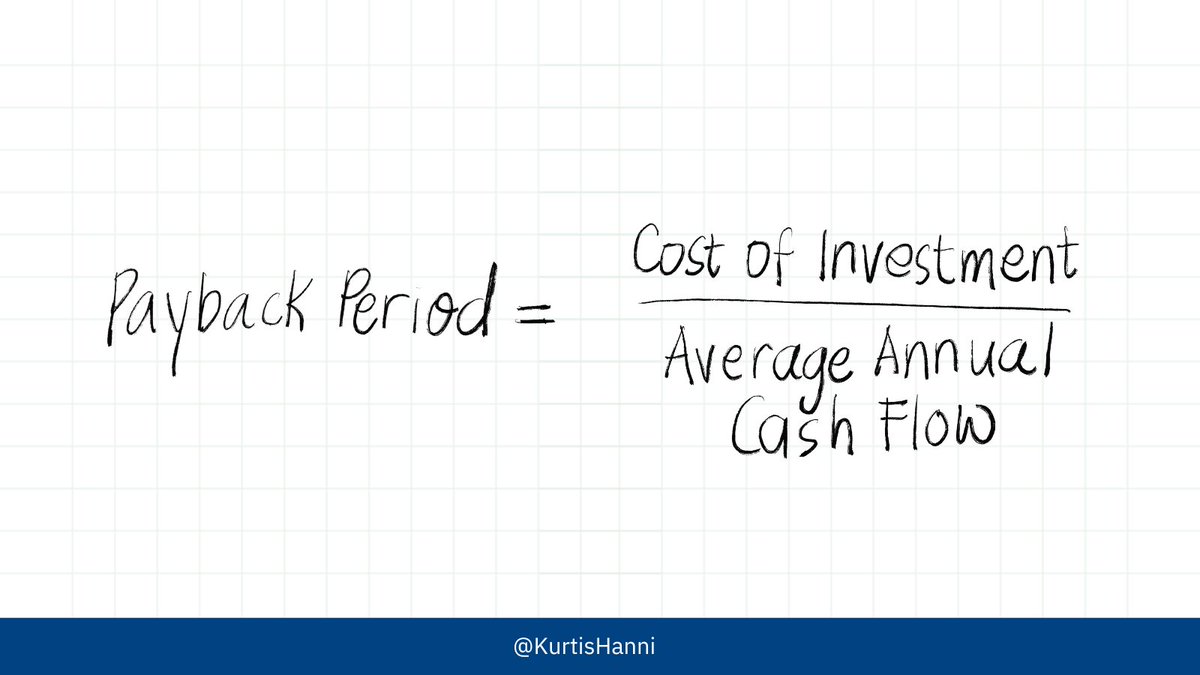
• Payback period
Payback period is the time it takes for an investment to generate enough cash to cover the cost.
The shorter the payback period, the less risky the investment is considered to be.
Payback period is the time it takes for an investment to generate enough cash to cover the cost.
The shorter the payback period, the less risky the investment is considered to be.
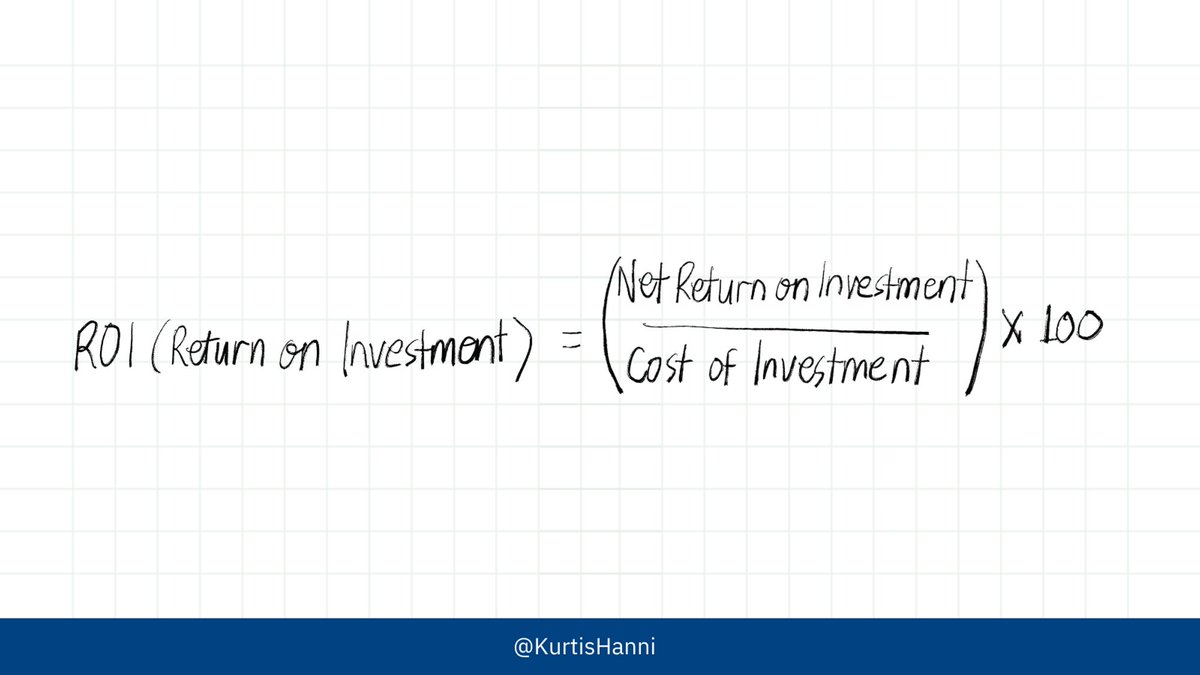
• Return on Investment (ROI):
The higher ROI the better.
ROI excels because it’s easy to calculate and can be used in lots of situations.
If cash flows are fairly regular, you can even divide this by the number of years of the investment and get an average rate of return.
The higher ROI the better.
ROI excels because it’s easy to calculate and can be used in lots of situations.
If cash flows are fairly regular, you can even divide this by the number of years of the investment and get an average rate of return.
• Impact on cash flows
Whether buying straight up or taking out a loan, you need to understand impact on cash and cash flow.
Ask:
- How long will it take to replenish?
- What’s my cash flow margin?
- What would make it catastrophic?
- How could it limit options tomorrow?
Whether buying straight up or taking out a loan, you need to understand impact on cash and cash flow.
Ask:
- How long will it take to replenish?
- What’s my cash flow margin?
- What would make it catastrophic?
- How could it limit options tomorrow?
4. Assess your risks and do scenario planning
• Risk Assessment
Everyone miss-assesses risk.
Look in-dept at:
1. Market
2. Financial
3. Operational
Spend the majority of your time on this step.
It’s the most important because a miss-assessment could damage your business.
• Risk Assessment
Everyone miss-assesses risk.
Look in-dept at:
1. Market
2. Financial
3. Operational
Spend the majority of your time on this step.
It’s the most important because a miss-assessment could damage your business.
• Scenario Analysis
Create different scenarios with the formulas above,
then “plug” risk into each.
Make sure you:
- Create ideal & worst case
- Combine different options
- Use consistent assumptions
- Ask others to check your math
- Write up pros & cons of each scenario
Create different scenarios with the formulas above,
then “plug” risk into each.
Make sure you:
- Create ideal & worst case
- Combine different options
- Use consistent assumptions
- Ask others to check your math
- Write up pros & cons of each scenario
5. Make a choice
You now “know” what you need to know.
3 steps to finalize the process:
• Determine your desire
• Create a plan
• Communicate it
We’ll dig into this Tuesday, but subscribers read it on Thursday.
Join 20k subscribed & read it here:
kurtishanni.com
You now “know” what you need to know.
3 steps to finalize the process:
• Determine your desire
• Create a plan
• Communicate it
We’ll dig into this Tuesday, but subscribers read it on Thursday.
Join 20k subscribed & read it here:
kurtishanni.com
Thank you for reading!
If you enjoyed this thread:
• Follow me @KurtisHanni for more threads like this
• RT the tweet below to share this thread with your audience
If you enjoyed this thread:
• Follow me @KurtisHanni for more threads like this
• RT the tweet below to share this thread with your audience
Loading suggestions...