

Unlocking the Mysteries of Existence: The Doctrine of Evolution in Hindu Philosophy
Thread:
Thread:
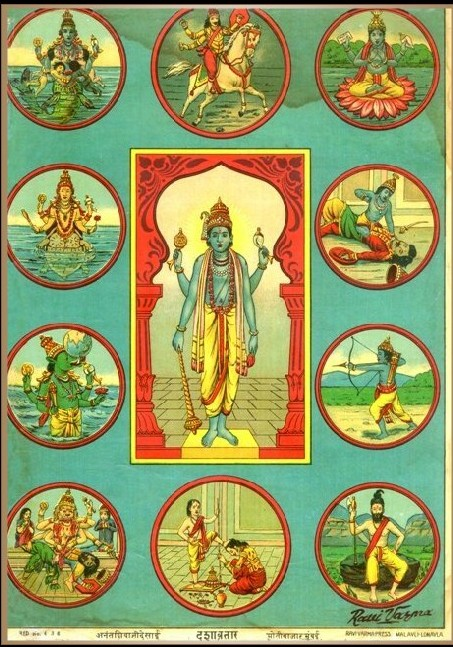
According to Hindu philosophy, the universe undergoes an eternal cycle of creation, preservation, and dissolution. It expands and contracts, pulsating with energy and consciousness.
/1
/1
The process of evolution in Hinduism is not limited to biological life on Earth. It encompasses the entire cosmos. From the tiniest microorganisms to vast galaxies, all are subject to this grand cosmic dance.
/2
/2
Brahma, the Creator, shapes matter into seven Tattvani, Elements, as they have been called. Different names are given to the first two ; we may use the names Mahat-Buddhi, Pure Reason, and Ahamkara, Egoism, the principle of separation, breaking up matter into tiny particles, called atoms.
/3
/3
Then come the remaining five Tattvas : Akasha, Ether ; Vayu, Air ; Agni, Fire ; Apa, Water ; Prithivi, Earth. This is called the crea-tion of the Bhutadi, Elements, and out of these all things are partly made. There is more of Tamo-guna than of Rajo-guna and of Sattva-guna showing itself in these elements, and so the things composed chiefly of them are dull and inert ; the inner life, the Jiva, cannot show its powers, for the coat of matter is so thick and heavy.
/4
/4
Creation of Indriyas and Senses
/5
/5
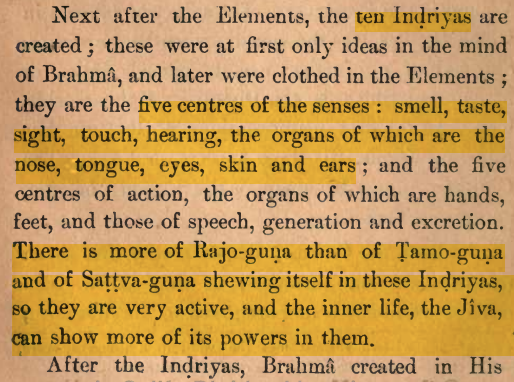
Creation of Manah
/6
/6
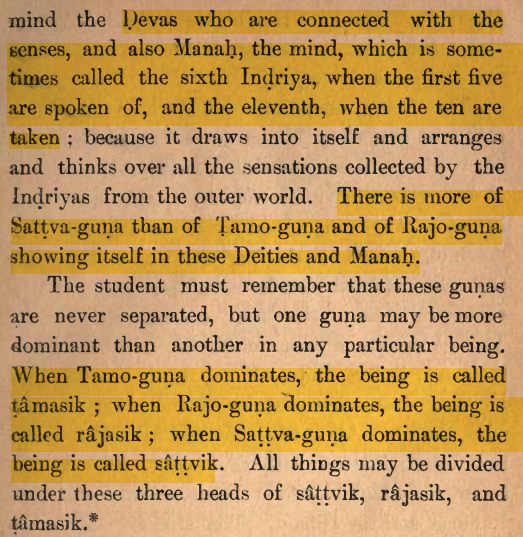
Creation of Devas
/7
/7
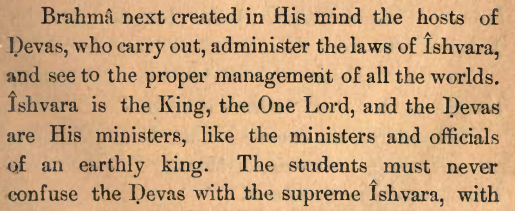
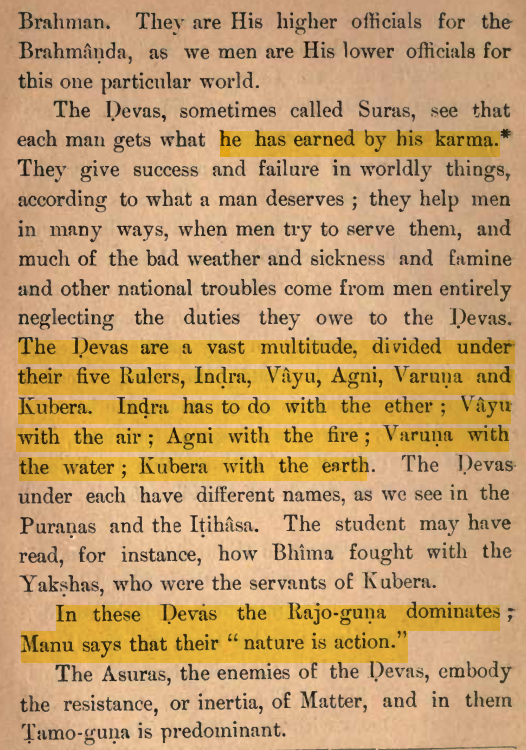
The Devas, or Suras, uphold justice by granting what individuals earn through their karma. They bring success or failure, aid those who serve them, and are associated with the elements—Indra (ether), Vayu (air), Agni (fire), Varuna (water), and Kubera (earth).
/8
/8
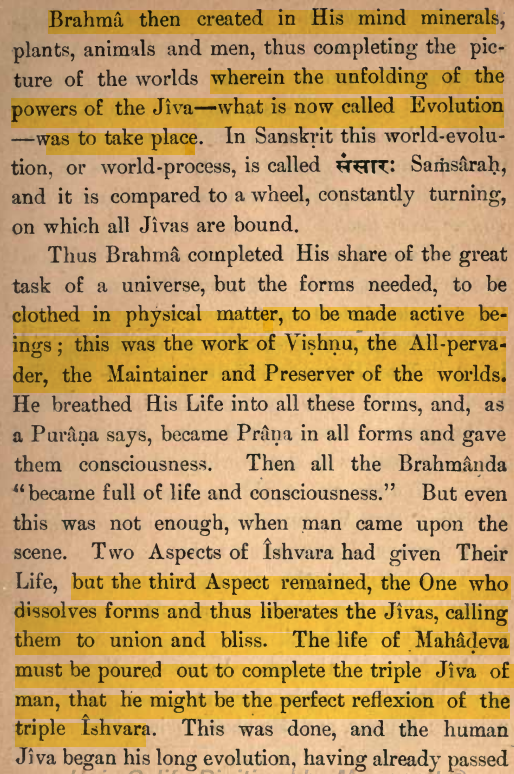
Brahma's creation, Vishnu's life-giving breath, and Mahadeva's liberating touch: How Sansar and Jiva was created?
/9
/9
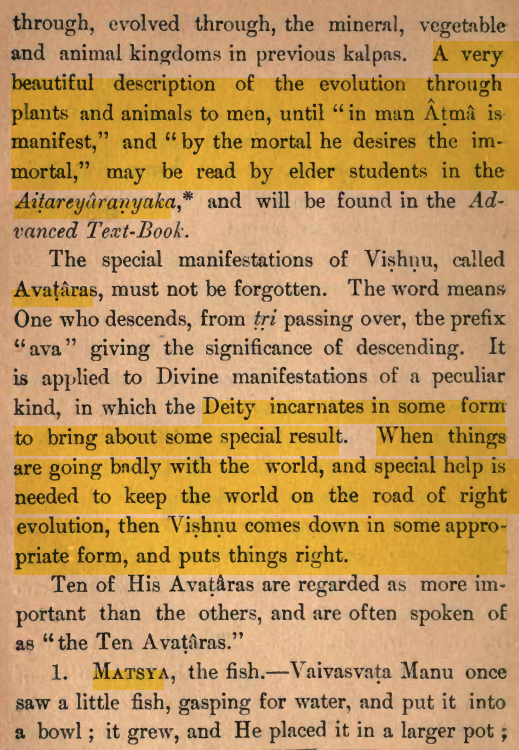
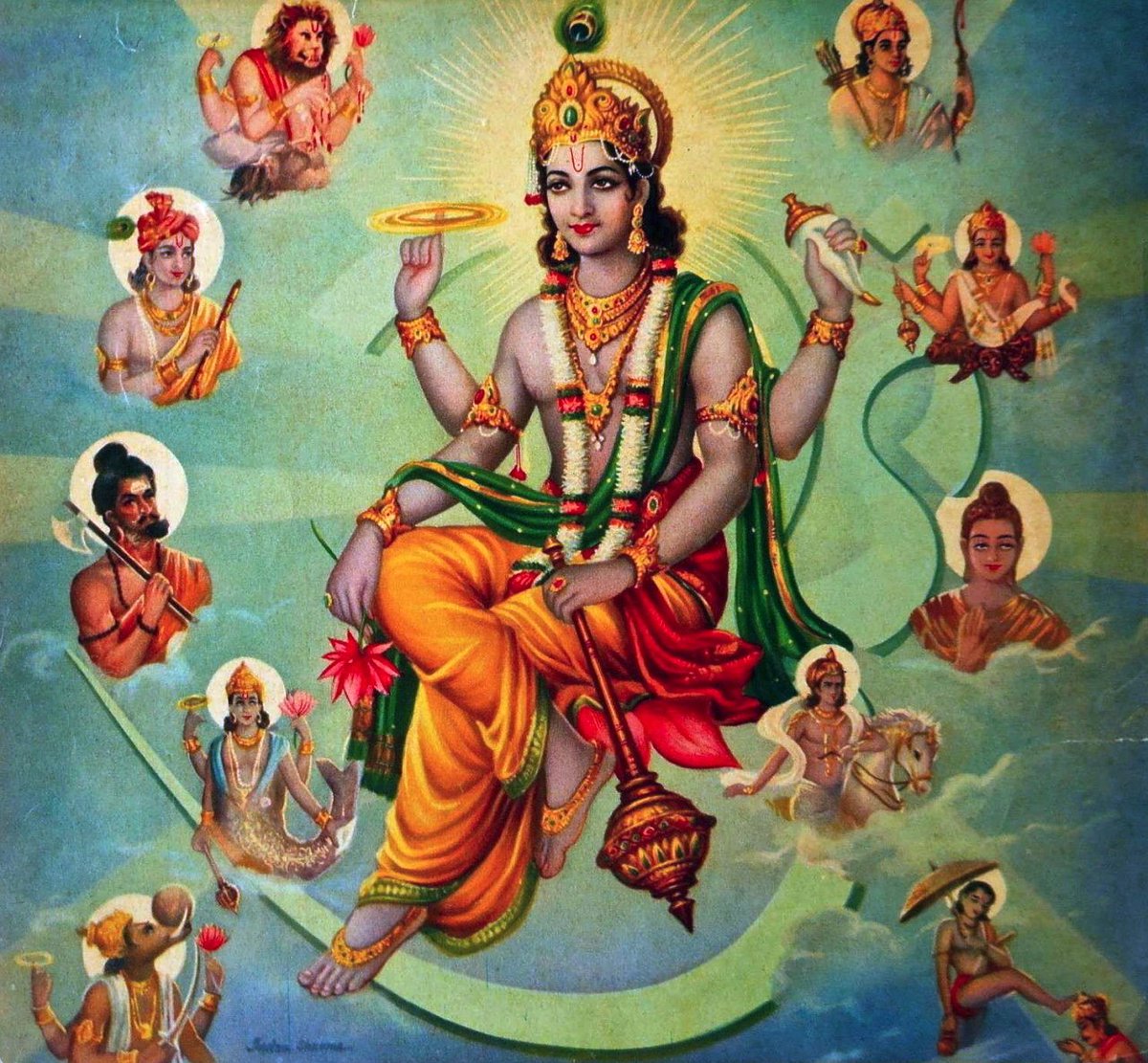
Avataras of Vishnu and the evolution of animals:
/10
/10
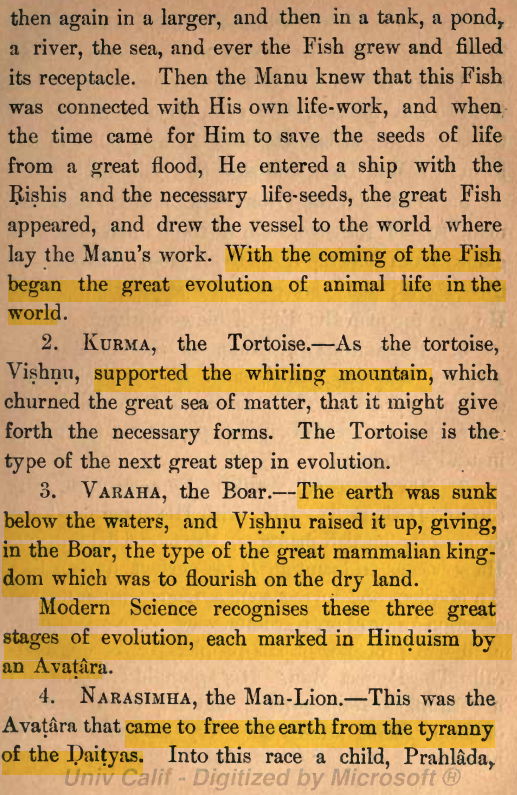
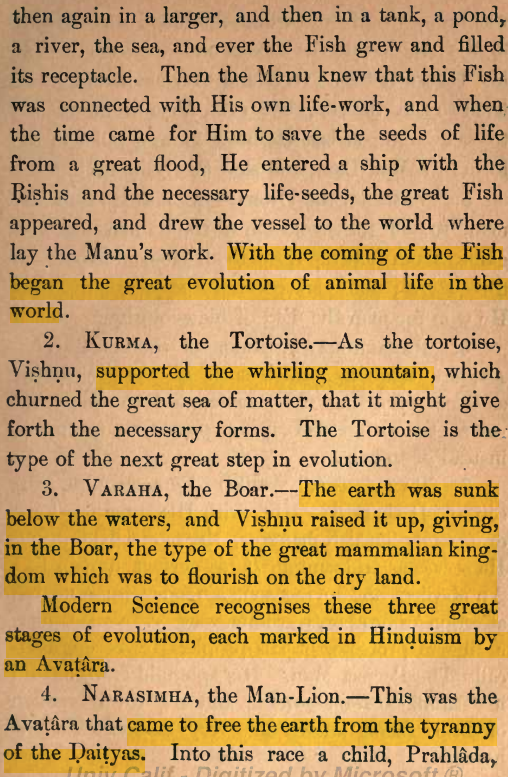
Matsya Avatar: In Hindu mythology, Matsya Avatar symbolizes the manifestation of Lord Vishnu as a giant fish. Matsya Avatar rescued the first man, Manu, and the seeds of all life during a great flood. It represents protection, preservation, and guidance during times of crisis.…
Matsya Avatar: In Hindu Philosophy, Matsya Avatar symbolizes the manifestation of Lord Vishnu as a giant fish. Matsya Avatar rescued the first man, Manu, and the seeds of all life during a great flood. It represents protection, preservation, and guidance during times of crisis.
Kurma Avatar: Kurma Avatar signifies Lord Vishnu taking the form of a massive turtle. It supported the divine churning of the ocean to obtain the elixir of immortality. Kurma Avatar represents stability, strength, and the importance of maintaining balance in the face of challenges.
Varaha Avatar: Varaha Avatar portrays Lord Vishnu as a boar, emerging to rescue the Earth from the depths of the cosmic ocean. Varaha Avatar symbolizes courage, strength, and the willingness to confront and overcome obstacles for the restoration of righteousness.
/11
Kurma Avatar: Kurma Avatar signifies Lord Vishnu taking the form of a massive turtle. It supported the divine churning of the ocean to obtain the elixir of immortality. Kurma Avatar represents stability, strength, and the importance of maintaining balance in the face of challenges.
Varaha Avatar: Varaha Avatar portrays Lord Vishnu as a boar, emerging to rescue the Earth from the depths of the cosmic ocean. Varaha Avatar symbolizes courage, strength, and the willingness to confront and overcome obstacles for the restoration of righteousness.
/11
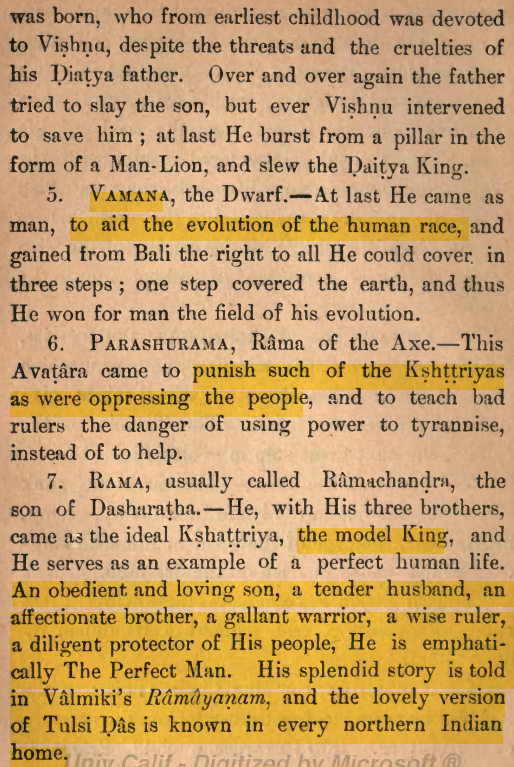
Narsimha Avatar: Narsimha, a half-man, half-lion form of Lord Vishnu, emerged to protect his devotee Prahlada from the tyrant Hiranyakashipu. This avatar represents the fierce aspect of divine protection and the triumph of good over evil.
Vamana Avatar: Vamana, the dwarf incarnation of Lord Vishnu, appeared to restore balance when the demon king Bali grew arrogant. Vamana sought alms, and with three steps, reclaimed the universe for the gods. It symbolizes humility, justice, and the power of selflessness.
Parshuram Avatar: Parshuram, the warrior sage, incarnated to rid the world of corrupt rulers and restore order. His mighty axe exemplifies his mission to eradicate evil and uphold righteousness.
Ram Avatar: Ram, the ideal king, undertook the epic journey in the Ramayana, showcasing righteousness, loyalty, and the triumph of good over evil. He inspires devotion, righteousness, and the pursuit of dharma.
/12
Vamana Avatar: Vamana, the dwarf incarnation of Lord Vishnu, appeared to restore balance when the demon king Bali grew arrogant. Vamana sought alms, and with three steps, reclaimed the universe for the gods. It symbolizes humility, justice, and the power of selflessness.
Parshuram Avatar: Parshuram, the warrior sage, incarnated to rid the world of corrupt rulers and restore order. His mighty axe exemplifies his mission to eradicate evil and uphold righteousness.
Ram Avatar: Ram, the ideal king, undertook the epic journey in the Ramayana, showcasing righteousness, loyalty, and the triumph of good over evil. He inspires devotion, righteousness, and the pursuit of dharma.
/12
Krishna: Krishna, the divine incarnation of Lord Vishnu, enchants with his playful and compassionate nature. Known as the charmer and philosopher, he imparts spiritual wisdom through the Bhagavad Gita. Krishna symbolizes love, devotion, and the eternal connection between humanity and the divine.
Buddha: Buddha, the enlightened one, is not an avatar of a Hindu deity but holds great significance in Indian philosophy. Siddhartha Gautama, the founder of Buddhism, taught the path to end suffering and attain enlightenment. His teachings of compassion, mindfulness, and detachment inspire seekers worldwide.
Kalki: Kalki, the prophesied future avatar of Lord Vishnu, is believed to appear at the end of the Kali Yuga. Mounted on a white horse, Kalki will bring justice, restore righteousness, and initiate a new era of harmony and enlightenment.
/13
Buddha: Buddha, the enlightened one, is not an avatar of a Hindu deity but holds great significance in Indian philosophy. Siddhartha Gautama, the founder of Buddhism, taught the path to end suffering and attain enlightenment. His teachings of compassion, mindfulness, and detachment inspire seekers worldwide.
Kalki: Kalki, the prophesied future avatar of Lord Vishnu, is believed to appear at the end of the Kali Yuga. Mounted on a white horse, Kalki will bring justice, restore righteousness, and initiate a new era of harmony and enlightenment.
/13

Summary:
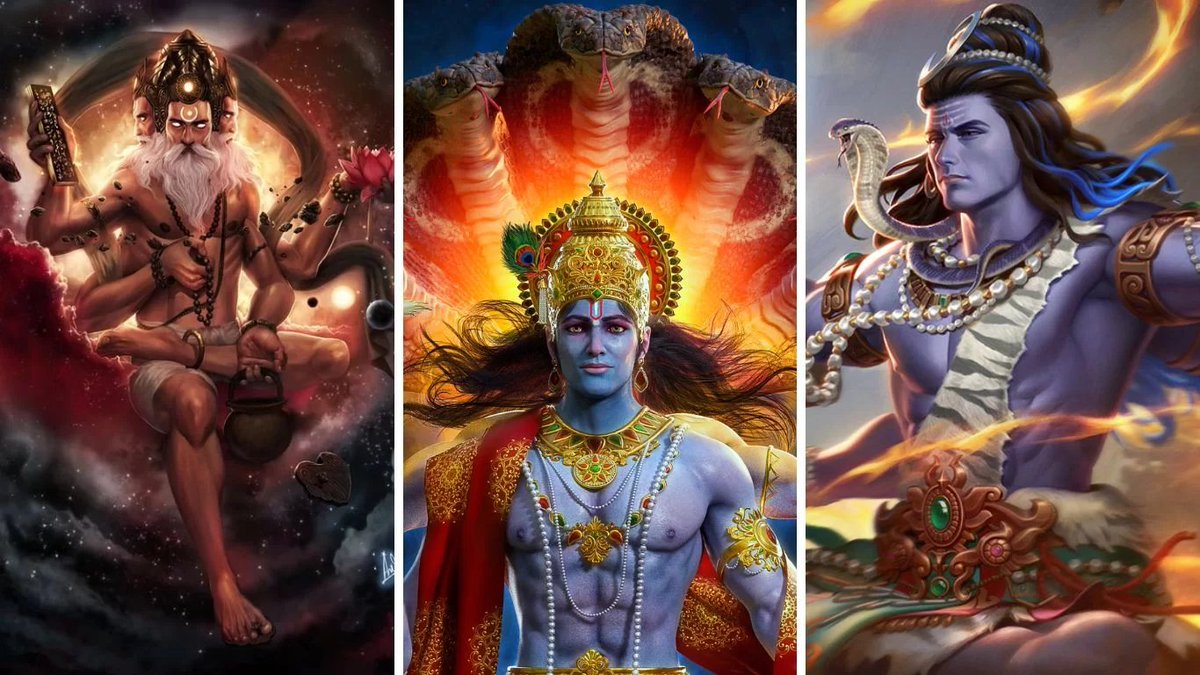
Hinduism presents a scientific view of creationism and through role of the divine trinity—Brahma, Vishnu, and Mahesh—in the universe. Brahma is the creator, depicted with four faces representing the four Vedas, responsible for shaping the physical realm and bestowing life upon beings. Vishnu is the preserver, incarnating in various avatars to maintain cosmic order, uphold righteousness, and guide humanity. Mahesh, also known as Shiva, is the destroyer and transformer, representing the cyclical nature of existence and the path to liberation.
The avatars in Hinduism depict divine manifestations in different forms to fulfill specific purposes. From Matsya (the fish) to Kalki (the future incarnation), each avatar serves a unique role in cosmic evolution, teaching moral values, and providing guidance. Narsimha symbolizes divine protection, Vamana showcases humility, Parshuram upholds righteousness through warfare, and Rama embodies the ideal king. Krishna exemplifies love and spirituality, while Buddha's teachings transcend traditional avatars.
Together, the trinity and the avatars present a comprehensive framework of creation, preservation, and transformation in Hindu philosophy.
End.
Hinduism presents a scientific view of creationism and through role of the divine trinity—Brahma, Vishnu, and Mahesh—in the universe. Brahma is the creator, depicted with four faces representing the four Vedas, responsible for shaping the physical realm and bestowing life upon beings. Vishnu is the preserver, incarnating in various avatars to maintain cosmic order, uphold righteousness, and guide humanity. Mahesh, also known as Shiva, is the destroyer and transformer, representing the cyclical nature of existence and the path to liberation.
The avatars in Hinduism depict divine manifestations in different forms to fulfill specific purposes. From Matsya (the fish) to Kalki (the future incarnation), each avatar serves a unique role in cosmic evolution, teaching moral values, and providing guidance. Narsimha symbolizes divine protection, Vamana showcases humility, Parshuram upholds righteousness through warfare, and Rama embodies the ideal king. Krishna exemplifies love and spirituality, while Buddha's teachings transcend traditional avatars.
Together, the trinity and the avatars present a comprehensive framework of creation, preservation, and transformation in Hindu philosophy.
End.
Reference:
Sanatana Dharma: An Elementary Textbook of Hindu Religion and Ethics
Sanatana Dharma: An Elementary Textbook of Hindu Religion and Ethics
Loading suggestions...