

Happy new week, farmers,
As promised, here is some guidance on how to start and make a #watermelon 🍉farm a success.
Let's keep today's discussion open and learn from each other.
#Thread #MfashaFarmingTips
As promised, here is some guidance on how to start and make a #watermelon 🍉farm a success.
Let's keep today's discussion open and learn from each other.
#Thread #MfashaFarmingTips
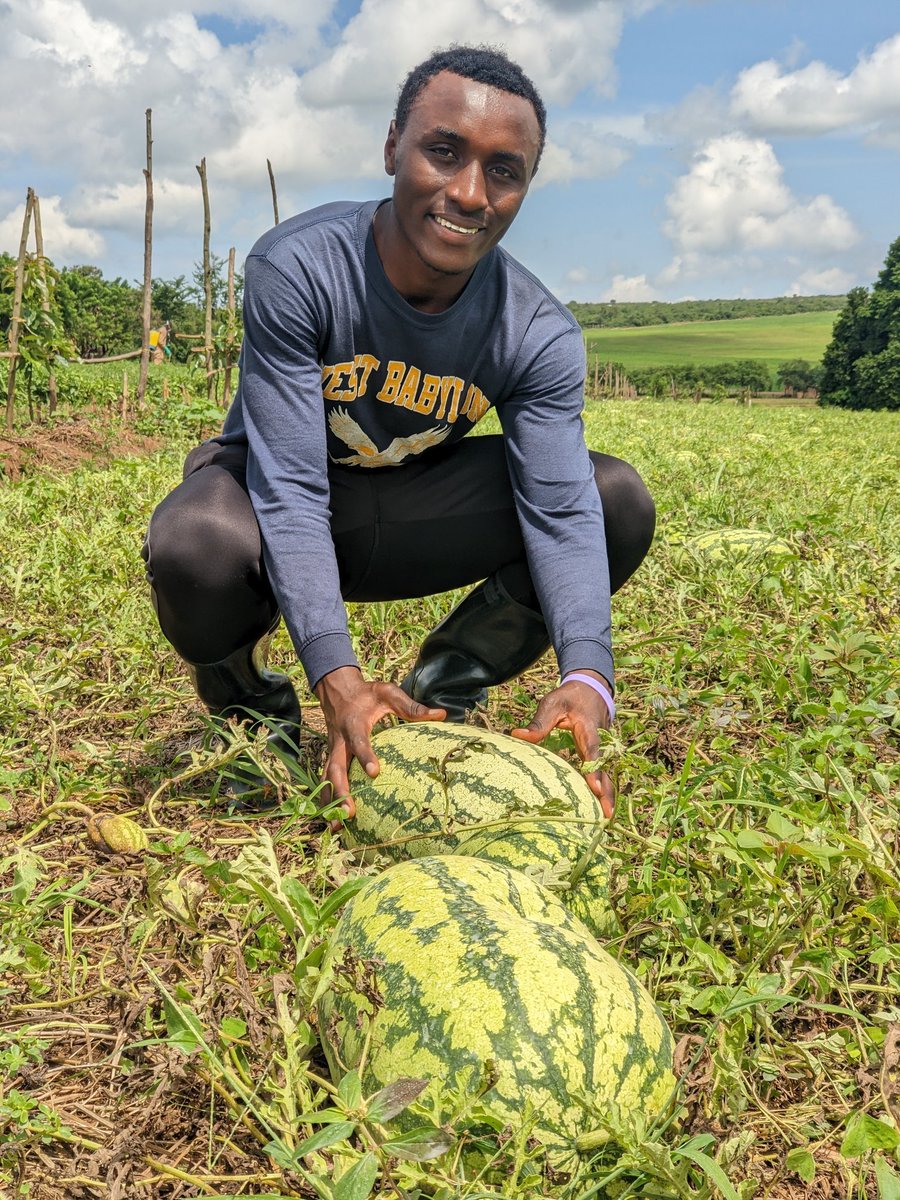
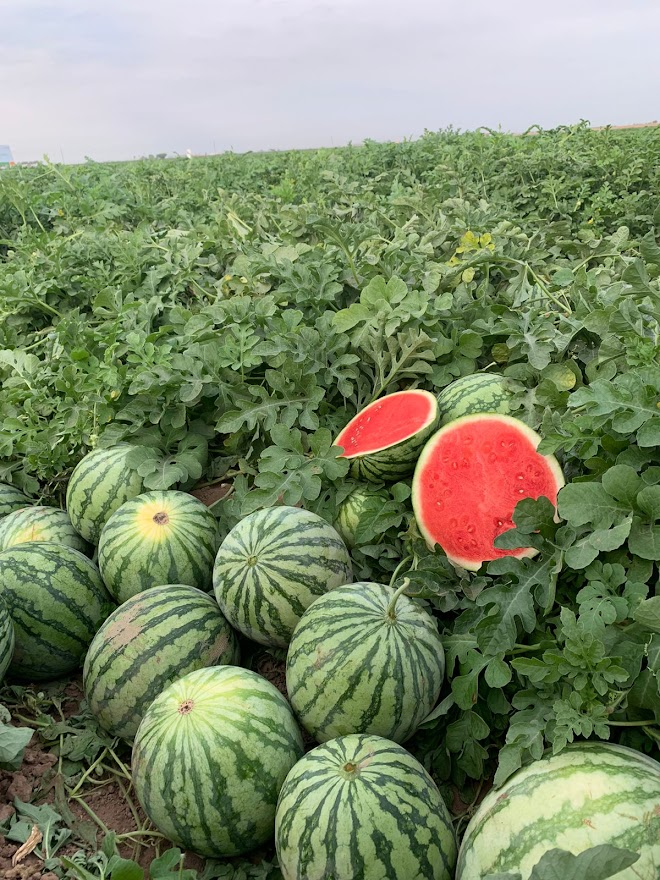
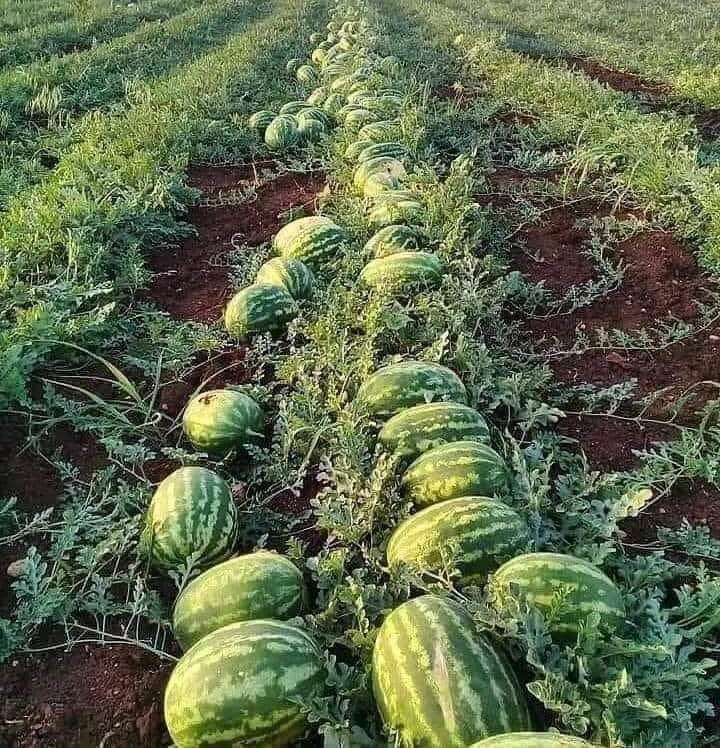
1. Climate and Location: Watermelons thrive best in warm climates with temperatures between 21-32°C. They struggle in too much clay soils and does not drain well. They prefer loamy, sandy, and well-drained soil. with soil pH levels ranging from 6.0 to 7.5.
2. Land Preparation: Well-drained soil with good fertility prepared by tilling and loosening. Incorporate organic matter, such as compost, to improve soil fertility and drainage. Make the holes for compost and DAP fertilizer applied during planting.
3. Seed selection: Watermelon varieties vary per region, production, and preference. In Rwanda, Sukari, Julie F1, and Tiger are the most common. Sukari being oval shaped and the most sweet and reddish compared to the rest. For most, maturity takes 70-90 days after transplanting.
4. Planting: Watermelon can be direct seeded given a control to snails that eat young germinates or transplanted from nursery (2-3 weeks). Seedling should be planted with both compost and inorganic fertilizer (DAP) for rooting support. Spacing varies from 1m - 1m to 2m - 2m.
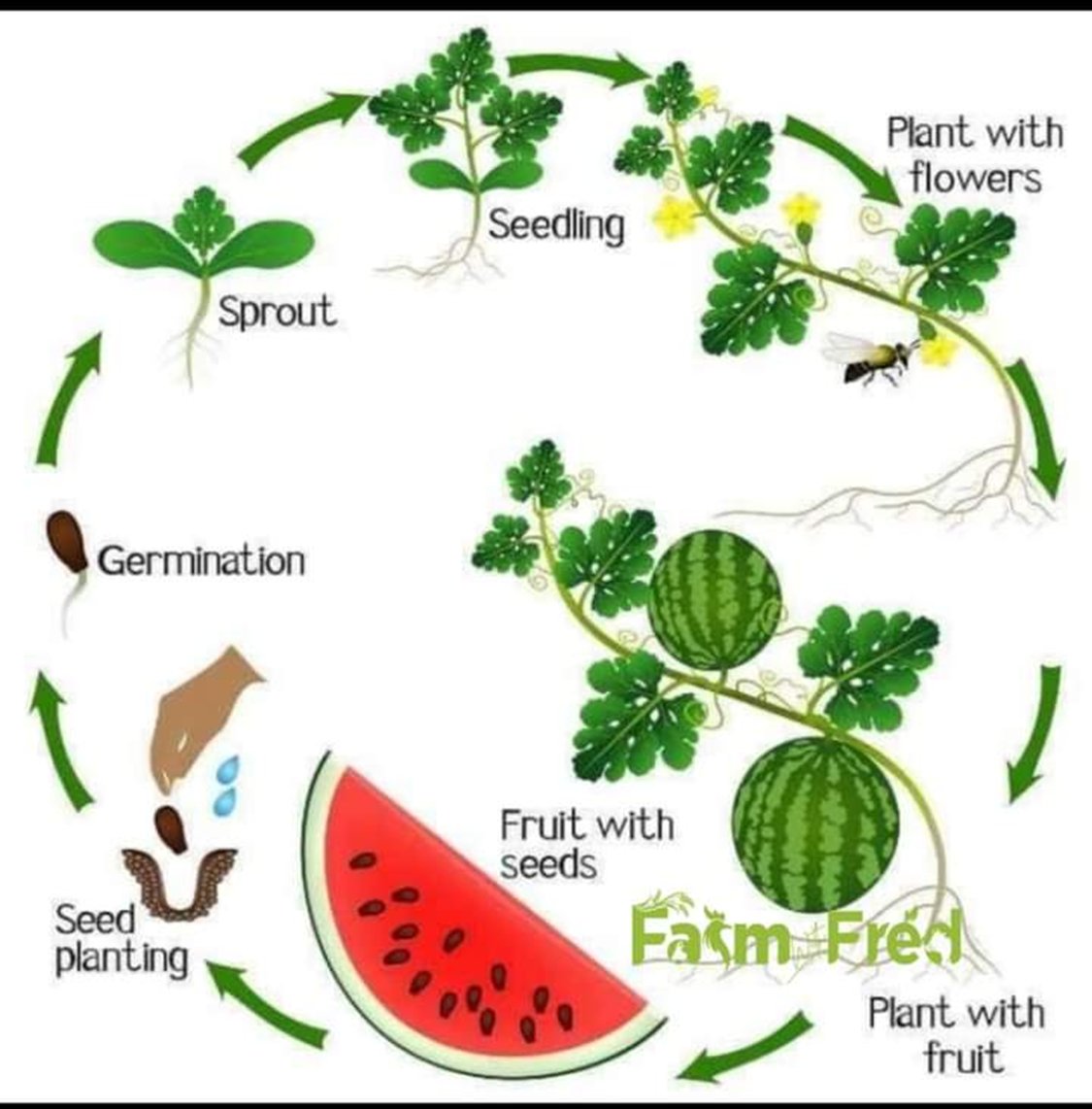
5. Watermelon growth stages
5.1. Seed germination: Cold soils delays germination, it needs warm. Seeds absorbs water, swells and emerge roots followed cotyledon leaves.
5.2. Seedling Stage: Watermelon develops true leaves and root system. Transplanting can be done at this stage.
5.1. Seed germination: Cold soils delays germination, it needs warm. Seeds absorbs water, swells and emerge roots followed cotyledon leaves.
5.2. Seedling Stage: Watermelon develops true leaves and root system. Transplanting can be done at this stage.
5.3. Vine Development: Vine, long trailing stems spread across ground with more leaves and roots expansion.
5.4. Flowering: After certain size and maturity, watermelon starts flowering with both male and female parts, male appearing before female (with small fruit forming behind)
5.4. Flowering: After certain size and maturity, watermelon starts flowering with both male and female parts, male appearing before female (with small fruit forming behind)
5.5. Pollination and fruit development: Bees and other pollinators transfer pollens from male flowers to female. Adequate pollination leads to watermelon fruit development. The fruit expands in size, and its rind starts to form. Watering and fertilizing are critical at this stage
5.6. Maturation and Harvesting: As the fruit matures, the color changes, fruit becomes heavier and the vine starts to wither along with drying of tendrils. Once it reaches full maturity, signs such as hollow sound when tapped, & waxy appearance on the rind are observed.
6. Watering: to ensure adequate moisture and proper fruit development water should supplied cautiously since too much water damage watermelons and affect their growth. Water on the ground not on leaves if you can.
As fruits approach maturity stop watering to avoid water-bursting.
As fruits approach maturity stop watering to avoid water-bursting.
7. Fertilization: For proper growth and fruit development, constant nutrient supply should ensured.
7.1. Solid form
=> Organic fertilizer and DAP per hole while planting.
=> NPK (17-17-17) & Urea while weeding for leaf growth, flowering and fruiting support, & vine development.
7.1. Solid form
=> Organic fertilizer and DAP per hole while planting.
=> NPK (17-17-17) & Urea while weeding for leaf growth, flowering and fruiting support, & vine development.
7.2. Foliar fertilizer applications
=> Easy Grow Vegetative for leaf growth and development
=> Easy Grow Flowers and Fruits for flower development and fruit formation.
=> Easy Grow Calcium for fruit development and maturity.
=> Easy Grow Vegetative for leaf growth and development
=> Easy Grow Flowers and Fruits for flower development and fruit formation.
=> Easy Grow Calcium for fruit development and maturity.
8. Pest and disease management
Disease management starts with regular scouting for early controlling identified problem.
8.1. Weeding: should be regularly done because weeds compete with watermelons for space, nutrients, & may harbor disease agents making them hard to control.
Disease management starts with regular scouting for early controlling identified problem.
8.1. Weeding: should be regularly done because weeds compete with watermelons for space, nutrients, & may harbor disease agents making them hard to control.
8.2. Melons, like other cucurbits, are susceptible to the majority of diseases and insect pests. Under certain conditions, powdery mildew, downy mildew, alternaria leaf spot, anthracnose, and fusarium wilt cause problems. Beetles, Red mites, aphids, & Melon fly are also dangerous
8.3. For pest control, Implement integrated pest management practices, including regular monitoring, physical removal of pests, & the use of organic or chemical insecticides when necessary. Rocket, Mancozeb, & other pesticides can be used. Overhead watering promote fungal growth.
Finally, beyond just good agronomic practices, you need to master good marketing skills, keep farm records, and consult other farmers in your region and experts to ensure your farm's success.
Found this helpful? Like ❤, leave comments, and Retweet this thread.
Found this helpful? Like ❤, leave comments, and Retweet this thread.
Loading suggestions...