

Frostbitten feet.
Bordering on starvation.
Shaking with cold.
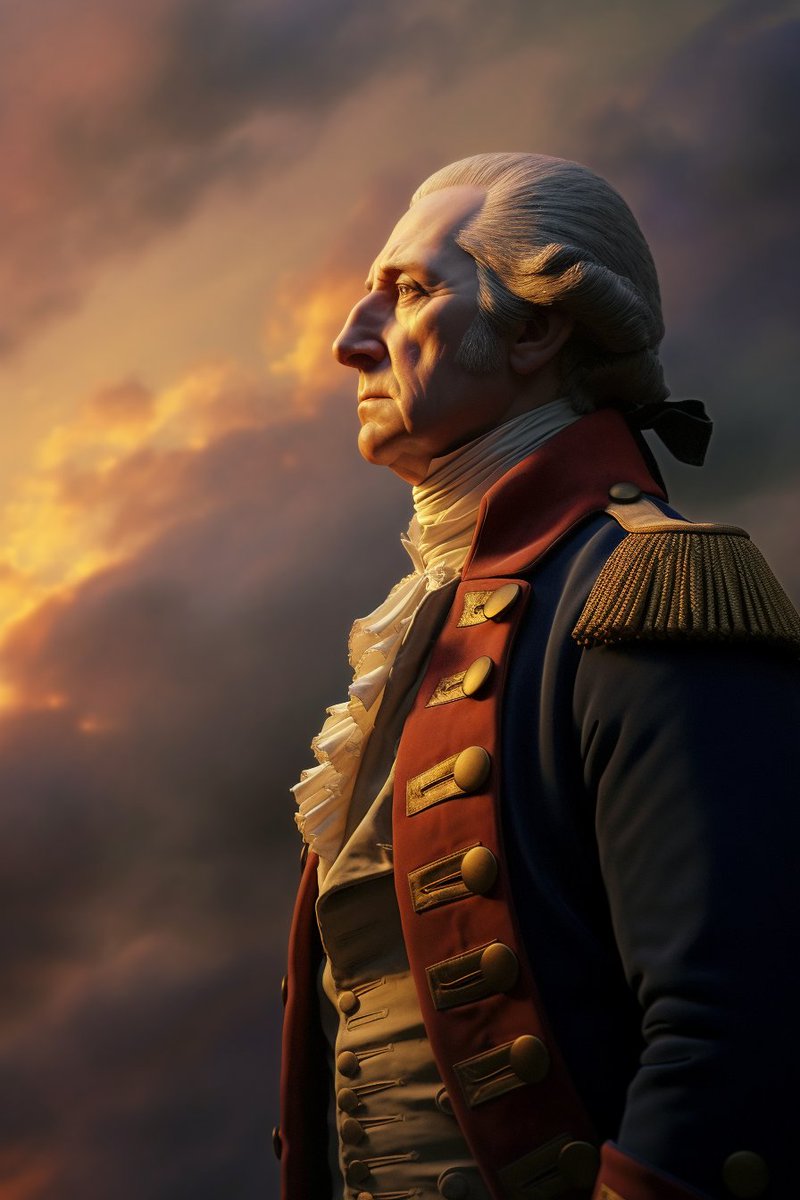
George Washington stares ahead with unwavering determination.
His army is crossing the Delaware River and there’s no turning back…
Bordering on starvation.
Shaking with cold.
George Washington stares ahead with unwavering determination.
His army is crossing the Delaware River and there’s no turning back…
The day was December 26th, 1776.
Morale was low throughout the Continental Army.
The Americans had just lost a few significant battles against the British:
-Battle of White Plains in October
-Battle of Forts Washington and Lee in November
Morale was low throughout the Continental Army.
The Americans had just lost a few significant battles against the British:
-Battle of White Plains in October
-Battle of Forts Washington and Lee in November

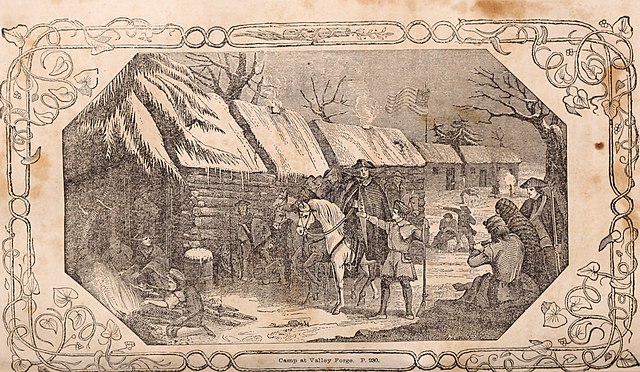
Washington and his men had retreated from New Jersey into Pennsylvania.
Their uniforms were barely hanging on their bodies due to wear.
They were in rough shape across the board.
Their uniforms were barely hanging on their bodies due to wear.
They were in rough shape across the board.
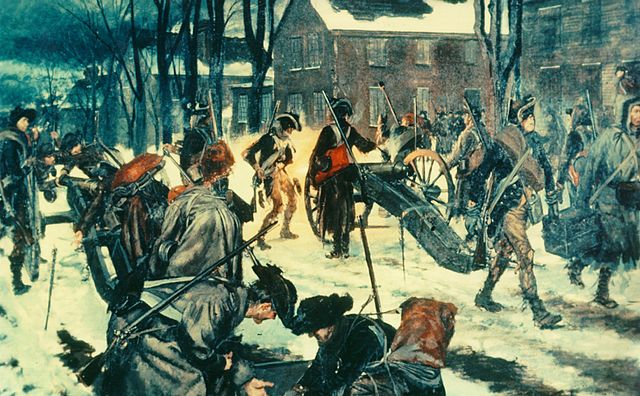
There were only a few thousand men left in Washington’s army.
In December, they could all be found at the bank of the Delaware River.
Although the winter weather was brutal, it was also keeping the British from attacking, so the Americans had a chance to recover and reorganize.
In December, they could all be found at the bank of the Delaware River.
Although the winter weather was brutal, it was also keeping the British from attacking, so the Americans had a chance to recover and reorganize.
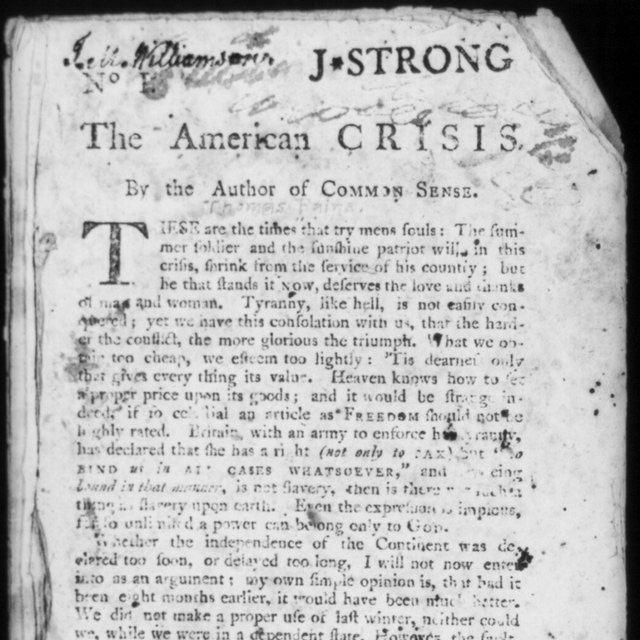
As they sat around the campfires, Thomas Paine’s “The American Crisis” was passed around and read by the hopeless men.
The light of the men's small candle of hope began to grow.
They all remembered why they were enduring what they were:
Freedom.
The light of the men's small candle of hope began to grow.
They all remembered why they were enduring what they were:
Freedom.
On Christmas night, Washington came up with a daring plan to attack the town of Trenton.
They would cross the ice-filled Delaware River and then march 9 miles to surprise a force of 1,500 Hessian soldiers (German mercenaries hired by the British).
This would give them supplies.
They would cross the ice-filled Delaware River and then march 9 miles to surprise a force of 1,500 Hessian soldiers (German mercenaries hired by the British).
This would give them supplies.

The plan was to have Washington's regiments ready to launch their boats by sunset.
He planned to cross the river at night.
But just before launching, a storm with wind, snow, rain, sleet, and hail, rolled in and many men abandoned their duties.
He planned to cross the river at night.
But just before launching, a storm with wind, snow, rain, sleet, and hail, rolled in and many men abandoned their duties.

The crossing of the river took far longer than Washington had planned, he even considered calling the attack off.
When he finally reached the other side, he watched the other boats trickle to shore.
They were three hours behind schedule.
When he finally reached the other side, he watched the other boats trickle to shore.
They were three hours behind schedule.
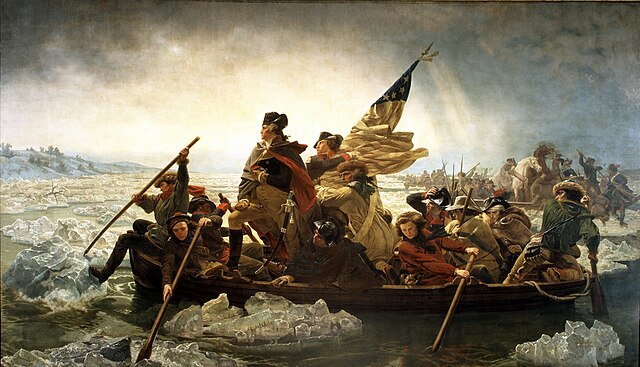
Washington knew an abandoned mission would be too devastating for his men, so they stuck to the plan.
Once everyone was ashore, with his eyes fixed and jaw set, Washington led his men on a march to Trenton.
Once everyone was ashore, with his eyes fixed and jaw set, Washington led his men on a march to Trenton.
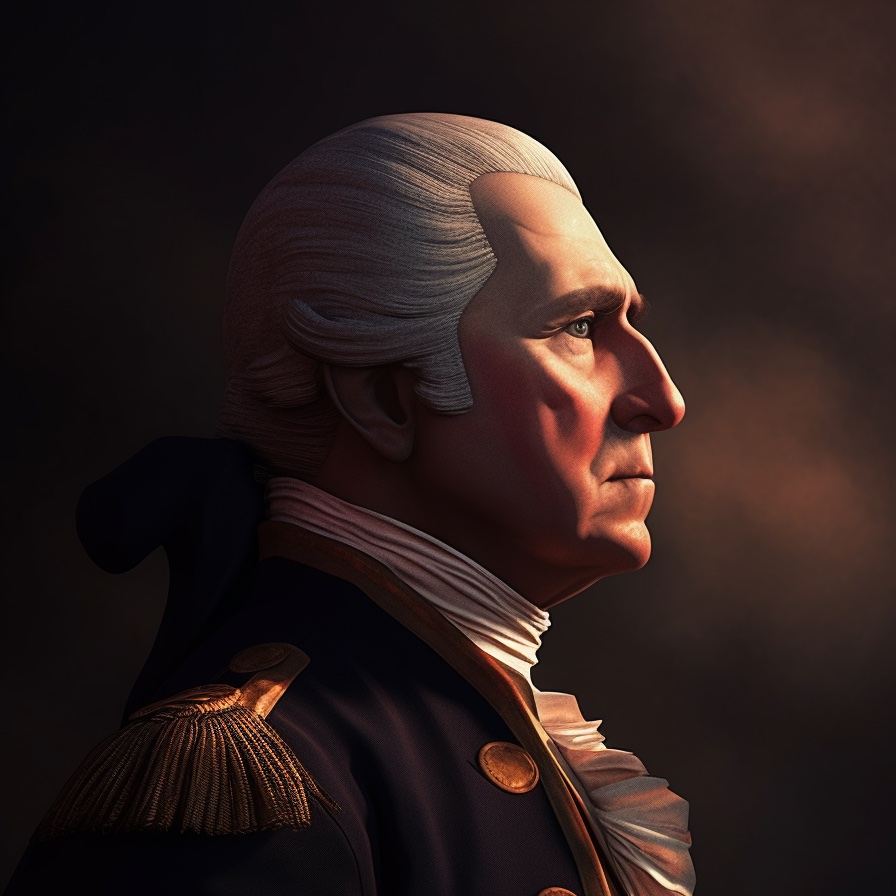
They were pelted with snow and rain.
Their weapons were basically useless due to the water.
As they fixed their bayonets while marching, Washington rode along the men shouting:
“Press on, boys! Press on!”
Their weapons were basically useless due to the water.
As they fixed their bayonets while marching, Washington rode along the men shouting:
“Press on, boys! Press on!”
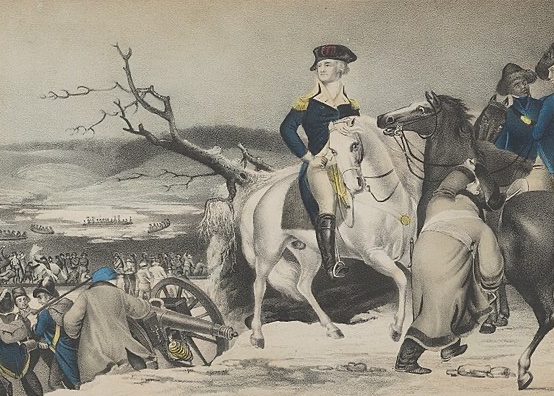
As they reached the high ground, Washington yelled:
“Follow me!”
He then galloped on his horse leading his men into battle.
“Follow me!”
He then galloped on his horse leading his men into battle.
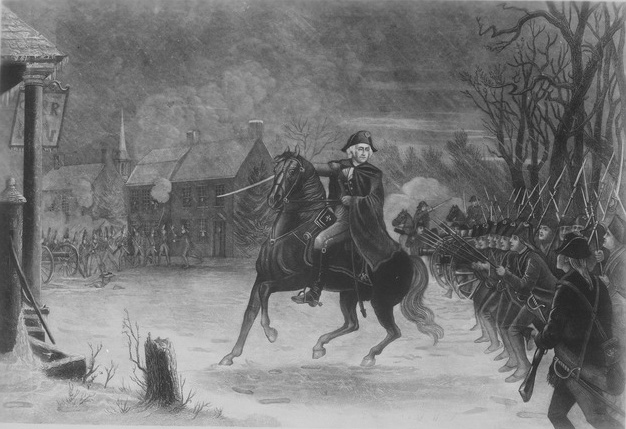
The soldiers followed closely behind inspired and determined due to their incredible leader.
The victory was achieved in under an hour.
Washington treated all prisoners with dignity.
The victory was achieved in under an hour.
Washington treated all prisoners with dignity.
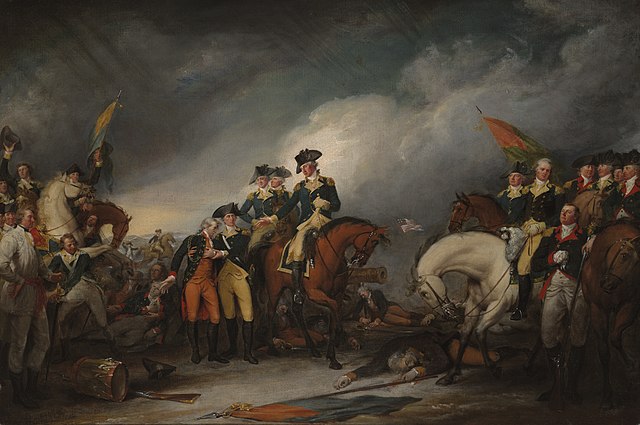
Washington praised his men:
“The General, with the utmost sincerity and affection, thanks the officers and soldiers for their spirited and gallant behavior at Trenton yesterday.”
But it was Washington’s “spirited and gallant behavior” that trickled down to these men!
“The General, with the utmost sincerity and affection, thanks the officers and soldiers for their spirited and gallant behavior at Trenton yesterday.”
But it was Washington’s “spirited and gallant behavior” that trickled down to these men!
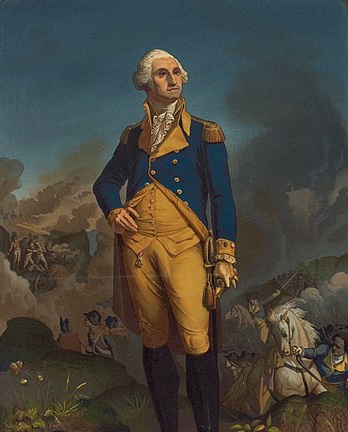
The Battle of Trenton was the Americans' first major victory.
They would go on to win another battle in Princeton afterward.
And you know how the rest of Revolutionary War goes…
They would go on to win another battle in Princeton afterward.
And you know how the rest of Revolutionary War goes…
Incredible story!
What’s one thing to remember from this story that you can use in your own life?
What’s one thing to remember from this story that you can use in your own life?
USEFUL KNOWLEDGE:
-Pursue actions that increase the morale of your people.
There’s a lot of leadership wisdom in this story, but the most important aspect here is Washington’s pursuit of increasing his men’s morale. Yes, they went to Trenton to get supplies, but they were really struggling with their confidence. They had suffered loss after loss, were sick, tired, cold, broke, you name it… If their spirits weren’t raised, the Freedom of Americans and everything great about this country was on the line. So, once you find the best route to increase the morale of your people (some kind of win. Could be one that is easier, but a win is what matters), you as the leader must lead them unwaveringly to such a destination. It’s going to be painful, but it must be done.
NOTE: Washington reminds me of a medieval knight driven by chivalry and the pursuit of righteousness. Obviously, he wasn’t perfect, but he was a rare leader!
-Pursue actions that increase the morale of your people.
There’s a lot of leadership wisdom in this story, but the most important aspect here is Washington’s pursuit of increasing his men’s morale. Yes, they went to Trenton to get supplies, but they were really struggling with their confidence. They had suffered loss after loss, were sick, tired, cold, broke, you name it… If their spirits weren’t raised, the Freedom of Americans and everything great about this country was on the line. So, once you find the best route to increase the morale of your people (some kind of win. Could be one that is easier, but a win is what matters), you as the leader must lead them unwaveringly to such a destination. It’s going to be painful, but it must be done.
NOTE: Washington reminds me of a medieval knight driven by chivalry and the pursuit of righteousness. Obviously, he wasn’t perfect, but he was a rare leader!

Loading suggestions...