
Why, you might be wondering, are illegal raiders going to the extraordinary lengths of stealing metal from old WWII wreckages, war graves at that?
Are they after gold? Silver? Stolen artworks?
The answer, it turns out, is far more interesting: a very, very rare form of steel
Are they after gold? Silver? Stolen artworks?
The answer, it turns out, is far more interesting: a very, very rare form of steel
This is not the first time HMS Repulse and HMS Prince of Wales, both sunk in the South China Sea in 1941, have been raided for metals. This kind of thing has been happening for years. Pirates scavenging war graves for pieces of metal, cannons and artillery. For the steel.

That might sound a little odd, given steel is hardly rare or indeed valuable. It's one of the cheapest types of metal (an alloy technically) but the type of steel we're talking about is one of the rarest substances in the world. It's called "low background steel"
Low background steel doesn't contain radionuclides, traces of radiation such as cobalt-60. These trace amounts don't matter for most uses but when you're making products highly sensitive to radiation - eg special scientific equipment or Geiger counters - you need this steel
And here's the thing: ALL steel made since 1945 contains radionuclides. To see why it helps to recall that since the era of Henry Bessemer, we have made steel by blasting molten iron with air or, more recently, oxygen. A primer on steel manufacture here 👇youtu.be
In other words, steel contains atoms which come from the atmosphere at the time it's made. And on 16 July 1945 the atmosphere all around the world began to change forever. That was the date of the Trinity nuclear test, the first ever. Many tests followed. The atmosphere changed
And so too did every tonne of steel produced after that time. It had and, as far as I can tell still has, v faint traces of radiation (tho amounts are diminishing). Nothing harmful to humans. But not good if you're a super sensitive radiation detection device.
And with a finite supply of pre-1945 steel, old wreckages have become a lucrative source of this metal. Battleships, subs, guns. Sadly this latest episode is only one of many. Pirates have been scavenging these sites for years. It's shameful. But there's a market for this stuff.
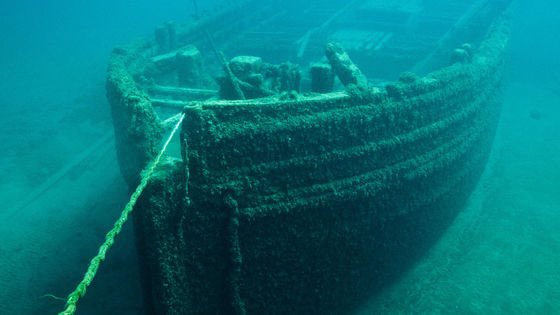
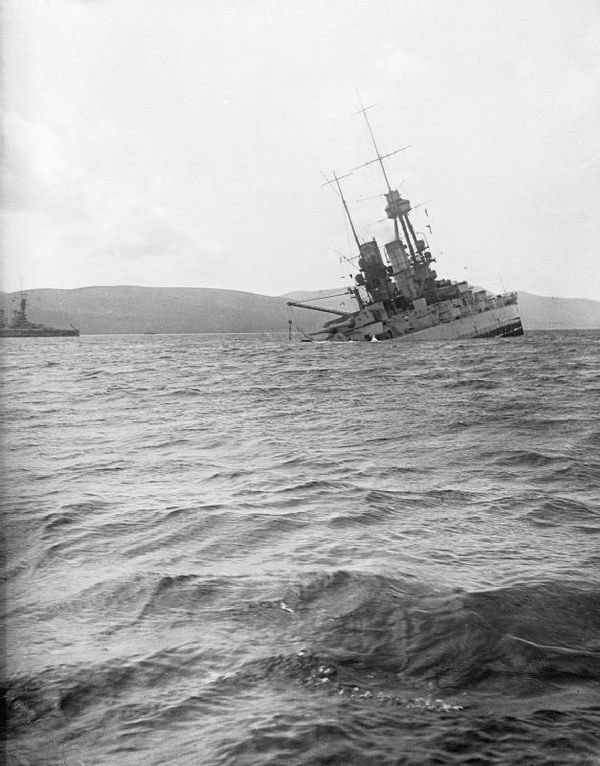
And it's not just pirates. Steel from some of the German fleet scuttled at Scapa Flow in the Orkneys in WWII was salvaged and used in the manufacture of medical equipment. Lives were saved thanks to these warships, which had a secret second life as a trove of low background steel
Nor is it just pre-1945 steel which is sought after for special uses. So too is lead - much more on this in this excellent thread 👇
The strange tale of low background steel is just one of the stories contained in MATERIAL WORLD, my book on the underbelly of the modern world, the materials we use to help us build civilisation. Out v soon. Order here: lnk.to

Oops Scapa Flow scuttling was of course WWI (actually just afterwards in 1919)
More on the backstory of the Scapa Flow steel here via @PauldeTarragona
Loading suggestions...