

Our friend, the high temperature aero gas turbine blade. It's coated, film cooled, made of single crystal Nickel superalloy, generates 1000HP and pulls thousands of g in an environment hundreds of degrees higher than its melting point.
And eventually it may be obsolete...
And eventually it may be obsolete...

In 2015, GE ran an F414 turbofan with a number of low pressure turbine blades made of Ceramic Matrix Composite (CMC) instead of Nickel alloy. Thus was the first use of CMC rotating parts in an aerospace gas turbine, and that is significant.

We all know ceramics. They tend to be brittle, have low ductility and can have extremely high melting points: The single crystal superalloy blade in the first post was investment casted in a ceramic mould after all.
But, like coffee mugs, they are brittle, often fragile.
But, like coffee mugs, they are brittle, often fragile.

CMCs are different: Made from ceramic fibres embedded in a ceramic matrix, with a coating to ensure a weak bond between matrix & fibre, they exhibit much better crack resistance for cracks perpendicular to the fibres, which bridge the crack.
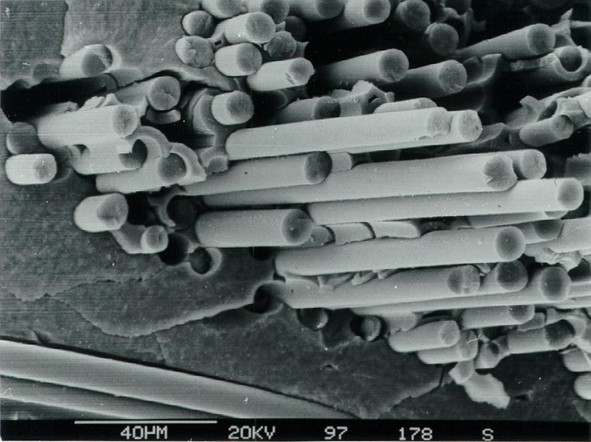
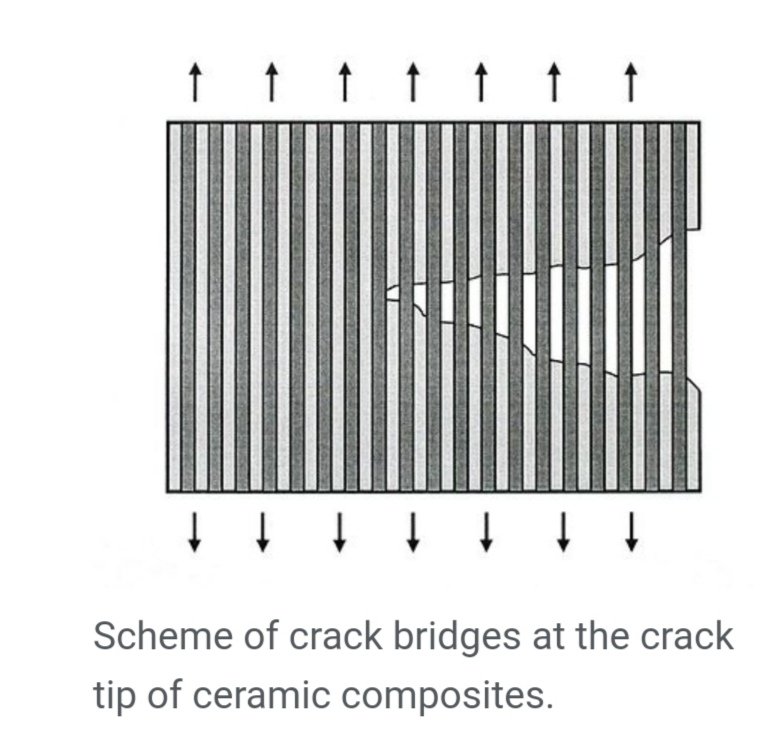
What this means in effect: Better robustness and the ability to use them for highly stressed components subject to vibration, shock or impact damage.
Here's a ceramic plate being hit by a 150mph impactor, next to a CMC plate.
Here's a ceramic plate being hit by a 150mph impactor, next to a CMC plate.


They are also 1/3 the weight of mechanically equivalent metal alloy parts. For turbine blades, this means correspondingly lighter turbine discs, saving hundreds of pounds in weight on an engine.
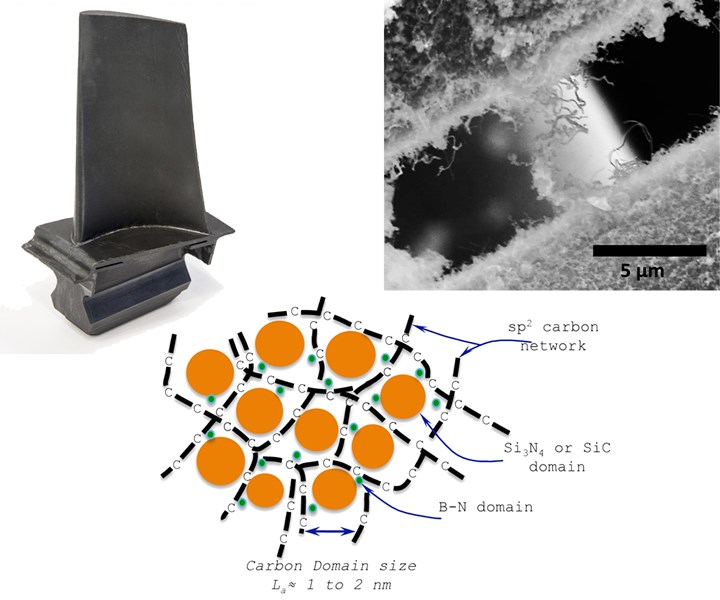
And there's temperature resistance: GE's mass produced Silicon Carbide (SiC) CMC shrouds already demonstrate integrity beyond 1300 degrees C, and CMCs can potentially go much further than that. Some CMCs can go far higher, and hundreds of degrees more than Nickel superalloy.
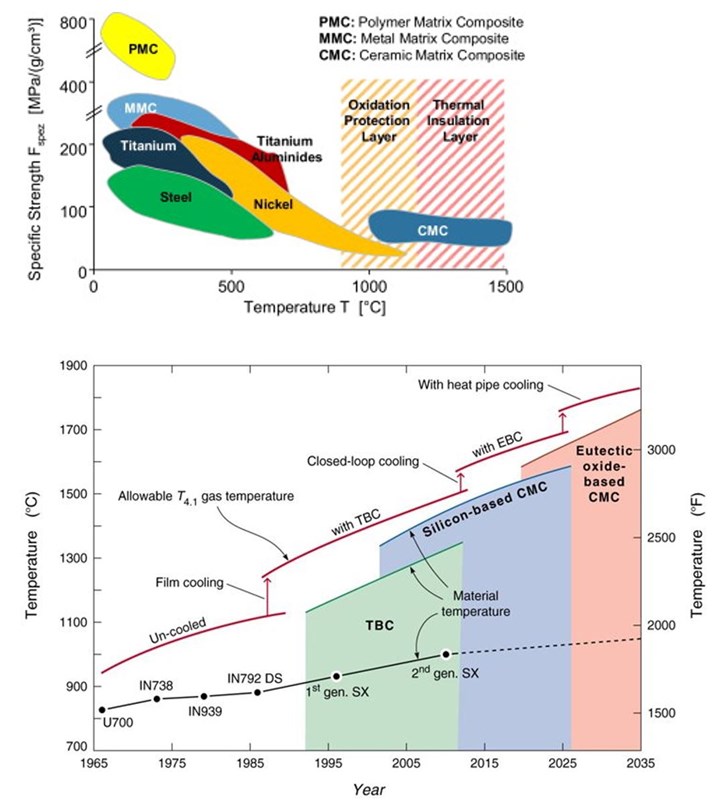
Like all aero material advances, CMCs will start conservatively, in the less stressed parts of the engine: Static shrouds, seals etc, but GE's F414 demonstrator changed the game, and what starts in the LP turbine will, hopefully, move to the HP side: Blades, stators & guide vanes
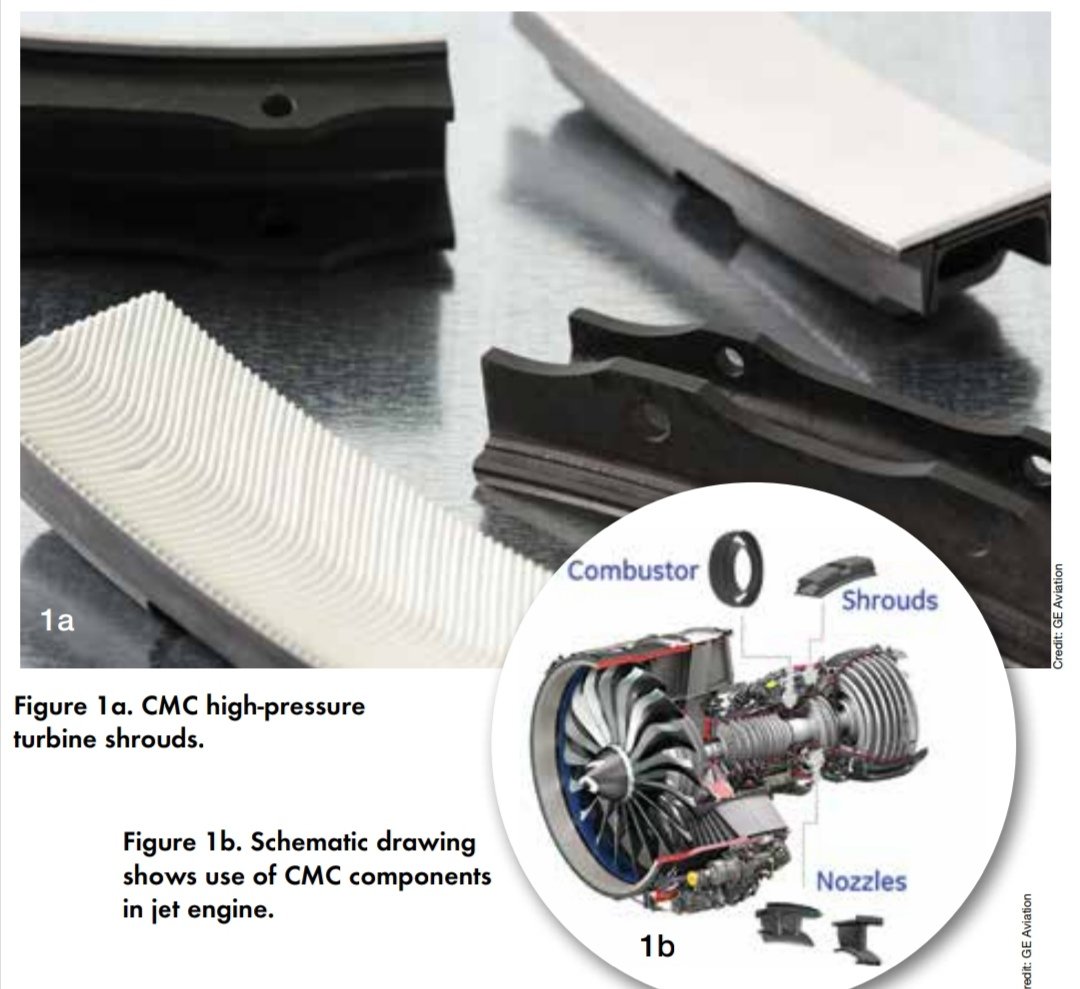
If this happens then the real magic begins: The hotter you can run a gas turbine the more efficient it is, & the less air you need to duct to blades & vanes for cooling the more efficient as well. Eliminate blade cooling entirely and more aerodynamic profiles can be considered.
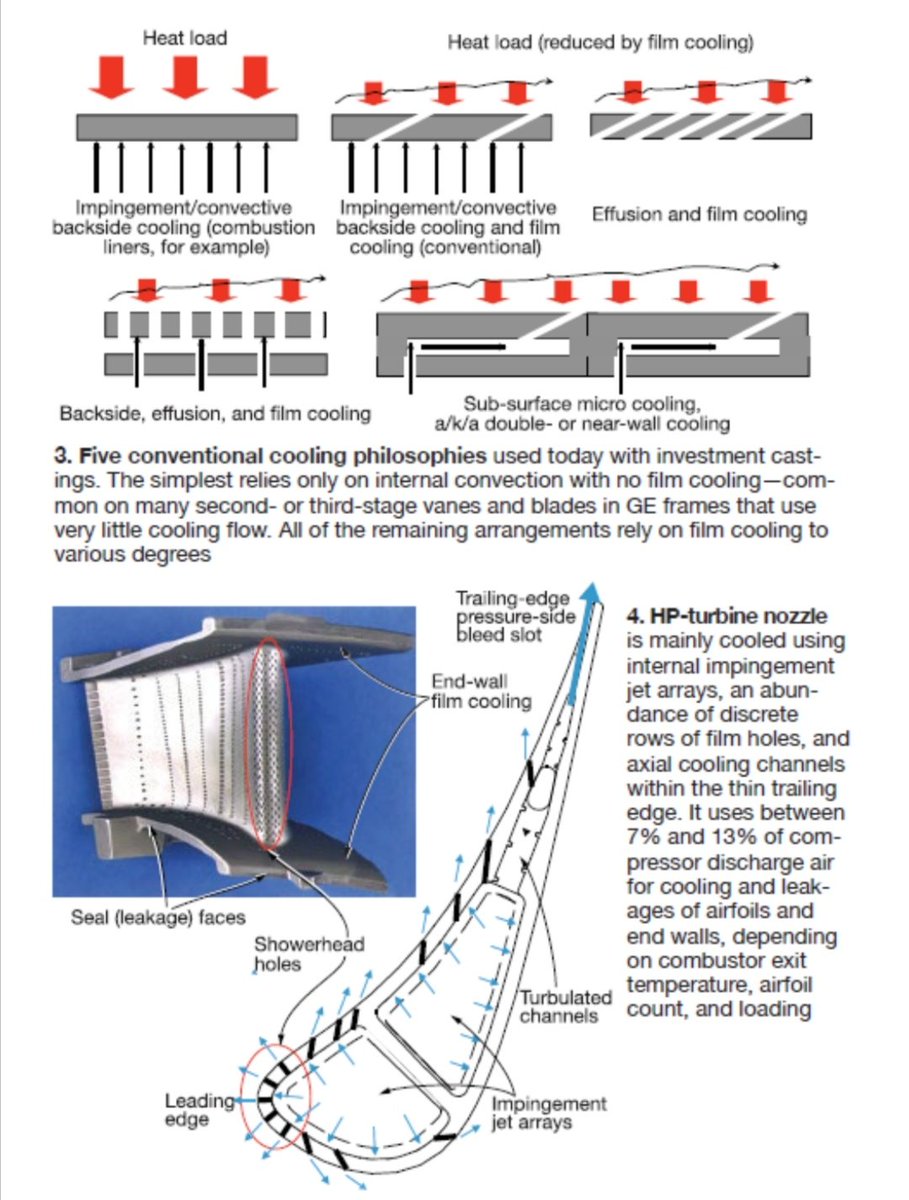
So a massive win, which is why GE invested over 1.5 billion in mastering CMCs. There is huge challenge: Materials systems are set up for metals in the big aero engine companies, and mass production will be a huge challenge, but the same was said of CFRP for airframes too...

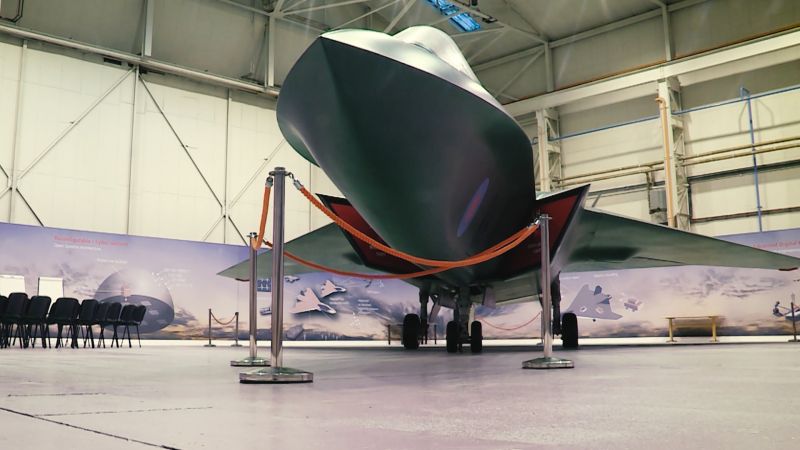
The first destination will probably be engines for 6th generation fighters, but next gen airliners will follow in time, and with that all of us will, eventually, benefit too.
Let's hear it for yet more unseen innovations!
Let's hear it for yet more unseen innovations!
Loading suggestions...