

Dhanur Ved - The Art of Warfare in Ancient India
#Thread
#Thread

1. Vishnu Purana refers to Dhanur Ved as one of the eighteen branches of knowledge taught by Bhrigu, while the Mahabharata mentions it as having sutras like other Vedas. Shukra Niti describes it as the Up Veda of Yajurveda which has five arts or practical aspects.

2. Agni purana and Shiva Tantra, contain separate chapters on the Science of archery and describe in detail the correct posture in shooting, the position of drawing the bows, measurement of bows, etc. According to Vishnudharmottara’, god Indra represents Dhanur Veda.


3. According to Maharishi Vashistha, on the other hand, Dhanurveda is considered the branch of both Yajurveda and Aṭharvaveda.2 Because the Pracaraṇa of Dhanurveda is from Yajurveda and that of the knowledge about the divine weapons is adopted from Aṭharvaveda.
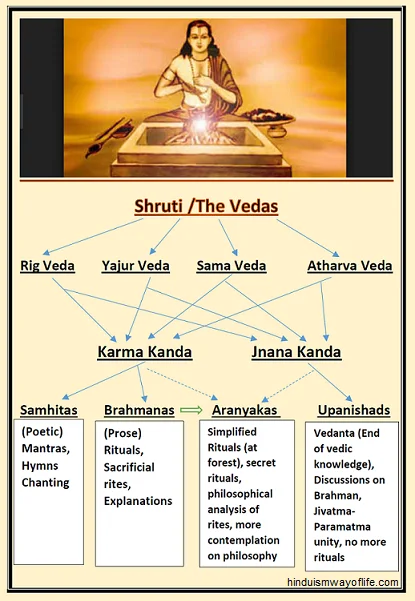
4. Dhanurveda is divided into four pādas. According to the Dhanurveda Samhita, dikṣha, saṃgraha, sidḍha, and prayoga are the four pādas of Dhanurveda.
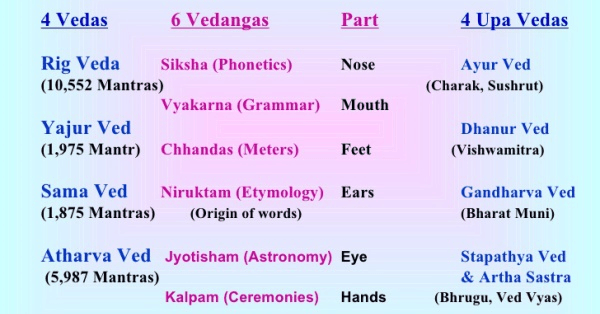
5. The Dikshapadi gives instructions on the principles. The samgrahapada contains the rules for collection and the sidḍhipada describes the ways of casting bows. The prayogapada tells about the application of the weapons.
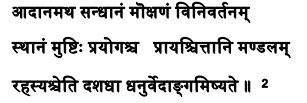
6. According to Mahabharata, Dhanur Veda has ten Angas and four Karana's. The below shloka of Mahabharata narrates the ten angas of Dhanur Veda. They are, adana, sanḍhana, mokṣaṇa, vinivarttana, sṭhana, muṣṭi, prayoga, prayas̓citta, mandala and rahasya.
7. Agnipuraṇa narrates, Dhanurveda as having five angas, yantramukta, pāṇimukta, Muktasandhārita, mauka and bāhuyudḍha. Yantramukta means using weapons with the help of machines. It involves kshepini, bow machines, etc. Pāṇimukta means using weapons by hand, stone, mace, etc. Muktasandhārita means which can be used by either throwing or holding it. Kunta is an example of the Muktasandhārita type of weapon. Which is used by not renouncing from the hand, is known as Amukta. The sword is an example of it. Bahuyudha means fighting by hand without using any weapons.
8. In Shukraniti weapons are classified into two main groups. They are Astra and Shastra. Weapons that are used with the help of mantra, yantra, or fire are called Shastra and other types of weapons are generally called Astra. Astra type of weapons is again classified into two, ie. nalikam and mantrikam.
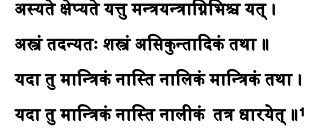
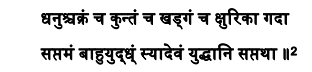
9. The below verse of Maharishi Vashiṣṭha in Dhanur Ved Samhita narrates the seven ways of fighting. They are by using bow and arrow (archery), discus, spear, gada, dagger, mace, and vandvayudḍha (wrestling).
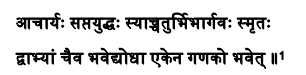
10. Teacher
In Dhanur Veda, the quality of Acharya is explained in a verse. He should be efficient in the seven types of battles. Those who knew seven ways of fighting are entitled to Acharya and he who teaches the art of warfare is called Acharya. He who is accustomed to four ways of fighting is known as Bhargava. Who knows only two types of fighting is Yodha (warrior) and the person who knows only one type of fighting is termed as Ganaka.
In Dhanur Veda, the quality of Acharya is explained in a verse. He should be efficient in the seven types of battles. Those who knew seven ways of fighting are entitled to Acharya and he who teaches the art of warfare is called Acharya. He who is accustomed to four ways of fighting is known as Bhargava. Who knows only two types of fighting is Yodha (warrior) and the person who knows only one type of fighting is termed as Ganaka.
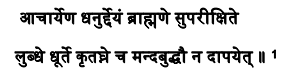
11. Methods of teaching archery
Dhanur Veda also narrates the training of weapons in detail. It deals with the training of students and also describes the ideal time and place for starting training. The Acharya will teach the science of archery only to those who have successfully come through the tests, and they should not be greedy ungrateful, and foolish people.
Dhanur Veda also narrates the training of weapons in detail. It deals with the training of students and also describes the ideal time and place for starting training. The Acharya will teach the science of archery only to those who have successfully come through the tests, and they should not be greedy ungrateful, and foolish people.
12. Auspicious time for training
The below verse of Vasiṣṭha’s Dhanurveda Samhita narrates the ideal time for starting weapon training. The weapon training may be started after the keen observation of nakṣatra, tithi, day, etc. The ideal time for initial teaching and learning of archery is found with some auspicious tithi and stars-hasta, punarvasu, puṣya, rohiṇi, uttaraphālguni, uttarabhādrapāda, uttarāṣāda, anurāda, as̓vini, Revati.
The below verse of Vasiṣṭha’s Dhanurveda Samhita narrates the ideal time for starting weapon training. The weapon training may be started after the keen observation of nakṣatra, tithi, day, etc. The ideal time for initial teaching and learning of archery is found with some auspicious tithi and stars-hasta, punarvasu, puṣya, rohiṇi, uttaraphālguni, uttarabhādrapāda, uttarāṣāda, anurāda, as̓vini, Revati.
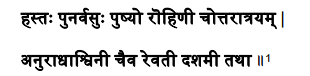
13. Lunar Astrology of learning
Learning archery will be fruitful when the moon is present in one’s zodiac sign of Lagna or occupies its third, sixth, seventh, tenth, or eleventh position. Also, the book tells that learning archery on the third, fifth, seventh, tenth twelfth, and thirteenth lunar day titḥi is very auspicious.
Learning archery will be fruitful when the moon is present in one’s zodiac sign of Lagna or occupies its third, sixth, seventh, tenth, or eleventh position. Also, the book tells that learning archery on the third, fifth, seventh, tenth twelfth, and thirteenth lunar day titḥi is very auspicious.
14. Rituals for the start of the Teaching and Learning
To start with the teaching the Acharya should submit offerings to deities and also should arrange for putting up an oblation of fire, where an offering of clarified butter is made along with chanting hymns. The disciples should offer a feast for the Brahmins and Kanya and should also worship the hermits or yogins who are ardent devotees of lord Shiva. Thereafter the disciple should salute his teacher by offering food, garlands, clothes, and ornaments. The student who is on fast should wear the deer skin and with folded hands requests the teacher to teach him archery. The teacher then in order to destroy the evils and sins and also to bring success to his disciple, should touch different parts of the body along with recitation of different Vedic hymns or mantras as mentioned by lord Shiva. Then the teacher prays to lord Mahadeva to dwell at the crown of his head or palate, lord Krishna at his arms, Lord Brahma on the navel, and lord Ganesha on the thighs. The teacher then offers the bow to his disciple after purifying it with the hymns mentioned in Dhanur Veda.
To start with the teaching the Acharya should submit offerings to deities and also should arrange for putting up an oblation of fire, where an offering of clarified butter is made along with chanting hymns. The disciples should offer a feast for the Brahmins and Kanya and should also worship the hermits or yogins who are ardent devotees of lord Shiva. Thereafter the disciple should salute his teacher by offering food, garlands, clothes, and ornaments. The student who is on fast should wear the deer skin and with folded hands requests the teacher to teach him archery. The teacher then in order to destroy the evils and sins and also to bring success to his disciple, should touch different parts of the body along with recitation of different Vedic hymns or mantras as mentioned by lord Shiva. Then the teacher prays to lord Mahadeva to dwell at the crown of his head or palate, lord Krishna at his arms, Lord Brahma on the navel, and lord Ganesha on the thighs. The teacher then offers the bow to his disciple after purifying it with the hymns mentioned in Dhanur Veda.
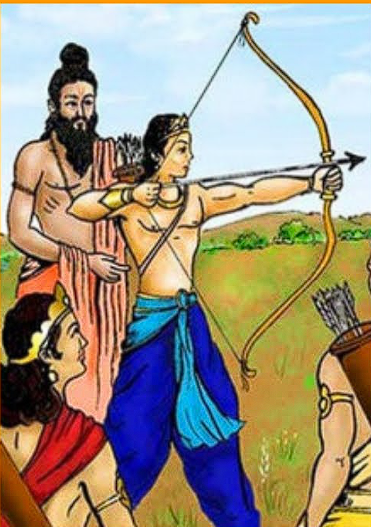
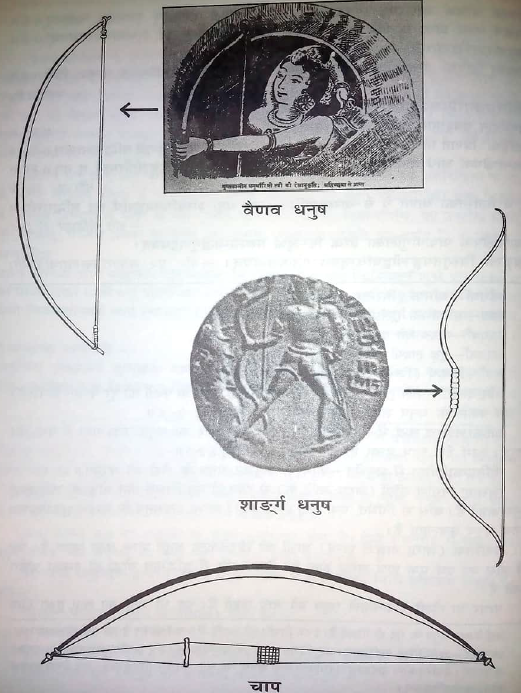
15. Types of Bows explained in Dhanur Ved
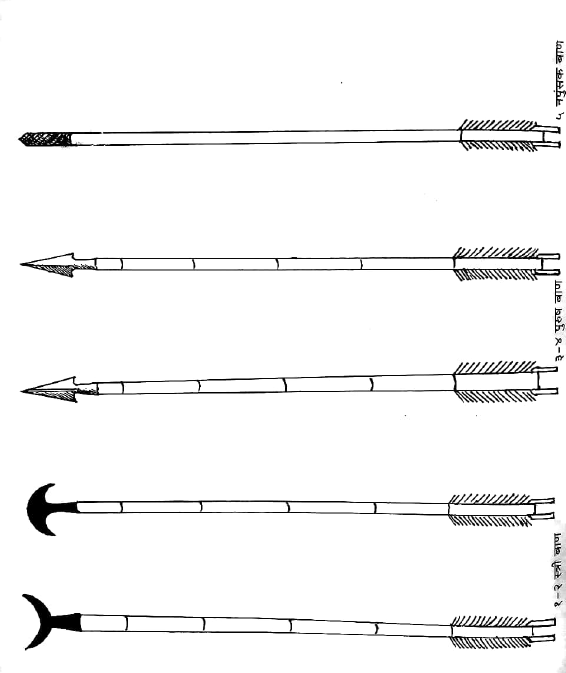
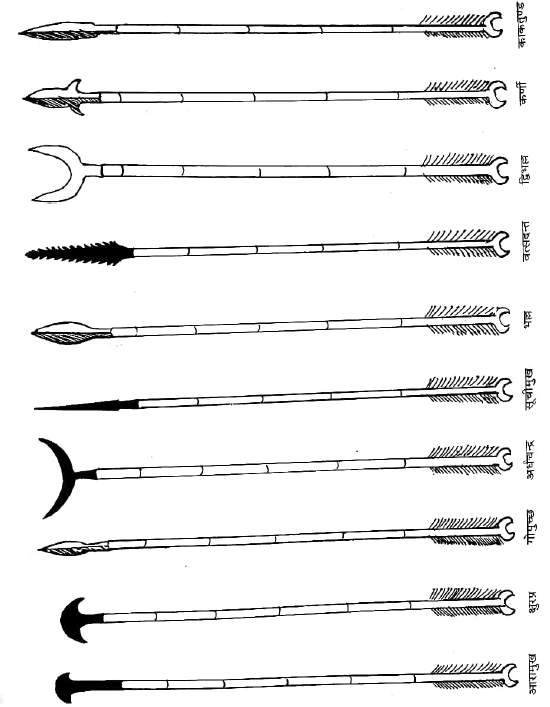
16. Types of Arrows described in Dhanur Ved
a)Based on the shape
b)Based on the Utility
a)Based on the shape
b)Based on the Utility
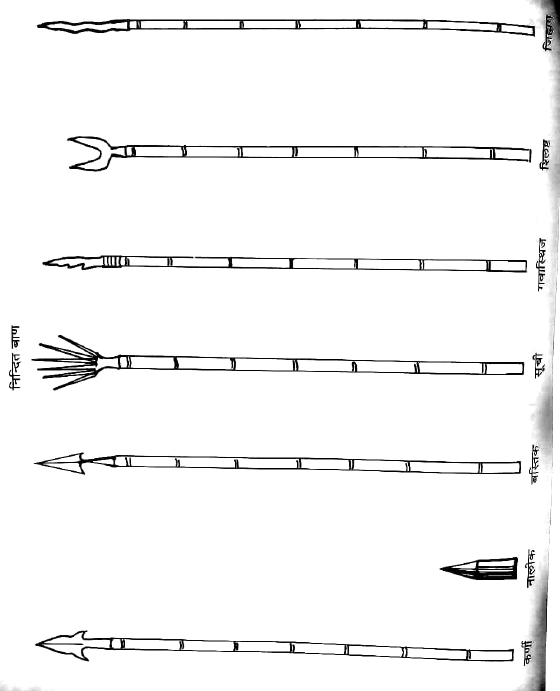
17. Arrows are not recommended for usage in Dhram Yudha as per DhanurVed
Nindit Baan
Nindit Baan
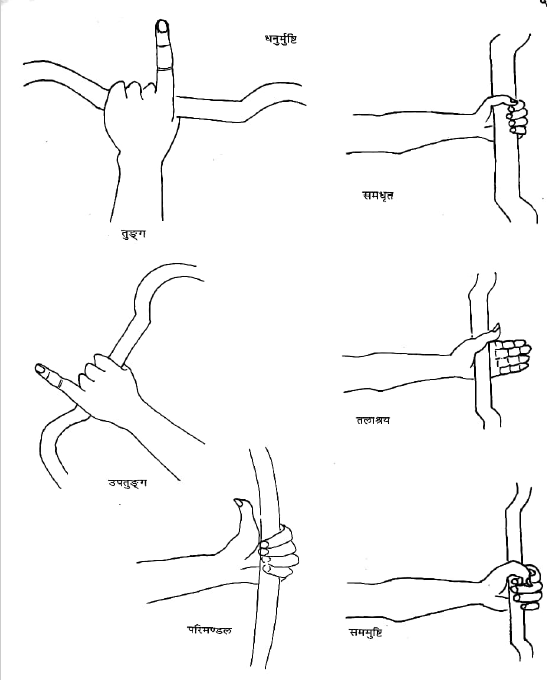
18. Methods of Holding the Bow and Shooting Arrow
As explained in Dhanur Ved
As explained in Dhanur Ved
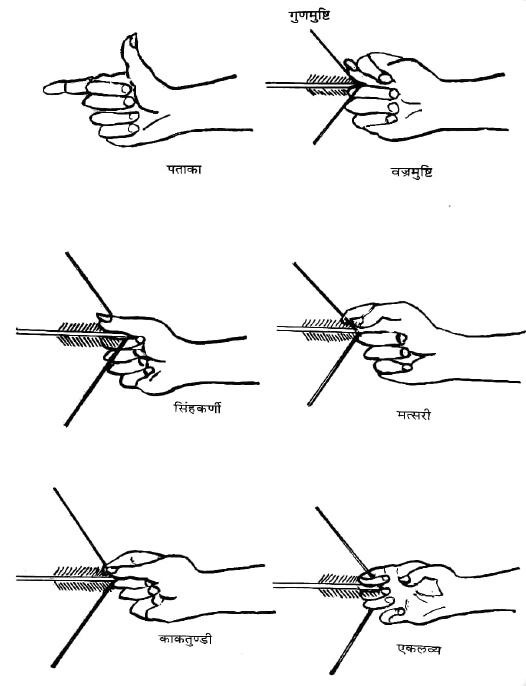
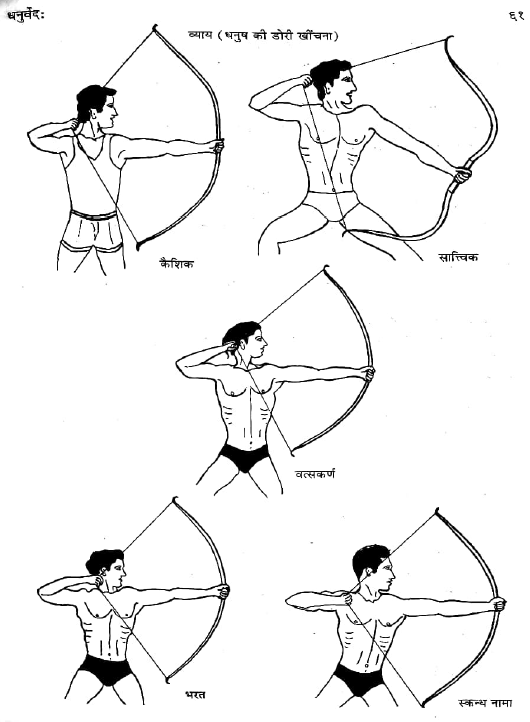
19. Stretching the string of the bow as explained in Dhanur Ved
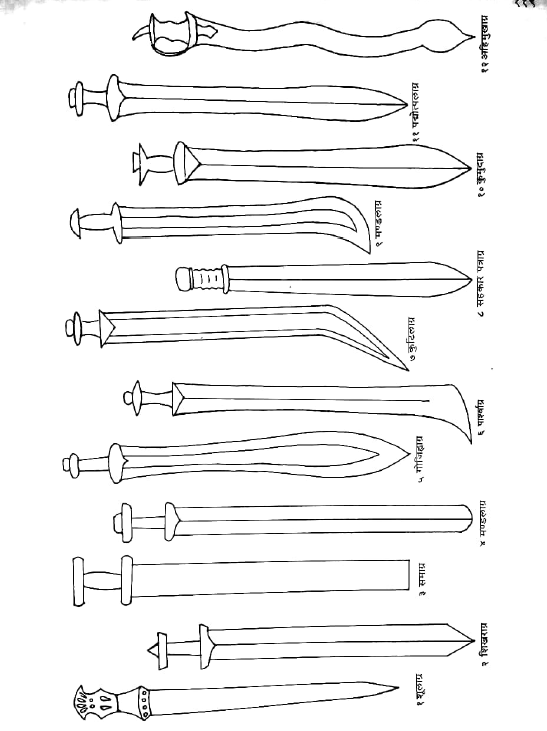
20. Types of Sword described in Dhanur Ved
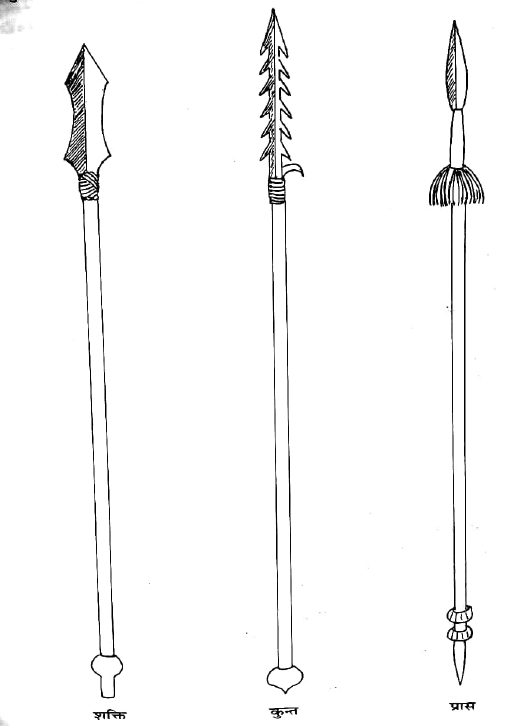
21. Types of Spears described in Dhanur Ved
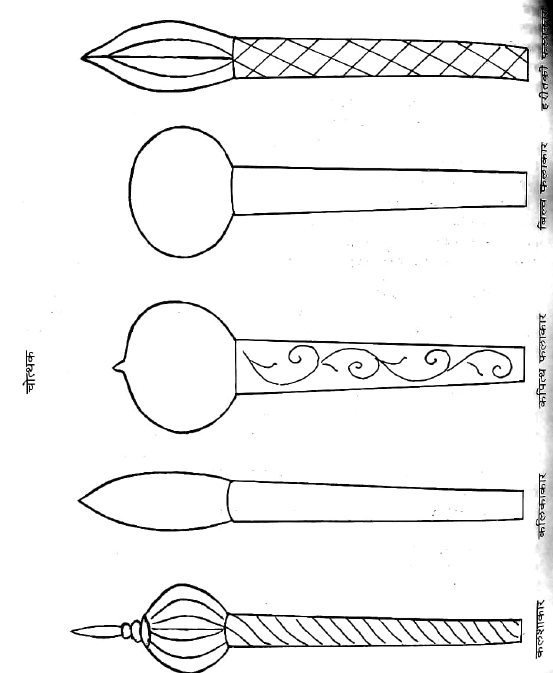
22. Types of Mace described in Dhanur Ved
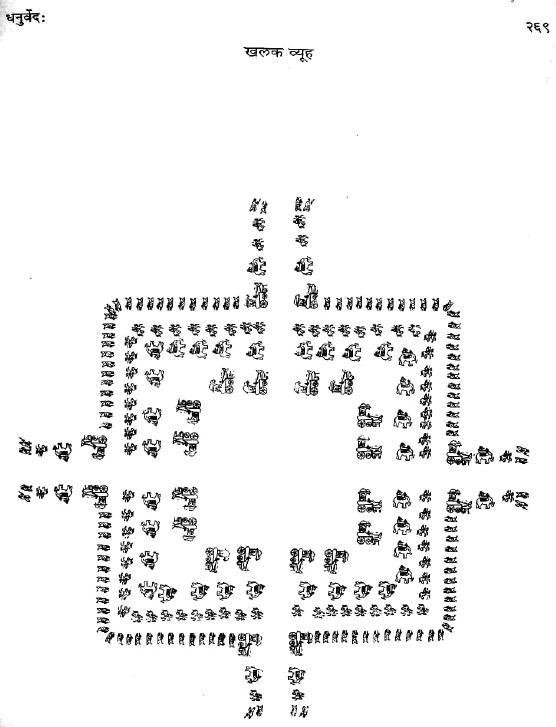
23. Armed formations in War - Most famous part of Dhanur Ved - Vyuh Rachna
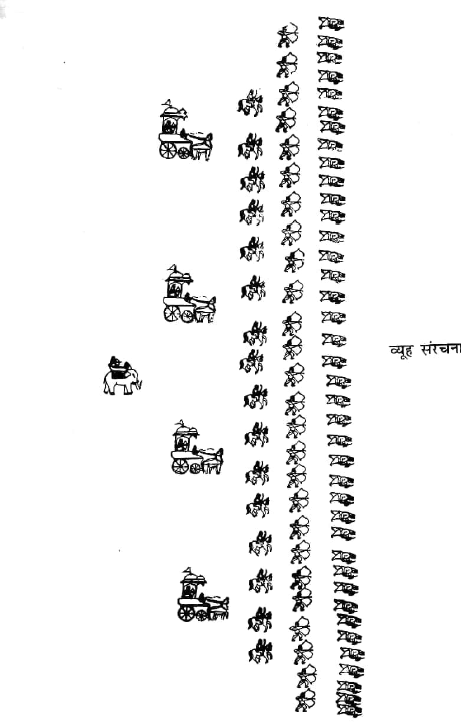
24. Technical explanation of the war field for armed formations - Vyuh Rachna in Dhanurved
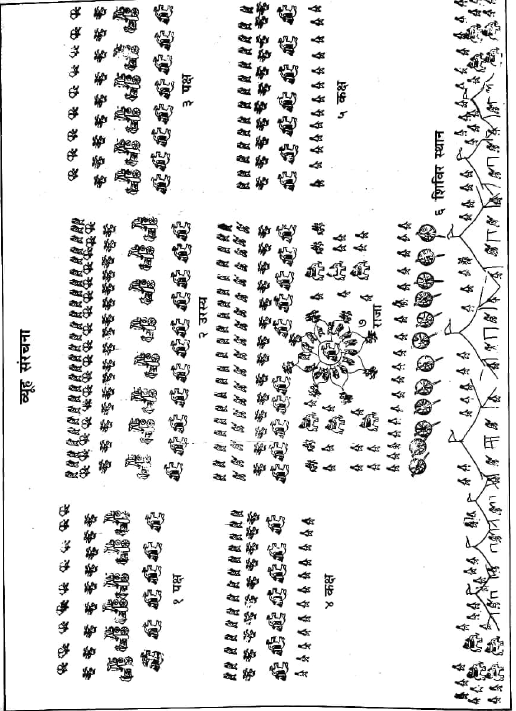
25. Types of Armed formations - Vyuh Rachna in Dhanur Ved
1. Shyen Vyuh
1. Shyen Vyuh
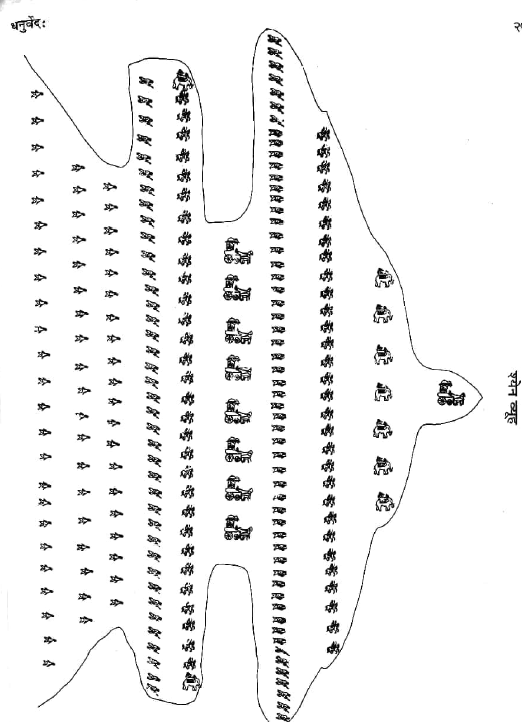
26. Types of Armed formations - Vyuh Rachna in Dhanur Ved
2. Shakat Vyuh
2. Shakat Vyuh
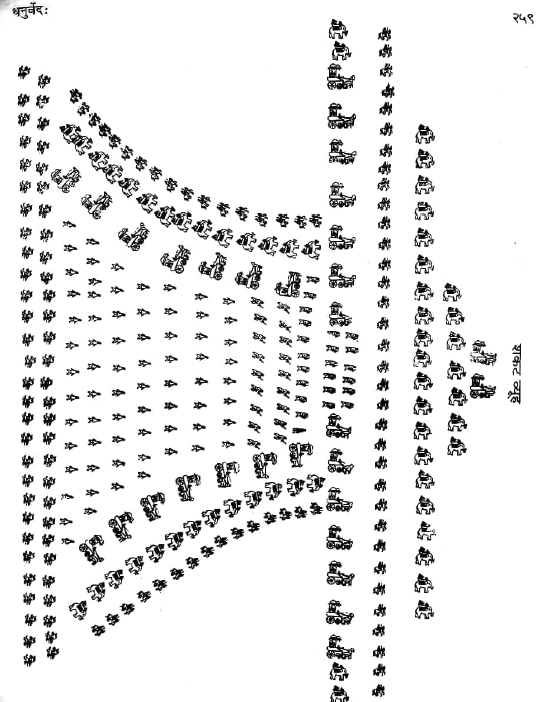
27. Types of Armed formations - Vyuh Rachna in Dhanur Ved
3. Singh Vyuh
3. Singh Vyuh
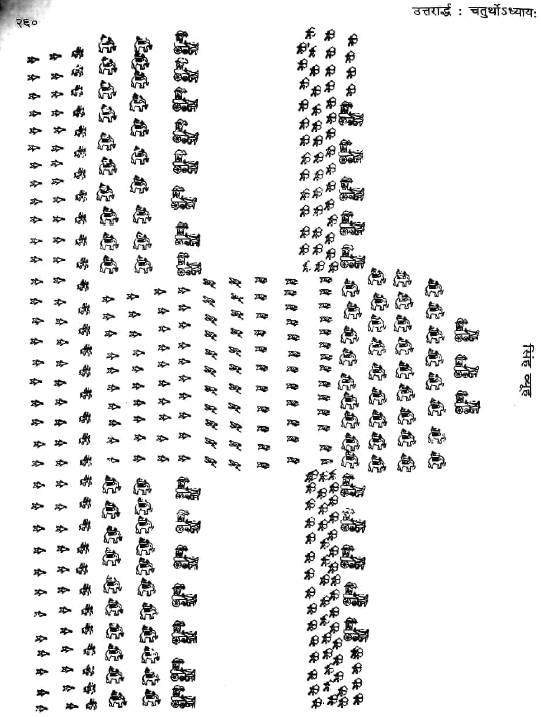
28. Types of Armed formations - Vyuh Rachna in Dhanur Ved
4. Chakra Vyuh
4. Chakra Vyuh
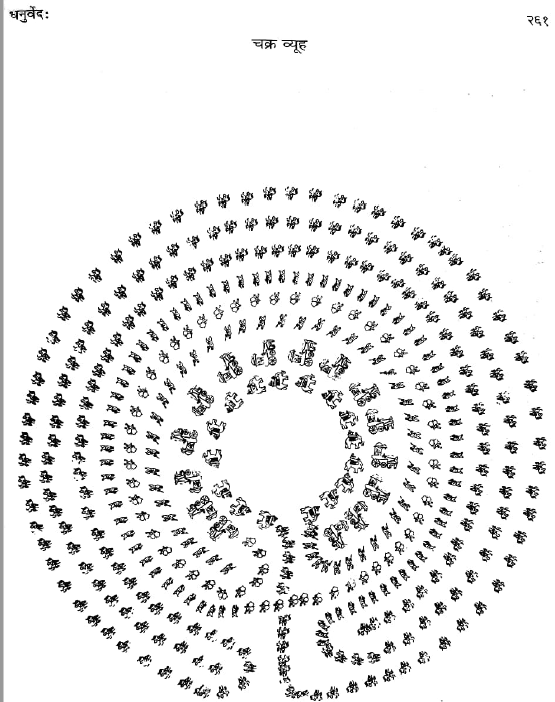
29. Types of Armed formations - Vyuh Rachna in Dhanur Ved
5. Padm Vyuh
5. Padm Vyuh
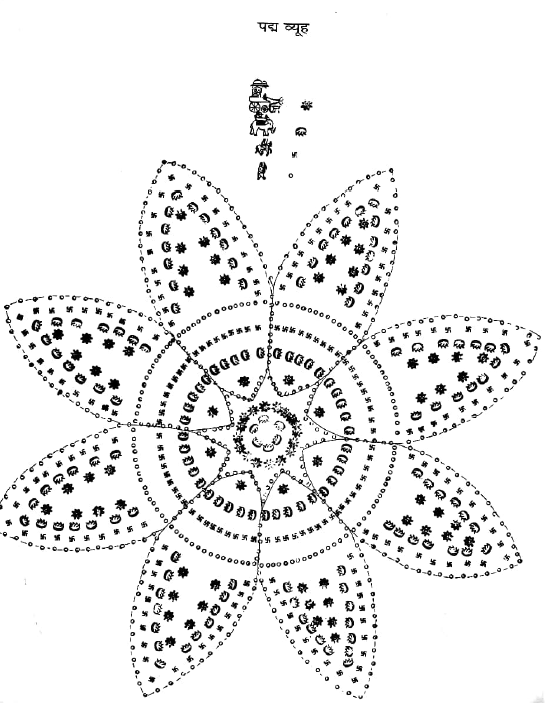
30.Types of Armed formations - Vyuh Rachna in Dhanur Ved
6. Sarp Vyuh
6. Sarp Vyuh
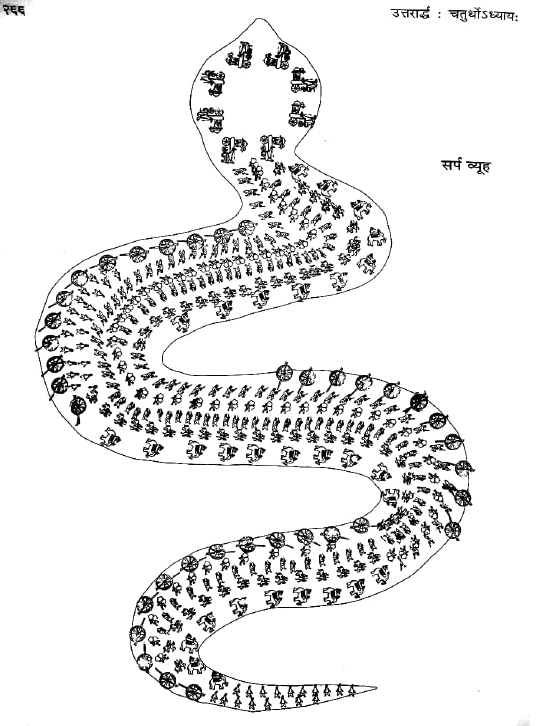
31. Types of Armed formations - Vyuh Rachna in Dhanur Ved
7. Agni Vyuh
7. Agni Vyuh
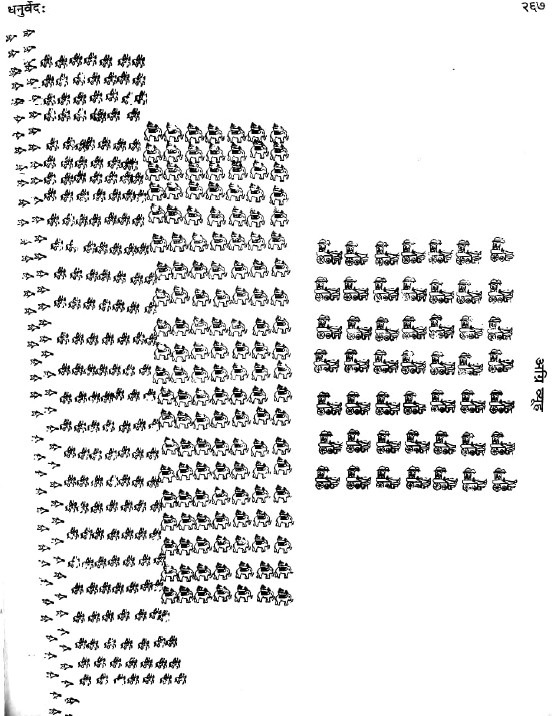
32. Types of Armed formations - Vyuh Rachna in Dhanur Ved
8. Khalak Vyuh
8. Khalak Vyuh
33. Dhanur Ved is too vast to summarize everything mentioned in one thread. But Dhanur Ved has a complete description of the ancient weapons equivalent to modern nuclear weapons in impact and destruction along with some divine methods to invoke them when the unavoidable situation…
Loading suggestions...